
Are Killer Instinct Crossbows Any Good for Hunting in 2026?

Most hunters assume that fast, affordable archery gear must be flimsy or prone to cracking under pressure. That fear is understandable, but these bows hold up well and deliver dependable field accuracy for deer season. They generate plenty of arrow speed to take down game cleanly without falling apart. The real compromises show up in stiffer cocking effort, basic starter scopes, and strings that wear quickly if ignored.
Getting long-lasting performance out of your setup depends on a few simple habits. The arrow track needs regular rail lube (a slick wax that stops friction) to protect the string, and hardware requires a quick check for loose screws before every hunt. Using arrows that meet the maker's minimum weight limit also shields the limbs from excess vibration. Here is what to expect before taking one into the woods.
The Real Verdict on Killer Instinct Build Quality
Killer Instinct bows offer serious arrow speed and dependable shooting without the hefty price tag seen on luxury archery brands. When you see a bow selling for a fraction of what top-tier models cost, it is natural to worry about brittle limbs or cheap metal that might bend under strain. The reassuring reality is that Killer Instinct focuses its spending on the core shooting mechanism. The aluminum rail and composite split limbs are tough, durable parts designed to handle heavy mechanical pressure.
You will not get custom-shop refinement or whisper-quiet shooting, but the platform does not cut corners on essential safety. The risers (the aluminum center frame that connects the limbs to the barrel) hold up under normal use, and the bows shoot straight. When hunters run into trouble, it almost always stems from neglected maintenance or shooting arrows that are too light for the bow.
If you treat the bow with care, keep the hardware snug, and wax the string regularly, it holds up over years of deer seasons. It is a no-nonsense working tool meant for regular hunters who want fast arrows without taking out a personal loan.
Hunting Performance and Accuracy in the Field
When you sit in a tree stand on a crisp morning, your bow must do two jobs well: drive an arrow cleanly through vitals and hit the exact spot you are aiming at. Killer Instinct models deliver plenty of power for whitetail deer, black bear, and wild hogs. Arrow speed is measured in FPS (feet per second, or how fast the arrow flies), and these bows send arrows downrange with enough speed to produce deep penetration on big game.
Accuracy is just as dependable at practical hunting ranges. Most shooters can place arrows into a tight three-inch group at thirty or forty yards straight out of the box. That level of precision easily covers ethical hunting shots across typical timber clearings and field edges. The trigger pull feels heavier than a match rifle trigger, but the release is predictable once you get familiar with the wall.
The compact frame also makes moving around in the woods much easier. The wheel-to-wheel length (the distance between the axle pins on the limb tips) stays narrow when cocked, which helps you swivel quietly inside a ground blind or brushy stand. Hunters who spend long hours in narrow blinds often look closely at bow clearance, and comparing how narrow limbs behave against compact bows designed for tight blinds proves how much a few inches of width matter when an animal walks into view.
State wildlife agencies also set strict rules for archery gear, often requiring a minimum pull weight (measured in pounds, meaning how much muscular effort it takes to pull the bowstring back) of around 40 pounds for whitetail deer. Killer Instinct setups easily surpass these legal floors, giving you all the kinetic energy needed for clean, humane harvests.
Where Costs Are Cut to Keep Prices Low
A bow cannot cost significantly less than the competition without shaving expenses somewhere. Understanding where Killer Instinct trims production costs helps you know what to expect before you spend your hard-earned money.
- Bundled glass optics: The included scope works fine in bright sunshine, but the lenses do not gather as much ambient light during the critical first and last fifteen minutes of legal shooting light.
- Higher cocking effort: Many entry-level setups rely on basic rope cocker cords rather than smooth internal crank winches, meaning you must lift around half the bow pull weight with your own back and arms.
- Shot sound and vibration: Premium bows use complex dampeners in the limb pockets to silence the shot, while budget setups produce a louder snap that sounds sharper in quiet woods.
- Factory arrows: The bundled carbon bolts shoot fine at close yardages, but their spine consistency (how evenly the carbon tube flexes in flight) can vary from shaft to shaft, opening up your groups past forty yards.
- Basic trigger feel: The trigger mechanism has a bit of travel and creep (the distance the trigger moves before dropping the sear) compared to expensive dry-fire systems.
Five Crucial Maintenance Steps to Prevent Limb and String Failures
Most horror stories about cracked limbs or broken bowstrings come down to simple maintenance mistakes. High-speed crossbows generate immense friction and vibration, so taking care of your equipment keeps you safe and protects your investment. Follow these five checks to keep your setup shooting smoothly.
- Apply slick rail lube to the arrow barrel track every twenty to thirty shots. Friction between the center string wrapping and the metal flight rail generates intense heat, and skipping rail lube burns through string servings in just a few shooting sessions.
- Rub archery wax over the exposed bowstrings before every long shooting day. Wax seals synthetic string fibers against rain, blocks grit, and prevents dry strands from fraying into weak spots that can snap under high tension.
- Flex-check carbon arrows by hand before loading them onto the flight deck. Bending the carbon arrow gently while listening for cracking noises reveals hidden internal cracks, preventing the shaft from snapping in half when fired.
- Snug down every frame screw, quiver bracket, and scope ring bolt once a month. Harsh mechanical vibrations shake fasteners loose over time, which ruins scope zero and can cause shifting between the limb pockets and the aluminum rail.
- Never launch an arrow lighter than the manufacturer recommended minimum grain weight. An arrow that is too light fails to absorb the bow's forward energy, throwing that brutal shock directly into the composite limbs and cracking them.
The single greatest danger to any crossbow is a dry fire. A dry fire happens when you drop the trigger latch without an arrow seated fully against the string. Because there is no arrow weight to absorb the kinetic energy of the power stroke, all that explosive force slams directly into the limbs and cams (the rotating pulleys at the limb tips). A dry fire can shatter limbs into sharp fragments, bend axle pins, and cause severe personal injury. Always seat your arrow nock firmly against the string until it clicks into place.
If you ever spot hairline cracks on the surface of the limbs, splintered fiberglass edges, or crooked cams, stop shooting immediately. Crossbow cables sit under hundreds of pounds of continuous tension. Never try to clamp or take apart a crossbow using home garage tools. Take the unit to a certified archery pro shop bow press so a trained technician can relieve tension safely and swap out the damaged parts.
Who Killer Instinct Fits Best and Who Should Walk Away
Killer Instinct bows are ideal for practical hunters who want fast arrow speeds and ethical hunting power on an honest budget. If you hunt a handful of weekends each fall, practice during the summer, and do not mind wiping down the rail track with lube, these bows deliver outstanding value. You get all the velocity needed to put game in the freezer without paying for high-end cosmetic perks.
On the other hand, hunters with shoulder pain, back stiffness, or limited upper-body strength should look elsewhere. Pulling back a heavy string with a basic rope cocker requires serious muscular effort. Luxury bows often feature integrated crank systems and decocking capabilities (letting the cocked string down safely without firing an arrow into a target block at the end of the day). If pulling heavy weight or manually discharging the bow sounds like a struggle, exploring crossbow models with built-in decocking mechanisms makes your time in the woods much safer and far less painful.
Target shooters who chase pinpoint accuracy beyond fifty yards may also feel limited by the basic bundled accessories. Replacing the factory scope, buying premium match-grade carbon arrows, and adding rubber string silencers adds up quickly. If you plan to replace every bundled accessory immediately, buying a higher-tier package from the start often saves money and headaches.
What to Check Before Choosing a Crossbow Package
When selecting a bow package for your upcoming season, start by evaluating how you plan to cock and uncock the bow. If you hunt out of elevated stands or have physical limitations, look for packages that feature a smooth crank cocker or a safe mechanical let-down trigger box that unloads the string without firing a bolt.
Next, examine the bundled optic. Make sure the sight includes multi-line aiming reticles calibrated for arrow drops, and look for illuminated dots if you plan to hunt thick timber during dawn and dusk. Also confirm the uncocked and cocked width of the limb assembly to ensure it fits comfortably inside your ground blind. Finally, verify that the package provides durable arrows and field points with enough grain weight to protect the limbs during practice.
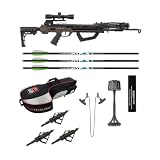
- ARS Mark9.5
ARS Mark is a ranking system developed by bestairriflescopes.com. ARS Mark has no relationship or impact from any manufacturers or sales agent websites. Learn more
- BrandKiller Instinct

- ARS Mark8.6
ARS Mark is a ranking system developed by bestairriflescopes.com. ARS Mark has no relationship or impact from any manufacturers or sales agent websites. Learn more
- BrandKiller Instinct

- ARS Mark8.4
ARS Mark is a ranking system developed by bestairriflescopes.com. ARS Mark has no relationship or impact from any manufacturers or sales agent websites. Learn more
- BrandKiller Instinct

- ARS Mark7.7
ARS Mark is a ranking system developed by bestairriflescopes.com. ARS Mark has no relationship or impact from any manufacturers or sales agent websites. Learn more
- BrandKiller Instinct
Last update on 2026-10-20 / Affiliate links / Images, Product Titles, and Product Highlights from Amazon Product Advertising API
FAQs
Can you safely decock a Killer Instinct crossbow without firing an arrow?
Only models equipped with a dedicated mechanical let-down trigger system allow you to lower the string safely using the cocking sled. If your specific model lacks that built-in mechanism, you must fire a designated discharge arrow into a portable target bag or ground block to unload the bow. Never attempt to let down the bowstring with your bare hands, as the violent tension will cause severe hand injuries.
Why do crossbow strings wear out quickly on budget bows?
High arrow velocities create extreme friction between the metal flight rail and the protective center string serving. Without regular coats of rail lube, that heat scorches the fibers and causes them to unravel after just a few dozen shots. Applying wax to the exposed strands and rail lube to the track prevents friction damage and keeps your strings shooting reliably for hundreds of shots.
Do I need to replace the factory scope right away?
The included scope works well for hunting inside forty yards under clear daylight conditions. However, the budget glass does not gather much light during the dawn and dusk periods when deer move most actively. Many hunters choose to upgrade their optic after their first season to gain clearer sight pictures and brighter illuminated aiming points in low light.
How often should I wax the bowstring and cables?
Wax the string and cables every two to three shooting sessions, or whenever the fibers begin to look dry and fuzzy. Rub the wax into the strands using your thumb and index finger so body heat melts the wax deep into the synthetic fiber core. Keep wax off the center serving where the trigger latch hooks the string to prevent sticky wax buildup inside the trigger box.


12 Best 22 Pcp Air Rifle For Hunting of 2026 With Quiet Power

7 Best 22 Pcp Air Rifle Under 300 of 2026 For Backyard Pest Control

10 Best 22 Break Barrel Air Rifles of 2026 For Backyard Pest Control

10 Best 30 Caliber Pcp Air Rifle of 2026 For Medium Game

Top Best 177 Air Rifle Under 100: Budget-Friendly Picks for 2026

How to Safely Reload Shotgun Shells at Home

11 Best Co2 Air Rifle For Pest Control of 2026 To Ensure Humane Dispatch

12 Best Inexpensive Air Rifles of 2026 For Dependable Backyard Accuracy






