
Are Liberty Gun Safes Good for Home Security in 2026?

Yes, these safes provide dependable protection against theft and fire for standard home storage. The real level of defense changes dramatically based on how thick the steel is on the model you bring home. Lighter entry models work well to keep curious children and quick smash-and-grab burglars out, but stopping a determined break-in requires a much heavier build.
Your choice comes down to a few practical factors. Steel thickness comes first, where a lower gauge number means thicker metal that resists prying. Fire insulation matters just as much, since heat-activated door seals and internal drywall panels keep high temperatures away from your valuables. The locking mechanism also plays a major role, from mechanical dials that never need a battery to electronic keypads that open in seconds. Here is a clear breakdown of how these safes hold up and what to check before putting one in your home.
How tough is the steel against a pry attack?
Steel thickness makes or breaks any gun safe when a burglar brings a pry bar into your home. In the safe industry, steel thickness is measured in gauge, where lower numbers mean thicker metal. A 14-gauge safe uses relatively thin sheet metal that measures around five-sixty-fourths of an inch thick. An attacker with a heavy demolition bar can bend, crease, or tear 14-gauge steel if they get enough leverage against the door seam.
Liberty uses different steel builds depending on the safe model you look at. Their entry lines rely on 14-gauge steel, which stops a rushed burglar who only has a standard screwdriver or a claw hammer. Their mid-tier lines step up to 12-gauge or 11-gauge steel, while their heaviest units use thick 10-gauge plate. Thicker steel gives the frame rigidity, so the door frame does not flex outward when someone tries to jam a wedge into the perimeter crack.
The door design also decides how well the safe resists brute force. Many budget security cabinets use thin, round locking pins that attach to flimsy internal linkages. Liberty uses wide military-style locking bars that interlock directly with the safe frame. These flat bars spread out the prying force across several inches of solid steel rather than concentrating the pressure onto a few small round pins. That wider contact area makes it much harder to pop the door out of its frame.
Behind the lock plate sits another vital defense part called a relocker. A relocker is an internal latch that deadlocks the door if the lock is smashed, drilled, or knocked off by an intruder. If a burglar uses a sledgehammer to drive the lock body into the interior, the relocker snaps shut automatically. Once that secondary pin fires, the door stays latched shut even if the external keypad or dial is completely ruined. To gain that protection, you must bolt the safe down so an intruder cannot tip it onto its back to gain extra leverage.
Can a Liberty safe survive a real house fire?
House fires create brutal heat that can melt aluminum, warp steel, and turn firearm stocks into ash. A standard room fire often reaches 1,200 degrees Fahrenheit in less than ten minutes. Thin metal cabinets offer zero heat protection, turning the interior into an oven that chars paper and ruins gun finishes almost immediately. Liberty protects internal contents by packing the walls and ceiling with fire board. A fire board is a heat-resistant drywall panel that insulates the interior by trapping tiny moisture molecules inside its plaster core.
When high heat hits the exterior walls, those water molecules inside the fire board begin to turn into steam. That steam process holds the internal temperature near the boiling point of water for a limited period, keeping heat away from your guns, ammunition, and documents. Thicker models carry multiple layers of fire board along the ceiling, walls, and door jambs. The ceiling requires the heaviest insulation because heat and flame rise to the top of the room first.
The door gap is the most vulnerable spot during a blaze, which is why door seals matter just as much as wall insulation. Liberty installs heat-activated expanding door seals around the perimeter of the door frame. When room temperatures climb above 200 degrees Fahrenheit, this seal material expands to several times its original size. That swollen barrier chokes off the door gap, sealing out superheated air, thick soot, and water from fire hoses.
To give your safe the highest chance of surviving a home fire, follow this setup checklist:
- Select a ground-floor concrete slab: Basements and concrete ground floors stay significantly cooler during a blaze than upper-level wooden subfloors that can burn away and drop the safe.
- Keep clear of fuel sources: Never place your storage unit near natural gas meters, hot water heaters, furnace rooms, or garage gasoline cans that burn hot and fast.
- Anchor against exterior walls: Exterior corners of a house usually experience lower temperatures and get hit with fire hoses earlier than central interior hallways.
- Check the certified label: Verify the listed fire rating label on the door edge to confirm how many minutes of protection the model provides at a specific heat level.
Which lock style gives you the most reliable access?
Selecting the right lock mechanism comes down to a balance between speed during an emergency and mechanical reliability over twenty years. Liberty builds models with three primary lock styles: biometric fingerprint scanners, digital electronic keypads, and classic mechanical dial locks. Each design serves a different daily routine, and each carries its own set of strengths and weaknesses.
Biometric locks use a fingerprint scanner to read the unique ridges on your finger. You press your thumb or index finger against the glass sensor, and a small motorized bolt retracts in one or two seconds. This setup works exceptionally well for nightstand vaults where you need immediate access in pitch darkness without remembering a code. But biometric sensors can fail to read your print if your skin is wet, dirty, sweaty, or scraped. They also run on battery power, meaning you must check battery levels regularly to prevent a lock lockout.
Electronic keypads offer a dependable middle ground for most homeowners. You enter a six-digit code on back-lit buttons, turn the handle, and open the safe. Entering a code takes three to four seconds, which is fast enough for home defense situations while avoiding print-reading errors. These keypads save your combination in non-volatile memory, so losing battery power never erases your personal code. If the battery dies, you simply slide off the bottom housing, snap in a fresh 9-volt battery, and enter your numbers.
Mechanical dial locks are the traditional round wheels that you spin left, right, and left to line up internal wheels. A dial lock is slow to open, often taking fifteen to thirty seconds under calm conditions. Spinning tiny numbers in a dark, smoky room without a flashlight is very difficult. But mechanical dials contain zero wires, circuit boards, or batteries. A mechanical dial safe can sit in a corner for forty years and open smoothly every time without any electrical failure.
What should you know about factory master override codes?
Many modern electronic gun safes are built with a factory management code stored by the manufacturer. Safe builders keep these records linked to safe serial numbers so owners can regain access if they forget their combination, lose their paperwork, or pass away without leaving access details for their family. If an owner gets locked out, a certified locksmith or the safe company can use that master record to open the door without drilling expensive holes through the front steel plate.
This convenience creates a security question for homeowners who want complete control over their storage. If a safe company maintains a master reset code for your serial number in a central database, that information exists outside your home. Anyone with legal authority, company access, or unauthorized entry to those records could theoretically look up the reset code for your safe. For owners storing high-value gear or sensitive items, that external access represents an unnecessary vulnerability.
You can manage this risk by taking charge of your safe settings right after delivery. Liberty allows safe owners to submit an official request to purge their master reset codes from the company system. When you opt out of factory code retention, the manufacturer permanently deletes the override code tied to your serial number. Once that record is wiped, no one can open the safe from the outside using a backdoor number.
Keep in mind that purging your factory code places all responsibility squarely on your shoulders. If you forget your combination after the master record is deleted, the company cannot assist you over the phone. A qualified safe technician will have to drill through the hardplate to release the lock, which costs money and requires steel repair work. Change your personal user code away from the default factory setting immediately, write your new numbers in a secure notebook, and store that record away from the safe itself.
Should you pick a compact vault or upright safe?
Deciding between a compact lockbox and a full-size upright safe depends entirely on the size of your collection and how quickly you need your equipment. Small handgun vaults are built for fast, single-gun storage right where you sleep or work. They fit inside desk drawers, slide under car seats, or bolt directly to bed frames. A compact vault keeps curious children away from defensive handguns, target pistols, or pellet sidearms while ensuring you can grab your gear in two seconds flat.
Full-size upright safes solve a completely different storage problem. If you own long guns, you need vertical clearance, solid steel mass, and internal shelving. Upright safes provide heavy fire insulation and strong pry resistance that small sheet-metal lockboxes simply cannot match. They also offer the physical room required for high-end shooting setups. Long rifles built with large scopes, bipods, or bulky air cylinders take up significant space inside a cabinet.
Shooters who store specialized gear like compact PCP air rifles face unique storage needs. A PCP or pre-charged pneumatic rifle uses an onboard high-pressure air reservoir charged up to several thousand pounds per square inch, which makes the action bulkier than a slim shotgun. Standard break-barrel spring or gas piston rifles, which cock by hinging the barrel downward, are often very long from buttstock to muzzle. Storing these guns alongside dedicated air guns for vermin requires wide internal slots so delicate optics do not bump together.
Use this quick sizing checklist before choosing your storage setup:
- Cut advertised capacities in half: Safe makers calculate long-gun capacity using tiny, un-scoped shotguns packed like sardines. If your rifles carry scopes, wide rotary magazines, or charging bolts, expect a safe to hold about half of its listed count.
- Measure total barrel length: Measure your longest rifle from recoil pad to muzzle tip. Make sure the interior shelf height leaves several inches of clearance so you do not ding your barrel crowns.
- Plan for support accessories: If you use pre-charged pneumatic gear, leave floor space for hand pumps, high-pressure air hoses, and pellet cases alongside your collection.
- Check entry doorway widths: Full-size upright safes weigh several hundred pounds and measure over two feet deep. Measure every door frame, tight staircase, and turn between your front door and the safe's final room before delivery.
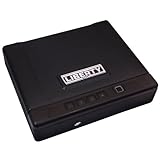
- ARS Mark8.3
ARS Mark is a ranking system developed by bestairriflescopes.com. ARS Mark has no relationship or impact from any manufacturers or sales agent websites. Learn more
- BrandLiberty Safe
Last update on 2026-10-20 / Affiliate links / Images, Product Titles, and Product Highlights from Amazon Product Advertising API
FAQs
How do you anchor a gun safe to prevent theft?
You anchor a gun safe by drilling into the concrete floor beneath the safe using a masonry hammer drill bit. Clear all dust from the holes, slide heavy wedge anchor bolts through the pre-drilled holes in the bottom steel plate of the safe, and tighten the nuts firmly with a socket wrench. Bolting the unit down prevents burglars from tipping the safe onto its side for prying or wheeling it away on a hand truck.
Do electronic safe keypads lose combinations when batteries die?
Electronic keypads do not lose your personal access combination when their batteries run out of power. The combination is stored in non-volatile memory, which holds data indefinitely without any electrical current. When the battery dies, you simply remove the keypad faceplate, connect a fresh 9-volt alkaline battery, and punch in your standard code to open the door.
Where is the safest place to put a gun safe?
The safest place to put a heavy gun safe is against an exterior load-bearing wall on a concrete slab floor, such as an unfinished basement corner. Concrete slabs support massive safe weights without sagging, and exterior walls remain cooler for longer during a house fire. Keep the safe tucked away from direct sightlines through front windows and far away from high-risk fire zones like kitchens and furnace rooms.
Can moisture build up inside an airtight gun safe?
Moisture builds up quickly inside sealed gun safes because expanding rubber door seals trap ambient room humidity inside the dark steel box. Fire board insulation panels also hold trace moisture that can release into the air over time, causing rust on steel barrels and mildew on leather slings. You can keep the interior dry by mounting a low-wattage electric heating rod near the floor or placing rechargeable silica gel packs on the shelves.


Uncover the Best Big Bore Handgun Scope: Your 2026 Top Picks Guide

Best Fully Automatic Pellet Gun: The Top Pick in 2026

Top 9 Best Compact Pellet Gun for Squirrels: A 2026 Review
Best CO2 Pellet Gun for Small Game: Top Picks of 2026

Best Break Barrel Pellet Gun for Hunting - Top 8 Picks in 2026

2026 Best Chinese Pellet Gun: Expert Reviews and Top Picks
Top-Rated Picks: Best Bolt Action Pellet Gun Under 100 in 2026

Best Chronograph for Pellet Gun: Top-Rated Picks for 2026









