
4 Best 20 Yards Air Rifles of 2026 For Quiet Backyard Shooting

High-velocity listings promise blistering speed and flat trajectories, but firing an overpowered magnum in a residential garden tells a very different story. That sharp sonic crack easily carries over fence lines, while violent spring recoil rattles reticles loose, tears up pellet traps, and scatters shots across the paper. Instead of an easy afternoon ringing metal spinners, excessive muzzle blast and harsh vibration turn casual practice into a stressful chore that risks neighbor complaints and damages property. An airgun that demands brute cocking effort and punches through backstops quickly becomes an expensive dust-collector rather than a favorite backyard shooter.
Backyard shooting works best when every discharge sounds like little more than a muffled door click and drops pellets into the exact same hole. Reaching that quiet, repeatable accuracy requires balancing caliber with sound moderation: a brisk .177 pellet punches clean paper targets without over-penetrating, while a moderated .22 safely drops garden pests on the spot. Pairing that bore choice with an integrated shroud and a smooth gas piston protects your scope zero and softens cocking strain over long sessions. Take a look at how the top rifles compare so your twenty-yard practice stays discreet, effortless, and reliably on mark.
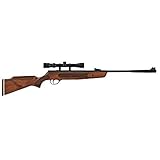
- ARS Mark9.6
ARS Mark is a ranking system developed by bestairriflescopes.com. ARS Mark has no relationship or impact from any manufacturers or sales agent websites. Learn more
- BrandHatsan

- ARS Mark9.3
ARS Mark is a ranking system developed by bestairriflescopes.com. ARS Mark has no relationship or impact from any manufacturers or sales agent websites. Learn more
- BrandHatsan

- ARS Mark8.4
ARS Mark is a ranking system developed by bestairriflescopes.com. ARS Mark has no relationship or impact from any manufacturers or sales agent websites. Learn more
- BrandHatsan

- ARS Mark7.1
ARS Mark is a ranking system developed by bestairriflescopes.com. ARS Mark has no relationship or impact from any manufacturers or sales agent websites. Learn more
- BrandHatsan
Last update on 2026-10-08 / Affiliate links / Images, Product Titles, and Product Highlights from Amazon Product Advertising API
Which caliber works best for shooting at a 20-yard backyard distance?
The right choice depends on whether your 20-yard goal is target practice or backyard rodent control. A .177 caliber rifle, such as the Hatsan 1000X Spring Striker Combo, produces clean paper perforations and provides flat trajectories for target practice without putting extreme demands on your backstop. For garden pests, step up to a .22 or .25 caliber model like the Hatsan Model 135 Vortex QE to transfer greater impact energy downrange. If you need maximum knockdown power, the Hatsan Mod 130S Vortex QE in .30 caliber delivers substantial force, but you must construct a reinforced backstop to handle the heavy impact at close range. If you want a versatile option for pest management, an air rifle for training and pest control offers a balanced middle ground for suburban properties.
Are sound-moderated QE barrels quiet enough for shooting near neighbors?
Yes, integrated QE sound moderation softens muzzle report enough to keep routine practice discreet in tight spaces. Rifles fitted with Hatsan QE technology, including the Hatsan Mod 130S Vortex QE and Hatsan Model 135 Vortex QE, use internal baffles to trap expanding air before it exits the muzzle. While the mechanical movement of the piston still makes a muted thump near your ear, the sharp crack that alerts neighbors is largely contained. At 20 yards, pellet impact against your target often creates more noise than the rifle itself, so pair a moderated barrel with a quiet, pellet-absorbing trap.
How does a gas piston compare to a traditional spring piston at 20 yards?
A gas piston provides a smoother firing cycle with noticeably less rotational vibration than a traditional wire coil spring. Traditional springs, like the powerplant inside the Hatsan 1000X Spring Striker Combo, can twist slightly as they decompress, requiring strict hold discipline to keep groups tight at 20 yards. In contrast, the enclosed Vortex ram found on the Hatsan Model 135 Vortex QE compresses inert gas, eliminating spring fatigue when cocked for brief moments while you wait for a clean shot. This stable linear stroke preserves natural sight alignment and reduces shooter fatigue during extended backyard plinking sessions.
Will a mounted optic hold zero under break-barrel recoil?
An optic will hold zero at 20 yards only if the scope and mounting hardware are rated to handle bidirectional piston recoil. Break-barrel rifles produce a unique two-way recoil impulse: the initial kick travels backward into your shoulder, followed by an abrupt forward jolt when the piston strikes the front of the compression cylinder. Combo packages such as the Hatsan 1000X Spring Striker Combo include compatible optics, but you should always verify that base screws and scope rings are tightened to the torque values specified in your manual. If your point of impact wanders between shots, verify that the mount recoil stop pin is fully seated in the receiver rail to prevent the scope from creeping backward.
What backstop precautions are needed for .25 and .30 calibers at 20 yards?
Larger calibers require dense, impact-absorbing backstops built with ballistic putty, rubber mulch, or heavy sand rather than basic sheet metal. Firing a .30 caliber pellet from the Hatsan Mod 130S Vortex QE or a .25 caliber pellet from the Hatsan Model 135 Vortex QE generates considerable force that can punch clean through thin plywood or split standard fence boards at 20 yards. Build a dedicated backstop with thick timber framing and a self-healing face to trap heavy pellets safely without ricochet risk. If your yard lacks the clearance or barrier depth for a heavy backstop, consider low-energy CO2 plinking guns to keep close-range target practice safe and simple.
How do you maintain consistent pellet groups at 20 yards?
Tight groups at 20 yards require a relaxed hold that allows the rifle to slide naturally through its recoil stroke. Clamping down tightly on the forearm or bracing the barrel against a hard fence post pushes the muzzle off target before the pellet clears the barrel crown. Rest the rifle stock gently across your flat, open palm, pull the buttstock lightly against your shoulder pocket, and maintain a smooth trigger squeeze. Also verify that all stock screws remain snug, as break-barrel vibration can gradually loosen hardware and cause erratic group dispersion over time.


12 Best 22 Pcp Air Rifle For Hunting of 2026 With Quiet Power

7 Best 22 Pcp Air Rifle Under 300 of 2026 For Backyard Pest Control

10 Best 22 Break Barrel Air Rifles of 2026 For Backyard Pest Control

10 Best 30 Caliber Pcp Air Rifle of 2026 For Medium Game

Top Best 177 Air Rifle Under 100: Budget-Friendly Picks for 2026

How to Safely Reload Shotgun Shells at Home

11 Best Co2 Air Rifle For Pest Control of 2026 To Ensure Humane Dispatch

12 Best Inexpensive Air Rifles of 2026 For Dependable Backyard Accuracy






