
8 Best Affordable Thermal Scopes of 2026 for Clear Target Identification

Thermal detection ratings create a common trap when marketing blurs the line between spotting a heat signature and actually recognizing an animal. A cut-rate sensor might flag body warmth several hundred yards away, but low resolution leaves that target as an indistinct, blurry heat blob. Pulling the trigger in the dark demands absolute certainty about whether that distant outline is a marauding coyote or a stray calf. Beyond visual clarity, underbuilt entry units often suffer from screen stutter on moving game or fail to hold zero against standard centerfire recoil, turning a nighttime pest patrol into an expensive guessing game.
Nighttime shooting changes completely when an optic provides crisp, unmistakable body contours and reliable point-of-impact stability. Prioritizing a 50Hz refresh rate keeps running predators smooth across the display, while stepping up to balanced sensor resolution ensures clean target confirmation at practical shooting distances. Verifying dedicated rifle rail mounting also ensures the reticle stays locked in place across repeated hunts. The picks below bring together positive target confirmation, dependable zero retention, and rugged recoil endurance for confident shooting in the dark.

- ARS Mark8.3
ARS Mark is a ranking system developed by bestairriflescopes.com. ARS Mark has no relationship or impact from any manufacturers or sales agent websites. Learn more
- BrandAGM Global Vision

- ARS Mark7.3
ARS Mark is a ranking system developed by bestairriflescopes.com. ARS Mark has no relationship or impact from any manufacturers or sales agent websites. Learn more
- BrandAGM Global Vision

- ARS Mark9.3
ARS Mark is a ranking system developed by bestairriflescopes.com. ARS Mark has no relationship or impact from any manufacturers or sales agent websites. Learn more
- BrandGOYOJO

- ARS Mark8.9
ARS Mark is a ranking system developed by bestairriflescopes.com. ARS Mark has no relationship or impact from any manufacturers or sales agent websites. Learn more
- BrandRIX
- ARS Mark8.2
ARS Mark is a ranking system developed by bestairriflescopes.com. ARS Mark has no relationship or impact from any manufacturers or sales agent websites. Learn more
- BrandGOYOJO

- ARS Mark9.0
ARS Mark is a ranking system developed by bestairriflescopes.com. ARS Mark has no relationship or impact from any manufacturers or sales agent websites. Learn more
- BrandRIX
- ARS Mark7.9
ARS Mark is a ranking system developed by bestairriflescopes.com. ARS Mark has no relationship or impact from any manufacturers or sales agent websites. Learn more
- BrandGOYOJO

- ARS Mark8.7
ARS Mark is a ranking system developed by bestairriflescopes.com. ARS Mark has no relationship or impact from any manufacturers or sales agent websites. Learn more
- BrandBansainong
Last update on 2026-10-04 / Affiliate links / Images, Product Titles, and Product Highlights from Amazon Product Advertising API
What is the difference between thermal detection range and actual target identification range?
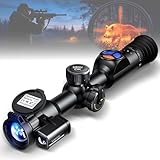
Detection range indicates the distance at which an optic spots an unverified heat source, while identification range is the much shorter distance required to confirm animal species. While options like the RIX Storm-S2 offer a detection range up to 1422 yards and the AGM Global Vision RattlerV2 19-256 reaches 950 yards, targets at extreme distances appear only as faint heat signatures. Positively distinguishing a coyote from a neighbor's dog requires closing the distance or utilizing a higher-density sensor like a 384x288 unit before taking a shot.
Can every affordable thermal optic mount directly to a rifle?
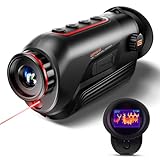
No, some thermal units at accessible price points are built strictly as handheld scanners rather than firearm optics. For instance, the GOYOJO Thermal Monocular uses a 10mm focal lens and a 25 Hz refresh rate designed for handheld scanning, spotting, or camping. Dedicated thermal scopes, like the GOYOJO GRS225 or RIX Storm-S3, feature integrated reticles and rifle mounting hardware designed to secure directly onto weapon rails. When setting up a dedicated scope, reviewing guidance on proper barrel clearance helps ensure your optic clears the rifle receiver and barrel correctly.
Why is a 50Hz refresh rate important for predator and hog hunting?
A 50Hz refresh rate refreshes the display screen fifty times every second to deliver fluid movement when tracking running targets. Slower displays, like 25 Hz units, can produce noticeable image stutter and visual lag when panning across an open field. Scopes like the GOYOJO GRS225-RF and RIX Storm-S2 feature 50Hz operation to keep your target tracking smooth in real time. This fluid refresh helps you maintain precise reticle placement on moving hogs rather than aiming where the animal was a fraction of a second earlier.
How does base optical magnification affect nighttime target acquisition?
Base optical magnification dictates how wide your field of view remains before applying digital zoom. An optic with 2.5X base magnification, such as the AGM Global Vision RattlerV2 19-256, provides a broader visual scanning area well suited for tight clearings and closer wood lines. A 3.5X base magnification, featured on the AGM Rattler V2 25-256 and RIX Storm-S2, narrows the view but brings distant heat sources closer with optical clarity. For wide open pastures, higher base optical magnification lets you assess animals at longer distances without relying solely on pixelated digital enlargement.
What weatherproofing and weight considerations matter for a night hunting scope?
Look for confirmed water resistance ratings like IP67 to protect delicate internal electronics against heavy night dew and driving rain. The GOYOJO GRS225 provides IP67 waterproof protection alongside high-sensitivity 25mm optics to handle severe weather conditions. Managing total rifle weight is also vital for long stalks across rough terrain, with compact thermal units like the RIX Storm-S2 weighing 0.9lb and the Storm-S3 weighing 0.97lb. Maintaining a lightweight build ties directly into strategies for better rifle balance when shooting from standing or offhand positions.
Is a 256x192 thermal sensor clear enough for night shooting, or do you need 384x288?
A 256x192 sensor cleanly detects animals at standard shooting distances, but a 384x288 sensor delivers noticeably sharper anatomical detail. Riflescopes built with 256x192 resolution, such as the GOYOJO GRS225 and the 12um RIX Storm-S2, readily display heat signatures in the dark, though their outlines become blocky under higher digital magnification. Stepping up to 384x288 resolution on models like the Bansainong scope or the RIX Storm-S3 with 35mm optics provides the extra image definition needed to verify body shape, ear posture, and target margins before pulling the trigger.

10 Top Picks: Best Youth Air Rifles for 13-Year-Olds

12 Best Rifle Scopes For 5.56 Under 150 Dollars - (2026 Top Picks)

Top 10 Rifle Scopes for Coyote Hunting in 2026

12 Best Benchrest Rifle Scopes of 2026 For Tight Groups

Top 5 Airsoft Rifles: Unleash the Action in 2026
Unveil the Best Straight Wall Deer Rifles: Top Picks for 2026

Top Ammo Choices for Air-Powered Rifles: Boost Your Performance in 2026

Best Quick Detach Scope Rings for Accurate and Convenient Shooting







