
Best Arrow Vanes for Hunting 2026: Quiet Control

A clean arrow build can still behave badly once a fixed-blade broadhead replaces a field point. Tiny alignment errors, weak vane adhesion, and poor clearance suddenly matter, especially as shooting distance grows. The best arrow vanes for hunting provide enough steering authority to settle broadhead flight without turning the back of the arrow into a noisy air brake. That balance matters more than flashy colors or whatever happens to be popular at the pro shop.
Vane profile changes how quickly an arrow corrects after leaving the bow. Taller vanes usually create stronger steering, which can help control broadheads with large exposed blades, but they may contact cables, rests, or risers on tighter setups. Lower-profile vanes offer better clearance and often handle crosswinds with less side pressure, though they may need extra length or a stronger helical angle to deliver similar control. There’s no free lunch, so clearance should be checked before chasing maximum surface area.
Length deserves the same practical attention. Compact vanes keep weight down and fit neatly on short hunting shafts, yet a slightly longer vane can produce useful stability without relying on excessive height. A design around two to three inches is common because it offers a workable middle ground for modern compound bows. Still, broadhead size, arrow speed, shaft diameter, and release quality can shift that sweet spot, so one fixed answer won’t cover every build.
Helical and offset fletching encourage rotation, helping the arrow recover from minor launch disturbances. More angle can increase spin and broadhead control, but it also raises drag and may create clearance trouble inside compact arrow rests. A modest offset often suits mechanical broadheads and well-tuned bows, while aggressive fixed-blade setups may benefit from a stronger helical if the rest allows it. The sensible move is to use enough rotation to stabilize the arrow, not the steepest angle a jig can produce.
Noise can creep into a hunting setup through stiff material, damaged vane edges, or an overly aggressive profile. A quiet vane won’t make up for loose clothing, poor wind direction, or rushed movement, but it removes one avoidable distraction during the shot. Softer, flexible materials often recover better after passing through brush or sitting against a quiver hood, while very soft vanes may show waviness if stored carelessly. Shape retention matters because a bent vane can create inconsistent steering long before it looks completely ruined.
Adhesion is another make-or-break detail. Even a well-shaped vane can peel if the shaft carries manufacturing residue, skin oil, or an incompatible cleaner. Proper shaft preparation, a suitable adhesive, firm base contact, and enough curing time reduce those frustrating failures. Honestly, replacing a loose vane at home is far better than discovering it after a long hike or during the only calm shooting window of the morning.
The strongest hunting setup also respects realistic tradeoffs. Larger vanes usually offer more control, yet they add rear weight and drag; smaller vanes preserve speed, yet they may expose tuning flaws that a more assertive profile would hide. Fixed-blade broadheads tend to demand more steering than compact mechanical heads, while slower arrows often tolerate added vane area better than extremely fast, lightweight builds. The best arrow vanes for hunting are therefore the ones that produce repeatable broadhead groups, clear the bow cleanly, remain quiet, and survive normal field abuse.

- ARS Mark9.8
ARS Mark is a ranking system developed by bestairriflescopes.com. ARS Mark has no relationship or impact from any manufacturers or sales agent websites. Learn more
- BrandAAE
- ARS Mark9.8
ARS Mark is a ranking system developed by bestairriflescopes.com. ARS Mark has no relationship or impact from any manufacturers or sales agent websites. Learn more
- BrandAAE

- ARS Mark9.8
ARS Mark is a ranking system developed by bestairriflescopes.com. ARS Mark has no relationship or impact from any manufacturers or sales agent websites. Learn more
- BrandArizona Archery Enterprises

- ARS Mark9.6
ARS Mark is a ranking system developed by bestairriflescopes.com. ARS Mark has no relationship or impact from any manufacturers or sales agent websites. Learn more
- BrandArizona Archery Enterprises

- ARS Mark9.6
ARS Mark is a ranking system developed by bestairriflescopes.com. ARS Mark has no relationship or impact from any manufacturers or sales agent websites. Learn more
- BrandBohning

- ARS Mark9.6
ARS Mark is a ranking system developed by bestairriflescopes.com. ARS Mark has no relationship or impact from any manufacturers or sales agent websites. Learn more
- BrandBohning
- ARS Mark9.6
ARS Mark is a ranking system developed by bestairriflescopes.com. ARS Mark has no relationship or impact from any manufacturers or sales agent websites. Learn more
- BrandBohning

- ARS Mark9.4
ARS Mark is a ranking system developed by bestairriflescopes.com. ARS Mark has no relationship or impact from any manufacturers or sales agent websites. Learn more
- BrandBohning
- ARS Mark9.2
ARS Mark is a ranking system developed by bestairriflescopes.com. ARS Mark has no relationship or impact from any manufacturers or sales agent websites. Learn more
- BrandTAC Vanes

- ARS Mark9.2
ARS Mark is a ranking system developed by bestairriflescopes.com. ARS Mark has no relationship or impact from any manufacturers or sales agent websites. Learn more
- BrandTAC Vanes
Last update on 2026-07-24 / Affiliate links / Images, Product Titles, and Product Highlights from Amazon Product Advertising API
AAE Max Hunter Vanes for Reliable Hunting Arrow Control
A hunting arrow can look perfectly assembled on the bench and still act fussy once a broadhead replaces the field point. Small clearance issues, weak adhesion, or too little steering authority often show up as wider groups and inconsistent impact points. The best arrow vanes for hunting need to manage those problems without adding needless drag or creating more noise than the setup already has. AAE Max Hunter Vanes bring a compact, purpose-driven shape to that job, packaged here as 50 white vanes for building or repairing multiple arrows.
AAE Max Hunter Vanes White 50 Pack
The Max Hunter profile is built around strong arrow correction rather than a long, low silhouette. That matters with broadheads because exposed blades can influence the front of the shaft, especially if the arrow leaves the bow with a slight wobble. A vane with firm steering authority helps the rear of the arrow regain control sooner, which can make tuning problems easier to diagnose. Still, no vane can rescue a badly matched spine, crooked insert, or poorly aligned broadhead.
The white color has a practical side that goes beyond appearance. It stands out against darker shafts, makes glue coverage easier to inspect, and can help reveal dirt, blood, or vane-edge damage after a shot. Bright fletching may also be easier to spot in grass, leaf litter, or dim storage areas, though white won’t remain spotless for long. That tradeoff is minor if easy visual inspection matters more than keeping every arrow looking fresh.
A 50-count pack gives enough material for several complete arrow sets while leaving replacements for torn or poorly bonded vanes. Three-fletch builds can cover sixteen arrows with two vanes remaining, while four-fletch layouts will cover twelve arrows with a small spare supply. That flexibility suits anyone who likes experimenting with different offsets or rebuilding damaged shafts instead of replacing the whole arrow. The larger quantity also makes consistent batch fletching easier because every shaft can use the same vane model and color.
Broadhead Steering Without Oversized Fletching
Broadhead control is the central reason to consider this vane style. Fixed-blade heads usually place more aerodynamic pressure at the front of an arrow than field points or compact mechanical designs. The Max Hunter’s compact shape aims to create meaningful correction from a relatively short footprint, helping the arrow settle without relying on an unusually long vane. That balance can support tighter broadhead flight while keeping the rear of the shaft manageable inside a quiver.
More steering isn’t automatically better, though. A tall or aggressive vane can strike cables, rests, or the riser if the arrow’s orientation and clearance aren’t checked carefully. Contact may leave small marks, wrinkle an edge, or push groups in ways that look like a tuning issue elsewhere. A quick powder test or slow-motion phone recording can reveal whether vane clearance is clean before broadhead testing begins.
Fletching angle changes the personality of the finished arrow just as much as vane shape. A moderate offset can encourage rotation without producing excessive drag, while a stronger helical may help stabilize broadheads that are stubborn during tuning. More angle also increases the chance of contact and may reduce downrange speed slightly, so the steepest setting isn’t always the smartest one. The useful goal is repeatable stabilization, not maximum spin for its own sake.
Adhesion, Prep, And Long-Term Shape
Good vanes can fail quickly if the shaft surface isn’t prepared correctly. Oils from manufacturing, fingerprints, dust, and cleaner residue can weaken the bond along the vane base. Careful shaft cleaning and an adhesive suited to the shaft material give the Max Hunter profile a better chance of staying flat and secure. Rushing this step often creates lifting vane edges that appear only after a few shots or a hot afternoon in the vehicle.
Firm pressure in the jig matters because the base needs full contact from front to back. Too much glue can squeeze out and leave a messy ridge, while too little may create dry spots that peel under impact or quiver pressure. A thin, even application usually keeps the build cleaner and reduces unnecessary weight differences between arrows. Letting the bond cure properly protects fletching consistency, even though waiting feels like the least exciting part of arrow building.
Storage can affect vane shape after the adhesive has cured. A tightly packed quiver hood may press against the vanes, and arrows left leaning against hard surfaces can develop bends over time. Flexible vanes often recover, but repeated compression may leave an edge distorted enough to alter flight. Regular inspection for warping, cuts, and loose bases is far easier than wondering why one arrow suddenly refuses to group with the rest.
Field Practicality And Realistic Tradeoffs
Compact hunting vanes can reduce bulk around the rear of the shaft, but they still need enough surface area to control the chosen broadhead. Fast, light arrows may react differently than heavier builds, and large fixed blades generally demand more correction than low-profile mechanical heads. The Max Hunter design makes the most sense after the bow has been paper tuned and the broadheads have been checked for alignment. That sequence keeps fletching performance from being confused with problems elsewhere in the setup.
Noise deserves attention because aggressive fletching can produce more air disturbance than a lower-profile vane. The difference may be small at ordinary hunting distances, yet quiet flight still matters when every piece of equipment is being refined. Clean vane edges, proper alignment, and sensible helical settings help avoid unnecessary hiss or flutter. A vane that is bent or partly detached can create far more flight noise than the original design itself.
White vanes offer visibility, but they also show grime and adhesive mistakes more clearly. Some archers will appreciate that honesty because flaws are easier to catch before a hunt. Others may prefer darker colors for a cleaner appearance after repeated range sessions. The real value lies in quick condition checks, especially after an arrow passes through a target, brush, or damp ground.
Where These Vanes Fit Best
The AAE Max Hunter Vanes suit arrow builds that need assertive correction without moving to a long traditional vane. They’re especially relevant where broadhead control, compact fletching, and a repeatable three- or four-vane layout matter more than minimizing every possible grain of rear weight. A carefully prepared shaft and accurate jig setup will influence the result as much as the vane itself. The package supports multiple matched arrows rather than a one-off repair with mixed fletching.
Some setups may be better served by a lower-profile vane. Tight cable clearance, drop-away rest timing issues, or extreme speed builds can make a taller shape harder to manage. A smaller mechanical broadhead may also stabilize well with less surface area, so extra steering could add drag without solving a real problem. Broadhead grouping and clearance checks should decide whether the Max Hunter profile earns a place on the shaft.
Related hunting equipment often involves different ballistic and setup considerations, and a separate reference appears in air rifle varmint hunting for readers comparing another type of field tool. That topic doesn’t affect vane selection, but it reflects the same need to match equipment to realistic distance, accuracy, and handling requirements. For these arrow vanes, the sensible evaluation remains straightforward: build carefully, confirm clearance, and shoot broadheads at practical ranges. Consistent groups, intact bonds, and predictable flight provide the clearest measure of real hunting value.
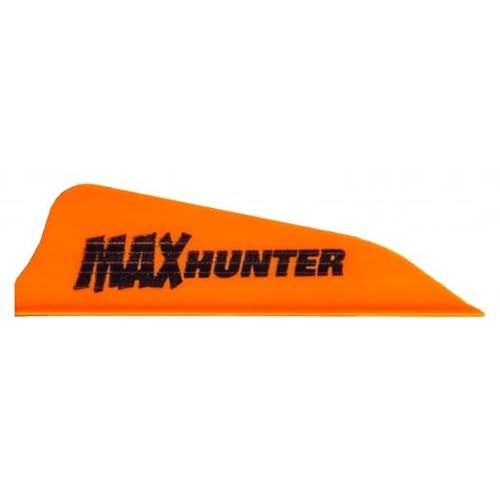
AAE Max Hunter Fire Orange Vanes for Hunting Arrows
A broadhead can expose tiny setup flaws that field points politely ignore. Weak steering, poor clearance, or a loose vane often turns a promising arrow build into scattered impacts and a whole lot of head-scratching. The best arrow vanes for hunting should help the shaft recover cleanly while staying practical inside a quiver, and the AAE Max Hunter Fire Orange 50 Pack is aimed squarely at that job. Its value rests on a compact hunting-focused format, a bright color that’s easy to inspect, and enough pieces for several complete builds plus repairs.
AAE Max Hunter Fire Orange Vanes
The package contains 50 fire orange vanes, which gives an arrow builder useful room to work without treating every fletching mistake like a minor disaster. A standard three-vane layout can cover sixteen arrows with two pieces left over, while a four-vane arrangement can cover twelve arrows and still leave a small reserve. That quantity matters because hunting shafts take abuse from targets, quivers, brush, and transport. Matching replacement vanes also keeps a finished set looking and behaving more consistent than a patchwork repair.
Fire orange brings a practical advantage that goes beyond style. The bright surface makes damaged edges, dirt, glue gaps, and wrinkles easier to notice during a quick inspection. It can also help an arrow stand out against dark foam targets, leaf litter, or the shadowed corner of a garage. Visibility won’t guarantee recovery in every setting, but fast visual recognition can save time when light is poor or several arrows are lying near one another.
The Max Hunter name points toward a vane shaped for hunting-arrow control rather than a long target-style profile. Compact vanes keep the rear of the shaft from becoming overly crowded, especially inside tight quiver hoods. They also leave more room on shorter shafts where broadheads, inserts, wraps, and nock indexing already demand attention. The real appeal is strong correction from a compact footprint, though final flight still depends on the bow, arrow spine, broadhead, and fletching angle.
Broadhead Control And Arrow Recovery
Fixed-blade broadheads place aerodynamic pressure at the front of an arrow, so the vanes need enough authority to keep the back end in charge. A compact hunting vane can support that balance by creating drag where it’s needed without stretching far down the shaft. The AAE Max Hunter format is relevant for builds that need decisive rear steering but don’t have much room for long fletching. Still, a vane can’t straighten a bent shaft or correct a broadhead that isn’t aligned with the insert.
Rotation also plays a big part in stabilizing broadhead flight. A modest offset can start the arrow spinning without piling on unnecessary drag, while a stronger helical may provide more correction for stubborn fixed blades. More angle isn’t automatically smarter, though, because it can reduce clearance and increase contact risk. The useful setup is the one that delivers repeatable broadhead groups, not the one that looks most aggressive in the jig.
Arrow speed changes the way a vane behaves, too. Fast, lightweight shafts may react sharply to extra drag, while heavier hunting arrows often tolerate a more assertive fletching layout. Mechanical broadheads may need less steering than large fixed heads, so the same vane setup won’t feel identical across every combination. That’s where practical testing earns its keep: confirm clearance, shoot field points, then judge broadhead consistency at realistic distances.
Fletching Setup And Adhesion Details
Surface preparation can make or break the finished arrow. Dust, skin oil, release agents, and cleaner residue may prevent the vane base from bonding evenly to the shaft. A suitable cleaning method and an adhesive compatible with the arrow material help the base sit flat from front to back. Skipping that prep can lead to lifting corners or partial separation after repeated shots, even if the vane looked fine at first.
Jig pressure deserves the same level of care. Too much glue creates squeeze-out and uneven ridges, while too little can leave dry areas along the base. A thin, controlled bead usually keeps the build cleaner and reduces unnecessary differences between arrows. Patience matters here, because allowing proper cure time supports consistent vane alignment and lowers the odds of twisting a vane before the bond settles.
Indexing should be checked before fletching a full batch. A vane that passes too close to a cable, containment brush, launcher arm, or riser may produce contact that looks like poor bow tuning. Powder, lipstick, or another safe transfer material can reveal where contact occurs without relying on guesswork. Clean clearance protects stable arrow flight, and it also prevents the bright orange edges from getting nicked before the arrow ever reaches the field.
Visibility, Storage, And Field Wear
Bright vanes make inspection easier, but they also show grime sooner than darker colors. Adhesive smears, target residue, and dirt may stand out after only a few sessions. That cosmetic downside doesn’t change performance by itself, and some arrow builders may actually prefer seeing wear before it becomes serious. The fire orange finish favors easy condition checks over a permanently spotless appearance.
Quiver pressure can bend or crease any vane if arrows stay packed tightly for long periods. A compact shape may reduce crowding, yet the fletching still needs enough space to avoid being mashed against the hood or neighboring shafts. Flexible material can often recover from light deformation, but repeated compression may leave an edge distorted. Regularly checking shape retention and base adhesion helps catch trouble before group size starts drifting.
Brush, foam targets, and pass-through shots can all rough up a vane. Small edge damage may not matter immediately, but tears, folds, or loose sections deserve attention because they change airflow behind the shaft. Replacing one damaged vane is usually cheaper and faster than questioning the entire bow setup. A 50-piece pack supports that maintenance routine by keeping matching repair vanes available instead of forcing a color or profile mismatch.
Strengths, Limits, And Best-Fit Setups
The main strength is the combination of a hunting-oriented profile and a bright, easy-to-track color. The pack size supports complete arrow sets, experimental layouts, and later repairs without mixing different vane models. Compact fletching also works neatly on shorter shafts and keeps quiver spacing more manageable. Those traits make the Max Hunter a sensible candidate among the best arrow vanes for hunting where broadhead control and visibility carry equal weight.
Clearance is the first limitation to respect. A vane built for meaningful steering may be less forgiving on bows with tight cable spacing, poorly timed drop-away rests, or awkward nock orientation. Extra steering can also add drag that isn’t necessary for a small mechanical broadhead or a perfectly tuned setup. The correct fletching angle should be chosen around the actual bow and arrow combination rather than copied blindly from someone else’s build.
The white and fire orange versions share a practical hunting purpose, but fire orange is likely to stand out more strongly against neutral ground and dark targets. Color preference remains personal, and bright fletching may not suit anyone trying to keep every visible component subdued. Performance still comes down to shape, installation, and arrow tuning rather than pigment alone. The meaningful difference is visibility during inspection and recovery, not a guaranteed change in accuracy.
Other hunting tools follow different ballistic rules, and a separate reference appears in 177 air gun pellets for readers researching another kind of projectile setup. That subject doesn’t affect vane selection, but both topics reward careful matching between projectile, equipment, distance, and intended use. For these vanes, sensible expectations matter: they can support stabilization and easier visibility, yet they won’t replace proper bow tuning. Clean installation, confirmed clearance, and consistent broadhead groups remain the strongest indicators of practical field readiness.
AAE Max Stealth Vanes for Hunting Arrow Stability
Dialing in a hunting arrow rarely goes exactly as planned. One broadhead flies beautifully, another opens the group just enough to make you question the entire setup. That's where the best arrow vanes for hunting earn their place, and the AAE Max Stealth Vanes Red 50 Pack is designed to address that balancing act by combining a compact profile with dependable steering. Based on the provided product information, this version includes 50 red Max Stealth vanes intended for fletching hunting arrows rather than serving as a universal solution for every shooting style.
AAE Max Stealth Vanes Red 50 Pack
The first thing that stands out is the practical package size. Fifty vanes provide enough material for multiple complete arrow builds while leaving extras available for routine repairs after target practice or field use. That reserve becomes surprisingly valuable because damaged fletching usually appears at the least convenient moment. Having matching replacements helps maintain consistent arrow configuration instead of mixing different vane styles across a hunting setup.
The bright red finish serves a purpose beyond appearance. It makes damaged edges, adhesive gaps, and twisted vanes easier to notice during inspection before heading into the woods. After repeated shooting sessions, the color also helps identify individual arrows more quickly inside a target or quiver. Those small conveniences contribute to better equipment management without changing the basic performance characteristics of the vane itself.
Compact hunting vanes often appeal to archers who prefer efficient steering without covering excessive shaft length. A shorter profile leaves room for wraps, nock alignment, and different fletching configurations while maintaining a clean overall appearance. That layout also reduces crowding inside many modern hunting quivers. The result is a vane designed around practical hunting applications rather than oversized target-style fletching.
Designed For Stable Broadhead Flight
Broadheads generate far more aerodynamic influence than ordinary field points, making rear stabilization increasingly important as shooting distance grows. A hunting vane must provide enough correction to settle the arrow while avoiding unnecessary drag that slows the shaft more than required. The Max Stealth profile aims to strike that balance by emphasizing controlled arrow recovery within a compact footprint. Naturally, proper bow tuning remains just as important as vane selection.
Helical or offset installation changes how any vane behaves. A stronger helical generally increases rotational stability, while a lighter offset may preserve slightly more speed and simplify clearance on tighter setups. Neither approach automatically outperforms the other because the ideal configuration depends on the arrow, broadhead, and rest system working together. That flexibility makes careful tuning more valuable than simply choosing the most aggressive angle available.
Arrow weight deserves consideration as well. Heavier hunting arrows often respond differently than lightweight speed-focused builds, and broadhead design can influence stabilization requirements. Mechanical heads may demand less steering than larger fixed-blade options, although every setup behaves differently once it leaves the string. Practical testing remains the best way to confirm repeatable point of impact across hunting distances.
Installation Quality Makes The Difference
Even an excellent vane can disappoint if the installation process is rushed. Shaft preparation removes oils and contaminants that interfere with adhesive performance, giving the vane base the best opportunity to bond evenly from front to rear. Skipping this step may lead to peeling edges that slowly change arrow flight over time. Careful preparation supports long-term vane retention throughout repeated practice sessions.
Glue application requires restraint instead of excess. Too much adhesive creates uneven squeeze-out, while too little can leave weak bonding points hidden beneath the vane. Applying a controlled amount across the full base usually produces cleaner results and more uniform finished arrows. Small details like these often separate consistent arrow builds from frustrating troubleshooting later.
Curing time deserves patience despite the temptation to shoot immediately. Adhesive that hasn't fully stabilized can shift under pressure or vibration, introducing tiny alignment differences between arrows. Those variations become more noticeable with broadheads than with field points. Allowing proper curing helps preserve uniform fletching alignment throughout the entire batch.
Performance Tradeoffs Worth Considering
No vane profile eliminates every compromise. Compact hunting vanes reduce overall length, yet they still require enough surface area to stabilize the intended broadhead effectively. Extremely large fixed-blade heads may demand more steering than compact mechanical designs, while exceptionally fast arrow setups sometimes highlight every tuning inconsistency. Matching the vane to the complete arrow system remains one of the most important setup decisions.
Clearance always deserves verification before assuming poor accuracy comes from another source. Contact between the vane and launcher, cables, containment system, or riser can create inconsistent groups that resemble tuning problems. Powder testing or slow-motion video often reveals issues that are nearly impossible to see during normal shooting. Eliminating contact protects clean arrow launch while preserving vane shape.
Storage conditions also influence long-term performance. Arrows pressed tightly together inside a crowded quiver may gradually deform vane edges if left that way for extended periods. Flexible materials frequently recover from minor pressure, but repeated compression can leave permanent changes that alter airflow behind the shaft. Routine inspection protects predictable hunting performance before those small issues become larger ones.
Overall Hunting Value
The AAE Max Stealth Vanes Red 50 Pack focuses on practical arrow building rather than unnecessary extras. The quantity supports multiple complete hunting arrows along with future maintenance, while the bright color simplifies inspection and identification during practice or equipment preparation. Those qualities make the product particularly attractive for archers who regularly rebuild or maintain their own arrows. The strongest advantage is long-term consistency across an entire arrow set instead of treating each repair as a separate project.
Every hunting setup has unique demands, so realistic expectations remain essential. Broadhead style, bow tuning, shaft selection, and installation quality all influence the final outcome just as much as vane design itself. Selecting an appropriate adhesive, confirming clearance, and verifying broadhead grouping contribute more to dependable results than relying on any single component alone. Together, those factors allow the best arrow vanes for hunting to perform the role they were designed to fill.
Related equipment often raises similar questions about precision and consistency across different shooting platforms, and another reference appears in scope mounts for spring air rifles for readers interested in a separate category of accuracy-focused gear. Although that topic addresses a different platform, both emphasize the importance of selecting components that complement the complete system. Proper installation, thoughtful tuning, and realistic expectations remain the foundation of dependable field performance.
AAE Max Stealth White Vanes for Hunting Arrows
A hunting arrow can look tidy on the workbench and still behave like it has a mind of its own once a broadhead is installed. Small alignment errors, uneven glue coverage, and poor clearance tend to show up at the worst possible time, usually after a shooter has already blamed the bow. The best arrow vanes for hunting need to support clean stabilization without adding needless fuss, and the AAE Max Stealth White 50 Pack is built around that practical role. Its appeal comes from a hunting-focused vane format, a visible white finish, and enough pieces for several complete arrow builds.
AAE Max Stealth White Vanes
The package includes 50 white vanes, which is a sensible quantity for anyone fletching more than a couple of shafts. A three-vane setup can cover multiple arrows while leaving spares for mistakes, repairs, or later replacements. That matters because even careful builders occasionally misalign a clamp, use too much adhesive, or damage a vane during target removal. A matching reserve helps keep arrow sets consistent instead of mixing different profiles after one piece gets torn.
White fletching has a useful honesty about it. Glue lines, dirt, wrinkles, and edge damage are easier to notice than they might be on darker colors, so inspection takes less squinting under poor garage lighting. The finish may show stains sooner, but that cosmetic tradeoff can actually help reveal problems before they affect flight. For practical maintenance, easy visual inspection often matters more than keeping every arrow looking untouched.
The Max Stealth name suggests a profile intended for hunting-arrow control rather than oversized target fletching. A compact vane keeps the back of the shaft cleaner, leaves room for wraps, and generally fits more comfortably inside crowded quiver hoods. That doesn’t mean it will suit every bow automatically, since rest design and cable clearance still set hard limits. The useful takeaway is efficient steering in a compact layout, not a promise that one vane shape solves every tuning issue.
Broadhead Stability And Flight Behavior
Broadheads place more aerodynamic pressure at the front of an arrow than ordinary field points, especially when exposed blades are large or slightly misaligned. The vanes have to keep the rear of the shaft in control, or the broadhead may begin steering the arrow instead. A hunting-oriented profile can help the shaft recover after release and settle into a more predictable path. That rearward correction is one reason vane choice becomes more noticeable as broadhead size and shooting distance increase.
Fletching angle changes the finished result just as much as vane shape. A mild offset may provide enough rotation for a well-tuned setup, while a stronger helical can add steering for more demanding fixed-blade heads. Too much angle, though, can create extra drag or clearance trouble, so piling on spin isn’t always the clever move. The right goal is repeatable stabilization, not the most aggressive clamp setting available.
Arrow weight, shaft diameter, and broadhead style all affect how much correction is actually needed. A heavier hunting shaft may tolerate a more assertive fletching arrangement, while a lightweight speed build can react more sharply to drag. Mechanical broadheads often place different demands on the arrow than broad fixed blades, so copying another setup blindly can send a builder down the wrong rabbit hole. Realistic broadhead grouping remains the clearest measure of practical vane performance.
Installation Details That Matter
Vane adhesion starts long before the glue touches the shaft. Manufacturing residue, skin oil, dust, and incompatible cleaners can weaken the bond even if the vane looks secure at first. A properly prepared shaft gives the base a better chance to sit flat and stay attached through repeated shooting. Skipping that step can lead to lifting edges and uneven bonds, problems that often appear only after the arrow has been shot several times.
Glue control is another small detail with a big influence. Too much adhesive can squeeze out in ridges and create a messy, uneven finish, while too little may leave dry spots hidden beneath the base. A thin, controlled application usually makes the build cleaner and helps keep each arrow closer to the same finished weight. That kind of fletching consistency isn’t glamorous, but it saves plenty of frustration later.
Clamp pressure and curing time deserve patience as well. A vane can twist, creep, or lift if the clamp doesn’t hold it evenly or if the arrow is handled before the bond settles. Building several shafts in a rush may feel efficient, yet one crooked vane can make the whole batch harder to diagnose. Careful alignment supports uniform arrow behavior, especially once broadheads replace forgiving field points.
Clearance, Storage, And Wear
Clearance should be checked before blaming a broadhead, spine, or release. A vane that brushes a cable, launcher arm, containment system, or riser can push an arrow off line and create inconsistent groups. The contact may be light enough to escape casual inspection, which is why transfer powder or slow-motion video can be so useful. Clean passage protects stable launch conditions and keeps the vane edges from getting chewed up.
Quiver storage can gradually change vane shape if arrows are packed too tightly. Even a compact profile may wrinkle or lean when pressed against a hood or neighboring shaft for weeks at a time. Some deformation may relax after removal, but repeated compression can leave a lasting bend that changes airflow. Regular checks for warping and base separation are easier than chasing a sudden shift in group size.
Targets and field conditions create their own wear patterns. Foam can grab at a vane during removal, brush may nick an edge, and damp ground can carry grit into the adhesive line. Minor scuffs usually aren’t a crisis, but tears, folds, or loose sections deserve attention before the arrow returns to the quiver. A 50-count pack gives enough room for matching repairs without forcing a mixed set of colors or profiles.
Strengths, Limitations, And Best Use
The strongest case for this pack is straightforward: it supports several arrow builds, offers a bright inspection-friendly color, and fits the practical needs of hunting fletching. The quantity also allows room for experimentation with three-vane or four-vane layouts without treating every mistake like wasted money. For careful builders, that flexibility makes setup work less restrictive. The main strength is consistency across a full group of arrows rather than a one-time repair.
The white finish also creates a clear difference in visibility compared with darker vane colors. It can make edge damage and glue gaps easier to spot, though it will also show dirt and staining sooner. That tradeoff won’t bother anyone who values inspection over appearance, but it may feel less tidy after repeated field use. Color helps with visibility; it doesn’t replace accurate installation or proper tuning.
The main weakness is that the product information provided doesn’t confirm dimensions, material details, exact profile height, or recommended adhesive. Those missing specifications matter because clearance and fletching-jig compatibility can vary from one bow setup to another. A builder should therefore avoid assuming the vane will fit every rest or cable arrangement without checking. Sensible expectations keep the product in its proper role as one component within a larger arrow system.
Different shooting platforms bring their own mounting and recoil concerns, and a separate technical reference appears in precision rimfire rifles for readers researching another accuracy-focused category. That subject doesn’t affect arrow fletching, but both areas reward careful component matching rather than guesswork. For the AAE Max Stealth White Vanes, clean prep, proper clearance, and honest broadhead testing remain the best indicators of field-ready performance.
Bohning X3 White Vanes for Hunting Broadhead Control
Broadhead flight can turn a tidy arrow build into a frustrating puzzle without much warning. A shaft that behaves well with field points may begin drifting, opening groups, or reacting sharply once larger blades enter the picture. The best arrow vanes for hunting have to create enough rear steering to settle that extra aerodynamic pressure, and the Bohning X3 White 36 Pack is shaped for that exact kind of work. Its 3-inch length, .49-inch height, and stiff AR1250 material point toward controlled correction for both vertical bows and crossbows.
Bohning X3 White Vanes
The X3 uses a profile that’s neither tiny nor unnecessarily oversized. A 3-inch vane gives the rear of the arrow more working surface than many short hunting designs, while the .49-inch height adds noticeable steering authority. That shape can be useful when fixed-blade broadheads expose small launch errors that field points tend to hide. It also keeps the vane short enough to avoid taking over too much shaft space.
The 36-count package lines up neatly with common fletching plans. A standard three-vane layout covers twelve arrows exactly, while a four-vane layout covers nine arrows with no leftovers. That clean count is convenient for building a matched set, though it leaves little room for mistakes or later repairs. The pack size feels organized rather than generous, so careful setup pays off.
White isn’t only a cosmetic choice. Glue gaps, torn edges, dirt, and slight warping show up quickly against the bright surface, which makes inspection less of a chore. The downside is equally obvious: white vanes won’t stay pristine after repeated shooting, wet grass, or target residue. Still, easy visual inspection carries real practical value during preseason checks.
Broadhead Steering And Arrow Recovery
Fixed-blade broadheads can steer the front of an arrow if the vanes don’t control the rear strongly enough. The X3’s height and length create a larger corrective surface, helping the shaft settle after release instead of letting the broadhead dictate the path. That doesn’t erase poor tuning, but it can support more decisive recovery once the arrow clears the bow. Mechanical broadheads may need less correction, yet they still benefit from consistent rear guidance.
Crossbow arrows introduce another layer of demand because rail clearance and launch speed can make fletching behavior more sensitive. The X3 is described for crossbows as well as vertical bows, which broadens its usefulness across different hunting setups. A .49-inch profile still needs enough clearance around the rail, cables, and surrounding hardware. Proper vane orientation matters just as much as the material itself.
Arrow speed changes the tradeoff between steering and drag. A fast, lightweight setup may react more noticeably to a taller vane, while a heavier hunting arrow can often tolerate the added surface area more easily. That doesn’t make one build better than the other; it simply changes what the vane has to manage. The real target is repeatable broadhead impact, not maximum speed on paper.
AR1250 Material And Shape Control
Bohning describes the AR1250 material as ultra stiff, quiet, and durable. Stiffness helps the vane resist folding or fluttering during flight, especially after sitting in a crowded quiver or brushing past target material. A firmer vane also tends to maintain its designed shape more consistently across repeated shots. That shape retention supports stable steering from one arrow to the next.
Quiet flight is a meaningful detail for hunting, but it still depends on the finished setup. Excessive helical, damaged edges, or partial glue separation can create more air disturbance than the original vane profile would produce on its own. The material may be described as quiet, yet installation quality remains part of the equation. Smooth edges and clean alignment protect controlled airflow behind the shaft.
Durability should be viewed realistically. A stiff vane can handle routine use, but it isn’t immune to foam targets, brush, tight quiver pressure, or rough arrow removal. Repeated bending can eventually leave a crease or twist that changes how the arrow reacts in flight. Regular checks for tears, leaning, and loose bases prevent small wear from turning into a larger tuning problem.
Primer-Free Adhesion And Setup Ease
The X3 is designed to bond with instant glues without requiring a primer. Removing that extra preparation step makes the fletching process less cluttered and can shorten the routine for a full dozen arrows. That convenience doesn’t eliminate shaft cleaning, though, because oil, residue, and dust can still weaken the bond. The main benefit is simpler vane preparation, not careless installation.
Instant glue rewards accurate clamp placement. A vane that lands crooked may bond before there’s much time to correct it, so dry fitting and jig alignment deserve attention before the adhesive is applied. Too much glue creates squeeze-out, while too little leaves weak spots along the base. A controlled bead supports clean, even contact from front to rear.
Curing habits still matter even with fast-setting adhesive. Handling the shaft too soon can shift the vane or stress the bond before it has fully settled. Building several arrows in sequence may feel routine, but one rushed step can introduce differences across the batch. Consistent timing helps preserve uniform fletching alignment and keeps later troubleshooting simpler.
Shaft Compatibility And Clearance Limits
The supplied description states that the X3 is optimized for standard arrow shaft sizes from .246 upward. That range makes it relevant for many common hunting shafts rather than restricting it to one narrow diameter category. Base fit should still be checked with the actual jig and clamp because diameter alone doesn’t guarantee perfect contact. Full-base adhesion is more important than assuming compatibility from a number.
The .49-inch height deserves a careful clearance test. A taller vane may come close to cables, containment rests, launcher arms, or crossbow rails depending on the equipment and fletching orientation. Light contact can push groups around while leaving only subtle marks on the vane. Powder testing or slow-motion footage can reveal hidden clearance issues before broadhead tuning gets blamed.
Helical angle adds another variable. More helical creates stronger spin and may help demanding fixed-blade heads, but it also increases the chance of contact and can add drag. A modest offset may be plenty for a cleanly tuned setup with a compact mechanical broadhead. The smart setting is enough rotation for control, not the most aggressive angle the jig can produce.
Three-Fletch Versus Four-Fletch Use
A three-fletch layout keeps the arrow simpler and uses the entire pack for twelve shafts. That setup usually offers a sensible balance between weight, drag, and broadhead correction, especially with a vane that already has a .49-inch height. It also leaves more space between vanes for clearance around rests and cables. The three-vane pattern makes the most economical use of the package.
A four-fletch arrangement increases rear surface area and gives more indexing options. That can help on arrows needing stronger steering or on bows where rotating the nock improves clearance. The tradeoff is added weight, added drag, and fewer completed arrows from the same pack. Nine arrows can be fully fletched this way, making four-fletch control a more specialized choice.
Neither pattern automatically wins. Broadhead shape, arrow weight, bow tuning, and available clearance all influence which layout behaves better. A builder who guesses based only on appearance may end up changing the entire batch later. Practical grouping and clean launch remain the best measures of finished arrow behavior.
Strengths, Weaknesses, And Realistic Use
The strongest feature is the combination of stiff material, a taller steering profile, and no-primer adhesion. Those details address three common frustrations: weak broadhead control, vanes losing shape, and extra preparation during fletching. The design also covers hunting and 3D use with fixed-blade or mechanical heads. Its main strength is purposeful correction without relying on an extra-long vane.
The biggest weakness is clearance sensitivity. A .49-inch vane won’t suit every rest, cable arrangement, or crossbow rail without careful orientation. More steering surface also means more drag than a very low-profile vane, which may be unnecessary for a well-tuned setup using compact mechanical heads. That clearance tradeoff should be checked before all 36 vanes are committed.
The pack quantity can feel either efficient or restrictive. Thirty-six pieces are enough for a clean dozen-arrow three-fletch build, but there are no spares unless fewer arrows are completed. Frequent shooters who damage or replace vanes regularly may need another pack sooner than expected. The value difference depends on whether the goal is one planned batch or ongoing maintenance.
Accuracy-focused equipment often shares the same need for secure component matching, even when the shooting platform is completely different, and a separate reference appears in quality PCP air rifles for readers researching another precision-oriented category. That subject doesn’t change the behavior of these vanes, but it reflects the same practical lesson about fit, setup, and realistic expectations. The Bohning X3 is best judged by clean clearance, durable adhesion, and repeatable broadhead groups rather than by appearance alone. Those field-ready checks reveal whether its taller profile and stiff material suit the finished arrow system.


12 Best 22 Pcp Air Rifle For Hunting of 2026 With Quiet Power

7 Best 22 Pcp Air Rifle Under 300 of 2026 For Backyard Pest Control

10 Best 22 Break Barrel Air Rifles of 2026 For Backyard Pest Control

10 Best 30 Caliber Pcp Air Rifle of 2026 For Medium Game

Top Best 177 Air Rifle Under 100: Budget-Friendly Picks for 2026

How to Safely Reload Shotgun Shells at Home

11 Best Co2 Air Rifle For Pest Control of 2026 To Ensure Humane Dispatch

12 Best Inexpensive Air Rifles of 2026 For Dependable Backyard Accuracy






