
9 Best Assault Rifle Scopes Wildlands of 2026 For Brush and Open Range

What good is pinpoint magnification when a target suddenly breaks through dense timber thirty yards away? Heavy glass often blinds your peripheral view during snap shots, while fragile optics struggle to survive real backcountry terrain. Hauling a front-heavy rifle across steep ridges drains your energy fast, but the bigger problem happens when dim glass washes out contrast under a dark forest canopy. Even worse, budget mounting hardware often rattles loose against trail brush, causing your setup to lose zero during rough travel. One unnoticed bump against a boulder turns a clear opportunity across an open clearing into a frustrating miss.
Backcountry shooting demands an optic that stays bright at dawn and tough enough to handle unavoidable knocks. The solution rests on a practical balance: low base magnification for instant target acquisition in thick scrub, backed by multi-coated glass and illuminated reticles that keep your crosshairs visible in shadows. Nitrogen-purged aluminum housings and stout mounts ensure every bump along the trail leaves your true zero untouched. Here is how the most dependable options compare for quick brush snap-shots and stretched-out open range shots this 2026.

- ARS Mark9.6
ARS Mark is a ranking system developed by bestairriflescopes.com. ARS Mark has no relationship or impact from any manufacturers or sales agent websites. Learn more
- BrandSig Sauer

- ARS Mark9.0
ARS Mark is a ranking system developed by bestairriflescopes.com. ARS Mark has no relationship or impact from any manufacturers or sales agent websites. Learn more
- BrandMidTen

- ARS Mark8.8
ARS Mark is a ranking system developed by bestairriflescopes.com. ARS Mark has no relationship or impact from any manufacturers or sales agent websites. Learn more
- BrandVortex
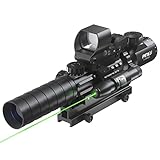
- ARS Mark8.8
ARS Mark is a ranking system developed by bestairriflescopes.com. ARS Mark has no relationship or impact from any manufacturers or sales agent websites. Learn more
- BrandPinty

- ARS Mark8.8
ARS Mark is a ranking system developed by bestairriflescopes.com. ARS Mark has no relationship or impact from any manufacturers or sales agent websites. Learn more
- BrandSniper

- ARS Mark8.8
ARS Mark is a ranking system developed by bestairriflescopes.com. ARS Mark has no relationship or impact from any manufacturers or sales agent websites. Learn more
- BrandCVLIFE

- ARS Mark8.6
ARS Mark is a ranking system developed by bestairriflescopes.com. ARS Mark has no relationship or impact from any manufacturers or sales agent websites. Learn more
- BrandMonstrum
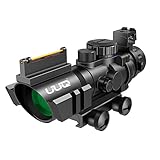
- ARS Mark8.6
ARS Mark is a ranking system developed by bestairriflescopes.com. ARS Mark has no relationship or impact from any manufacturers or sales agent websites. Learn more
- BrandUUQ

- ARS Mark7.8
ARS Mark is a ranking system developed by bestairriflescopes.com. ARS Mark has no relationship or impact from any manufacturers or sales agent websites. Learn more
- BrandCVLIFE
Last update on 2026-09-26 / Affiliate links / Images, Product Titles, and Product Highlights from Amazon Product Advertising API
Does fixed 4x or variable magnification work better in dense timber?
Variable magnification with a low starting power between 3x and 4x offers far more versatility than a fixed 4x optic when you move between thick brush and open country. Lower magnification gives you the broad field of view required to track fast movement through trees, while dialing up to 9x or 16x allows positive target identification across open cuts and clearings. If you prefer a fixed magnification setup, prism optics like the CVLIFE 4x32 or UUQ 4x32 incorporate top-mounted fiber optic sights to help you acquire close targets immediately without relying entirely on magnified glass.
Will tactical scope mounts hold zero through rough backcountry travel?
A scope holds zero during rough travel only if you secure the mounting rings to match the exact main tube diameter and torque them evenly to the base rail. Optic tubes range from 1-inch bodies, such as the SIG SAUER Buckmasters 3-9x40mm, up to 30mm designs on the Vortex Viper HD and 34mm platforms on the CVLIFE EagleBlaze. Backcountry bumps and recoil vibration exploit loose fasteners, so checking Picatinny or Weaver rail clamp fitment before setting out prevents zero shift when your gear takes an unexpected hit against rocks or brush.
Is an illuminated reticle bright enough to see against dark woodland brush?
Multi-level illuminated reticles provide high contrast against tangled shadows, dark bark, and dense canopy where standard black crosshairs blend into the background. Optics like the SNIPER MT 4-16X50 AOL offer red, green, and blue Mil-Dot illumination paired with fully multi-coated lenses to maximize light transmission in dim timber. Other systems, including the Monstrum Hornet 4-16x50 and CVLIFE EagleBlaze, feature 6 levels of red illumination across Christmas-tree style holdover markings so you can tune reticle brightness directly to ambient timber lighting without washing out your sight picture.
What is the advantage of a first focal plane reticle over a second focal plane reticle in wildland terrain?
First focal plane reticles scale in size as you change magnification, ensuring holdover marks and subtensions remain accurate at every zoom setting. That consistency helps when taking quick elevation holdovers across varying ridge distances using designs like the Monstrum Hornet 4-16x50 FFP X-Tree reticle. By contrast, second focal plane scopes like the SIG SAUER Buckmasters or the Vortex Viper HD 5-25x50 keep the reticle crosshair the exact same visual size at all powers, requiring you to dial to specific magnification settings to use subtension hash marks for accurate holdovers. Understanding reticle placement helps when choosing optics configured for accurate holdovers on unpredictable wildland terrain.
How do you keep a tactical rifle balanced during long backcountry treks?
Maintaining proper handling balance requires tracking the total weight and overall length of your optic setup before adding accessories. Large variable scopes with broad 50mm or 56mm objective bells and long sunshades add forward mass, with the SNIPER MT 4-16X50 AOL weighing 2.5 pounds and measuring 15 inches, while the CVLIFE EagleBlaze weighs 2.03125 pounds. Lighter glass like the Vortex Viper HD at 1.56 pounds reduces forward lever arm strain, but pairing your rifle with compact glass designed for better rifle balance prevents arm fatigue during all-day wildland patrols.
How do fast-focus eyepieces and adjustable objectives differ in the field?
A fast-focus eyepiece adjusts the reticle focus directly to your individual eyesight, whereas an adjustable objective or side parallax dial corrects target focus and eliminates reticle drift at specific yardages. The fast-focus eyepiece on the Vortex Viper HD allows immediate reticle clarity the moment you shoulder the rifle in tight brush. Meanwhile, front adjustable objectives on optics such as the MidTen 4-16x50 AO or SNIPER MT 4-16X50 AOL allow you to dial out parallax error and sharpen distant targets when transitioning from close timber to stationary targets across open clearings.

10 Top Picks: Best Youth Air Rifles for 13-Year-Olds

12 Best Rifle Scopes For 5.56 Under 150 Dollars - (2026 Top Picks)

Top 10 Rifle Scopes for Coyote Hunting in 2026

12 Best Benchrest Rifle Scopes of 2026 For Tight Groups

Top 5 Airsoft Rifles: Unleash the Action in 2026
Unveil the Best Straight Wall Deer Rifles: Top Picks for 2026

Top Ammo Choices for Air-Powered Rifles: Boost Your Performance in 2026

Best Quick Detach Scope Rings for Accurate and Convenient Shooting







