
7 Best Athlon Scope of 2026 For Precision Shooting and Hunting

Shared model names across entirely different optical platforms catch more shooters off guard than almost any other spec sheet detail. Ordering an optic only to unbox a benchtop spotting scope instead of a rifle sight is an immediate headache, but subtle configuration mismatches cause just as much grief. Grabbing a first focal plane reticle for close timber hunting can leave the crosshairs paper-thin and nearly invisible at minimum power, while a bulky 56mm objective bell forces tall mounting rings that ruin a natural cheek weld. Add in the confusion between milliradian and minute-of-angle turrets that clash with a spotter's calls, and range days turn into an exercise in second-guessing every adjustment.
Dialing in long-distance steel or tracking game through dusk demands glass that tracks true and keeps your sight picture instinctive. Getting there starts with matching the focal plane to your shooting distance, favoring a second focal plane reticle for quick brush shots and a first focal plane grid for long-range elevation holdovers. Aligning turret adjustments with your spotter and confirming ring clearance for your objective bell keeps the entire rifle balanced and comfortable. Here is how each configuration performs so you can mount the best Athlon scope for your specific rifle platform and shooting style.

- ARS Mark9.5
ARS Mark is a ranking system developed by bestairriflescopes.com. ARS Mark has no relationship or impact from any manufacturers or sales agent websites. Learn more
- BrandAthlon Optics
- ARS Mark9.3
ARS Mark is a ranking system developed by bestairriflescopes.com. ARS Mark has no relationship or impact from any manufacturers or sales agent websites. Learn more
- BrandAthlon Optics

- ARS Mark9.1
ARS Mark is a ranking system developed by bestairriflescopes.com. ARS Mark has no relationship or impact from any manufacturers or sales agent websites. Learn more
- BrandAthlon Optics
- ARS Mark8.7
ARS Mark is a ranking system developed by bestairriflescopes.com. ARS Mark has no relationship or impact from any manufacturers or sales agent websites. Learn more
- BrandAthlon Optics

- ARS Mark7.8
ARS Mark is a ranking system developed by bestairriflescopes.com. ARS Mark has no relationship or impact from any manufacturers or sales agent websites. Learn more
- BrandAthlon Optics

- ARS Mark7.7
ARS Mark is a ranking system developed by bestairriflescopes.com. ARS Mark has no relationship or impact from any manufacturers or sales agent websites. Learn more
- BrandAthlon Optics

- ARS Mark7.5
ARS Mark is a ranking system developed by bestairriflescopes.com. ARS Mark has no relationship or impact from any manufacturers or sales agent websites. Learn more
- BrandAthlon Optics
Last update on 2026-10-05 / Affiliate links / Images, Product Titles, and Product Highlights from Amazon Product Advertising API
What is the difference between an Athlon Argos riflescope and an Argos spotting scope?
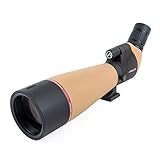
Argos riflescopes mount directly to a firearm, while Argos spotting scopes mount onto a tripod for stationary glassing. Riflescope models like the Argos BTR GEN3 6-24x50mm and 8-34x56mm feature internal illuminated reticles, elevation and windage turrets, and a Precision Zero Stop System to hold zero on a rifle. By contrast, the Athlon Argos HD 20-60x85 is an angled observation scope built with a 45-degree eyepiece and variable 20-60x magnification, lacking mounting tube rings or internal aiming reticles.
Should you choose the APLR11 MOA or APRS11 MIL reticle on the Argos BTR GEN3?
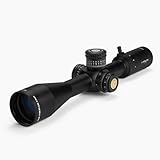
Choose the reticle measurement standard that matches your elevation turret preference and the communication style of your shooting partners. The Athlon Argos BTR GEN3 6-24x50mm comes with the APLR11 FFP IR MOA reticle under part number 214074, while the APRS11 FFP IR MIL version is designated under part number 214075. MOA models scale adjustments based on minutes of angle, whereas MIL reticles rely on milliradian increments. Both configurations place the illuminated reticle in the first focal plane, so select the unit system you feel most comfortable calculating under pressure.
When is a second focal plane Neos preferable to a first focal plane Argos riflescope?
The Athlon Optics Neos HMR 4-12x40 SFP Center-X MOA is preferable when you want a reticle that remains a constant, easily visible size across all magnification levels. On this second focal plane scope, the Center-X crosshair stays bold and clear at 4x power, making it well suited for quick target acquisition at closer distances. First focal plane optics like the Argos BTR GEN3 shrink the reticle markings at minimum zoom, which can make fine crosshairs harder to see in thick timber. If you are outfitting a compact rifle or looking for a versatile scope for bullpup air rifle shooting, confirming how thick the crosshair appears at low magnification will prevent a lost sight picture.
How does objective lens size affect mounting ring height on Athlon riflescopes?
Larger objective lenses require taller mounting rings to prevent the scope bell from contacting the rifle barrel. An optic like the Neos HMR 4-12x40 features a 40mm objective bell that generally clears standard barrel profiles with lower rings, maintaining a natural cheek weld on traditional stocks. Larger models like the Argos BTR GEN3 6-24x50mm or the Argos BTR GEN3 8-34x56mm have 50mm and 56mm objective lenses that demand medium to high rings for clearance. Measure your rifle barrel contour and base height before ordering rings to ensure the bell does not touch the barrel.
Which Athlon spotting scope configuration fits long-range observation?
Objective lens diameter and viewing angle determine which spotting scope fits your viewing position. Athlon offers the Talos 20-60x80 straight-body spotter, the Argos HD 20-60x85 with a 45-degree eyepiece, and the Cronus G2 20-60X86 under part number 311004. The larger 85mm and 86mm lenses gather more light at 60x magnification compared to an 80mm objective, which helps when identifying targets at distance. When comparing optics for field packouts alongside options like a dedicated spotting scope for backpack hunting, verify the total dimensions and tripod plate compatibility before packing into remote terrain.
What optical coatings and turret stops come standard on Argos BTR GEN3 scopes?
All Argos BTR GEN3 riflescopes feature Advanced Multicoating across the glass and Athlon's Precision Zero Stop System on the elevation turret. The 6-24x50mm MOA configuration (214074) also lists XPL Lens Coatings for external surface durability. The 6-24x50mm MIL (214075) and 8-34x56mm MOA (214076) models use the Precision Zero Stop System to quickly return the turret to zero after dialing for long-distance windage and elevation adjustments.

10 Top Picks: Best Youth Air Rifles for 13-Year-Olds

12 Best Rifle Scopes For 5.56 Under 150 Dollars - (2026 Top Picks)

Top 10 Rifle Scopes for Coyote Hunting in 2026

12 Best Benchrest Rifle Scopes of 2026 For Tight Groups

Top 5 Airsoft Rifles: Unleash the Action in 2026

Unveil the Best Straight Wall Deer Rifles: Top Picks for 2026

Top Ammo Choices for Air-Powered Rifles: Boost Your Performance in 2026

Best Quick Detach Scope Rings for Accurate and Convenient Shooting







