
Best Binocular Size for All Around Use Guide

Choosing the best binocular size for all around use can feel like finding a needle in a haystack. With so many options—compact, mid-size, or full-size—outdoor enthusiasts often struggle to pick one that ticks all the boxes. The truth is, your ideal binoculars must balance magnification, portability, and clarity without weighing you down. People who love hiking want gear that’s light yet powerful. Travelers crave something versatile enough to spot city skylines and distant mountains with ease. Birdwatchers need a clear image without constant shaking. And casual users? They simply want one tool that works in most situations without fuss. The sweet spot often lies in the 8x42 range. Why? Because these models provide bright images, steady focus, and comfort for long viewing sessions. They’re not too heavy to carry yet strong enough to capture detail. That said, compact sizes like 8x32 or even pocket-sized binoculars appeal to those who value mobility over brightness. On the flip side, bigger 10x50s offer more reach but may fatigue your hands faster. The real challenge isn’t about specs alone—it’s about how binoculars fit into your lifestyle. If you’re hopping on planes, trekking trails, or just exploring the backyard, you’ll want something that feels like an extension of you. That’s why picking the best binocular size for all around use isn’t just about numbers; it’s about comfort, flexibility, and confidence that you’re ready for any scene.
The hunt for the best binocular size for all around use starts with a simple question: how do you balance performance with portability? For outdoor lovers, birders, and frequent travelers, binoculars aren’t just tools—they’re gateways to vivid experiences. Yet many folks end up frustrated because their gear is either too heavy to carry comfortably or too weak to deliver crisp views. That’s why the mid-sized models like 8x42 or 8x32 often steal the spotlight. They strike a fine balance between magnification, brightness, and usability. You won’t feel like you’re lugging around bricks, but you’ll still catch those intricate wing patterns or mountain ridges. For casual users, this size delivers versatility without overcomplicating things. But here’s the kicker: not all “all-around” binoculars are created equal. Some lean more toward portability, others toward power. The key is figuring out what matters most to you—whether it’s lightweight design, image stability, or wide field of view—and letting that guide your choice. By exploring the nuances, you’ll find a pair that feels less like a purchase and more like a companion on every adventure.

- ARS Mark9.0
ARS Mark is a ranking system developed by bestairriflescopes.com. ARS Mark has no relationship or impact from any manufacturers or sales agent websites. Learn more
- BrandGIGAPENGUIN

- ARS Mark9.0
ARS Mark is a ranking system developed by bestairriflescopes.com. ARS Mark has no relationship or impact from any manufacturers or sales agent websites. Learn more
- BrandTinllaans

- ARS Mark8.8
ARS Mark is a ranking system developed by bestairriflescopes.com. ARS Mark has no relationship or impact from any manufacturers or sales agent websites. Learn more
- Brandoccer

- ARS Mark8.8
ARS Mark is a ranking system developed by bestairriflescopes.com. ARS Mark has no relationship or impact from any manufacturers or sales agent websites. Learn more
- BrandFLYANT

- ARS Mark8.8
ARS Mark is a ranking system developed by bestairriflescopes.com. ARS Mark has no relationship or impact from any manufacturers or sales agent websites. Learn more
- BrandRodcirant

- ARS Mark8.6
ARS Mark is a ranking system developed by bestairriflescopes.com. ARS Mark has no relationship or impact from any manufacturers or sales agent websites. Learn more
- BrandQICBIUD
- ARS Mark8.6
ARS Mark is a ranking system developed by bestairriflescopes.com. ARS Mark has no relationship or impact from any manufacturers or sales agent websites. Learn more
- BrandPOLDR

- ARS Mark8.4
ARS Mark is a ranking system developed by bestairriflescopes.com. ARS Mark has no relationship or impact from any manufacturers or sales agent websites. Learn more
- BrandJivcok

- ARS Mark8.4
ARS Mark is a ranking system developed by bestairriflescopes.com. ARS Mark has no relationship or impact from any manufacturers or sales agent websites. Learn more
- BrandAHFLRITO
Last update on 2025-09-29 / Affiliate links / Images, Product Titles, and Product Highlights from Amazon Product Advertising API
For many outdoor lovers, the quest for the best binocular size for all around use isn’t just about specs—it’s about freedom. Carrying the wrong pair can feel like dragging bricks around your neck. Too small, and you’ll lose light and clarity. Too big, and you’ll be worn out before reaching the trail’s end. A pair that balances magnification, portability, and brightness can be the difference between frustration and awe.
Travelers often complain about heavy models that dominate backpack space. Hikers, on the other hand, worry about missing detail if they go too compact. And birders? They’re stuck between craving crystal-clear images and dealing with arm fatigue. That’s why finding the perfect balance matters. It’s not just gear; it’s part of how you experience the world.
According to Outdoor Gear Lab, mid-size 8x42 binoculars remain the top pick for versatility because they combine bright images, wide field of view, and comfortable handling. It’s no wonder they’ve become the go-to for adventurers who want one binocular that “does it all.”
Choosing wrong can feel like money down the drain. But finding the right fit means more than specs—it’s about how your eyes, arms, and lifestyle connect with your gear. That’s what makes the best binocular size for all around use a deeply personal yet universally relevant choice.
Magnification is one of the first numbers people look at, but it’s also where confusion sets in. Higher isn’t always better. A 10x magnification can make distant wildlife appear closer, but even the slightest shake in your hands will magnify, too. An 8x magnification might not pull subjects in as close, but it provides a steadier, clearer image for longer sessions.
Take hikers exploring uneven ground: the more you move, the harder it is to keep 10x binoculars steady. Add in fatigue, and what once looked sharp now feels like a blurry mess. By contrast, 8x binoculars strike a sweet spot—strong enough to capture detail, forgiving enough for shaky hands.
Professional birdwatcher David Allen Sibley once said, “Clarity and steadiness beat raw magnification every time.” His words highlight why so many experts recommend mid-range magnification as the gold standard for all-around use.
This isn’t about settling for less. It’s about maximizing usability. A smaller, steadier magnification can keep you glued to the view instead of fighting the wobble.
Let’s face it: no one enjoys lugging heavy gear for hours. Yet choosing ultra-light pocket binoculars often sacrifices image brightness and comfort. That’s where mid-size binoculars shine. They deliver enough power to satisfy birders while staying light enough for travelers.
Compact 8x32 models weigh significantly less than 8x42, making them attractive for long treks. But under dim lighting, the smaller objective lens struggles to deliver brightness. On the flip side, full-size 10x50 binoculars perform beautifully at dusk but quickly drain energy from your arms and shoulders.
For everyday adventurers, the best binocular size for all around use often sits right in the middle—something that balances weight, image clarity, and low-light performance. This balance is why 8x42 binoculars are often labeled as the “jack of all trades.”
Here’s the kicker: the best choice isn’t always the lightest or the strongest—it’s the one that works with your lifestyle. If you’re an urban traveler, go lighter. If you’re often in forests or low light, lean toward brightness. It’s all about choosing what keeps your adventures effortless.
One often-overlooked feature is the field of view (FOV)—how much scenery you can see without moving the binoculars. Wider FOV means you’ll track a bird in flight or scan a mountain landscape without constant adjustments. Narrow FOV, on the other hand, can feel like peeking through a tunnel.
Typically, 8x binoculars offer a wider FOV than 10x. This difference may seem small on paper, but in practice, it’s massive. For birders, wider FOV means catching that warbler darting across branches. For sports fans, it means watching plays unfold smoothly without losing context.
Imagine standing on a cliff: with wider FOV, you can soak in the whole valley, not just one tree. That sense of immersion is what makes binoculars not just tools but extensions of your eyes.
Statistics from Cornell Lab of Ornithology show that beginners stick with birdwatching longer when they start with wider FOV models because the experience feels less frustrating. In short, FOV influences enjoyment as much as magnification.
Even the best optics are useless if your binoculars hurt to hold. Comfort and ergonomics often make or break the experience, especially for long sessions. Padded straps, rubberized grips, and balanced weight distribution can be game-changers.
Some users report that poorly designed binoculars create neck strain after just 20 minutes. Others complain about uneven weight that forces constant readjustments. These aren’t small annoyances—they can push people to stop using their gear altogether.
Well-designed binoculars with balanced weight and easy-to-reach focus wheels allow users to stay in the moment. Instead of fiddling, you’re enjoying the view. For those who wear glasses, eye relief becomes a non-negotiable factor—longer relief ensures you don’t have to press lenses uncomfortably close.
The takeaway? Don’t just chase specs. Pay attention to how binoculars feel in your hands. The best binocular size for all around use doesn’t just fit your eyes—it fits your body, too.
One of the trickiest aspects of choosing the best binocular size for all around use is how well they perform when the sun starts dipping. A pair that shines in bright daylight can stumble in dim forests or twilight skies. The objective lens size plays the biggest role here—larger lenses gather more light, offering clearer images in darker settings.
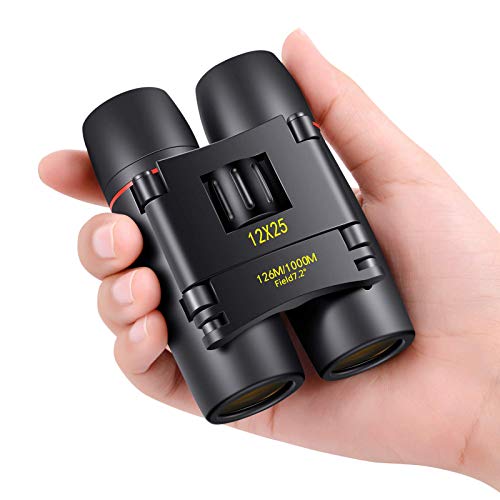
For example, 8x42 binoculars typically perform far better at dusk than compact 8x25s. Hunters, stargazers, and birders at dawn know the difference firsthand. Those extra millimeters in lens size often mean the difference between spotting an owl’s silhouette and staring into the void.
But here’s the catch: bigger lenses also mean added weight. This constant trade-off is why mid-size binoculars are so popular—they keep brightness decent without breaking your back. At the end of the day, if you often find yourself out during early mornings or late evenings, low-light performance becomes non-negotiable.
Adventures rarely happen under perfect conditions. Rain pours, dust blows, and sometimes binoculars hit the ground. That’s why durability and weatherproofing matter as much as optics. Waterproof and fog-proof designs ensure your view isn’t ruined by condensation or sudden showers. Rubber armor adds shock resistance, protecting against drops that might otherwise crack your investment.
Outdoor Gear Magazine notes that nearly 40% of returned binoculars involve damage from weather or rough handling. This stat highlights why build quality can’t be ignored. Whether you’re trekking mountains or sailing, a rugged pair will keep performing long after fragile ones give up.
Beyond survival, durable binoculars also give peace of mind. You don’t want to baby your gear in the wild—you want to focus on the view. That’s why picking the best binocular size for all around use means choosing models designed to endure real-life conditions, not just showroom displays.
product_cta:
Let’s be honest—budget plays a big role in decision-making. But price tags can be deceiving. Cheaper models may look good on paper but often cut corners in lens coatings, durability, or image clarity. On the flip side, top-tier models with premium glass can cost as much as a plane ticket. So, what’s the middle ground?
Experts suggest focusing on value over price. Mid-range binoculars often pack features like fully multi-coated lenses and waterproofing without draining your wallet. Spending wisely here ensures you don’t end up with blurry, fragile gear that needs replacing every season.
Remember, your binoculars aren’t just for one trip—they’re companions across years of adventures. A few extra dollars for better coatings, higher-quality prisms, and reliable build can mean sharper, brighter views and longer product life.
Theory is nice, but real-world use is where decisions count. For travelers hopping between cities and landscapes, compact or mid-size binoculars are lifesavers. They slide into bags without hogging space, yet still deliver crisp views. For birdwatchers, 8x42 models stand out—they balance detail with a wide field of view, perfect for spotting flitting wings.
Hunters, on the other hand, might lean toward 10x42 or 10x50 for longer reach in open fields, though they trade some stability. Hikers value comfort above all, often preferring lightweight 8x32s to keep their packs light. Each group highlights the same principle: the best binocular size for all around use adapts to your specific lifestyle, not the other way around.
As the saying goes, “The best camera is the one you have with you.” The same applies here: the right binoculars are the ones you’ll actually carry and use, not the ones gathering dust on a shelf.
At the end of the day, the search for the best binocular size for all around use boils down to balance. Balance between magnification and stability, between brightness and portability, and between price and long-term value. No single model fits everyone, but patterns emerge—8x42s for versatility, 8x32s for lightweight explorers, and 10x50s for detail seekers.
Think about your habits: Are you a dawn hiker, a casual traveler, or a backyard birder? The right answer lies in aligning binocular specs with your actual adventures. Get this right, and your gear becomes more than glass and metal—it becomes your window to experiences you’d otherwise miss.
In the end, the most important thing isn’t just having binoculars—it’s having the right size that keeps you engaged, comfortable, and excited to explore.


12 Best 22 Pcp Air Rifle For Hunting of 2026 With Quiet Power

7 Best 22 Pcp Air Rifle Under 300 of 2026 For Backyard Pest Control

10 Best 22 Break Barrel Air Rifles of 2026 For Backyard Pest Control

10 Best 30 Caliber Pcp Air Rifle of 2026 For Medium Game

Top Best 177 Air Rifle Under 100: Budget-Friendly Picks for 2026

How to Safely Reload Shotgun Shells at Home

11 Best Co2 Air Rifle For Pest Control of 2026 To Ensure Humane Dispatch

12 Best Inexpensive Air Rifles of 2026 For Dependable Backyard Accuracy






