
Best Binocular Strength For Bird Watching 2026 Guide

The right best binocular strength for bird watching usually falls between 8x and 10x magnification, but the larger number isn't automatically better. An 8x binocular gives a wider field of view, steadier handling, and faster subject tracking, which matters when a warbler darts through tangled branches. A 10x model pulls distant shorebirds and raptors a little closer, though every hand movement becomes more noticeable. That extra reach can be handy, but it may feel like too much of a good thing during long walks or quick woodland sightings.
8x42 binoculars earn their popularity by balancing brightness, comfort, and practical detail. The 42 mm objective lenses gather enough light for cloudy mornings, shaded trails, and the dim minutes around sunrise without turning the binocular into a brick around the neck. The view also tends to be easier to hold steady than a 10x image, so feather markings remain readable instead of bouncing around. Still, compact 8x32 models may make more sense when low weight matters more than peak low-light brightness.
10x42 binoculars suit open habitats where birds often stay far away. Coastal flats, reservoirs, grasslands, and broad wetlands leave fewer branches in the way, giving the narrower field of view less chance to become frustrating. Fine details on a perched hawk or distant duck can appear larger, yet locating a fast-moving bird may take an extra moment. Well, that tradeoff sounds small on paper, but it becomes obvious once a bird disappears while the binoculars are still searching the wrong patch of sky.
Magnification tells only part of the story. Field of view, lens coatings, focus-wheel feel, eye relief, weight, and close-focus distance can affect everyday use just as much as the printed strength. A bright, sharp 8x binocular often reveals more useful detail than a dim or poorly aligned 12x model. Bigger numbers look tempting on a product page, but shaky images, narrow views, and reduced brightness can quickly spoil the bargain.
Handheld binoculars above 10x demand realistic expectations. A 12x model may help with stationary birds across large open areas, though a monopod or tripod often becomes useful for keeping the image calm. Dense woods expose its weaknesses because the narrow view makes small birds harder to locate, while reduced exit pupil size can make shadowed scenes feel dull. For most casual outings, 8x provides the easiest all-around view, while 10x favors distance and patience.
Fit matters, too, and it’s easy to overlook. Eyeglass wearers should pay close attention to eye relief, since insufficient space can crop the edges of the image and make the stated field of view feel much smaller. A focus wheel should turn smoothly without feeling loose, and the binocular body should sit naturally in both hands. Minor annoyances have a habit of growing during a two-hour walk, so comfort isn't merely a nice extra.
Weather and habitat can shift the decision. Foggy mornings, damp marshes, and sudden rain make waterproof construction and internal fog resistance worthwhile, while dusty trails reward easy-to-clean exterior lenses. Backyard observation may not require rugged armor or oversized objectives, especially when most birds appear at feeders within a short distance. The smartest strength is the one that keeps the view bright, steady, and easy to find before the bird moves on.
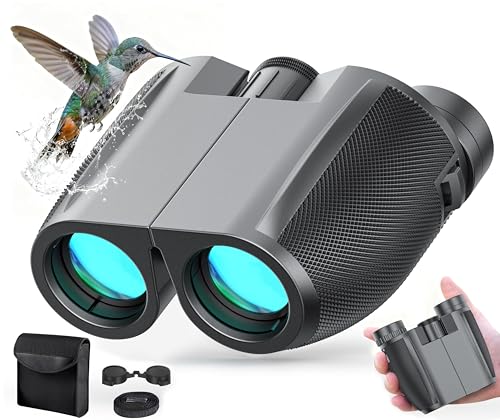
- ARS Mark10.0
ARS Mark is a ranking system developed by bestairriflescopes.com. ARS Mark has no relationship or impact from any manufacturers or sales agent websites. Learn more
- Brandretulgie

- ARS Mark9.2
ARS Mark is a ranking system developed by bestairriflescopes.com. ARS Mark has no relationship or impact from any manufacturers or sales agent websites. Learn more
- BrandCronyoptics
- ARS Mark9.2
ARS Mark is a ranking system developed by bestairriflescopes.com. ARS Mark has no relationship or impact from any manufacturers or sales agent websites. Learn more
- BrandHontry
- ARS Mark9.2
ARS Mark is a ranking system developed by bestairriflescopes.com. ARS Mark has no relationship or impact from any manufacturers or sales agent websites. Learn more
- BrandAdasion
- ARS Mark9.0
ARS Mark is a ranking system developed by bestairriflescopes.com. ARS Mark has no relationship or impact from any manufacturers or sales agent websites. Learn more
- BrandAdorrgon

- ARS Mark8.8
ARS Mark is a ranking system developed by bestairriflescopes.com. ARS Mark has no relationship or impact from any manufacturers or sales agent websites. Learn more
- Brandoccer

- ARS Mark8.8
ARS Mark is a ranking system developed by bestairriflescopes.com. ARS Mark has no relationship or impact from any manufacturers or sales agent websites. Learn more
- BrandFLYANT

- ARS Mark8.8
ARS Mark is a ranking system developed by bestairriflescopes.com. ARS Mark has no relationship or impact from any manufacturers or sales agent websites. Learn more
- BrandTinllaans

- ARS Mark8.8
ARS Mark is a ranking system developed by bestairriflescopes.com. ARS Mark has no relationship or impact from any manufacturers or sales agent websites. Learn more
- BrandGIGAPENGUIN

- ARS Mark8.6
ARS Mark is a ranking system developed by bestairriflescopes.com. ARS Mark has no relationship or impact from any manufacturers or sales agent websites. Learn more
- BrandFLYANT
Last update on 2026-07-24 / Affiliate links / Images, Product Titles, and Product Highlights from Amazon Product Advertising API
Best Binocular Strength For Bird Watching With 12x Power
A bird perched across an open field can look frustratingly small through ordinary compact optics. The best binocular strength for bird watching depends on distance, hand stability, available light, and how quickly the subject moves, so bigger numbers don't automatically settle the question. These 12x25 binoculars lean toward long-range detail while keeping the body small enough for a jacket pocket or daypack. That combination sounds appealing, though the higher magnification brings a few practical compromises that deserve an honest look.
Compact 12x25 Waterproof Binoculars
The basic formula is straightforward: 12x magnification makes a distant subject appear twelve times closer, while the 25 mm objective lenses keep the housing compact. Birds sitting on utility lines, exposed branches, shoreline rocks, or distant feeders should appear larger than they would through common 8x models. That extra reach can help with broad outdoor views where the subject isn't hidden behind layers of leaves. On the flip side, twelve-power optics also magnify every small movement from the hands.
A listed weight of 0.7 pounds makes these binoculars easier to carry than many full-size 42 mm models. They fold down for storage, so they won't hog much room beside water bottles, field guides, snacks, or rain gear. That matters on a casual hike because bulky gear often gets left at home, and binoculars sitting in a closet won't show anyone a thing. The compact shape also feels more approachable for smaller hands, though the focus controls may still take a little practice.
The supplied package covers the basic care and storage needs without adding clutter. It includes a carrying bag, cleaning cloth, lens caps, and user manual alongside the binoculars. The protective accessories help reduce scratches and dust buildup, especially when the optics ride loose in a backpack. Lens caps on compact binoculars can be easy to misplace, however, so keeping them in the carrying bag is the sensible move.
Magnification And Image Stability
Twelve-power magnification earns its keep in open settings. A stationary heron across a pond, a hawk circling beyond the tree line, or a deer standing at the edge of a field can benefit from the closer apparent view. Fine shapes become easier to separate at distance, which may help distinguish a pointed bill from a rounded one or a pale wing patch from the surrounding feathers. Quick, erratic birds in dense brush tell a different story because the narrower, shakier view can make them harder to relocate.
Hand shake is the main tradeoff, and there’s no getting around it. A relaxed grip, elbows tucked against the ribs, and support from a railing or tree trunk can improve viewing steadiness without carrying extra equipment. Even so, someone accustomed to 8x binoculars may notice more image movement the moment the 12x pair reaches eye level. Short viewing sessions should feel manageable, while prolonged observation may be more comfortable with some form of physical support.
The product description refers to an expansive viewing area, but actual ease of tracking depends on more than a broad specification. Eyepiece design, optical alignment, focus speed, and the observer’s ability to center a moving subject all affect the result. These binoculars make more sense for birds that pause long enough to study than for tiny warblers bouncing through close branches. Put plainly, distance is their strength, while fast woodland tracking isn't their natural sweet spot.
Brightness And Low-Light Expectations
The optical system combines BAK4 prisms with fully multi-coated surfaces, features intended to improve light transmission and reduce unwanted reflections. Those elements can support clearer color and contrast during normal daylight, particularly when glare is controlled. The 25 mm objective lenses, however, gather less light than larger 32 mm or 42 mm objectives. Compactness wins the size battle, but physics still sends the bill.
Dividing the 25 mm objective diameter by the 12x magnification gives an exit pupil of roughly 2.1 mm. That size can perform reasonably in bright daylight, yet it leaves less light reaching the eye during heavy cloud, deep shade, dawn, or dusk than an 8x42 binocular with a much larger exit pupil. The listed low-light capability should therefore be treated as improved dim-condition usability within the limits of a compact 12x25 design, not as night vision. Shadowed feather detail may soften before the magnification itself stops being useful.
Bright afternoon conditions should play more naturally to this design. Open parks, stadium seating, mountain overlooks, concerts, and sunny shoreline walks give the smaller objectives enough light to work with while allowing the higher power to show distant action. Under a thick forest canopy, the picture may feel less relaxed and forgiving. Lighting conditions matter just as much as the printed magnification, especially with a small front lens.
Eyecups, Focus, And Viewing Comfort
Twist-up eyecups allow the viewing position to be adjusted for glasses or bare eyes. Proper eye placement helps reveal the full image circle and cuts down on the dark crescents that appear when the binoculars sit too close, too far away, or slightly off center. The adjustable eyecup design is useful during shared outings because one person may wear glasses while another doesn't. A few seconds spent setting each eyecup can save plenty of squinting later.
Long viewing sessions depend on more than soft contact points. Twelve-power magnification encourages careful eye placement because slight misalignment becomes easier to notice, and the smaller exit pupil offers less room for sloppy positioning. The light body reduces neck and arm fatigue, though steadiness can still become tiring during repeated overhead viewing. There’s a balancing act here: low carrying weight improves portability, while the stronger magnification asks more from the hands.
Shared use with children aged 8 to 12 may work best under patient guidance. Folding the barrels to match the distance between the eyes, setting the eyecups, and turning the center focus wheel are simple steps once demonstrated, but rushing them can produce double images or a fuzzy view. The binoculars are compact enough for smaller hands, yet 12x is less forgiving than 8x for a first-time observer. Starting with a stationary object such as a sign, rooftop, or perched bird makes the learning curve less fussy.
Water Resistance And Outdoor Handling
A waterproof design brings peace of mind around drizzle, damp grass, mist, and accidental splashes. Bird walks rarely wait for dry weather, and moisture can appear quickly near wetlands or during early-morning hikes. Weather resistance doesn't mean the binoculars should be submerged or tossed into a soaked bag without care, but it adds practical protection during normal outdoor use. Drying the exterior before storage remains a smart habit.
Compact binoculars also collect fingerprints surprisingly fast. The included cleaning cloth should be used gently after loose dust has been removed, since rubbing grit across a coated lens can create fine scratches. Lens caps help during transport, while the carrying bag keeps abrasive objects such as keys and zippers away from the glass. A little routine maintenance preserves optical clarity far better than aggressive cleaning after months of neglect.
Outdoor observation sometimes overlaps with property and wildlife concerns, though those subjects call for separate equipment and careful legal awareness. A neutral reference on that distinct topic appears in rodent air rifles, rather than being treated as part of binocular performance. These binoculars remain observation tools first, suited to spotting distant movement before deciding whether the subject is a bird, animal, or simply leaves shifting in the wind. Keeping those roles separate prevents an unrelated use case from muddying the review.
Strengths, Weaknesses, And Practical Fit
The strongest feature is the blend of 12x reach and pocket-friendly dimensions. Many high-magnification binoculars feel bulky during travel, while this 12x25 format stays light enough for hikes, concerts, sporting events, and casual wildlife stops. Adjustable eyecups and included accessories add everyday convenience without complicating the setup. For distant, mostly stationary subjects in good light, the design has a clear purpose.
The weaknesses follow directly from the same specifications. Twelve-power viewing can look shaky, and the 25 mm objectives limit brightness compared with larger binoculars during dim conditions. A fast bird moving through nearby branches may slip outside the field before the observer can refocus and recenter. Those are real optical tradeoffs, not defects unique to this model.
Someone prioritizing a calm image, wide tracking area, and strong dawn performance may feel more comfortable with an 8x32 or 8x42 configuration. Someone valuing extra distance, low bag weight, and occasional multi-purpose use may appreciate this compact 12x25 setup more. The product isn't a universal answer to the best binocular strength for bird watching, because no single magnification handles every habitat equally well. It fits open views and portable routines better than shaded woodland sessions filled with quick, close movement.
Realistic expectations make the difference. These binoculars should provide a closer view in a small package, supported by BAK4 prisms, fully multi-coated optics, adjustable eyecups, and basic protective accessories. They won't erase hand shake, turn 25 mm lenses into full-size light collectors, or make every moving bird easy to follow. Used within those boundaries, the compact long-range design offers a practical way to carry stronger magnification without dragging around a heavy optical setup.
Best Binocular Strength For Bird Watching With 8x42 Optics
A bird can vanish behind a branch before an awkward focus wheel or shaky image gives up a useful view. That small frustration explains why the best binocular strength for bird watching isn't always the model with the biggest magnification number stamped on the body. CronyOptics takes a steadier route with an 8x42 configuration, combining moderate reach, generous light collection, and a body designed for regular outdoor use. The result looks geared toward long walks, changing weather, and quick sightings rather than distant subjects that sit perfectly still.
CronyOptics 8x42 Bird Watching Binoculars
The core specification is a familiar one for good reason. 8x magnification brings a bird closer without exaggerating every twitch of the hands, while the 42 mm objective lenses gather more light than compact 25 mm designs. That balance helps with birds moving through shaded trees, crossing an open field, or appearing briefly near the edge of a pond. Bigger magnification may sound more exciting, but a calmer image often reveals more usable detail in the few seconds that actually matter.
CronyOptics also uses a roof prism design, which keeps the binoculars relatively streamlined and easier to hold with one hand. The listed weight of 1.2 pounds isn't featherlight compared with pocket binoculars, yet it remains manageable for extended walks and repeated viewing. That extra size supports the 42 mm lenses and the brighter image they can provide. Put another way, the body trades a little pocketability for a more forgiving view.
The product description emphasizes edge-to-edge clarity, though the real appeal lies in the practical relationship between magnification and lens size. An 8x42 binocular usually feels easier to aim than a higher-powered model because the wider visible area helps locate moving subjects. That matters with finches, warblers, and other birds that don't politely wait in the center of the frame. Fast subject acquisition can be more useful than extra reach once the branches start shaking and the bird starts hopping.
Why 8x42 Fits Everyday Birding
Eight-power binoculars sit in a comfortable middle ground. They offer enough magnification to study color patterns, bill shapes, and body proportions while keeping the image steadier than many 10x or 12x alternatives. The broader field is especially useful in wooded parks, gardens, and mixed habitats where movement happens at several distances. For the best binocular strength for bird watching, that flexibility carries real weight.
The 42 mm front lenses also make the view more tolerant of changing light. Early morning clouds, late-afternoon shade, and dense foliage can rob smaller binoculars of contrast, even when the printed magnification looks impressive. A larger objective doesn't create night vision, of course, but it can preserve a brighter and less cramped image in conditions that aren't full daylight. Low-light practicality becomes noticeable during the first and last parts of a birding walk.
There is a tradeoff, and it's worth saying plainly. An 8x42 binocular takes more room than an 8x25 compact model, so it won't disappear into a pants pocket. The added lens diameter also contributes to the 1.2-pound weight, which may feel noticeable after hours around the neck. Still, that burden remains reasonable for those who value viewing comfort and brightness over absolute portability.
Outdoor Handling And Weather Protection
Outdoor optics have a rough life. They get bumped against railings, exposed to mist, carried through dusty trails, and pulled from bags with damp hands. The CronyOptics model is described as waterproof, shockproof, and fog-proof, giving it a practical edge for unpredictable conditions. Those protections don't excuse careless treatment, but they reduce the worry that a drizzle or minor knock will end the day.
Fog resistance matters most during abrupt temperature changes. Moving from a warm car into cold morning air can cause untreated internal surfaces to haze, leaving the view useless until the moisture clears. A fog-proof design aims to prevent that internal condensation, which is far more troublesome than wiping droplets from the outside lenses. All-weather reliability sounds like a marketing phrase until a rare bird appears while another pair of binoculars is clouded over.
Related outdoor equipment can sometimes appear in the same gear discussions even when it serves a completely different purpose. A neutral reference for another category appears in spray gun regulators, though it has no bearing on binocular performance or bird observation. Keeping those topics separate helps the review stay honest and avoids forcing an unrelated link into the optical discussion. The CronyOptics binoculars should be judged on image handling, durability, and comfort alone.
Eyecups, Stability, And Long Viewing Sessions
Twist-up eyecups help set the proper distance between the eyes and the ocular lenses. People wearing glasses can lower the cups, while those without glasses can extend them for a more stable viewing position. That adjustment helps reduce dark edges and makes the visible image feel more complete. Comfortable eye placement becomes increasingly important during long observation sessions because constant repositioning gets old fast.
Tripod compatibility adds another layer of flexibility. Eight-power binoculars are usually steady enough for handheld use, yet a tripod can still help during prolonged stargazing, nest monitoring, or distant landscape viewing. Fixed support removes arm fatigue and lets the eyes study a scene without the subtle drift that comes from breathing and muscle movement. The feature isn't essential for every outing, but added stability can make patient observation far more relaxed.
The included protective eyecups, cleaning cloth, carry-on bag, and presentation box cover the basic ownership routine. The bag gives the binoculars a dedicated place away from keys, grit, and loose objects, while the cleaning cloth supports gentle lens care. None of these accessories changes the optics, but they help preserve the surfaces that do. Simple maintenance support is easy to overlook until scratched coatings or missing covers become a nuisance.
Strengths And Limitations In Real Use
The main strength is balance. CronyOptics combines 8x steadiness, 42 mm light gathering, weather-resistant construction, and a roof prism body without pushing into oversized territory. That mix suits birding situations where subjects appear at close, medium, and moderately long distances during the same walk. It also makes the binoculars useful for hiking, hunting observation, and casual stargazing without pretending one configuration masters every job.
The limitations come from the same design choices. Eight-power magnification won't pull a distant eagle as close as a 12x binocular, and the 42 mm lenses make the body bulkier than a small travel pair. Anyone focused mainly on faraway shorebirds across wide mudflats may want more reach, while someone carrying almost no gear may prefer a smaller objective. Those compromises don't weaken the design; they define its best-fit situations.
The 12-month warranty adds a measure of reassurance, though the product description doesn't provide details about claim procedures or coverage exclusions. That means expectations should stay grounded in the stated duration rather than assumptions about replacement speed or service terms. The binoculars are also described as durable, but no outdoor optic is immune to careless drops, prolonged submersion, or abrasive cleaning. Realistic care still matters even with shockproof and waterproof construction.
Viewed as a birding tool rather than a collection of buzzwords, this 8x42 model makes a sensible case. It favors steadiness, brightness, and a broad usable view over extreme magnification, which lines up well with the quick, unpredictable nature of bird observation. The 1.2-pound body may feel substantial after a long day, but it supports a more forgiving optical format than many tiny high-powered binoculars. For mixed habitats and regular outdoor use, the 8x42 configuration offers a practical balance without promising more than the supplied specifications can support.
Hontry 10x25 Compact Binoculars For Bird Watching
A distant bird rarely stays put long enough for fumbling, heavy optics, or a view that shakes all over the place. The best binocular strength for bird watching often sits between easy handling and enough reach to separate a perched bird from the branches around it, and this Hontry model lands at 10x magnification. Its 25 mm objective lenses keep the body small, while the palm-sized build and 0.6-pound weight make it far easier to carry than a full-size field binocular. That tradeoff gives the Hontry 10x25 a clear identity: portable first, reasonably powerful second, and built for everyday situations rather than one narrow hobby.
Hontry 10x25 Compact Binoculars
The 10x magnification sits between the steadier feel of common 8x binoculars and the more demanding handling of 12x models. That extra reach can make a noticeable difference while watching birds across a yard, along a shoreline, or from the edge of a clearing. A robin on a distant fence, a hawk resting above a field, or a duck moving across open water should appear larger without pushing the design into extremely high power. Still, ten-power viewing asks for a reasonably steady grip, especially after the arms have been raised for a while.
The compact 25 mm objective lenses keep the binoculars close to palm size. At only 0.6 pounds, the body can ride in a daypack, glove box, travel bag, or jacket pocket without turning into dead weight by lunchtime. That convenience matters more than it sounds because bulky binoculars often stay behind during short walks and spontaneous outings. Hontry makes these easier to keep nearby, which is half the battle with any piece of observation gear.
Portability brings a predictable compromise. A 25 mm front lens gathers less light than a 32 mm or 42 mm objective, so dim woodland shade and late-evening viewing may look less open than they would through larger binoculars. The supplied description notes useful low-light performance, yet the compact optical format still has physical limits. Bright mornings, overcast daytime walks, stadiums, cruises, and outdoor events should suit this design more naturally than deep twilight.
Image Detail And BAK4 Prism Performance
BAK4 prisms are one of the more meaningful details in the specification list. They’re intended to support cleaner image edges, stronger contrast, and a fuller-looking circular view compared with lower-grade prism materials. Hontry describes the image as having noticeable depth and rich detail, which fits the everyday purpose of separating feathers, body shape, and surrounding branches. The binoculars won’t turn a faraway bird into a close-up photograph, but the optical system is designed to make the available magnification look more useful.
Ten-power magnification can help with identifying larger markings at moderate distance. A dark cap, pale wing bar, long tail, or contrasting chest may stand out more clearly than it would through lower magnification, provided the image remains steady. The extra visual reach is especially handy in open areas where birds aren’t constantly disappearing behind nearby leaves. Dense brush is less forgiving because a narrower view can make a quick-moving subject harder to relocate.
Focus technique matters here. Starting on a stationary object at roughly the same distance as the bird can reduce the frantic back-and-forth turning that often happens during a sudden sighting. Once the image snaps into place, small corrections should be easier than trying to recover from a completely blurred view. That may sound obvious, but with compact 10x binoculars, fast focusing habits can decide whether the bird stays in view or slips away unnoticed.
Fit For Adults And Kids
The adjustable interpupillary distance spans from 60 mm to 75 mm. That wide IPD range allows the barrels to move closer together or farther apart so the two image circles merge into one clean view. Shared use becomes less awkward because the binoculars can accommodate many adults as well as older children without requiring separate equipment. A proper fit also reduces eye strain, double vision, and the constant feeling that the image is being viewed through two disconnected tunnels.
Compact dimensions help smaller hands wrap around the barrels, though 10x magnification still takes patience. A child may need a little guidance with grip, focus, and eye spacing before the view feels natural. Starting with a building sign, tree trunk, or perched bird is easier than trying to follow a fast-moving animal on the first attempt. The lightweight body helps here because it doesn’t place as much strain on the wrists during practice.
Adults benefit from the same compactness in a different way. These binoculars can sit in a vehicle, carry-on, desk drawer, or coat pocket without demanding a dedicated gear case. That makes them useful for a lunch-break walk, a short scenic stop, or a sudden sighting outside the window. The design feels less like specialized equipment and more like an everyday observation tool, which suits people who don’t want to plan an entire outing around carrying optics.
Everyday Uses Beyond Bird Watching
Hontry positions the 10x25 binoculars for concerts, theater, sport games, cruising, hiking, travel, hunting observation, and backyard viewing. That range makes sense because the compact 10x format can bring distant action closer without filling a bag. Stadium seats and concert balconies are natural fits, particularly where a full-size binocular would feel awkward or bulky. The small body also makes it easier to hold discreetly during indoor performances.
Travel is another strong use case. Airport layovers, scenic overlooks, cruise decks, and roadside stops often produce interesting views with little warning, and carrying a heavy binocular for those moments can feel like overkill. A 0.6-pound pair is far easier to justify, especially when luggage space is tight. The palm-sized construction keeps the binoculars available without forcing a choice between optics and other essentials.
Hunting-related topics may appear beside binocular discussions, though observation gear and ammunition serve very different purposes and shouldn’t be blurred together. A separate reference for that distinct subject appears in grouse shotgun shells, while the Hontry binoculars remain focused on viewing, tracking, and spotting from a distance. That separation keeps the practical role clear. These binoculars help identify what’s ahead; they don’t replace the judgment, safety practices, or legal knowledge required for any hunting activity.
Strengths And Practical Tradeoffs
The main strength is simple: useful magnification in a very portable body. Ten-power viewing offers more reach than many basic compact models, while the 0.6-pound weight keeps the binoculars from feeling like a chore. The adjustable IPD broadens the fit across different faces, and the BAK4 prism system supports the goal of a clear, detailed image. For casual observation across several settings, that package is easy to understand.
The main weakness comes from the 25 mm objectives. Smaller lenses help create the compact shape, but they can’t gather as much light as larger 42 mm binoculars, especially under heavy cloud, dense shade, or near dusk. Ten-power magnification can also amplify hand movement, so anyone with an unsteady grip may prefer 8x for longer viewing sessions. Those are design tradeoffs, not hidden defects, and they follow directly from the compact specifications.
Another limitation is the balance between field of view and magnification. A stronger image usually means a narrower visible area, which may slow down tracking for birds that dart between branches. Open settings play to the Hontry model’s strengths, while close woodland movement can expose the narrower, less forgiving side of 10x optics. The best binocular strength for bird watching depends heavily on habitat, and this model favors moderate distance over lightning-fast subject acquisition.
Used with realistic expectations, the Hontry 10x25 makes sense as a light, shareable pair that can follow daily routines instead of waiting for special trips. It won’t replace a large 8x42 binocular for maximum brightness, nor will it deliver the rock-steady feel of lower magnification in every situation. What it does offer is compact reach, flexible fit, and easy carry in a format that can move from backyard birds to travel, sports, and live events without fuss. That practical range is the real reason this small binocular earns attention.
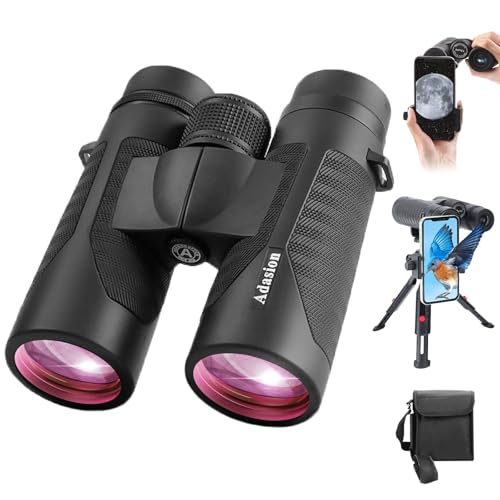
Adasion 12x42 HD Binoculars With Phone Adapter
Extra reach sounds appealing until shaky hands turn a distant bird into a bouncing blur. The best binocular strength for bird watching has to balance magnification, brightness, stability, and carrying weight, and the Adasion 12x42 takes a bold position with twelve-power optics and full-size 42 mm objectives. It promises more distant detail than common 8x models while staying at a listed 1.25 pounds. That combination suits open landscapes and patient observation, though the higher magnification demands steadier technique than a casual glance might suggest.
Adasion 12x42 HD Binoculars
The headline specification is 12x magnification paired with 42 mm objective lenses. That setup can make distant birds, shoreline wildlife, mountain details, and stadium action appear noticeably larger than they would through lower-powered optics. Adasion lists a field of view of 367 feet at 1,000 yards, giving the binoculars a useful span for scanning open areas. Dense woodland remains trickier because stronger magnification can make quick, close movement harder to track.
An 18 mm eyepiece supports a broader, more comfortable-looking image than the cramped view often associated with small ocular lenses. That matters during longer sessions because narrow eyepieces can make the view feel like peering through a keyhole. The larger eyepiece design also helps with locating the proper viewing position, especially after quickly raising the binoculars to catch a bird in motion. Still, alignment has to be right, since twelve-power optics are less forgiving of sloppy eye placement.
The listed 1.25-pound weight keeps the binoculars lighter than many bulky long-range models, but they’re not pocket optics. A crossbody case makes more sense than stuffing them into a jacket, especially with the phone adapter and tripod included. That extra bulk buys a brighter 42 mm optical system and a more substantial grip. The practical trade is clear: better long-range viewing in exchange for carrying more gear than a compact 8x25 pair.
Brightness, Color, And Low-Light Use
BAK4 prisms sit at the heart of the optical system. They’re intended to reduce dark edges around the image and support stronger color separation, which can help distinguish a brown bird from a similarly colored branch. Fully multi-coated lenses are also designed to improve light transmission and reduce internal reflections. Together, those features support clearer contrast and cleaner edges under daylight and less-than-perfect lighting.
The 42 mm objectives gather more light than compact 25 mm binoculars, giving the Adasion model a practical advantage around dawn, late afternoon, and cloudy weather. Even so, the 12x magnification produces an exit pupil of about 3.5 mm, so it won’t feel as bright as an 8x42 binocular with the same objective size. That’s not a flaw; it’s the cost of stronger magnification. Low-light performance should therefore be viewed as capable for a 12x42 design rather than equivalent to dedicated twilight optics.
Open skies, marshes, lake edges, and broad fields play to this configuration’s strengths. A perched raptor or distant waterbird gives the observer time to settle the view and use the extra magnification. Small birds bouncing through shaded shrubs may expose the narrower, less forgiving side of the design. Put simply, distance and available light determine whether the twelve-power image feels rewarding or fussy.
Phone Adapter And Tripod Experience
The included universal phone adapter changes how these binoculars can be used. Instead of relying only on memory, the setup allows a smartphone camera to line up with one eyepiece for photos or video. The 2026 upgraded adapter is described as compatible with all smartphones, while the 360-degree swivel helps position the device. That can be useful for documenting a perched bird, distant landscape, cruise view, or sporting event without carrying a separate camera.
A compact 2.2-inch extendable tripod supports steadier recording. Twelve-power magnification magnifies hand movement, so tripod support becomes more than a nice extra when the goal is a usable photo rather than a quick look. The small tripod won’t replace a full-height field tripod, but it can stabilize the binoculars on a table, railing, rock, or other flat surface. Reduced image shake is especially helpful while aligning a phone camera, which tends to amplify every slight bump.
Phone attachment takes patience, and that’s worth mentioning. The camera lens must sit precisely over the eyepiece, the binoculars need to be focused first, and the phone may require minor repositioning to avoid a dark circular border. Once aligned, the setup can capture stationary subjects more easily than fast-moving birds. The adapter and tripod combination favors deliberate observation, not split-second action.
Waterproof Build And Outdoor Handling
IPX7 waterproofing gives the binoculars a stronger weather-resistance claim than basic splash protection. The fog-proof design also aims to prevent internal condensation during sudden temperature shifts, such as stepping from a warm vehicle into cold morning air. Rain, mist, and damp trail conditions are less likely to derail an outing when the optics are built for wet environments. Even so, wiping down the exterior before storage remains a sensible habit.
The non-slip rubber grip helps the binoculars stay secure in damp or cold hands. A full-size 12x42 body benefits from that texture because stronger magnification rewards a controlled hold. The included crossbody case adds a phone pocket, while the 1.4-inch padded shoulder strap spreads weight more comfortably over longer walks. Those carrying details support all-day practicality rather than treating storage as an afterthought.
Outdoor optics often appear beside other distance-measuring equipment, although each tool solves a different problem. A neutral reference to that separate category appears in air rifle rangefinders, while these binoculars remain focused on magnified viewing, observation, and phone-assisted image capture. Keeping those roles distinct prevents the review from overstating what binoculars can do. The Adasion model shows distant detail, but it doesn’t measure range by itself.
Eyecups, Focus, And Viewing Comfort
Twist-up eyecups support both eyeglass and non-eyeglass use. Adasion lists an eye-relief range from 13.6 mm to 19.6 mm, allowing the eyepieces to be adjusted until the image circle looks complete. Glasses wearers generally need more distance between the eye and the eyepiece, so the adjustable range is a meaningful feature rather than decorative hardware. Proper eye relief can reduce blackouts, cropped edges, and repeated repositioning.
The center focus wheel is designed for quick adjustments as subjects move between different distances. A smooth focusing motion matters with birds because the scene can shift from a nearby branch to a distant treetop in seconds. Twelve-power optics have a shallower margin for focus error, so small inaccuracies become more visible than they would at 8x. The easy-adjust focus system therefore plays a major role in whether the extra magnification feels useful.
Long sessions bring two competing sensations. The padded strap and 1.25-pound body reduce carrying strain, while the 12x image asks the hands and eyes to work harder during handheld use. Resting elbows against the body, leaning on a railing, or using the tripod can settle the view. Comfort here isn’t only about soft eyecups; it also depends on stable posture and realistic session length.
Strengths, Weaknesses, And Best-Fit Situations
The strongest point is the pairing of 12x reach with 42 mm light gathering. That combination suits distant birds, wildlife across open ground, cruise viewing, hiking overlooks, stargazing, and sports events where extra magnification helps. BAK4 prisms, fully multi-coated lenses, waterproofing, fog resistance, and an 18 mm eyepiece round out a feature set built around serious observation. The included phone adapter and tripod also add a recording angle that many basic binoculars leave out.
The biggest weakness is image stability. Twelve-power binoculars naturally magnify hand tremor, so they’re less relaxed than 8x models during long handheld sessions. Fast-moving birds in thick vegetation may be harder to locate, and the full-size body won’t suit someone who wants true pocket portability. Those handling limitations follow directly from the high-powered design.
Another tradeoff concerns brightness versus magnification. The 42 mm lenses help in low light, but the 12x power still produces a smaller exit pupil than an 8x42 setup. Someone spending most of the time in dark forests or watching birds at very close range may prefer lower magnification and a wider view. Someone scanning wetlands, cliffs, distant treelines, or open water may value the extra apparent detail more than the easier handling of 8x optics.
The Adasion 12x42 doesn’t represent the universal best binocular strength for bird watching, because habitat and viewing style matter too much for one answer. It makes the strongest case where distance, weather protection, phone compatibility, and occasional tripod use rank above compactness and effortless tracking. Used freehand, it rewards steady technique; placed on support, it becomes far calmer and better suited to detailed observation. That honest split between power and handling defines the product more clearly than any exaggerated claim could.
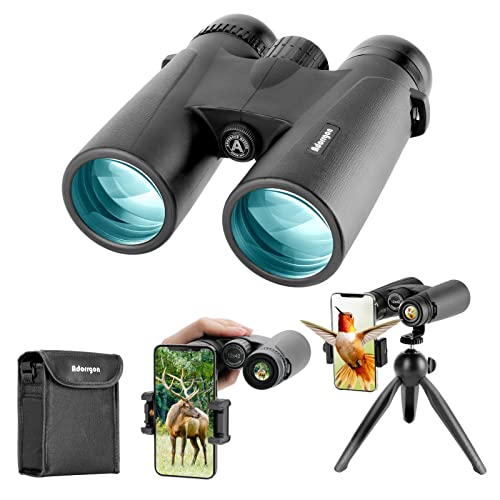
Adorrgon 12x42 HD Binoculars With Tripod
Long-distance viewing can become a wrestling match once hand tremor, narrow eyepieces, and dim glass enter the picture. The best binocular strength for bird watching needs enough reach to reveal distant markings without making every breath look like an earthquake, and Adorrgon tackles that tension with 12x magnification, 42 mm objectives, and tripod support. Its listed 1.1-pound weight is surprisingly restrained for a full-size configuration, while the phone adapter adds a practical way to record stationary subjects. Still, this isn’t the laid-back steadiness of an 8x binocular, so technique and viewing conditions matter.
Adorrgon 12x42 HD Binoculars
The 12x42 optical layout is built around distance. Adorrgon lists a 367-foot field of view at 1,000 yards and states that the binoculars can produce a clear image from more than 650 feet away. Those specifications point toward open-water birds, treetop raptors, distant wildlife, cruise views, and sporting events where subjects remain beyond comfortable naked-eye range. Up close in tangled brush, though, the higher power can make locating a restless bird feel like chasing a needle through moving leaves.
Weight gives this model an interesting edge. At a stated 1.1 pounds, it is listed as 0.6 pounds lighter than typical full-size 10x50 binoculars, which reduces the burden during hikes and long periods of standing observation. It still won’t vanish into a shirt pocket, and the tripod plus phone mount add more pieces to carry. Even so, the body strikes a workable middle ground between tiny travel optics and heavy long-range binoculars.
The overall design suits deliberate observation better than frantic scanning. A hawk perched on a distant snag gives the optics time to show what twelve-power magnification can do, while a chickadee darting between nearby branches may disappear before the view settles. That distinction matters because strong magnification rewards patience. Used in the right setting, the extra reach feels useful; used in cramped cover, it can feel like too much glass for the job.
Magnification And Field Handling
Twelve-power viewing enlarges distant subjects more than common 8x or 10x configurations. Feather patches, posture, bill shape, and movement can become easier to separate across a field or lake, especially when the bird pauses. The catch is simple: hand movement is magnified too. Tucking the elbows against the ribs or leaning on a railing can calm the picture, but a tripod remains the cleaner answer for extended viewing.
The listed field of view gives enough room to scan open terrain without feeling completely boxed in. Still, field width on paper doesn’t guarantee effortless tracking, since focus speed, grip, eye placement, and subject movement all affect the experience. A bird gliding across a bright sky should be easier to follow than a small songbird weaving through cluttered branches. That’s the practical difference between open-country reach and woodland agility.
Higher power can also make focusing feel more sensitive. Small adjustments matter because slight blur becomes more obvious at 12x, particularly on fine feather detail or distant lettering at a stadium. The focus wheel should be handled with controlled, short movements rather than big turns once the image is nearly sharp. A little restraint goes a long way, and constant overcorrection can turn a promising sighting into a fuzzy back-and-forth routine.
Large Eyepieces And Low-Light Viewing
Adorrgon uses 18.5 mm eyepieces, a larger format than the smaller ocular lenses found on many compact binoculars. The supplied description states that these eyepieces create an image 2.25 times the size of a 14 mm eyepiece and 1.28 times the size of a 16 mm eyepiece. A larger viewing window can feel less cramped and make eye positioning easier, especially during repeated use. That doesn’t increase the actual magnification, but it can make the existing 12x image more comfortable to inspect.
The optical system combines fully multi-coated lenses with a 16.5 mm BAK4 prism. Those elements are intended to improve light transmission, limit dark edges, and preserve stronger color and contrast in weak light. Cloudy afternoons, shaded observation points, and dim indoor events are the kinds of conditions where those coatings may matter most. Complete darkness remains outside the design’s scope, so the low-light claim shouldn’t be mistaken for night vision.
The 42 mm objective lenses give this model more light-gathering area than compact 12x25 binoculars. Yet twelve-power magnification still divides that available light into a smaller exit pupil than an 8x42 model would produce. In plain English, the image can remain useful in weak light, but an 8x42 may appear brighter and more relaxed under the same conditions. Adorrgon favors reach first, with brightness supported by the larger objectives and coated glass.
Phone Adapter And Tripod Setup
The 2026 upgraded phone adapter is designed to fit smartphones with or without cases. Soft anti-slip rubber protects the phone’s surface, while the three-direction screw-locking structure is intended to hold the device firmly during alignment. That matters because smartphone binocular photography can be fiddly, and even a tiny shift may introduce a dark crescent or push the subject out of frame. The quick-alignment design aims to reduce that frustration.
A 360-degree rotating ball head gives the included tripod more positioning freedom. The stronger leg tubes and non-slip rubber feet are intended to create a steadier base on a table, railing, rock, or other reasonably flat surface. That support is especially valuable at 12x, where handheld photos can blur from small movements that barely register to the naked eye. For stationary birds and distant scenery, tripod stability can turn a frustrating phone setup into something far more manageable.
The tripod remains compact, so expectations should stay sensible. It’s suited to low surfaces and portable use rather than standing-height observation in the middle of an open field. A full-size field tripod would provide more flexibility, but it would also add bulk and slow down spontaneous outings. This included setup fits the product’s personality: light enough to carry, stable enough for planned shots, and not pretending to replace professional photographic support.
Outdoor Uses And Practical Versatility
Bird watching is the obvious job, but the specifications also suit hiking, travel, concerts, cruises, hunting observation, and sports events. Strong magnification helps from distant seats or across broad scenery, while the relatively light body keeps the binoculars from becoming a brick around the neck. The multi-use design makes more sense for people who want one optical tool for several activities. It’s less convincing for anyone who only watches close-range backyard birds under heavy tree cover.
Weather protection isn’t specified in the supplied details as clearly as the optical and accessory features, so this review won’t invent a waterproof rating or fog-proof standard. Care around rain, spray, and sudden temperature changes is therefore sensible unless the manufacturer’s current documentation confirms otherwise. A padded case and dry storage area can help protect the coatings and internal alignment. Honest limits matter, particularly with optics that may travel through changing outdoor conditions.
Some outdoor equipment discussions branch into equipment with entirely separate purposes, and a neutral reference to that unrelated category appears in lightweight PCP air rifles. That subject has no bearing on the binoculars’ image quality, magnification, or phone-mounting features. Adorrgon’s role is observation and image capture, not range measurement or any other function beyond what the supplied specifications support.
Strengths, Weaknesses, And Realistic Fit
The clearest strength is the combination of 12x reach, 42 mm objectives, large eyepieces, and a manageable 1.1-pound body. Distant subjects receive more apparent detail than they would through lower-powered binoculars, while the BAK4 prism and fully multi-coated lenses support brightness and contrast. The phone adapter and rotating tripod also add practical value for stationary wildlife and scenic recording. Few compact accessories eliminate every setup headache, but these pieces address the most obvious stability problem.
The main weakness is the handling demand created by twelve-power magnification. Hand shake becomes more visible, quick birds can be harder to track, and close woodland observation may feel narrower and less forgiving than it would through 8x optics. The included tripod helps, though it adds setup time and works best from a stable surface. Anyone expecting effortless handheld viewing in every habitat may come away disappointed.
Low-light performance also deserves a measured reading. The 42 mm objectives, large prism, and multi-coated glass support usable brightness, but the 12x power still places greater demands on available light than an 8x42 configuration. Distant evening subjects may remain visible, yet fine shadow detail can soften as daylight fades. That brightness tradeoff is normal for the format and shouldn’t be mistaken for poor design.
Adorrgon makes the strongest case in open spaces where distant subjects pause long enough to study or photograph. Wetlands, coastlines, overlooks, cruise decks, sports venues, and broad backyards give the 12x system room to breathe. Thick woods, fast-moving songbirds, and shaky handheld use expose its less forgiving side. As an answer to the best binocular strength for bird watching, this model favors long-range detail and supported viewing rather than universal ease.


12 Best 22 Pcp Air Rifle For Hunting of 2026 With Quiet Power

7 Best 22 Pcp Air Rifle Under 300 of 2026 For Backyard Pest Control

10 Best 22 Break Barrel Air Rifles of 2026 For Backyard Pest Control

10 Best 30 Caliber Pcp Air Rifle of 2026 For Medium Game

Top Best 177 Air Rifle Under 100: Budget-Friendly Picks for 2026

How to Safely Reload Shotgun Shells at Home

11 Best Co2 Air Rifle For Pest Control of 2026 To Ensure Humane Dispatch

12 Best Inexpensive Air Rifles of 2026 For Dependable Backyard Accuracy






