
Best Carbon Arrows for Elk Hunting 2026: Field Picks

A dependable elk arrow has to do more than look good on a speed chart. The best carbon arrows for elk hunting need enough finished weight to carry momentum, a spine that matches the bow, and straight construction that keeps broadheads from wandering. Elk are large, heavily built animals, so a light setup chosen only for flatter trajectory can leave little room for error. A balanced arrow may give up a few feet per second, but it often behaves better once wind, bone, steep angles, and imperfect range estimates enter the picture.
Finished arrow weight deserves more attention than the number printed on the bare shaft. Inserts, nocks, vanes, broadheads, wraps, and lighted nocks can change the final result by dozens of grains. That extra mass affects speed, noise, trajectory, and penetration, so guessing isn't good enough. A practical elk setup usually leans toward controlled momentum rather than chasing the lightest legal build.
Spine selection can make or break the whole system. A shaft that's too weak may flex excessively during launch, causing poor broadhead groups and inconsistent impact points. A shaft that's unnecessarily stiff can also tune poorly, especially with lighter draw weights or shorter draw lengths. Correct dynamic spine depends on draw weight, arrow length, point weight, cam aggressiveness, and the specific bow, which means the manufacturer's chart should be treated as a starting point rather than a final answer.
Straightness tolerances matter, but they aren't the only sign of a useful hunting shaft. A tighter tolerance can help with consistency, yet component fit and shaft durability may have a bigger effect in rough country. Loose inserts, uneven nock fit, or weak outserts can turn an otherwise accurate shaft into a headache. Rocky practice ranges, packed quivers, and accidental drops are part of elk season, so tough components earn their keep long before an arrow reaches an animal.
Diameter creates another tradeoff. Micro-diameter shafts can reduce wind drift and may penetrate efficiently, but they often require specialized inserts, collars, or outserts. Standard-diameter shafts are usually easier to build, repair, and match with common components. Neither format automatically wins. The smarter move is choosing a system that stays aligned after repeated shooting and doesn't make replacement parts difficult to track down.
Front-of-center balance also shapes arrow behavior. More weight near the point can improve broadhead steering and help the shaft continue forward after impact, but extreme front loading may weaken dynamic spine and produce a steep trajectory. Moderate front weight often offers a more forgiving middle ground. It supports fixed-blade broadheads without turning the setup into a slow, overly specialized build.
Broadhead testing can't be skipped, even with expensive shafts. Field points may stack tightly while fixed blades reveal a small tuning flaw, crooked insert, or damaged nock. Spin each completed arrow, shoot broadheads at realistic distances, and mark shafts that consistently group together. That routine isn't glamorous, but it prevents the frustrating discovery that a paper-perfect setup falls apart days before a hunt.
Price matters too, especially after a season filled with stumps, rocks, and missed targets. Premium straightness grades can be worthwhile for meticulous builds, while mid-priced shafts may offer better value for frequent practice. The sensible choice leaves enough room in the budget for matched components, spare arrows, and real broadhead practice. A costly dozen that rarely gets shot won't build confidence, and confidence is what counts when the rangefinder reads farther than expected and the bull won't stand still for long.

- ARS Mark9.2
ARS Mark is a ranking system developed by bestairriflescopes.com. ARS Mark has no relationship or impact from any manufacturers or sales agent websites. Learn more
- BrandTIGER ARCHERY

- ARS Mark9.2
ARS Mark is a ranking system developed by bestairriflescopes.com. ARS Mark has no relationship or impact from any manufacturers or sales agent websites. Learn more
- BrandTIGER ARCHERY

- ARS Mark9.2
ARS Mark is a ranking system developed by bestairriflescopes.com. ARS Mark has no relationship or impact from any manufacturers or sales agent websites. Learn more
- BrandCarbon Express

- ARS Mark9.2
ARS Mark is a ranking system developed by bestairriflescopes.com. ARS Mark has no relationship or impact from any manufacturers or sales agent websites. Learn more
- BrandTIGER ARCHERY

- ARS Mark9.0
ARS Mark is a ranking system developed by bestairriflescopes.com. ARS Mark has no relationship or impact from any manufacturers or sales agent websites. Learn more
- BrandPointdo

- ARS Mark8.8
ARS Mark is a ranking system developed by bestairriflescopes.com. ARS Mark has no relationship or impact from any manufacturers or sales agent websites. Learn more
- BrandBOWSOUL
- ARS Mark8.8
ARS Mark is a ranking system developed by bestairriflescopes.com. ARS Mark has no relationship or impact from any manufacturers or sales agent websites. Learn more
- BrandTY Archery

- ARS Mark8.8
ARS Mark is a ranking system developed by bestairriflescopes.com. ARS Mark has no relationship or impact from any manufacturers or sales agent websites. Learn more
- BrandLWANO

- ARS Mark8.4
ARS Mark is a ranking system developed by bestairriflescopes.com. ARS Mark has no relationship or impact from any manufacturers or sales agent websites. Learn more
- Brandsanlida
Last update on 2026-08-01 / Affiliate links / Images, Product Titles, and Product Highlights from Amazon Product Advertising API
Tiger Archery 30-Inch Carbon Practice Arrows
Loose groups and damaged shafts can turn an ordinary afternoon at the range into a costly headache. The TIGER ARCHERY arrow pack takes a straightforward approach with twelve carbon shafts, removable tips, adjustable nocks, and visible orange-and-white vanes. Although the product is presented for practice and hunting use, anyone researching best carbon arrows for elk hunting should look closely at bow compatibility, finished arrow weight, spine behavior, and broadhead readiness before treating a practice-oriented shaft as a serious elk setup. Reliable construction matters, but matching the arrow to the bow matters even more.
Tiger Carbon Arrow Pack
The basic specifications make this pack easy to understand. Each arrow measures 30 inches long and has a stated outer diameter of 0.309 inch, giving it a conventional profile rather than a micro-diameter build. The manufacturer lists compatibility with recurve, compound, and longbows in the 35-to-60-pound draw-weight range. That broad range adds flexibility, though the correct match still depends on arrow length, point weight, bow design, and actual draw length.
Twelve arrows in one package provide enough shafts for repeated practice without forcing constant trips back to the target after every few shots. That sounds simple, but it changes the rhythm of a shooting session, especially while tuning a bow or working on consistent anchor points. Carbon construction also keeps the shafts reasonably uniform compared with basic wooden practice arrows, while offering better resistance to bending than aluminum shafts. Still, carbon arrows should always be inspected for cracks, splinters, or impact damage before shooting again.
The orange-and-white color layout is more practical than decorative. Two orange vanes and one white vane make the cock vane easier to identify, which helps with proper nock orientation on recurve, compound, and longbow setups. The plastic fletching is designed to keep the arrow stabilized and pointed correctly during flight, yet bent vanes can still affect grouping until they return to shape. Warm air or gentle manual reshaping may help minor bends, but badly damaged vanes eventually need replacement.
Build Quality And Everyday Shooting Feel
The shafts are described as solid, well made, and intended for extended target practice. That emphasis makes sense because repeated impacts, target removal, and routine transport can be harder on arrows than many beginners expect. Durability during practice is the strongest practical appeal here, particularly for backyard targets, club ranges, and outdoor shooting sessions. The pack also arrives well protected according to the supplied description, reducing the chance of receiving shafts that were crushed or scraped during shipping.
Nickel-plated stainless-steel tips come installed for target use. These removable points are convenient because a damaged tip can be replaced without retiring the whole shaft, and the threaded design may allow other compatible points to be installed. Target-point convenience is useful for foam blocks, bag targets, and general range work, but field use requires more thought. Broadheads add different weight, steering, and stress, so compatibility should be verified rather than assumed.
The nocks aren't glued into place, and that small design decision has real value. An adjustable nock can be rotated to match the bowstring and vane orientation, which helps prevent clearance problems as the arrow passes the rest or shelf. Replacement nocks are also included, giving the pack a little more life after an accidental dry target impact or a tight group damages one. The tradeoff is that non-glued nocks should be checked often because a loose nock can rotate or shift during use.
Flight consistency depends on more than straight carbon shafts. Bow tuning, release quality, rest alignment, and nock fit all affect where the arrow lands, so these arrows won't hide a poorly adjusted setup. Their 30-inch shaft length may suit many bows, but cutting or altering a finished arrow requires proper tools and a clear understanding of spine changes. Shooting them at full length is simpler, though a longer shaft may behave dynamically weaker than a shorter shaft of the same construction.
Elk Hunting Fit And Important Tradeoffs
Elk hunting places heavier demands on an arrow than casual target shooting. A finished hunting arrow needs enough structural strength, appropriate total mass, dependable component alignment, and stable broadhead flight. The supplied product details don't state shaft spine, grains per inch, straightness tolerance, insert weight, or finished arrow weight. Those missing figures make it difficult to rank this pack confidently among the best carbon arrows for elk hunting, even though the shafts may feel sturdy during ordinary practice.
Draw-weight compatibility up to 60 pounds doesn't automatically confirm elk suitability. A bow set near the upper end of that range may require a specific spine depending on draw length, cam aggressiveness, arrow length, and broadhead weight. An arrow that is dynamically too weak can group poorly, flex excessively, or become difficult to tune with fixed-blade broadheads. Spine verification should come before any attempt to convert these practice arrows into a hunting build.
The removable stainless-steel tips are described as suitable for target practice and outdoor shooting, not as hunting broadheads. That distinction matters. Elk require a legal, properly matched broadhead and an arrow system that has been tuned as a complete unit, including insert, shaft, nock, vanes, and point weight. Practice points and broadheads may share the same nominal weight yet strike in different places because their aerodynamics aren't the same.
The conventional 0.309-inch outer diameter has a few everyday advantages. Standard-diameter components can be easier to replace, and the shaft may be simpler to pull from certain foam targets than extremely narrow hunting arrows. On the other hand, larger-diameter shafts generally present more surface area to crosswinds and may not offer the same penetration profile as a carefully assembled micro-diameter setup. Standard diameter isn't inherently bad, but it reflects a practical practice-arrow design rather than a specialized elk configuration.
Setup, Tuning, And Range Use
A careful first inspection pays off before these arrows ever reach the string. Roll each shaft on a flat surface, confirm that the tips sit straight, and check every nock for cracks or looseness. Flex carbon shafts gently while listening for faint cracking sounds, especially after hard impacts or tight groupings. These basic habits protect both the equipment and the person shooting, and they matter more than any cosmetic finish.
Nock orientation should match the bow's rest or shooting shelf. The white vane can serve as the reference vane, while the adjustable nock allows the arrow to be rotated until clearance looks right. Clean vane clearance reduces contact that can throw an otherwise good shot sideways. A small alignment mark on the shaft and nock can make it easier to spot unwanted rotation between shooting sessions.
Target choice also affects arrow life. Dense or damaged targets can grip shafts tightly, and pulling from an angle may stress the carbon near the insert or point. A rubber arrow puller and a straight, controlled removal technique reduce that strain. Routine shaft inspection should follow every hard impact, miss, or collision with another arrow, because carbon damage isn't always obvious at a glance.
Sight adjustment often gets blamed for grouping problems that actually begin with arrow setup. A neutral reference on affordable aiming equipment appears in compound bow sights under 100, though sight hardware can't compensate for mismatched spine or inconsistent nock alignment. The arrows should first produce repeatable groups before major sight changes are made. That order saves time and keeps tuning decisions grounded in the actual source of the problem.
Strengths, Weaknesses, And Realistic Value
The clearest strength is the practical package. Twelve carbon arrows, removable target tips, visible vanes, and spare adjustable nocks cover the basics for frequent recreational shooting. Good package value becomes especially noticeable when several arrows are needed for form practice, distance sessions, or bow setup. The supplied information also emphasizes solid construction and long-lasting target use, which fits the product's most convincing role.
Versatility is another plus, though it needs sensible limits. The arrows are listed for compound, recurve, and longbows from 35 to 60 pounds, so one pack can fit several common shooting styles on paper. Real compatibility still depends on the bow's setup, and the absence of a stated spine number creates uncertainty. That missing specification is a meaningful weakness for careful tuning and serious hunting preparation.
The plastic vanes bring visibility and straightforward orientation, but they may arrive bent after sitting in packaging or a quiver. Minor deformation isn't unusual with this style of fletching, and it may settle with gentle correction. Hard use can also loosen tips or rotate nocks, so occasional checks belong in the routine. These aren't deal-breaking flaws for target practice, yet they add small maintenance chores that shouldn't be ignored.
The biggest limitation concerns the elk-hunting keyword itself. No supplied data confirms grains per inch, finished weight, straightness tolerance, broadhead compatibility, or a specific spine rating, all of which influence hunting performance. Treating the arrows as confirmed elk-ready equipment would stretch beyond the available facts. Their strongest case is as durable practice arrows that can help build form and consistency, while a dedicated elk setup should be selected only after the full technical specifications have been verified.
Tiger Archery 30-Inch Yellow White Carbon Arrows
A dozen arrows can look nearly identical in the box and still behave very differently once they leave the string. Small details such as nock alignment, vane condition, shaft length, and point fit often decide whether a group tightens or spreads across the target. The TIGER ARCHERY 30-inch pack enters the discussion around best carbon arrows for elk hunting with solid carbon construction, removable target tips, adjustable nocks, and a stated draw-weight range of 35 to 60 pounds. Its strongest case, though, rests on durable practice use rather than a fully documented elk-hunting build.
Tiger 30-Inch Carbon Arrow Pack
The package includes twelve carbon arrows, giving a shooter enough shafts for longer practice rounds without constant walks to the target. Each shaft measures 30 inches and has a stated outer diameter of 0.309 inch, which places it in a familiar standard-diameter category rather than the narrower micro-diameter class. That conventional size can make basic handling and component replacement less fussy. Still, the supplied details don't state spine rating, grains per inch, or straightness tolerance, so technical matching requires caution.
The arrows are listed for recurve, compound, and longbows within a 35-to-60-pound draw-weight range. That sounds broad, and it is, but draw weight alone doesn't settle arrow compatibility. Draw length, cam design, point weight, and the full 30-inch shaft length all influence dynamic spine. A shaft that behaves calmly from one bow may leave another with sideways nock travel, loose groups, or stubborn broadhead tuning.
The yellow-white color description pairs with two black vanes and one white vane in the supplied specifications. The contrasting cock vane makes orientation easier to spot before loading the arrow, especially during repetitive range sessions when little setup errors creep in. Visible vane orientation helps reduce clearance problems around a rest or bow shelf. Plastic vanes can bend after storage or transport, however, so a quick inspection belongs in the routine before shooting.
Construction And Range Durability
Carbon shafts suit repeated practice because they don't develop the permanent bends associated with aluminum after an awkward impact. They aren't indestructible, though, and that's worth saying plainly. A carbon arrow may look straight while hiding cracks or splintering near the point, nock, or a previous impact mark. Regular flex checks and visual inspection matter after every miss, hard strike, or collision with another arrow.
The product description emphasizes solid construction and extended durability for long target sessions. That positioning fits the design well, since the installed nickel-plated stainless-steel tips are made for target practice and outdoor shooting. Removable tips also simplify basic maintenance because a worn or damaged point can be replaced without discarding the shaft. Threaded parts can loosen with repeated impacts, so checking point tightness every few ends keeps small annoyances from becoming accuracy problems.
Packaging quality has practical value that often gets overlooked. A crushed box can bend vanes, chip nocks, or damage shaft ends before the arrows ever reach the bow case. The supplied information notes that the arrows arrive well packaged, which helps protect shaft condition and component alignment during shipping. It doesn't guarantee every arrow will be perfectly matched, but it reduces the odds of beginning with obvious transport damage.
Target removal deserves care as well. Dense foam can grip a carbon shaft tightly, and twisting or yanking at an angle places unnecessary stress near the insert. A straight pull with a rubber gripper is kinder to the shaft and easier on the hands. That habit sounds minor, yet careful arrow removal can extend the useful life of practice equipment over many shooting sessions.
Adjustable Nocks And Flight Behavior
The nocks aren't glued in place, allowing them to rotate for proper vane clearance. That flexibility is helpful across different rests, shelves, and string positions because the arrow can be oriented without rebuilding the rear of the shaft. Spare replacement nocks are also included, which softens the sting of a cracked nock after a tight group. The downside is simple: adjustable nocks need checking because a loose fit may rotate during handling or shift after impact.
Nock fit on the bowstring deserves just as much attention as orientation. A nock that's too tight can cling to the string and disturb the release, while one that's too loose may create an unsafe or inconsistent connection. The supplied details don't specify throat size, so fit should be judged directly against the string serving. Clean nock engagement should feel secure without requiring excessive force to attach or detach.
Plastic fletching keeps the arrows stabilized as they travel toward the target. The two dark vanes and single white vane make indexing straightforward, and the color break is easy to notice even in a crowded quiver. Bent vanes may cause a small amount of steering until they regain shape, especially at longer practice distances. Consistent vane condition matters more than the color itself, since one damaged vane can pull an otherwise sound arrow away from the group.
Arrow flight also reflects bow setup, not just shaft quality. Rest alignment, center shot, release consistency, brace height, and string condition can all produce movement that looks like an arrow defect. A useful indoor practice reference appears naturally in indoor archery arrows, where controlled distances often make small tuning issues easier to notice. Even so, indoor grouping success doesn't automatically prove that the same shaft is ready for fixed-blade broadheads or elk-sized hunting demands.
Elk Hunting Relevance And Missing Data
Elk equipment needs more than a durable shaft and a sharp point. Total arrow weight, shaft spine, insert strength, broadhead alignment, and finished front-of-center balance all shape penetration and flight. The supplied information doesn't include grains per inch, spine rating, insert weight, or straightness tolerance. Without those figures, calling this pack one of the confirmed best carbon arrows for elk hunting would go beyond the available evidence.
The 35-to-60-pound bow range also needs perspective. A 60-pound compound with an aggressive cam and long draw length may place much greater dynamic demand on a shaft than a 45-pound recurve. Adding a heavier broadhead or insert weakens dynamic spine further, and the full 30-inch length adds another variable. Bow-specific spine matching can't be skipped simply because the package lists a compatible draw-weight window.
The installed stainless-steel tips are suited to target use, not elk hunting by themselves. Hunting requires a legal broadhead that fits the arrow system, spins true, and groups with field points after tuning. Swapping the target point for a broadhead may change front weight, steering, and impact location. Broadhead compatibility must be verified at the component level rather than assumed from removable-tip construction.
Standard-diameter shafts bring a practical mix of strengths and tradeoffs. Components may be easier to source, and the arrow can be straightforward to maintain for general range work. A larger outside diameter also gives crosswind more surface to press against than a slimmer shaft, though actual drift depends on speed, weight, and distance. For someone practicing across changing outdoor conditions, predictable tuning and matched components matter more than diameter alone.
Strengths, Weaknesses, And Practical Fit
The pack's clearest strength is convenience. Twelve arrows, removable tips, visible fletching, and spare adjustable nocks create a useful setup for frequent practice without piecing together every component separately. The carbon shafts are described as solid and well made, supporting their role in extended target sessions. That practical bundle makes sense for building form, working on release timing, or keeping several bows supplied with suitable practice arrows after compatibility is confirmed.
Versatility is another real advantage, but it has boundaries. Recurve, compound, and longbow compatibility gives the pack broader appeal than equipment built around one narrow bow style. Yet the lack of a stated spine rating remains a significant technical weakness, especially near the upper end of the draw-weight range. Careful shooters may hesitate to use a shaft for hunting when a central specification isn't provided in the available description.
Maintenance is light, not absent. Points can loosen, nocks can rotate, vanes can bend, and carbon shafts can suffer hidden damage after a rough impact. None of those issues makes the pack unusable, but they require an inspection habit rather than a shoot-and-forget approach. Routine checks and sensible handling are part of keeping any carbon arrow safe and consistent.
The strongest use case remains practice with bows that fall within the stated range and match the shaft behavior in real shooting. The arrows offer enough practical features to support regular backyard or range work, and the contrasting vanes make setup less confusing. For elk, the missing spine and weight data create a hard limit on how confidently the pack can be recommended. Its value sits in repeatable practice and adaptable setup, while a final hunting arrow should be selected only after every major specification has been confirmed.
Carbon Express Maxima RED SD Contour 350 Arrows
Wind has a nasty habit of exposing every weak link in an arrow setup, especially across open ridges where a clean lane can turn twitchy in seconds. The Carbon Express Maxima RED SD Contour 350 tackles that problem with a small-diameter shaft, controlled flex design, matched sorting, and camouflage that doesn't shout from the quiver. Within the conversation around best carbon arrows for elk hunting, this six-pack stands out for its 9.7 grains-per-inch shaft weight, 350 spine, and construction aimed at steady broadhead flight. It isn't a bargain-bin practice shaft, and its details clearly lean toward demanding field setups where consistency matters more than squeezing out the highest possible speed.
Maxima RED SD Contour 350
The core design starts with a 0.203-inch small-diameter shaft, which gives the arrow a slimmer profile than common standard-diameter models. Less exposed surface area can help reduce wind influence, a useful trait on slopes, cut lines, and open meadows where gusts rarely stay polite. Carbon Express also pairs that narrow shaft with aircraft-grade aluminum components, premium inserts, BullDog nock collars, and LaunchPad nocks. Put together, those pieces aim to create a hunting arrow that stays aligned and carries energy without feeling clunky through the air.
The 350-spine model weighs 9.7 grains per inch before the insert, nock, vanes, wrap, and broadhead are counted. That shaft weight gives builders room to create a substantial finished arrow, though the final number depends heavily on cut length and front-end components. A 28-inch shaft, for example, begins with more bare-shaft mass than a lighter 8-grain-per-inch alternative before accessories enter the equation. That can favor momentum and quiet the bow, but it also produces a more curved trajectory than a featherweight speed setup.
Mossy Oak Contour camouflage covers the shaft with a broken pattern intended to blend into brush, timber, and mixed backgrounds. Camouflage won't fix a poor release or badly tuned broadhead, of course, yet it can reduce bright visual contrast around a bow-mounted quiver. The practical benefit is subtle rather than dramatic. Low-profile concealment fits the field-minded design, while the printed finish also gives the arrow a distinctive look without relying on loud graphics.
The pack contains six arrows rather than twelve, so the cost per shaft may matter more to anyone who loses arrows often during rough practice sessions. Six matched hunting arrows can be enough for a tuned quiver, but replacements become important once broadhead testing, travel damage, or rocky misses take their toll. That smaller quantity isn't automatically a flaw. It simply places more pressure on careful inspection and consistent component setup, since each shaft carries a bigger share of the working set.
RED ZONE Flex Control
Dynamic spine is one of those topics that sounds technical until broadheads start landing several inches away from field points. The Maxima RED SD uses RED ZONE Technology, which places stiffer distal sections toward the ends while allowing the center portion to manage flex. Carbon Express describes this arrangement as a way to contain the arrow's bending in a controlled zone. The goal is cleaner recovery after launch rather than random flex traveling unpredictably along the shaft.
Tri-Spine Technology supports that same idea by managing the center section instead of treating the entire shaft as one uniform bending surface. The brand states that this design can deliver four times the accuracy of traditional single-spine arrows, though that remains a manufacturer claim rather than a guarantee for every bow. Real results still depend on draw length, draw weight, release quality, rest position, broadhead choice, and shaft cut length. Even so, the underlying approach makes sense for setups that become fussy with fixed blades.
Stiffer shaft ends can also help the front and rear components stay on a more stable line as the arrow recovers from the shot. That matters because insert alignment, nock travel, and broadhead steering all magnify small inconsistencies. A shaft that flexes unevenly may appear fine with field points and then throw broadheads sideways. Controlled arrow recovery gives a hunter a better starting point, but it doesn't eliminate the need for paper tuning, walk-back tuning, and broadhead confirmation.
The 350 spine suits heavier draw forces than a weaker 400 spine in many common configurations, yet a spine label isn't a universal pass. Long draw lengths, aggressive cams, heavier point weights, and longer shafts all increase the load placed on the arrow. A 350 may fit one 65-pound compound and feel wrong from another with different geometry. Bow-specific spine matching remains the deciding step, not the number printed beside the camouflage pattern.
Small Diameter Penetration And Wind Control
The narrow 0.203-inch profile gives this shaft one of its clearest hunting advantages. A smaller cross-section pushes through less air during flight and presents less surface for a crosswind to grab. That doesn't make the arrow immune to wind, but it can reduce drift compared with a wider shaft of similar speed and mass. Across exposed elk terrain, lower wind resistance can help preserve confidence when the shot isn't taken in still backyard conditions.
Penetration also benefits from a slim front profile because less shaft surface has to pass through the entry channel after the broadhead. The supplied description connects the small diameter, insert system, and overall construction with greater penetration and maximum kinetic energy. Kinetic energy itself comes from finished arrow mass and velocity, so the shaft can't create it alone. Still, a heavier small-diameter build can carry useful momentum while reducing friction behind the broadhead.
The aircraft-grade aluminum insert system adds structure at a point that receives repeated stress. Broadhead impacts, hard target stops, and side pressure during arrow removal can all work on the insert-to-shaft connection. Premium inserts are valuable only when installed squarely, though, because a slightly crooked front end will make a broadhead wobble during a spin test. Component alignment deserves just as much attention as the carbon itself.
BullDog nock collars reinforce the rear of the arrow where tight groups can create expensive damage. A second shaft striking near the nock can split unprotected carbon, and crowded foam targets make that possibility more than theoretical. The collar adds a protective barrier around the shaft end while the LaunchPad nock handles string engagement. Rear-end protection won't prevent every failure, but it can help preserve arrows during repeated grouping sessions.
Sorting, Straightness, And Setup Consistency
Carbon Express states that each group is laser checked and spine-sorted to a tolerance of plus or minus 0.0025 inch. The arrows are also weight-sorted to within plus or minus 1.0 grain across the batch. Those numbers matter because closely matched shafts require fewer compensating adjustments during assembly. Small weight and spine differences can still exist, but the supplied tolerances suggest a more controlled starting point than unsorted general-purpose arrows.
Weight matching becomes especially useful once broadheads are installed. A few grains won't usually ruin a hunting setup by themselves, yet cumulative differences in shafts, inserts, nocks, and vanes can spread impact points at longer distances. Keeping finished arrows close in total weight helps maintain similar trajectory and timing. Consistent finished builds make sight marks more dependable and reduce the temptation to blame every flyer on the bow.
Straightness should be checked after assembly rather than assumed from the shaft specification alone. Inserts can seat slightly off-center, broadheads can have uneven ferrules, and nocks can fit with minor variation. A slow spin test on every finished arrow quickly reveals visible wobble at the point or rear end. That simple habit protects the value of laser-sorted carbon shafts by making sure the installed parts don't undermine them.
Release mechanics also play into how much benefit these arrows can deliver. A consistent anchor and clean release reduce sideways string movement that no shaft design can fully erase. Related setup details often overlap with equipment covered in thumb release choices, since release style can change nock travel and perceived tuning behavior. The link between the two isn't promotional; it's simply part of understanding why the same arrow may group differently after a release change.
Strengths, Weaknesses, And Field Fit
The strongest feature is the way the parts support one another. RED ZONE flex management, Tri-Spine construction, matched sorting, a 0.203-inch diameter, reinforced nock collars, and premium inserts all point toward controlled hunting performance. Nothing in the supplied description feels added merely for decoration. The system is built around repeatability, reduced wind exposure, and component support from nock to point.
The shaft weight is another meaningful strength for elk-oriented builds. At 9.7 grains per inch, the 350 spine can produce a substantial finished arrow without requiring extreme point weight to reach a practical total mass. That may help maintain dynamic spine while still supporting penetration and quieter bow behavior. The tradeoff is reduced speed and a steeper trajectory compared with lighter carbon shafts, so accurate range estimation remains essential.
The main weakness is the limited six-arrow quantity. Rocky terrain, broadhead practice, and accidental impacts can shrink a hunting set faster than expected, and matching another batch later may require extra sorting. A backup pack can ease that concern, but it increases the overall cost of building a larger practice inventory. Six matched arrows work well for a dedicated hunting quiver, yet they leave less room for careless shooting around hard backstops.
The small-diameter format also creates component dependence. Standard inserts, field points, or broadheads may not fit correctly without the intended hardware, and replacement parts need to match the shaft system. That isn't unusual among narrow hunting arrows, but it can be inconvenient in a small-town shop during a trip. Specialized component fit rewards advance planning and punishes last-minute repairs.
For elk hunting, the Maxima RED SD Contour 350 brings more documented technical detail than a basic carbon practice arrow. Its stated spine, grains per inch, straightness sorting, weight sorting, small diameter, reinforced nock end, and flex-control design provide a solid basis for a carefully tuned setup. It still needs to be cut, assembled, weighed, and broadhead-tested for the specific bow. Among candidates for best carbon arrows for elk hunting, its strengths suit deliberate builders who value stable flight, wind resistance, and penetration more than raw launch speed.
Tiger Archery 30-Inch Green White Carbon Arrows
Practice sessions get frustrating fast when arrows arrive bent, nocks sit crooked, or points loosen after a handful of shots. This TIGER ARCHERY twelve-pack keeps the setup fairly simple with 30-inch carbon shafts, removable stainless-steel tips, adjustable nocks, and contrasting plastic vanes. The pack may appear in searches for best carbon arrows for elk hunting, but its clearest strength is durable target practice with recurve, compound, and longbows rated from 35 to 60 pounds. That distinction matters because a solid practice shaft and a fully verified elk arrow aren't always the same thing.
Tiger 30-Inch Green White Carbon Arrows
The stated dimensions are straightforward: each arrow measures 30 inches long with a 0.309-inch outer diameter. That standard-size profile feels familiar in the hand and doesn't depend on the specialized hardware often required by narrow hunting shafts. Twelve arrows also keep a range session moving, since there’s less need to retrieve after every small group. For backyard targets, club lanes, and regular form work, the larger pack size is a practical advantage.
The shafts are intended for bows between 35 and 60 pounds, including compound, recurve, and longbow designs. That broad label sounds convenient, but it shouldn't replace proper arrow matching. Draw length, actual shaft length, cam aggressiveness, tip weight, and release style all affect how a carbon arrow bends during the shot. A shaft that groups neatly from a moderate recurve may react differently from a hard-cam compound set near the top of the listed range.
The green-and-white product version uses two black vanes and one white vane according to the supplied details. That single white vane gives a clear reference for nock orientation, which can reduce mistakes during repetitive shooting. Visible vane indexing is especially helpful on rests or shelves where poor clearance can kick the arrow sideways. The color itself doesn't improve accuracy, of course, but the contrast makes setup less fiddly.
Carbon Construction And Practice Durability
Carbon shafts don't take a permanent bend the way aluminum sometimes can, and that's one reason they suit regular practice. They can still crack, splinter, or weaken after a hard strike, so durability doesn't mean neglecting inspection. The product description emphasizes solid construction and long-lasting target use, which matches the pack's strongest purpose. After a miss into wood, stone, or another hard surface, each shaft should be flexed and checked before returning to the string.
The arrows are described as precision carbon hunting arrows, yet most of the supplied hardware points toward general shooting and target work. Nickel-plated stainless-steel tips come installed, and those points are suitable for target practice and outdoor shooting. Removable tips are handy because worn points can be replaced instead of forcing the whole shaft into retirement. Threads may loosen after repeated impacts, though, so a quick hand check between ends can prevent a point from backing out unnoticed.
Packaging deserves a little credit here. Arrows are long, narrow, and easy to damage during shipping, especially around the vanes and nocks. The supplied information says the pack arrives extremely well protected, which helps preserve shaft condition and fletching shape before first use. Well-packed arrows still need inspection, but starting without crushed vanes or chipped nocks saves a fair amount of annoyance.
Target removal also affects long-term shaft condition. Dense foam can grip carbon tightly, and pulling sideways puts stress near the point and insert area. A straight pull with a rubber gripper is easier on both the arrow and the shooter’s hands. That small habit supports longer service life far better than yanking every shaft loose in a hurry.
Nocks, Vanes, And Everyday Tuning
The nocks aren't fixed with glue, so they can be rotated to match the bow and vane clearance. That adjustability is useful across different rests, shelves, and string positions, especially when switching between bow styles. Spare replaceable nocks are included, which gives the pack some breathing room after accidental rear-end damage. The tradeoff is that non-glued nocks need occasional checks because a loose fit may rotate during transport or repeated shooting.
Nock fit on the string should feel secure without clamping too tightly. A tight nock can resist clean separation, while a loose one may not remain safely attached before the shot. The product details don't state the nock throat size, so actual compatibility has to be judged against the serving. Proper string fit matters more than the convenience of being able to rotate the nock.
Plastic vanes are practical because they tolerate normal handling and help stabilize the shaft during flight. The two dark vanes and one white vane make the cock vane easy to recognize, even with several arrows stacked in a quiver. Bent vanes can cause inconsistent steering until they return to shape, so each one deserves a quick glance before shooting. Uniform fletching condition helps keep one arrow from becoming the unexplained flyer in an otherwise tight group.
Bow tuning remains part of the deal. Rest alignment, center shot, brace height, string condition, and release consistency all influence how these arrows leave the bow. A neutral reference to an unrelated equipment category appears in scope mounts for Marlin 45-70, though that subject has no direct bearing on arrow tuning or carbon shaft performance. Here, the practical focus stays on matching the arrow to the bow rather than blaming the shaft for every scattered impact.
Elk Hunting Limits And Practical Expectations
Elk hunting demands more information than the supplied description provides. A serious hunting setup depends on total arrow weight, grains per inch, spine rating, straightness tolerance, insert strength, broadhead fit, and finished front-of-center balance. None of those major specifications is fully documented here beyond length, diameter, and draw-weight range. That missing data creates a clear limitation for anyone trying to confirm these as the best carbon arrows for elk hunting.
The listed 35-to-60-pound range also needs context. A 60-pound compound with a long draw length can place far more stress on a shaft than a lower-poundage recurve, even though both sit inside the printed range. Heavier broadheads and full-length shafts further weaken dynamic spine. Spine confirmation should happen before any attempt to use the arrows for large-game hunting.
The installed stainless-steel points are target tips, not elk broadheads. A hunting setup requires a legal broadhead that threads correctly, spins true, and groups with field points after tuning. Swapping points can change front weight and arrow behavior, sometimes by more than expected. Broadhead readiness can't be assumed just because the tips are removable.
The 0.309-inch outer diameter also marks these as a conventional shaft rather than a slim hunting design. Standard-diameter arrows can be easier to handle and maintain, and replacement parts may be simpler to source. They also expose more surface area to crosswinds than smaller shafts of similar speed and mass. That doesn't disqualify them, but it adds another field-performance tradeoff worth recognizing.
Strengths, Weaknesses, And Best Use
The strongest part of this pack is the combination of quantity and straightforward hardware. Twelve carbon shafts, removable target tips, contrasting vanes, and spare adjustable nocks cover most of what’s needed for steady practice. The arrows are described as solid and well made, supporting their role in extended range sessions. That setup suits repeated form work, distance practice, and general outdoor shooting without making every lost arrow feel like a small disaster.
Versatility is another useful strength. Compound, recurve, and longbow compatibility gives the pack broader appeal than a narrowly tuned specialty shaft. Still, the missing spine number is a meaningful weakness because draw-weight compatibility alone can't guarantee clean arrow flight. Careful shooters may need more technical detail before trusting the shafts near the upper end of the stated range.
Maintenance is light but unavoidable. Points can loosen, nocks can rotate, vanes can bend, and carbon can hide damage after hard impacts. None of that is unusual, yet it means the arrows shouldn't be treated as maintenance-free equipment. Routine inspection protects consistency and safety far better than assuming every shaft remains unchanged after each session.
The practical fit is easy to describe without overselling it. These arrows make sense for regular target shooting, skill-building, and bows that match their actual spine behavior after testing. Their package size and replaceable components reduce common range frustrations, while the standard diameter keeps the setup familiar. For elk hunting, the responsible position is more cautious because key technical specifications are absent, and those missing details matter more than color, packaging, or the number of arrows in the box.
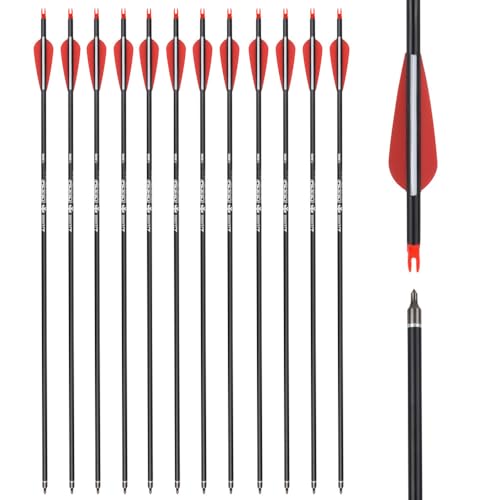
Pointdo 30-Inch Fluorescent Carbon Arrows
Losing an arrow in tall grass can turn a productive practice session into an irritating scavenger hunt. Pointdo addresses that everyday problem with fluorescent shafts, bright vanes, removable tips, and adjustable nocks packed into a straightforward 30-inch carbon design. The arrow also enters discussions about best carbon arrows for elk hunting because it carries a stated 500 spine and supports bows from 25 to 60 pounds. Still, its strongest appeal rests on visible, reusable practice performance, while serious elk use requires a closer look at spine, finished weight, and broadhead compatibility.
Pointdo Fluorescent Carbon Arrow
The shaft is made from carbon fiber and measures 30 inches from end to end. Its stated outer diameter is 7.8 millimeters, which converts to roughly 0.307 inch and places it near a familiar standard-diameter profile. That size keeps the arrow easy to handle and avoids some of the component complications associated with very narrow hunting shafts. The full-length format also suits many common recurve and compound setups, though shortening the shaft would change its dynamic behavior.
Pointdo rates this version at 500 spine for bows between 25 and 60 pounds. That wide range sounds flexible, but bow type, draw length, point weight, and shaft length can shift the real match quite a bit. A 500-spine arrow may behave comfortably from a lighter recurve and feel too weak from a harder-hitting compound near the upper end of the range. Proper matching matters because a weak dynamic spine can create poor clearance, wide groups, and stubborn tuning problems.
The fluorescent finish is one of the most practical features in the package. Both the shaft and fletching are designed to stand out, while two yellow vanes and one white vane make orientation easy to read at a glance. High visibility can save time after a miss into grass, leaves, or dim corners of an outdoor range. It also makes damaged or dirty vanes easier to spot before the next shot.
The arrows arrive in protective packaging according to the supplied information, and that detail carries more weight than it first appears. Long shafts are easy to crush, scrape, or bend during shipping if the box doesn't support them properly. Well-protected packaging helps preserve nock condition, vane shape, and shaft alignment before the first session. Even so, every arrow should be rolled, flexed, and inspected before use because shipping protection isn't the same as a safety check.
Flight Visibility And Range Convenience
Bright colors don't directly improve accuracy, but they make the shooting routine less fussy. A fluorescent shaft is easier to trace in flight under decent light, and the yellow-white vane pattern gives a clear reference for nock position. That visibility helps during group analysis because one unusual impact can be tied back to a specific shaft more quickly. Easy arrow identification is especially useful in mixed groups where several shooters use similar black carbon shafts.
Plastic vanes help stabilize the arrow after release, guiding the rear of the shaft as it recovers from launch. Their value depends on consistency, though, since one warped vane can steer differently from the other two. Storage pressure, heat, and tight quivers may bend plastic fletching over time. A quick glance and gentle reshaping can protect more repeatable flight before small vane problems become confusing group changes.
The standard-size shaft also pulls reasonably well from many foam and bag targets, though dense targets can still grip hard. Twisting or yanking at an angle places extra stress near the insert and front of the carbon tube. A straight pull with a rubber gripper reduces strain and helps protect the shaft. That simple habit supports longer practice life without adding much effort to the session.
Fluorescent coloring becomes particularly useful outdoors, where brown leaves and uneven ground can swallow dark shafts in seconds. It won't guarantee recovery after a deep miss, but it improves the odds of spotting the arrow before stepping on it. That matters because carbon damage can occur when a hidden shaft is crushed under a boot. Better visibility and safer recovery work together here, especially around brushy targets and sloped shooting lanes.
Adjustable Nocks And Removable Tips
The nocks aren't glued into the shafts, allowing them to rotate for proper vane clearance. That design makes the arrows easier to adapt across different rests, shelves, and string positions. Six spare nocks are included, giving the package some insurance after rear-end impacts or accidental damage. The tradeoff is that adjustable nocks need regular checks because a loose one may rotate between shots.
Nock fit should feel secure on the string without clamping down too tightly. A nock that grips too hard can delay release from the string, while one that barely holds may create an unsafe setup. The supplied information doesn't specify throat size, so the fit has to be judged directly against the serving. Proper string engagement is more important than whether the nock happens to rotate easily.
Removable screw-in tips make the arrows easier to maintain and adapt for target practice. Pointdo includes twelve O-rings designed to lock the screw tips and reduce loosening during repeated impacts. That small addition solves a common annoyance because threaded points can gradually back out inside dense targets. O-ring tip retention helps keep point alignment steadier and cuts down on constant hand tightening.
The supplied description says the arrows work for target practice and hunting, but the installed tips should still be treated according to their actual design. Serious hunting requires legal broadheads that fit correctly, spin true, and match the intended total point weight. Replacing the practice tip may change front weight and dynamic spine, especially on a 500-spine shaft. Broadhead conversion should never be treated as a simple thread swap without checking the finished setup.
Elk Hunting Strengths And Limits
The fluorescent finish solves a real field frustration, but visibility alone doesn't qualify an arrow for elk. Large-game equipment depends on total mass, shaft spine, grains per inch, insert strength, broadhead alignment, and finished front-of-center balance. The supplied details provide length, diameter, material, and spine, yet they don't state shaft weight or straightness tolerance. That missing information creates a meaningful limitation for anyone weighing this pack against the best carbon arrows for elk hunting.
A 500-spine shaft generally sits on the weaker side for many powerful elk-oriented compound setups, especially with a long draw length or heavier broadhead. The stated 25-to-60-pound range is broad, but those numbers don't account for aggressive cams or extended shaft length. Keeping the arrow at the full 30 inches also makes it behave dynamically weaker than a shorter version of the same shaft. Spine suitability should be confirmed with the bow manufacturer's chart and actual tuning results.
The standard 7.8-millimeter diameter brings both convenience and compromise. Common-size components may be easier to source, and the shaft is straightforward for routine target shooting. A wider shaft also presents more surface area to crosswinds than a narrow hunting model of similar weight and speed. That doesn't make it unusable, but wind exposure and penetration profile deserve attention in open elk country.
The strongest practical fit remains repeated practice with compatible recurve and compound bows. Bright shafts are easier to recover, spare nocks extend usability, and O-rings help keep screw tips from loosening. Those details make the pack less troublesome during regular range work. For elk, the responsible view is more cautious because finished arrow mass and broadhead behavior aren't documented in the supplied specifications.
Maintenance, Tradeoffs, And Realistic Use
Carbon arrows demand inspection even when they look fine at first glance. Hard target impacts, missed shots, and collisions inside a tight group can create cracks or splinters that aren't obvious until the shaft is flexed. Each arrow should be checked along its full length before reuse. Routine carbon inspection is a safety habit, not a fussy extra step.
The fluorescent coating and plastic vanes may show dirt, scuffs, and target residue sooner than darker arrows. That cosmetic wear doesn't automatically affect flight, though damaged vanes or loose components certainly can. Cleaning the shafts with a soft cloth and checking every tip keeps small issues from piling up. Simple upkeep is enough for most sessions, provided the arrows haven't struck a hard surface.
Accessory choices around a bow can influence shooting consistency even though they don't change the arrow's basic specifications. A separate reference to optic equipment appears in 177 air rifle scopes, but that subject has no direct effect on carbon arrow spine, fletching, or broadhead tuning. The useful lesson is simply that each piece of shooting equipment should be judged by its own role. Arrow performance still comes back to bow match, shaft condition, release quality, and component alignment.
The Pointdo pack offers a sensible mix of visibility, replaceable parts, and everyday convenience. Its fluorescent construction reduces the hassle of locating missed arrows, while adjustable nocks and locking O-rings add practical value at the range. The 500 spine and missing weight data keep it from being an easy recommendation for harder-hitting elk setups. It makes the most sense as a bright, serviceable practice arrow for bows that match its actual dynamic spine after careful testing.


12 Best 22 Pcp Air Rifle For Hunting of 2026 With Quiet Power

7 Best 22 Pcp Air Rifle Under 300 of 2026 For Backyard Pest Control

10 Best 22 Break Barrel Air Rifles of 2026 For Backyard Pest Control

10 Best 30 Caliber Pcp Air Rifle of 2026 For Medium Game

Top Best 177 Air Rifle Under 100: Budget-Friendly Picks for 2026

How to Safely Reload Shotgun Shells at Home

11 Best Co2 Air Rifle For Pest Control of 2026 To Ensure Humane Dispatch

12 Best Inexpensive Air Rifles of 2026 For Dependable Backyard Accuracy






