Bestairriflescopes.com is reader-supported. When you buy through links on our site, we may earn an affiliate commission. Learn more

Best Combat Shotgun for Home Defense: Safety First

A search for the best combat shotgun for home defense often starts with power, capacity, or appearance, but those details don't settle the biggest household concerns. A firearm kept near bedrooms, children, guests, or shared living spaces creates responsibilities that reach far beyond the product itself. Secure storage, lawful access, reliable identification of a threat, and safe handling matter more than dramatic specifications. A poor plan can turn a defensive tool into another source of danger.

Safe access creates an awkward balancing act. The firearm must remain inaccessible to unauthorized hands while still being stored in a manner consistent with local law and the owner's emergency plan. A locked rapid-access safe may help reduce casual access, but the lock, mounting method, and storage location still need careful thought. Leaving a shotgun loose in a closet, behind a door, or beneath a bed won't provide responsible control, no matter how convenient it feels.

Physical fit also deserves attention because shotguns can be heavy, long, and difficult to handle in confined rooms. Excessive length or poor balance may make safe movement harder, while strong recoil can interfere with control and follow-up handling. Manageable recoil and a stock that fits correctly support safer practice, yet those features can't replace instruction. Frankly, a firearm that feels intimidating at the range probably won't become easier to manage during a frightening event.

Home construction adds another layer of concern. Interior walls may offer limited protection from missed projectiles, and nearby rooms can contain family members or neighbors who can't be seen. Target identification must remain non-negotiable, especially in darkness, confusion, or a possible false alarm. Noise, stress, and reduced visibility can distort judgment, so a defensive plan should never depend on assumptions or a half-awake reaction.

Maintenance isn't glamorous, but neglect can create failures at the worst moment. Storage humidity, dust, improper lubrication, damaged ammunition, and an unfamiliar safety mechanism can all cause trouble. Regular inspections should follow the manufacturer's instructions, and any mechanical concern belongs with a qualified gunsmith rather than a kitchen-table repair. Reliable condition means verified maintenance, not confidence based on appearance.

Legal requirements can differ sharply between states, cities, and countries. Storage laws, transportation rules, magazine restrictions, defensive-force standards, and reporting duties may change what responsible ownership looks like. Local legal guidance from qualified sources should shape the plan before a firearm enters the home. Internet opinions won't protect anyone from legal consequences caused by a misunderstood rule.

A layered security plan usually offers more protection than relying on one object. Solid door hardware, working locks, exterior lighting, alarms, charged phones, clear family communication, and a designated safe room can create valuable time. Dogs, cameras, and motion alerts may also provide early warning, though each comes with tradeoffs. The shotgun should never become the entire strategy because prevention and distance often reduce risk more effectively.

Professional training needs to include more than basic marksmanship. Safe loading and unloading, malfunction recognition, storage habits, decision-making, emergency communication, and post-incident conduct all deserve practice. Scenario-based safety instruction can expose weak assumptions without turning the home into a tactical playground. The realistic goal isn't to feel fearless; it's to avoid panic, prevent mistaken identification, and make fewer irreversible errors.


Umarex T4E HDS .68 CO2 Safety Review

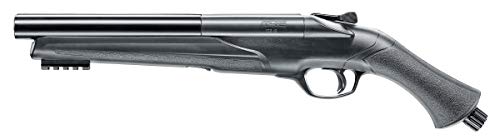
A device built to launch large .68-caliber projectiles carries consequences that go well beyond its compact, shotgun-like appearance. The Umarex T4E HDS is sometimes discussed beside the best combat shotgun for home defense, yet it isn't a firearm and shouldn't be treated as a guaranteed substitute for one. Its factory-rated 16-joule output, stated velocity above 325 FPS, and ability to accept several projectile types demand disciplined handling rather than casual experimentation. The sensible way to review it is through storage, control, legal risk, maintenance, and realistic expectations.

Umarex T4E HDS 16J

The defining feature is the factory-produced 16-joule configuration, not an aftermarket power modification. That distinction matters because factory assembly may provide clearer warranty coverage and more predictable component compatibility than a privately altered launcher. Even so, factory production doesn't remove the need to inspect seals, controls, and the manual before use. A warranty is useful for defects, but it can't correct careless loading or unsafe storage.

Power comes from a standard 12-gram CO2 cartridge, which keeps the system self-contained and avoids pumps or external air tanks. CO2 performance can change with temperature, cartridge condition, firing pace, and seal health, so the stated velocity shouldn't be viewed as identical in every environment. Cold storage may reduce pressure, while leaving a cartridge installed for long periods can place unnecessary strain on seals. Those tradeoffs make routine inspection more valuable than relying on a number printed in a listing.

The .68-caliber platform accepts several projectile materials according to the supplied description, including rubber, nylon, shaped rounds, pepper projectiles, and steel balls. That flexibility is also the product's biggest safety complication, because projectile choice changes impact risk, legal exposure, and the chance of severe injury. Steel ammunition can be particularly dangerous and may damage the launcher, surrounding property, or unintended targets depending on manufacturer guidance. Only ammunition expressly permitted by the current manual should be considered, and local restrictions may apply to chemical or impact projectiles.

The double-barrel form gives the HDS a visually familiar layout, but appearance shouldn't create false confidence. Two available shots mean limited capacity, and a CO2-powered system still depends on intact seals, adequate pressure, correct loading, and proper activation. A mechanical issue, puncture failure, or empty cartridge can leave the device unusable. That limitation deserves more attention than aggressive styling or headline velocity.

Handling And Storage Responsibilities

Safe storage starts with treating the launcher as capable of causing serious harm. A locked container, controlled key or code access, and separation from projectiles can reduce unauthorized handling. Hiding it behind clothing or beneath furniture isn't secure storage, especially in homes with visitors, children, contractors, or shared access. Physical security matters every day, not only during an emergency.

The muzzle should remain pointed in a safe direction during loading, unloading, inspection, and cartridge changes. Fingers belong away from the trigger until a lawful and clearly identified need exists. Protective eyewear is sensible during maintenance and approved training because CO2 systems can release gas, debris, or damaged projectiles unexpectedly. These habits sound basic, yet basic lapses cause many preventable incidents.

Projectiles need their own labeled storage so incompatible or prohibited ammunition doesn't get mixed together. Pepper rounds may degrade, leak, or create contamination concerns, while hard projectiles can present ricochet and penetration hazards. Ammunition management should include checking packaging, condition, manufacturer approval, and expiration guidance where applicable. Loose rounds in a drawer invite mistakes at exactly the wrong moment.

CO2 cartridges shouldn't be exposed to excessive heat, puncture, fire, or careless disposal. A cartridge installed indefinitely may slowly leak or stress internal seals, though removal procedures must follow the manufacturer's instructions. Storage temperatures, lubrication points, and approved oils matter because petroleum products can damage some seals. The owner's manual, not guesswork, should settle those details.

Realistic Home Defense Limitations

The phrase best combat shotgun for home defense can create a misleading comparison here. The T4E HDS is a CO2 launcher, and its legal classification, stopping capability, reliability, and permissible use can differ sharply from a firearm. It shouldn't be presented as certain to stop an attacker, nor should its visual resemblance be mistaken for proven defensive effectiveness. Real emergencies are chaotic, and uncertain tools can add confusion rather than remove it.

Projectiles can miss, bounce, break, penetrate lightweight materials, or strike someone who wasn't visible. Interior walls, glass, furniture, pets, and neighboring rooms complicate every discharge inside a home. Target identification remains essential because a silhouette, sound, or sudden movement doesn't establish a lawful threat. Darkness and panic make that judgment harder, not easier.

Pepper projectiles introduce another set of tradeoffs. Chemical agents can affect the person using the launcher, other occupants, children, older relatives, pets, or anyone with respiratory sensitivity. Airflow may spread irritants through hallways and ventilation systems, while cleanup can take longer than expected. A confined room is not a controlled outdoor training area.

Hard projectiles may create greater impact but also bring greater risk of severe injury, ricochet, property damage, and legal consequences. Steel balls deserve particular caution because they can behave very differently from softer training rounds. More impact isn't automatically more safety, especially where walls and bystanders are nearby. The safest projectile is still dangerous when launched at a person.

Maintenance And Reliability Checks

CO2 launchers depend on seals, valves, piercing components, and clean barrels. Dirt, damaged O-rings, improper lubricant, or long-term cartridge pressure can cause leaks and inconsistent operation. A simple pre-storage inspection should confirm that the launcher is unloaded, clean, dry, and secured. Mechanical readiness comes from maintenance, not from leaving it untouched for months.

The stated factory warranty is a practical advantage over an unofficially modified unit, provided the product is genuine and used within warranty terms. Unauthorized disassembly, unsuitable ammunition, or nonapproved modifications may affect coverage. Receipts, serial information, packaging, and the manual should be retained in case service is needed. Factory support is most useful when ownership records are easy to produce.

Dry firing, seal lubrication, cleaning intervals, and cartridge removal should follow official instructions. Generic firearm-cleaning habits don't always transfer safely to CO2 equipment because solvents and oils can react differently with polymer parts and seals. Manufacturer-approved maintenance reduces the chance of damaging the valve system. A qualified service technician is the better route when pressure leaks or internal faults appear.

Function checks should occur only in a lawful, controlled location with a secure backstop and proper eye protection. Residential walls, cardboard boxes, fences, and household furniture aren't dependable backstops for hard .68-caliber projectiles. Noise and visible handling may also alarm neighbors or attract law-enforcement attention. A licensed range or approved training location removes some of that uncertainty.

Legal And Ethical Tradeoffs

Local law may treat CO2 launchers, pepper projectiles, and impact rounds differently. Carry rules, transport restrictions, chemical-agent limits, age requirements, storage duties, and defensive-force standards can vary by jurisdiction. Legal classification should be confirmed through current official sources or qualified local counsel rather than retailer descriptions. A product being available for sale doesn't guarantee every proposed use is lawful.

Displaying a launcher that resembles a firearm can trigger a deadly misunderstanding. Police officers, neighbors, security personnel, or another armed person may not be able to distinguish it from a conventional shotgun. That visual similarity is a serious liability during public transport, open handling, or a confused emergency response. Keeping it secured and discreet is part of responsible ownership.

Defensive force must still be reasonable and lawful, regardless of whether the tool is described as less lethal. A .68-caliber projectile can cause grave injury, permanent disability, or death depending on impact location and circumstances. Less lethal doesn't mean harmless, and the label doesn't erase accountability. Every discharge carries moral and legal consequences.

De-escalation, retreat where lawful and practical, secure-room planning, alarms, reinforced locks, exterior lighting, and prompt emergency calls can reduce the chance of direct confrontation. These measures don't depend on cartridge pressure or projectile condition. A launcher may sit within a broader safety plan, but it shouldn't become the whole plan. Layers buy time, and time often matters more than intimidation.

Strengths, Weaknesses, And Practical Fit

The HDS offers a compact format, straightforward CO2 power, a familiar break-barrel layout, and a factory-rated energy level supplied in the product description. Those features may support controlled training or lawful sporting use where regulations allow it. Factory configuration is preferable to an unknown modification because component history is easier to assess. The design is also mechanically simpler than systems relying on external tanks.

Its weaknesses are substantial: only two shots, temperature-sensitive CO2 performance, seal dependence, projectile-specific hazards, and uncertain effectiveness in a real confrontation. The broad ammunition claim can encourage unsafe experimentation unless the manual's limits are followed carefully. Limited capacity also means there is little margin for a loading error or mechanical failure. Appearance may promise more certainty than the mechanism can deliver.

Physical handling may feel easier than managing a full-size firearm, but that doesn't eliminate recoil-like movement, muzzle discipline, or the need for practice. Controls must be understood without rushing, and loading procedures should never be improvised under stress. A person uncomfortable with pressure systems, secure storage, or regular maintenance may find the ownership burden frustrating. The device asks for more discipline than its uncomplicated profile suggests.

The fairest assessment is that the Umarex T4E HDS 16J is a serious CO2-powered launcher with defined mechanical strengths and equally serious limitations. It isn't a toy, a guaranteed threat stopper, or a direct replacement for professional security planning. Responsible ownership means secure storage, approved projectiles, lawful use, routine service, and sober expectations. Anyone unwilling to maintain those standards should leave it unpurchased and rely on safer defensive layers.

Umarex T4E HDS .68 Training Marker Review

Compact launchers often look simpler than they really are. The Umarex T4E HDS sits in the same visual neighborhood as products discussed under best combat shotgun for home defense, yet its actual role is much narrower: it is a .68-caliber CO2 training marker designed to fire compatible paintballs or rubber balls. That distinction matters because appearance, marketing language, and real-world capability aren’t interchangeable. A fair review has to weigh handling, storage, maintenance, legal concerns, and realistic expectations instead of leaning on its shotgun-style shape.

Umarex T4E HDS Training Marker

The HDS uses .68-caliber projectiles, which places it in a familiar paintball-sized format. According to the supplied product details, it can fire paintballs or rubber balls, though projectile compatibility should always be confirmed against the current manufacturer manual. Different projectile materials behave differently after impact, and that changes the risk of injury, ricochet, property damage, and cleanup. Rubber balls may sound less serious than conventional ammunition, but they can still cause severe harm.

Power comes from a standard CO2 cartridge, which isn’t included with the marker. CO2 keeps the system self-contained and avoids the bulk of an external air tank, but performance can shift with temperature, cartridge condition, firing pace, and seal health. Cold environments may reduce pressure, while improper long-term storage can contribute to leakage or damaged seals. That’s the catch: the setup is convenient, but it isn’t maintenance-free.

The product description highlights a quick-piercing CO2 chamber intended to simplify cartridge installation and activation. Mechanically, that design can reduce the hassle of preparing a cartridge compared with slower threaded systems. Still, a cartridge should never be installed, pierced, removed, or stored without following the official instructions. Pressurized gas deserves respect because rushed handling can damage seals, release gas unexpectedly, or leave the marker in an uncertain state.

Handling And Everyday Practicality

The shotgun-like body gives the HDS a broad grip area and a layout that may feel familiar during controlled training. Its form can also create false confidence, especially for anyone assuming that visual similarity means firearm-level performance. Training value comes from learning safe muzzle direction, trigger discipline, loading procedures, and responsible storage, not from pretending the marker is something else. Used carelessly, the styling can become more liability than benefit.

A Picatinny accessory rail is included for compatible equipment such as lights or other training accessories. The rail adds flexibility, but piling on accessories can increase weight, snag points, and handling complexity. A light may help identify objects in a controlled exercise, yet no accessory replaces positive identification or sound judgment. Lasers also require discipline because pointing one at a person, animal, vehicle, or aircraft can create serious legal and safety consequences.

Two-shot capacity shapes the entire experience. It keeps operation relatively simple, but it also leaves little room for a loading mistake, pressure problem, or damaged projectile. Limited capacity may be acceptable for short training drills, though it makes the marker a poor foundation for unrealistic defensive promises. Any product that depends on two chambers, a CO2 seal, and compatible ammunition needs calm preparation rather than last-second improvisation.

Safety, Storage, And Maintenance

Secure storage shouldn’t be treated as optional just because the HDS is a paintball-style marker. Its appearance can alarm visitors, neighbors, law enforcement, or anyone who mistakes it for a firearm. A locked case, controlled access, and separate projectile storage help reduce unauthorized handling. Responsible storage also means keeping CO2 cartridges away from heat, flame, puncture hazards, and curious hands.

Cleaning needs to follow the manufacturer’s guidance because CO2 systems rely on valves, seals, and materials that may react badly to ordinary firearm solvents. Petroleum-based products can damage certain seals, while excessive oil may attract dirt or interfere with operation. Approved lubricant and careful inspection are safer than guessing. A persistent leak, damaged chamber, or unreliable piercing mechanism belongs with a qualified technician rather than a home repair experiment.

Paint residue, shell fragments, dust, and damaged rubber rounds can affect consistency. After approved use, the chambers and barrel should be checked for debris while the marker is unloaded and depressurized according to the manual. Eye protection is sensible during loading, cleaning, and cartridge work because compressed gas or debris can escape suddenly. Basic protective gear isn’t overkill here; it’s part of treating the equipment honestly.

Home Defense Claims Need Restraint

The phrase best combat shotgun for home defense doesn’t accurately describe this product. The HDS is not a conventional shotgun, and it shouldn’t be presented as a guaranteed replacement for one. Its ability to launch rubber balls doesn’t establish reliable threat-stopping performance, lawful defensive use, or predictable results under stress. Marketing language can sound reassuring, but real emergencies don’t follow product-page scripts.

Interior walls, doors, windows, pets, guests, and nearby rooms complicate every projectile discharge. Rubber balls may bounce, miss, break objects, or strike someone who wasn’t visible. Paintballs can obscure surfaces and leave residue, while hard training rounds can cause significant injury. Target identification remains essential because noise in a hallway doesn’t prove that a lawful threat exists.

Displaying a realistic marker may provoke an armed response from police, security personnel, neighbors, or an intruder who believes it is a firearm. That visual ambiguity is one of the product’s most serious weaknesses in a defensive setting. Less-lethal appearance isn’t obvious from across a room or through poor lighting. The marker may therefore escalate a confrontation even if the person holding it never intends to fire.

Strengths, Weaknesses, And Realistic Use

The strongest case for the HDS is controlled training or recreational use where local rules permit it. Its .68-caliber format, CO2 operation, quick-piercing chamber, and accessory rail create a straightforward platform for practicing safe handling habits. Simple mechanical operation can make short drills easier to organize than systems built around external tanks. That said, every session still needs an approved location, eye protection, a dependable backstop, and clear range rules.

The weaknesses are equally plain. CO2 pressure changes with temperature, seals can leak, cartridges aren’t included, and only two projectiles are available before reloading. The marker’s realistic appearance adds legal and social risk, while projectile choice can dramatically change the severity of an impact. Mechanical simplicity doesn’t erase these tradeoffs; it merely makes them easier to understand.

Rubber-ball use may suit controlled drills where hard surfaces, bystanders, and fragile property are absent. Paintballs can provide visible impact feedback, though cleanup and staining become part of the bargain. Neither option should be used casually in a backyard, garage, apartment hallway, or residential room without a lawful and properly designed training setup. Safe environment design matters more than the novelty of the launcher.

The HDS makes the most sense as a serious training marker for someone willing to store it securely, maintain the CO2 system, follow local laws, and accept its limitations. It makes less sense for anyone seeking a guaranteed defensive answer, a maintenance-free device, or a product that can be left loaded and forgotten. Realistic expectations keep the review grounded: it is a compact two-shot CO2 marker with useful training features, not a shortcut around planning, instruction, or responsible judgment.

P2P HDX .68 CO2 Safety And Training Review

A long, pump-action launcher can look reassuring at first glance, especially beside smaller defensive tools. The P2P HDX is often discussed around the best combat shotgun for home defense topic, but its actual identity is different: it is a .68-caliber CO2-powered launcher built to fire compatible pepper rounds, rubber balls, or powder balls. That difference isn’t a footnote. It shapes the product’s legal status, handling limits, storage needs, reliability concerns, and the consequences of using it inside a home.

P2P HDX .68 CO2 Launcher

The supplied description states that the HDX launches .68-caliber projectiles at speeds of up to 300 feet per second. That figure gives a basic sense of output, but it doesn’t guarantee identical performance in every situation. CO2 pressure changes with temperature, cartridge condition, firing pace, seal health, and maintenance. A warm cartridge and a cold cartridge may not behave the same, so the listed velocity should be treated as a maximum specification rather than a fixed result.

The included kit adds 20 pepper rounds, 20 rubber balls, and a Quick Piercing Adapter. That bundle reduces the need to source basic compatible projectiles separately, yet each projectile type carries different risks. Pepper rounds can contaminate rooms and affect unintended occupants, while rubber balls may ricochet or cause severe impact injuries. Powder balls can also create cleanup, visibility, and respiratory concerns depending on their contents and the environment.

A full-length format gives the HDX more contact points than a compact pistol-style marker. The fore-end, stock area, and longer sighting plane may feel steadier during controlled training. Still, larger size becomes a drawback in narrow hallways, small bedrooms, crowded storage spaces, and vehicles. The same length that helps stabilize the launcher can make it awkward to secure or maneuver safely.

CO2 Deployment And Pressure Management

The HDX uses economical CO2 cartridges, though the cartridges aren’t included. The manufacturer recommends Umarex-brand CO2 for proper sealing and consistent performance, according to the supplied information. That recommendation matters because cartridge dimensions and seal contact can vary slightly between brands. Reliable sealing is essential in any system that depends on stored gas pressure.

A dedicated CO2 piercing button allows the cartridge to remain unpierced until activation. In theory, this arrangement may reduce long-term pressure on the seals compared with leaving a cartridge continuously punctured. The Quick Piercing Adapter is included to make activation easier and faster. Even so, a delayed-piercing setup doesn’t guarantee immediate operation because the cartridge, valve, adapter, and internal seals must all function correctly.

Storage habits make or break CO2 equipment. Heat can raise internal pressure, cold can reduce output, and long-term neglect can dry or deform seals. Cartridges should be kept away from flame, puncture hazards, hot vehicles, and direct sunlight. Pressure-system maintenance isn’t glamorous, but ignoring it can leave the launcher leaking or unusable.

Activation also deserves deliberate practice in an approved, unloaded setting. A person who has never operated the piercing mechanism may hesitate, use it incorrectly, or assume the cartridge has punctured when it hasn’t. Practice should focus on understanding the controls without loading live impact or chemical projectiles. That’s a safer way to reveal mechanical confusion before it matters.

Magazine Capacity And Loading Routine

The integrated magazine holds 16 rounds, which is substantially more than a two-shot launcher. A larger onboard supply reduces how often the marker must be reloaded during structured drills. The grip houses a loading ramp intended to make the process quicker and easier. Capacity is convenient, but it also increases the number of projectiles that must be tracked, inspected, and stored responsibly.

Loading different projectile types into the same magazine can create uncertainty. Pepper rounds, rubber balls, and powder balls may look similar in poor lighting or under stress. Mixing them without a clear system can lead to unintended effects. Projectile identification should remain simple, consistent, and verified before anything enters the magazine.

Round condition matters too. Deformed shells, cracked pepper rounds, swollen projectiles, dirt, or moisture may interfere with feeding. A 16-round magazine won’t help if one damaged ball causes a jam or breaks inside the launcher. Every projectile should match the current manufacturer guidance and remain within its recommended storage conditions.

The loading ramp simplifies access, though any opening in the grip can collect lint, grit, or debris during storage. A launcher kept near clothing, carpet, garages, or dusty utility spaces may need more frequent inspection. Clean feeding surfaces support reliability far better than assuming a covered magazine stays clean forever. Routine checks should be done with the CO2 system safely depressurized as directed by the manual.

Pump Action And Sight Arrangement

The HDX uses a smooth pump-action mechanism according to the product details. That motion creates a familiar manual cycle and gives the operator tactile feedback between shots. A pump system can also introduce short-stroking, incomplete cycling, or hesitation if the fore-end isn’t moved through its full travel. Familiar appearance doesn’t eliminate the need to learn the mechanism carefully.

The removable rear sight flips up and can be adjusted, while the front sight is also removable. Those features allow the sight picture to be configured for controlled recreational or training use. Adjustable sights may help with consistency, but they don’t correct poor handling or unsafe target selection. Sight alignment only matters after the surroundings, backstop, and target have been positively confirmed.

Removing the sights may create a cleaner rail area for other equipment, though doing so can also reduce the simplicity of the setup. Extra parts can loosen, shift, snag, or require periodic checking. A straightforward configuration is often easier to maintain than a launcher covered in accessories. More hardware doesn’t automatically create better control.

Pump action also increases overall movement during use. Cycling the fore-end changes hand position, balance, and muzzle stability, particularly for someone with limited reach or strength. That motion should be practiced only in a safe location with an approved backstop and proper protective equipment. Controlled cycling matters more than speed.

Accessory Mounting And Practical Tradeoffs

The launcher includes M-LOK slots and Picatinny rails for compatible lights, optics, and other accessories. These mounting points provide flexibility for training configurations and low-light identification exercises. They also tempt owners to attach more equipment than the platform needs. Weight, balance, snagging, battery management, and mounting security all change as accessories are added.

A light can support visual identification in controlled exercises, but it should never be treated as permission to point the launcher at every sound. The muzzle follows the light on a weapon-mounted setup. That means searching with the light may also mean covering objects or people with the barrel. Positive identification must come before any decision involving force.

Optics can make aiming easier at known targets, yet they add height, bulk, and another component that may lose zero or suffer battery failure. The rail may also tempt buyers to attach lasers. Lasers create their own legal and safety issues, especially around roads, aircraft, neighbors, and public spaces. Accessories need a clear training purpose rather than a decorative role.

Mechanical fit deserves attention because loose mounts can move under repeated cycling and handling. Screws may require inspection, but overtightening can damage mounts or rails. Manufacturer torque guidance should take priority over guesswork. Accessory reliability depends on correct installation, not just compatibility.

Home Defense Claims And Realistic Limits

The phrase best combat shotgun for home defense does not accurately define the P2P HDX. It is not a conventional shotgun, and its projectile energy, operating system, legal classification, and intended use differ from a firearm. Pepper and rubber projectiles shouldn’t be described as harmless or guaranteed to stop a threat. Real confrontations are unpredictable, and less-lethal tools can fail, escalate the situation, or cause permanent injury.

Pepper rounds create special indoor concerns. Ventilation systems, fans, open doors, and confined rooms can spread irritant particles beyond the intended area. Children, older adults, pets, and people with respiratory conditions may be affected. Chemical exposure doesn’t stay neatly confined to one person or one corner of a room.

Rubber balls bring a different set of problems. Hard interior surfaces can cause ricochets, and lightweight walls may not provide a dependable backstop. A missed shot can strike an unseen person, break glass, or damage property. Less lethal never means risk-free.

The realistic appearance of the HDX may also provoke a deadly response. Police officers, neighbors, security personnel, or another armed person may believe it is a firearm. That misunderstanding can unfold faster than anyone can explain what the launcher actually is. Visual intimidation is therefore a serious liability, not simply a benefit.

Safety, Storage, And Legal Responsibility

A locked case or secure cabinet should be the baseline for storage. The launcher, CO2 cartridges, and projectiles need controlled access, especially in homes with children, visitors, roommates, or service workers. Hiding it behind a door or beneath a bed doesn’t count as secure storage. Unauthorized access prevention remains essential even when the device isn’t legally classified as a firearm.

Local laws may regulate pepper projectiles, CO2 launchers, transport, display, carrying, storage, and defensive use differently. Retail availability doesn’t guarantee that every configuration or intended use is lawful in every location. Current official sources or qualified local legal guidance should settle those questions. Legal uncertainty is too serious to resolve through product listings or forum comments.

Maintenance needs to follow the official manual because ordinary firearm solvents may damage CO2 seals or polymer components. Approved lubricants, clean chambers, intact projectiles, and healthy valves support dependable operation. Persistent leaks, broken piercing parts, or internal feeding problems belong with qualified service personnel. Improvised repairs can make a pressurized system less predictable.

A broader home-safety plan should include strong door hardware, working locks, exterior lighting, alarms, charged phones, clear emergency communication, and a secure retreat location. These layers don’t depend on cartridge temperature or projectile condition. The HDX may occupy a limited role in lawful training or preparedness, but it shouldn’t become the entire plan. Prevention and distance often reduce danger more reliably than confrontation.

Strengths, Weaknesses, And Sensible Expectations

The main strengths are easy to identify: 16-round capacity, a quick-piercing CO2 system, multiple mounting surfaces, adjustable removable sights, and compatibility with several .68-caliber projectile types. The pump-action format also gives the launcher a stable, familiar handling profile for controlled training. Those features create flexibility, though each one adds responsibility. Capacity, pressure, and projectile variety all require careful management.

The weaknesses are just as clear. CO2 performance changes with environmental conditions, seals require attention, cartridges aren’t included, and the long body may be awkward in tight spaces. Pepper rounds create contamination risks, while rubber balls can ricochet or cause severe injury. Realistic appearance may also escalate encounters or trigger an armed response.

This launcher makes the most sense in lawful, supervised training environments with protective equipment, a proper backstop, and clear projectile rules. It makes less sense as a maintenance-free device that can be stored indefinitely and expected to work without inspection. Anyone unwilling to learn the piercing system, monitor seals, secure the magazine, and understand local law will likely find ownership more demanding than expected. Mechanical readiness comes from upkeep, not from confidence in the product’s appearance.

The fairest reading of the P2P HDX is that it is a serious .68-caliber CO2 launcher with a useful magazine system and adaptable training features. It is not a conventional combat shotgun, not harmless, and not a guaranteed answer to a home emergency. Its strongest qualities show up under controlled conditions where handling, storage, and maintenance are taken seriously. Sober expectations are the feature that matters most.

Double Eagle Tri-Shot Airsoft Shotgun Review

Realistic styling can blur the line between a recreational replica and equipment built for an actual emergency. The Double Eagle Heavy Weight Pistol Grip 3 Shot Shotgun borrows the silhouette and handling cues of a compact shotgun, yet it remains a spring-powered airsoft replica that launches lightweight 6 mm BBs. That distinction immediately removes it from any serious discussion of the best combat shotgun for home defense. Its practical value sits in backyard target sessions, supervised airsoft games, prop use, and basic handling practice where eye protection, safe storage, and local rules are taken seriously.

Double Eagle Tri-Shot Shotgun

The defining feature is the three-BB burst produced with each trigger pull. Rather than sending one BB down a single barrel, the internal system launches three at once, creating a spread that feels closer to a shotgun pattern within normal airsoft distances. That can make casual target shooting more engaging, though it also drains the shell-style magazine faster than a single-shot design. More BBs per trigger pull means more frequent reloading and more cleanup around the shooting area.

The supplied velocity range is 300 to 350 FPS with .20-gram BBs. That output places it firmly in airsoft territory, where field limits, engagement distances, and protective-equipment rules vary by venue. Velocity may shift with spring condition, BB weight, temperature, barrel cleanliness, and manufacturing tolerances. The stated range shouldn’t be treated as a guarantee for every shot or every individual unit.

A full-size body gives the replica a more substantial feel than a compact airsoft pistol. The added mass may help steady the muzzle during deliberate shots, but it also makes one-handed handling tiring despite the pistol grip. Realistic weight can be useful during supervised training drills, though it isn’t the same as firearm recoil, balance, or operating pressure. The similarity is mostly visual and ergonomic.

Pros Of The Tri-Shot Design

The three-shot mechanism is the biggest reason to consider this model for recreational play. Each pump cycle chambers three BBs, creating a wider impact pattern than a standard spring rifle. That spread can be useful on paper targets or in close-range airsoft scenarios where field rules permit it. Multiple projectiles per shot also add a satisfying mechanical rhythm without requiring batteries or gas.

Spring power keeps the operating system simple. There’s no CO2 cartridge to replace, battery to charge, or gas magazine to maintain between sessions. Pumping the fore-end compresses the spring and prepares the next shot, which makes the replica largely self-contained. Low operating cost is a genuine strength for occasional use, provided the owner is comfortable with the physical effort of cycling it.

The shell-style magazine adds character and makes loading more organized than pouring BBs directly into a fixed reservoir. Shells can be prepared before a session, counted easily, and stored separately from the replica. That format also introduces a small dose of realism without involving actual ammunition. Removable shell magazines are convenient, but losing one can bring the session to a halt.

The pistol grip shortens the rear profile and makes the replica easier to store than a full-stock shotgun. It may also feel natural during close-range airsoft movement, especially in tight field layouts. Still, the grip concentrates more of the load on the wrist and forearm. Compact handling comes with a comfort tradeoff during longer sessions.

Cons And Handling Limitations

The pump action can feel stiff, especially when the spring is new or when the operator has limited hand strength. Three-barrel spring systems generally require more effort than light single-shot airsoft guns. Repeated cycling may become tiring during extended games, and incomplete pumping can interrupt the firing sequence. Manual effort is the price paid for avoiding gas and batteries.

Three BBs leave the magazine with every trigger pull, so capacity disappears quickly. A shell that seems generous on paper may provide only a handful of firing cycles once each shot consumes three rounds. That pace can be frustrating during longer matches or target sessions without spare shells nearby. Fast ammunition use is fun for short bursts but inconvenient for sustained play.

Accuracy also deserves realistic expectations. The multi-barrel layout is designed to create spread rather than one tight point of impact. At modest airsoft distances, the pattern may be useful, but it won’t behave like a precision rifle. A related reference on spring-powered airgun formats appears in break barrel air rifles, though those platforms use different ammunition, mechanics, and intended applications.

The realistic appearance creates another serious drawback. Neighbors, police officers, security staff, or passersby may mistake the replica for a firearm, especially from a distance. Carrying it openly in public can trigger an emergency response before anyone notices airsoft markings. Visual realism demands discreet transport in a closed case and responsible handling only in lawful locations.

Shell Loading And Everyday Use

The shotgun-shell magazine gives the Double Eagle a distinctive loading routine. BBs are placed into the removable shell, the shell is inserted into the receiver, and the pump action chambers the next group. That sequence is straightforward once learned, but small shells are easy to misplace in grass, bags, or cluttered storage areas. Spare-shell organization makes a noticeable difference during a day of play.

Only clean, polished airsoft BBs of the correct size should be used. Cheap BBs with seams, rough surfaces, or inconsistent dimensions can jam the barrels or damage internal components. Reusing BBs picked up from the ground is also a bad bargain because dirt and deformation can affect feeding. Ammunition quality matters even in a simple spring replica.

Barrel cleaning should be gentle and performed with the replica unloaded. Residue, dust, and fragments can disturb the three-barrel pattern or cause inconsistent shots. Silicone-safe products are generally associated with airsoft maintenance, but the manufacturer’s instructions should settle the exact procedure. Routine cleaning is simple, though forcing a rod through the barrel can create more problems than it solves.

Dry firing should be avoided unless the manual explicitly allows it. Releasing a spring without a properly loaded system may place unnecessary stress on internal parts. Leaving the replica cocked for long periods can also weaken the spring over time. Spring preservation depends on unloading, decocking safely, and storing it according to the official guidance.

Safety And Storage Responsibilities

Eye protection is mandatory for anyone near the firing area. A lightweight plastic BB can damage an eye permanently, even after bouncing off a wall, target frame, or hard ground. Ordinary glasses don’t provide the same coverage as properly rated protective goggles. Full eye protection matters for shooters, observers, and anyone retrieving targets.

A suitable backstop needs to capture BBs without causing ricochets. Metal sheets, concrete walls, glass, and rigid indoor surfaces can send projectiles back toward the firing line. Thick fabric traps, purpose-built airsoft targets, or layered soft materials are generally more appropriate for controlled practice. Ricochet control should be planned before the first shell is loaded.

Storage should keep the replica inaccessible to children, visitors, and anyone unfamiliar with airsoft equipment. A locked case is better than leaning it in a closet or hiding it under a bed. The shell magazines and BBs can be stored separately to reduce unauthorized use. Secure access control matters because realistic replicas can create fear or provoke dangerous misunderstandings.

The muzzle should always point in a safe direction, and the trigger finger should remain outside the guard until the sights are on an approved target. Those habits aren’t reserved for firearms. Practicing them with an airsoft replica builds consistency and reduces careless handling. Basic muzzle discipline is one of the most useful lessons this product can support.

Why It Is Not A Home Defense Tool

The Double Eagle should never be presented as the best combat shotgun for home defense. It launches lightweight plastic BBs intended for airsoft recreation, not reliable threat interruption. Its realistic appearance may intimidate someone, but bluffing with a replica can escalate an encounter catastrophically. A person who believes it is a firearm may respond with genuine lethal force.

Airsoft BBs also lack dependable defensive effect. Clothing, distance, barriers, and adrenaline can reduce their immediate impact, while shots to the eyes or face may still cause severe injury. That combination creates a troubling mismatch: limited stopping capability paired with a real risk of permanent harm. Unpredictable injury without reliable protection is not a sound defensive plan.

Mechanical limitations add to the problem. The replica must be pumped before each burst, shells hold limited ammunition, and spring components can wear or jam. None of those traits support dependable emergency use. Recreational reliability and defensive reliability are entirely different standards.

Home security is better addressed through reinforced locks, alarms, exterior lighting, communication plans, charged phones, secure rooms, and lawful professional guidance. Those layers can create time and distance without introducing a realistic replica into a confused confrontation. The Double Eagle belongs on an approved airsoft field or controlled target range. Clear role separation keeps recreation from turning into avoidable danger.

Where The Replica Makes Sense

Casual target shooting is the clearest fit. The pump action provides tactile feedback, the three-BB burst adds variety, and spring power keeps operating expenses modest. It can be entertaining for short sessions where targets are close, the backstop is dependable, and everyone wears eye protection. Simple recreational use plays to the design’s strengths without asking it to do something it can’t.

Airsoft games may also suit the platform, provided the field accepts its velocity and firing configuration. The compact pistol grip can help in close quarters, while the spread may be useful at modest range. The stiff pump and quick shell consumption remain noticeable drawbacks during fast-paced play. Field-rule compatibility should be confirmed before arriving with it.

Basic handling drills offer another reasonable role. Unloaded practice can reinforce muzzle awareness, trigger-finger placement, and controlled movement under qualified supervision. It cannot replicate firearm recoil, reliability, legal responsibility, or live-fire instruction. Training realism has firm limits, and pretending otherwise weakens the value of the exercise.

The most honest assessment is straightforward: the Double Eagle Tri-Shot is a distinctive spring airsoft shotgun with an engaging three-BB mechanism, shell-style loading, and a compact pistol grip. Its drawbacks include tiring pump effort, rapid ammunition use, modest precision, and the legal risk created by realistic styling. Recreational value is credible under controlled conditions, while home-defense claims are neither realistic nor responsible. Properly stored and used with protective gear, it fills a narrow but enjoyable airsoft role.

Umarex Tactical Force Tri Shot Shotgun Review

A realistic shell-fed shotgun replica can look tougher and more capable than its actual role suggests. The Umarex Tactical Force Tri Shot Shotgun is a pump-action airsoft platform built around three-BB firing, a pistol grip, an accessory rail, and a shell-loading system. Its appearance may place it beside searches for the best combat shotgun for home defense, but that comparison stops at styling. This product belongs in controlled airsoft play, target practice, prop use, and safe handling drills, not in a real defensive plan.

Umarex Tactical Force Tri Shot

The headline feature is the tri-shot firing system, which launches three airsoft BBs with each trigger pull. That spread gives the replica a more shotgun-like feel than a standard single-projectile spring gun. At close recreational distances, three BBs can cover a wider section of a paper target or airsoft lane. The tradeoff is obvious, though: every shot consumes ammunition three times faster than a single-shot platform.

A pump-action design powers the firing cycle without batteries, gas, or CO2. Pulling the fore-end back and forward compresses the spring and loads the next group of BBs. That makes the replica fairly self-contained, but the pump may feel stiff during repeated use. Manual spring operation keeps running costs low while putting more work on the support hand.

The included shell system adds a practical loading routine and gives the replica much of its personality. Seven shells and a shell caddy are supplied, reducing the need to buy basic spares right away. Each shell can be prepared before a game or target session, then swapped as needed. Shell-based loading feels organized and engaging, though small shells are easy to lose in grass, gear bags, or dim staging areas.

Tri-Shot Performance And Shot Spread

Three BBs leave the barrels together, so the pattern matters more than pinpoint accuracy. The replica is built for close-to-moderate airsoft distances where a small spread can be useful. It won’t behave like a precision rifle, and expecting tight groups far downrange misses the point of the design. Close-range coverage is its strength, while long-distance consistency is a clear weakness.

BB quality can affect feeding and spread. Smooth, polished airsoft BBs of the correct size are less likely to jam or drag inside the barrels. Cheap BBs with seams, rough surfaces, or inconsistent dimensions can create erratic flight and mechanical trouble. Consistent ammunition helps the three-barrel system behave more predictably.

Barrel cleanliness also influences how evenly the BBs separate after leaving the muzzle. Dust, old residue, fragments, and dirt can shift the pattern or cause one barrel to perform differently from the others. Cleaning should be gentle, with the replica unloaded and the spring released according to the manual. Three clean barrels matter more here than cosmetic exterior care.

The multi-projectile setup may feel satisfying during short games, but it empties shells quickly. A shell that holds a respectable number of BBs on paper produces far fewer trigger pulls once each shot uses three rounds. Spare shells reduce interruptions, though reloading still becomes part of the experience. Fast ammunition use is fun for bursts and less convenient during longer sessions.

Pump Action And Pistol Grip Handling

The pump-action fore-end creates a direct, mechanical rhythm: cycle, aim, fire, repeat. That sequence can feel deliberate and rewarding, especially for someone who prefers spring-powered replicas over battery-driven platforms. It also slows the firing pace, which may encourage more careful shot selection. Measured operation suits recreational practice better than frantic trigger pulling.

Stiffness is the main handling complaint built into this type of design. A stronger spring demands a firm, complete pump stroke, and short-stroking can interrupt loading. Smaller hands, limited upper-body strength, or long play sessions may make the action tiring. Pump effort is part of the package, not a defect that disappears after a few shells.

The ergonomic pistol grip keeps the rear profile compact and gives the shooting hand a clear angle. That can help in tight airsoft field layouts where a full stock feels bulky. Still, the grip places more strain on the wrist because the shoulder isn’t supporting the rear of the replica. Compact control comes at the cost of long-session comfort.

Two-handed use is the sensible expectation. One hand manages the pistol grip and trigger area, while the other controls the pump and stabilizes the muzzle. Trying to operate a full-size tri-shot replica one-handed invites poor balance and careless muzzle movement. Stable two-hand handling is safer and more practical.

Accessory Rail And Setup Choices

The accessory rail creates space for compatible lights, sights, or other airsoft equipment. A small light can support target identification during lawful, supervised low-light games. Optics may help with a clearer sight picture, though the replica’s spread limits the value of precision aiming hardware. Accessory flexibility is useful, but the platform doesn’t need to be overloaded.

Extra hardware changes the balance quickly. A heavy light, oversized optic, or multiple attachments can make the front end cumbersome during repeated pumping. Mounts can also loosen over time if they aren’t installed correctly. Simple configurations tend to stay easier to carry, maintain, and operate.

A laser may look appealing on the rail, but it brings legal and safety concerns outside controlled play. Pointing lasers toward roads, aircraft, homes, animals, or uninvolved people can create serious consequences. The beam also doesn’t replace proper backstop awareness or target identification. Responsible accessory use matters more than visual appeal.

Rail placement can influence grip position and pumping comfort. An accessory mounted too close to the fore-end may interfere with the support hand or snag during cycling. Testing the layout with the replica unloaded helps reveal these conflicts. Clear pump travel should take priority over adding more equipment.

Shell Caddy And Reloading Routine

The included shell caddy keeps spare magazines close and gives the replica a more complete airsoft setup. Seven supplied shells provide enough rotation for casual play without immediately relying on aftermarket extras. Loading them before a session reduces downtime and makes ammunition tracking easier. Organized shell storage is a real convenience during short games.

Shells still need a secure place after use. Dropping them into grass or leaving them on a bench is an easy way to lose one. A pouch, numbered storage box, or dedicated compartment keeps loaded and empty shells separate. Small-part management saves frustration later.

Each shell should be inspected for cracks, dirt, or damaged feed openings. A worn or contaminated shell may cause poor loading even if the replica itself is clean. Forcing a damaged shell into the receiver can make a simple problem worse. Shell condition deserves the same attention as the barrels and pump mechanism.

Reloading also affects the pace of play. The system isn’t built for constant uninterrupted firing, and that slower rhythm may be either enjoyable or annoying depending on expectations. Some people appreciate the deliberate process, while others may prefer a large-capacity magazine. Realistic handling flavor is the benefit, not raw firing speed.

Pros Of The Tactical Force Tri Shot

The strongest advantage is mechanical simplicity. Spring power removes the need for batteries, chargers, gas cans, or CO2 cartridges. The replica can be prepared with shells and used as long as the pump system remains functional. Low operating complexity makes it approachable for occasional recreational sessions.

Three-BB firing gives each shot more presence than a basic spring pistol or rifle. The spread can make close-range paper targets and airsoft engagements feel more dynamic. That feature also creates a distinct identity rather than copying a single-shot format. Tri-shot character is the main reason this model stands out.

The supplied seven shells and shell caddy add immediate practical value. Those accessories support a complete loading cycle without requiring extra purchases on day one. They also make the replica feel more organized during games. Included shell storage is useful rather than decorative.

The pistol grip and accessory rail offer setup flexibility. A compact rear profile can help with storage, transport, and close-field maneuvering, while the rail allows modest customization. From a practical angle, a related reference on larger air-powered platforms appears in 357 PCP air rifles, though those products differ sharply in power, ammunition, legal treatment, and intended use. Category separation matters because an airsoft shotgun and a PCP rifle aren’t interchangeable tools.

Cons And Realistic Limitations

The pump can become tiring during long sessions. A spring strong enough to launch three BBs demands repeated physical effort, and that effort adds up after several shells. Anyone expecting semi-automatic speed will likely feel slowed down. Manual cycling fatigue is the biggest usability tradeoff.

Ammunition disappears quickly because every trigger pull uses three BBs. Seven shells sound generous until the firing cycle is counted in groups of three. More shells reduce interruption, but they don’t change the rate of consumption. High BB usage raises cleanup and reloading demands.

Precision is limited by design. The tri-shot pattern is intended to spread rather than place one projectile in the same hole repeatedly. At longer distances, the separation between BBs may become less predictable. Moderate accuracy is realistic; precision-rifle behavior isn’t.

The realistic shape is another serious drawback. Police, neighbors, security staff, and passersby may mistake it for a firearm from a distance. Open handling in public can create a dangerous misunderstanding before anyone notices airsoft markings. Discreet transport in a closed case is essential.

Safety And Storage Expectations

Proper eye protection belongs on every person near the firing area. Airsoft BBs can ricochet off walls, target frames, concrete, and hard ground with enough force to injure an eye. Ordinary prescription glasses don’t provide full side coverage. Rated protective goggles should be treated as standard equipment.

A dependable backstop is just as important as eye protection. Metal plates, glass, bare concrete, and rigid household surfaces can send BBs back toward the shooter. Soft trapping materials or purpose-built airsoft targets reduce that risk. Ricochet control should be planned before loading the first shell.

Secure storage prevents unauthorized handling and public confusion. The replica should be unloaded, uncocked, and locked away according to the manufacturer’s directions. Shells and BBs can be stored separately, especially in homes with children or visitors. Controlled access matters even though the product is recreational.

The muzzle should remain pointed in a safe direction during loading, pumping, cleaning, and transport. Trigger fingers belong outside the guard until the replica is aimed at an approved target. These habits may seem basic, but they prevent a large share of careless incidents. Consistent handling discipline gives the replica genuine training value.

Why It Does Not Fit Home Defense

The Umarex Tactical Force Tri Shot isn’t the best combat shotgun for home defense, nor is it a defensive firearm. It launches lightweight airsoft BBs intended for recreational use. Those projectiles don’t provide reliable threat interruption, yet they can still injure eyes, teeth, and exposed skin. Low defensive capability paired with realistic appearance creates a dangerous mismatch.

Bluffing with a replica can escalate an encounter. Someone who believes the airsoft gun is real may respond with a firearm or other lethal force. Police officers arriving during confusion may also have no safe way to identify it at a glance. Visual intimidation is a liability in a genuine emergency.

Mechanical limitations make the mismatch even clearer. The replica requires a full pump stroke before each shot, relies on small shell magazines, and fires three lightweight BBs rather than defensive ammunition. A jam, lost shell, incomplete pump, or damaged spring can stop operation. Recreational reliability isn’t the same standard as emergency reliability.

Layered home security provides more practical value. Reinforced locks, alarms, exterior lighting, communication plans, charged phones, and a secure retreat area can create time without introducing a realistic replica into a confrontation. The Tactical Force Tri Shot belongs on an approved airsoft field or controlled target setup. Clear role boundaries keep an enjoyable replica from becoming a serious safety mistake.

5
1 ratings
Edwin Cannady
WRITTEN BY
Edwin Cannady
My name is Edwin Cannady and I love to fish and hunt. I started fishing when I was 5 years old and I've been hooked ever since. I love to share my passion for fishing with others, and I hope to inspire others to get out and enjoy the great outdoors.