
8 Best Coyote Gun With Thermal Scope of 2026 For Clear Night Identification

Many night hunters assume any glowing heat signature on a screen is enough to anchor a successful predator setup. In reality, spotting a warm blob at two hundred yards tells nothing about whether that silhouette is an incoming coyote, a neighborhood dog, or a calf bedded in the grass. Choosing an optic with weak sensor clarity and low base magnification turns long pasture views into blocky digital noise the moment zoom is applied. That visual guesswork wastes freezing night stands, spoils shot placement, and risks dangerous misidentifications in the dark.
Confidently working open pastures requires gear that delivers unmistakable target confirmation before a trigger squeeze. Matching a 384x288 or sharper thermal core with higher base optical magnification keeps body outlines crisp without relying on pixelated digital enlargement. Fast refresh rates of 50Hz or higher keep sprinting predators smooth in the viewfinder, while sturdy rail mounts keep your zero locked tight through heavy recoil. Below is a side-by-side look at the setups built to deliver sharp clarity and reliable predator control.

- ARS Mark8.9
ARS Mark is a ranking system developed by bestairriflescopes.com. ARS Mark has no relationship or impact from any manufacturers or sales agent websites. Learn more
- BrandATN

- ARS Mark7.1
ARS Mark is a ranking system developed by bestairriflescopes.com. ARS Mark has no relationship or impact from any manufacturers or sales agent websites. Learn more
- BrandATN
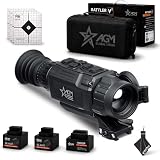
- ARS Mark8.7
ARS Mark is a ranking system developed by bestairriflescopes.com. ARS Mark has no relationship or impact from any manufacturers or sales agent websites. Learn more
- BrandAGM Global Vision

- ARS Mark8.3
ARS Mark is a ranking system developed by bestairriflescopes.com. ARS Mark has no relationship or impact from any manufacturers or sales agent websites. Learn more
- BrandAGM Global Vision

- ARS Mark9.6
ARS Mark is a ranking system developed by bestairriflescopes.com. ARS Mark has no relationship or impact from any manufacturers or sales agent websites. Learn more
- BrandATN

- ARS Mark8.9
ARS Mark is a ranking system developed by bestairriflescopes.com. ARS Mark has no relationship or impact from any manufacturers or sales agent websites. Learn more
- BrandRIX

- ARS Mark7.7
ARS Mark is a ranking system developed by bestairriflescopes.com. ARS Mark has no relationship or impact from any manufacturers or sales agent websites. Learn more
- BrandGOYOJO

- ARS Mark8.6
ARS Mark is a ranking system developed by bestairriflescopes.com. ARS Mark has no relationship or impact from any manufacturers or sales agent websites. Learn more
- BrandTRV
Last update on 2026-09-25 / Affiliate links / Images, Product Titles, and Product Highlights from Amazon Product Advertising API
Can you tell a coyote from a dog or deer at night across open pastures?
Positive target identification requires verifying body outline, movement style, and proportions rather than relying solely on a heat glow. While thermal optics list detection capabilities reaching 950 yards, 1422 yards, or 1800yd, detection simply indicates that an object is warmer than its surroundings. Confirming whether that target is a coyote or non-target livestock requires enough optical detail to evaluate leg length, tail carriage, and head shape before taking a shot.
What sensor resolution and base magnification work best for coyote hunting?
A sensor resolution of 384x288 or 640x512 paired with an optical base magnification of 2.5x or 3.5x delivers the sharpest image for open-country predator control. Optical setups such as 384x288 cores with 2.5-20x, 3-24x, or 3.5-28x zoom ranges let you observe targets at distance while preserving clarity. While 256-resolution sensors with 2.5x or 3.5x base zoom detect heat across wide pastures, stepping up to 384x288 or 640x512 with 2-16x zoom preserves vital animal contours so digital magnification does not blur the target.
How does scope refresh rate affect tracking a running coyote?
A refresh rate of 50Hz or 55Hz ensures the screen displays fluid motion without stuttering when following a moving animal. Thermal units update the digital screen dozens of times per second, and rates like 50Hz or 55Hz eliminate the choppy video lag that occurs on slower viewfinders during fast pans. If you plan to call coyotes into open fields where they may break into a sprint, check that the optic lists at least a 50Hz refresh rate to maintain smooth crosshair placement.
Will a thermal scope mount securely to a standard centerfire rifle rail?
Most thermal hunting scopes mount directly to standard Picatinny bases, though you must confirm the specific mounting interface included in the box. Several models include quick-detach (QD) mounts designed for 20mm rails, allowing repeatable installation without losing your zero. Always check the height of the mounting bracket on your rifle receiver to maintain proper barrel clearance and achieve comfortable eye relief behind the ocular display.
How does thermal optic weight impact rifle balance during fast offhand shots?
Optic weight determines how quickly you can bring the rifle to bear when a coyote appears outside your primary shooting lane. Compact thermal scopes can weigh as little as 0.9lb, preserving handling agility for offhand or shooting-stick engagements. Adding a bulky scope to a long predator barrel shifts leverage forward, so selecting a lightweight profile helps maintain better rifle balance and reduces fatigue during long night stands.
How do built-in rangefinders and ballistic compensation help during night hunts?
Integrated rangefinders and ballistic compensation eliminate distance guesswork caused by the flat two-dimensional display of a thermal screen. Thermal sensors lack natural depth cues, making it easy to misjudge whether a heat signature is a small predator nearby or a large animal farther out. Optics equipped with a 1200m rangefinder and onboard ballistic calculation instantly supply true target distance and adjusted aim points, preventing missed shots across uneven terrain.

10 Top Picks: Best Youth Air Rifles for 13-Year-Olds

12 Best Rifle Scopes For 5.56 Under 150 Dollars - (2026 Top Picks)

Top 10 Rifle Scopes for Coyote Hunting in 2026

12 Best Benchrest Rifle Scopes of 2026 For Tight Groups

Top 5 Airsoft Rifles: Unleash the Action in 2026
Unveil the Best Straight Wall Deer Rifles: Top Picks for 2026

Top Ammo Choices for Air-Powered Rifles: Boost Your Performance in 2026

Best Quick Detach Scope Rings for Accurate and Convenient Shooting







