
8 Best Coyote Thermal Scope of 2026 For Positive Identification

Distant coyotes quickly blur into glowing blobs. When a predator hangs up at two hundred yards along a pasture edge, an entry-level coyote thermal scope smears leg joints and tail profiles into indistinct pixel blobs. Guessing whether that heat signature belongs to a hard-hunted song dog, a stray calf, or a neighbor's pet is a safety risk nobody should take behind a rifle. Cranking the digital zoom only multiplies the grain, costing precious seconds on the shooting sticks while an educated animal slips back into the timber.
Clean recognition across open ground restores shooting confidence. Spotting the sharp outline of pointed ears, a low brush tail, and distinct chest depth lets you confirm the animal before touching the safety. Reaching that clarity depends on choosing a 384x288 sensor paired with a native base optical magnification between 2.5x and 3.5x, which resolves fine body anatomy before digital zoom degrades the picture. A 50Hz refresh rate keeps tracking fluid on pacing predators, while checking battery runtimes prevents sudden shutdowns during freezing winter stands. Look through the options below to pair the right optic with your pastures, securing positive identification on every stand throughout 2026.
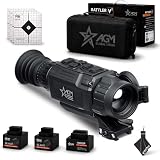
- ARS Mark8.7
ARS Mark is a ranking system developed by bestairriflescopes.com. ARS Mark has no relationship or impact from any manufacturers or sales agent websites. Learn more
- BrandAGM Global Vision

- ARS Mark9.6
ARS Mark is a ranking system developed by bestairriflescopes.com. ARS Mark has no relationship or impact from any manufacturers or sales agent websites. Learn more
- BrandATN
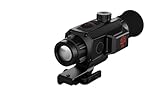
- ARS Mark7.1
ARS Mark is a ranking system developed by bestairriflescopes.com. ARS Mark has no relationship or impact from any manufacturers or sales agent websites. Learn more
- BrandtheOpticGuru

- ARS Mark9.1
ARS Mark is a ranking system developed by bestairriflescopes.com. ARS Mark has no relationship or impact from any manufacturers or sales agent websites. Learn more
- BrandATN

- ARS Mark8.3
ARS Mark is a ranking system developed by bestairriflescopes.com. ARS Mark has no relationship or impact from any manufacturers or sales agent websites. Learn more
- BrandAGM Global Vision

- ARS Mark9.0
ARS Mark is a ranking system developed by bestairriflescopes.com. ARS Mark has no relationship or impact from any manufacturers or sales agent websites. Learn more
- BrandRIX

- ARS Mark7.3
ARS Mark is a ranking system developed by bestairriflescopes.com. ARS Mark has no relationship or impact from any manufacturers or sales agent websites. Learn more
- BrandAGM Global Vision

- ARS Mark9.3
ARS Mark is a ranking system developed by bestairriflescopes.com. ARS Mark has no relationship or impact from any manufacturers or sales agent websites. Learn more
- BrandGOYOJO
Last update on 2026-09-28 / Affiliate links / Images, Product Titles, and Product Highlights from Amazon Product Advertising API
Can a 256x192 sensor identify a coyote, or do you need a 384x288 optic?
A 256x192 sensor can detect a heat signature at distance, but a 384x288 sensor is usually necessary for positive identification before taking a shot. Scopes with a 256x192 resolution, like the AGM RattlerV2 19-256 or ATN Thor 6 Mini, highlight warm bodies well in tight fields. Stepping up to a 384x288 resolution with 12-micron pixels, such as the AGM Rattler V2 35-384 or ATN Thor 6 Mini Compact with its rating of ≤18mK NETD, sharpens body contours so you do not confuse a distant coyote with a farm dog or livestock.
What base magnification works best for open pastures versus timber?
Base optical magnification between 2.5x and 3.5x offers the most versatile view depending on your terrain. Lower base magnifications, such as the 2.5x found on the ATN Thor 6 Elite (2.5-20x) or the RattlerV2 19-256, give you a broader sight picture to track animals through wooded creek bottoms or brush. For expansive fields where coyotes hang up at distance, starting at 3.5x on models like the RIX Storm-S3 (3.5x-14.0x) or the AGM Rattler V2 25-256 provides enough detail without relying heavily on digital zoom that can degrade your target image.
How does refresh rate affect tracking a running coyote?
A 50Hz refresh rate delivers smooth, real-time target tracking without choppy frames or screen freeze. Thermal scopes such as the RIX Storm-S3 and the GOYOJO GRS225 feature 50Hz processing, which allows your reticle to follow a sprinting predator smoothly across your field of view. Lower display refresh rates can cause motion jitter, making it difficult to establish proper lead distance on an animal trotting across dark ground.
What detection range can you expect from different thermal scope models?
Detection range depends directly on sensor resolution and objective lens diameter. For instance, compact 256x192 units like the AGM RattlerV2 19-256 list a 950-yard detection range, while the Rattler V2 25-256 model extends detection up to 1250 yards. Higher-resolution models with 35mm lenses reach much farther, with the AGM Rattler V2 35-384 listing an 1800-yard detection range and the RIX Storm-S3 reaching 1968 yards. Remember that detection merely shows a glowing heat pocket, while positive identification requires confirming actual animal posture at closer distances.
How does thermal scope weight affect rifle balance on shooting sticks?
Thermal scope weight directly influences how steady your setup stays when scanning over shooting sticks or a bipod. An ultralight optic like the RIX Storm-S3 weighs just 0.97 pounds, keeping your setup agile and preventing fatigue during multiple stands across a long night. If your predator rifle feels top-heavy, exploring ways to achieve better rifle balance helps keep your reticle settled during critical shots.
What weatherproofing specs should you check for winter predator hunting?
Check the ingress protection rating on the optic body to ensure it withstands blowing snow, heavy dew, and sudden temperature shifts. The GOYOJO GRS225 lists an IP67 rating, confirming that the scope housing prevents dust ingress and resists moisture even during temporary water immersion. For sub-freezing night hunts, also verify battery housing seals and cold-weather operation limits directly in the manufacturer manual to prevent sudden power loss mid-set. If you practice long-distance shooting during daytime sessions, pairing your rifle with optics designed for accurate holdovers will help maintain consistent mechanics in adverse outdoor weather.

10 Top Picks: Best Youth Air Rifles for 13-Year-Olds

12 Best Rifle Scopes For 5.56 Under 150 Dollars - (2026 Top Picks)

Top 10 Rifle Scopes for Coyote Hunting in 2026

12 Best Benchrest Rifle Scopes of 2026 For Tight Groups

Top 5 Airsoft Rifles: Unleash the Action in 2026
Unveil the Best Straight Wall Deer Rifles: Top Picks for 2026

Top Ammo Choices for Air-Powered Rifles: Boost Your Performance in 2026

Best Quick Detach Scope Rings for Accurate and Convenient Shooting







