
Best Glue for Fletching Aluminum Arrows 2026 Guide

A loose vane can turn an otherwise dependable arrow into a frustrating repair project. The best glue for fletching aluminum arrows needs to grip a slick metal shaft, bond with the vane material, and stay secure through vibration, target impact, and changing temperatures. That sounds simple, but aluminum doesn’t give adhesive much texture to grab, so surface preparation matters almost as much as the glue itself. Skip that step, and even a respected adhesive may peel away sooner than expected.
Fast-setting cyanoacrylate adhesive, often called instant glue or fletching glue, suits quick repairs and busy arrow-building sessions. It forms a firm bond in seconds, which keeps vanes from sliding while the clamp is holding them in place. Still, faster isn’t always easier because there’s little time to correct a crooked vane or wipe away excess adhesive. A tiny bead is usually enough, and using too much can create brittle buildup along the vane base.
Flexible fletching cement takes longer to cure, but it can absorb repeated flexing better than a hard, glassy bond. That extra give helps where vanes brush through rests, strike grass, or take minor knocks inside a crowded quiver. The tradeoff is patience, plain and simple. Arrows may need to remain in the jig longer, and shooting them before the adhesive has fully cured can weaken the bond.
Clean shafts make a noticeable difference. Oils from fingertips, old adhesive residue, dust, and polishing compounds can prevent glue from making direct contact with the aluminum. Wiping the fletching area with a residue-free cleaner and letting it dry completely creates a more dependable base. Light abrasion may help some adhesive systems, but aggressive sanding can damage the shaft finish or leave deep scratches, so restraint pays off.
Vane material deserves attention too. Standard plastic vanes often bond well with dedicated archery adhesive, while certain low-surface-energy plastics may require a primer or a glue specifically labeled for that material. Feathers behave differently because the porous quill absorbs adhesive rather than resisting it. Mixing an unknown vane plastic with a random household glue is a roll of the dice, especially if arrows will sit in a hot vehicle or damp garage.
A practical pick balances working time, flexibility, cleanup, and temperature resistance. Quick glue makes sense for small repairs at the range, while slower cement offers more control during a full dozen-arrow build. Neither style can compensate for greasy shafts, poorly seated vane bases, or rushed curing. Careful preparation, a thin adhesive line, steady clamp pressure, and enough curing time usually matter more than squeezing on an extra layer.
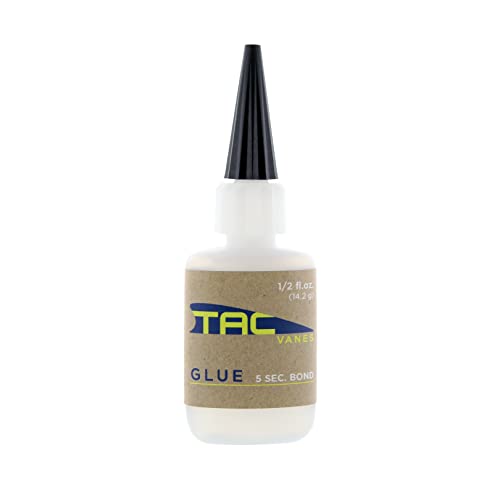
- ARS Mark9.6
ARS Mark is a ranking system developed by bestairriflescopes.com. ARS Mark has no relationship or impact from any manufacturers or sales agent websites. Learn more
- BrandTAC Vanes

- ARS Mark9.4
ARS Mark is a ranking system developed by bestairriflescopes.com. ARS Mark has no relationship or impact from any manufacturers or sales agent websites. Learn more
- BrandBondtech

- ARS Mark9.2
ARS Mark is a ranking system developed by bestairriflescopes.com. ARS Mark has no relationship or impact from any manufacturers or sales agent websites. Learn more
- BrandMeuvcol
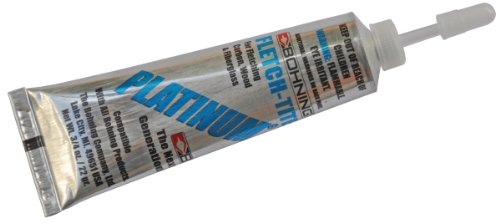
- ARS Mark9.2
ARS Mark is a ranking system developed by bestairriflescopes.com. ARS Mark has no relationship or impact from any manufacturers or sales agent websites. Learn more
- BrandBohning

- ARS Mark9.2
ARS Mark is a ranking system developed by bestairriflescopes.com. ARS Mark has no relationship or impact from any manufacturers or sales agent websites. Learn more
- BrandBondtech

- ARS Mark9.2
ARS Mark is a ranking system developed by bestairriflescopes.com. ARS Mark has no relationship or impact from any manufacturers or sales agent websites. Learn more
- BrandBohning
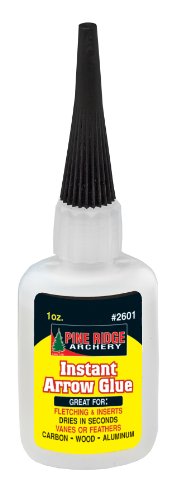
- ARS Mark9.2
ARS Mark is a ranking system developed by bestairriflescopes.com. ARS Mark has no relationship or impact from any manufacturers or sales agent websites. Learn more
- BrandPine Ridge

- ARS Mark8.4
ARS Mark is a ranking system developed by bestairriflescopes.com. ARS Mark has no relationship or impact from any manufacturers or sales agent websites. Learn more
- BrandMereido

- ARS Mark8.0
ARS Mark is a ranking system developed by bestairriflescopes.com. ARS Mark has no relationship or impact from any manufacturers or sales agent websites. Learn more
- BrandBellisinno
Last update on 2026-08-01 / Affiliate links / Images, Product Titles, and Product Highlights from Amazon Product Advertising API
TAC Vanes Glue for Fletching Aluminum Arrows
Loose vane edges have a habit of showing up at the worst time, usually after the arrows have already been tuned and the shooting session is underway. A dependable adhesive needs to grip the smooth shaft without leaving thick ridges, cloudy residue, or glue trails around the vane base. For anyone searching for the best glue for fletching aluminum arrows, TAC Vanes TAC Glue brings a fast-setting formula, a narrow applicator, and compatibility with aluminum, carbon, and wooden shafts. The main appeal is straightforward: less waiting, cleaner placement, and a bond made specifically for archery work.
TAC Vanes TAC Glue
TAC Vanes TAC Glue comes in a compact 1/2-fluid-ounce bottle, which makes sense for an adhesive applied in thin, controlled lines rather than heavy beads. The formula is designed specifically for fletching, so it addresses the awkward bond between a vane base and a shaft surface instead of relying on a general household-glue approach. That specialization matters on aluminum because the shaft’s smooth finish gives adhesive less texture to bite into. Purpose-built chemistry is the clearest advantage here.
The fast-bonding behavior cuts down the time each arrow needs to sit in a fletching jig. That doesn’t mean the work should be rushed, though, since a quick-setting adhesive leaves less room to reposition a vane after it touches the shaft. A careful dry fit, a steady clamp, and a light hand will prevent most crooked placements. Speed helps only when preparation is already handled.
Compatibility adds useful flexibility for a mixed arrow bench. The supplied description states that the glue bonds vanes to carbon, aluminum, and wooden shafts, while also working with virtually all fletching materials and arrow types. It’s optimized for TAC Vanes, so matching those components is the most direct pairing, but the broader compatibility keeps the bottle from becoming a one-brand tool. That’s handy for a bench holding hunting arrows, practice shafts, and older aluminum setups at the same time.
Precision Tip And Application Control
The narrow applicator tip is more than a small convenience. Fletching adhesive works best as a fine line along the vane base, not a blob that squeezes out on both sides once clamp pressure is applied. TAC Glue’s precision applicator supports that restrained approach, helping keep the shaft cleaner and reducing the scraping needed during later vane replacement. A tidy bond line also makes the finished arrow look less homemade.
Control matters even more with aluminum shafts because excess adhesive can spread across the smooth finish before it cures. A small amount placed from one end of the vane base to the other should provide more useful coverage than several thick drops. Too much glue won’t automatically create a stronger bond, and it may form a hard ridge beside the vane. Thin and even is the sensible working rule.
The bottle still needs routine care between vanes. Adhesive collecting around the nozzle can narrow the opening, redirect the flow, or cause an unexpected surge during the next application. Wiping the tip after use and replacing the cap promptly helps preserve the controlled dispensing that makes this product appealing. It’s a minor maintenance habit, but skipping it can turn a neat applicator into a fussy one.
Bond Strength On Aluminum Shafts
Aluminum presents a different bonding challenge than a porous wooden shaft. The material doesn’t absorb adhesive, and oils from handling can sit between the metal surface and the glue without being obvious. TAC Glue is formulated to create a durable hold on aluminum, but surface preparation remains essential. Old adhesive, dust, fingerprints, and cleaner residue can all undermine an otherwise suitable formula.
A clean shaft gives the adhesive direct contact with the metal finish. The fletching area should be free of residue and completely dry before the vane is clamped into place. Aggressive sanding isn’t automatically better, since it may scratch the finish or remove more material than necessary. Cleanliness, alignment, and steady pressure usually do more good than rough handling.
The fast-setting formula is intended to reduce downtime while maintaining long-lasting adhesion during repeated shooting. That benefit becomes practical during a dozen-arrow build, where slow adhesive can leave the jig tied up for much of the day. Still, “fast-setting” shouldn’t be confused with permission to shoot immediately, since handling strength and full cure aren’t always the same thing. Giving each arrow undisturbed curing time is the safer bet, even after the vane no longer shifts in the clamp.
Daily Use, Tradeoffs, And Fit
Beginners may appreciate the controlled tip because it limits one of the messiest parts of fletching. The quick bond can also feel unforgiving, especially during the first few vanes, since hesitation or poor clamp alignment may lock in a mistake before there’s time to correct it. Practicing the jig movement without glue is a smart workaround. The learning curve is manageable, but the formula rewards deliberate motion.
Experienced fletchers will probably value the quicker workflow and broad shaft compatibility more than anything else. One bottle can support aluminum practice arrows, carbon hunting shafts, and wooden builds without requiring a separate adhesive for each material listed by the manufacturer. That said, vane material, shaft coating, and preparation can still affect the result. Compatibility doesn’t erase technique, and no glue can flatten a warped vane base or rescue a contaminated surface.
The small bottle size suits precision work, though frequent builders may go through it faster than expected. Storage also deserves attention because archery adhesive can become harder to dispense if the cap is left loose or dried glue collects around the nozzle. Keeping the bottle upright and tightly closed helps protect the remaining contents. Those aren’t serious drawbacks, but they’re part of the ownership routine.
How It Supports Cleaner Arrow Builds
A clean fletching job starts before the adhesive bottle opens. Vanes should sit naturally in the clamp, the jig should hold the intended orientation, and the shaft should rotate without wobbling between positions. TAC Glue then fills a narrow role: locking that careful setup in place without unnecessary mess. The product can speed up the process, but the jig and preparation still determine whether the final spacing looks consistent.
Repair work benefits from the same precision. A partly detached vane should be removed properly rather than patched with a thick bead along the lifted edge, since leftover glue can prevent the replacement vane from seating flat. Aluminum shafts can usually be cleaned more easily than porous materials, but scraping still needs a gentle touch. A smooth replacement surface gives the fresh adhesive a fair chance to hold.
Arrow setup often involves more than fletching, particularly where draw length affects shaft selection, overall balance, and equipment fit. A neutral reference related to that broader setup appears in bows for short draw length, though bow fit and adhesive selection solve separate problems. Keeping those decisions separate prevents a useful glue from being credited for issues caused by poor arrow tuning or mismatched equipment. TAC Glue handles vane attachment, not the entire shooting system.
Strengths And Realistic Limitations
The strongest case for TAC Vanes TAC Glue rests on its archery-specific formula, rapid setting, and controlled dispensing. Those features directly address the common headaches of sliding vanes, long jig waits, and adhesive running beyond the vane base. Compatibility with multiple shaft materials also makes it practical for varied arrow collections. The product’s design feels focused rather than overloaded with claims.
The main limitation is tied to the same speed that makes it convenient. Fast bonding leaves a smaller correction window, so sloppy clamp placement can become a permanent problem in a hurry. The half-ounce quantity may also feel modest on a busy workbench, although each vane should require only a thin application. Careful use stretches the bottle and produces cleaner results.
TAC Glue won’t compensate for oily aluminum, dried adhesive beneath a replacement vane, or shooting an arrow before the bond has had enough time to settle. It also won’t make every fletching material behave identically, despite the stated broad compatibility. Those realities don’t weaken the product’s purpose; they simply place the adhesive in the proper role. Used with a clean shaft and an accurately set jig, it offers a practical route to secure vanes without turning the bench into a sticky mess.
Bondtech Glue for Fletching Aluminum Arrows
A vane that lifts at the edge can spoil an otherwise tidy arrow build, and the annoyance grows fast when several shafts need the same repair. Smooth aluminum leaves little room for sloppy preparation, so the best glue for fletching aluminum arrows has to bond cleanly, stay flexible enough to resist brittleness, and handle repeated impact without turning the repair bench into a sticky mess. Bondtech Fletching Glue aims squarely at those problems with a clear instant formula, three precision droppers, resistance to water, heat, ultraviolet exposure, and shock after curing. Its appeal isn’t flashy; it’s rooted in controlled application, broad shaft compatibility, and a clearly stated curing routine.
Bondtech Fletching Glue 30 g
The 30-gram bottle gives this adhesive a little more working capacity than many tiny archery glue containers, which can matter during a full rebuild rather than a single vane repair. Its formula is intended for carbon arrows, fletching vanes, feathers, inserts, aluminum shafts, carbon shafts, and wood shafts. That range helps keep one bottle useful across mixed arrow setups instead of tying it to one narrow material pairing. Broad compatibility is one of the product’s most practical strengths.
Bondtech describes the glue as fast and strong while also stating that it won’t harden or become brittle over time. That detail matters because a rigid adhesive line can crack after repeated vibration, target impact, or vane contact with a rest. A bond that retains some resilience has a better chance of staying intact through regular shooting. Still, surface preparation and curing time remain part of the equation, and no adhesive can overcome grease, dust, or old glue trapped beneath the vane base.
The clear finish helps keep repaired arrows from looking patched together, especially on bare aluminum or brightly colored shafts where excess glue would stand out. Clear adhesive also makes it easier to inspect whether the vane base is seated evenly along its full length. A thin line is enough; piling on extra glue may create squeeze-out and leave a hard ridge beside the fletching. Neat application beats heavy application every time here.
Fast Bonding Without Guesswork
The application instructions are unusually specific, which is useful for anyone tired of vague “sets quickly” claims. Bondtech directs the surfaces to be kept clean and dry, then pressed together for 45 seconds for initial curing. The product also calls for a full 24-hour wait before optimum bonding is reached. That distinction between initial hold and full cure helps prevent the common mistake of shooting an arrow just because the vane no longer moves in the clamp.
A 45-second hold isn’t instant in the literal blink-and-done sense, but it’s short enough to keep a fletching session moving. The pause gives the adhesive time to grab while still leaving the process manageable for several shafts in one sitting. Patience pays off after that initial hold, since the 24-hour cure period gives the bond time to develop as intended. Quick positioning and slower final curing create a sensible balance rather than encouraging rushed use.
Alignment deserves attention before the glue touches the vane. A fast-setting formula won’t leave much room to correct a crooked clamp, uneven vane base, or poorly indexed shaft after contact is made. Dry-fitting the vane first can save a lot of scraping later, particularly on aluminum where old adhesive must be removed without gouging the finish. Preparation takes longer than correction, but it’s far less frustrating.
Precision Droppers And Cleaner Repairs
Three included droppers with tiny nozzles give this glue a useful edge for narrow vane bases and insert work. The smaller opening helps lay down a controlled bead instead of flooding the shaft with adhesive. That precision is especially welcome in hard-to-reach spots where a standard bottle tip may block the view or release too much at once. Better flow control means cleaner arrows and less cured residue to remove later.
The nozzle tips can be cut as needed, letting the opening be adjusted for thicker flow or a slightly wider bead. That flexibility sounds minor, but different jobs call for different amounts of adhesive. A feather quill, plastic vane base, and insert cavity don’t all need the same delivery pattern. The trick is to trim conservatively because a larger opening can’t be made small again.
Bondtech also recommends lightly vibrating the bottle vertically after using the droppers to reduce the chance of residual glue clogging the nozzle. That small maintenance step is worth taking seriously because dried adhesive inside a fine applicator can ruin the controlled flow that makes the droppers useful. The special cap is designed to prevent the spout from sticking and to limit premature drying. Nozzle care and the anti-clogging cap work together to help the bottle remain usable instead of becoming a one-session tool.
Resistance To Weather And Repeated Shooting
The cured adhesive is described as waterproof, heat resistant, ultraviolet resistant, and shock resistant. Those traits speak directly to the conditions arrows face outside a climate-controlled workshop. Humidity, damp grass, hot vehicle interiors, bright sunlight, and repeated target impact can all stress a weak bond. Environmental resistance gives this formula a better chance of holding up through seasonal use and storage.
Shock resistance matters around the vane base because every release, target strike, and arrow pull sends vibration through the shaft. Aluminum arrows are durable, but a poorly bonded vane can still begin peeling from one end after repeated use. The stated resistance to brittleness may help the adhesive absorb those small stresses rather than cracking like a thin shell. That said, durability still depends on a flat vane base and a properly cleaned shaft.
The product description says repaired arrows can return to accurate use after curing, but glue alone doesn’t restore alignment if the vane was attached at the wrong angle. Adhesive secures the setup; it doesn’t tune the arrow or correct uneven spacing in the jig. A separate equipment topic, especially where bow power and intended quarry affect the overall setup, appears in bows for bear hunting, though bow selection and fletching adhesive solve very different problems. Keeping those roles separate leads to more realistic expectations.
Real Strengths And Practical Drawbacks
The strongest feature set centers on clear bonding, precision dispensing, and multi-material use. Three droppers make detailed repairs easier, while the 30-gram bottle offers enough capacity for more than an emergency field fix. Water, heat, ultraviolet, and shock resistance add useful protection after curing. Those qualities make the glue suitable for routine vane replacement, fresh arrow builds, feather attachment, and insert work within the stated applications.
The biggest drawback is the waiting period. The bond may hold after 45 seconds, but optimum curing requires 24 hours, so a same-day repair shouldn’t be mistaken for a ready-to-shoot arrow. The tiny nozzles also need care because residue can clog them if the bottle is put away carelessly. Fast handling strength doesn’t eliminate maintenance or patience.
This glue may also feel less forgiving for anyone who tends to reposition vanes several times after contact. Once the adhesive begins grabbing, a correction can smear glue across the shaft or leave an uneven bond line. A well-set jig, a dry run, and a light bead reduce that risk. Controlled technique brings out the product’s strengths, while rushed placement exposes its limits.
Best Use On Aluminum Shaft Repairs
Aluminum shafts benefit from careful cleaning because oils and polishing residue can remain invisible on the smooth surface. The repair area should be dry, free of old adhesive, and untouched after cleaning whenever possible. Scraping needs a gentle hand so the shaft finish isn’t gouged or flattened beneath the vane. A clean, level bonding area gives the glue direct contact and helps the vane sit flush from front to back.
A narrow adhesive line should be placed along the vane base before firm, even pressure is applied for the stated 45 seconds. The vane shouldn’t rock in the clamp or lift at either end during that period. After removal from the jig, the arrow needs to rest undisturbed for the full curing window. Steady pressure and a full 24-hour wait are more valuable than adding a thicker layer of glue.
The anti-clogging cap and reusable droppers make the bottle practical for a workbench where repairs happen gradually rather than all at once. Stored upright with the cap secured, the adhesive is less likely to dry around the spout or leak into the applicator. Wiping residue before storage takes only a moment and protects the next application from sudden surges or blocked flow. Simple bottle care keeps the precision system working as intended and makes the remaining glue easier to use.
100g Heavy Duty Glue for Fletching Aluminum Arrows
A loose vane can turn a clean arrow build into a nuisance before the first serious shooting session even begins. Smooth shafts, tiny bonding surfaces, and repeated vibration leave little room for a weak adhesive line, especially on aluminum. This 100g formula enters the conversation around the best glue for fletching aluminum arrows with a quick initial bond, a clear finish, and compatibility across carbon, aluminum, wood, and fiberglass shafts. The larger bottle, precision applicator, and stated resistance to heat, moisture, ultraviolet exposure, and shock give it a practical, workbench-first personality.
100g Heavy Duty Fletching Glue
The 100g capacity immediately separates this kit from the small emergency bottles often found in archery repair boxes. That extra volume makes more sense for building several sets of arrows, replacing multiple damaged vanes, or handling inserts and feathers alongside standard plastic fletching. More adhesive on hand reduces the stop-and-start rhythm that can interrupt a full arrow-building session. Still, the larger quantity only pays off if the cap and applicator are kept clean between uses.
The formula is described as suitable for carbon, aluminum, wood, and fiberglass shafts, so one bottle can cover a mixed collection without forcing separate adhesives for every material. That range is useful around a bench where older aluminum arrows sit beside newer carbon shafts or traditional wooden builds. Vanes, feathers, and inserts are also listed among the intended applications, giving the glue more reach than a product made for one narrow repair. Broad compatibility is handy, but careful preparation still decides whether the bond begins on solid footing.
The clear finish is a quiet advantage. Excess glue is less noticeable around bright vanes or bare metal than a cloudy or colored adhesive, and a transparent bead makes it easier to inspect the contact line. A clean appearance doesn’t mean a thick application should be tolerated, though, because squeeze-out can cure into sharp ridges beside the vane base. A thin, continuous line remains the better approach.
Fast Bonding With A Real Cure Window
The stated bonding range of 10 to 45 seconds gives this glue a quick working rhythm, especially during minor repairs or a multi-arrow fletching project. A vane can begin holding before the jig feels like it has become permanent furniture on the bench. That speed helps reduce downtime, but it also narrows the window for correcting a crooked clamp or uneven vane position. A dry run before applying adhesive can save a fair amount of scraping later.
The provided instructions call for pressing the two surfaces together for 45 seconds to achieve initial curing. That step is specific enough to remove some of the guesswork that usually surrounds fast adhesives. The bond may feel stable after that period, yet the formula still needs 24 hours for maximum strength. Treating initial grab and full cure as the same thing would be asking for trouble.
The phrase “immediate use” in the description should be read carefully beside the 24-hour curing guidance. Quick adhesion can make the arrow easier to handle, but maximum bond strength develops later. Shooting too soon may place vibration and impact stress on a joint that hasn’t fully settled. Fast setup doesn’t cancel patient curing, and the longer wait is the safer choice for serious use.
Precision Application On Smooth Aluminum
Aluminum shafts expose sloppy glue work in a hurry. Their smooth finish gives adhesive less texture to grip, while excess product spreads easily beyond the vane base. The included precision applicator helps place a controlled amount directly where it belongs instead of flooding the shaft. That control is especially useful near narrow feather quills, insert edges, and small repair points.
A fine applicator also helps maintain an even bond from the front of the vane to the back. Gaps can create weak spots, while oversized drops tend to squeeze outward once clamp pressure is applied. The goal isn’t to bury the vane base in adhesive; it’s to establish full contact with as little mess as possible. Measured flow and steady pressure usually produce a cleaner result than a heavy-handed squeeze.
The tip still needs attention after each use. Residual adhesive around a narrow opening can dry, redirect the next bead, or block the applicator entirely. Wiping the nozzle before replacing the cap keeps the delivery more predictable and protects the value of the larger bottle. It’s a small habit, sure, but applicator care affects every later repair.
Durability In Outdoor Shooting Conditions
The adhesive is described as shock resistant and vibration resistant after curing, two traits that matter because arrows experience repeated stress rather than a single static load. Every release, target strike, and pull from a dense target sends force through the shaft. A brittle bond may begin cracking at the vane edge, while a more durable joint has a better chance of staying intact. Impact resistance is central to long-term fletching security.
Heat, moisture, and ultraviolet resistance broaden the formula’s usefulness beyond a climate-controlled workshop. Arrows may sit in a warm vehicle, rest in damp grass, or remain exposed to sunlight during long outdoor sessions. Those conditions can weaken an adhesive that isn’t built for environmental changes. The stated weather-resistant properties make sense for field use, though proper curing remains essential before those protections are put to the test.
Outdoor durability also depends on the quality of the original bond line. Water resistance won’t rescue adhesive applied over dust, oil, or old glue, and shock resistance can’t compensate for a vane that never sat flat. Equipment decisions elsewhere in an archery setup follow the same practical logic, and a related reference appears in wood for bow making for those considering traditional bow materials. Bow construction and fletching repair are separate jobs, but both reward clean preparation and material awareness.
Surface Preparation And Repair Technique
Cleanliness is the unglamorous part that makes the biggest difference. The product directions call for a surface that is both clean and dry before adhesive is applied. Finger oils, polishing residue, dust, and leftover glue can all sit between the shaft and the new bond. Direct contact with the shaft surface gives the formula its best chance to perform as described.
Old vane removal should be handled patiently on aluminum. Scraping too aggressively can scratch the finish or leave an uneven bonding area, while leaving hardened adhesive behind prevents the replacement vane from lying flat. A smooth surface matters because the glue layer should fill tiny irregularities, not bridge over chunks of old material. Flat seating and clean preparation reduce the odds of an edge lifting later.
Clamp pressure should stay firm and even during the stated 45-second initial cure. Too little pressure may leave gaps, while excessive force can squeeze nearly all the adhesive away from the center of the vane base. After the clamp is removed, the arrow should rest without twisting, bending, or testing the vane prematurely. Controlled pressure followed by undisturbed curing is the sensible routine.
Strengths, Tradeoffs, And Daily Use
The strongest part of this kit is its combination of large capacity, quick initial bonding, and broad shaft compatibility. A 100g bottle fits frequent repair work better than a tiny tube that disappears after a few builds. The precision applicator supports controlled use, while the clear formula keeps finished arrows looking cleaner. Those features line up well with the practical demands of a busy fletching bench.
The main tradeoff is that speed leaves less room for hesitation. A misaligned vane can begin setting before there’s time to nudge it into place, and correcting the mistake may require full removal rather than a quick adjustment. The 24-hour maximum-strength cure also means the glue isn’t truly a last-minute fix for arrows needed right away. Fast handling and full readiness aren’t identical.
The larger bottle may be more adhesive than an occasional repair calls for, and storage becomes more important as a result. A clogged tip or poorly sealed cap can waste the very capacity that makes the kit attractive. Careful dispensing, prompt cleanup, and upright storage help stretch its useful life. Good bottle habits protect the investment as much as the cap itself.
Best Fit For Aluminum Arrow Projects
Aluminum arrow projects benefit from a glue that doesn’t demand a separate formula for every other shaft on the rack. This kit can move from metal shafts to carbon, fiberglass, or wood without changing bottles, at least within the applications stated in the description. That flexibility suits anyone maintaining several arrow types or handling both vane and insert work. One adhesive for several repair jobs keeps the bench simpler.
Beginners may appreciate the straightforward instructions and controlled applicator, though the quick bond rewards preparation rather than improvisation. Experienced fletchers will likely notice the larger capacity and the reduced waiting between clamp positions. Neither group gets a free pass on surface cleaning or alignment. The formula shortens the bonding step, not the entire craft.
Realistic expectations keep the product in its proper lane. It can secure vanes, feathers, and inserts on the listed shaft materials, resist several common outdoor stresses after curing, and support cleaner application through its fine tip. It won’t tune an arrow, correct poor jig spacing, or repair a damaged vane base that no longer sits flat. Used with clean surfaces and patient curing, it offers a practical answer for repeated aluminum fletching work without pretending the adhesive does every job on the bench.
Bohning Platinum Fletch-Tite for Aluminum Arrows
Fast glue isn’t always the smartest glue, especially on shafts that see repeated flex, vibration, and rough handling in the field. A slower adhesive can feel old-school beside instant formulas, yet that extra time may buy better placement control and a bond that keeps developing after the clamp comes off. Bohning Platinum Fletch-Tite earns attention as a best glue for fletching aluminum arrows candidate because it’s made for both vanes and feathers, works across four common shaft materials, and remains flexible after curing. The catch is plain enough: five minutes of clamp time and a 48-hour full cure demand planning rather than last-minute repair work.
Bohning Platinum Fletch-Tite 3/4 oz
The 3/4-ounce tube is aimed squarely at archery work rather than general household repairs. Its listed uses include plastic vanes and natural feathers, which makes it useful for modern hunting arrows, traditional setups, and mixed projects on the same bench. Compatibility extends to aluminum, carbon, fiberglass, and wood shafts. That broad material range is practical, though each surface still needs its own careful cleaning routine.
Platinum Fletch-Tite takes a flexible approach instead of forming an especially hard, brittle seam. Flexibility matters around the vane base because the shaft vibrates at release, absorbs impact at the target, and gets twisted during removal from dense foam or layered targets. A rigid bond can crack at its edges under repeated strain. A durable, flexible glue line is better suited to those small movements.
The product is also described as working best in low-humidity conditions. That point shouldn’t be buried, since moisture in the air can affect how some solvent-based fletching cements set and cure. A dry workshop or indoor bench gives the adhesive a more favorable environment than a damp garage on a muggy afternoon. Humidity control is a real working consideration, not an optional detail.
A Slow Bond With More Placement Control
Five minutes of clamp time sounds long beside glues that grab in seconds, but that slower pace offers a useful tradeoff. The vane doesn’t lock instantly the moment it touches the shaft, leaving more room to verify alignment, seating, and contact along the base. That breathing room can be helpful on helical or offset fletching where clamp position matters quite a bit. More working time means fewer rushed corrections.
The slower clamp cycle does make a full dozen-arrow build take longer. A single-jig setup can become a patient, one-vane-at-a-time affair, especially with three or four fletchings per shaft. Multiple clamps or a multi-position jig can reduce the bottleneck, but the glue itself won’t hurry. Speed is the obvious weakness, and anyone facing a same-day repair may find the schedule inconvenient.
The bond is stated to increase over time, which helps explain the full 48-hour cure period. Initial attachment after five minutes isn’t the same as finished strength, so twisting the vane, flexing it by hand, or shooting the arrow early defeats the point of choosing a slower formula. Two days can feel excessive, sure, but it gives the adhesive time to mature as intended. Patience is part of the product’s performance.
How It Behaves On Aluminum Shafts
Aluminum is smooth, nonporous, and quick to reveal weak preparation. Oil from fingers, dust from storage, and traces of old adhesive can sit between the glue and shaft without looking dramatic. Platinum Fletch-Tite may be formulated for aluminum, but it still needs direct contact with a clean surface. Surface preparation remains the foundation of the bond.
Old fletching should be removed without digging into the shaft finish. A flat vane base can’t seat properly over hardened glue ridges, and an uneven contact line creates small gaps where lifting may begin. Careful scraping followed by residue-free cleaning gives the new adhesive a better chance to spread evenly. A clean, level bonding area matters more than adding extra cement.
The adhesive should be applied in a thin, continuous line rather than several oversized drops. Too much glue can squeeze out along both sides of the vane, leaving messy edges and a longer cleanup job after curing. Too little may create dry spots beneath the base. Even coverage with modest volume is the sweet spot.
Flexible Hold For Vanes And Feathers
Plastic vanes and feathers don’t behave the same way under pressure, so an adhesive designed for both has a useful role. A plastic vane base needs consistent contact across a smooth strip, while a feather quill may carry slight natural variations in shape. Platinum Fletch-Tite’s flexible character helps accommodate those small differences without turning the bond into a hard ridge. Material flexibility broadens its practical use.
Feathers often benefit from a glue that allows deliberate placement because the quill can shift or roll if clamped too quickly. Five minutes in the clamp gives the assembly time to settle without demanding frantic movement. Plastic vanes gain from the same steady pressure, particularly where the front or rear edge tends to lift. Controlled seating is one of this glue’s quiet strengths.
The bond’s gradual increase also suits arrows that spend time in storage before hunting season. A freshly built set can cure fully on the rack rather than being rushed into use the following morning. That schedule won’t suit emergency repairs at camp, but it fits planned maintenance and off-season building nicely. Planned projects suit this adhesive better than urgent fixes.
Humidity, Cure Time, And Workshop Routine
Low humidity gives this formula its preferred working environment. Damp air may slow solvent evaporation or leave the adhesive feeling tacky longer than expected, so the stated clamp and cure times shouldn’t be treated as guaranteed under every condition. A dry, ventilated room makes the process more predictable. Climate affects the workflow, particularly during rainy seasons or in unconditioned spaces.
Ventilation also matters because fletching cement can carry a noticeable odor during application and curing. Keeping the work area aired out makes long building sessions less unpleasant, while tightly capping the tube helps prevent thickening between projects. The nozzle should be wiped before storage so dried adhesive doesn’t interfere with the next bead. Simple tube care protects consistency.
The 48-hour cure creates a natural staging process. Finished arrows can remain horizontal or upright in a rack where the vanes won’t brush against one another, and each shaft can be marked with the completion time if several batches are underway. That small organizational habit prevents an early batch from being confused with one glued only a few hours ago. A clear curing routine avoids accidental early use.
Hunting Use And Field Limitations
The listed sport type is hunting, and the flexible bond makes sense for arrows carried through brush, bounced in a quiver, or pulled from stubborn targets during practice. Vanes can brush against rests, clothing, vegetation, and other arrows before the shot ever happens. A glue line that remains durable without becoming overly brittle is well matched to that kind of handling. Field durability is the central benefit.
The weakness shows up during travel. A vane that peels loose the evening before a hunt can be reglued, but the stated 48-hour cure means the arrow shouldn’t be considered fully ready by sunrise. A fast-setting backup adhesive may still have a place in a field repair kit, even if Platinum Fletch-Tite is preferred for the main workshop build. Bench reliability and emergency convenience are different needs.
Other hunting equipment choices come with similarly narrow roles, and optical setup is one example. A separate reference related to steady magnification appears in fixed power rifle scopes, although rifle optics and arrow adhesive have no direct functional overlap. Both decisions still reward realistic expectations rather than buying around a single headline feature. Purpose matters more than feature count.
Strengths And Tradeoffs Worth Knowing
The strongest qualities are easy to identify: flexibility, multi-shaft compatibility, and support for both vanes and feathers. The bond is designed to become stronger over time, which favors carefully built arrows meant for repeated use. Aluminum, carbon, fiberglass, and wood compatibility also reduces the need to keep several specialized tubes on the bench. For planned builds, that combination is sensible and uncomplicated.
The main drawback is time. Five minutes per clamp position slows production, and 48 hours before full cure rules out quick turnaround. Low-humidity preference adds another condition that instant adhesives may handle differently. Slow curing and environmental sensitivity are the costs attached to the flexible bond.
Cleanup can also become tedious if too much cement is applied. The slower-setting formula gives excess adhesive time to spread beyond the vane base, especially under heavy clamp pressure. A narrow bead and moderate pressure keep the edges tidier. Application discipline makes a visible difference.
Where This Glue Makes The Most Sense
Platinum Fletch-Tite fits a workbench where arrows are built ahead of time rather than repaired in a panic. It suits aluminum shafts that need a flexible hold, feathered traditional arrows that require careful seating, and mixed collections containing carbon, fiberglass, or wood. The long cure is easier to accept when the project is scheduled around it. Planned fletching sessions bring out its best qualities.
The formula may feel unnecessarily slow for someone replacing one vane before an afternoon range visit. It may also be awkward in humid spaces where curing conditions aren’t easy to control. Those limitations don’t make the glue unsuitable; they simply narrow the situations where it feels convenient. Convenience depends heavily on timing and workspace.
Used on a clean shaft, held in the clamp for the stated five minutes, and left alone for the full 48 hours, this adhesive offers a deliberate path to a durable fletching bond. Its flexible nature addresses the repeated movement and impact that can punish brittle glue lines. The process isn’t quick, and that’s the honest tradeoff. Careful builders get more from it than hurried repair work ever will.
Bondtech Arrow Glue for Aluminum Fletching
A peeling vane has a sneaky way of turning a routine shooting day into a repair session. The shaft may still look straight, the nock may be fine, and the point may be secure, yet one lifted edge can throw the whole setup off balance. Bondtech enters the best glue for fletching aluminum arrows discussion with a clear, quick-bonding formula made for vanes, feathers, inserts, and several shaft materials. Its strongest practical points are fast initial curing, three precision droppers, and resistance to heat, water, ultraviolet exposure, and shock.
Bondtech Arrow Glue 30 g
The 30-gram bottle sits in a useful middle ground between a tiny emergency tube and an oversized workshop container. It provides enough adhesive for repeated vane repairs, fresh fletching jobs, and insert bonding without taking up much space in a tackle box or bench drawer. The formula is intended for aluminum, carbon, and wood shafts, which keeps it relevant even when several arrow styles share the same workspace. That broad compatibility cuts down on clutter and makes the bottle easier to justify for mixed projects.
Bondtech describes the adhesive as fast, strong, and resistant to becoming brittle over time. That last detail deserves attention because arrows don’t sit motionless after repair; they vibrate at release, strike targets, rub inside quivers, and sometimes get tugged from tight foam. A bond that retains some resilience may cope better with those repeated stresses than a hard seam that cracks along the vane edge. Durability without excessive brittleness is a sensible feature for regular shooting.
The clear finish also suits detailed arrow work. Dark or cloudy residue can make even a secure repair look rough, especially on bright aluminum shafts or light-colored vanes. Clear adhesive won’t hide sloppy application, though, so restraint still matters. A narrow, even bead creates a cleaner result than flooding the vane base and hoping the excess disappears.
Fast Initial Bonding And Full Cure
The supplied directions call for both repair surfaces to be pressed together for 45 seconds after the adhesive is applied. That initial curing period is short enough to keep a repair session moving without forcing each shaft to occupy the jig for several minutes. It also gives the bond time to grab before the clamp is removed. For several arrows in a row, that rhythm feels manageable rather than painfully slow.
Initial curing isn’t the finish line. Bondtech recommends waiting 24 hours for optimum bonding, and that longer period shouldn’t be brushed aside just because the vane feels secure after a minute. Early handling may be fine for moving the shaft carefully, but shooting places far more stress on the joint. Letting the adhesive fully settle is the better call, particularly before hunting, competition, or a long practice session.
The quick grab creates one tradeoff: alignment mistakes become harder to correct once the vane touches the shaft. A dry fit helps confirm clamp angle, vane position, and contact along the base before glue enters the picture. That extra minute can prevent a crooked fletching job and the tedious cleanup that follows. Fast bonding rewards preparation, not hurried hands.
Precision Droppers For Controlled Application
Three included droppers give this kit a practical edge for close, detailed repairs. Their tiny nozzles can place adhesive along a narrow vane base, around an insert, or inside a small gap without covering half the shaft. Better control means less squeeze-out once pressure is applied. Precision dispensing reduces mess and makes the finished arrow easier to inspect.
The nozzle tips can be trimmed to adjust the opening, which adds a useful bit of flexibility. A feather quill may need a different bead width than a slim plastic vane or an insert pocket. Small cuts are the safer approach because an opening can always be widened later, but it can’t be shrunk once too much material is removed. Conservative trimming keeps the flow predictable.
Bondtech advises lightly vibrating the bottle vertically after using a dropper so residual adhesive is less likely to remain inside the tip. That sounds fussy at first, but clogged precision nozzles are a common nuisance with fast-setting glues. The motion helps clear the narrow passage before the adhesive begins to harden. Simple nozzle care preserves the feature that makes the kit convenient.
Anti-Clogging Cap And Bottle Care
The special cap is designed to keep the glue spout from sticking and to reduce drying around the opening. That matters more than it may seem because a blocked bottle can release adhesive unevenly or become difficult to open without damaging the tip. A reusable adhesive only stays useful if air exposure is limited after each repair. The anti-clogging design supports longer-term storage.
No cap can fix careless handling, though. Dried residue should be wiped away before the bottle is closed, and the container should remain upright rather than rolling around loose in a gear bag. Those habits help prevent glue from collecting inside the cap or seeping into the applicator. Clean storage protects both the bottle and the remaining adhesive.
The claim that the product can be used until the last drop is appealing, but real-world results still depend on maintenance. Leaving a coated nozzle exposed for several minutes can start the curing process right where controlled flow is needed most. Closing the bottle promptly between vanes helps keep the formula from thickening at the tip. A little discipline goes a long way here.
Performance On Aluminum Shafts
Aluminum shafts are durable, but their smooth, nonporous finish can be unforgiving during fletching work. Finger oils, old adhesive, dust, and cleaning residue may sit between the metal and glue without being obvious. Bondtech specifically lists aluminum among the compatible materials, yet surface cleanliness still determines how well the bond begins. No formula can grip properly through contamination.
Old vane removal should leave a flat, clean area rather than a ridge of cured adhesive. Scraping too aggressively can scratch the shaft finish, while leaving residue behind creates gaps under the replacement vane. A gentle cleanup followed by complete drying gives the new adhesive a direct path to the metal. Flat seating matters as much as glue strength.
The repaired vane should be held evenly for the stated 45 seconds rather than squeezed hard at one point. Uneven pressure can force adhesive away from part of the base or leave one end slightly raised. Afterward, the shaft should rest where the fletching won’t brush against nearby arrows during the 24-hour cure. Steady pressure and undisturbed curing improve the odds of a neat, durable repair.
Resistance To Outdoor Conditions
The cured glue is described as waterproof, heat resistant, ultraviolet resistant, and shock resistant. Those properties match the conditions arrows often face outside the workshop, from damp grass and humid air to bright sun and hot vehicle storage. Repeated target impact adds another layer of stress that ordinary craft adhesive may not handle gracefully. Weather and impact resistance give the formula a practical outdoor focus.
Shock resistance is especially relevant near inserts and vane edges. Every shot sends vibration through the shaft, and every target strike tests the bond again. A weak seam may begin peeling from the front or rear after enough cycles. Bondtech’s stated resistance to shock and brittleness is meant to address that repeated movement rather than just holding under static pressure.
Environmental resistance still begins with proper curing. Moisture protection won’t mean much if the arrow is exposed before the adhesive has reached its optimum bond, and ultraviolet resistance can’t correct poor vane alignment. Another unrelated equipment topic appears in laser pointers for LED TVs, though home electronics accessories and fletching adhesive serve entirely separate purposes. Each product should be judged within its actual job.
Vanes, Feathers, And Insert Repairs
The formula is intended for plastic vanes, feathers, and arrow inserts, giving it more range than an adhesive limited to one fletching style. Plastic vane bases need a thin, continuous bond line, while feather quills may require slightly different positioning and pressure. Inserts present another challenge because the adhesive must reach a narrow internal surface. One bottle covering several arrow components simplifies routine maintenance.
Feathers deserve a lighter hand because a thick bead can spread beyond the quill and stiffen the base more than necessary. Plastic vanes also benefit from measured flow, particularly near the front edge where excess glue can create a visible lump. The fine droppers help with both jobs by reducing the temptation to squeeze too much. Controlled volume keeps different materials easier to manage.
Insert work calls for extra care because too much adhesive may spread into unwanted areas during seating. A tiny nozzle can place glue more accurately, but the insert still needs to be aligned and pressed according to the arrow component’s requirements. Bondtech supplies the adhesive, not the fit between mismatched parts. Correct component sizing remains essential.
Strengths And Limitations In Daily Use
The clear strengths are easy to spot: fast initial curing, multi-material compatibility, and precise application. Heat, water, ultraviolet, and shock resistance broaden its usefulness for arrows that leave the workshop and see outdoor conditions. The three droppers add practical value because small repairs often become messy with a standard bottle opening. Taken together, the feature set suits careful bench work and planned maintenance.
The main weakness comes from the same fast action that makes the glue convenient. A vane placed crookedly may begin bonding before there’s enough time to slide it into the correct position. The fine droppers can also clog if they’re left dirty, despite the cap design and recommended clearing method. Speed and precision both demand attentive handling.
The 24-hour optimum cure may disappoint anyone expecting a true shoot-right-away repair. Forty-five seconds provides the initial hold, but maximum bond strength develops later. That distinction makes the product better for repairs completed ahead of a range day than for fixing an arrow five minutes before shooting. Realistic timing prevents avoidable bond failure.
Practical Fit For Repeated Fletching Work
Bondtech’s 30-gram format suits a bench where repairs happen more than once in a blue moon. It’s compact enough to store easily, yet large enough to support multiple vanes, feathers, or inserts. Mixed shaft collections also benefit from compatibility with aluminum, carbon, and wood. Versatility without an oversized bottle is part of its appeal.
Less experienced hands may appreciate the clear directions and fine applicators, though practicing the clamp motion first is wise. More seasoned builders will likely value the fast initial hold and the ability to adjust nozzle openings for different jobs. Both approaches depend on clean surfaces and sensible glue volume. Technique still carries much of the workload.
This adhesive makes the most sense where quick positioning, clean application, and outdoor resistance matter more than unlimited adjustment time. It won’t correct a warped vane, a poorly prepared shaft, or an insert that doesn’t fit properly. Used with a clean aluminum surface, even clamp pressure, and a full day of curing, it offers a focused solution for fletching and repair work. The formula handles bonding, while careful setup handles everything around it.


12 Best 22 Pcp Air Rifle For Hunting of 2026 With Quiet Power

7 Best 22 Pcp Air Rifle Under 300 of 2026 For Backyard Pest Control

10 Best 22 Break Barrel Air Rifles of 2026 For Backyard Pest Control

10 Best 30 Caliber Pcp Air Rifle of 2026 For Medium Game

Top Best 177 Air Rifle Under 100: Budget-Friendly Picks for 2026

How to Safely Reload Shotgun Shells at Home

11 Best Co2 Air Rifle For Pest Control of 2026 To Ensure Humane Dispatch

12 Best Inexpensive Air Rifles of 2026 For Dependable Backyard Accuracy






