
11 Best Pistol Red Dot Zero Distance of 2026 For Consistent Impact

Conventional range wisdom often insists that pushing a pistol red dot zero out to 25 yards guarantees flat precision at every closer distance. In reality, stretching that initial distance too far exaggerates height-over-bore offset on immediate targets, while setting it too close causes steep trajectory drop further out. That mismatch leads to confusing misses, chewed-up paper targets, and boxes of wasted ammunition spent chasing windage and elevation clicks. When an optic sits high on an adapter plate or vibrates loose from slide snap, guessing where the dot truly points turns a quick range session into pure frustration.
True shooting confidence comes from knowing the glass sits rock-solid and the reticle mirrors your true point of impact across every practical yardage. Setting a 15-yard baseline zero smooths out mechanical offset without creating dramatic drop on distant silhouettes. Pair that sensible distance with a crisp 2 MOA or 3 MOA dot, verify a low-profile footprint that matches your slide or rail securely, and check for rugged shockproof construction that shrugs off recoil vibration. Below, several reliable optics demonstrate how the right glass and mounting setup can keep every shot landing exactly where you look.

- ARS Mark8.6
ARS Mark is a ranking system developed by bestairriflescopes.com. ARS Mark has no relationship or impact from any manufacturers or sales agent websites. Learn more
- BrandVector Optics

- ARS Mark8.5
ARS Mark is a ranking system developed by bestairriflescopes.com. ARS Mark has no relationship or impact from any manufacturers or sales agent websites. Learn more
- BrandZEROHAWK

- ARS Mark7.9
ARS Mark is a ranking system developed by bestairriflescopes.com. ARS Mark has no relationship or impact from any manufacturers or sales agent websites. Learn more
- BrandZEROHAWK

- ARS Mark8.1
ARS Mark is a ranking system developed by bestairriflescopes.com. ARS Mark has no relationship or impact from any manufacturers or sales agent websites. Learn more
- BrandHOLOSUN
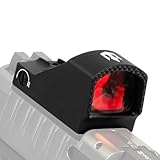
- ARS Mark8.5
ARS Mark is a ranking system developed by bestairriflescopes.com. ARS Mark has no relationship or impact from any manufacturers or sales agent websites. Learn more
- BrandTriton

- ARS Mark7.1
ARS Mark is a ranking system developed by bestairriflescopes.com. ARS Mark has no relationship or impact from any manufacturers or sales agent websites. Learn more
- BrandBushnell

- ARS Mark8.5
ARS Mark is a ranking system developed by bestairriflescopes.com. ARS Mark has no relationship or impact from any manufacturers or sales agent websites. Learn more
- BrandARORY
- ARS Mark8.3
ARS Mark is a ranking system developed by bestairriflescopes.com. ARS Mark has no relationship or impact from any manufacturers or sales agent websites. Learn more
- BrandZEROHAWK

- ARS Mark8.0
ARS Mark is a ranking system developed by bestairriflescopes.com. ARS Mark has no relationship or impact from any manufacturers or sales agent websites. Learn more
- BrandZEROHAWK

- ARS Mark7.3
ARS Mark is a ranking system developed by bestairriflescopes.com. ARS Mark has no relationship or impact from any manufacturers or sales agent websites. Learn more
- BrandCVLIFE

- ARS Mark8.6
ARS Mark is a ranking system developed by bestairriflescopes.com. ARS Mark has no relationship or impact from any manufacturers or sales agent websites. Learn more
- BrandCVLIFE
Last update on 2026-10-09 / Affiliate links / Images, Product Titles, and Product Highlights from Amazon Product Advertising API
Should you zero a pistol red dot at 10, 15, or 25 yards?
A 15-yard zero serves as an effective baseline for most handgun setups, balancing close mechanical offset with minimal drop out to practical distances. At 15 yards, your point of impact remains predictable without extreme trajectory rise or fall between point-blank range and 25 yards.
Zeroing at 10 yards produces tight alignment for close defensive drills, but your shots will climb slightly at intermediate yardages before dropping off past 20 yards. A 25-yard zero creates a flatter flight path out to distance, yet it increases holdover demands inside 7 yards where optic height over bore is most pronounced. If you spend time practicing sight transitions with a CO2 BB gun or defensive pistol, a 15-yard zero provides consistent impacts with the least amount of mental calculation.
How does optic mounting height affect close-range holdover?
Optic height creates mechanical offset between the bore axis and the red dot window, forcing shots to land low inside your zero distance. The greater the physical distance between the center of the lens and the center of your barrel, the higher you must aim on targets inside 10 yards.
Direct slide cuts or optics with a 0.33" low profile minimize this separation, keeping your sightline closer to the barrel axis. Stacking adapter plates lifts the optic higher, which exaggerates your close-range offset and can consume more elevation adjustment clicks to establish your zero. For targets inside 5 yards, expect to place the dot an inch or two above your intended target point to compensate for this mechanical offset.
Does a 2 MOA dot work better for zeroing than a 3 MOA or 5 MOA reticle?
Yes, a 2 MOA dot provides a finer point of aim that covers less of the bullseye when zeroing at 15 or 25 yards. Because a 2 MOA dot covers roughly half an inch at 25 yards, it allows clear target visibility so you can dial in precise windage and elevation clicks.
A 3 MOA dot offers a balanced compromise between speed and precision, while a 5 MOA or 6 MOA dot covers more target area downrange. Larger dots excel at rapid target acquisition up close, but they can blot out standard bullseyes at distance, making fine zero confirmation harder. If your primary goal is surgical precision at distance, a smaller 2 MOA dot gives you the clearest view of your impact point.
How do multi-reticle circle dots perform across different zero distances?
Multi-reticle designs that combine a 2 MOA center dot with a 32 MOA or 34 MOA outer circle allow you to separate precision zeroing from fast close-range holds. You zero the optic using the small center dot at your chosen distance, ensuring exact bullet placement downrange.
Once zeroed, the wide outer circle functions as an instinctive framing ring for fast sight acquisition inside 10 yards. At close distances where mechanical offset causes shots to hit low, the bottom edge of a 32 MOA or 34 MOA ring can often serve as an immediate holdover reference. When setting up a multi-reticle optic, always adjust your windage and elevation using the fine center dot before relying on the outer ring during dynamic shooting drills.
Which optic footprint and adapter plate setup holds zero best under slide recoil?
Direct-mount footprints matched to your slide cutout hold zero more reliably than stacked adapter plates because they eliminate an extra layer of movement. Mounting directly to an RMSc, 407K, 507K, or RMR footprint keeps the optic seated deep in the slide pocket with minimal tolerance play.
When your pistol requires a conversion plate, such as a MOS-to-RMSc adapter plate or an adapter for Glock MOS, the screws endure higher shear stress during slide cycling. To ensure the plate holds zero, verify that the adapter includes raised recoil lugs to absorb forward and rearward inertia. Applying correct screw torque and checking that the optic housing seats flat against the slide prevents vibration from shifting your point of impact.
What build features prevent a pistol red dot from losing zero over time?
Optics built with 7075 T6 aluminum housings and shockproof ratings such as 1500G provide the structural rigidity needed to withstand rapid slide acceleration. Repeated slide snap can jar loose delicate internal adjustment dials on poorly reinforced sights, causing gradual zero drift.
Side-loading or side-mounted battery compartments also protect your zero because they allow battery changes without unmounting the optic from the slide. Removing an optic breaks the factory screw torque and plate seat, forcing you to re-confirm your zero at the range. Maintaining consistent optic settings on your handgun or practicing similar holdovers with a tactical air rifle ensures your sights remain locked in place across thousands of rounds.


12 Best 22 Pcp Air Rifle For Hunting of 2026 With Quiet Power

7 Best 22 Pcp Air Rifle Under 300 of 2026 For Backyard Pest Control

10 Best 22 Break Barrel Air Rifles of 2026 For Backyard Pest Control

10 Best 30 Caliber Pcp Air Rifle of 2026 For Medium Game

Top Best 177 Air Rifle Under 100: Budget-Friendly Picks for 2026

How to Safely Reload Shotgun Shells at Home

11 Best Co2 Air Rifle For Pest Control of 2026 To Ensure Humane Dispatch

12 Best Inexpensive Air Rifles of 2026 For Dependable Backyard Accuracy






