
11 Best Pulsar Thermal Monocular of 2026 For Night Hunting

The costliest mistake in night hunting is mismatching the thermal sensor to your terrain, which leaves a hunter staring at an unrecognizable heat blur right when positive identification matters most. Darkness strips away depth perception, so an optic with too small an objective lens or an inadequate core turns open pastures into a guessing game. Squeezing a stalk through timber with an oversized, cumbersome unit brings physical fatigue, while taking a narrow field of view into tight brush means sweeping right past close-in predators without ever spotting them. A bad fit wastes hard-earned cash, blows setups, and turns hours of cold waiting into pure frustration.
Spotting an incoming predator early and knowing its exact distance before raising a rifle changes everything about hunting in the dark. Getting that confidence comes down to balancing three straightforward details: choosing a 640 sensor for vast agricultural flats versus a practical 384 core for timber stands, picking a pocket-friendly shell over an ergonomic full-frame body, and opting for an integrated laser rangefinder to eliminate nighttime yardage guessing. Matching those hardware traits to your typical backdrop keeps you from overspending while ensuring every heat signature reads clear. Here is how the leading options stack up across different night-hunting landscapes in 2026.

- ARS Mark9.6
ARS Mark is a ranking system developed by bestairriflescopes.com. ARS Mark has no relationship or impact from any manufacturers or sales agent websites. Learn more
- BrandPulsar

- ARS Mark9.5
ARS Mark is a ranking system developed by bestairriflescopes.com. ARS Mark has no relationship or impact from any manufacturers or sales agent websites. Learn more
- BrandPulsar

- ARS Mark9.1
ARS Mark is a ranking system developed by bestairriflescopes.com. ARS Mark has no relationship or impact from any manufacturers or sales agent websites. Learn more
- BrandPulsar

- ARS Mark8.9
ARS Mark is a ranking system developed by bestairriflescopes.com. ARS Mark has no relationship or impact from any manufacturers or sales agent websites. Learn more
- BrandPulsar

- ARS Mark8.8
ARS Mark is a ranking system developed by bestairriflescopes.com. ARS Mark has no relationship or impact from any manufacturers or sales agent websites. Learn more
- BrandPulsar

- ARS Mark8.6
ARS Mark is a ranking system developed by bestairriflescopes.com. ARS Mark has no relationship or impact from any manufacturers or sales agent websites. Learn more
- BrandPulsar

- ARS Mark8.3
ARS Mark is a ranking system developed by bestairriflescopes.com. ARS Mark has no relationship or impact from any manufacturers or sales agent websites. Learn more
- BrandPulsar

- ARS Mark8.3
ARS Mark is a ranking system developed by bestairriflescopes.com. ARS Mark has no relationship or impact from any manufacturers or sales agent websites. Learn more
- BrandPulsar

- ARS Mark8.2
ARS Mark is a ranking system developed by bestairriflescopes.com. ARS Mark has no relationship or impact from any manufacturers or sales agent websites. Learn more
- BrandPulsar
- ARS Mark7.5
ARS Mark is a ranking system developed by bestairriflescopes.com. ARS Mark has no relationship or impact from any manufacturers or sales agent websites. Learn more
- BrandPulsar

- ARS Mark7.3
ARS Mark is a ranking system developed by bestairriflescopes.com. ARS Mark has no relationship or impact from any manufacturers or sales agent websites. Learn more
- BrandPulsar
Last update on 2026-09-24 / Affiliate links / Images, Product Titles, and Product Highlights from Amazon Product Advertising API
Should you choose an Axion or a Telos thermal monocular for night hunting?
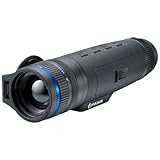
It depends on whether your priority is pocket-sized mobility or extended scanning comfort. Compact models such as the Pulsar Axion XQ19 or Axion XG30 fit easily into a coat pocket for mobile stalkers who move quietly on foot. Larger units like the Pulsar Telos XP50 or Telos XQ35 feature a more substantial body profile designed for stability during long stationary observation sessions. Check the exact chassis dimensions and battery format on the manufacturer specification sheet to match your pack space.
Does your terrain require a 640x480 sensor over a 384x288 sensor?
It depends on your average viewing distance and terrain openness. Units equipped with a 640x480 sensor, including the Pulsar Axion 2 XG35 and the Pulsar Telos XP50, provide higher thermal definition to help identify distant animals across wide agricultural pastures. A 384x288 sensor, found on the Pulsar Axion XQ30 Pro and Pulsar Telos XQ35, works reliably for dense timber and brush where close encounters make ultra-high resolution unnecessary. Evaluate your typical hunting range to avoid purchasing more sensor resolution than your terrain demands.
Is an integrated laser rangefinder necessary on a thermal monocular?
Yes, adding a laser rangefinder solves the loss of depth perception that occurs on pitch-black nights. Models with an integrated laser rangefinder, such as the Pulsar Axion 2 XQ35 Pro, Pulsar Telos LRF XQ35, and Pulsar Oryx LRF XG35, project an instant distance reading directly onto the internal display. This prevents hunters from confusing a small varmint up close with a coyote far out in the field before readying their rifle, especially when setting up the best gun for a thermal scope to make an ethical shot.
What magnification range should you look for in a compact thermal monocular?
Magnification depends on whether you prioritize a wide field of view for scanning or digital zoom for target verification. The Pulsar Axion 2 XQ35 Pro features 2-8x magnification, which balances close-range awareness with moderate reach. In contrast, the Pulsar Axion XG30 delivers 2-16x magnification to inspect thermal signatures at greater distances. Confirm the base magnification level in the product specifications so your initial field of view stays wide enough for rapid target detection.
What practical benefit does a 12 µm sensor offer over a 17 µm sensor?
A 12 µm sensor allows the optic to deliver higher base magnification without increasing the outer housing size. For example, the compact Pulsar Axion XG30 pairs a 12 µm sensor with 2-16x magnification, whereas the Pulsar Axion 2 XQ35 Pro utilizes a 17 µm sensor for 2-8x magnification. Smaller pixel pitch helps optical designers pack greater long-range identification capability into a pocket-friendly device. Always check the sensor resolution and pixel pitch together to determine how clearly the unit renders heat signatures.
Can a thermal monocular completely replace a daytime spotting scope?
No, thermal imagers and optical spotting scopes serve distinct roles in the field. While a thermal monocular detects living heat signatures through dense brush, mist, and complete darkness, it cannot reveal antler points, plumage colors, or fine surface details. Pairing your thermal scanner with a dedicated glass optic like the best spotting scope for backpack hunting ensures you can verify trophy details in daylight while relying on thermal contrast once the sun goes down.

10 Top Picks: Best Youth Air Rifles for 13-Year-Olds

12 Best Rifle Scopes For 5.56 Under 150 Dollars - (2026 Top Picks)

Top 10 Rifle Scopes for Coyote Hunting in 2026

12 Best Benchrest Rifle Scopes of 2026 For Tight Groups

Top 5 Airsoft Rifles: Unleash the Action in 2026

Unveil the Best Straight Wall Deer Rifles: Top Picks for 2026

Top Ammo Choices for Air-Powered Rifles: Boost Your Performance in 2026

Best Quick Detach Scope Rings for Accurate and Convenient Shooting







