Bestairriflescopes.com is reader-supported. When you buy through links on our site, we may earn an affiliate commission. Learn more

Best Pump Shotgun Ever Made 2026: Enduring Legends

The debate over the best pump shotgun ever made rarely ends with one uncontested winner. Some models earn loyalty through decades of hard field use, while others stand out for smooth actions, rugged receivers, sensible controls, or widely available replacement parts. A shotgun that feels beautifully balanced in one pair of hands may feel awkward and front-heavy in another. That’s the rub: reputation matters, but fit, purpose, and long-term support matter just as much.

The Remington 870 and Mossberg 500 usually sit at the center of this argument, and neither landed there by accident. The 870 built its name around a steel receiver, familiar handling, and an enormous catalog of barrels, stocks, and service parts. The Mossberg 500 counters with an aluminum receiver, an ambidextrous tang safety, dual extractors, and a design that’s easy to configure for hunting or sporting use. Both have been produced in huge numbers, so parts availability and gunsmith familiarity remain practical advantages rather than brochure fluff.

Older Winchester Model 12 shotguns bring a different kind of appeal. Their machined construction, slick action, and graceful proportions give them a mechanical character that many newer designs don’t quite match. Still, age introduces complications, including worn components, limited modern compatibility, and prices influenced by condition or collector interest. A well-preserved example can feel special, but it isn’t automatically the sensible answer for someone who wants simple maintenance and easy replacement parts.

Ithaca’s Model 37 also deserves a seat at the table, especially for its lightweight feel and bottom-loading, bottom-ejecting layout. That configuration keeps empty shells directed downward and makes the design naturally comfortable from either shoulder. The tradeoff is a smaller accessory ecosystem than the 870 or 500 family, plus model-year differences that can complicate parts shopping. Its charm is real, though, and the fast, lively handling still wins over shooters who dislike bulky pump guns.

Durability claims need context. A heavy steel receiver can tolerate years of use, yet extra weight becomes noticeable during long walks through wet fields or thick cover. A lighter receiver makes carrying easier, but some people prefer the planted feel of a heavier gun during repeated shots. Finish quality matters too, since neglected moisture can leave surface rust on blued steel surprisingly quickly. Routine cleaning, dry storage, and basic inspection often affect longevity more than brand arguments do.

Manufacturing era deserves attention because a famous model name doesn’t guarantee identical quality across every production year or trim level. Economy versions may use rougher finishes, simpler furniture, or more polymer components than older flagship examples. Those changes aren’t always bad, but they can alter the feel that built the model’s reputation in the first place. Buying on name alone can leave someone wondering why the action feels stiff or the stock dimensions seem off, so individual condition and configuration should guide the final judgment.

The strongest all-around case often belongs to the Remington 870 Wingmaster because it blends proven mechanics, smooth operation, broad parts support, and a long sporting history. The Mossberg 500 remains the more practical rival for those who value its control layout, lighter receiver, and flexible barrel options. Vintage choices such as the Model 12 and Model 37 bring craftsmanship and personality, but they ask for more patience around inspection and sourcing parts. No single answer fits every cabinet, yet the enduring finalists share one trait: they’ve stayed useful long after marketing campaigns faded.
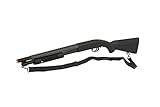
 

Pump Action Airsoft Shotgun With Full Metal Barrel

A convincing pump cycle can make a spring-powered replica far more satisfying than a flimsy toy that rattles after a few weekends. This model borrows the familiar handling rhythm associated with the best pump shotgun ever made, but the comparison needs a firm boundary: it’s an airsoft gun, not a firearm. The single-shot mechanism, metal barrel, and textured furniture aim for a grounded, mechanical feel without pretending to offer rapid follow-up fire. That combination suits slower, deliberate play, though anyone expecting a multi-shot shell system may feel the limitations right away.

Full Metal Pump Action Airsoft Shotgun

The single-shot pump action defines the whole experience. Each BB requires a complete pump cycle before the next shot, creating a clear load, aim, fire rhythm that feels more involved than simply squeezing a trigger repeatedly. That pace can be entertaining during backyard target sessions or structured airsoft scenarios where careful shot placement matters. Still, it won’t keep up with electric rifles or gas-powered platforms once the action gets fast and crowded.

A stated muzzle velocity of 300 to 340 FPS with 0.20g BBs places the shotgun in a useful recreational range, but actual results can shift with temperature, BB quality, spring condition, and chronograph setup. The listed velocity suggests enough energy for medium-distance airsoft use while keeping the mechanism simple and self-contained. Accuracy will depend heavily on consistent ammunition and a steady pumping motion, so bargain-bin BBs may cause more frustration than they save in cost. Field limits should always be checked before play because individual venues set their own rules.

The shortened name sounds straightforward, and frankly, so does the design. There’s no battery to charge, no gas reservoir to monitor, and no electronic fire-control system adding extra maintenance. That simplicity is a genuine practical strength for occasional play or target practice, especially after the gun has been sitting in storage. The flip side is equally plain: every missed shot costs time because the action must be cycled again.

Metal Barrel And Realistic Handling

The heavyweight full metal barrel construction gives the front end more substance than an all-plastic replica. Added weight can improve the impression of realism and help the muzzle feel steadier while aiming from a supported position. It also makes the shotgun less toy-like in the hands, which may be a big part of its appeal. Carried through a long game, though, that same weight can become tiring, especially when paired with a full-length stock.

The stock uses a comfortable traditional length, while the textured grip and grooved handguard provide useful contact points. Those grooves matter during warm-weather games when hands get sweaty, and they’re even more noticeable with gloves that dull fingertip feedback. A pump handle that feels secure reduces short-stroking and makes the repeated cycling motion less awkward. Hand size still plays a role, so smaller frames may find the reach and front-heavy balance less forgiving.

Traditional shotgun proportions also make the replica easier to shoulder instinctively. The stock encourages a stable cheek position, while the long barrel gives a clear visual line toward the target. That familiar geometry can feel more natural than compact tactical replicas covered in controls and rails. Yet realistic length becomes a drawback in narrow hallways, dense brush, or cramped indoor arenas where shorter platforms turn more easily.

Single-Shot Performance In Actual Play

Single-shot spring guns reward patience rather than volume. A carefully aimed BB can be satisfying, but the mechanism leaves little room for hurried correction after a poor trigger press. That makes shot discipline a central part of the experience, which can be fun during limited-ammunition scenarios or informal target challenges. During aggressive team games, the slow firing cycle may put the shotgun at a clear disadvantage.

The pump action mimics the movement of a traditional shotgun without requiring shells or compressed gas. Pulling the handguard through its full travel loads the next BB and resets the spring mechanism, so the process is easy to understand. That mechanical feedback is part of the charm, although repeated pumping can become tiring during long sessions. A rushed or incomplete stroke may also interrupt feeding, making consistent cycling more important than brute force.

At the stated velocity, heavier BBs may trade some speed for better stability, while 0.20g ammunition matches the manufacturer’s listed FPS range. The ideal weight can’t be assumed without testing because hop-up behavior and barrel consistency aren’t described in the supplied specifications. Starting with clean, polished BBs from a reputable airsoft brand is the sensible route. Cheap or misshapen ammunition can undermine feeding reliability and accuracy, no matter how solid the barrel feels.

Grip, Stock, And Sling Carry

Front and rear sling mounting points allow the shotgun to work with a two-point sling. That’s useful between rounds, while moving through staging areas, or whenever both hands are needed for other gear. A properly adjusted sling also keeps the replica close to the body instead of letting the barrel swing into obstacles. Sling hardware isn’t specified, so checking the attachment points for looseness before each session would be sensible.

The grooved handguard offers more than visual detail because it gives the support hand a repeatable place to land. That repeatability can make pumping smoother and reduce fumbling during reload cycles. Gloves should work reasonably well with the textured surfaces, though very thick gloves may still reduce trigger feel. The handling layout stays simple, which is welcome on a spring gun where unnecessary controls would only add clutter.

The full stock supports a stable shooting stance, yet it won’t suit every body type. A fixed stock offers no quick adjustment for heavy clothing, smaller shoulders, or different arm lengths. That’s a meaningful fit limitation, not a minor cosmetic issue, because poor stock length can slow shouldering and strain the wrist. Anyone accustomed to adjustable carbine stocks may need time to adapt.

Magazine Setup And Reloading Expectations

The product description identifies a separate magazine option under model reference B0B6KHVRGN. A spare magazine can reduce downtime, but the supplied information doesn’t state the included capacity, exact compatibility tolerances, or whether the spare uses the same retention system across production batches. Confirming those details before ordering would prevent an annoying mismatch. The key practical point is that single-shot operation remains unchanged even with extra magazines.

Reloading speed matters less during casual target shooting, where the slower routine can actually add structure. Games tell a different story. A low-capacity or awkwardly placed magazine may leave the shotgun out of action at inconvenient moments, and the pump mechanism already limits firing tempo. Carrying a spare helps, but it doesn’t erase the platform’s rate-of-fire disadvantage.

Magazine handling should stay clean and deliberate because dirt around the feed path can cause jams. Spring-powered replicas are mechanically simple, yet the magazine still has to present each BB correctly. Avoid forcing the magazine into place, and don’t reuse damaged ammunition that has landed on hard ground. Small habits like those protect feeding consistency better than aggressive pumping ever will.

Who Will Appreciate This Design Most

The strongest appeal comes from the blend of mechanical simplicity and realistic presentation. Someone tired of charging batteries or buying gas may appreciate a spring platform that can be picked up and used with minimal preparation. The metal barrel and traditional furniture give the gun more presence than a lightweight plastic starter model. Even so, the slow single-shot format asks for realistic expectations from the start.

Collectors may enjoy the familiar silhouette and the tactile pump cycle, particularly as a display-friendly airsoft piece that can still handle recreational shooting. Casual plinking also fits the design because speed matters less when paper targets aren’t firing back. Competitive skirmishing is a tougher sell, especially against automatic platforms with larger magazines. The shotgun’s personality comes from deliberate handling, not tactical dominance.

The main keyword creates an unavoidable distinction. This replica may echo the feel and visual language connected with the best pump shotgun ever made, but it cannot be judged as an actual shotgun because it fires 6mm airsoft BBs through a spring-powered system. Treating it as an airsoft replica leads to a fairer evaluation and avoids inflated expectations. Its strengths are realism, simplicity, and hands-on operation, while its weaknesses are speed, adaptability, and likely close-quarters maneuverability.

Limitations That Deserve Attention

The product information doesn’t provide details about hop-up adjustment, magazine capacity, overall weight, barrel length, or included accessories. Those omissions make it hard to predict long-range consistency or how comfortable the gun will feel after several hours. The stated FPS range is useful, but velocity alone doesn’t guarantee accuracy or field effectiveness. Buyers should judge the shotgun by its simple spring design rather than assuming performance beyond the supplied specifications.

A full metal barrel improves realism, but it doesn’t mean every internal component is metal. The description only confirms the barrel construction, so claims about gears, trigger parts, or internal durability would be speculation. Spring mechanisms can remain dependable with basic care, though rough pumping and storing the gun cocked may shorten component life. Careful handling matters more than trying to cycle it as hard as possible.

The unrelated topic of piston-powered airguns sometimes comes up during research into spring mechanisms, and a neutral technical reference appears in nitro piston air rifles. Those rifles use a different power system, ammunition type, and intended application, so they shouldn’t be treated as substitutes for this airsoft shotgun. The distinction matters because equipment rules, protective gear, safe backstops, and legal requirements can differ sharply. Keeping categories separate prevents a misleading performance comparison.

Safety, Maintenance, And Realistic Ownership

Protective eyewear is non-negotiable around any airsoft gun, even during casual target practice. A 0.20g BB traveling at the listed velocity can injure eyes, damage fragile objects, and ricochet from hard surfaces. A controlled backstop and clear firing area are basic parts of responsible use. The realistic appearance also means the shotgun should be transported discreetly in a case rather than carried openly.

Basic maintenance doesn’t need to become a science project. Keep the barrel clean with airsoft-safe materials, store the magazine unloaded, and avoid leaving the spring compressed after use. Petroleum oils can damage certain seals and plastics, so random household lubricants aren’t a smart substitute for products intended for airsoft equipment. These small routines support consistent feeding and spring life without creating a fussy ownership experience.

The Pump Action Airsoft Shotgun makes the most sense as a deliberate, tactile replica rather than a high-volume primary weapon. Its metal barrel, textured controls, sling points, and 300 to 340 FPS rating give it a credible feature set based on the supplied description. The fixed stock and single-shot cycle create clear tradeoffs, particularly during fast games or in tight spaces. For slower scenarios, collecting, and target practice, those same traits provide the hands-on character that separates it from generic spring pistols and battery-powered rifles.

GoldenBall 788 Pump Action Airsoft Spring Shotgun

Compact airsoft shotguns often promise quick handling, then spoil the idea with awkward controls or a tiny loading system. The GoldenBall 788 takes a simpler route, pairing a stockless frame with an internal 100-round reservoir and a straightforward spring-powered pump mechanism. Its styling nods toward the best pump shotgun ever made conversation, but the product belongs firmly in the airsoft category and should be judged by that standard. The result is a lightweight replica built around mobility, basic operation, and a fast-moving close-range play style.

GoldenBall 788 Airsoft Shotgun

The GoldenBall 788 strips away much of the bulk associated with full-stock airsoft replicas. Its stockless design shortens the overall package, making it easier to maneuver around doorways, corners, temporary barriers, and crowded staging areas. That compact shape also makes storage less of a headache because it takes up less room in a case or gear bin. The tradeoff is reduced shoulder support, so aiming may feel less stable than it would with a traditional stock.

A spring-powered system keeps the operating routine simple. Each shot requires a full pump cycle, which cocks the mechanism and prepares the next BB from the internal reservoir. There’s no battery to charge and no gas supply to manage, so the shotgun can sit between sessions without much preparation. That low-maintenance operation is a clear strength, though the single-pump rhythm limits firing speed against electric airsoft rifles.

The product description emphasizes lightweight ABS plastic construction. ABS helps keep the gun manageable during longer indoor games, especially where frequent direction changes matter more than a heavy, realistic feel. It also lowers fatigue while carrying the replica between rounds. Still, plastic construction won’t offer the same weight, balance, or tactile character as a model with extensive metal parts.

Compact Handling In Tight Spaces

Close-quarter environments are where the short frame makes the strongest case for itself. A full-length stock can snag on clothing, walls, or barricades during quick transitions, while this design keeps the rear of the gun out of the way. The shorter profile allows faster movement from a low-ready position without requiring as much clearance. That close-range mobility is useful, but it doesn’t automatically translate into better accuracy.

The missing stock changes the way the shotgun is controlled. Instead of planting the butt against the shoulder, the shooter relies more heavily on the firing hand, support hand, and eye alignment. That can make quick snapshots feel natural at short distances, yet longer or more deliberate shots may expose the lack of rear support. A stockless layout favors speed and compactness over steady sight alignment.

Indoor play can be hectic, and lightweight gear tends to feel less cumbersome after repeated rounds. The GoldenBall 788 should be easier to carry through short matches than a heavier full-metal replica, based on the stated ABS construction. Less weight can also make the pump motion easier for smaller hands or anyone who dislikes front-heavy equipment. On the flip side, a very light platform may feel less planted during aiming and pumping.

Pump Action Feel And Shooting Rhythm

The pump mechanism is designed to mimic the motion of a traditional pump-action shotgun. Pulling the grooved handguard through its full travel creates a hands-on shooting rhythm that feels more involved than pressing a button on an electric platform. That mechanical interaction is part of the appeal, especially during casual target practice or slower airsoft scenarios. The realistic pumping motion adds character without requiring shells or external power.

Spring operation rewards deliberate cycling. A rushed or incomplete pump stroke may interfere with loading, so smooth movement matters more than speed. The grooved handguard gives the support hand a clearer purchase, which should help maintain control while repeating the action. Still, every shot requires manual effort, and that becomes a rate-of-fire limitation during prolonged exchanges.

Single-shot spring systems tend to encourage better shot selection because missed rounds can’t be corrected instantly with a burst. That slower rhythm can be satisfying during backyard target sessions where accuracy and timing matter more than volume. In a fast indoor match, though, the pause between shots can feel costly. The design suits measured play better than aggressive suppression.

Internal 100-Round Reservoir

The built-in reservoir is one of the most practical features in the description. A stated capacity of 100 rounds reduces the need for frequent external magazine changes and keeps the body free from a bulky detachable box. That setup fits the compact design because there’s less hardware protruding from the shotgun. It also simplifies loading for casual sessions where convenience matters more than realistic magazine handling.

Reservoir capacity shouldn’t be confused with rapid firing. The shotgun may hold many BBs internally, but the spring mechanism still requires a pump before each shot. That combination offers longer shooting sessions between refills rather than a higher firing rate. In plain terms, the large ammunition supply supports endurance, not speed.

An internal reservoir can also reduce the number of loose accessories that need to be carried or misplaced. There’s no separate magazine mentioned in the supplied details, so the loading system appears intended to remain self-contained. The drawback is that a problem inside the feed path may be less convenient to inspect than a removable magazine. Clean BBs and careful loading should help preserve feeding consistency.

Grip Texture And Control

The textured pistol grip includes finger grooves to create a more defined hold. Those grooves can help the firing hand remain centered during pumping, aiming, and quick direction changes. Gloves often reduce fine tactile feedback, so raised texture becomes more useful than it looks in photos. The enhanced grip surface is a practical feature rather than decorative molding.

Finger grooves can be a mixed blessing because hand shapes vary. A grip that lines up comfortably with one hand may feel restrictive to another, especially with thick gloves. Fixed grooves don’t adapt, and there’s no mention of interchangeable grip panels. The feature improves indexing, but individual hand fit will determine whether it feels natural.

The grooved handguard supports the other half of the control equation. Repeated pumping puts pressure on the support hand, and a slick surface would make that motion tiring or inconsistent. Deeper grooves provide a more reliable place to pull from without squeezing excessively. That should help reduce slipping, though rough treatment can still stress a plastic assembly over time.

Strengths In Casual Airsoft Use

Simplicity is the GoldenBall 788’s biggest advantage. The spring system removes battery care, gas seals, charging schedules, and electronic components from the ownership routine. Load the reservoir, cycle the pump, and the basic mechanism is ready to operate. That straightforward setup suits occasional use and keeps preparation from becoming a project.

The compact body is another strong point. Stockless airsoft replicas can move quickly through small spaces and remain easier to transport than long, full-stock shotguns. The lightweight ABS frame should also make the gun less tiring during short recreational sessions. Together, those traits create a nimble platform for indoor target practice or informal airsoft play.

The 100-round reservoir adds convenience without disrupting the clean exterior profile. Fewer reload interruptions mean more time spent shooting, even though each individual shot still requires pumping. The design balances a generous BB supply with a mechanically slow firing cycle. That contrast gives the shotgun a distinct personality rather than trying to imitate an automatic rifle.

Weaknesses And Practical Tradeoffs

The absence of a shoulder stock is the most obvious compromise. Compactness improves, but stability suffers because there’s no rear contact point to support a consistent shooting position. That may not matter much at short range, yet it becomes noticeable when trying to hold the sights steady. The stockless layout favors maneuverability and sacrifices precision support.

ABS construction keeps weight down, though it may feel less realistic than metal-bodied alternatives. The supplied description calls the plastic durable, but it doesn’t provide drop-test data, material thickness, or internal component details. Hard impacts, forced pumping, and careless storage could still damage external parts. Realistic expectations are essential because lightweight plastic is a design choice, not an invitation to abuse the replica.

The manual firing cycle also limits competitiveness. Electric platforms can place multiple BBs downrange before this shotgun has completed another pump stroke. That gap matters in open spaces or against opponents who rely on volume. The GoldenBall 788 makes more sense for controlled, close-range play than for situations demanding sustained fire.

Accuracy Expectations And BB Management

The product details don’t specify muzzle velocity, hop-up adjustment, barrel length, or recommended BB weight. Without those figures, precise claims about range and accuracy would be guesswork. The compact format and spring mechanism suggest a recreational focus rather than long-distance precision. Consistent BB quality will likely matter more than chasing unsupported performance assumptions.

Clean, polished airsoft BBs help reduce feed problems inside reservoir-based systems. Damaged, dirty, or reused ammunition can create jams or inconsistent shots, especially where multiple BBs move through an internal channel. Loading carefully is less glamorous than talking about tactical handling, but it often has a bigger effect on reliability. Keeping the feed path clean supports smoother cycling.

A separate topic sometimes appears while researching safe target setups for air-powered equipment, and one neutral example is pellet gun backstops. Pellet guns and airsoft guns use different projectiles and can require very different containment materials, so the categories shouldn’t be treated as interchangeable. A backstop suitable for lightweight plastic BBs may not safely stop metal pellets. That distinction matters wherever target shooting takes place.

Safety And Maintenance Habits

Eye protection remains essential around spring airsoft guns. Plastic BBs can ricochet from walls, metal targets, hard flooring, and improvised backstops without much warning. A controlled shooting lane and a proper airsoft-rated target catcher reduce avoidable risk. The gun’s realistic appearance also calls for discreet transport and responsible storage.

Maintenance should stay simple. Keep debris away from the reservoir, avoid leaving tension on the spring after a session, and wipe the exterior before storage. Forcing the pump handle rarely solves a feed issue and may turn a minor jam into a broken component. Gentle inspection protects the pump mechanism better than extra muscle.

The GoldenBall 788 works best as a compact, manually operated airsoft shotgun with a large internal BB supply. Its 100-round reservoir, textured grip, grooved handguard, and stockless frame directly support mobile close-range use. The same design brings clear compromises in stability, firing speed, and realistic weight. Those tradeoffs aren’t hidden flaws, but they should shape expectations before the first reservoir is filled.

Daisy Model 25 Pump-Action BB Gun

A simple afternoon of target practice can turn sour fast when a rifle feels awkward, inconsistent, or needlessly complicated. The Daisy Model 25 takes the opposite path, leaning on a familiar pump-action layout, a slim profile, and a straightforward .177-caliber BB system. Its vintage roots give it a strong connection to the discussion around the best pump shotgun ever made, though this is a BB gun rather than a shotgun and should be judged within that lane. The appeal comes from mechanical rhythm, nostalgic styling, and uncomplicated recreational shooting rather than raw power or modern tactical features.

Daisy Model 25 BB Gun

The Model 25 is a remake of the vintage No. 25, and that heritage shapes nearly every part of its identity. Instead of looking like a modern air rifle covered in rails, adjustable stocks, and oversized controls, it sticks to a cleaner, more traditional form. That old-school approach gives the rifle a distinct personality without forcing decorative gimmicks into the design. The vintage-inspired layout is likely to matter most to anyone who values mechanical charm as much as basic shooting function.

Its pump-action mechanism creates a hands-on cycle before each shot. That movement adds a physical rhythm to target practice and makes each trigger pull feel more deliberate than it would on a semi-automatic BB gun. There’s a small learning curve, especially for anyone used to lighter cocking systems, but the process becomes part of the enjoyment. The manual pump operation slows things down in a way that can encourage steadier aim and more thoughtful shooting.

The supplied specification lists a caliber of .177, which is the standard size associated with many recreational BB guns. That makes ammunition easy to identify and keeps the rifle aligned with common backyard target setups designed for steel BBs. Ammunition type still matters, so it shouldn’t be confused with pellet compatibility unless the manufacturer specifically confirms it. Clear labeling and careful loading reduce avoidable feeding problems and help preserve the rifle’s simple operating routine.

Vintage Pump Action Experience

The strongest part of the Model 25 experience is the way the pump handle changes the pace of shooting. Each cycle becomes a small ritual: cock, settle, aim, and fire. That routine can feel satisfying during relaxed target sessions because there’s no pressure to rush through ammunition. The mechanical feedback gives the rifle a character that quieter, less interactive designs sometimes lack.

Older styling doesn’t automatically mean outdated handling, though it does bring a different set of expectations. The rifle isn’t described as having an adjustable stock, modular furniture, or interchangeable controls. Its dimensions and fit are therefore more fixed than those of many newer air rifles. That traditional configuration may feel natural to some shooters and less accommodating to others, especially where arm length or preferred stance differs.

The pump action also introduces effort that shouldn’t be ignored. Repeating the cocking motion over a long session can become tiring, particularly for smaller shooters or anyone with limited upper-body strength. That isn’t necessarily a flaw, but it’s a real tradeoff built into the design. The Model 25 rewards a relaxed pace rather than rapid strings of fire.

Velocity And Realistic Range Expectations

The listed velocity is 350 feet per second, a figure that places the rifle in a recreational BB-gun category rather than a high-powered hunting platform. Velocity alone doesn’t tell the whole story because practical accuracy also depends on ammunition consistency, barrel condition, sight alignment, and shooting technique. Still, the stated speed is enough to support casual paper-target shooting at sensible distances. It’s better viewed as a plinking rifle than as a tool for demanding long-range precision.

Shorter target distances will usually play to the rifle’s strengths. A pump-action BB gun with vintage geometry is most enjoyable when the target is close enough for clear sight alignment and visible feedback. Stretching the range too far can magnify every small inconsistency in hold, trigger control, and BB quality. The best practical results are likely to come from modest distances and a stable shooting position.

Steel BBs can ricochet from hard surfaces, so velocity should always be paired with a suitable backstop and clear shooting lane. Thin metal, rocks, concrete, and exposed wood can send a BB in an unpredictable direction. A purpose-built trap or deeply layered soft backstop is far safer than improvising with whatever happens to be nearby. Responsible setup matters more than squeezing a few extra yards from the rifle.

Handling And Everyday Use

The Model 25’s traditional shape should make the controls easy to understand after a short familiarization period. There’s no indication of complex electronics, external gas cartridges, or battery-driven parts. That keeps preparation simple and limits the number of things that can interrupt a casual session. The straightforward operation is a real strength for anyone who prefers mechanical simplicity over feature overload.

A vintage remake also tends to feel more at home on a bench, in a backyard target lane, or during supervised introductory practice than in a highly competitive setting. The fixed design encourages consistency because the user learns one stock shape, one pump stroke, and one basic sight picture. That repetition can build better habits over time. The downside is that there’s less room to tailor the rifle to unusual shooting positions or different body sizes.

Storage is another practical consideration. The rifle should be kept unloaded, dry, and secured away from unauthorized handling. Moisture can affect metal components, while dust and debris can interfere with the action if the gun is left uncovered. Basic care preserves the pump mechanism and exterior finish without turning maintenance into a complicated routine.

Strengths That Give It Staying Power

Nostalgia is the obvious strength, but it isn’t the only one. The remake of the No. 25 combines recognizable styling with a simple manual action and a widely understood .177-caliber format. That blend gives the rifle a clear identity instead of trying to imitate every current design trend. Its distinctive character makes it more memorable than a generic entry-level BB gun.

The listed 350 FPS velocity also keeps expectations grounded. It’s quick enough for recreational target shooting while remaining far removed from the power levels associated with more serious air rifles. That middle ground can make the shooting experience feel manageable and predictable. The rifle’s purpose is easier to understand because it isn’t pretending to cover every possible use.

A one-year limited warranty adds a defined support period. Warranty terms always deserve a careful read because coverage may depend on proper use, proof of purchase, and the nature of the problem. Even so, the stated warranty is more informative than a vague promise of support. The one-year coverage gives buyers a concrete baseline for manufacturer backing.

Limitations Worth Considering

The rifle’s vintage layout means it may not suit someone seeking adjustable ergonomics or modern accessory compatibility. The supplied details don’t mention optics rails, interchangeable sights, or stock adjustments. Those omissions don’t make the rifle defective, but they narrow the range of customization. The Model 25 is best appreciated for what it already is rather than for what can be bolted onto it later.

The pump mechanism can also slow down group shooting. Each shot requires physical input, and that can make extended sessions more tiring than expected. A lighter cocking system might feel easier for younger or smaller-framed shooters, though supervision and local rules remain essential regardless of age. The manual effort requirement is part of the rifle’s charm and one of its clearest compromises.

The product description provides only a few specifications, so claims about magazine capacity, sight type, overall weight, materials, or exact dimensions would be speculation. That lack of detail makes it harder to predict how the rifle will balance or how many BBs it can hold between reloads. The honest approach is to judge the confirmed facts: .177 caliber, 350 FPS velocity, one-year limited warranty, and No. 25-inspired design. Everything else should remain an open question until verified through official product documentation.

Sights, Aim, And Shooting Technique

A pump-action BB rifle rewards a repeatable stance and consistent sight picture. Small changes in cheek placement or grip pressure can shift impact, especially once the target moves farther away. Slow breathing and a clean trigger press often matter more than trying to force the rifle into rapid shooting. The deliberate shooting rhythm naturally supports those habits.

Sight details aren’t included in the supplied description, so it would be careless to claim a specific notch, post, or adjustment system. The rifle’s vintage heritage suggests a simple arrangement, but suggestion isn’t confirmation. A relevant reference from another aiming discipline appears in peep sight archery, though archery sights and BB-gun sights function in different equipment systems. The useful connection is the importance of consistent eye alignment, not hardware interchangeability.

A bench rest can help separate aiming errors from rifle behavior during the first few sessions. Once a stable baseline is established, standing and kneeling positions become easier to evaluate. That method keeps expectations realistic without inventing accuracy figures the manufacturer hasn’t provided. The Model 25’s measured, traditional pace fits this kind of patient practice well.

Safety And Long-Term Care

Protective eyewear belongs in every shooting session, even with a recreational BB rifle. Steel BBs can rebound from hard targets with surprising speed, and eye injuries can happen at close range before anyone has time to react. A clear firing lane, controlled backstop, and strict muzzle discipline are basic requirements. The rifle should never be treated like a toy simply because its velocity is lower than that of many pellet rifles.

Maintenance should focus on cleanliness, dry storage, and correct lubrication practices. Household oils may not be suitable for seals or internal parts, so products intended for airguns are the safer reference point. Excess lubrication can attract dust just as easily as neglect can cause wear. The goal is light, appropriate maintenance, not soaking the mechanism.

The Daisy Model 25 makes the most sense as a nostalgic recreational rifle built around deliberate pumping and straightforward .177-caliber shooting. Its 350 FPS rating, No. 25 heritage, and one-year limited warranty provide a clear picture of its intended role. The fixed vintage format and manual effort won’t suit every preference, especially where adjustability or rapid fire matters. For relaxed target practice and appreciation of classic airgun styling, those same traits give the rifle its reason for existing.

AGM 350 FPS Tactical Pump Action Airsoft Shotgun

Tight corners expose every awkward inch of a long airsoft replica, especially once a bulky stock and loose accessories start catching on barriers. The AGM 350 FPS Tactical Pump Action Airsoft Shotgun answers that frustration with a shortened profile, retractable stock, shell-fed loading system, and a bundle of practical field accessories. Its pump-driven shape naturally brings the best pump shotgun ever made discussion to mind, though this model is strictly a spring-powered airsoft replica rather than a firearm. The appeal rests on compact handling, mechanical operation, and realistic shell management, not rapid automatic fire.

AGM Tactical Pump Airsoft Shotgun

The shell-fed design gives this AGM model more personality than a basic hopper-fed spring gun. Four supplied shells hold 14 rounds each, creating a combined stated capacity of 56 BBs before every shell needs refilling. That arrangement adds a deliberate loading routine that fits the shotgun theme without requiring batteries or compressed gas. It also means small magazines must be tracked carefully, because losing one reduces the usable ammunition supply right away.

The sawed-off styling keeps the front end short and easier to turn through doorways, indoor barricades, and narrow lanes. A compact replica won’t drag against walls as often, and it feels less clumsy while moving from one side of cover to the other. That close-quarter mobility is a genuine strength during indoor play. The shorter profile still requires disciplined muzzle control, since a realistic replica can injure others or cause alarm when handled carelessly.

Spring power strips away several routine chores. There’s no battery pack to charge, no gas pressure to watch, and no electronic trigger system to troubleshoot before a game. Each shot only requires a complete pump cycle, which keeps the mechanism easy to understand. The catch is obvious: manual single-shot operation can’t match the speed of an electric rifle once the pace picks up.

Shell-Fed Loading Experience

The removable shells are more than a visual gimmick because they control how ammunition is carried and reloaded. Each shell stores 14 BBs, so the user can rotate through four prepared units before stopping to refill them. That makes the process feel more involved and gives the replica a stronger shotgun identity. On the other hand, shell management adds more steps than inserting one large magazine and getting back into play.

The included external shell holder keeps spare ammunition within reach instead of burying it in a pocket or pouch. That position can shorten reload time and reduce fumbling while gloves are on. Retention matters, though, because a loose shell holder could let a magazine fall during running or kneeling. The description confirms the holder but doesn’t specify its material or grip strength, so secure shell retention remains something to monitor during use.

A supplied speed-loader helps refill the shells without handling every BB individually. Tiny plastic rounds have a knack for rolling under furniture, vanishing into gravel, or scattering across a staging table. The speed-loader cuts down that annoyance and keeps the reload process more organized. Even with it, the shell system is slower than a high-capacity magazine, so realistic reloading comes with a time penalty.

Velocity And Shooting Expectations

The product description lists a maximum velocity of up to 350 FPS. That number suggests useful speed for recreational airsoft play, though actual readings may vary with BB weight, spring condition, temperature, and chronograph setup. Field rules also differ, so a stated maximum doesn’t automatically mean the replica will be approved everywhere. Velocity is only one part of performance, and it shouldn’t be mistaken for guaranteed range or precision.

Accuracy depends on the barrel, ammunition consistency, sight alignment, pump technique, and any hop-up system the shotgun may use. The supplied details don’t identify barrel length, hop-up adjustment, or recommended BB weight. Without those specifications, claims about exact grouping or effective range would be guesswork. The most reasonable expectation is close-to-medium-range airsoft performance with clean, consistent BBs.

The pump action changes the shooting rhythm in a noticeable way. Every miss requires another full stroke before a follow-up shot, so careless trigger work becomes costly. That slower pace can encourage better shot selection and cleaner timing around corners. During a fast exchange, however, limited firing speed becomes the main weakness and leaves little room for rushed corrections.

Retractable Stock And Balance

The retractable stock adds flexibility to a design that would otherwise feel locked into one shape. Extended, it creates a shoulder contact point for steadier aiming and more consistent control. Collapsed, it shortens the replica for transport or tight indoor lanes. This adjustable stock setup helps bridge the gap between compact movement and stable shooting.

Stock length affects wrist angle, cheek position, and the reach to the pump handle. A setting that’s too long can make the shotgun feel stretched out, while an overly short position may crowd the face and shoulders. Small adjustments can make repeated pumping more comfortable during longer sessions. The exact number of positions isn’t provided, so the available fit range can’t be judged from the supplied information alone.

Retractable stocks sometimes develop slight movement where the sliding components meet. The description doesn’t state how tightly this AGM stock locks or what materials support the adjustment system. A little play may not matter during quick close-range shots, but it can be distracting during careful aiming. The design gains convenience while giving up some of the solid feel of a fixed stock.

Tactical Flashlight And Low-Light Use

The included tactical flashlight can help illuminate nearby barriers, dark corners, and floor hazards during low-light games. It also saves the trouble of sourcing a compatible unit before the shotgun can be configured for dim indoor play. That’s handy, particularly in enclosed arenas where lighting changes from room to room. Still, brightness, battery type, and runtime aren’t included in the description.

Missing flashlight specifications make it difficult to predict how useful the beam will be across a large room or outdoor night field. A compact light may provide enough spill for nearby movement without offering strong distance illumination. Battery condition also affects output, and a weak cell can make the accessory feel far less capable than expected. The flashlight should be treated as a basic visibility aid rather than a proven long-range lighting system.

Mounted lights can reflect from windows, pale walls, glossy barriers, and protective shields. That glare may briefly interfere with the user’s own vision, especially in a dark room. Some airsoft venues also restrict direct flashlight use around other players. Careful beam control keeps the accessory practical and prevents low-light visibility from becoming a distraction.

Carrying Strap And Field Convenience

The carrying strap reduces the need to hold the shotgun constantly between rounds. It frees both hands for masks, gloves, shells, or other gear while moving through a staging area. A properly adjusted strap also keeps the replica close to the body instead of letting it swing into obstacles. That hands-free carrying benefit becomes more noticeable during longer game days.

Strap length and attachment strength matter more than they first appear. A strap hanging too low can let the muzzle bump into barriers, while a tight setup may restrict movement or make stock adjustment awkward. The description doesn’t identify the mounting hardware, so durability claims would be speculation. Regular checks help preserve secure carrying and controlled movement.

The external shell holder and strap can create extra snag points around clothing or barricades. That’s the price of keeping equipment attached and accessible. Careful adjustment can reduce loose movement, but it won’t make the accessories disappear. The AGM balances field convenience against a slightly busier exterior profile.

Practical Strengths During Skirmishes

Compact dimensions give the AGM a clear advantage in crowded indoor spaces. The shortened barrel profile and collapsing stock make it easier to turn, crouch, and shift around cover. That can reduce the constant bumping and scraping associated with longer replicas. The maneuverable shape fits close-range scenarios better than open-field engagements.

The included package covers several practical needs without requiring separate purchases right away. Four shells, a speed-loader, an external holder, a carrying strap, and a flashlight support loading, transport, storage, and low-light visibility. Those accessories don’t increase the firing rate, but they make the overall setup more complete. The bundled equipment is a meaningful benefit for anyone who dislikes chasing down compatible extras.

The pump action also gives each shot a stronger sense of involvement. Cycling the handguard, loading shells, and managing limited follow-up speed creates a slower, more deliberate style of play. That rhythm can be satisfying during themed scenarios or casual target sessions. The mechanical shooting experience is the product’s personality, not merely a technical detail.

Limitations And Realistic Tradeoffs

The slow rate of fire is the biggest drawback. Electric airsoft rifles can send several BBs downrange while this shotgun is still being cycled for another shot. Smart positioning may reduce that disadvantage, but it can’t eliminate it entirely. The AGM suits careful corner work and timed shots more than continuous fire.

The product description leaves several construction details unclear. Overall weight, body materials, internal components, barrel length, hop-up type, and recommended BB weight aren’t specified. Those omissions make long-term durability and balance difficult to assess. A responsible review has to separate the confirmed feature list from assumptions about unseen parts.

The realistic sawed-off appearance also brings responsibilities beyond basic airsoft handling. Public display can alarm bystanders, and local rules may govern transport, markings, ownership, or use. A closed case and discreet storage are sensible practices. The realistic replica design demands more care than a brightly colored recreational toy.

Safety And Equipment Category

Proper eye protection belongs in every session because a BB traveling near the stated velocity can cause serious injury. Indoor play may also require full-face protection due to shorter engagement distances. Hard surfaces can produce unpredictable ricochets, so target practice needs a controlled lane and suitable catcher. The 350 FPS maximum should never be treated casually.

Airsoft replicas and pellet rifles operate in different categories despite their shared use of compressed or spring-driven mechanisms. From a practical angle, a separate equipment reference appears in air rifles for chickens, though those metal-projectile airguns serve a different purpose and involve different safety concerns. This AGM shotgun is intended for recreational airsoft use, not pest control. Keeping that distinction clear prevents unsafe equipment substitution.

The phrase best pump shotgun ever made may evoke famous firearm designs, but this AGM model only borrows the visual profile and manual pumping motion. It fires airsoft BBs from spring-powered internals and uses 14-round shell magazines rather than firearm ammunition. Judging it as an airsoft replica produces a much fairer assessment. Its strongest traits are compact handling, shell-fed interaction, and included accessories.

Maintenance And Ownership Habits

Shell-fed systems stay more reliable when clean, polished BBs are used. Dirty or damaged rounds may interfere with feeding, while cracked shells can create inconsistent loading. Keeping all four magazines together in a pouch or case reduces the chance of losing one. The 56-round combined supply only remains useful if every shell stays functional and accounted for.

The pump should be moved through a full, controlled stroke rather than slammed. Forcing the action may stress catches, springs, or plastic components, especially if a BB has jammed in the feed path. A blockage calls for inspection, not extra force. Smooth handling supports consistent cycling and longer component life.

The flashlight and carrying strap add small maintenance tasks of their own. Mounts can loosen, batteries can weaken, and clips may shift after repeated movement. A brief inspection before play can prevent an accessory from falling away at the wrong moment. Those routine checks preserve the AGM’s field-ready convenience without turning ownership into a complicated project.

Where This Airsoft Shotgun Fits

Indoor skirmishes suit this design better than large outdoor fields dominated by long-range electric rifles. The short body turns easily, and the retractable stock gives a choice between compact movement and steadier shoulder support. Shell-fed operation adds character without relying on gas or batteries. The AGM’s close-quarter focus is clear and should shape expectations from the beginning.

The listed 350 FPS maximum and four 14-round shells create a practical framework for recreational play. The speed-loader, holder, strap, and flashlight address several common setup hassles, from loose ammunition to low-light navigation. They don’t solve the slower pump cycle or missing technical specifications. This remains a specialized spring airsoft shotgun, not an all-purpose primary weapon.

Careful timing brings out the best in the platform. A deliberate shot, complete pump stroke, and organized shell reload suit its mechanical character better than frantic trigger work. The main strengths are compact handling, adjustable stock support, realistic shell use, and a broad accessory bundle. The main weaknesses are slow follow-up shots, small removable magazines, uncertain material details, and limited performance information beyond the stated velocity.

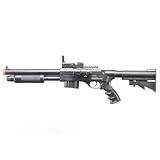
M0581 Pump Action Airsoft Shotgun With Scope And Light

A bare spring shotgun can feel plain once dim rooms, small targets, and awkward sight lines enter the picture. The M0581 tackles those annoyances with an included scope, mounted light, and familiar pump-operated format. Its silhouette may bring the best pump shotgun ever made debate to mind, but this model belongs strictly in the airsoft category and should be judged by that standard. The practical appeal centers on simple manual operation, added aiming support, and low-light visibility rather than speed or advanced technical performance.

M0581 Airsoft Shotgun

The M0581 presents a straightforward package: a pump-action airsoft shotgun supplied with a scope and light. That combination reduces the need to hunt for compatible accessories before the first target session. It also gives the replica a more complete tactical appearance right out of the box. Still, the limited description leaves velocity, magazine capacity, construction materials, and BB recommendations unconfirmed.

Spring operation keeps the firing system mechanically simple. Each shot requires a complete pump cycle, which means there’s no battery to charge and no gas canister to refill. That makes the shotgun easier to store between sessions and less dependent on extra equipment. The price of that simplicity is slow follow-up fire, especially beside electric airsoft rifles.

The included accessories shape expectations more than the underlying specifications do. A scope suggests careful aiming, while the light points toward dim indoor use or low-light target setups. Neither accessory guarantees better results by itself because mounting stability, barrel consistency, and ammunition quality still matter. The M0581 works best as a feature-equipped recreational replica, not as a proven precision platform.

Pump Action And Shooting Rhythm

The pump mechanism gives the shotgun most of its personality. Cycling the handguard before every shot creates a tactile routine that feels more engaging than simply pressing a trigger on an automatic platform. That slower pace can make casual target practice feel deliberate and controlled. The manual action also encourages better shot selection because every miss costs another full pump cycle.

A smooth stroke matters more than speed. Pulling the pump only partway may interfere with cocking or feeding, depending on the internal design. Forcing the action is no better, especially if a BB has already jammed. Consistent, controlled movement supports reliable cycling and puts less stress on internal parts.

Repeated pumping can tire the support arm during longer sessions. That physical effort is part of the format, but it may become noticeable after many shots. A relaxed pace suits the design far better than frantic close-range exchanges. The single-shot rhythm is enjoyable during measured practice and limiting during high-volume play.

Scope Performance And Aiming

The included scope gives the M0581 a clearer aiming reference than a basic spring shotgun with simple sights. It may help steady the sight picture on paper targets or small reactive targets at modest distances. The supplied details don’t identify magnification, reticle style, lens size, or adjustment range. Because of that, the scope should be treated as a starter optic rather than proof of long-range accuracy.

Mount stability can make or break the usefulness of any optic. Pumping creates repeated movement, and loose mounting hardware may shift the point of aim over time. A scope that wanders between shots becomes more frustrating than an uncomplicated open sight. Periodic checks help preserve alignment and repeatability.

Aiming consistency still depends on cheek placement, grip pressure, BB quality, and barrel condition. The scope can’t correct an uneven hold or inconsistent ammunition. A stable rest may help separate aiming errors from the shotgun’s actual behavior during early sessions. That approach gives the optic a fair chance without inventing performance claims.

Mounted Light In Dim Spaces

The supplied light adds practical value in dark rooms, shaded target areas, and indoor spaces with uneven lighting. It may help identify nearby barriers or improve visibility around a target lane. The product information doesn’t state brightness, beam distance, battery type, or runtime. Those omissions mean the light’s real output remains uncertain.

Reflective surfaces can create their own trouble. White walls, glass, polished metal, and glossy barriers may bounce light back toward the user and briefly reduce visibility. Careful beam control matters more in enclosed spaces where reflections stay close. The accessory is useful only when light spill is managed sensibly.

Battery care adds one more small ownership task. Weak cells can reduce brightness long before the light stops working altogether, while loose mounts may shift during pumping or transport. Removing batteries during long storage may help prevent leakage if the light design allows it. The included illumination is convenient, but it isn’t maintenance-free.

Handling And Added Bulk

The scope and light give the shotgun extra function, yet they also add size and weight. A bare spring replica tends to move more cleanly around corners and storage cases. Accessories can snag on straps, clothing, or barricades if the profile becomes too busy. The M0581 trades some clean handling for greater visual and practical utility.

Balance may shift depending on where the light is mounted and how heavy the scope is. A front-heavy setup can make repeated pumping more tiring, while a high-mounted optic may alter the natural cheek position. Exact weight and dimensions aren’t provided, so the effect can’t be measured from the description alone. The main tradeoff remains accessory convenience versus handling simplicity.

Storage deserves attention too. A case that fits the shotgun without attachments may feel cramped once the scope and light are installed. Repeatedly removing the optic can save space, but doing so may disturb alignment. Keeping the setup assembled protects convenience, while a larger case protects the mounted accessories.

Strengths Of The M0581

The strongest benefit is the bundled configuration. A scope and light are already included, so the shotgun arrives with basic aiming and low-light tools instead of a bare rail or plain frame. That saves time spent matching mounts and accessories. The ready-equipped setup gives the M0581 more personality than many basic spring models.

Mechanical simplicity is another clear strength. Spring power removes charging schedules, gas pressure checks, and electronic troubleshooting from the routine. The shotgun can be stored between sessions with fewer supporting items to manage. This self-contained operation suits casual practice and occasional airsoft use.

The pump action also creates a satisfying shooting sequence. Loading, cycling, aiming, and firing feel more involved than using a fast automatic platform. That slower pace can turn a simple target session into a more deliberate exercise. The hands-on shooting experience is likely the main reason to choose this style of replica.

Weaknesses And Unknown Details

The sparse specification list is the biggest weakness. No confirmed velocity, magazine capacity, overall weight, body material, hop-up system, or recommended BB weight appears in the supplied information. That makes deeper performance judgments impossible without speculation. The missing technical data should keep expectations conservative.

Manual firing also limits the shotgun during fast skirmishes. Electric rifles can deliver several follow-up shots before the M0581 completes another pump cycle. Positioning and timing may soften that disadvantage, but they won’t remove it. The platform favors careful engagement rather than sustained fire.

The scope and light may be basic accessories. Without details about lens clarity, adjustment precision, lumen output, or mounting hardware, their durability and usefulness can’t be confirmed. They may serve well for casual use, but stronger claims would be guesswork. The uncertain accessory quality is part of the product’s overall risk.

Casual Target Practice

Paper targets give the M0581 room to work at its own pace. There’s no pressure to match automatic fire, and the pump cycle becomes part of the activity rather than a handicap. The scope may help create a more repeatable sight picture at sensible distances. This setting plays directly to the shotgun’s measured shooting style.

Clean, polished airsoft BBs matter more than flashy attachments. Damaged or dirty ammunition may produce inconsistent shots or interfere with feeding. The product description doesn’t name a preferred BB weight, so exact recommendations would be speculative. Consistent ammunition gives the barrel and optic a better chance to perform predictably.

A stable rest can help identify whether missed shots come from aim, ammunition, or the replica itself. Once a baseline is established, standing and kneeling practice becomes easier to evaluate. That method keeps expectations grounded without relying on unsupported range claims. The M0581 rewards patience and repeatable technique.

Airsoft Safety And Equipment Limits

Protective eyewear belongs in every shooting session. Airsoft BBs can ricochet from hard surfaces and strike the face from unpredictable angles. A controlled lane and suitable catcher reduce avoidable risk during indoor or backyard practice. The realistic shotgun appearance also calls for discreet transport in a closed case.

Airsoft guns and pellet rifles shouldn’t be treated as interchangeable equipment. From a practical angle, a separate reference appears in break barrel air rifles, though those platforms often fire metal pellets and involve different backstops, power levels, and intended uses. The M0581 remains a recreational airsoft replica rather than a hunting or pest-control tool. That category difference matters for both safety and expectations.

The phrase best pump shotgun ever made may suggest famous firearm designs, yet the M0581 only borrows the manual action and visual language. It doesn’t share firearm ammunition, power, or intended application. Judging it as an airsoft shotgun keeps the review honest. Its practical value lies in simple spring operation, an included optic, and added illumination.

Maintenance And Storage

The pump should move through a full, controlled stroke. Slamming it won’t improve performance and may place unnecessary stress on internal catches or springs. A jam calls for inspection instead of extra force. Smooth handling supports consistent operation and longer component life.

The scope and light need occasional attention too. Mounting screws may loosen, lenses collect dust, and batteries lose strength during storage. A quick inspection before each session can prevent small issues from spoiling the shooting routine. These checks protect alignment, visibility, and accessory stability.

Dry storage helps preserve the shotgun and its attachments. The replica should remain unloaded and uncocked between sessions, with the light’s batteries removed during long storage if practical. A padded case can protect the scope from knocks and keep the realistic-looking gun out of public view. Those habits support safer ownership and dependable use without turning maintenance into a chore.

4
1 ratings
Edwin Cannady
WRITTEN BY
Edwin Cannady
My name is Edwin Cannady and I love to fish and hunt. I started fishing when I was 5 years old and I've been hooked ever since. I love to share my passion for fishing with others, and I hope to inspire others to get out and enjoy the great outdoors.