
10 Best Rifle Scope For 700 Yards of 2026 for Long-Distance Precision

Why does that trusty hunting optic run completely out of elevation the moment steel stretches past 400 yards? Most general-purpose glass simply lacks the mechanical adjustment and optical clarity needed for true long-range work. Cranking standard capped turrets to their mechanical stop leads to dialed-out elevation travel, while fixed parallax transforms a distant target into a shimmering blur. Trying to compensate with second focal plane hash marks at varying zoom levels only introduces guesswork, burning through match ammunition and leaving shooters wondering where their shots actually landed.
Connecting cleanly at seven hundred yards should feel deliberate, repeatable, and deeply rewarding. Reaching that distance with confidence comes down to three key features: a first focal plane reticle that keeps holdovers true at every magnification setting, dedicated side parallax to bring the target into sharp focus, and a broad 34mm main tube that supplies plenty of upward turret travel. The following optics deliver the optical clarity and tracking precision needed in a dependable rifle scope for 700 yards, letting you spot your own impacts and command the distance.
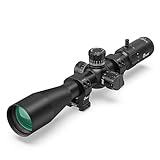
- ARS Mark7.4
ARS Mark is a ranking system developed by bestairriflescopes.com. ARS Mark has no relationship or impact from any manufacturers or sales agent websites. Learn more
- BrandCVLIFE

- ARS Mark8.8
ARS Mark is a ranking system developed by bestairriflescopes.com. ARS Mark has no relationship or impact from any manufacturers or sales agent websites. Learn more
- BrandCVLIFE

- ARS Mark7.3
ARS Mark is a ranking system developed by bestairriflescopes.com. ARS Mark has no relationship or impact from any manufacturers or sales agent websites. Learn more
- BrandBarska
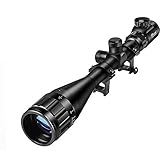
- ARS Mark8.5
ARS Mark is a ranking system developed by bestairriflescopes.com. ARS Mark has no relationship or impact from any manufacturers or sales agent websites. Learn more
- BrandCVLIFE

- ARS Mark8.7
ARS Mark is a ranking system developed by bestairriflescopes.com. ARS Mark has no relationship or impact from any manufacturers or sales agent websites. Learn more
- BrandMidTen

- ARS Mark8.7
ARS Mark is a ranking system developed by bestairriflescopes.com. ARS Mark has no relationship or impact from any manufacturers or sales agent websites. Learn more
- BrandBushnell

- ARS Mark7.1
ARS Mark is a ranking system developed by bestairriflescopes.com. ARS Mark has no relationship or impact from any manufacturers or sales agent websites. Learn more
- BrandCVLIFE

- ARS Mark8.0
ARS Mark is a ranking system developed by bestairriflescopes.com. ARS Mark has no relationship or impact from any manufacturers or sales agent websites. Learn more
- BrandSimmons

- ARS Mark9.5
ARS Mark is a ranking system developed by bestairriflescopes.com. ARS Mark has no relationship or impact from any manufacturers or sales agent websites. Learn more
- BrandCVLIFE

- ARS Mark7.9
ARS Mark is a ranking system developed by bestairriflescopes.com. ARS Mark has no relationship or impact from any manufacturers or sales agent websites. Learn more
- BrandEZshoot
Last update on 2026-09-26 / Affiliate links / Images, Product Titles, and Product Highlights from Amazon Product Advertising API
What magnification is required to spot and hit targets at 700 yards?
High variable magnification reaching at least 24x or 25x, such as 6-24x, 5-25x, or 7-35x, provides the resolution needed for 700 yards. Standard 3-9x configurations leave distant targets looking tiny, making it difficult to spot bullet impacts or identify exact aiming points. Optics that reach 24x or higher let you see target boundaries clearly and read conditions downrange. For long-distance shooting, verify the optic maintains sharp optical clarity at maximum zoom rather than blurring around the edges.
Why do standard 3-9x hunting scopes fail at 700 yards?
Standard 3-9x hunting scopes lack the internal elevation travel, holdover reticles, and adjustable parallax required to compensate for steep bullet drop at 700 yards. Most 3-9x scopes are built for closer shooting, meaning their elevation turrets often run out of adjustment before you can dial enough elevation. These models frequently lack side parallax adjustment, which causes target blur and aiming errors at extended distances. They also typically feature simple crosshairs without the subtensions needed to make precise wind or elevation corrections.
Do you need a first focal plane reticle for 700-yard shooting?
A first focal plane (FFP) reticle is ideal because the reticle scale expands and contracts along with your magnification setting. This ensures your MOA or mil-dot holdovers remain accurate across the entire zoom range, whether you are at low magnification or zoomed in to 24x. On a second focal plane optic, holdover marks are only true at one specific magnification setting, which can cause calculation mistakes if you adjust power under pressure. Choosing an optic with a first focal plane reticle provides accurate holdovers across every zoom level when adjusting for distance and wind drift.
Why is side parallax adjustment necessary for 700-yard targets?
Side parallax adjustment eliminates optical blur and reticle movement when focusing on targets far beyond standard factory presets. When a scope lacks parallax adjustment, shifting your eye position inside the eyebox can cause the reticle to drift across your target even if the rifle stays completely still. Optics with side parallax or an adjustable objective allow you to bring both the reticle and the distant target into the exact same focal plane. This creates a crisp sight picture and prevents parallax error from pulling your shot off target.
What advantage does a 34mm tube provide over smaller scope tubes?
A 34mm tube offers increased internal space for the erector assembly, which allows for significantly greater elevation adjustment travel. Dialing elevation to compensate for bullet drop at 700 yards requires substantial turret movement that can max out smaller scope tubes. The wider 34mm main tube design provides the travel needed to dial your elevation directly without running out of clicks. When selecting an optic with a 34mm tube, verify that your scope mount or mounting rings match that specific diameter.
How does a zero stop turret help when engaging targets at 700 yards?
A zero stop turret prevents you from turning your elevation dial below your base zero after adjusting for extreme distances. Dialing for 700 yards often requires turning the elevation turret through full revolutions, making it easy to lose track of your starting mark when returning down. A mechanical zero stop creates a hard physical barrier that stops the turret exactly at your original zero position. This eliminates dialing confusion and allows you to return to your primary zero quickly and reliably without counting clicks.
How do you ensure barrel clearance when mounting scopes with 50mm or 56mm objective lenses?
You must verify ring height and scope mount spacing to ensure the wider 50mm or 56mm objective lens bell clears your rifle barrel. Large objective lenses gather light effectively, but their wide outer diameter sits closer to the barrel contour than smaller 32mm or 40mm optics. Checking for proper barrel clearance before mounting ensures the bell does not contact the barrel or mounting rail. Always check your rifle mount interface, such as a 20mm rail, to match the correct ring height and tube diameter for your setup.

10 Top Picks: Best Youth Air Rifles for 13-Year-Olds

12 Best Rifle Scopes For 5.56 Under 150 Dollars - (2026 Top Picks)

Top 10 Rifle Scopes for Coyote Hunting in 2026

12 Best Benchrest Rifle Scopes of 2026 For Tight Groups

Top 5 Airsoft Rifles: Unleash the Action in 2026
Unveil the Best Straight Wall Deer Rifles: Top Picks for 2026

Top Ammo Choices for Air-Powered Rifles: Boost Your Performance in 2026

Best Quick Detach Scope Rings for Accurate and Convenient Shooting







