
Best Rifle Scope for Bad Eyesight 2026: Clearer Aim

Blurred reticles, narrow viewing angles, and constant eye repositioning can turn a steady shooting session into a frustrating guessing game. A well-matched best rifle scope for bad eyesight should make the sight picture easier to acquire without forcing the eye to fight complicated markings or unforgiving alignment. Clear glass matters, but diopter adjustment, eye relief, reticle design, and usable brightness often matter just as much. The right combination lets the image settle quickly, so attention stays on safe handling, breathing, and a controlled trigger press.
Generous eye relief is one of the first details worth checking because it creates more room between the eye and the eyepiece. That extra space can reduce the annoying black ring that appears when head position is slightly off, especially from improvised field positions. A larger exit pupil also helps the view feel less cramped at practical magnification levels. Crank the power too high, though, and even an expensive optic may become darker and fussier to use.
Reticle choice can make or break the experience. Thin target lines may look precise on a bright range, yet they can disappear against brush, shadows, or dark game. A bold duplex reticle gives the eye thicker outer posts to follow while keeping the center open enough for careful placement. Illumination can help, too, but excessive brightness creates glare and may wash out the aiming point rather than sharpening it.
Focus controls should feel simple and deliberate, not like tiny knobs added for decoration. A fast-focus eyepiece helps sharpen the reticle for individual vision, while side parallax adjustment can clean up the target image at changing distances. Still, more controls aren't always better. Someone who wants a straightforward hunting setup may get better results from a clean 2-7x or 3-9x scope than from a crowded long-range model with several adjustment turrets.
Low-light clarity deserves attention because fading daylight exposes weak contrast fast. A larger objective lens can gather more light, but it also raises the scope, adds weight, and may require taller rings. Good lens coatings and balanced magnification often provide a more useful improvement than simply chasing the largest front lens available. In plain English, a manageable 40 mm or 44 mm objective can be easier to mount and carry while still producing a bright, readable image.
Eyeglasses add another wrinkle. Long eye relief and a forgiving eye box make it easier to maintain a full field of view without pressing frames against the ocular lens. Adjustable ocular focus should offer enough range to sharpen the reticle while leaving glasses in their normal position. Contact lenses can change the needed setting, so the scope may need a quick refocus whenever vision correction changes.
Magnification should match real shooting distances rather than advertising numbers. Lower power creates a wider field of view, faster target acquisition, and a larger exit pupil, all of which can ease visual strain. Higher power reveals more detail, but it also magnifies shake, heat shimmer, and small focusing errors. For woods hunting or moderate range use, a modest zoom range often feels calmer and more dependable than an oversized optic built around extreme magnification.
Weight and mounting height deserve a practical look as well. Heavy glass can upset rifle balance, while oversized objectives may force an awkward cheek position that makes eye alignment less consistent. A scope that fits the stock naturally usually delivers a clearer view because the eye returns to the same place with less effort. That small ergonomic advantage can matter more than another layer of technical features.
The strongest best rifle scope for bad eyesight setup won't fix every vision problem, and realistic expectations matter. Astigmatism may cause illuminated dots or fine illuminated centers to bloom, while severe prescription changes can remain difficult for any optical system to compensate for. A simple etched reticle, moderate magnification, and restrained illumination often provide a cleaner result than a bright electronic aiming point. The sensible pick is the scope that produces a crisp reticle, comfortable head position, and repeatable sight picture without unnecessary fuss.
- ARS Mark9.4
ARS Mark is a ranking system developed by bestairriflescopes.com. ARS Mark has no relationship or impact from any manufacturers or sales agent websites. Learn more
- BrandVortex

- ARS Mark9.2
ARS Mark is a ranking system developed by bestairriflescopes.com. ARS Mark has no relationship or impact from any manufacturers or sales agent websites. Learn more
- BrandGOYOJO

- ARS Mark8.8
ARS Mark is a ranking system developed by bestairriflescopes.com. ARS Mark has no relationship or impact from any manufacturers or sales agent websites. Learn more
- BrandUUQ
- ARS Mark8.6
ARS Mark is a ranking system developed by bestairriflescopes.com. ARS Mark has no relationship or impact from any manufacturers or sales agent websites. Learn more
- BrandCVLIFE

- ARS Mark8.6
ARS Mark is a ranking system developed by bestairriflescopes.com. ARS Mark has no relationship or impact from any manufacturers or sales agent websites. Learn more
- BrandCVLIFE

- ARS Mark8.6
ARS Mark is a ranking system developed by bestairriflescopes.com. ARS Mark has no relationship or impact from any manufacturers or sales agent websites. Learn more
- BrandATN
- ARS Mark8.4
ARS Mark is a ranking system developed by bestairriflescopes.com. ARS Mark has no relationship or impact from any manufacturers or sales agent websites. Learn more
- BrandATN

- ARS Mark8.2
ARS Mark is a ranking system developed by bestairriflescopes.com. ARS Mark has no relationship or impact from any manufacturers or sales agent websites. Learn more
- BrandATN

- ARS Mark7.8
ARS Mark is a ranking system developed by bestairriflescopes.com. ARS Mark has no relationship or impact from any manufacturers or sales agent websites. Learn more
- BrandSniper
Last update on 2026-08-01 / Affiliate links / Images, Product Titles, and Product Highlights from Amazon Product Advertising API
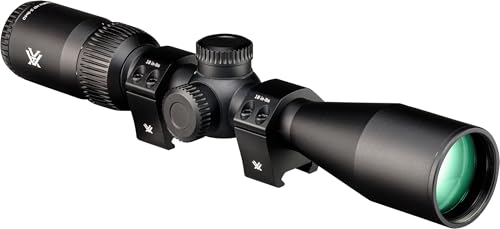
Vortex Triumph HD 3-9x40 Rifle Scope Kit
A clear sight picture shouldn't demand a wrestling match with tiny controls, awkward mounting parts, or an eyepiece that never seems quite sharp. That frustration matters even more when aging eyes, corrective lenses, or reduced contrast sensitivity make fine reticle details harder to separate from the background. For anyone researching the best rifle scope for bad eyesight, the Vortex Triumph HD 3-9x40 takes a sensible route: moderate magnification, a fast-focus eyepiece, coated glass, and a complete mounting package. It isn't built around flashy electronics or an oversized objective, and frankly, that restraint is part of its appeal.
Vortex Triumph HD 3-9x40 Kit
The package arrives with the scope, a pair of 1-inch Hunter Rings, and a neoprene cover, removing several small but irritating setup decisions. Newer hunters often get stuck wondering whether ring diameter, ring height, and tube size will match, so the included 0.90-inch low rings provide a more direct starting point. That doesn't guarantee perfect fit on every rifle, since receiver shape, rail type, bolt clearance, and stock geometry still matter. Even so, having matched 1-inch rings in the box cuts down the odds of ordering the wrong basic hardware.
The 3-9x magnification range keeps operation familiar and manageable. At 3x power, the field of view should feel less restrictive during close woodland shots or quick target acquisition, while 9x offers more visual detail for longer opportunities. Shooters dealing with poor eyesight may be tempted to chase much higher magnification, but extra power also magnifies shake, heat shimmer, and focusing errors. A moderate range often produces a calmer picture and makes it easier to maintain a repeatable cheek position.
The 40 mm objective strikes a practical balance between light gathering, mounting height, and overall bulk. A giant front lens may sound appealing for dim conditions, yet it can force taller rings and lift the head away from a natural cheek weld. The included low-height rings may help keep the optic closer to the bore on compatible rifles, which can support more consistent eye alignment. A steady head position won't correct eyesight, of course, but it can prevent avoidable scope shadow and disappearing sight pictures.
Optical Clarity And Focus Control
Vortex describes the HD optical system as using selected glass elements to improve resolution, reduce chromatic aberration, and preserve color fidelity. Those traits have real value for eyes that struggle with fuzzy edges or poor contrast because a cleaner image can make target shapes easier to separate from brush, bark, and uneven shadows. Edge-to-edge sharpness also matters since a blurred outer field can make the whole view feel less settled. The specification sounds promising, though individual eyesight and prescription strength will still influence how sharp the image appears.
The fully multi-coated lenses use anti-reflective coatings intended to increase light transmission and improve clarity in dimmer conditions. Low light often exposes optical weaknesses first, with fine details fading and colors blending into flat gray patches. Better light transmission can help preserve useful contrast during early morning or late afternoon, but no 40 mm scope can create daylight after sunset. Realistic expectations count here, especially for eyes already sensitive to glare or reduced brightness.
The fast-focus eyepiece is arguably one of the most relevant features for blurred vision. It allows the reticle to be adjusted to the shooter's eye, helping the crosshair appear crisp instead of hazy or doubled. The smart method is to aim the scope at a plain, bright background, glance briefly through it, and adjust until the reticle snaps into focus without prolonged staring. Reticle focus should be set before judging target sharpness, since the eye will otherwise keep trying to compensate and may tire surprisingly fast.
Correct eyepiece adjustment won't solve every visual issue. Astigmatism, strong prescription changes, cataracts, and certain retinal conditions may still make fine lines look distorted, especially after long periods behind the optic. The Triumph HD's simple focus system is easier to manage than a scope packed with several unfamiliar controls, but it lacks the specialized electronic aids found on illuminated or digital models. That tradeoff favors straightforward operation over extra visual assistance.
Dead-Hold BDC Reticle In Practical Use
The Dead-Hold BDC reticle uses a customized hashmark layout for holdover and windage references at varying distances. Its main benefit is reducing the need to guess how far above or beside a target to hold after distance and ballistic behavior have been established. For eyesight that has trouble tracking extremely thin markings, the usefulness will depend on how clearly those hashmarks appear against the target background. The BDC reference points add capability, though they also create more visual information than a basic duplex reticle.
Second focal plane construction means the reticle remains visually the same size as magnification changes. That consistency can help because the center aiming pattern won't shrink at low power or expand at high power. The catch is that BDC subtensions are generally intended to correspond at a specified magnification, so holdover marks need to be used with a clear understanding of the scope's setup. Second focal plane simplicity works well for a traditional hunting optic, but it still rewards careful zeroing and range verification.
A BDC reticle isn't a substitute for checking actual bullet drop. Cartridge, bullet weight, muzzle velocity, barrel length, elevation, and weather can all shift impact from a generalized holdover reference. The reticle becomes much more useful after confirming its marks on paper at known distances rather than assuming every hashmark perfectly matches a specific range. A neutral reference for the mechanical side of setup appears in adjust rifle sights, where the relationship between controlled adjustments and point of impact fits naturally with proper scope zeroing.
Busy backgrounds may expose one limitation of a non-illuminated reticle. Dark branches, heavy cover, or an animal standing in shadow can make black hashmarks less obvious, particularly for eyes with reduced contrast perception. The Triumph HD relies on optical clarity and reticle geometry rather than illuminated aiming points, so it may feel less forgiving than a lit reticle in certain dim scenes. On the other hand, no battery dependence keeps operation simple and avoids brightness bloom that can bother people with astigmatism.
Field Construction And Handling
The scope body is made from aircraft-grade aluminum and finished with a low-glare matte black anodized coating. A muted exterior reduces reflections that might draw attention in the field, while the one-piece style supports the rugged expectations placed on a hunting optic. Vortex lists the scope as waterproof, fogproof, and shockproof, addressing rain, temperature swings, recoil, and ordinary bumps. Those protections don't make careless handling harmless, but they suit an optic intended to leave the bench and spend time outdoors.
The neoprene cover adds a useful layer against dust, light scratches, and minor knocks during transport or storage. It isn't a rigid case, so it won't protect the turrets or lenses from heavy crushing force in a crowded truck box. Still, slipping on a flexible cover is easier than dealing with separate lens caps that may be misplaced. The included protective cover fits the kit's overall theme of reducing small setup hassles.
Low-height rings can support a natural cheek weld on many standard hunting rifles, but mounting compatibility deserves a careful look. Some rifles need medium rings because of bolt-handle clearance, barrel contour, rail design, or a stock comb that sits unusually high. A poorly matched mounting height can make even clear glass feel difficult because the eye never lands in the center of the exit pupil. Proper scope alignment matters just as much as the optic's internal glass, especially when visual tolerance is already limited.
The matte finish and traditional proportions keep the Triumph HD from feeling bulky or overly complicated. Controls are familiar, the magnification range is broad enough for common hunting distances, and there are no menus or electronic settings to memorize. That simplicity can be a relief when cold fingers, fading daylight, or a rushed shooting position leave little patience for fiddling. The clean control layout supports confidence through predictability rather than feature overload.
Strengths, Weaknesses, And Best Fit
The strongest part of this kit is the way its components work toward an easier first setup. A scope, correctly sized rings, and a cover arrive together, while the fast-focus eyepiece handles individual reticle sharpness without requiring technical expertise. The HD glass and anti-reflective coatings address clarity and contrast, two issues that can become especially noticeable with weaker eyesight. Its practical feature set feels grounded in ordinary hunting needs rather than long-range competition trends.
The moderate 3-9x range also keeps visual demands reasonable. Lower magnification provides a more forgiving sight picture, and the 40 mm objective avoids the mounting complications that often accompany huge lenses. Shooters can stay at 3x or 4x in dense cover, then increase power when distance and a stable rest allow it. That flexibility makes usable magnification more valuable than an inflated maximum number that rarely performs well from field positions.
Several limitations deserve equal attention. The reticle isn't illuminated, the BDC markings may appear busy to eyes that prefer a plain duplex, and the low rings won't fit every rifle configuration. The scope also doesn't include side parallax adjustment, a feature some shooters appreciate for refined focus at varying distances. These aren't hidden flaws, but they define the boundaries of a simple hunting scope rather than a specialized optic for every visual condition.
The warranty adds meaningful long-term reassurance. Vortex states that its unlimited, unconditional, lifetime VIP Warranty is transferable and covers repair or replacement if the item becomes damaged or defective. Loss, theft, deliberate damage, and cosmetic wear that doesn't affect performance are excluded, which keeps the promise broad without pretending every situation is covered. A transferable lifetime warranty is especially useful for gear expected to endure recoil, weather, transport, and years of seasonal use.
How It Serves Difficult Eyesight
Poor eyesight doesn't create one universal problem. Some eyes struggle with reticle focus, others lose contrast in dim light, and some have difficulty maintaining the exact head position needed for a full image. The Triumph HD addresses the first two concerns through its fast-focus eyepiece, coated lenses, and HD optical design. It doesn't directly solve every eye-box or prescription issue, so careful mounting and a deliberate cheek weld remain necessary.
Glasses wearers may appreciate the straightforward ocular adjustment, though the final comfort level depends on eye relief and frame position. The scope should be mounted only after confirming a full sight picture at maximum magnification, since the usable eye box often becomes less forgiving as power increases. Setting it too far forward or backward can create dark edges that mimic an optical problem. Correct mounting distance can make the difference between a relaxed view and constant head shuffling.
The Dead-Hold BDC reticle can support varying-distance shots, but clarity should outrank ballistic complexity for anyone whose vision has trouble separating fine marks. Keeping magnification moderate may make the central aiming area easier to read, while a plain background at the range helps confirm whether the reticle is truly focused. A shooter who consistently sees the hashmarks as doubled, smeared, or invisible may be better served by a bolder illuminated reticle. The Triumph HD favors clean optics and mechanical simplicity, not electronic compensation.
As a candidate for the best rifle scope for bad eyesight, this Vortex kit makes the most sense where uncomplicated controls, a traditional zoom range, and improved optical clarity carry more weight than illumination or advanced adjustment systems. Its strengths are practical: fewer setup purchases, a fast reticle focus, useful low-light coatings, durable construction, and a warranty with broad coverage. Its weaknesses are just as clear, including fixed reticle visibility, rifle-dependent ring fit, and limited help for severe visual conditions. The result is a grounded hunting package that can reduce common viewing frustrations without pretending a riflescope can replace proper eye care or a current prescription.
GOYOJO GRL335 Thermal Scope Review
Dark fields can flatten into a wall of gray, and a conventional reticle may become hard to separate from brush long before the night is truly over. That visual strain makes thermal imaging especially relevant to anyone researching the best rifle scope for bad eyesight, since heat contrast can reveal shapes without depending on ordinary color detail. The GOYOJO GRL335 approaches the problem with a 384x288 thermal sensor, a 1024x768 OLED display, and six image palettes rather than relying on visible light alone. It’s a different kind of optic, with real benefits for difficult viewing conditions and a few practical tradeoffs that shouldn’t be brushed aside.
GOYOJO GRL335 Thermal Scope
The GRL335 combines a 35 mm objective lens with thermal imaging designed for long-distance scanning. GOYOJO lists a detection range of up to 1,968 yards, which refers to noticing a heat source rather than positively identifying every distant object. That distinction matters because detection, recognition, and confident identification aren’t the same thing. Still, broad open fields and uneven terrain become easier to scan when warm bodies stand apart from cooler surroundings.
The thermal sensor carries a 384x288 resolution, while the internal OLED display is rated at 1024x768. The sensor gathers the thermal detail, and the display presents that information to the eye in a larger, more readable format. For blurred vision or reduced contrast sensitivity, a bright digital screen can feel less demanding than trying to resolve fine black reticle lines against dark branches. The image won’t look like ordinary daylight glass, though, so there’s a short adjustment period for anyone new to thermal optics.
Size and weight are restrained for a digital thermal unit. The housing measures 6.30 by 3.35 by 3.15 inches and weighs 1.22 pounds, keeping the device compact enough for field carry without turning the rifle into an unwieldy setup. That weight is still noticeable compared with a basic hunting scope, particularly once mounts and other accessories are added. Balance should be checked before a long outing because front-heavy equipment can make offhand viewing less steady.
Thermal Clarity For Difficult Vision
Thermal imaging changes the viewing problem rather than simply magnifying it. Instead of asking the eye to separate brown fur from brown grass, the GRL335 translates heat into contrasting tones on an electronic display. That heat-based contrast can reduce the frustration caused by dim light, muted color, or backgrounds that swallow a conventional reticle. It won’t correct a medical vision issue, but it may simplify what the eye needs to interpret.
The six selectable image modes allow the display palette to be changed for different surroundings and personal preferences. Some eyes respond better to a bright target on a dark background, while others find a softer palette less tiring during extended scanning. This flexibility is one of the GRL335’s strongest traits for the best rifle scope for bad eyesight discussion because visual comfort isn’t identical from one person to the next. A mode that looks crisp in open country may feel too harsh in thick cover, so having alternatives is genuinely useful.
The 1024x768 OLED screen is designed to present a detailed and responsive picture, but display focus still deserves careful setup. Eyeglasses, prescription strength, and astigmatism can affect how sharp text, symbols, and digital edges appear through the eyepiece. A bright screen may also cause fatigue if the intensity is set higher than needed. Comfortable display settings matter more than maximum brightness during long periods of observation.
Zoom And Motion Handling
The GRL335 provides a 4x to 16x magnification range, allowing the view to move from wider scanning to closer inspection. Lower magnification helps cover more ground and usually makes moving heat signatures easier to follow. Higher settings enlarge details, but they also narrow the visible area and make hand movement more obvious. That familiar tradeoff remains true even though the image is digital.
A 55 Hz refresh rate keeps motion looking smoother than a low-refresh thermal display. Fast movement across the frame should appear more continuous, which helps while tracking wildlife or panning across broken terrain. The stated 55 Hz refresh rate also reduces the laggy, stepping effect that can make digital optics uncomfortable to follow. Smoothness won’t create extra sensor detail, yet it can make the available image easier to interpret.
Long-range detection sounds impressive, but magnification should be used with restraint. Pushing toward 16x may enlarge the thermal pixels along with the target, so the picture can look softer even though the object appears bigger. Heat haze, vegetation, moisture, and target size also influence what can be recognized at distance. The GRL335 is strongest when its zoom range is treated as a flexible viewing tool rather than a guarantee of fine identification at the outer detection limit.
Recording And Field Endurance
Built-in recording adds a practical layer for documenting wildlife movement or reviewing an outdoor session later. The GRL335 includes 64 GB of internal storage, removing the immediate need to carry separate memory cards. That capacity should provide room for substantial footage, although actual recording time depends on file size and recording settings. Storage management still matters because a full internal drive can become an unwelcome surprise in the field.
Battery life is listed at six to eight hours, which can cover an evening or much of an overnight outing depending on temperature and usage. Frequent recording, high display brightness, and extended operation may shorten real-world runtime. Cold conditions can also reduce battery efficiency, as they do with many electronic devices. A thermal scope brings far more visual capability than passive glass, but it also creates a charging routine that traditional optics don’t require.
The digital design means planning becomes part of ownership. Charging before departure, checking remaining storage, and confirming menu settings take a few minutes, yet skipping those steps can leave the optic unprepared when light fades. The upside is a display that can record, change palettes, and present heat signatures in total darkness. The weakness is electronic dependence, since an empty battery turns the device into dead weight rather than a usable sighting system.
Durability And Recoil Resistance
GOYOJO rates the GRL335 to withstand recoil shocks up to 1,000 g for 0.4 milliseconds. That specification suggests the internal components and housing are designed for repeated impact rather than casual handheld viewing alone. Recoil resistance matters more with thermal devices because screens, sensors, and internal electronics add complexity that ordinary glass scopes don’t have. Proper mounting remains essential, since a durable optic can still shift if the attachment system isn’t secure.
The compact housing is described as suitable for harsh field conditions, giving the unit a rugged, carry-ready character. At 1.22 pounds, it remains manageable, though the added mass may alter rifle handling compared with a slim 1-inch tube scope. A stable rest can offset some of that change and make the digital image easier to hold steady. Field durability is useful, but practical balance and mounting position still shape the day-to-day experience.
Thermal equipment also benefits from careful lens and screen protection. Dust, moisture, fingerprints, and abrupt temperature changes can affect viewing quality even when the main housing is built to take abuse. A soft cloth, protected storage, and sensible transport habits go a long way toward preserving clarity. Rugged construction reduces worry, but it doesn’t eliminate ordinary maintenance.
Strengths, Weaknesses, And Realistic Use
The GRL335’s clearest strength is its ability to create visible contrast where ordinary glass may struggle. Six palettes, a responsive display, and thermal detection can help separate warm objects from visually confusing backgrounds. That makes the scope relevant to bad eyesight in low light, especially where muted color and shadow are the main obstacles. It may feel far less natural to someone who strongly prefers a traditional optical view.
Its limitations are tied to the same digital architecture that gives it an advantage. Battery dependence, menu navigation, electronic focus, and thermal interpretation all add a learning curve. The 384x288 sensor is capable, yet it shouldn’t be mistaken for unlimited detail at extreme range. Detection distance sounds dramatic on paper, while identification still depends on target size, weather, terrain, and magnification.
The nontraditional display may suit eyes that struggle with fine etched reticles, though it can create new issues for people sensitive to bright screens. Astigmatism, eye fatigue, and prescription changes may still affect the clarity of icons and edges. A careful brightness setting and a preferred color palette can ease those problems, but no electronic optic guarantees effortless viewing for every condition. The practical benefit lies in stronger thermal separation, not medical correction.
One unrelated shooting topic occasionally comes up alongside optic research, and a neutral reference appears in air pistol target practice for readers considering a separate low-recoil practice setup. That subject doesn’t change how the GRL335 performs, so it belongs outside the thermal-scope discussion rather than being forced into it. The GOYOJO model remains focused on nighttime detection, heat contrast, and recorded observation. Its value depends on whether those capabilities solve the actual viewing problem better than conventional glass.
Where The GRL335 Makes The Most Sense
Open fields, dark tree lines, and low-contrast terrain play directly to the GRL335’s strengths. The 35 mm lens and six display modes support scanning across changing backgrounds, while the 55 Hz refresh rate helps movement remain readable. A conventional scope may offer finer daytime detail, but it can’t reveal heat in darkness. That difference makes thermal visibility the deciding factor rather than raw magnification alone.
The scope also makes sense where recording has practical value. Internal storage can preserve sightings, animal movement patterns, or memorable outdoor footage without adding a separate camera. Recording may increase power use and fill storage over time, so it isn’t completely hands-off. Still, having the feature built into the optic keeps the field setup more compact.
Traditional hunters who want instant operation, zero charging, and a natural glass image may prefer a standard illuminated scope instead. The GRL335 asks for more preparation and a willingness to interpret thermal shapes rather than ordinary colors and textures. On the flip side, its digital thermal display can reduce dependence on ambient light and fine visual contrast. That’s a meaningful trade for eyes that lose detail quickly after dusk.
As a contender for the best rifle scope for bad eyesight, the GOYOJO GRL335 is most persuasive where darkness and poor background separation cause the biggest trouble. Its thermal sensor, OLED display, multiple palettes, smooth refresh rate, recording storage, and compact housing form a focused package rather than a conventional all-day optic. The weaknesses are equally clear: battery management, electronic complexity, pixel limits at high zoom, and the lack of a familiar natural image. For the right conditions, though, heat contrast can remove visual clutter that ordinary magnification only makes larger.
UUQ 2.5-10x40 Illuminated Scope And Laser
A dark reticle disappearing into shaded brush can make an otherwise steady shot feel like a guessing exercise. Fine markings, weak contrast, and a cramped sight picture become even more irritating once eyesight stops cooperating the way it used to. For anyone weighing the best rifle scope for bad eyesight, the UUQ 2.5-10x40 takes a feature-heavy approach with red and green illumination, five brightness levels, a 40 mm objective, and an integrated green laser. It offers several ways to make an aiming reference easier to see, though the extra controls and accessories bring more setup work than a plain hunting scope.
UUQ 2.5-10x40 Scope And Laser
The UUQ combines 2.5x to 10x magnification with a 40 mm objective lens, giving it a broad range for short and moderate-distance viewing. At 2.5x, the listed field of view is 32.5 feet at 100 yards, which provides more surrounding awareness while locating a target. At 10x, that view narrows to 8.9 feet at 100 yards, trading coverage for a closer look at distant details. That range is practical, but higher power will also magnify rifle movement and make eye position less forgiving.
The package includes rings for both 20 mm Picatinny and 11 mm dovetail rails, which widens its compatibility across rifles and air guns. That dual-mount approach can save the headache of ordering a second ring set after opening the box. Rail dimensions still need to be confirmed before installation because mounting standards, receiver shapes, and available clearance can differ. A secure fit matters more than convenience, especially with the added weight of the laser assembly.
Lens covers, batteries, a cleaning cloth, wrenches, and a manual are also included. The supplied accessories create a more complete starting package, though each electronic component introduces another battery and another control to remember. The scope illumination uses a CR2032 battery, while the laser power source depends on the selected model configuration. Package completeness is a strength here, but keeping spare batteries organized becomes part of routine ownership.
Illumination For Hard-To-See Reticles
The illuminated Mil-Dot reticle offers red and green color settings, each with five brightness levels. That flexibility can help the aiming pattern stand apart from dark foliage, pale targets, or mixed backgrounds where an unlit black reticle tends to fade. Red may feel comfortable in dim conditions, while green can appear more distinct against certain brown or gray scenes. The better color depends on the eye, ambient light, and target background rather than a universal rule.
Brightness control matters just as much as color selection. An overly bright reticle can bloom, flare, or cover fine target detail, particularly for eyes affected by astigmatism. A lower setting usually keeps the Mil-Dot pattern defined without creating a glowing haze around the center. The five-level adjustment gives more room to strike that balance than a simple on-and-off illumination system.
The reticle markings support holdover and range-related reference work, but Mil-Dot layouts can look busy to anyone who struggles with fine detail. Extra dots provide useful visual information only when they remain clear enough to distinguish quickly. At low magnification, those markings may appear smaller, while higher power makes them easier to see but narrows the field. This reticle complexity is both a benefit and a drawback, depending on whether multiple aiming references clarify the shot or clutter the view.
Illumination doesn't correct eyesight, and it won't replace a current prescription. It simply strengthens contrast between the reticle and the scene, which may reduce the effort needed to locate the aiming point. People sensitive to bright electronic light may still experience eye fatigue during extended viewing. Short observation periods and restrained brightness settings make more sense than leaving the reticle glowing at maximum intensity.
Green-Coated Glass And Image Quality
UUQ describes the lens system as using an upgraded multilayer green coating intended to reduce reflections and light scattering. Less internal glare can help preserve contrast, particularly near bright skies, reflective surfaces, or uneven lighting. The 40 mm objective also provides a reasonable opening for gathering available light without requiring the enormous mounting height of a larger front lens. Clearer contrast is valuable for weak eyesight because outlines often matter more than tiny texture details.
The coating is intended to support both bright and low-light viewing, but expectations should stay grounded. A conventional scope still depends on ambient light, so it won't produce a visible target in complete darkness. The illuminated reticle remains visible after the scene itself becomes too dark to identify, and that distinction is easy to overlook. Low-light usefulness depends on the target remaining visible through the glass, not merely on the crosshair being lit.
Magnification affects brightness and comfort as well. Lower power generally provides a larger exit pupil and a more forgiving view, while 10x can feel tighter and dimmer as daylight fades. Eyes that struggle with alignment may get a steadier picture by staying near the lower half of the zoom range until extra detail is truly needed. Cranking the magnification ring to its limit isn't always the clever move.
The 40 mm objective keeps the optic within familiar proportions, though the attached laser makes the overall setup less streamlined than a basic scope. Mounting height should allow the eye to settle behind the eyepiece without lifting the cheek away from the stock. A poor cheek weld creates black edges and shifting scope shadow that can be mistaken for weak glass. Consistent eye alignment often improves perceived clarity more than chasing another step of magnification.
Integrated Green Laser In Daily Use
The integrated green laser is rated at 2 mW and Class IIIA, with a stated range of more than 300 yards. A laser's visible range can change considerably with lighting, surface color, atmosphere, and viewing angle, so the longest stated distance shouldn't be treated as guaranteed identification range. Green light is generally easier to notice than red under many conditions, which can support quick reference at closer practical distances. Bright sunlight, however, may make the dot much harder to pick out.
The laser gives the UUQ two separate aiming systems in one assembly. That can be handy for initial reference, close-range alignment, or situations where looking through the scope is awkward. It also means the laser and riflescope must each be zeroed, checked, and kept secure. Dual aiming capability adds flexibility, but it isn't maintenance-free.
Buttons, adjustment points, and separate batteries increase the number of things that can demand attention before use. A basic optic asks for focus, magnification, and turret settings; this combo also adds reticle illumination and laser management. That busier layout may suit someone who enjoys having several visual options, while a stripped-down setup will feel calmer to others. More features aren't automatically more helpful once cold fingers or fading light enter the picture.
Laser safety deserves a firm mention because direct exposure to eyes can cause harm. The beam shouldn't be aimed at people, reflective surfaces, aircraft, or anything outside a safe and lawful shooting environment. Local rules may also limit laser use or hunting applications, so lawful operation can't be assumed everywhere. The Class IIIA laser is a functional tool, not a casual pointer.
Construction And Weather Resistance
The scope body uses aircraft-grade aluminum alloy, a common material choice for balancing strength and manageable weight. UUQ describes the construction as vibration resistant and suitable for hunting conditions. The floating internal design is intended to support stability under movement and repeated use. Even so, ring screws and mounting hardware should be checked periodically because a solid tube can't compensate for loose attachment points.
Waterproof and fog-proof construction addresses rain, humidity, and temperature shifts that can cloud an inadequately sealed optic. Those protections are especially useful during damp mornings, sudden weather changes, or storage in a cool vehicle before entering warm air. Exterior lens moisture can still form and will need to be wiped away carefully. Internal fog resistance prevents one problem, but it doesn't make the outside glass immune to condensation.
The green lens coating needs sensible cleaning rather than aggressive scrubbing. Loose grit should be removed before wiping so particles don't drag across the surface. The included cloth is convenient, although a clean lens-safe tool is only useful if it hasn't collected dust inside a pocket or pack. Small maintenance habits protect coated lens clarity better than frequent hard polishing.
The laser assembly gives the optic a tactical appearance and adds components beyond the main tube. That shape may interfere with certain cases, bolt handles, or nearby accessories depending on the firearm layout. It can also affect balance compared with a conventional 2.5-10x40 scope. Measuring available rail space before installation avoids a fair amount of fuss.
Mounting And Adjustment Tradeoffs
The included mounting options support both common 20 mm and 11 mm rails, but installation still requires patience. Rings need even spacing, the reticle must be leveled, and eye relief should be set from a natural shooting position. Tightening one side too aggressively can pull the scope out of alignment. Careful mounting is the foundation for a repeatable sight picture and dependable adjustments.
Eyesight difficulties can make an improperly positioned scope feel worse than it actually is. The eyepiece should sit where a full image appears immediately without stretching the neck or creeping forward on the stock. Checking this position at maximum magnification is sensible because the eye box may be less forgiving there. A comfortable cheek weld reduces the repeated head searching that quickly becomes tiring.
The Mil-Dot reticle and external laser should be treated as separate reference systems. Zeroing one doesn't automatically align the other, and each may shift differently if mounting hardware loosens. Range confirmation on a safe backstop remains necessary before relying on hold points or laser placement. The two-system setup asks for more careful verification than a single-reticle optic.
Air guns and firearm platforms can have different recoil behavior, rail dimensions, and mounting demands. Compatibility claims should be checked against the specific platform rather than assumed from rail width alone. Some spring-powered air rifles produce a two-direction recoil impulse that can be hard on optics. The UUQ's described vibration resistance is encouraging, but the supplied details don't establish compatibility with every recoil pattern.
Strengths And Weaknesses For Poor Eyesight
The strongest eyesight-related feature is the adjustable red and green illuminated reticle. Five brightness levels allow the center pattern to be tuned instead of forcing the eye to accept one harsh setting. The coated 40 mm lens and moderate 2.5x starting magnification also support a brighter, wider view than a high-powered optic locked into a narrow field. Together, those features address reticle visibility, scene contrast, and target acquisition from several angles.
The green laser offers another visible reference without requiring the eye to resolve every Mil-Dot marking. That may help during closer setup work or quick alignment, though daylight visibility and lawful use place limits on its role. The laser shouldn't be mistaken for a replacement for proper sighting technique or a confirmed zero. Its practical value depends heavily on distance, lighting, and the shooting environment.
The main weakness is visual and operational clutter. A Mil-Dot reticle, two illumination colors, five brightness settings, magnification control, turrets, and a laser create several decisions around one optic. Anyone wanting the calmest possible view may prefer a bold duplex reticle with fewer controls. The UUQ favors feature flexibility over bare-bones simplicity.
Optical expectations should also remain measured. The supplied description emphasizes brightness, clarity, and reflection reduction, but it doesn't provide laboratory transmission figures or detailed eye-relief specifications. Those missing measurements make it difficult to judge how forgiving the eye box will feel with glasses or at 10x. For the best rifle scope for bad eyesight, reticle illumination is promising, yet comfort behind the eyepiece still needs to match the individual setup.
Realistic Fit And Related Shooting Gear
The UUQ makes the most sense where changing backgrounds frequently swallow a plain black reticle. Red and green illumination can restore separation, while the lower 2.5x setting keeps the view broad enough for quicker orientation. Moderate magnification also avoids the extreme image shake and narrow exit pupil associated with oversized zoom ranges. That combination suits practical field distances better than chasing dramatic numbers.
Air-gun setups receive direct support through the included 11 mm mounting option, though rail type and recoil behavior still need verification. Eye protection is another distinct part of airsoft and recreational shooting equipment, and a separate reference appears naturally in mesh goggles for airsoft. That equipment topic doesn't affect the UUQ scope's optical performance, so it remains a neighboring safety consideration rather than a reason to select this optic. Keeping unrelated gear decisions separate leads to a cleaner assessment.
The package offers a lot in one box, including mounting hardware, batteries, covers, tools, and cleaning supplies. That reduces the chance of stopping halfway through installation because a basic accessory was overlooked. Yet the included pieces don't remove the need to confirm torque, alignment, rail fit, and zero. Convenient packaging helps with setup, while careful installation determines whether the scope stays dependable.
As an entry in the best rifle scope for bad eyesight category, the UUQ 2.5-10x40 stands out through adjustable illumination and multiple aiming references rather than minimalist design. Its useful traits include a wide low-end view, a 40 mm coated objective, red and green reticle options, a visible green laser, and mounts for two rail standards. The tradeoffs include added controls, separate power sources, a potentially busy Mil-Dot pattern, and limited supplied detail about eye relief. It fits situations where stronger visual contrast is worth a little extra setup and battery management.
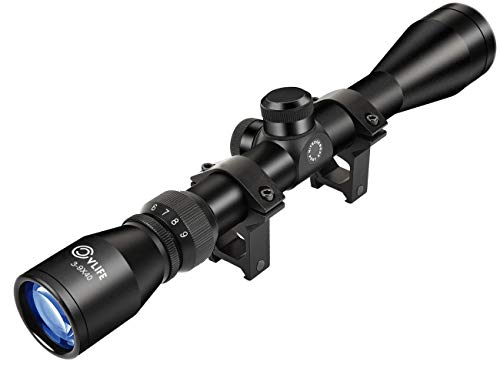
CVLIFE 3-9x40 R4 Reticle Scope
A fuzzy aiming point can turn a calm range session into a string of second guesses. Small eye-position errors, dim backgrounds, and fine crosshair lines often become more noticeable once vision loses a little sharpness. Within the search for the best rifle scope for bad eyesight, the CVLIFE 3-9x40 takes a simple, old-school route with moderate magnification, a 40 mm objective, an R4 crosshair reticle, and included 20 mm mounts. The package doesn’t promise advanced electronics or specialized glass, so its appeal rests mainly on straightforward operation and a familiar sight picture.
CVLIFE 3-9x40 R4 Scope
The core specification is easy to grasp: 3x to 9x magnification paired with a 40 mm objective. That range covers a useful middle ground, offering a wider view at the low end and more target detail at the upper end. It won’t overwhelm a new owner with oversized turrets, digital menus, or several illumination modes. For eyes that already feel taxed, fewer distractions can be a real benefit.
The scope measures 12.20 inches long, giving it the proportions of a conventional hunting-style optic. That length should feel familiar on many full-size rifles, though compact platforms may look or balance differently once it’s mounted. A longer body can provide useful ring-placement flexibility, but available rail space still needs to be checked. Mounting position matters because poor eye placement can make even a simple scope feel harder to use.
Included 20 mm mounts reduce the need to source basic hardware separately. That’s convenient, especially for a first setup, but rail compatibility shouldn’t be assumed solely from the phrase “free mounts.” The rifle needs a matching 20 mm rail, and ring height must still allow proper clearance around the objective and receiver. A mount that technically fits can still create an awkward cheek weld if it positions the scope too high or too far forward.
Why Moderate Magnification Helps
Higher magnification sounds helpful for weak eyesight, yet more power doesn’t always create a more usable image. At 3x, the sight picture should feel broader and less sensitive to tiny head movements, while 9x brings distant details closer at the cost of a narrower view. That tradeoff is especially relevant to the best rifle scope for bad eyesight because visual comfort depends on more than size alone. A stable, easy-to-center image often beats a larger but twitchier one.
Lower magnification also tends to make target acquisition less fussy. The eye can pick up more of the surrounding area, which helps with orientation before settling onto the center crosshair. At the upper end, normal rifle movement becomes more obvious, and any wobble may appear exaggerated. That doesn’t mean 9x is unusable, but it works best from a steady position rather than hurried offhand shooting.
The 3-9x layout has another quiet advantage: it’s familiar. Many shooters already understand how to use this range without studying a manual or building a new routine. The control scheme is likely to feel more natural than a thermal or heavily illuminated optic packed with buttons. Operational simplicity can reduce mental clutter when the real concern is getting a clean, repeatable sight picture.
Magnification should still match the actual distance and target size. Leaving the scope at 9x all day can make close targets slower to locate, while staying at 3x may hide detail that would be useful farther out. A practical rhythm is to keep the power lower while scanning and increase it only after the rifle is stable. That approach keeps the optic working with the eye instead of asking the eye to chase a narrow image.
R4 Reticle And Visual Readability
The R4 reticle uses a traditional crosshair layout rather than a dense grid of holdover marks. That cleaner design can help eyes that struggle to separate tiny hashmarks from branches, shadows, or textured backgrounds. A simple center reference reduces visual noise and keeps attention on alignment. The uncluttered reticle is arguably the scope’s most relevant feature for anyone tired of overly busy optics.
A plain crosshair does have limits. Dark lines can fade against dark targets or shaded brush, and the provided description doesn’t mention illumination. That means reticle visibility depends heavily on ambient light, background contrast, and individual eyesight. Someone who specifically needs a glowing center may feel better served by an illuminated design.
The R4 pattern also avoids the learning curve tied to Mil-Dot or BDC systems. There are no extra reference points to interpret under pressure, so the eye can settle on the center and stay there. That simplicity is useful for ordinary target work and basic zeroing. It’s less suited to anyone who wants built-in holdover references for varied distances.
Reticle sharpness still depends on proper ocular adjustment, though the supplied details don’t describe the eyepiece system. Before judging image quality, the crosshair should appear crisp against a plain background without prolonged staring. If the eye has to keep refocusing, fatigue builds quickly. A sharp reticle matters just as much as a clear target image because the eye needs both references to feel settled.
Objective Size And Image Comfort
The 40 mm objective, listed as 1.57 inches in diameter, keeps the front lens within familiar hunting-scope territory. It’s large enough to support a useful sight picture without creating the bulk of a 50 mm or larger objective. A smaller profile can also make it easier to mount the optic at a reasonable height. That may help maintain a more natural cheek weld and more consistent eye alignment.
Objective diameter alone doesn’t determine clarity. Lens coatings, internal glass, light conditions, magnification, and eye position all shape what the view actually looks like. The supplied information doesn’t specify coating type or light-transmission figures, so claims about exceptional brightness would be guesswork. The safe expectation is a basic 40 mm optical system rather than a specialized low-light instrument.
The listed exit pupil is 0.2, but no unit or magnification-specific explanation is provided. Exit pupil normally changes across the zoom range, so a single number without context isn’t enough to judge viewing comfort. That missing detail matters because a larger exit pupil generally makes eye placement more forgiving. The scope may still feel comfortable at lower power, but the supplied specification doesn’t let that be confirmed precisely.
Low-light performance should therefore be treated realistically. A 40 mm objective can gather useful ambient light, yet it cannot overcome poor glass, a dark background, or fading daylight by itself. Without illumination, the reticle may disappear before the target image does. Daylight and brighter overcast use appear to be the safer fit based on the limited information available.
Mounting And Setup Practicalities
The included mounts make the package feel ready to assemble, but careful positioning still decides whether the scope is pleasant to use. Eye relief needs to be set from a natural shooting stance, not while stretching the neck toward the eyepiece. The crosshair should also be leveled before the rings are fully tightened. A crooked reticle won’t necessarily look blurry, but it can make aiming and adjustment feel inconsistent.
Ring screws should be tightened evenly so the tube isn’t pulled out of alignment. Over-tightening can damage components, while loose hardware may let the scope shift under recoil. The provided description doesn’t include torque specifications, so the manual and mount guidance should take priority. Even mounting pressure is a small detail with a big effect on reliability.
The 12.20-inch body may offer room to adjust fore-and-aft position, though receiver length and rail layout still matter. Compact rifles or unusual stocks may require different rings or additional rail space. The free mounts are useful only if they place the optic at the correct height and distance. A poor fit can create scope shadow, neck strain, and repeated head movement that feels like an optical problem.
Zeroing remains separate from mounting. Once the optic is secure, point of impact must be confirmed at a safe range rather than assumed from bore alignment alone. A related reference on practical pest-control setups appears naturally in air rifle varmint control, where appropriate equipment choice and realistic distance expectations belong to the same broader shooting discussion. That topic doesn’t change this scope’s optical limits, but it does underline the value of matching magnification and platform to the actual task.
Strengths And Weaknesses
The biggest strength is simplicity. A 3-9x zoom range, 40 mm objective, plain R4 reticle, and included mounts create a setup that’s easy to understand. There’s no battery to manage and no menu to work through before taking aim. For someone who wants fewer visual distractions, that stripped-back design may feel refreshing.
The scope’s moderate magnification also keeps expectations grounded. It covers common short-to-medium viewing needs without pushing into extreme power that can expose more shake and reduce field of view. Lower settings may feel especially comfortable for eyes that struggle with narrow eye boxes. The practical zoom range is more useful than a dramatic number printed on the box.
The weaknesses mostly come from missing features and limited specifications. There’s no stated illumination, no detailed information about lens coatings, no clear eye-relief figure, and no confirmed weatherproofing description in the provided data. Those omissions make it harder to judge low-light comfort, durability, and glasses-friendly use. The scope should be viewed as a basic optic, not assumed to offer features that weren’t listed.
The R4 reticle can also become difficult against dark backgrounds because it relies on natural contrast. Eyes affected by reduced contrast sensitivity may still lose the center crosshair in brush or at dusk. A bolder or illuminated reticle would provide more visual support in those situations. That lack of illumination is the main reason this model won’t suit every case of poor eyesight.
Where This Scope Fits Best
The CVLIFE 3-9x40 fits situations where straightforward daytime aiming matters more than specialized low-light performance. Its traditional crosshair and moderate zoom keep the visual workload manageable, especially on a stable bench or in open terrain. The included mounts also make the first installation less complicated for a compatible 20 mm rail. Basic usability is the central theme here.
Eyes that mainly struggle with cluttered reticles may respond well to the R4 pattern. The clean center avoids the maze of dots, lines, and numbers found in tactical reticles. That said, anyone whose main problem is seeing black lines against dark targets may not gain enough contrast. The scope simplifies the picture, but it doesn’t brighten the aiming point.
Glasses wearers should pay close attention to eye relief because that measurement isn’t included in the supplied information. A scope can have clear glass and still feel awkward if the full image only appears with the eye too close to the eyepiece. Proper mounting may help, but it can’t change the optic’s internal eye-relief design. Fit behind the rifle remains a personal and platform-dependent part of the decision.
As a candidate for the best rifle scope for bad eyesight, the CVLIFE 3-9x40 makes the strongest case through a clean reticle, familiar magnification, manageable size, and uncomplicated controls. It doesn’t offer the contrast boost of illumination or the detailed optical specifications of more specialized models. Its value lies in keeping the sight picture simple rather than trying to solve every vision problem with more technology. That makes it sensible for brighter conditions and basic shooting needs, while severe low-light or contrast difficulties may call for a different optic.
CVLIFE 3-9x40 R4 Dovetail Scope
A scope can look fine on the bench and still become a headache once the eye starts hunting for the full image behind it. Black edges, a disappearing crosshair, and constant head movement are especially annoying when vision already struggles with fine detail. In the search for the best rifle scope for bad eyesight, the CVLIFE 3-9x40 keeps things fairly plain with a traditional R4 reticle, 3.5 inches of eye relief, a 40 mm objective, and an included 11 mm dovetail mount. That simple layout won’t solve every visual limitation, but it removes several layers of clutter that can make aiming feel harder than it needs to be.
CVLIFE 3-9x40 Dovetail Scope
The scope uses a familiar 3x to 9x magnification range, which gives it enough flexibility for short and moderate distances without drifting into oversized long-range territory. At the low end, the wider view helps the eye settle on the target with less searching. At 9x, small details appear larger, though movement and alignment errors also become more noticeable. That balance matters because more magnification isn’t always kinder to weak eyesight.
A 40 mm objective keeps the front end reasonably compact while still allowing a practical amount of light into the optical system. Larger objectives can force taller rings and an awkward cheek position, so the moderate diameter has an ergonomic advantage. The scope measures 12.20 inches long, giving it enough tube length for ordinary mounting adjustments on compatible platforms. It isn’t tiny, but it avoids the bulky feel of larger tactical optics.
The included 3/8-inch or 11 mm dovetail mount is intended for compatible airguns, rimfire rifles, and similar platforms. That saves a separate hardware purchase, provided the rail dimensions actually match the rifle. The supplied compatibility list includes airsoft, 10/22, rimfire, .22 pellet, .22 LR, .177, and .17 HMR applications. Rail fit still deserves a careful check because similar-looking grooves can differ in shape and spacing.
Eye Relief And Head Position
The listed 3.5-inch eye relief gives the eye a reasonable amount of space behind the eyepiece. That distance can help reduce the cramped feeling caused by scopes that require the face to sit too close to the ocular lens. It also provides room for glasses, though frame shape and shooting position will affect comfort. A full sight picture should appear without stretching the neck or sliding the cheek forward.
Eye relief is only useful when the scope is mounted in the correct position. The rifle should come naturally to the shoulder, with the eye landing behind the scope rather than searching for it after every movement. Mounting too far forward creates a small, shadowed image, while placing it too far back can feel crowded. Repeatable eye alignment often improves apparent clarity more than simply turning the magnification higher.
Maximum magnification is the best place to verify mounting position because the eye box may feel less forgiving at 9x. A scope that looks comfortable at 3x can become fussy once the zoom ring is turned. Checking both ends of the magnification range before tightening the rings saves a fair amount of frustration. That extra minute during setup can prevent repeated head shifting later.
Glasses wearers may need a slightly different stock position than someone shooting without corrective lenses. Thick frames can change how close the eye comfortably sits to the eyepiece, and progressive lenses may affect which part of the lens produces the clearest view. The CVLIFE’s 3.5-inch spacing gives some room to work with, but individual fit still matters. No specification can fully predict how a scope will feel behind a particular stock and face shape.
R4 Reticle And Visual Simplicity
The R4 reticle favors a clean crosshair layout instead of covering the view with numerous dots, bars, and holdover marks. That simplicity can be helpful when fine visual information starts blending together. A clear center reference asks less of the eye and keeps the target area from looking crowded. For the best rifle scope for bad eyesight, fewer markings can be a genuine strength rather than a missing feature.
The downside is that the reticle isn’t described as illuminated. Black crosshairs may become difficult to see against shaded bark, dark fur, or dense brush. Bright daylight should provide better contrast, while late-evening use may expose the limits of the plain reticle. Someone whose main issue is low contrast rather than clutter may prefer an optic with adjustable illumination.
A traditional R4 pattern also skips the complexity of ballistic hashmarks. That keeps operation straightforward, though it means holdover has to be learned through practice rather than read from a detailed reticle grid. For shorter rimfire and airgun distances, that may not be a serious drawback. Simple center aiming often fits casual target work and small-game setups better than an elaborate reticle that never gets fully used.
Reticle focus should still be adjusted carefully before judging the scope. The eye naturally tries to compensate for a fuzzy crosshair, and that constant refocusing can create strain. A plain bright background helps reveal whether the reticle itself is sharp. Once the lines appear crisp, the target image becomes easier to assess without the eye juggling two different focus problems.
Field Of View Across The Zoom Range
The stated field of view runs from 25 feet to 14 feet at 100 yards. A wider view at lower magnification helps with target acquisition, especially when the target is moving or partly hidden by vegetation. The narrower view at higher power provides more detail but less surrounding awareness. That tradeoff is normal, yet it can feel more pronounced for eyes that already take longer to locate a clear center image.
Three-power operation is likely to feel calmer and less restrictive for most everyday use. It allows the shooter to see more of the scene and makes minor alignment errors less disruptive. Nine-power viewing has its place, particularly from a stable rest, but it also magnifies natural wobble. Lower magnification comfort shouldn’t be mistaken for reduced capability because a steady, readable image is often more useful than a shaky enlarged one.
The field of view also affects how quickly the rifle can be brought onto a target. Narrow views require more precise initial alignment, so starting at lower power makes sense while scanning or moving between positions. Once the target is centered, magnification can be increased if extra detail is needed. That workflow keeps the scope from turning into a tunnel during the most hurried part of aiming.
Target distance should guide the zoom setting rather than habit. Leaving the optic at 9x all the time may sound logical for poor eyesight, but it can slow target pickup and reduce image brightness. A moderate setting around the middle of the range may offer the best compromise. The useful setting is the one that keeps the target visible, the reticle readable, and the head position relaxed.
Exit Pupil And Viewing Comfort
The listed exit pupil range is 0.2 to 0.67 inches, which corresponds to changing magnification settings across the scope’s zoom range. A larger exit pupil generally gives the eye more room to move while still seeing a full image. That can make lower magnification feel more forgiving, especially during quick mounting or uneven shooting positions. Higher magnification typically tightens that tolerance.
A forgiving exit pupil can reduce the black crescent shapes that appear around the sight picture when the eye isn’t perfectly centered. Those shadows are often blamed on weak optics, but head position is usually the real cause. Proper cheek weld, ring height, and fore-and-aft placement all influence how easily the exit pupil lines up. Scope fit and optical design work together rather than acting as separate issues.
Dim light may make the difference between magnification settings more obvious. Lower power usually presents a brighter and more open-looking image, while higher power can feel darker and tighter. The supplied details don’t mention lens coatings or measured light transmission, so claims beyond the basic specification would be speculation. Realistic use favors daylight, brighter overcast conditions, and moderate power.
Eyes affected by age-related pupil changes may benefit from keeping the scope at a setting that doesn’t demand extremely precise alignment. That doesn’t mean avoiding 9x altogether. It simply means using the upper end when the rifle is stable and the target detail justifies it. The adjustable magnification gives enough room to adapt instead of locking the eye into one viewing style.
Mounting On Rimfire And Airgun Platforms
The supplied dovetail mounts are a practical match for many .22 rimfire and airgun rails. Installation should begin with clean contact surfaces, even ring spacing, and a level reticle. Uneven tightening can rotate the scope or place unnecessary stress on the tube. A secure mount is especially important on spring-powered airguns, where recoil behavior may differ from ordinary firearm recoil.
The listed compatibility includes several common small-caliber and air-powered platforms, but that doesn’t mean every model will fit without adjustment. Stock comb height, bolt clearance, rail length, and receiver shape can affect the final position. The 40 mm objective may also need enough clearance above the barrel or rear sight. Physical compatibility involves more than matching the rail width printed on the package.
Air rifles below common power limits often pair naturally with moderate magnification because typical shooting distances remain manageable. A related reference appears in 22 air rifles under 500 fps, where platform power, intended distance, and optic weight are part of the same practical setup discussion. That subject doesn’t alter the CVLIFE scope’s optics, but it shows why a 3-9x range can make sense on lower-powered rifles. Matching the optic to realistic range prevents unnecessary bulk and magnification.
Zeroing should be confirmed at the actual distance the rifle will most often be used. Rimfire and pellet trajectories can change noticeably with distance, so a center zero at one range won’t guarantee the same impact point elsewhere. The R4 reticle keeps the view simple, but trajectory still needs to be learned through safe range work. Repeatable mounting and verified zero matter more than decorative features.
Strengths And Practical Limits
The strongest feature is the scope’s straightforward layout. A conventional zoom range, uncomplicated crosshair, 3.5-inch eye relief, and included dovetail mounts keep the setup approachable. There are no batteries, brightness controls, or digital menus to manage. That mechanical simplicity can be refreshing for someone who wants a clear routine rather than a pile of settings.
The moderate objective and 12.20-inch body also suit many traditional rimfire and airgun builds. The scope should feel less bulky than models with larger lenses or attached electronics. Its 25-to-14-foot field of view supports both wider scanning and closer inspection across the zoom range. Those specifications fit everyday target work more naturally than extreme long-range use.
The major weakness is the lack of stated illumination and detailed optical coating information. A plain black reticle may disappear in dark surroundings, and the supplied data doesn’t establish specialized low-light performance. The eye relief is clearly listed, which helps, but there’s no information about reticle thickness or diopter range. Limited visual support in dim conditions is the clearest concern for weak eyesight.
The included mount is another mixed point. It adds convenience for a compatible 11 mm dovetail rail, yet it doesn’t help a rifle with a different mounting system. Ring quality, torque guidance, and recoil suitability aren’t described in detail either. The package should be treated as a practical starting point, not proof that every platform will require no further adjustment.
Who Will Get The Most From It
The CVLIFE 3-9x40 makes the most sense on small-caliber rifles and airguns used at modest distances in decent light. The clean R4 reticle reduces visual clutter, while 3x magnification keeps the image broad and easier to acquire. Nine-power capability adds detail when the rifle is supported and the target sits farther away. That balanced magnification range suits ordinary field and range use without making the optic unnecessarily complicated.
Eyes that mainly struggle with overly busy reticles may appreciate the stripped-down crosshair. The scope won’t throw a web of reference marks across the target, and there’s no glowing center to bloom or flare. On the other hand, reduced contrast sensitivity may still make the black reticle hard to see in shade. The same simplicity that helps one visual problem can expose another.
Glasses wearers have a useful starting point in the 3.5-inch eye-relief specification. Proper mounting should allow enough room for a comfortable head position without pressing frames toward the eyepiece. Still, the final result depends on the rifle’s stock and the shape of the glasses. Personal fit remains more important than any single number on the specification list.
As a candidate for the best rifle scope for bad eyesight, this CVLIFE model earns attention through simplicity, moderate power, a clean reticle, and a clearly stated eye-relief distance. It doesn’t offer illumination, advanced optical data, or specialized visual aids, so it shouldn’t be presented as a cure for severe eyesight limitations. Its real strength is making the sight picture less complicated while staying compatible with many common dovetail-equipped rimfire and airgun platforms. That restrained approach works best where daylight is available and easy operation matters more than extra features.

10 Top Picks: Best Youth Air Rifles for 13-Year-Olds

12 Best Rifle Scopes For 5.56 Under 150 Dollars - (2026 Top Picks)

Top 10 Rifle Scopes for Coyote Hunting in 2026

12 Best Benchrest Rifle Scopes of 2026 For Tight Groups

Top 5 Airsoft Rifles: Unleash the Action in 2026
Unveil the Best Straight Wall Deer Rifles: Top Picks for 2026

Top Ammo Choices for Air-Powered Rifles: Boost Your Performance in 2026

Best Quick Detach Scope Rings for Accurate and Convenient Shooting







