
Best Rifle Scope Lens Covers 2026: Field-Smart Picks

A scratched objective lens can turn a dependable optic into an expensive source of frustration. The right best rifle scope lens covers block grit, moisture, fingerprints, and stray debris before those small hazards reach the glass. Protection matters during transport, storage, and long hours outdoors, especially when a rifle rests against brush, rides in a dusty case, or sits near loose gear. A cover may look like a minor accessory, but replacing damaged scope glass certainly isn't a minor expense.
Fit and retention separate useful covers from pieces that disappear after a few trips. A loose cap can shift inside a case, fall off while walking, or rattle at the worst possible moment. A cover that's too tight creates a different headache because removing it may require enough force to disturb the rifle or leave smudges around the lens housing. Accurate sizing, flexible contact surfaces, and secure hinges help keep protection reliable without making access feel like a wrestling match.
Flip-up designs suit situations where the optic must move from protected to ready in seconds. Their hinged caps stay attached to the scope, so there are no loose pieces to pocket or drop in wet grass. Still, bulky hinges may interfere with bolt handles, magnification rings, or low-mounted accessories, and inexpensive mechanisms can become stiff in cold weather. Low-profile construction and sensible hinge placement deserve more attention than flashy packaging or broad compatibility claims.
Stretchable rubber and elastic covers bring a simpler approach. They often fit several nearby scope sizes, seal both ends at once, and work well during storage or travel. The tradeoff is slower removal, since the whole cover may need to be pulled away before the optic is usable. They can also trap moisture if placed over wet glass, so drying the scope first remains part of good maintenance rather than an optional chore.
Clear lens caps offer another practical route for keeping dirt away while preserving some visibility through the optic. That convenience sounds appealing, yet extra plastic in front of the scope can introduce glare, haze, reflections, or reduced clarity under difficult light. Clear covers make more sense for brief observation or foul-weather protection than for precise viewing at distance. Clean optical glass should remain the priority whenever image detail and contrast matter.
Material quality affects how well a cover survives heat, cold, repeated opening, and contact with cleaning products. Softer polymers grip smoothly and reduce scratching around the scope body, while harder plastics may hold their shape better over time. Thin hinge pins and brittle tabs are common weak spots, so simple construction often lasts longer than a complicated design with tiny moving parts. Well-made covers should open predictably, stay out of the sight picture, and close without needing constant adjustment.
Weather protection also needs realistic expectations. Most caps help shield lenses from rain, snow, dust, and fingerprints, but they don't turn an optic into a sealed storage container. Condensation can still form if damp equipment moves into a warm room too quickly. Wiping the exterior, allowing moisture to evaporate, and storing the rifle in a dry place will do more for long-term care than leaving wet caps closed overnight.
The strongest pick balances secure fit, fast access, quiet operation, and practical durability. Hunters moving through brush may favor attached flip-up caps, while range equipment stored in padded cases may need only a straightforward elastic cover. Thick gloves, tight mounting space, and frequent weather changes can also influence which style feels less troublesome. The small details matter here, because a cover that protects well but slows every setup soon gets left at home.

- ARS Mark9.2
ARS Mark is a ranking system developed by bestairriflescopes.com. ARS Mark has no relationship or impact from any manufacturers or sales agent websites. Learn more
- BrandVortex
- ARS Mark8.8
ARS Mark is a ranking system developed by bestairriflescopes.com. ARS Mark has no relationship or impact from any manufacturers or sales agent websites. Learn more
- BrandMonstrum

- ARS Mark8.8
ARS Mark is a ranking system developed by bestairriflescopes.com. ARS Mark has no relationship or impact from any manufacturers or sales agent websites. Learn more
- BrandMonstrum
- ARS Mark8.8
ARS Mark is a ranking system developed by bestairriflescopes.com. ARS Mark has no relationship or impact from any manufacturers or sales agent websites. Learn more
- BrandTrijicon

- ARS Mark8.4
ARS Mark is a ranking system developed by bestairriflescopes.com. ARS Mark has no relationship or impact from any manufacturers or sales agent websites. Learn more
- BrandMonstrum
- ARS Mark8.4
ARS Mark is a ranking system developed by bestairriflescopes.com. ARS Mark has no relationship or impact from any manufacturers or sales agent websites. Learn more
- BrandMonstrum
- ARS Mark8.4
ARS Mark is a ranking system developed by bestairriflescopes.com. ARS Mark has no relationship or impact from any manufacturers or sales agent websites. Learn more
- BrandMonstrum
Last update on 2026-08-01 / Affiliate links / Images, Product Titles, and Product Highlights from Amazon Product Advertising API
Vortex Defender E-10 and O-44 Flip Caps
Scope glass tends to collect trouble at the least convenient moment. Dust settles during transport, rain beads across the objective, and an uncovered eyepiece can pick up fingerprints while the rifle moves in and out of a case. For anyone sorting through the best rifle scope lens covers, the Vortex Defender E-10 and O-44 pairing addresses those annoyances with attached caps, sturdy springs, and clearly defined compatibility. The design feels less like a decorative add-on and more like practical armor for exposed lenses.
Vortex Defender E-10 and O-44
The package combines an E-10 eyepiece cap with an O-44 objective cap, covering both ends of a compatible Vortex riflescope. That paired setup saves the hassle of mixing unrelated caps that may open differently, grip unevenly, or look mismatched once mounted. Both caps remain attached to the scope after installation, so there’s no loose cover to tuck into a pocket or leave behind on a shooting bench. Simple, yes, but that everyday convenience is exactly where this set earns its keep.
Vortex describes the Defender caps as virtually indestructible, and the supplied details point to a durability-first build rather than a thin disposable shell. The stainless steel spring mechanism is the key feature because it controls opening position without relying on a soft plastic hinge alone. Repeated movement is usually where basic flip caps begin to feel sloppy, so a metal spring offers a more reassuring foundation. Made in the USA, the set also carries a straightforward, workmanlike character that suits equipment expected to take bumps and rough handling.
Fit deserves careful attention before anything gets pressed onto the scope. The E-10 fits Vortex riflescopes except the one-inch tube Viper models VPR-M-01BDC, VPR-M-04BDC, and VPR-M-03BDC, while the O-44 is intended for Vortex scopes with a 44mm objective lens. That specificity is useful because vague universal-fit claims often lead to loose caps, stretched collars, or covers that rotate around the optic. Still, this isn’t a general-purpose pair for every brand and every diameter, so checking the exact scope model remains part of the purchase decision.
Multiple Stop Positions Add Real Utility
The eyepiece cover doesn’t merely flip open and stop wherever the hinge lands. Its multiple stop positions hold the cap vertically, at 45 degrees, or at 90 degrees, giving the shooter a few practical ways to keep it clear of the sight picture. A vertical position keeps the cap close to the optic, while the angled settings may sit more naturally depending on head position and nearby equipment. That flexibility also helps prevent the cover from flopping around like a loose lid during movement.
The vertical eyepiece position has a specific purpose beyond keeping the cap upright. It’s designed to hold a dope disk, placing ballistic reference information within easy view while shooting. The disk isn’t included, so anyone expecting a complete data-card setup will need to supply that piece separately. Even so, building the mounting location into the cap is a thoughtful detail because it keeps reference information close without adding another bracket or adhesive card holder.
The O-44 objective cap uses its own stainless steel spring and stops at 45 or 90 degrees. Those angles give the front cover enough clearance to stay away from the objective lens without forcing it into one fixed orientation. Mounted accessories, tight rifle cases, and the way a scope sits on a particular rifle can all influence which angle feels less awkward. Having two positions won’t solve every clearance issue, but it offers more control than a cap that only snaps completely open.
Quiet handling also matters, especially in situations where unnecessary movement or a sharp plastic snap becomes distracting. The provided description doesn’t claim silent operation, so it would be unfair to pretend the mechanism makes no sound at all. Still, controlled stop positions can reduce random movement once the caps are open. The real benefit is predictable positioning, not some magical promise that the covers disappear from the setup.
Protection Without Loose Parts
Lens protection sounds simple until a separate cap falls into wet leaves, disappears under a truck seat, or gets left on a range table. Attached flip caps eliminate much of that routine irritation because the covers remain connected to the optic during use. Open them, take the shot, then close them again without searching through pockets. For a rifle that moves frequently between storage, transport, and outdoor conditions, retained lens protection is easier to live with than two detachable pieces.
The objective lens usually faces the greater exposure to brush, dust, and light rain, while the eyepiece is more likely to collect skin oils and accidental smudges. Covering both ends limits how often the glass needs to be wiped, and fewer cleanings can mean fewer chances to drag grit across a coated surface. Caps won’t replace proper cleaning habits, of course, and they shouldn’t be closed over visibly wet lenses for long storage. Their job is to create a first barrier against debris, not to turn the scope into a sealed vault.
Durability has a practical limit, too. “Virtually indestructible” suggests a hard-use design, but deliberate damage, loss, theft, and cosmetic issues that don’t hinder performance fall outside the stated warranty coverage. That distinction matters because no flip cap is immune to every kind of abuse. The sensible expectation is a set built for repeated field handling and common impacts, backed by a company promise if the product becomes damaged or defective during legitimate use.
Red-dot optics solve a different sighting problem, yet equipment comparisons often begin with the same concern: keeping the view clear and the setup manageable. A neutral reference for smaller rimfire sighting systems appears in red dot sights, where compact optic choices bring their own protection and mounting considerations. The Defender caps remain focused on compatible Vortex riflescopes rather than open-emitter or enclosed red-dot housings. That separation is worth keeping clear, since forcing accessories across unrelated optic types usually creates more headaches than benefits.
Warranty Coverage and Everyday Tradeoffs
The unlimited, unconditional lifetime VIP Warranty adds a meaningful layer of reassurance to a product that may be exposed to rough cases, accidental knocks, and changing weather. The promise is fully transferable and covers repair or replacement if the item becomes damaged or defective. No receipt-based ownership limitation is mentioned in the supplied details, which makes the coverage easier to appreciate on equipment that may change hands with a rifle or optic. Loss and theft aren’t covered, though, so the attached design still does some of the practical work by helping the caps stay with the scope.
Compatibility remains the biggest limitation. The E-10 excludes three specified one-inch Viper models, and the O-44 is restricted to 44mm Vortex objective lenses. A shooter using another brand, a different objective diameter, or one of the excluded models shouldn’t assume the rubber collar will compensate for the mismatch. A cap that technically stretches into place can still rotate, loosen, or put unwanted pressure around the scope housing.
The dope-disk feature also comes with a small catch because the disk itself isn’t supplied. That omission doesn’t reduce the cap’s ability to protect the eyepiece, but it means the vertical position won’t provide a ready-made ballistic reference straight from the package. Anyone who doesn’t use dope cards may never care about this slot at all. For those who do, the built-in display position is useful, but it requires one extra piece before the feature reaches its full potential.
Bulk is another realistic consideration with any hinged lens cover. The springs and flip sections add more structure around the optic than basic slip-on caps, and tight cases may need a little extra clearance. Depending on the rifle’s setup, an open cap could also sit near a bolt handle, turret, or other accessory. The adjustable stop angles help manage that concern, yet mounting clearance should still be checked rather than assumed.
How the Defender Pair Fits Real Use
A rifle that spends most of its life in a padded case may not demand elaborate protection, but exposed lenses can still rub against fabric, foam, straps, or loose gear. The Defender pair keeps those contact points covered while remaining ready to open without removing separate pieces. That balance suits people who dislike fiddly accessories and don’t want another item to keep track of. The caps aren’t glamorous, but less lens cleaning and fewer lost covers are practical wins.
Outdoor use brings a different set of headaches. Dust can creep into an open eyepiece while walking, and droplets on the objective can blur the view before a shot is ever considered. Closing both caps during movement provides quick protection, then the spring-loaded hinges move them out of the optical path once needed. The design won’t prevent fogging caused by temperature changes, but it does reduce direct exposure to dirt and surface moisture.
Bench shooting gives the multiple positions another purpose. The eyepiece cap can stay vertical with a dope disk visible, while the objective cap can rest at 45 or 90 degrees according to the available space. That setup keeps reference information close and avoids laying removed caps among ammunition boxes, tools, and empty cases. A small organizational benefit can make a crowded bench feel less chaotic, and frankly, that’s not nothing.
The Vortex Defender E-10 and O-44 set makes the most sense where known compatibility, retained covers, and adjustable opening angles matter more than a minimal profile. Its strengths are easy to identify: steel spring mechanisms, useful stop positions, paired front-and-rear protection, American manufacturing, and broad warranty support. Its drawbacks are just as clear: model restrictions, objective-size limitations, added hinge bulk, and a dope-disk slot that arrives without the disk. Those tradeoffs keep the review grounded, while the core design remains a sturdy answer to the everyday problem of protecting expensive scope glass.
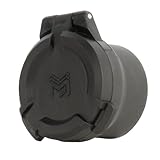
Monstrum Pro Series Flip-Up Scope Lens Cover
Loose lens caps have a habit of disappearing at exactly the wrong time. One slips under a bench, another gets packed with grit in a pocket, and exposed glass ends up collecting dust before the rifle is even ready. The Monstrum Pro Series model approaches the best rifle scope lens covers problem with a snug rubberized sleeve and a spring-loaded cap that stays attached to the optic. It’s a simple design, but the real value lies in protecting one lens without adding another loose part to manage.
Monstrum Pro Flip-Up Cover
The cover is designed for scope sections measuring 43 to 48 mm across the outside diameter. That measurement must come from the outer edge of the eyepiece or objective bell, not from the advertised lens size or main tube diameter. A scope labeled with a 40 mm objective, for example, will normally have a larger outer housing. Measuring first prevents the common headache of receiving a cap that won’t seat properly.
The mounting sleeve uses an improved rubber formulation intended to provide a snug fit with more resilience than earlier material. Flexible rubber gives the cover enough stretch to handle a range of nearby diameters while gripping the scope housing securely. It also creates a softer contact point than a rigid plastic collar pressed against the optic’s finish. That flexibility helps, though it doesn’t remove the need to select the correct size.
The cap opens through a spring-loaded flip-up mechanism that can be activated with a thumb. This keeps the cover connected to the scope after opening, so there’s no separate piece to stash away during use. Once closed, the cap secures over the lens and helps block dust, fingerprints, and incidental contact. The operation is straightforward and suited to repeated opening and closing during a range session.
Each package includes one individual lens cover, not a matched front-and-rear pair. Covering both ends of a riflescope requires purchasing one cover for the eyepiece and another for the objective bell. Those two ends often have different outside diameters, so each one should be measured independently. This modular setup offers sizing freedom, but it also adds cost and a second ordering step.
Practical Strengths of the Design
The strongest feature is the attached cap. A removable lens cover can fall into grass, collect lint in a jacket, or get left behind during cleanup. The Monstrum design remains fixed around the scope through its rubberized sleeve, reducing the chance of loss during transport or use. That retained layout also makes it easier to cover the lens again as soon as the shooting session pauses.
Quick access is another useful strength. The spring-loaded cap deploys with a thumb movement rather than requiring two hands to stretch off a full scope cover. This can make the routine smoother during short practice sessions where the optic is repeatedly covered between strings. From a related equipment perspective, backyard air rifles often involve the same need for compact accessories that are easy to open, close, and keep organized.
The flexible size range gives the sleeve more forgiveness than a hard cap made for one exact measurement. A scope housing that sits comfortably inside the 43-48 mm range should allow the rubber to grip without extreme stretching. That can be useful on eyepieces with slight tapers or textured surfaces. Still, the fit depends on the actual shape of the housing as well as the measured diameter.
Keeping the lens covered also reduces unnecessary cleaning. Dust and fingerprints can encourage frequent wiping, and careless cleaning may drag fine particles across coated glass. A closed cap creates a physical barrier against routine contamination during storage, transport, and breaks at the range. The cover won’t replace proper lens care, but it can reduce how often that care becomes necessary.
Pros Worth Considering
Secure retention is the first clear advantage. The rubber sleeve grips the scope while the flip cap remains attached after opening. This cuts down on misplaced caps and keeps the protective surface close to the optic. It’s especially useful in cluttered spaces where small accessories tend to vanish.
Fast one-handed operation makes the cover easy to manage. The spring-assisted cap opens with a thumb, which avoids the awkward motion of pulling off a tight removable cap. That quick movement can be helpful when the rifle moves frequently between protected and ready positions. The cap’s attached design also means there’s nothing extra to hold.
Flexible fit across several diameters gives the product broader compatibility within its stated range. The rubber sleeve can stretch around housings that don’t match one exact rigid dimension. This makes the cover more adaptable than a hard plastic model sized to a single diameter. The flexibility is useful, but only after the scope has been measured correctly.
Simple lens protection rounds out the benefits. The cap covers the glass without wrapping the entire scope in fabric or elastic straps. It adds a protective layer against dust, smudges, and light contact while keeping the optic easy to access. The design stays focused on one job instead of adding complicated parts that serve little purpose.
Cons and Realistic Tradeoffs
The single-cover package is the most noticeable weakness. Full protection for both the eyepiece and objective requires two separate purchases. That means measuring two locations, selecting two sizes, and paying twice if both ends need coverage. Anyone expecting a complete set may be disappointed by the one-cover-per-package format.
Sizing errors can also make the product unusable. The required number is the outside diameter of the scope housing, not the glass size printed in the optic’s model name. Guessing from a product description may lead to a cap that is too tight or too loose. A ruler can work, though calipers will usually provide a cleaner measurement.
Borderline measurements require judgment. The manufacturer recommends choosing the larger range when the diameter falls close to the edge between two sizes. That approach reduces excessive stretching, but a larger sleeve may feel less secure on certain smooth or tapered housings. The stated range provides guidance, yet final fit can vary by scope shape.
The flip-up hinge also adds some bulk around the optic. Tight cases, nearby turrets, bolt handles, or other accessories may limit where the hinge can sit. Rotating the sleeve can sometimes improve clearance, though not every rifle and scope combination will leave ample room. A plain removable cap is slimmer, even if it’s easier to lose.
Measurement and Installation Details
Accurate measurement should happen before ordering. Measure the widest outer section where the cover will sit on the eyepiece or objective bell. Do not rely on the scope’s advertised objective size, since that figure usually refers to the internal lens rather than the outside housing. Matching the result to the correct diameter range gives the sleeve the best chance of gripping securely.
Both ends of the scope should be measured separately. Eyepieces and objective bells rarely share the same outside diameter, even when the scope appears fairly compact. Buying two covers based on one measurement can leave one end properly protected and the other completely mismatched. Recording both numbers before ordering avoids that easily preventable mistake.
A measurement sitting between two available ranges should generally move toward the larger size, following the supplied guidance. Stretching a smaller sleeve too aggressively may make installation difficult and keep constant tension on the rubber. That tension can encourage twisting or uneven seating around the scope. A larger range may settle more naturally without requiring brute force.
Installation should feel firm but controlled. The sleeve needs enough grip to resist rotating when the cap flips open, but it shouldn’t require sharp tools or excessive pulling. Tools can damage the rubber or scratch the optic’s finish. Slow pressure around the circumference helps the rubberized sleeve seat evenly.
Lens Protection in Real Use
Dust is one of the most common problems a scope lens faces. Fine particles settle during storage, transport, and outdoor use, often before the rifle leaves its case. The closed cap helps block that debris from reaching the glass. Less dust means fewer rushed cleanings and a lower chance of rubbing grit across the lens coating.
Fingerprints create another everyday annoyance. Handling the rifle near the eyepiece can leave oils on the glass, especially while adjusting cheek position or packing equipment. The cover adds a barrier against accidental contact without requiring the entire optic to be wrapped. That can help preserve a clearer sight picture at the start of each session.
Moisture needs more careful handling. A flip cap can shield the lens from light rain or droplets, but closing it over wet glass for long storage may trap dampness. The optic should be allowed to dry before being placed in a case or cabinet. The cover helps with temporary exposure, though it isn’t a sealed moisture-control system.
The inside of the cap should also stay clean. Dust or grit trapped against the inner surface can eventually transfer to the lens area or surrounding housing. A soft, clean cloth can remove debris from the cover without introducing harsh cleaners. Protective gear works better when it’s maintained, and this small task keeps the cap from becoming part of the problem.
Where It Makes the Most Sense
Frequent range use suits the Monstrum cover well. The cap can remain closed during setup, open quickly for shooting, and close again during breaks. That routine is easier than removing and pocketing a separate cap several times in one session. The spring-loaded action earns its value through repetition rather than through complicated features.
Rifles stored in padded cases can also benefit from attached protection. Foam, straps, tools, and other equipment may rub against exposed lenses during transport. A closed cap places a solid layer between the glass and those contact points. Tight cases may need extra clearance around the hinge, but the lens receives useful everyday protection.
Minimalist setups may not appreciate the added hinge profile. A removable cap takes up less permanent room around the optic and may suit a rifle that rarely leaves a clean storage area. The Monstrum design makes more sense where retention and quick access matter more than the slimmest possible outline. That tradeoff should be considered before sizing and ordering.
The product is most convincing after its limits are accepted. It protects one end at a time, depends heavily on accurate measurement, and requires enough space for the cap to open freely. In return, it offers resilient rubber, attached storage, and a quick thumb-operated mechanism. Those qualities make it a sensible entry among the best rifle scope lens covers for setups that value convenience and repeatable protection.
Monstrum Bikini Scope Lens Covers 31-42 mm
Fine dust has a sneaky way of reaching scope glass even inside a padded case. Add a loose zipper pull, a gritty cloth, or a careless bump, and that exposed lens can pick up marks long before the rifle reaches the range. The Monstrum Bikini model approaches the best rifle scope lens covers category with a flexible, full-length design that stretches across the optic and protects both ends at once. It favors simple coverage over fast deployment, which makes sense for storage and transport but brings a few tradeoffs once shooting starts.
Monstrum Bikini 31-42 mm Cover
The design uses two flexible caps connected by a central strap, creating the familiar bikini-style scope cover. One cap fits over the eyepiece, the other fits over the objective housing, and the connecting section keeps both pieces together. That arrangement removes the annoyance of tracking two separate caps after they come off. It also gives the scope a covered front and rear without adding hinges, springs, or permanent hardware.
This version is intended for scope housings with outside diameters that fall within the stated 31 mm to 42 mm range. That number does not refer to the advertised objective lens size printed in the scope model. A scope marked 3-9x40 mm will have an objective housing wider than the internal 40 mm lens, so choosing a 40 mm cover based on the label alone can lead to a bad fit. Physical measurement is the only reliable way to match the cover to the optic.
Monstrum offers the bikini covers in several lengths and diameter combinations for scopes ranging from 26 mm to 65 mm objective diameters. That broader lineup helps accommodate compact optics, common hunting scopes, and larger objective housings without forcing one overly stretchy design to handle everything. Still, each scope has its own proportions, and the eyepiece may be much narrower than the front bell. Both ends need to be checked rather than treating the scope as one uniform tube.
The product is backed by a lifetime guarantee, which adds reassurance to an accessory that may be stretched, removed, packed, and exposed to changing temperatures. The supplied information does not spell out every condition of that guarantee, so it’s better not to assume coverage beyond what is stated. Even so, lifetime backing is a meaningful feature for a simple rubber accessory that depends heavily on long-term flexibility. The guarantee doesn’t correct a sizing mistake, though, so careful selection still comes first.
Protection Across Both Ends
The main strength is complete coverage of the two exposed glass surfaces. The front cap blocks dust and incidental contact around the objective, while the rear cap keeps fingerprints and debris away from the eyepiece. Joined by the flexible strap, the pair stays together after removal instead of splitting into two easy-to-lose pieces. That two-end protection is especially useful during transport, cabinet storage, or long breaks between shooting sessions.
Scratch prevention starts with keeping grit away from the glass. Fine particles can settle on an uncovered lens, then get dragged across the coating during a hurried wipe. A closed bikini cover reduces that exposure and can cut down on unnecessary cleaning. The cover won’t stop damage from a severe impact, but it creates a practical barrier against dust, light contact, and storage debris.
The connected design also suits crowded gear bags. Loose caps can fall beneath ammunition boxes, cleaning tools, or sling hardware, while this cover remains one complete piece. Once removed, it can hang from the scope or be placed in a pocket without separating. That may sound like a tiny convenience, but small accessories have a knack for disappearing when a setup contains several moving parts.
Weather protection has limits that deserve a plain explanation. The flexible caps can shield the glass from blowing dust and light moisture while the rifle isn’t in use, yet the product isn’t described as a waterproof seal. Closing damp caps over wet lenses for extended storage may trap moisture where it isn’t wanted. Drying the scope before storage remains part of responsible optic care.
Sizing Demands Real Measurement
Sizing is the point most likely to cause frustration. The number printed in a scope name usually describes the internal objective lens, not the outer diameter of the bell where the cap must fit. A 3-9x40 mm scope, for instance, will not automatically match a cover labeled 40 mm. The correct approach is to measure the outside diameter of the eyepiece and objective housing directly.
Calipers provide the cleanest measurement, though a flexible measuring tape or a careful ruler can work with patience. Measure the widest section where each cap will sit, not a narrower portion of the tube nearby. Record both figures in millimeters and check them against the available size range. Guessing from photos or model names is a roll of the dice, and this accessory doesn’t leave much room for wishful thinking.
Length matters alongside diameter because the connecting strap must stretch across the body of the scope. A cover with suitable cap sizes may still pull too tightly if the center section is too short. Excessive stretch can place constant tension on the caps and make removal awkward. A loose strap causes fewer problems than one stretched to its limit, though too much slack may allow the cover to shift during transport.
The product information recommends viewing the instruction video before purchasing, which reflects how much fit accuracy matters here. That guidance isn’t empty fine print. A properly sized bikini cover should grip both ends snugly without requiring brute force, while a mismatched one may slip off or strain the material. Careful measuring is the difference between easy protection and an accessory that ends up unused in a drawer.
Daily Handling and Removal
A bikini cover trades immediate access for broad protection. Removing it generally requires pulling one cap free, stretching the connected section away, and clearing the second cap from the opposite end. That process takes longer than flicking open spring-loaded caps. For storage and transport, the extra second or two is hardly a burden, but it may feel clumsy in situations where the optic needs to be ready without delay.
The absence of hinges gives the cover a clean, low-profile shape while installed. Nothing sticks upward beside a turret, crowds a bolt handle, or catches on foam inside a narrow case. This makes the simple flexible construction attractive for rifles stored in fitted compartments. The tradeoff is that the cover must come off as a whole unit rather than remaining fixed to the optic in an open position.
Gloves can make removal slightly more awkward, particularly if the caps fit tightly against smooth scope housings. A small tab or textured edge would make gripping easier, though no such feature is specified in the supplied description. Flexible material should still provide enough purchase for most handling, but a snug fit naturally demands a firmer pull. That resistance is useful during transport and less convenient during rapid setup.
From a separate equipment angle, a neutral reference appears in accurate airsoft sniper rifles, where optic fit, storage habits, and repeatable setup also influence accessory choices. The connection is limited to scope handling rather than the rifles themselves. Bikini covers remain focused on protecting mounted glass between uses. Keeping that distinction clear avoids pretending one accessory category solves every optic-related problem.
Strengths That Earn Attention
Full front-and-rear coverage is the clearest advantage. One connected accessory protects both exposed ends of the scope rather than requiring two separately purchased caps. The central strap keeps the pieces together, reducing the chance of losing one half. For storage, travel, and occasional range use, that simplicity is hard to argue with.
Flexible fitment options also strengthen the design. Multiple lengths and diameters allow the product line to serve a broad range of scope shapes instead of forcing one cover onto every optic. The rubber-like construction can accommodate small variations within the selected size. That flexibility helps, but it still depends on accurate outside measurements.
Low-profile protection suits rifles carried in snug cases. No spring housing or flip-up hinge remains attached to the scope, so the optic keeps a cleaner outline. The cover can stretch into place, stay put during storage, and come off completely before use. Shooters who dislike permanent attachments may prefer that uncluttered arrangement.
The lifetime guarantee adds another practical point in its favor. Flexible covers endure repeated stretching and exposure to heat, cold, and oils from handling, so long-term support carries real value. The guarantee doesn’t make the material immune to wear, and the exact terms aren’t provided here. Still, it gives the product more backing than a throwaway cap with no stated support.
Weaknesses and Practical Limits
Slower access is the biggest drawback. Both ends must be uncovered before the scope is fully ready, and the connected cover needs somewhere to rest after removal. A flip-up system stays attached and opens faster. The bikini format is better suited to protection between uses than to situations where every movement must be immediate.
Measurement sensitivity creates another hurdle. Buying according to the scope’s advertised objective number can result in the wrong cover, even when the label seems to match perfectly. Both the objective bell and eyepiece need direct measurement. That extra homework isn’t difficult, but skipping it can make the purchase useless.
The flexible strap may also create tension if the selected length is too short. Constant pulling can make the caps harder to seat and may place unnecessary strain on the material. A setup with oversized turrets or a long sunshade could further complicate fit. The product’s simple appearance hides the fact that scope proportions matter as much as diameter.
The cover does not provide instant access, rigid impact armor, or a permanent attached solution. It can help keep lenses clean and reduce light scratching risks, but it shouldn’t be treated like a hard protective shell. A severe drop or direct blow may still damage the optic. Realistic expectations keep its role clear: everyday dust and scratch protection, not complete damage prevention.
Best-Fit Scenarios and Expectations
Rifles that spend significant time in cabinets, soft cases, or vehicle storage are a natural fit for this design. The connected caps protect both ends from incidental contact with fabric, straps, and loose gear. Removal happens only when the rifle is ready for use, so slower access matters less. In that routine, the Monstrum cover solves a common nuisance without complicating the optic.
Occasional range sessions also suit the bikini format. The cover stays on during travel, comes off during setup, and returns after the rifle is packed. It doesn’t need to be opened and closed between every string unless dust or weather makes that necessary. That use pattern plays to the product’s storage-first design rather than exposing its slower handling.
Fast-moving field use may favor hinged caps instead. A hunter or shooter who needs the glass protected until the last possible second could find a full-length cover cumbersome. Removing the connected piece involves more motion, and the detached cover must be managed afterward. The Monstrum model can still function outdoors, but it isn’t built around immediate one-thumb deployment.
The product makes the most sense for someone willing to measure carefully and prioritize simple coverage over speed. Its strengths are the connected two-cap layout, flexible construction, broad size availability, and lifetime backing. Its limitations include slower removal, sizing complexity, and less rigid protection than hard caps provide. Within those boundaries, it stands as a practical entry among the best rifle scope lens covers for keeping stored optics cleaner and less exposed.
Trijicon TR131 AccuPoint and AccuPower Lens Caps
Scope caps usually seem unimportant right up until one cracks, stretches out, or disappears somewhere between the rifle case and the shooting bench. Exposed glass then starts collecting dust, fingerprints, and stray contact from gear that was never meant to touch an optical surface. The Trijicon TR131 takes a straightforward place among the best rifle scope lens covers by providing a replacement set made specifically for selected 50 mm AccuPoint and AccuPower models. Its appeal isn’t built around clever mechanisms or elaborate parts, but around correct model fit, connected caps, and official accessory status.
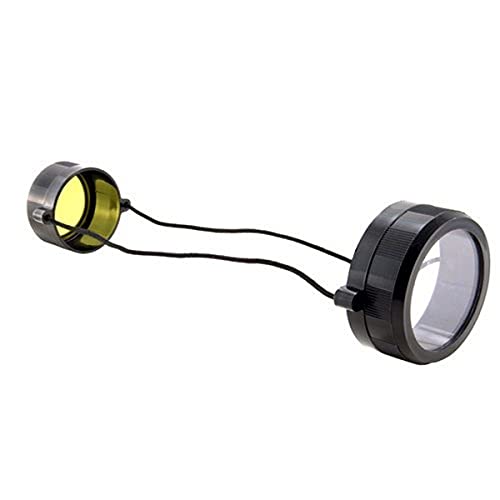
Trijicon TR131 Lens Caps
The TR131 is described as a replacement item for Trijicon AccuPoint 5-20x50 riflescopes and AccuPower 4-16x50 models. That narrow compatibility is both its defining strength and its biggest limitation. Instead of pretending to be universal, the cap set is tied to scopes with known dimensions and housing shapes. For an owner replacing worn or missing original caps, that specificity removes much of the guesswork that comes with flexible aftermarket covers.
Both caps are connected by large bungee cords, creating a simple retained system that stretches across the scope. The cords keep the front and rear pieces together after removal, so one cap is less likely to wander off by itself. That matters more than it sounds, especially inside a crowded rifle case where small black accessories tend to blend into foam, straps, and cleaning cloths. The connected layout also makes the set easier to grab as one piece during packing.
The matte black finish keeps the accessory visually consistent with the scopes it is intended to cover. There’s no bright hardware or contrasting material called out in the supplied details, which helps the caps remain understated on the rifle. A low-key appearance won’t improve optical protection by itself, but it avoids making a practical accessory look tacked on. The factory-matched appearance suits equipment owners who prefer replacement parts to look like they belong there.
Official accessory status carries practical weight. The TR131 is identified as an official Trijicon AccuPoint accessory, rather than a broadly sized cap adapted to several unrelated optics. That designation supports a cleaner fit expectation for the listed models, though it shouldn’t be stretched into claims about models not named in the description. The product’s role is focused: replace the original lens caps on compatible 50 mm Trijicon scopes.
Pros of the Connected Cap Design
Connected front and rear protection is the clearest advantage. The bungee cords tie both caps into one assembly, reducing the chance that the objective cap and eyepiece cap become separated during use. A loose cap can drop into grass or slide under a vehicle seat without much warning. Keeping the pieces linked makes the accessory easier to account for before the rifle goes back into storage.
The design also avoids permanent hinges mounted around the scope housing. Nothing needs to flip upward beside a turret, crowd a bolt handle, or stay attached near the eyepiece while the optic is in use. Once removed, the caps and cords can rest away from the viewing path. That uncluttered scope profile may appeal to anyone who doesn’t want extra hardware surrounding the optic during shooting.
Replacement simplicity is another meaningful benefit. A damaged or missing original cap set can leave otherwise functional glass exposed, and a model-specific replacement restores the intended coverage without requiring diameter measurements. The product description already identifies the compatible AccuPoint and AccuPower scope families. That makes the purchasing decision more direct than choosing among several ranges of stretch-fit covers.
The large cords may also be easier to handle than thin elastic connectors. More material gives the fingers something substantial to grip while removing or reinstalling the caps. The supplied information doesn’t specify cord thickness, stretch limits, or environmental resistance, so those details shouldn’t be invented. Still, the phrase large bungee cords clearly points to a robust, visible connection rather than a delicate thread.
Cons and Practical Limitations
Restricted compatibility is the first drawback. The TR131 is listed for 5-20x50 AccuPoint and 4-16x50 AccuPower scopes, so owners of other Trijicon models shouldn’t assume it will fit. Even another 50 mm scope may use a different outer housing diameter or eyepiece shape. The product’s model-specific nature is useful for the right optic and limiting everywhere else.
The bungee layout also takes longer to clear than a spring-loaded flip cap. Removing connected covers normally involves pulling one cap away, stretching the cord assembly, and freeing the opposite end. That process is perfectly reasonable during setup or storage, but it doesn’t provide instant one-thumb access. Anyone prioritizing rapid lens exposure may prefer a hinged design, assuming a compatible option exists.
Connected cords can create their own handling quirks. Once the caps are removed, the assembly needs to rest somewhere without catching on controls, slings, or nearby gear. Letting it hang from the scope may be convenient in some setups and distracting in others. The description doesn’t state whether the caps are intended to remain dangling during use, so the most realistic expectation is that placement will depend on the rifle and shooting position.
The supplied information is brief, leaving several reasonable questions unanswered. Material type, exact cap dimensions, water resistance, and cold-weather behavior aren’t specified. That doesn’t make the product unsuitable, but it does limit how far a review can go without drifting into guesswork. The safest assessment stays centered on replacement fit, connected storage, and official accessory status.
Lens Protection During Storage
Storage is where this style of cover makes the most immediate sense. Closed caps shield both ends of the optic from dust, case lining, fingerprints, and incidental contact with nearby equipment. A rifle placed beside tools, slings, or ammunition boxes can expose unprotected glass to more rubbing than expected. The TR131 creates a simple barrier over the objective and eyepiece before the scope enters that crowded environment.
Dust prevention can reduce unnecessary cleaning. Every wipe carries some risk of dragging fine grit across coated glass, especially if the lens is cleaned quickly with whatever cloth happens to be nearby. Keeping the caps in place during transport lowers the amount of debris that reaches the optical surfaces. Prevention is less dramatic than repair, but it’s usually the smarter routine.
The connected arrangement also helps during long periods in a cabinet or safe. Both covers remain paired, making it less likely that one side of the scope is left exposed because its matching cap went missing. Reinstalling the set becomes a single task rather than a search for two separate pieces. That one-piece handling supports a tidier storage habit without adding mechanical complexity.
Moisture still requires common sense. No waterproof rating or sealing claim appears in the supplied description, so the caps shouldn’t be treated as airtight protection. Wet glass should dry before the scope is stored for an extended period. Covering a damp lens may keep new dust away, but it won’t solve trapped humidity.
Fit for AccuPoint and AccuPower Models
The strongest reason to consider this set is model alignment. Trijicon names the TR131 for AccuPoint 5-20x50 and AccuPower 4-16x50 scopes, which removes the usual outside-diameter measuring process associated with generic caps. That’s handy for owners who want a direct replacement rather than a universal part that may need stretching or adjustment. The accessory’s narrow purpose becomes an advantage once the optic matches the listed models.
Official fit also reduces the odds of a cap appearing awkward or oversized on the scope. Generic bikini covers often serve multiple diameters, so their tension and appearance can vary depending on where a scope falls inside the sizing range. A replacement accessory developed for specific product families should align more naturally with their proportions. That said, the supplied description doesn’t provide tolerances, so claims of exact fit beyond the named models would go too far.
AccuPoint and AccuPower scopes share the listed 50 mm objective format, yet the rear sections and overall body dimensions still matter to a connected cover. Trijicon’s designation suggests those differences have been considered for this accessory. Buyers using another optic with a similar magnification range shouldn’t treat those numbers as proof of compatibility. Model identity matters more than magnification alone.
A related equipment reference appears in German air rifles, where scope fit and storage habits can also shape accessory decisions. The connection is limited to optic care rather than direct TR131 compatibility. These caps are made for the specified Trijicon riflescopes, not for a rifle category or mounting platform. Keeping that boundary clear prevents a useful reference from turning into a forced product match.
Everyday Handling and Maintenance
Simple accessories often last longer when they have fewer moving parts. The TR131 relies on two caps and connecting bungee cords rather than springs, pins, or rotating hinges. That construction avoids several common failure points found in flip-up mechanisms. The tradeoff is slower removal, but mechanical simplicity can be appealing on gear meant primarily for transport and storage.
The cords and cap interiors should stay clean. Dust collected inside the covers can transfer back toward the scope housing or lens area, undermining the protection they’re supposed to provide. A clean, soft cloth can remove loose debris before the caps are reinstalled. Harsh cleaners aren’t mentioned in the product information, so there’s no reason to assume the material tolerates them.
Stretching should be controlled rather than aggressive. Bungee cords are built to extend, but yanking one end farther than necessary may place avoidable stress on the connection points. Removing each cap with steady pressure is the sensible approach. The large cord design should provide enough material to handle without resorting to sharp tools or excessive force.
Heat and cold may affect flexible materials, though no operating range is provided. Leaving the caps under constant strain in extreme conditions could influence how the cords feel over time, but anything more specific would be speculation. Regular inspection is the practical answer. Cracks, loss of tension, or loose attachment points would signal that the replacement set is no longer providing dependable coverage.
Where the TR131 Makes the Most Sense
The TR131 fits best into a routine where the rifle is covered during transport, uncovered during setup, and protected again before storage. That pattern plays directly to the strengths of a connected bikini-style set. Quick access during a sudden field moment isn’t its main talent. Reliable off-range coverage is where the design earns its place.
Owners replacing original caps are likely to appreciate the straightforward model match. There’s no need to juggle several diameter ranges or wonder whether a generic sleeve will stretch evenly across the optic. The official accessory label also preserves a factory-consistent look. For a compatible scope, that simplicity can outweigh the lack of flip-up convenience.
The product is less convincing for optics outside the named families or setups requiring instant access. A shooter who wants caps permanently attached beside the lenses may dislike removing the full connected assembly. Likewise, someone using a different 50 mm scope shouldn’t gamble on fit based only on objective size. The narrow application is honest, but it leaves little room for improvisation.
Its strengths remain clear: official Trijicon status, replacement-specific purpose, connected caps, and coverage for both ends of compatible scopes. Its weaknesses are equally plain: limited model support, slower removal, and sparse material details. Those tradeoffs keep the TR131 from being a universal answer among the best rifle scope lens covers, yet they also make it a sensible replacement for the exact AccuPoint and AccuPower models listed.
Monstrum Rubberized Flip-Up Eyepiece Cover
A lens cap that shifts every time the rifle leaves its case isn’t really protecting much. Dust still creeps around the edge, the cap rotates across the housing, and the optic ends up needing a wipe before the first shot. The Monstrum Rubberized Flip-Up Cover enters the best rifle scope lens covers discussion with a tight rubberized sleeve, an attached spring-loaded lid, and a stated fit range of 37 to 42 mm. Its strengths center on quick access and retained protection, while its biggest weakness is a sizing process that leaves little room for casual guessing.
Monstrum Rubberized Flip-Up Cover
This model is made for an eyepiece measuring 37 to 42 mm in outside diameter, or roughly 1.5 to 1.7 inches. That range describes the exterior of the scope housing where the sleeve sits, not the internal glass size printed in the scope name. A 3-9x40 mm optic, for example, doesn’t automatically take a 40 mm cover because the objective bell extends beyond the lens itself. The distinction sounds basic, but it’s the detail most likely to decide whether the cover fits or ends up back in the box.
The mounting section uses a rubberized sleeve that conforms around the scope tube. Flexible material lets it grip several diameters within the listed range instead of fitting only one exact measurement. That snug contact helps the cap resist spinning or sliding while the spring-loaded lid opens. It also avoids placing a hard mounting ring directly against the scope’s exterior finish.
A spring-loaded flip-up mechanism handles deployment. The lid pops open when needed and closes tightly over the lens when the optic is idle. Since the cap remains attached to the sleeve, there’s no small plastic piece to pocket, drop, or accidentally leave on a shooting bench. The mechanism favors convenience during repeated short sessions where the lens moves often between covered and ready.
Each package contains one flip-up lens cover. Full protection at both ends of a scope requires buying a separate unit for the eyepiece and another for the objective bell. Those two positions commonly use different outside diameters, so ordering two identical covers without measuring both areas can create an awkward mismatch. The single-unit package offers flexibility, though it also increases the work and cost of building a complete set.
Pros of the Rubberized Mount
Secure grip is the clearest benefit of the rubberized sleeve. A rigid cap that fits slightly loose may rotate every time the lid flips open, while a flexible collar can settle more closely around the housing. That tighter contact keeps the hinge position consistent and helps the cover stay where it was installed. The result is less fiddling after the rifle moves in and out of storage.
The sleeve also offers a little forgiveness across the stated size range. A 38 mm eyepiece and a 41 mm eyepiece don’t share identical dimensions, yet the same flexible model is designed to accommodate both. That makes sizing less restrictive than a hard cap built for one exact diameter. Still, flexibility isn’t unlimited, and forcing the sleeve onto an oversized housing can strain the material or prevent the lid from sitting correctly.
Soft contact around the optic is another practical strength. The rubberized surface is less likely to feel harsh against the scope body than bare rigid plastic. It can also provide useful friction on smooth finishes where a slick collar might move. No scratch-proof guarantee is stated, so careful installation still matters, but the conforming material is well suited to repeated handling.
The sleeve’s low profile keeps the mounting system relatively simple. It doesn’t require tools, screws, or an additional ring around the scope tube. Installation mainly depends on selecting the proper size and seating the rubber evenly. That stripped-down approach limits extra hardware while keeping the protective cap permanently available.
Pros of the Flip-Up Mechanism
Fast one-handed opening gives this design a clear edge over full-length bikini covers. A thumb movement clears the lens without forcing the entire protective assembly off the scope. That’s useful during range breaks, transport pauses, or brief periods when dust starts moving through the area. The attached lid then stays close instead of turning into another loose item.
The spring-loaded action also creates a predictable routine. Open the cap, use the optic, then close it as soon as the rifle returns to rest. That simple cycle reduces the temptation to leave the lens exposed because reinstalling a separate cover feels inconvenient. A protective accessory only helps when it actually gets used, and easy operation encourages regular coverage.
The lid secures tightly while closed, according to the supplied description. A firm closure helps block ordinary dust and abrasion during storage or transport. The cover isn’t described as a waterproof seal, so it shouldn’t be treated like one. Its job is everyday shielding rather than complete isolation from weather or moisture.
Attached caps also cut down on clutter around a shooting bench. Removable covers often end up mixed with tools, ammunition boxes, or cleaning supplies, then disappear during cleanup. This model remains mounted on the optic throughout the session. That retained design solves a small but persistent annoyance without adding a complicated release system.
Cons That Deserve Attention
Sizing sensitivity is the most serious drawback. The product requires a physical outside-diameter measurement, and scope model names don’t provide that number reliably. Guessing from the objective lens size can result in a cover that’s either too tight or too loose. The sizing chart and video aren’t optional background material here; they’re central to getting a usable fit.
The 37 to 42 mm range also limits compatibility. Larger eyepieces and most objective bells will need another size, while narrow scope sections may not give this sleeve enough grip. A diameter that sits just outside the stated range shouldn’t be treated as close enough. Stretching beyond the limit may distort the rubber or keep the cap from closing squarely.
One cover per package creates another inconvenience. Protecting both lenses means repeating the measurement process and ordering a second cap. The eyepiece and objective often fall into different ranges, so the pair may not match in size or appearance. A bundled two-cap kit would be simpler, though the separate format does allow each end to be fitted independently.
The hinge adds physical bulk near the optic. Depending on its orientation, the open lid may sit close to a turret, bolt handle, throw lever, or other accessory. Rotating the sleeve can help, but some compact setups leave little free space around the eyepiece. A removable cap creates a cleaner outline during use, even though it’s slower and easier to lose.
Measuring the Scope Correctly
The safest method begins with the outside diameter of the exact section where the sleeve will sit. Calipers provide the clearest reading, but a carefully positioned ruler can offer a workable estimate. Measure across the widest part of the eyepiece housing, not the narrower main tube beside it. A small error can matter because the total range spans only five millimeters.
Scope labels can be misleading during this process. The “40” in a 3-9x40 mm description identifies the objective lens diameter, not the outer dimension of the bell. The housing must be larger than the glass it surrounds, so a 40 mm cover is unlikely to match based on that label alone. Physical measurement beats catalog shorthand every time.
Both ends should be measured separately if a complete pair is planned. The eyepiece may fall inside the 37 to 42 mm range while the objective requires a substantially larger cover. Assuming symmetry creates avoidable ordering mistakes. Recording each number before selecting the covers keeps the process tidy and reduces returns.
The manufacturer also directs attention to a sizing chart and sizing video. Those materials matter because they show where the measurement should be taken and how the size ranges correspond to the optic. A correct number paired with the wrong measurement location can still lead to trouble. Fit begins with method, not merely with owning a ruler.
Protection in Everyday Use
Dust protection is where the cover earns its keep most often. Fine particles settle on exposed glass during transport, storage, and outdoor handling, even when the rifle never touches the ground. Closing the lid limits that buildup and reduces the frequency of lens cleaning. Fewer hurried wipes mean fewer chances to drag grit across coated glass.
Abrasion protection is more modest but still useful. The lid places a physical barrier between the lens and case lining, loose straps, fingers, or nearby equipment. It won’t stop damage from a severe impact, yet it can prevent ordinary contact from reaching the glass. That first layer of defense is often enough for routine storage and movement.
Moisture requires a different approach. The supplied description focuses on dust and abrasion, not waterproof sealing. A closed cap can shield the lens from light droplets, but damp glass should dry before long-term storage. Trapping moisture under any cover can create its own problems, so the cap shouldn’t replace sensible drying habits.
The inside of the lid also needs occasional attention. Dust collected there may eventually transfer toward the lens area, particularly if the cap closes against a gritty scope housing. A soft, clean cloth can remove loose debris without adding harsh chemicals. A clean cover protects better than one treated as maintenance-free.
Related Rifle and Optic Considerations
Optic accessories often depend on the rifle’s handling pattern as much as the scope itself. A rifle carried through brush places different demands on a lens cap than one moved between a cabinet and a backyard bench. From a practical angle, 22 air rifles for rabbit hunting involve similar concerns around compact optics, dust exposure, and keeping glass protected between periods of use. The Monstrum cover remains scope-specific, though the broader handling issues overlap.
Fast access matters most where the optic may need to become usable with little warning. The flip-up design handles that better than a connected two-end cover that must be pulled away completely. Still, an open hinged lid remains visible around the scope, and its position may affect clearance. Speed and profile sit on opposite sides of the tradeoff.
Bench shooting places less pressure on instant deployment, but the attached cap still helps during pauses. Closing the lens between strings keeps airborne debris away while the rifle rests. The mechanism also reduces the chance of caps getting mixed into other gear. In that environment, convenience shows up through repetition rather than urgency.
Storage-focused setups may not need spring-loaded hardware at all. A full-length cover can shield both ends with fewer mounted parts, though it takes longer to remove. The Monstrum flip-up model fits better where frequent access and retained protection matter more than total simplicity. That distinction helps prevent the cap from being judged against the wrong type of lens cover.
Strengths, Weaknesses, and Best Fit
The leading strengths are easy to identify: a conforming rubberized sleeve, fast spring-assisted opening, tight closure, and a cap that stays attached. Those features solve common problems involving loose covers, repeated handling, and dusty storage. The design is practical rather than elaborate. It focuses on making lens protection quick enough that it won’t be skipped.
The weaknesses are just as concrete. Exact measurement is mandatory, the package contains only one cover, and the hinge can crowd tight scope setups. Compatibility is limited to housings within the 37 to 42 mm range. Anyone expecting a universal two-cap kit will need to adjust those expectations.
The cover makes the most sense on a correctly measured eyepiece that sees frequent use. It suits a rifle moving regularly between case, bench, and storage, where removable caps become bothersome. A rarely used optic kept in a clean cabinet may get by with a simpler cover. The Monstrum model earns its place through repeated convenience rather than through broad compatibility.
Realistic expectations keep the review grounded. This isn’t rigid impact armor, a waterproof seal, or a complete front-and-rear package. It is a quick-access protective cap built to reduce dust and abrasion on one properly sized end of a riflescope. Within those limits, it offers a sensible balance of grip, speed, and everyday lens coverage among the best rifle scope lens covers.

10 Top Picks: Best Youth Air Rifles for 13-Year-Olds

12 Best Rifle Scopes For 5.56 Under 150 Dollars - (2026 Top Picks)

Top 10 Rifle Scopes for Coyote Hunting in 2026

12 Best Benchrest Rifle Scopes of 2026 For Tight Groups

Top 5 Airsoft Rifles: Unleash the Action in 2026
Unveil the Best Straight Wall Deer Rifles: Top Picks for 2026

Top Ammo Choices for Air-Powered Rifles: Boost Your Performance in 2026

Best Quick Detach Scope Rings for Accurate and Convenient Shooting







