
Best Rifle Scope Mounts and Rings 2026 Picks

A clear optic can only do so much if the hardware beneath it shifts, pinches the tube, or sits at the wrong height. The best rifle scope mounts and rings create a stable connection between the rail and optic without turning installation into a wrestling match. Solid clamping pressure, correct ring diameter, sensible height, and dependable fasteners matter far more than flashy machining marks. Get those basics wrong, and even an expensive scope may feel awkward or lose its carefully set position.
Fit causes more headaches than most people expect. A 30 mm scope won’t fit one-inch rings, while rings that sit too low may leave the objective bell pressed against the barrel or rail. Go too high, though, and a comfortable cheek weld can disappear, leaving the head floating above the stock. Proper ring height should provide enough clearance for the optic and any lens caps while keeping the sight line naturally aligned with the eye.
Mount style deserves equal attention. Separate rings offer flexibility and often keep weight down, but they rely on the receiver or rail to provide suitable spacing. A one-piece scope mount keeps both rings aligned on a shared base and may simplify installation, especially on platforms that need forward offset. That convenience comes with a tradeoff: one-piece designs can weigh more and may limit placement on compact rails.
Clamping systems also shape the day-to-day experience. Traditional cross-bolt hardware tends to be simple, sturdy, and less expensive, although removal usually requires a tool. Quick-detach levers make it easier to remove and reinstall an optic, but extra moving parts demand careful adjustment and periodic checks. Neither approach automatically holds zero better; consistent machining, firm rail engagement, and correctly tightened hardware carry more weight than the release style alone.
Small installation details can save a pile of frustration. Ring caps should be tightened gradually in an alternating pattern so the gaps remain reasonably even and pressure stays balanced. Over-tightening can mark or distort a scope tube, while loose screws may allow subtle movement that’s hard to spot at first. A proper torque setting based on the hardware maker’s instructions is worth following rather than relying on feel and hoping for the best.
Material choices bring another set of compromises. Aluminum mounts reduce weight and resist corrosion, making them practical for equipment carried over long distances. Steel rings usually add heft but appeal where ruggedness and hard-use durability take priority. Surface finish, recoil lugs, fastener quality, and cleanly cut threads often tell more about real-world reliability than the material name printed on the package.
Not every mount needs oversized screws, multiple locking lugs, or a bulky tactical profile. A light-recoiling setup may benefit more from trim rings that preserve balance, while heavier recoil calls for stronger rail contact and fasteners that won’t creep loose. Reliable scope mounting comes from matching the hardware to the firearm, optic, and intended use rather than buying the biggest assembly on the shelf. Practical fit wins, plain and simple.
- ARS Mark9.4
ARS Mark is a ranking system developed by bestairriflescopes.com. ARS Mark has no relationship or impact from any manufacturers or sales agent websites. Learn more
- BrandVortex
- ARS Mark9.2
ARS Mark is a ranking system developed by bestairriflescopes.com. ARS Mark has no relationship or impact from any manufacturers or sales agent websites. Learn more
- BrandModkin

- ARS Mark9.2
ARS Mark is a ranking system developed by bestairriflescopes.com. ARS Mark has no relationship or impact from any manufacturers or sales agent websites. Learn more
- BrandCVLIFE
- ARS Mark9.2
ARS Mark is a ranking system developed by bestairriflescopes.com. ARS Mark has no relationship or impact from any manufacturers or sales agent websites. Learn more
- BrandMonstrum

- ARS Mark9.2
ARS Mark is a ranking system developed by bestairriflescopes.com. ARS Mark has no relationship or impact from any manufacturers or sales agent websites. Learn more
- BrandLeupold

- ARS Mark9.2
ARS Mark is a ranking system developed by bestairriflescopes.com. ARS Mark has no relationship or impact from any manufacturers or sales agent websites. Learn more
- BrandCVLIFE
- ARS Mark9.2
ARS Mark is a ranking system developed by bestairriflescopes.com. ARS Mark has no relationship or impact from any manufacturers or sales agent websites. Learn more
- BrandLONSEL
- ARS Mark9.2
ARS Mark is a ranking system developed by bestairriflescopes.com. ARS Mark has no relationship or impact from any manufacturers or sales agent websites. Learn more
- BrandModkin
- ARS Mark9.0
ARS Mark is a ranking system developed by bestairriflescopes.com. ARS Mark has no relationship or impact from any manufacturers or sales agent websites. Learn more
- BrandModkin
Last update on 2026-08-01 / Affiliate links / Images, Product Titles, and Product Highlights from Amazon Product Advertising API
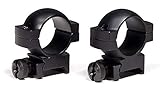
Vortex Hunter 1-Inch Medium Riflescope Rings
A scope can look perfectly settled on the bench and still become a source of irritation once the rifle is carried, shouldered, and fired repeatedly. Small alignment mistakes, loose clamp screws, or the wrong ring height often show up as shifting eye position and inconsistent comfort rather than an obvious mechanical failure. The best rifle scope mounts and rings should create a firm, uncomplicated connection without adding needless bulk, and these Vortex rings aim squarely at that practical middle ground. They’re built for ordinary hunting setups where sensible weight, familiar hardware, and a straightforward installation matter more than tactical extras.
Vortex Hunter Medium Rings
The shortened name fits the product’s personality rather well: Vortex Hunter Medium Rings are simple two-piece rings made for one-inch riflescope tubes. Each package contains two rings, so there’s no ambiguity about what arrives or what’s needed for a standard scope installation. The design uses two screws across each ring cap, keeping the layout familiar and easy to understand. That basic arrangement won’t impress someone chasing oversized hardware, but it keeps the setup tidy and appropriate for a general-purpose hunting rifle.
The medium-height geometry places the center of the scope tube 0.87 inches, or 22.0 mm, above the base. That measurement matters because ring height affects objective clearance, cheek position, and how naturally the eye lines up behind the optic. A medium ring often lands in the useful middle zone for common hunting scopes, especially those without extremely large objective bells. Still, clearance depends on the rifle, rail, scope diameter, and lens caps, so the stated height should be checked against the full setup rather than treated as a universal fit.
Compatibility covers both Picatinny and Weaver-style rails, which gives these rings a broad practical role across many conventional rifle configurations. The cross-slot mounting approach is familiar, widely used, and easy to inspect during installation. It’s also a sensible match for someone who prefers separate rings instead of a one-piece mount that adds more metal between the rifle and optic. The tradeoff is that separate rings rely more heavily on the rail and installation process for proper alignment.
Build Quality Without Unnecessary Weight
The rings are made from 6061-T6 aircraft-grade aluminum, a material commonly chosen where strength and manageable weight need to coexist. Aluminum keeps the mounting system from making a hunting rifle feel nose-heavy or overbuilt. That’s especially useful on a rifle carried through brush, across uneven ground, or over long stretches where every extra ounce eventually makes itself known. The material choice doesn’t make the rings indestructible, but it suits their intended role well.
Steel rings can offer a heavier, more traditional feel, yet they may be more hardware than a mild or moderate hunting setup really needs. These aluminum rings take a more balanced route, offering structural rigidity with lower mass. The black finish also keeps the appearance subdued and easy to match with most scopes, rails, and receivers. Nothing about the styling shouts for attention, which is honestly a good fit for a product that should disappear into the setup once installed.
The standard two-screw cap design does require a little patience during tightening. Each screw should be brought down gradually so the cap gap stays reasonably even and pressure remains balanced across the scope tube. Rushing that process can twist the optic slightly or create uneven contact, and neither issue is something the material can solve on its own. Careful installation matters as much as the ring body, particularly with lightweight aluminum components.
Mounting Process And Torque Details
The supplied specification lists 25 to 30 inch-pounds for the base clamp screws. That range gives installers a concrete target rather than leaving everything to hand feel. A torque driver is useful here because small fasteners can feel snug before they’ve reached the intended value, while excessive force can damage threads or deform lighter components. Following the stated base-clamp range helps the rings seat securely without turning installation into a guessing game.
The product details don’t provide a cap-screw torque value, so that figure shouldn’t be invented or assumed. The safer approach is to follow the current instructions supplied with the rings and the scope manufacturer’s guidance for tube clamping pressure. Scope tubes can be marked, pinched, or stressed by aggressive tightening, especially if one side is drawn down much faster than the other. Balanced screw tension is the key habit, not brute force.
Separate rings also make spacing flexible, which can help accommodate different turret housings and tube lengths. That freedom is useful, but it places more responsibility on the installer to keep the rings aligned and positioned correctly. A rail with uneven surfaces or excessive wear may create problems that no ordinary ring set can fully hide. For that reason, rail condition and ring placement deserve a quick inspection before the scope is tightened into place.
Fit For General Hunting Setups
These rings are described as a match for general hunting configurations, and the feature set supports that claim. The medium height, one-inch tube compatibility, modest weight, and common rail interface all point toward traditional field rifles rather than specialized long-range builds. That focus keeps the product refreshingly uncomplicated. There are no quick-detach levers, oversized cap bolts, or elaborate cantilever sections to manage.
A simple mounting system often makes sense on a rifle where the scope will stay in place for long periods. Once the zero is established, most of the value comes from stability, repeatable cheek placement, and confidence that the hardware hasn’t shifted. These rings don’t promise tool-free removal or rapid optic swapping, and that limitation should be acknowledged. Permanent or semi-permanent mounting is where this design feels most at home.
The 0.87-inch center height may work neatly with many moderate-objective hunting scopes, but larger bells can complicate the picture. A thick barrel contour, raised rail, flip-up cap, or unusually shaped scope body can change the clearance requirement. A few millimeters can make the difference between a clean fit and a cap rubbing against the barrel. So, while the medium height is broadly useful, measurement before purchase remains the smarter move.
Strengths That Matter In Daily Use
The main strength is restraint. These rings focus on secure mounting, low weight, and common compatibility instead of piling on features that may never be used. That makes them easier to understand and easier to integrate into a straightforward rifle build. For many hunting setups, that plain-spoken approach is more useful than a heavy mount designed for harsher demands.
The two-piece layout also lets the installer position the rings around the scope’s turret housing and adjustment controls. That can be helpful with shorter tubes or optics that have limited mounting space. A one-piece mount may dictate spacing more rigidly, while separate rings offer a little breathing room. The freedom is practical, though it does mean alignment must be handled carefully during setup.
The stated material and torque information add clarity. Buyers know the rings use 6061-T6 aluminum, fit one-inch scope tubes, mount to Picatinny or Weaver rails, and place the tube center at 0.87 inches above the base. Those concrete specifications make compatibility easier to judge without leaning on vague promises. Clear dimensions reduce installation surprises, which is worth more than glossy language.
Limitations Worth Knowing Up Front
The two-screw cap design is lighter and simpler than a four-screw arrangement, but it offers less clamping hardware around the tube. That doesn’t automatically make it unreliable, especially in the intended hunting role, yet it may be less appealing for heavier recoil or unusually demanding use. Someone building a hard-use rifle may prefer more substantial rings with larger fasteners and a stronger recoil interface. Application matters more than brand loyalty here.
These rings also lack quick-detach capability. Removing the scope requires tools, and returning it to exactly the same position may require another zero check. For a rifle that keeps one optic installed season after season, that’s barely a concern. For a setup that regularly swaps optics, night devices, or alternative sights, fixed cross-bolt mounting may feel limiting.
The one-inch diameter is another firm boundary. Many modern scopes use 30 mm or larger tubes, and these rings won’t accommodate them. That sounds obvious, yet tube diameter is one of the easiest details to overlook when several measurements are being compared at once. The product makes sense only after confirming one-inch tube compatibility, suitable rail type, and enough objective clearance.
How They Compare With Heavier Mounts
Heavy-duty rings often use steel bodies, four-screw caps, oversized nuts, or integrated recoil lugs. Those features can be useful on magnum rifles, precision platforms, or equipment expected to absorb rough handling. They also increase weight and may look out of place on a slim hunting rifle. The Vortex Hunter design chooses practical moderation instead of maximum hardware.
A one-piece cantilever mount can solve eye-relief problems on platforms with limited forward rail space. These separate rings won’t create that forward offset, so they depend on the receiver and rail layout to place the optic correctly. On a conventional bolt-action rifle, that may be no issue at all. On a platform that needs extra reach, mount geometry may be the deciding factor.
Price isn’t the only reason to choose a simpler ring set. Lower weight, fewer moving parts, and a cleaner profile can be worthwhile benefits on their own. Still, simplicity should never be mistaken for universal suitability. A related but separate topic appears in laser pointer selection, though it has no direct bearing on scope-ring fit or mounting strength.
Practical Verdict On The Design
The product makes the most sense on a rifle using a one-inch hunting scope, a Picatinny or Weaver rail, and an objective size compatible with the stated medium height. In that setting, the rings provide a lightweight and familiar mounting solution without clutter. The 6061-T6 aluminum construction fits the intended balance between strength and carry comfort. The design feels purpose-built rather than overreaching.
Installation quality will shape the final experience more than any dramatic feature claim. Proper spacing, even cap gaps, verified clearance, and correctly torqued base screws all matter. A careless setup can make good hardware behave poorly, while a patient installation lets a straightforward product do its job. Consistency at the workbench pays off later in the field.
The limitations are real but easy to understand: one-inch tubes only, no quick-detach function, no built-in forward offset, and a standard two-screw cap. Those boundaries don’t make the rings weak; they simply define where the product belongs. On a general hunting rifle that needs medium-height rings and doesn’t demand tactical extras, Vortex Hunter Medium Rings offer a sensible, no-fuss fit.
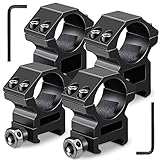
Modkin 1-Inch Scope Rings Set With Two Heights
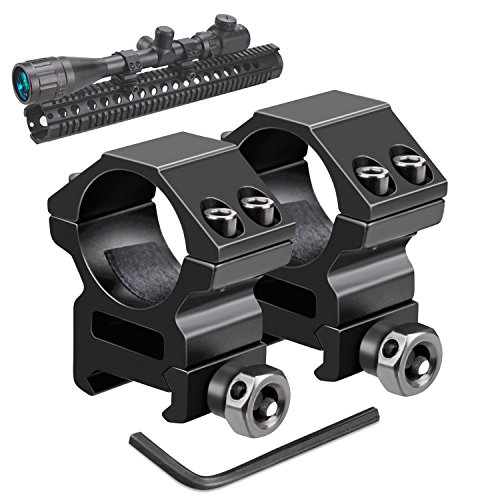
A scope mount can become a real nuisance when the rifle, optic, and rail don’t line up the way the product photos suggested. Too low, and the objective bell crowds the barrel; too high, and the cheek weld starts feeling loose and awkward. The best rifle scope mounts and rings should solve those fit problems without adding a brick of hardware, and this four-ring Modkin set takes a flexible approach by supplying both medium and high profiles. That mixed-height package gives a rifle owner room to sort out clearance before committing to one mounting position.
Modkin Dual-Height Scope Ring Set
The package contains four individual rings: two medium-profile pieces and two high-profile pieces. Each ring is designed around a one-inch, or 25.4 mm, scope tube and attaches to a 21 mm Picatinny or Weaver-style rail. That layout is handy for anyone working through a new setup and unsure which height will clear the barrel, receiver, or lens cover. Instead of buying one pair and crossing your fingers, both common height options arrive together.
The medium rings measure 1.9 by 1.6 by 0.8 inches, while the high rings measure 2.0 by 1.6 by 0.8 inches. The difference may look modest on paper, but a small increase in height can create the breathing room needed beneath a larger objective bell. It can also alter how naturally the eye meets the scope, so taller isn’t automatically better. The right profile is the one that provides clearance while preserving a steady cheek position.
Each pair is listed at 2 ounces, keeping the mounting hardware relatively light. That matters on compact rifles and air rifles where a bulky mount can make the whole setup feel clumsy or top-heavy. The open, hollowed sections reduce unnecessary material and leave some sightline beneath the optic, though the practical value of that opening depends on the rifle. Either way, the design avoids the blocky look of a solid one-piece mount.
Two Heights Make Setup Less Frustrating
Ring height often causes more trouble than tube diameter because clearance involves several parts at once. The objective lens, barrel contour, rail thickness, turret body, and lens caps all influence how low the scope can sit. With medium and high rings in one box, the installer can mock up both positions and judge them against the actual rifle. That’s more useful than relying on a generic height label that may not account for the rail already fitted to the receiver.
The medium pair should suit situations where the scope needs modest clearance and a lower sight line remains comfortable. Keeping the optic closer to the bore can help maintain a more natural stock position, especially on rifles with a conventional comb. The high pair creates additional space for larger objective housings or raised components beneath the tube. Still, extra clearance comes with a tradeoff, since a higher optic may require a cheek riser to restore consistent head placement.
This four-piece arrangement also leaves a spare pair once the preferred height is chosen. That sounds convenient, but the unused rings aren’t automatically suitable for every other rifle in the cabinet. The second setup still needs a one-inch tube and a compatible 21 mm rail. Even so, having two complete mounting pairs can be useful for another optic, a backup project, or a later change in scope size and clearance needs.
Tape Inserts Address Two Common Problems
Built-in tape lines the inner ring surface to help protect the scope tube from direct metal contact. That layer may reduce cosmetic scratching during installation and adjustment, particularly if the optic needs to slide forward or backward while eye relief is being set. It also adds friction between the ring and tube. The intended benefit is less scope movement under repeated recoil, which addresses a frustrating problem that can be difficult to notice until accuracy begins to wander.
The tape shouldn’t be treated as permission to crank down the cap screws without restraint. Excessive clamping pressure can still mark or stress a scope tube, while uneven tightening may pull the optic off its natural alignment. Both screws on each ring cap should be tightened gradually, keeping the gaps reasonably balanced from side to side. Even pressure matters more than simply making every fastener feel as tight as possible.
Adhesive-lined rings can also require a little patience during scope positioning. The added grip may resist fine adjustments once the caps begin to snug down, so eye relief and reticle orientation should be checked before final tightening. Dust or debris trapped against the tape could also leave marks, which makes a clean work surface worthwhile. Used carefully, the protective lining adds practical friction without calling for a separate insert or improvised layer.
Clamp Hardware And Installation Feel
Each ring uses one rail clamp screw and two scope-clamp screws per side. The rail screw secures the base to the Picatinny or Weaver slot, while the upper hardware closes the ring around the one-inch tube. Two included Allen wrenches cover the basic installation tools. That straightforward hardware layout should feel familiar to anyone who has mounted a conventional hunting or air-rifle optic before.
No torque figures are provided in the supplied specifications, so guessing at exact inch-pound values would be careless. The better approach is to follow the current instructions packaged with the rings and stay within the scope maker’s limits for tube pressure. Aluminum threads deserve a measured hand because they don’t benefit from brute-force tightening. Snug, balanced, and verified beats leaning hard on a small wrench and hoping nothing strips.
Rail engagement also deserves a close look before the screws are tightened. Picatinny and Weaver systems are related, but slot dimensions can differ, and tolerances vary across rails and accessories. The ring bases should sit flat, with the clamp properly engaged and no visible rocking. Pushing each ring consistently against the same side of its rail slot before tightening can help create a more repeatable mounting position.
Aluminum Construction Keeps The Bulk Down
The rings use an aluminum-alloy body with a black anodized surface. Aluminum keeps weight manageable while providing the stiffness expected from ordinary scope-mounting hardware. The anodized finish adds a dark, low-key appearance and helps shield the exposed metal from routine handling. It won’t make the rings immune to scratches, but it suits a field setup where shine and unnecessary weight aren’t welcome.
Hollowed sections cut down material further and give the rings a leaner profile. That design choice fits lighter rifles, where oversized steel mounts can upset balance and make the optic assembly look out of proportion. There’s also a potential line of sight through the open lower area, though whether it proves useful depends on the rifle’s iron sights and mounting geometry. The real advantage is reduced mass without a solid blocky base.
Light construction has limits, naturally. These rings aren’t described as oversized tactical hardware for extreme recoil or repeated hard knocks. Their feature set points toward routine sporting, hunting, rimfire, and air-rifle arrangements where sensible weight and adaptable height carry more value than maximum reinforcement. A heavier setup may justify thicker rings, broader recoil lugs, or steel hardware, while moderate-duty builds benefit from restraint.
How The Rings Fit Real Rifle Setups
A one-inch scope tube remains common on hunting optics, rimfire scopes, and many air-rifle models. This Modkin set stays firmly within that size, so a 30 mm or 34 mm optic won’t fit no matter how carefully the screws are loosened. Confirming tube diameter before installation prevents one of the most basic mounting mistakes. The rail must also be 21 mm Picatinny or Weaver style, not a narrow dovetail commonly seen on some rimfire and air guns.
The high rings may help with a larger objective lens, but objective diameter alone doesn’t settle the height question. A thick rail raises the entire mount, flip-up caps need additional room, and a heavy barrel contour may reduce clearance beneath the bell. The medium pair could still clear a surprisingly large optic on one rifle, while another receiver might demand the taller option. Physical mock-up beats assumptions, and this package conveniently supports that process.
Pellet choice affects a different part of an air-rifle setup, so it shouldn’t be tangled up with mounting claims. For equipment planning beyond the optic hardware, ballistic considerations are discussed separately in .177 air rifle pellets. That reference doesn’t change ring compatibility, yet it fits the broader process of building a balanced air-rifle system without pretending unrelated parts solve the same problem.
Strengths That Stand Out
The strongest feature is height flexibility in a single package. Buying both medium and high rings separately can be wasteful when clearance remains uncertain, while this set lets the rifle itself settle the question. The included second pair also provides room for a future project using the same tube and rail standards. That’s practical value rooted in hardware choices, not inflated performance language.
Tape protection adds another thoughtful detail. Scope tubes often pick up marks during repeated repositioning, particularly when eye relief takes several attempts to dial in. The lined contact area helps limit direct abrasion and may resist forward movement under recoil. Combined with the lightweight aluminum frame, tube protection and manageable weight make the set appealing for rifles carried often and adjusted carefully.
The supplied Allen wrenches simplify the first installation, and the familiar screw layout avoids unusual tools or complicated levers. Separate rings also let the installer choose spacing around the turret housing rather than accepting the fixed gap of a one-piece mount. That flexibility helps with scopes that have short mounting sections. The design is plain, but plain hardware can be easier to live with when every part serves an obvious purpose.
Weaknesses And Sensible Expectations
The set’s biggest limitation is that half the rings may remain unused after installation. Someone who already knows the exact height needed could prefer a single pair rather than storing two extra pieces. The mixed package earns its keep mainly when height is uncertain or a second compatible rifle is waiting. Without that need, four rings can feel less efficient than one purpose-selected pair.
No supplied torque values means installation requires extra care and attention to manufacturer guidance. The included Allen tools provide access, but they don’t measure tightening force. A basic torque driver can make the process more controlled, especially around scope-cap screws where over-tightening carries real risk. The absence of stated values doesn’t make installation impossible, though it removes a useful reference point.
The lightweight, two-screw arrangement also has a defined lane. It’s sensible for everyday scope mounting, but equipment exposed to severe recoil, constant optic swapping, or harsh professional use may call for heavier hardware. Quick-detach capability isn’t present, and the separate-ring format won’t provide forward cantilever offset. For a one-inch scope on a compatible rail, however, the Modkin Dual-Height Scope Ring Set offers adaptable clearance, protective lining, and a trim mounting footprint without piling on parts that many rifles simply don’t need.
CVLIFE 1-Inch Medium Precision Scope Rings
A scope that creeps forward, twists slightly, or picks up fresh marks during installation can turn a simple mounting job into an afternoon of second-guessing. Hardware beneath the optic rarely gets much attention until something slips, yet that small connection has a direct effect on repeatable alignment and a comfortable shooting position. Among the best rifle scope mounts and rings, this CVLIFE set takes a detail-focused route with recoil lugs, stainless steel Torx hardware, a hard-anodized surface, and a clearly stated torque range. The design stays relatively lean, but it isn’t bare-bones.
CVLIFE Medium Precision Scope Rings
The pair is built for scopes with a one-inch tube diameter, and the ring center sits 1.00 inch above the rail. That medium-profile height should provide useful clearance for many common optics without lifting the sight line as dramatically as a tall mount. Still, scope objective size, rail thickness, barrel contour, and lens caps all affect the final fit. A measurement taken from the actual rifle tells more than the word “medium” ever could.
Compatibility covers both Weaver and Picatinny rails, which makes the rings suitable for a broad range of sporting setups using those interfaces. The base is described as 20 mm and uses an integrated recoil-stop design to resist movement in the rail slot. That’s a meaningful feature because tightening force alone isn’t the only thing holding a scope in place. A properly seated lug gives recoil a solid mechanical stop rather than asking friction to handle the entire load.
The package includes two scope rings, a T25 wrench, and four additional screws. Spare hardware is easy to overlook until a screw is damaged, misplaced, or dropped onto a cluttered shop floor. Having replacements in the box saves a small but very real headache. It also suits a mount built around Torx fasteners, which generally provide solid tool engagement when the correct bit is seated fully.
Machined Aluminum Keeps The Design Focused
The ring bodies use 6061-T6 aluminum alloy, a familiar material for mounting hardware that needs strength without excessive mass. CNC machining is intended to keep the dimensions controlled and the mating surfaces consistent. That precision matters around the scope tube and rail clamp, where uneven contact can complicate alignment. The rings feel aimed at practical rigidity rather than sheer bulk.
Lightweight construction makes sense on rimfire rifles, air rifles, compact carbines, and sporting setups where a heavy mount would upset the balance. Less mass above the receiver also keeps the optic assembly from feeling clumsy during carry and position changes. Of course, lighter doesn’t automatically mean suitable for every hard-use application. The material and profile favor efficiency, not oversized tactical heft.
A beveled edge around the ring helps reduce sharp contact points that could scrape hands during installation or handling. It’s a modest design touch, but small edges become noticeable when fingers are working around screws, turrets, and a narrow receiver. The smoother contour also gives the mount a more finished shape without adding decoration for decoration’s sake. Comfort during setup isn’t the headline feature, though it’s welcome.
Recoil Lugs Add Mechanical Stability
The integrated recoil lugs are intended to prevent the rings from sliding forward under repeated impact. That movement can be subtle at first, showing up as changed eye relief, shifting zero, or unexplained inconsistency rather than an obviously loose mount. A lug seated firmly against the rail slot helps transfer force through a defined contact surface. That’s a sounder arrangement than relying only on clamp pressure.
Installation technique still decides whether the recoil-stop feature can do its job. Each ring should sit flat on the rail, with the lug fully engaged in a compatible slot before the base screw is tightened. Pressing both rings consistently toward the same side of their slots can reduce variation during setup. Consistent seating matters, especially if the optic is later removed and mounted again.
The manufacturer lists compatibility across airsoft, 10/22, rimfire, .22 pellet, .22 LR, .177, .17 HMR, 5.56, .223, and .308 applications. That list describes intended use, but rifle condition, rail quality, installation, and optic weight still influence results. No ring can compensate for a damaged rail or loose receiver base. The recoil lugs are a useful safeguard, not a substitute for careful fit inspection.
Torx Hardware Makes Torque Easier To Control
Each side uses two T25 Torx ring screws, creating four upper fasteners per ring. That layout spreads clamping force across the cap more broadly than a two-screw design. Torx heads also give the wrench multiple contact points, helping reduce the chance of slipping when the bit is properly inserted. The stainless steel hardware adds corrosion resistance and a firmer feel during tightening.
CVLIFE recommends no more than 18 inch-pounds for the ring screws and 30 inch-pounds for the base screws. Those figures are valuable because tiny fasteners invite overconfidence, and hand feel can be misleading. A torque driver provides far better control than leaning on the supplied wrench until everything feels “good and tight.” Over-torquing risks damaged threads, distorted caps, or unnecessary pressure on the scope tube.
The cap screws should be tightened in stages, moving between fasteners so the gaps remain reasonably even. Drawing one side down completely before touching the other can tilt the cap or place uneven stress on the optic. Reticle alignment and eye relief also deserve a final check before reaching full torque. Slow, alternating tightening is the boring method, and boring is exactly what keeps a mounting job predictable.
Hard Anodizing Helps With Daily Wear
The exterior carries a Type III hard-anodized finish designed to create a tougher outer layer over the aluminum. That surface should resist ordinary scratches and small dings better than untreated metal. Rings tend to meet tools, benches, cases, and nearby hardware during their working life, so surface durability isn’t merely cosmetic. It also helps keep exposed wear from becoming the first thing noticed on an otherwise clean rifle.
Hard anodizing doesn’t mean the finish can’t be marked. A slipping wrench, grit trapped under a tool, or rough rail edge can still leave evidence. The practical advantage is greater resistance during normal mounting and field handling rather than immunity from abuse. Reasonable scratch protection is the honest expectation.
The black finish also blends easily with common scope tubes and receiver rails. That visual consistency keeps the mount from drawing attention away from the optic or rifle. More importantly, the coating supports the aluminum body without adding a thick painted layer around precision contact areas. The appearance is restrained, and the protection serves a functional purpose.
One-Inch Center Height Has Real Tradeoffs
A 1.00-inch ring-center height lands this set squarely in the medium-profile category. It may provide enough room for common objective bells while keeping the optic reasonably close to the bore. That balance can support a steadier cheek weld than an unnecessarily tall mount. Yet stock shape and facial structure vary, so the same height won’t feel identical across different rifles.
See-through space beneath the ring may leave some visual access below the optic, depending on the receiver, sight arrangement, and rail. That opening can be useful in certain configurations, though it shouldn’t be assumed to guarantee usable iron-sight visibility. Rail height and rear-sight position can block the line even if the mount itself is open. The see-through design is conditional, not a promise that every backup sight remains practical.
Large objective lenses or thick flip-up caps may still require more clearance than these rings provide. On the other hand, a compact scope could sit higher than necessary and weaken cheek contact on a low-comb stock. Measurement is the clean answer: calculate the optic’s radius, account for caps, and compare that figure with the rail-to-barrel space. Proper height selection prevents more discomfort than any cosmetic feature can fix.
Where The Mounting Kit Fits Best
The overall design suits rifles using a one-inch optic and a standard Weaver or Picatinny interface. Rimfire, air-rifle, and moderate centerfire setups can benefit from the mix of lightweight aluminum, four-screw caps, and mechanical recoil stops. The mount doesn’t rely on quick-release levers or elaborate adjustment systems. That makes it a better match for an optic expected to stay installed rather than swap roles every weekend.
The broad caliber and platform list shouldn’t distract from the key compatibility checks. Scope tube diameter must be exactly one inch, the rail interface must match, and the medium height must provide adequate clearance. Skip any one of those checks and the installation may stall before the first screw is tightened. Compatibility is dimensional, not just a product label.
Pistol-mounted optics follow a different set of dimensions and recoil considerations, so that subject belongs in its own lane. A neutral reference to related handgun optic planning appears in red dot sights for 1911 pistols, while these CVLIFE rings remain focused on one-inch tubular rifle scopes. Keeping those categories separate avoids forcing a connection between mounting systems that solve different problems.
Practical Strengths In The Design
The strongest feature is the combination of recoil lugs and four-screw caps. One controls movement at the rail, while the other distributes pressure around the scope tube. Together, they address both halves of the mounting connection without resorting to a heavy one-piece chassis. That’s a sensible layout for a fixed optic on a sporting rifle.
Clear torque recommendations are another meaningful advantage. Many mounting problems start with vague instructions and a small wrench, leaving the installer to judge pressure by instinct. The listed limits of 18 inch-pounds at the rings and 30 inch-pounds at the base remove some of that uncertainty. Defined torque guidance makes repeatable installation much easier.
The included T25 tool and extra screws round out the package in a practical way. Nothing about those accessories changes the core performance, but they reduce the number of loose ends during setup. Spare screws are particularly useful because small hardware has a habit of vanishing at the worst moment. The package feels considered rather than stuffed with unnecessary extras.
Limitations That Should Not Be Ignored
The rings fit one-inch scope tubes only. A 30 mm or 34 mm optic is completely outside their range, and no amount of loosening will create the missing diameter. That limitation sounds obvious, yet scope tube size is often confused with objective-lens diameter. Confirm the main tube measurement, not the number printed near the front lens.
The mount is also fixed rather than quick-detach. Removing the optic requires tools, and reinstalling it may justify a zero check even if the recoil lugs help restore placement. That’s no great burden for a scope that stays mounted all season. It becomes less convenient on a rifle that regularly changes optics or accessories.
Medium height won’t solve every clearance problem, and the 20 mm see-through opening may offer little benefit on rifles without appropriately positioned iron sights. The lightweight aluminum construction also won’t appeal to someone who specifically wants thick steel rings or an oversized duty mount. Within its intended lane, though, the CVLIFE Medium Precision Scope Rings deliver controlled torque, solid rail engagement, tube-friendly edges, and a clean balance between strength and weight.
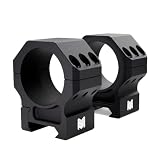
Monstrum Deadlock 1-Inch Scope Rings
Extra weight over the receiver doesn’t always buy extra confidence, especially when the mount feels bulky before the rifle ever leaves the bench. A smarter design puts material where recoil loads actually travel, then trims the rest without turning the frame flimsy. That balance is what gives the best rifle scope mounts and rings their real value, and the Monstrum Deadlock Series leans hard into it with a reinforced aluminum body, steel Torx hardware, and rail-locking bolts. The result is a mount built around rigidity, controlled weight, and a one-inch center height that suits many common optic setups.
Monstrum Deadlock Scope Rings
The shortened name fits a product that’s clearly more substantial than a basic pair of hunting rings. These Monstrum Deadlock Scope Rings use a beefed-up frame with carefully placed lightening cuts, so the body keeps its structural shape without carrying unnecessary metal. That’s a practical design choice rather than a cosmetic trick. Strong mounting points remain reinforced, while open sections help prevent the rings from feeling like small anvils bolted to the rail.
This version is made for a one-inch scope tube and places the tube center 1.00 inch above the mounting surface. That measurement matters because ring height affects objective clearance, cheek weld, and how naturally the eye settles behind the optic. One inch is a useful middle ground for many rifle setups, though it won’t automatically fit every large objective bell or every stock shape. Rail thickness, lens caps, barrel contour, and receiver geometry still need to be considered.
The Deadlock line is also offered for 30 mm and 34 mm scope tubes, but those sizes aren’t interchangeable with the one-inch model. Tube diameter must match exactly, plain and simple. Someone ordering by objective-lens size instead of main-tube diameter could end up with the wrong rings even though the numbers look familiar. Correct tube sizing is the first compatibility check, not an afterthought.
Rigid Frame With Weight Cut In The Right Places
The main body is crafted from 6061-grade aluminum, a material often used where strength and manageable weight need to coexist. Aluminum keeps the mount from adding the dense feel of a full steel ring set, which can matter on rifles carried for long stretches or moved quickly between positions. The reinforced frame adds stiffness around the areas that handle clamping and recoil forces. Meanwhile, the lightening cuts remove bulk from places that don’t need to be solid.
That approach is more thoughtful than simply making every surface thicker. A mount can be heavy yet poorly shaped, just as a lighter mount can remain rigid if the load paths are handled correctly. Monstrum’s design aims for minimum practical weight without a stripped-down frame. It’s a sensible fit for someone who wants sturdier hardware but doesn’t want the rifle to feel top-heavy after the optic is installed.
The cuts also give the rings a more open profile around the base and body. That may make it easier to inspect rail contact, spot trapped debris, and see whether the mount is sitting flat before the bolts are tightened. It also keeps the finished setup from looking like one solid block around the scope tube. The visual style is aggressive, but the weight-saving geometry serves a mechanical purpose.
Locking Bolts Build Confidence At The Rail
The rings mount to Picatinny or Weaver platforms using custom locking bolts designed to fit into the rail slots. That engagement matters because recoil should be managed through more than surface friction alone. A bolt or cross-lug seated firmly against the slot gives forward and rearward force a defined stopping point. It helps reduce the chance of the rings creeping along the rail after repeated firing.
Installation still needs a careful hand. Each ring should sit flat, the locking bolt should be fully engaged, and both bases should be pushed consistently against the same side of their rail slots before tightening. That small habit can improve repeatability and prevent one ring from settling differently than the other. Even rail contact is every bit as important as the strength of the bolt itself.
The product description states that the locking system is intended to hold zero against heavy recoil. That claim reflects the design goal, though actual results still depend on rail condition, proper torque, optic weight, and installation quality. A damaged rail or loose receiver base can undermine even stout rings. The Deadlock system provides a strong mechanical interface, but it can’t fix unrelated weaknesses elsewhere in the mounting chain.
Steel Torx Hardware Adds A Useful Layer
Hardened steel Torx hardware handles the clamping duties, and that material choice makes sense in a mount built for repeated tightening force. Steel screws resist deformation better than softer fasteners, while the Torx pattern gives the tool multiple contact points. Properly seated, the wrench is less likely to slip than a worn hex key. That helps protect the screw heads from stripping during installation or later adjustments.
Strong hardware doesn’t mean the screws should be leaned on without restraint. Scope tubes can be damaged by excessive cap pressure, and aluminum threads can suffer if bolts are forced past sensible limits. The supplied product details don’t include torque figures, so inventing exact numbers would be reckless. Manufacturer instructions and a torque driver should guide the final tightening process.
Alternating between screws also matters. One cap shouldn’t be pulled down fully on a single side while the opposite gap remains wide, because that can twist the cap and load the tube unevenly. Bringing the fasteners down in small stages keeps pressure more balanced around the optic. It’s slower, sure, but controlled clamping beats brute force every time.
One-Inch Center Height In Real Use
The stated 1.00-inch center height places these rings in a practical medium range. That may provide enough clearance for many traditional hunting, rimfire, and general-purpose scopes while keeping the optic reasonably close to the bore. A lower optic often supports a firmer cheek weld, which can make head placement feel more natural. Still, the word “medium” can’t account for every rifle’s rail and barrel shape.
Large objective housings, thick flip-up caps, or elevated rail sections may require more room than the Deadlock rings provide. On the other hand, a compact optic mounted too high can leave the cheek floating above the stock. Neither extreme feels right for long. The useful goal is minimum safe clearance with stable eye alignment, not maximum space under the scope.
A quick mock-up before final tightening can save a fair bit of grief. The scope should clear the barrel and receiver, the turrets should remain accessible, and the eyepiece should allow proper eye relief without forcing the head backward. Those checks take minutes and prevent a mount from being blamed for a geometry problem. Fit is a complete-system issue, not just a ring measurement.
Strengths That Set The Deadlock Apart
The strongest point is the balance between reinforcement and weight control. Many rings choose one direction or the other, either becoming overly bulky or shaving away too much structure. The Deadlock frame keeps a stout shape around the mounting points while cutting material elsewhere. That gives it a more serious feel without turning the rifle into a bench-only setup.
Custom rail-locking bolts are another meaningful strength. They address movement where the rings meet the rail, while the hardened Torx screws address secure clamping around the scope. Those two areas carry different loads, and the design treats them separately. The result is a more complete mounting system than rings that rely only on thin bases and generic fasteners.
The lifetime guarantee also adds a layer of reassurance beyond the hardware itself. It doesn’t replace correct installation, nor does it make compatibility mistakes disappear. Still, long-term backing matters on a product that may stay attached to a rifle through years of adjustments, transport, and recoil. Support after purchase is a practical benefit, especially with mounting equipment that takes repeated mechanical stress.
Tradeoffs Before Picking This Ring Set
The Deadlock design may be more ring than a very light rimfire or low-recoil plinker needs. Someone building the leanest possible rifle could prefer a simpler two-screw ring with less metal and fewer visible cuts. The reinforced profile earns its keep where rigidity and secure rail engagement are priorities. On a featherweight setup, though, the added structure may feel unnecessary.
These rings also lack quick-detach levers. Removing the optic requires tools, and reinstalling it may justify checking zero even with a strong recoil interface. That’s barely a drawback on a rifle where the scope stays mounted for months or years. It becomes less convenient on equipment that regularly swaps optics or needs rapid access to backup sights.
The one-inch version is also limited to one-inch tubes, and the 1.00-inch center height may not clear every objective lens. Those boundaries are easy to live with if the measurements match the rifle and optic. They become deal breakers only when compatibility is guessed rather than verified. Deadlock strength means little without correct sizing, so the basic dimensions still call the shots.
Where This Mounting Style Makes Sense
A sturdy pair of rings like this fits well on rifles expected to see regular recoil, transport, and repeated handling. Hunting rifles, general-purpose centerfires, rimfires, and some air-rifle setups can all benefit from a mount that resists sliding without becoming excessively heavy. The design feels especially appropriate where the optic will remain installed for long periods. Fixed, dependable mounting is its natural lane.
Big-bore air rifles create their own mounting challenges because recoil behavior and rail standards can differ from conventional firearms. That broader equipment category is discussed separately in big bore air rifles, while these Deadlock rings remain focused on one-inch scopes and Picatinny or Weaver mounting surfaces. Keeping those details separate prevents a sturdy ring from being treated as universally compatible with every airgun platform.
The final impression is straightforward: these rings favor structural confidence, secure rail engagement, and durable hardware over minimalist styling. They aren’t the lightest-looking option, nor are they designed for tool-free removal. Still, the Monstrum Deadlock Scope Rings bring together reinforced aluminum, hardened Torx screws, custom locking bolts, and a practical one-inch center height in a package that feels built for rifles expected to be used rather than merely displayed.
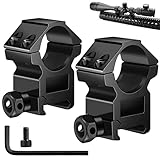
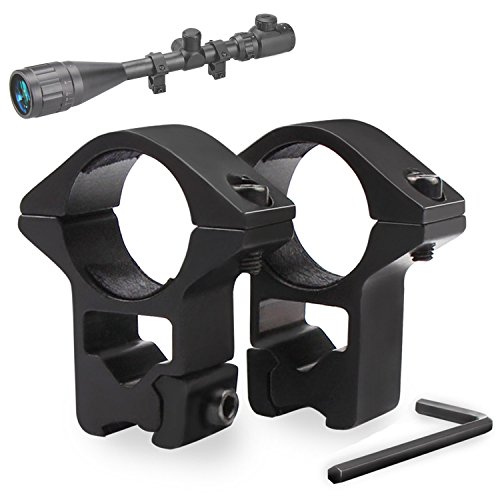
Leupold Rifleman See-Thru High Rings
A low-mounted scope can look tidy right up until the objective bell crowds the barrel or the factory sights disappear completely beneath the optic. That kind of fit problem is annoying because the rings may be secure yet still make the rifle less convenient to use. Among the best rifle scope mounts and rings, the Leupold Rifleman design takes a specific route: a high, see-through profile that preserves space below a one-inch scope while keeping the mounting hardware relatively light. It’s a specialized arrangement, not a universal answer, and that distinction matters.
Leupold Rifleman High Rings
The shortened name tells the story without much fuss. The Leupold Rifleman High Rings are a detachable pair made for scopes with a 1.00-inch main tube, and the listed overall height is 1.44 inches. That taller geometry creates more room beneath the optic than conventional low or medium rings. For rifles with usable iron sights and the right receiver layout, the see-through opening may allow a second sighting path below the scope.
Precision machining from aircraft-grade aluminum keeps the body focused on strength without piling on unnecessary weight. That matters on a hunting or sporting rifle where heavy steel mounts can make the upper half feel clumsy. Aluminum also suits a detachable ring design because it keeps repeated handling from turning the mount into dead weight. The tradeoff, naturally, is that a lighter construction may not appeal to someone who simply prefers the heft and feel of steel.
The matte finish keeps reflections subdued and blends with most black scope tubes and receivers. It isn’t there to make the rings flashy, and that’s a good thing. Mounting hardware should visually settle into the rifle rather than demand attention. The plain matte exterior fits field equipment where glare control and a low-key appearance matter more than decorative polish.
See-Through Height Solves A Specific Problem
The defining feature is the see-through high-ring layout. By lifting the scope above the receiver, the rings leave an open channel underneath that may preserve access to factory iron sights. That can be useful on rifles where a quick close-range sight picture is still desirable or where the scope isn’t meant to be the only aiming system. Still, the opening works only if the rifle’s sight line actually passes through it.
Receiver shape, rail thickness, rear-sight position, and stock design all affect whether the lower sight path remains usable. A visible opening doesn’t automatically mean the iron sights will align through it. Some rifles place the sights too low, while others have rail hardware that blocks the view. Real compatibility depends on complete geometry, not the ring shape alone.
The 1.44-inch height also changes cheek position. A taller optic can force the head upward, which may weaken cheek contact on a traditional low-comb stock. That loose head position can make the scope feel slower and less repeatable even though the mount itself is secure. A stock riser may help in some setups, but the basic tradeoff remains: more clearance can mean less natural alignment.
Detachable Hardware Adds Practical Flexibility
The rings are described as detachable, giving the setup more flexibility than a mount intended to stay untouched for years. Removing the scope can make cleaning, transport, maintenance, or access to iron sights more convenient. That’s especially useful if the rifle’s role changes between scoped and unscoped use. Detachable doesn’t mean careless, though, because mounting position and screw tension still affect repeatability.
A scope removed and reinstalled should be seated consistently against the same rail surfaces. Any dirt, oil, or debris beneath the base can change alignment just enough to create trouble. Even with dependable hardware, a quick zero verification after reinstallation is sensible. Repeatable mounting habits matter as much as the detachable feature itself.
The supplied details don’t specify quick-release levers, torque values, or a guaranteed return-to-zero figure, so those claims shouldn’t be assumed. Detachable simply means the rings can be removed from the mounting platform. How quickly that happens and how closely the scope returns to its prior zero will depend on the actual hardware and installation. The honest benefit is easier removal without presenting it as magic.
One-Inch Compatibility Keeps The Fit Clear
The ring diameter is exactly 1.00 inch, which fits scopes built around a one-inch main tube. That measurement refers to the central scope body, not the objective lens diameter printed near the front bell. A 30 mm tube won’t fit, even if the scope looks close in size. Confirming that single dimension prevents one of the most common ordering mistakes.
The high profile can help larger objective lenses clear the barrel or receiver, but objective size alone doesn’t settle the matter. Rail height, barrel thickness, lens caps, and turret placement all influence the final space beneath the optic. A medium ring might clear a particular 40 mm objective on one rifle, while another setup may genuinely need the extra lift. Measurement beats guesswork, especially with a tall mount that affects cheek weld.
These rings make the most sense where one-inch scope compatibility and extra vertical clearance are already known requirements. They’re less convincing on a compact optic that could sit lower and closer to the bore. Mounting high simply because the rings allow it can create more problems than it solves. The useful goal is enough clearance, not maximum height.
Aluminum Construction Keeps Carry Weight Down
Aircraft-grade aluminum gives the rings a favorable balance between stiffness and mass. A rifle carried over uneven ground benefits from hardware that doesn’t add weight without a clear reason. The material also suits a high-profile design, since taller rings naturally place more structure above the rail. Keeping that structure light helps prevent the scope assembly from feeling overly top-heavy.
Lightweight doesn’t mean flimsy by default. Precision machining can preserve consistent contact surfaces and clean dimensions while removing unnecessary bulk. The ring body still has to clamp the scope securely and sit squarely on the base, so machining quality matters more than decorative thickness. Controlled material placement is the real advantage.
Aluminum does require reasonable installation habits. Threads and clamp surfaces shouldn’t be forced beyond the guidance supplied with the product. The description doesn’t list torque values, so inventing a number would be irresponsible. A proper torque tool and current Leupold instructions provide a safer path than tightening by feel until the screws refuse to move.
Where These Rings Fit Best
A traditional hunting rifle with usable iron sights is the clearest match for this design. The high, open base can preserve an alternate sight picture while keeping a one-inch optic mounted above. That arrangement may also suit rifles with larger objective bells that need more room. The see-through feature earns its keep only where the lower sight line remains practical.
Compact rimfire rifles and air rifles can present a mixed case. Some may benefit from the extra clearance, while others have stock combs too low for a comfortable high-mounted scope. Rail standards also vary, so mount compatibility should be confirmed rather than assumed. A separate equipment reference appears in RWS .22 spring air rifles, although those rifles still require their own rail and recoil considerations before any ring set is chosen.
Heavy-recoil or specialized precision builds may call for different hardware, especially if they need broader bases, more cap screws, or a lower optical centerline. These Leupold rings aren’t described as a tactical one-piece mount or a reinforced competition system. Their strength lies in lightweight high mounting with see-through access. That narrower purpose is useful, but only if it matches the rifle.
Strengths That Stand Out
The biggest strength is the combination of high clearance and low material weight. Tall rings can easily become bulky, yet the aluminum construction keeps the design more manageable. That’s helpful on rifles that already carry a full-size optic. The rings create room without automatically making the setup feel overloaded.
The see-through channel also offers a practical option that ordinary solid rings don’t provide. Keeping iron sights visible can add flexibility on rifles used across different distances or in changing cover. Still, the feature should be judged through the actual rifle, not admired in isolation. Usable sight alignment matters more than simply seeing daylight beneath the scope.
Leupold’s Full Lifetime Guarantee adds long-term support to the package. A guarantee doesn’t correct a mismatched tube diameter or uncomfortable mounting height, but it does provide reassurance around the product itself. That support is especially relevant for rings expected to handle removal, transport, and years of field use. Manufacturer backing is a meaningful strength without needing exaggerated claims.
Weaknesses And Practical Tradeoffs
The high profile is also the main weakness. Raising the scope to 1.44 inches can make a conventional stock feel too low against the cheek. That may lead to inconsistent head placement, slower eye alignment, and a less settled shooting position. The height benefit comes with an ergonomic cost that shouldn’t be brushed aside.
See-through rings can also encourage a compromise between two sighting systems rather than optimizing either one. The scope may sit higher than ideal, while the iron-sight view remains narrow or partially obstructed. That arrangement can still be useful, but it won’t feel as refined as a properly fitted low scope or completely unobstructed open sights. Flexibility sometimes trades away simplicity.
The one-inch diameter creates another firm boundary, and no alternative tube sizes are mentioned for this specific set. Modern scopes with 30 mm or larger tubes require different rings. The detachable design also doesn’t guarantee exact zero retention after removal. For the right rifle, though, the Leupold Rifleman High Rings offer a light, precisely machined way to gain objective clearance and preserve a possible sight path beneath the optic.

10 Top Picks: Best Youth Air Rifles for 13-Year-Olds

12 Best Rifle Scopes For 5.56 Under 150 Dollars - (2026 Top Picks)

Top 10 Rifle Scopes for Coyote Hunting in 2026

12 Best Benchrest Rifle Scopes of 2026 For Tight Groups

Top 5 Airsoft Rifles: Unleash the Action in 2026
Unveil the Best Straight Wall Deer Rifles: Top Picks for 2026

Top Ammo Choices for Air-Powered Rifles: Boost Your Performance in 2026

Best Quick Detach Scope Rings for Accurate and Convenient Shooting







