
2 Best Scope For 100 500 Yards of 2026 for Reliable Holdovers

Holding dead-center delivers easy hits at a hundred paces, but bullet drop accelerates drastically once targets sit past the three-hundred-yard line. Most shooters push into medium distances thinking standard crosshairs can bridge the gap, only to find themselves guessing elevation in thin air. Without clear holdover reference marks or balanced magnification, five-hundred-yard targets turn into muddy silhouettes and modest bullet drop becomes pure speculation. That disconnect wastes expensive ammunition, turns range trips into frustrating guessing sessions, and costs hunters clean opportunities when seconds count.
Shooting reliably between close targets and extended ground should never require lugging two setups or constantly spinning turret dials. Connecting cleanly across that span relies on a dependable BDC reticle with clear holdover points, backed by multi-coated glass that preserves contrast against brush and shadows. Securing a rugged, fog-proof tube onto the proper rail width ensures your zero remains stable through every shot. The breakdown below highlights the standout scope choices for 100 to 500 yards so you can ring steel and take game with total confidence.

- ARS Mark7.5
ARS Mark is a ranking system developed by bestairriflescopes.com. ARS Mark has no relationship or impact from any manufacturers or sales agent websites. Learn more
- BrandSVITVU
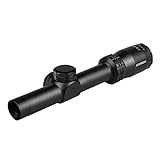
- ARS Mark7.3
ARS Mark is a ranking system developed by bestairriflescopes.com. ARS Mark has no relationship or impact from any manufacturers or sales agent websites. Learn more
- BrandEdenberg
Last update on 2026-10-05 / Affiliate links / Images, Product Titles, and Product Highlights from Amazon Product Advertising API
Is a 4x or 5x magnification scope powerful enough for shooting out to 500 yards?
Yes, a 4x fixed magnification or a 1.5-5x variable optic provides adequate magnification to identify and strike targets out to 500 yards. Compact 4x32 configurations are designed for medium to long-range hunting up to 500 yards while maintaining a clear sight picture without excess bulk. A 1.5-5x optic delivers a wide field of view at lower power while letting you zoom in to 5x for extended shots. If you prefer versatile zooming for snappy close-range shots, choosing a scope for rapid target acquisition can give you both speed and distance capability.
How do BDC reticle markings help when shooting past 100 yards?
BDC reticle markings provide dedicated holdover reference points below the central crosshair to compensate for bullet drop as distance increases. Instead of guessing how high to aim above a target at 300, 400, or 500 yards, you place the appropriate reticle mark directly over your target. This keeps your sight picture clear and prevents you from losing track of the silhouette behind a thick reticle wire. Because every cartridge drops at a different rate, confirm your specific ammunition trajectory against the reticle documentation to ensure exact yardage correlation.
Will a 1-inch tube scope fit your existing mounting rings?
A 1-inch tube scope will only fit mounting rings machined with an internal diameter of 1 inch. An optic configured as a 1.5-5x20 model uses a 1-inch tube diameter, meaning it will not mount securely into 30mm or 34mm rings. If your current rings were designed for larger tube dimensions, the scope will slide freely and cannot hold zero. Check your existing hardware markings or measure the ring diameter with calipers before mounting the optic.
How do you determine whether your rifle requires an 11mm dovetail or a 20mm rail mount?
Check the width of your receiver mounting track to establish whether you need an 11mm dovetail clamp or a 20mm rail interface. Rimfire rifles and small-bore platforms often feature narrow 11mm dovetail grooves, whereas tactical rifles and hunting centerfires typically use 20mm rails. A 1-inch tube rifle scope requires rings that match both its 1-inch body and your receiver rail width. If you shoot compact airguns or shorter carbines, reviewing a scope for bullpup air rifle mounting setup helps illustrate how base dimensions and ring heights affect your cheek weld.
What are the trade-offs between a 20mm and a 32mm objective lens?
A 32mm objective lens gathers more incoming light for improved target clarity at extended distances, while a 20mm objective lens keeps the optic lighter and sits closer to the barrel. The 4x32 layout offers balanced light transmission for hunting between 100 and 500 yards without adding excessive weight. A 1.5-5x20 configuration reduces overall profile and maintains a wide field of view, making it suitable for rapid movement and tactical shooting. Select the 32mm format if you prioritize low-light visibility, or pick the 20mm size if you want a sleek, compact profile.
What construction features ensure an optic holds zero from 100 to 500 yards?
A reliable optic requires 100% waterproof, fogproof, and shockproof construction to withstand recoil shock and environmental humidity. Shockproof engineering safeguards the internal elevation and windage components, keeping your zero intact through repeated firing cycles. Fogproof and waterproof seals stop moisture from penetrating the housing and clouding the lenses during sudden weather changes. Before heading to the range, verify that your ring mount screws are torqued evenly to manufacturer specifications to avoid pinching the 1-inch tube.

10 Top Picks: Best Youth Air Rifles for 13-Year-Olds

12 Best Rifle Scopes For 5.56 Under 150 Dollars - (2026 Top Picks)

Top 10 Rifle Scopes for Coyote Hunting in 2026

12 Best Benchrest Rifle Scopes of 2026 For Tight Groups

Top 5 Airsoft Rifles: Unleash the Action in 2026
Unveil the Best Straight Wall Deer Rifles: Top Picks for 2026

Top Ammo Choices for Air-Powered Rifles: Boost Your Performance in 2026

Best Quick Detach Scope Rings for Accurate and Convenient Shooting







