
12 Best Scope For Bird Watching of 2026 To Spot Crisp Plumage

Dawn breaks over the tidal marsh, and a rare sandpiper bobs along an oyster bar hundreds of yards out. The magnification dial turns up, but pushing past thirty power suddenly transforms the scene into a dim, murky blur. Every breath of wind sends violent tremors through a flimsy mount, turning subtle wing bars and bill curves into an illegible haze. Instead of a confident field identification, the moment dissolves into painful eyestrain, awkward posture, and a fleeting silhouette slipping away unidentified into the reeds.
Spotting subtle field marks across open water or high canopies should feel effortless, delivering vivid plumage details without fighting a dark view. The secret lies in pairing fully multi-coated glass with an objective lens between 60mm and 85mm, which floods the view with dawn light even at higher zoom. An angled eyepiece body eliminates neck strain during long vigils, while a smooth dual-focus knob lets you dial in feather textures before the bird takes flight. Here is how the leading models compare on optical clarity, trail weight, and stability so you can choose the best scope for bird watching on your home turf.

- ARS Mark9.6
ARS Mark is a ranking system developed by bestairriflescopes.com. ARS Mark has no relationship or impact from any manufacturers or sales agent websites. Learn more
- BrandLuzsco
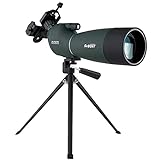
SVBONY SV28 Spotting Scopes with Tripod,Hunting,25-75x70,Angled,Waterproof,Range Shooting Scope,with Phone Adapter,Compact,
View on Amazon- ARS Mark8.0
ARS Mark is a ranking system developed by bestairriflescopes.com. ARS Mark has no relationship or impact from any manufacturers or sales agent websites. Learn more
- BrandSVBONY

- ARS Mark8.2
ARS Mark is a ranking system developed by bestairriflescopes.com. ARS Mark has no relationship or impact from any manufacturers or sales agent websites. Learn more
- BrandGosky
- ARS Mark7.8
ARS Mark is a ranking system developed by bestairriflescopes.com. ARS Mark has no relationship or impact from any manufacturers or sales agent websites. Learn more
- BrandFEEMIC

- ARS Mark7.8
ARS Mark is a ranking system developed by bestairriflescopes.com. ARS Mark has no relationship or impact from any manufacturers or sales agent websites. Learn more
- BrandGosky

- ARS Mark8.6
ARS Mark is a ranking system developed by bestairriflescopes.com. ARS Mark has no relationship or impact from any manufacturers or sales agent websites. Learn more
- BrandLULOLO

- ARS Mark7.7
ARS Mark is a ranking system developed by bestairriflescopes.com. ARS Mark has no relationship or impact from any manufacturers or sales agent websites. Learn more
- BrandLuzsco

- ARS Mark7.1
ARS Mark is a ranking system developed by bestairriflescopes.com. ARS Mark has no relationship or impact from any manufacturers or sales agent websites. Learn more
- BrandSVBONY

- ARS Mark7.1
ARS Mark is a ranking system developed by bestairriflescopes.com. ARS Mark has no relationship or impact from any manufacturers or sales agent websites. Learn more
- BrandNWDEY
- ARS Mark7.1
ARS Mark is a ranking system developed by bestairriflescopes.com. ARS Mark has no relationship or impact from any manufacturers or sales agent websites. Learn more
- BrandPankoo

- ARS Mark9.0
ARS Mark is a ranking system developed by bestairriflescopes.com. ARS Mark has no relationship or impact from any manufacturers or sales agent websites. Learn more
- BrandThree Triping

- ARS Mark7.9
ARS Mark is a ranking system developed by bestairriflescopes.com. ARS Mark has no relationship or impact from any manufacturers or sales agent websites. Learn more
- BrandWOZEL
Last update on 2026-10-04 / Affiliate links / Images, Product Titles, and Product Highlights from Amazon Product Advertising API
Is an 80mm or 100mm objective lens better than a 60mm model for bird watching?
Larger objective lenses like 80mm or 100mm gather more incoming light than a 60mm optic, but they add physical bulk to your pack. An 80mm or 100mm objective maintains brighter, clearer views when viewing distant waterfowl or roosting raptors during dawn and dusk. A 60mm objective creates a lighter, more compact setup for long hikes, yet the image can dim noticeably as you increase zoom toward 60x or 75x magnification. Check the listed unit weight on the product page to balance pack comfort against your low-light optical needs.
Is an angled spotting scope better than a handheld monocular for bird watching?
Yes, an angled spotting scope is significantly better for stationary bird identification, while a monocular excels at quick scans on the move. Angled spotting scopes allow comfortable viewing through tree canopies and mudflats without forcing severe neck strain during long sessions. A handheld 8x42 monocular or compact 40X60 monocular tucks easily into a pocket for rapid sightings, but lacks the 20-60x or 25-75x zoom range required to verify distant plumage details. For steady identification at extended distances, mount an angled scope to a stable support.
How stable are included tripods at 60x or 75x magnification?
Included compact tripods provide baseline support on flat surfaces, but any light breeze or hand contact produces noticeable image shake at 60x or 75x zoom. Because higher magnification magnifies every microscopic vibration, even turning the focus ring can momentarily blur subtle plumage patterns. Models that supply a full-height support, such as a 51in tripod, give standing versatility but still require a steady hand. To prevent optical bounce during windy shoreline viewing, verify the mounting thread compatibility and consider a heavier, rigid photography tripod.
What optical features keep bird plumage sharp and clear in low light?
Optics equipped with a BAK4 prism and fully multi-coated (FMC) lenses provide the clearest views of plumage markings during early morning and late evening hours. High-density BAK4 glass minimizes internal light scattering, while FMC coatings maximize light transmission across the entire optical path. Weatherproofing also protects internal clarity, so confirm whether the optic features waterproof construction or nitrogen-filled fogproof sealing to prevent internal condensation in humid wetlands. Pairing these features with an 80mm, 85mm, 92mm, or 100mm objective keeps distant field marks bright across variable zoom settings.
Can you use a high-magnification rifle scope instead of a spotting scope for bird watching?
No, rifle scopes lack the ergonomic housing, rotating collar, and angled eyepiece required for comfortable, prolonged bird identification. A long-range rifle optic designed for accurate holdovers relies on crosshairs, fixed eye relief, and firearm ring mounts that do not adapt cleanly to field tripods. Dedicated spotting scopes feature variable zoom ranges like 20-60x or 25-75x with wide objective lenses designed specifically for viewing natural plumage rather than aiming at targets.
How do phone adapters work for photographing birds through a scope?
Phone adapters clamp a smartphone camera directly over the eyepiece of the spotting scope to capture photos of distant wildlife. Many spotting scopes include a quick phone holder or smartphone adapter in the kit alongside a carrying case. Because high magnification can make alignment delicate, secure the phone clamp firmly over the primary camera lens before zooming in on a bird. To avoid camera shake when taking digiscoping photos, tap the shutter button gently or use your smartphone's camera timer.

10 Top Picks: Best Youth Air Rifles for 13-Year-Olds

12 Best Rifle Scopes For 5.56 Under 150 Dollars - (2026 Top Picks)

Top 10 Rifle Scopes for Coyote Hunting in 2026

12 Best Benchrest Rifle Scopes of 2026 For Tight Groups

Top 5 Airsoft Rifles: Unleash the Action in 2026
Unveil the Best Straight Wall Deer Rifles: Top Picks for 2026

Top Ammo Choices for Air-Powered Rifles: Boost Your Performance in 2026

Best Quick Detach Scope Rings for Accurate and Convenient Shooting







