
Best Shotgun for 8 Year Old: Safety Comes First

The phrase best shotgun for 8 year old raises a bigger question than brand, gauge, or stock length. At that age, physical size, emotional readiness, attention span, and the ability to follow commands can vary wildly, so an ordinary product ranking would miss the point. A firearm that feels manageable for one brief moment can still produce painful recoil, poor muzzle control, or unsafe handling once fatigue and excitement creep in. Safety and readiness have to outrank the urge to buy equipment early.
A child shouldn't be expected to control a shotgun independently, even if the model carries a youth label. Youth-sized stocks may shorten the reach to the trigger, but they don't remove recoil, noise, weight, or the consequences of a careless movement. A qualified instructor can assess stance, arm length, balance, eye dominance, and the ability to keep the muzzle pointed safely without constant correction. Until those basics are reliable, inert training tools, supervised air-powered sporting equipment, or structured simulator practice offer a calmer place to build habits.
Recoil deserves special attention because a bad first experience can create flinching before proper technique has taken root. Smaller gauges aren't automatically gentle, either, since lightweight firearms can transfer a sharper kick into a small shoulder. Reduced-recoil ammunition may soften the experience in some supervised settings, but ammunition selection never fixes poor fit or weak control. The sensible route starts with professional fitting and direct adult possession rather than a quick purchase based on age alone.
Noise is another piece people underestimate. Shotgun discharge can damage hearing, and a loose earmuff seal around a small head may provide less protection than expected. Properly fitted hearing protection, eye protection, a controlled range, and one-on-one instruction aren't optional extras. Frankly, a crowded shooting line or informal backyard lesson leaves too much room for distraction and mixed commands.
Local laws, range policies, and hunting regulations can also restrict how minors may handle or use firearms. Those rules differ by location, so a responsible adult needs to verify current requirements before arranging any live-fire activity. The firearm should remain unloaded, locked, and inaccessible to the child whenever it isn't being used under direct lawful supervision. Secure storage matters every day, not just during a lesson.
No single model earns a universal recommendation here. The right decision may be to postpone live-fire shotgun use, especially when the child struggles to hold the firearm level, tires quickly, reacts strongly to noise, or forgets instructions under pressure. A patient delay isn't a setback; it prevents fear, injury, and sloppy habits from becoming part of the learning process. Real progress looks like calm repetition, consistent rule-following, and an adult who is willing to stop the session the moment control slips.
- ARS Mark9.2
ARS Mark is a ranking system developed by bestairriflescopes.com. ARS Mark has no relationship or impact from any manufacturers or sales agent websites. Learn more
- BrandTovol Zerky

- ARS Mark8.6
ARS Mark is a ranking system developed by bestairriflescopes.com. ARS Mark has no relationship or impact from any manufacturers or sales agent websites. Learn more
- BrandKyliandi

- ARS Mark8.4
ARS Mark is a ranking system developed by bestairriflescopes.com. ARS Mark has no relationship or impact from any manufacturers or sales agent websites. Learn more
- BrandOuzhimanxing

- ARS Mark8.4
ARS Mark is a ranking system developed by bestairriflescopes.com. ARS Mark has no relationship or impact from any manufacturers or sales agent websites. Learn more
- BrandDWMTGS

- ARS Mark8.4
ARS Mark is a ranking system developed by bestairriflescopes.com. ARS Mark has no relationship or impact from any manufacturers or sales agent websites. Learn more
- BrandOuzhimanxing

- ARS Mark8.4
ARS Mark is a ranking system developed by bestairriflescopes.com. ARS Mark has no relationship or impact from any manufacturers or sales agent websites. Learn more
- BrandAmazing Astral Boundary

- ARS Mark8.4
ARS Mark is a ranking system developed by bestairriflescopes.com. ARS Mark has no relationship or impact from any manufacturers or sales agent websites. Learn more
- BrandBsyzyani
Last update on 2026-07-21 / Affiliate links / Images, Product Titles, and Product Highlights from Amazon Product Advertising API
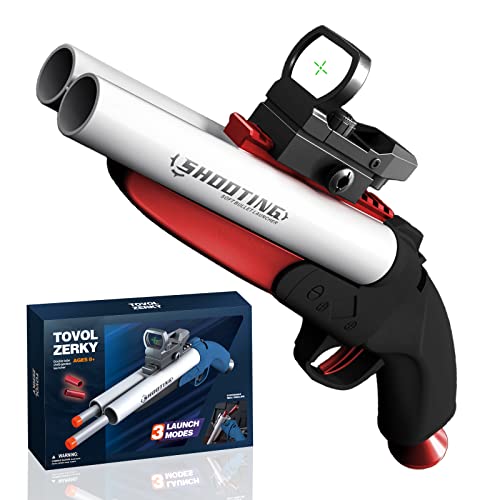
Double Barrel Foam Dart Blaster Set
Backyard play can lose its spark fast when a toy feels awkward, reloads slowly, or scatters pieces all over the grass. The best shotgun for 8 year old searches often point toward foam-dart designs because they bring the visual drama of shell loading without the recoil, noise, or function of a real firearm. This Double Barrel Foam Dart Blaster leans heavily into hands-on play with two barrels, ejecting shells, and three selectable firing arrangements. Its appeal isn't raw power; it's the repeated load, aim, fire, eject routine that keeps each round active.
Double Barrel Dart Blaster
The blaster's double-tube layout is the feature that gives it personality. A selector lets either barrel fire on its own, or both barrels release their foam darts together, creating three practical play modes without a complicated control scheme. That variety can change the pace of a game, since a single shot preserves the second dart while a double shot creates a bigger moment. Still, the selector needs to be set before firing, so rushing through the steps can lead to the wrong barrel being used.
The stated dimensions are 17 by 4.75 by 2 inches, which keeps the body more compact than many long foam blasters. At 12.5 ounces, the lightweight build should be easier to carry between rooms, around a yard, or through a longer play session without the front end becoming tiring. The product description also notes that it is sized for single-hand gripping, though two-handed handling will usually provide steadier aiming and more deliberate muzzle control. Compact proportions help with storage, too, especially where toy bins and closet shelves are already packed.
Visual play matters here almost as much as dart launching. Loading two shells into separate barrels, closing the action, and choosing a firing pattern gives each round a clear beginning and end. That mechanical rhythm adds role-play value that a simple pull-back dart launcher may not provide. On the flip side, anyone who prefers rapid-fire action could grow impatient with repeated shell loading and manual preparation.
Loading, Firing, And Shell Ejection
The operating sequence has three basic stages: pull the handle, press the trigger, then use the ejecting control before reloading. That simple operation keeps the learning curve manageable, yet it still asks for enough involvement to make the toy feel interactive. The shell-ejection step is especially satisfying because it creates a visible response after each shot rather than ending with a quiet trigger pull. Loose shells can roll under furniture, though, so keeping play within a defined area will save time later.
Twelve shells are included, while the blaster itself uses two at a time. That gives several reload sets before every shell needs to be gathered, which helps reduce constant interruptions during indoor target games or backyard rounds. The set also contains 30 EVA foam darts, leaving some spares when darts bend, disappear behind furniture, or get mixed into another blaster collection. Because shells and darts are separate pieces, organizing them in a small container between sessions makes the next setup less frustrating.
The advertised range reaches up to 30 feet, or roughly 9 meters, which suits short backyard lanes and room-to-room target setups better than long-distance competition. Real distance will naturally depend on how the dart is seated, whether the foam is bent, and whether wind interferes outdoors. The included scope adds a aiming-themed detail, although expectations should stay grounded because foam darts aren't precision projectiles. For a separate optics topic with a very different purpose, a neutral reference appears in pcp air rifle scopes.
Shell ejection creates both the biggest bit of theater and the most obvious maintenance chore. Players who enjoy reloading will likely see the scattered cartridges as part of the fun, while anyone who dislikes hunting for small pieces may see them as clutter. Piece management becomes especially relevant on lawns, where shells can blend into grass or get stepped on. A blanket, patio area, or marked play zone can keep the action moving without turning cleanup into a scavenger hunt.
Indoor And Outdoor Play Experience
The 30-foot range gives the blaster enough reach for paper cups, lightweight targets, and casual point-based games without demanding a huge open space. Indoors, shorter lanes encourage controlled shooting and make dart retrieval faster. Outdoors, the portable 12.5-ounce body is easy to carry, but wind can push foam darts off line and reduce consistency. Calm days and closer targets will produce a smoother experience than trying to stretch every shot to the maximum claimed distance.
Three firing modes make it easier to create different rules without buying extra equipment. One barrel can represent a careful accuracy round, alternating barrels can reward controlled pacing, and both barrels can be reserved for a final target. That flexibility gives the blaster more staying power than a toy with one repetitive action. Even so, the manual reload cycle favors imaginative play and target games over fast team battles.
The included scope contributes to the overall look, but the short range and natural variation of foam darts limit how much precision it can realistically add. Aiming down the top can still help establish a repeatable line toward larger targets, particularly at moderate indoor distances. The better approach is to treat the scope as a play feature, not calibrated equipment. Small paper targets may prove frustrating, while cups, boxes, or broad scoring zones match the blaster's capabilities more comfortably.
Foam ammunition softens the impact compared with harder projectiles, yet eye protection and clear play rules still matter. Faces, pets, windows, fragile decorations, and people who aren't participating should remain outside the firing direction. The toy's resemblance to a double-barrel design also means it should stay within private play spaces rather than being carried openly in public. Adult supervision helps keep the play imaginative without letting excitement overtake basic judgment.
Package Value And Everyday Tradeoffs
The package brings together the blaster, 12 shells, 30 foam darts, and a scope, so the core play loop is available from the start. Extra shells are more useful than they may first appear because two remain loaded while others can be prepared for the next round. The included ammunition supply also leaves room for lost darts without ending the session immediately. Still, replacement compatibility isn't explained in the supplied details, so preserving the original shells matters.
Gift appeal comes largely from the moving parts rather than a long accessories list. Opening the barrels, inserting shells, selecting a firing mode, and ejecting cartridges creates several small moments of interaction before the dart even leaves the toy. That sequence can make birthdays and holiday play feel more memorable than a basic single-shot launcher. Yet the same mechanical focus may not suit someone who wants motorized firing, large magazines, or quick follow-up shots.
The lightweight construction is a practical strength, but light toy blasters often need more deliberate handling than heavier models during loading and closing. Pulling, pressing, or snapping parts with excessive force could shorten the life of any mechanical toy, so calm operation is the wiser habit. The description presents the process as easy, though younger hands may still need guidance during the first few reloads. Gentle handling matters more here than trying to cycle the action as fast as possible.
Strengths, Weaknesses, And Best-Fit Play
The strongest part of this set is its interactive double-barrel system. Three firing modes, ejecting shells, and separate cartridges create a tactile routine that supports target challenges and imaginative scenarios. The generous count of 30 darts reduces the sting of losing a few under a couch or beyond the patio. Its compact size also avoids the bulky feel of larger foam blasters that can become tiring during extended play.
The drawbacks are tied to the very features that make it interesting. Shells add realism to the routine, but they also add pieces to track, load, collect, and store. A two-shot capacity means frequent pauses, and the claimed 30-foot range won't satisfy play built around long outdoor distances. Reload-heavy pacing is a feature for patient role-play and a limitation for fast-moving foam battles.
The phrase best shotgun for 8 year old can be misleading because this product is a foam-dart toy, not a shotgun, and that distinction should remain clear in both storage and play. Its better fit is a controlled target setup where the shell-ejection action has time to shine and every piece can be collected afterward. Broad targets, short lanes, and simple scoring rules suit its design better than accuracy contests with tiny bull's-eyes. Expectations grounded in toy-level range and manual operation will make the set feel more engaging and less frustrating.
The package makes sense where mechanical play, pretend loading, and two-barrel choices carry more weight than speed. It may fall flat where rapid firing, large dart capacity, or minimal cleanup are the main priorities. The supplied scope adds visual character, while the shells and selector deliver the real interaction. Its identity rests on the loading ritual, and that ritual is exactly what separates it from simpler foam-dart launchers.
Kyliandi Shell-Ejecting Pump Foam Blaster
A toy loses its charm pretty quickly if the loading feels flimsy, the pieces vanish after two rounds, or the play pattern becomes repetitive. The best shotgun for 8 year old search often leads toward foam blasters that offer mechanical action without batteries, and this Kyliandi model leans hard into that idea. Its pump-style operation, shell-ejecting action, scope, two magazines, 32 shell casings, and 40 EVA darts create a busier play cycle than a basic single-shot launcher. That extra involvement is the main attraction, though it also brings more pieces to organize and more pauses between shots.
Kyliandi Pump Foam Blaster
The blaster’s personality comes from the shell-ejecting pump action. Cycling the mechanism before each shot creates a more hands-on rhythm, and the empty casing jumping free adds a little theater that ordinary foam launchers don’t provide. That motion can make target games feel less flat because every shot includes loading, pumping, aiming, firing, and collecting. Still, the same feature means shells may end up under furniture, in grass, or behind patio chairs.
The package includes 32 shell casings, which is a fairly generous amount for a toy built around ejection. Forty EVA foam darts are also supplied, leaving several extras for the inevitable bent tip or missing round. Two magazines add another layer to the setup, especially during structured games where one can be prepared while the other is in use. The tradeoff is obvious: more accessories create more setup time and more cleanup afterward.
The gold finish gives the toy a flashy, costume-like look rather than a plain tactical appearance. That visual style may appeal during birthday games, holiday play, or themed backyard activities where the blaster is as much a prop as a launcher. At the same time, the realistic barrel shape and shell action call for clear play boundaries, especially outside the home. Keeping it in private play areas avoids confusion and unnecessary concern.
Pump Action And Shooting Rhythm
No batteries are required, so the blaster is ready as long as the shells, darts, and magazines are available. The manual pump mechanism also removes the whine of a motor and the frustration of dead batteries halfway through a game. Each shot depends on physical cycling, which naturally slows the pace and can encourage more deliberate aiming. Rapid-fire fans may see that as a weakness rather than a benefit.
The shell-ejecting design adds a strong cause-and-effect moment. Pumping the action, watching a casing pop out, and lining up the next shot gives the toy more texture than simply pulling a trigger over and over. That repeated movement can keep solo target practice entertaining for longer stretches. On the flip side, the mechanism asks for smoother handling, since forcing the pump or rushing the reload can make the play feel clumsy.
Two magazines help separate this model from many basic shell-fed toys. A prepared spare can shorten downtime between rounds, and that matters during casual competitions where constant reloading breaks the flow. The dual-magazine setup also supports simple game rules, such as switching magazines after a target sequence or limiting each round to one magazine. Even so, the supplied information doesn’t describe magazine capacity, so expectations should stay tied to the listed accessories rather than assumptions.
The included scope adds a visual aiming point, but it should be treated as part of the play experience rather than precision optics. Foam darts vary in flight, especially after repeated use, so the scope won’t turn the blaster into a true long-range tool. A related reference from another air-powered category appears in multi pump air rifles, though this Kyliandi product remains a battery-free foam toy with a very different purpose. Larger targets and shorter lanes will suit it better than tiny bull’s-eyes.
Indoor And Outdoor Play
The product description positions the blaster for outdoor games with friends or family, and the shell action certainly suits open spaces where movement is part of the fun. Lawns, patios, and driveways can support simple target courses without crowding the shooting lane. The portable battery-free design also means there’s no charger, battery compartment, or power switch to worry about. Wind, however, can make EVA darts drift and reduce consistency.
Indoor use is possible, but the play area needs a little planning. Foam darts are softer than hard projectiles, yet picture frames, televisions, lamps, pets, and faces should remain out of the firing path. A hallway target lane or a room with lightweight paper cups makes more sense than unrestricted running play. Eye protection and adult oversight still deserve a place in the routine, even with soft ammunition.
Shell collection will shape the experience more than many buyers expect. On a hard floor, casings are easier to spot and gather, while grass can swallow them in seconds. A blanket, marked firing area, or small collection bin can keep the set from losing its most important pieces. Without the shells, much of the mechanical play value disappears.
Carrying the blaster itself should be straightforward because it doesn’t depend on a battery pack or electronic components. The accessory count is another story, since 32 shells, 40 darts, two magazines, and a scope create a small kit rather than a grab-and-go toy. A zippered pouch or divided container will keep the parts from turning into a mixed pile. That simple bit of organization can make setup far less annoying.
Pros That Stand Out
The biggest advantage is the interactive reload cycle. Pumping the action and ejecting shells gives each shot a beginning and an end, which can make target games feel more deliberate and imaginative. The blaster doesn’t rely on lights, sounds, or motors to create interest. Its mechanical operation does the heavy lifting.
The accessory bundle is another clear strength. Thirty-two casings and 40 EVA darts provide a decent reserve, while two magazines reduce the need to stop after every small batch of shots. That broader package supports group play, scoring rounds, and repeated target drills without immediately running short on pieces. More included components also reduce the pressure to buy extras right away.
Battery-free operation keeps maintenance simple. There’s nothing to charge before a birthday gathering, no batteries to replace, and no electronic motor to dominate the sound of play. Manual action also gives more control over the pace because every shot requires a physical step. That can help keep the game structured rather than chaotic.
The scope and gold finish add presentation value. Neither changes the basic foam-dart function, but both contribute to the themed look that makes the toy feel more involved than a plain launcher. Gift appeal often depends on that first impression, and this set has plenty of visual drama. Style and mechanical action are closely tied here.
Cons And Practical Limitations
The shell-ejection feature creates the most obvious inconvenience. Casings can scatter across floors, slide under furniture, or disappear outdoors, and the toy depends on those pieces for its core routine. Cleanup becomes part of every session rather than an occasional chore. Loose-part management is the price of the more realistic loading sequence.
The manual pump action won’t suit every style of play. Anyone expecting rapid firing or long uninterrupted bursts may lose patience with the repeated cycling and reloading. The design favors slower target games, pretend scenarios, and measured rounds. That difference matters because the blaster’s strength can feel like a limitation under the wrong expectations.
The scope may look impressive, but foam-dart accuracy has natural limits. Bent darts, imperfect seating, indoor airflow, and outdoor wind can all change the flight path. The sight can help with alignment, yet it shouldn’t be mistaken for a precision system. Realistic aiming expectations will prevent unnecessary frustration.
The supplied description uses strong gift language, but suitability still depends on patience, coordination, and comfort with keeping track of several parts. A simpler blaster may be easier for play that needs minimal setup and cleanup. This model fits better where the loading ritual is part of the fun rather than an obstacle. The extra steps are engaging only if they’re actually appreciated.
Safety, Storage, And Best-Fit Use
The recommended age range begins at eight, but age alone doesn’t settle readiness. The blaster’s realistic barrel shape, scope, and ejecting-shell action require calm rules about where it can be used and where it should never be displayed. Public spaces, school grounds, and crowded community areas are poor settings for realistic-looking toy guns. Private, supervised play is the sensible lane.
Soft EVA darts reduce impact compared with harder ammunition, but direct shots toward faces or eyes are still a bad idea. Targets should sit against a safe backdrop, and anyone entering the play area should know a game is underway. Simple boundaries prevent most trouble before it starts. Adult supervision also helps keep the shell-ejection novelty from turning into careless firing.
Storage deserves its own routine because the set includes many separate pieces. Shells, magazines, darts, and the scope should stay together in a labeled container rather than loose in a general toy bin. That habit protects the smaller parts from damage and makes the next play session easier to start. Organized storage also helps adults notice when pieces are missing.
The Kyliandi blaster makes the most sense for target play, imaginative scenarios, and slower head-to-head games where reloading adds to the experience. It’s less suited to rapid team battles, ultra-simple operation, or households that strongly dislike scattered accessories. The strengths are clear: mechanical action, a large accessory bundle, two magazines, and no batteries. The weaknesses are just as clear: cleanup, frequent cycling, and toy-level accuracy that won’t match the visual promise of the scope.
Blue Shell-Ejecting Foam Dart Blaster
Small toy blasters often look exciting in the box, then lose their charm once the loading feels awkward or the darts vanish under the couch. This blue shell-ejecting model takes a more hands-on route, using manual pump action, a single-round loading process, and an ejecting cartridge case to create a slower, more theatrical style of play. That makes it relevant to searches for the best shotgun for 8 year old, especially where the appeal comes from loading, aiming, and cycling the action rather than firing a rapid stream of darts. The key question isn’t whether it looks dramatic, though; it’s whether the reload pattern, included darts, and practical cleanup match the way it’ll actually be used.
Blue Shell-Ejecting Dart Blaster
The blaster uses a manual loading sequence that gives each shot a clear rhythm. The magazine is opened, one dart is loaded, the pump is pulled back, and the trigger releases the shot. Cycling the action again ejects the previous cartridge case, which adds movement and sound without needing batteries. That little mechanical routine is the main reason this toy feels more involved than a basic pull-and-fire foam launcher.
Single-round loading slows everything down, and that can be either a strength or a headache. Deliberate target games benefit because there’s time to reset, aim, and keep track of each shell. Fast team battles are another story, since constant reloading may feel like stopping at every red light. Slow-paced play suits this design far better than rapid-fire competition.
The blue finish gives the toy a more playful appearance than darker, realistic colors, although the overall shotgun-inspired shape still calls for sensible boundaries. Private yards, playrooms, and supervised indoor target lanes are better settings than sidewalks, parks, or public spaces. The ejecting action can look convincing from a distance, so responsible storage and use matter even though the ammunition is soft foam. A toy can still create confusion if it’s carried where bystanders don’t know what it is.
Loading Feel And Shell-Ejection Action
The supplied description says the loading process is smooth and designed to avoid jamming. That’s encouraging, but the real experience will still depend on straight darts, properly seated shells, and careful cycling. Bent foam or rushed loading can make almost any manual blaster feel rough. Gentle operation will likely preserve the mechanism better than slamming the pump back and forth.
Shell ejection brings the biggest smile and the biggest cleanup chore. Watching the cartridge case pop out gives each shot a satisfying finish, almost like punctuation at the end of a sentence. Then the shell lands behind a chair, under a table, or somewhere in the grass. Loose-piece management becomes part of ownership, so a defined play area makes the whole experience less frustrating.
The one-dart loading pattern also encourages small target challenges. Paper cups, reusable boards, and smooth plastic targets can turn the slower cycle into a point-based game rather than a race. Each shot matters a bit more because another round takes time to prepare. That can hold attention surprisingly well, provided the goal is accuracy-themed play instead of nonstop firing.
The realistic cycling motion may appeal to model enthusiasts as much as younger players. The product’s strength lies in the mechanical sequence, not raw distance or capacity. That distinction is worth keeping clear because the visual styling can promise more than a foam launcher can deliver. Theater and tactile feedback carry the experience here.
Range, Darts, And Target Behavior
The listed firing distance reaches up to 33 feet, giving the blaster enough room for hallway lanes, garages, patios, and compact backyard setups. Foam darts can lose consistency as they wear, so maximum range shouldn’t be mistaken for repeatable precision. Wind, bent tips, and uneven loading can all pull a shot away from the intended target. Moderate-distance targets will usually feel more rewarding than trying to stretch every dart to its limit.
The package details mention 40 EVA suction-cup darts, despite the product title referring to 30 bullets. That mismatch deserves attention because the supplied information isn’t fully consistent. The safer expectation is to rely on the detailed description while recognizing that package counts can vary or be listed incorrectly. Accessory-count uncertainty is one of the few clear drawbacks in the provided details.
Suction-cup tips make the darts especially useful against smooth surfaces. Glass-safe target boards, glossy plastic panels, or clean flat targets can hold the darts long enough to make scoring visible. Textured walls, fabric, and rough cardboard won’t provide the same sticking effect. The darts remain usable as ordinary foam projectiles, but the suction feature only earns its keep on the right surface.
The description states that the foam darts are soft and intended to avoid painful impact, though direct shots toward faces and eyes should still be off-limits. Eye protection, clear firing lanes, and adult supervision remain sensible because even soft ammunition can surprise someone at close range. A related reference about sight alignment appears in rifle scope use, although this foam blaster is a toy and should never be confused with real shooting equipment. Safe habits matter most when the design imitates a firearm action.
Materials And Everyday Handling
The body is described as using a nylon-fiberglass material intended to provide a sturdy feel. That suggests a firmer shell than thin, flexible toy plastic, although no independent durability data is provided. The benefit should be most noticeable during repeated loading, pumping, and shell cycling, where loose panels or flex would quickly become annoying. Structural firmness matters more on a manual blaster than on a simple one-piece launcher.
Grip comfort also shapes the experience because the player handles the blaster through every stage of the shot. Loading, pumping, aiming, and cycling all put hands on the body rather than relying on a motor. A comfortable shape can make longer sessions easier, but younger hands may still need time to learn the sequence. Smooth control beats speed, especially during the first few rounds.
Battery-free operation keeps preparation simple. There’s no charging cable to misplace, no drained battery to interrupt play, and no motor noise filling the room. The tradeoff is that every shot requires manual effort, which can become tiring or repetitive during longer sessions. Mechanical simplicity saves maintenance while demanding more participation.
Storage needs a little more thought than tossing the blaster into a bin. Darts and shell cases are the working parts, and losing either one reduces the appeal of the loading system. A small pouch or lidded container keeps the set together and makes the next session easier to start. That minor habit can prevent the common problem of owning a toy blaster with no matching ammunition left.
Strong Points In Real Play
The shell-ejection feature is the clear standout. It turns a basic foam shot into a sequence with loading, pumping, firing, and cycling, giving imaginative play more texture. That action can make solo target practice feel less repetitive because each round involves several steps. The toy doesn’t need electronic effects to stay interesting.
Suction-cup darts add a practical scoring element. Smooth targets can hold successful shots in place, making it easier to see accuracy without walking forward after every round. That fits the deliberate pace of a single-load blaster rather well. Visible target feedback gives the slower reload process a reason to exist.
Compatibility with major-brand soft foam darts, as stated in the description, may make replacement easier if the original ammunition gets damaged or lost. Compatibility claims can still vary by dart size and condition, so not every third-party dart should be assumed to feed identically. Still, broader foam-dart support is more convenient than depending on an obscure proprietary shape. That flexibility helps extend the useful life of the toy.
The listed ASTM and CPSIA compliance is another positive detail from the supplied description. Those claims relate to toy safety standards, though they don’t replace supervision or sensible handling. The shell-ejecting design still requires rules about faces, pets, fragile objects, and public spaces. Standards and supervision work together rather than substituting for one another.
Weaknesses And Practical Tradeoffs
The biggest weakness is the one-shot reload cycle. Players who enjoy quick foam battles may lose patience before the second round begins. The blaster rewards careful aiming and mechanical play, not speed. That difference should guide expectations before the box is opened.
Scattered shell cases can also become tiresome. Hard floors make them easy to spot, while lawns and cluttered rooms can swallow them in minutes. Once several shells are missing, the signature action becomes less convenient. Cleanup isn’t a side issue here; it’s part of the product’s daily reality.
The package-count discrepancy between 30 bullets in the title and 40 darts in the description creates unnecessary uncertainty. Buyers generally expect accessory quantities to be clear, especially when replacement parts affect how the toy functions. No assumption should be made beyond the information supplied. Clearer package details would strengthen confidence in the listing.
The realistic action may also be too involved for anyone who wants a simple grab-and-fire toy. Pumping, loading, and managing shells require patience and coordination. A basic spring blaster with an internal magazine would create less mess and faster play. This model makes more sense where the process itself is the attraction.
Best-Fit Situations And Limits
The blaster fits indoor target lanes, backyard cup games, and imaginative scenarios where loading is part of the fun. Short sessions with defined targets will likely feel smoother than chaotic group battles. The 33-foot listed range offers enough distance for casual play without demanding a huge area. Larger targets will reduce frustration as the darts wear.
It may not suit households that dislike small loose parts. Shells, suction darts, and manual loading create more organization than a basic foam launcher requires. A storage container and a marked firing area solve much of that problem, but they don’t erase it. Maintenance is light, yet cleanup is frequent.
The phrase best shotgun for 8 year old should be understood strictly as a toy-shopping term in this case. This product is a foam-dart blaster with shell-ejecting action, not a real shotgun and not a substitute for formal firearm instruction. Its value comes from safe pretend play, manual coordination, and target-focused pacing. Keeping that distinction obvious protects both the experience and the people around it.
The strongest match appears where mechanical realism matters more than capacity. The blue finish, manual pump action, suction darts, stated 33-foot range, and ejecting shell sequence give the toy a distinct personality. Its weak spots are equally plain: slow reloading, scattered cases, uncertain dart count, and limited precision. Patience and organized play will determine whether those tradeoffs feel charming or annoying.
Blue Double Barrel Foam Dart Blaster
Short play sessions can turn dull in a hurry when a toy fires the same way every single time. This blue break-barrel blaster changes the rhythm by allowing either a single dart or a double shot, giving the best shotgun for 8 year old search a clearly toy-based option built around foam ammunition rather than speed or motorized firing. The package includes 20 darts, split between 10 tip darts and 10 suction darts, plus a green dot scope for aiming-themed games. Its strongest appeal comes from the simple loading ritual, while the biggest tradeoff is the need to reload after only one or two shots.
Double Barrel Foam Blaster
The double-barrel design gives this toy a different feel from magazine-fed foam blasters. Pressing the release button lets the barrel fold downward to 90 degrees, creating open access for loading the darts. After the barrel closes, a light trigger pull fires one round, while a fuller press releases both darts. That two-stage firing pattern creates a little decision before each shot instead of turning every round into the same repeated motion.
The package keeps things fairly straightforward. One foam blaster, 10 tip darts, 10 suction darts, and one green dot scope are included, so the set arrives with two ammunition styles rather than a pile of unrelated accessories. Twenty total darts provide enough spares for target games, though a few missing darts can still reduce the fun quickly. A small storage pouch would make more sense than tossing everything loose into a crowded toy bin.
The blue exterior helps separate the toy visually from darker firearm-inspired designs. Even so, the double-barrel silhouette can still look realistic at a distance, especially when paired with the scope. Private play spaces remain the sensible setting, including a backyard, playroom, garage, or supervised indoor lane. Carrying it around public areas would create confusion that the bright color alone may not prevent.
Break-Barrel Loading And Firing
The loading sequence is one of the product’s clearer strengths. Press the button, fold the barrel down, insert the foam darts, close the action, and pull the trigger. That easy loading routine is simple enough to remember without batteries, charging cables, or a complicated magazine system. Still, the barrel should be opened and closed with controlled pressure rather than slammed for effect.
Single-shot firing gives a player the option to preserve the second dart for another target. Double-shot firing creates a bigger moment, especially during cup-knockdown games or short competitive rounds. The difference sounds small, yet it adds a useful layer of choice to a toy with only two barrels. Selectable shot behavior keeps the action from feeling completely one-note.
Frequent reloading is built into the design. Anyone who enjoys the process of opening, loading, closing, and firing may see that as half the fun. Someone who wants rapid follow-up shots may find the pace frustrating after a few minutes. The blaster suits deliberate target games better than fast team battles where constant reloads can break momentum.
The action also encourages a natural pause between rounds. That pause can be used to reset lightweight targets, count points, or retrieve suction darts from a smooth board. In a noisy group game, though, waiting for every reload may test patience. Slow mechanical play is a defining trait here, not a side effect.
Two Dart Styles For Different Targets
The 10 tip darts support ordinary foam-blaster play across cardboard targets, paper cups, and lightweight containers. Their flight will still depend on dart condition, seating, indoor airflow, and outdoor wind. Bent foam can pull a shot off line even at short distances. Fresh, straight darts will provide a more predictable experience than worn pieces that have been stepped on or crushed.
The 10 suction darts add a different kind of feedback. Smooth plastic, glass-safe target boards, and glossy panels give the suction cups a chance to stick after impact. Rough walls, fabric, and textured cardboard won’t hold them nearly as well. The suction feature works best when the target surface matches the dart rather than relying on the foam alone.
Visible dart placement can turn a simple round into a scoring game. A smooth board divided into large zones makes it easy to see where each shot landed without walking forward after every turn. That arrangement pairs nicely with the single-or-double firing choice, since one dart can be used for precision and two for a higher-risk attempt. Tiny bull’s-eyes may create more frustration than fun because foam darts aren’t precision projectiles.
The supplied description calls the ammunition soft EVA sponge material. That reduces impact compared with harder projectiles, but it doesn’t justify firing toward faces, eyes, pets, or people who aren’t participating. Soft foam still requires boundaries, especially at close range. Eye protection and a clearly marked firing direction remain sensible precautions.
Green Dot Scope And Aiming Experience
The included green dot scope adds visual interest and gives the blaster an aiming-themed setup. It can help establish a repeatable sight picture, particularly with larger indoor targets at moderate distance. Foam-dart flight naturally varies, so the scope should be viewed as a play accessory rather than calibrated equipment. Aiming consistency will depend more on steady handling and dart condition than the sight itself.
Mounting a scope on a short-range foam blaster is mostly about engagement. It encourages slower shots, more deliberate alignment, and target games that reward patience. The sight won’t erase the effect of crooked darts or rushed loading. That limitation is worth accepting before expecting tight groups on small targets.
A neutral reference from a different shooting category appears in competition air rifles, though this blue product remains a low-power foam toy with a completely different purpose and handling standard. The link topic deals with equipment built for precision, while this blaster is better suited to casual games and pretend play. The scope here is recreational, not a precision instrument. Keeping those categories separate prevents unrealistic expectations.
The scope may also add bulk during storage. Removing it can make the toy easier to place in a drawer or bin, but detachable accessories are easier to misplace. Keeping the sight, darts, and blaster together avoids the familiar situation where the toy survives but half the package disappears. Simple organization preserves the complete play setup.
Comfort, Materials, And Handling
The exterior is described as plastic, while the darts use soft EVA material. Plastic keeps the toy lightweight and manageable, though no specific dimensions or weight were provided. That means the actual balance and grip size can’t be judged from the supplied details alone. Manageable handling will depend on how comfortably the stock, trigger, and barrel release fit smaller hands.
Break-barrel toys involve repeated movement at the hinge. Smooth, straight operation matters because twisting the barrel sideways or forcing it closed can strain plastic parts. The product description presents loading as easy, but younger hands may need a few supervised rounds before the sequence feels natural. Calm handling will likely serve the mechanism better than hurried cycling.
The trigger’s two-stage behavior may require a little practice. A light press is intended for one shot, while a stronger press releases both darts. That sounds intuitive, yet excited play can make fine trigger control harder than expected. Short practice rounds can help separate the two firing modes before a full game begins.
No battery requirement keeps ownership simple. There’s nothing to charge overnight, no motor to jam, and no power switch to troubleshoot. The tradeoff is entirely mechanical, with every shot demanding manual loading and closing. For some, that hands-on routine is satisfying; for others, it becomes repetitive.
Practical Benefits During Play
The blaster can support observation, patience, and basic hand-eye coordination through target games. Opening the barrel, placing the darts, closing the action, and choosing a firing mode require attention to sequence. Those steps create more involvement than simply pressing a button on an electronic toy. Structured play is where this design makes the most sense.
Large cups, lightweight blocks, and reusable target boards can create simple scoring systems without extra technology. One shot might count for accuracy, while the double shot could be reserved for a wider target or final round. That flexibility makes the toy more engaging in short sessions. Long sessions may still run into the same bottleneck: constant reloading.
The absence of electronic effects also changes the atmosphere. There’s no motor noise, flashing light, or battery warning interrupting the game. The sound comes from the mechanical action and the darts hitting their targets. Quieter operation may suit indoor spaces better, provided fragile objects remain outside the firing lane.
The product may also help reduce screen time during birthdays, rainy afternoons, or backyard gatherings, though that benefit depends on how the game is arranged. Tossing the blaster into a room without targets or rules won’t automatically hold attention. A few broad targets and a visible scoring system can give the activity more shape. The toy supplies the action, while the setup supplies the reason to keep playing.
Limitations Worth Knowing
The two-shot capacity is the most obvious limitation. Reloading after one or two darts slows the pace and makes the blaster a poor match for rapid foam battles. Players who enjoy mechanical routines may appreciate the pause, but speed-focused play will expose the limitation immediately. The break-barrel design is better understood as part of the entertainment rather than an efficiency feature.
The included scope may raise expectations beyond what foam darts can realistically deliver. Suction darts and tip darts both change flight as they wear, and no sight can compensate for heavily bent ammunition. Larger targets will create a more satisfying experience than tiny scoring rings. Realistic accuracy expectations matter more than the scope’s appearance.
Plastic construction keeps the toy manageable, yet it also calls for moderate handling. Repeatedly forcing the barrel, twisting the hinge, or dropping the blaster on hard surfaces could affect its operation over time. No durability testing or long-term performance figures were provided, so stronger claims wouldn’t be justified. The safest assumption is that careful use matters.
The package includes only 20 darts, split evenly between two styles. That’s enough to start, but foam ammunition has a habit of disappearing into grass, closets, and furniture gaps. Compatibility with other darts wasn’t stated in the supplied details. Dart preservation will matter if replacement fit is uncertain.
Safety And Best-Fit Use
The phrase best shotgun for 8 year old should remain a toy-category description here. This product fires soft foam darts and should never be treated, stored, or discussed as though it were a real shotgun. Clear language helps prevent confusion, especially when the design includes a scope and break-barrel action. Adult supervision reinforces that distinction during play.
Targets should sit against a safe backdrop with no windows, screens, pets, or uninvolved people in line. Eye protection is a practical precaution even with EVA darts. The player should also stop shooting whenever someone enters the lane. Simple range rules make the activity more controlled without draining the fun out of it.
The blaster fits best in short target sessions, pretend scenarios, and calm head-to-head games where reloading is part of the experience. It fits less comfortably in large group battles, outdoor games on windy days, or households that want minimal setup. The blue finish, dual firing modes, suction darts, and green dot scope give it a distinct identity. Its success depends on enjoying the routine rather than rushing past it.
The strongest match is a play setup with broad targets, organized dart storage, and enough space to open the barrel safely. The weaker match is an environment where small parts disappear quickly or where everyone expects rapid fire. Controlled pacing and deliberate aiming bring out the product’s better qualities. Without those conditions, the frequent reloads may feel like more chore than charm.
Shell-Ejecting Pump Foam Dart Blaster
A toy can look exciting on the shelf and still become boring after five minutes if the firing cycle feels flat. This shell-ejecting model takes a slower, more hands-on route, using single-round loading, pump action, and a casing that pops free during reloading. That mechanical sequence gives the best shotgun for 8 year old search a foam-based option built around pretend play rather than rapid firing. Its listed 33-foot range, suction darts, and manual action bring clear benefits, though the scattered shells and frequent reloads won’t suit every play style.
Shell-Ejecting Foam Blaster
The manual pump system gives each shot a beginning, middle, and end. Open the magazine, load one foam dart, pull the pump back, press the trigger, then cycle the action again to eject the previous casing. That routine feels more involved than firing several darts from a rotating drum. The extra steps can hold attention during target games because the loading process becomes part of the fun.
Single-shot loading creates a deliberate pace. A player gets time to aim, reset a target, and keep track of each casing before preparing another round. That slower rhythm can help reduce frantic firing indoors, but it also becomes a clear weakness during fast group games. Anyone expecting quick follow-up shots may lose patience with the repeated reload cycle.
The description says the loading action is smooth and designed to avoid jams. That sounds promising, yet dart condition and handling still matter with any manual foam blaster. Crushed darts, bent suction tips, or crooked loading can interrupt an otherwise simple sequence. Careful operation will likely keep the mechanism feeling better than forcing the pump for dramatic effect.
Range And Target Play
The listed firing distance reaches up to 33 feet, which is enough for hallways, garages, patios, and compact backyard lanes. Foam darts won’t travel with identical accuracy every time, especially after repeated use. Wind, worn foam, and uneven seating can all change the flight path. Moderate-distance targets should feel more satisfying than trying to stretch every shot to the maximum range.
Suction darts add a useful scoring element when the target surface is smooth. Clean plastic boards, glossy panels, or glass-safe targets give the tips a better chance to stick after impact. Rough cardboard, fabric, and textured walls won’t hold them as well. The surface choice has a direct effect on whether the suction feature feels useful or disappointing.
The product title mentions 30 bullets, while the detailed description states that 40 soft EVA suction darts are included. That inconsistency is worth flagging because ammunition count affects how often play stops for retrieval. No extra assumption should be made beyond the supplied information. Unclear package quantity is one of the listing’s most obvious drawbacks.
Compatibility with major-brand soft foam darts could make replacement easier once the original pieces bend or disappear. The exact compatible models aren’t identified, so fit may still vary by dart size and foam firmness. Even so, broader compatibility is more convenient than relying on a rare proprietary dart. Replacement flexibility may help extend the usable life of the blaster.
Shell Ejection And Play Rhythm
The ejecting cartridge action supplies most of the toy’s personality. Cycling the pump and seeing the spent casing jump free adds a visible reaction after each shot. That movement gives pretend play more texture without requiring batteries, lights, or electronic sound effects. For patient target sessions, the mechanical feedback can be more engaging than raw firing speed.
Of course, every ejected shell has to land somewhere. On hard floors, the casings are easy to spot, but rugs, grass, and cluttered rooms can hide them in seconds. A marked play zone can keep cleanup from turning into a scavenger hunt. Loose-piece management is the price paid for the shell-ejection feature.
The single-round rhythm fits paper-cup games and broad scoring targets quite well. Each shot carries more weight because another round requires a complete reload. That can create a calm, turn-based game without complicated rules. Precision-themed play is a better match than chaotic foam battles.
The realistic action also calls for sensible boundaries. Even though this is a foam toy, the shape and shell behavior may look convincing from a distance. Private yards, garages, and supervised indoor areas make more sense than sidewalks, parks, or school grounds. Responsible use matters whenever a toy resembles a firearm.
Grip, Build, And Handling
The body is described as using nylon-fiberglass material intended to provide a sturdy feel. That firmer construction may help the pump and magazine area feel less flimsy during repeated use, though no independent durability data was supplied. Moving parts will still take the most stress over time. Moderate handling is wiser than slamming the action shut.
Every shot requires several hand movements, so comfort matters more than it does on a motorized blaster. Loading, pumping, aiming, firing, and cycling keep both hands involved throughout the session. That can make play feel more interactive, but it may also become tiring. Manual coordination is part of the experience rather than a minor detail.
No batteries are required, which removes charging time and dead-cell interruptions. The blaster stays ready as long as the darts and shells are available. The downside is that every shot depends on a complete physical reload. Battery-free simplicity saves preparation while slowing the firing pace.
Storage needs a little planning because the darts and shell casings are essential to the mechanism. Tossing everything into a general toy bin increases the chance of losing the smaller parts. A small container can keep the set together between sessions. Organized storage makes the next round easier to start.
Pros Of The Foam Blaster
The strongest advantage is the interactive firing cycle. Loading one dart, pumping the action, firing, and ejecting the casing gives each shot more character than a basic spring launcher. The process can keep solo target play from feeling repetitive. It also encourages more deliberate aiming because every missed shot requires another full reload.
The listed 33-foot range suits common household play areas without demanding a large field. Hallways, garages, patios, and short backyard lanes can all support simple target games. Suction darts add visible feedback when used on smooth surfaces. Compact target setups are where the product makes the most sense.
The stated compatibility with major foam-dart brands is another practical benefit. Original darts rarely stay straight forever, and some will disappear behind furniture or into grass. Broader dart support may reduce the frustration of replacing worn ammunition. Less dependence on proprietary darts can make ownership easier.
The description also states that the toy meets ASTM and CPSIA safety standards. That information is reassuring, though it doesn’t remove the need for eye protection, supervision, and clear firing rules. Soft EVA material reduces impact, but faces and eyes should still remain off-limits. Soft ammunition and safe habits need to work together.
Cons And Practical Weaknesses
The single-shot capacity is the biggest limitation. Reloading after every round becomes tedious during fast games, especially when other foam blasters can fire several darts before stopping. The design rewards patience rather than speed. That difference should be clear before expecting a rapid battle toy.
Shell ejection creates frequent cleanup. Casings can roll under furniture, disappear in grass, or get mixed with unrelated toys. Losing several shells reduces the appeal of the product’s signature feature. Constant piece collection may bother households that prefer simple, self-contained toys.
The inconsistent dart count weakens confidence in the package description. Thirty bullets in the title and 40 darts in the details leave the exact quantity unclear. That matters because spare ammunition affects how long play can continue. Listing clarity should have been better.
The realistic appearance may also limit where the blaster can be used comfortably. Bright toy colors don’t always prevent confusion from a distance. Public spaces create unnecessary risk, especially around people who don’t know the item is a foam launcher. Private supervised use is the safer fit.
Safety And Learning Value
Soft EVA darts are designed to reduce painful impact, but they shouldn’t be aimed at faces, eyes, pets, or anyone outside the game. A safe backdrop helps protect windows, screens, and fragile objects. Firing should stop whenever someone enters the target lane. Basic range discipline keeps the activity controlled without making it feel overly formal.
The loading sequence can support patience and hand-eye coordination. One dart at a time encourages attention to order, while suction targets make shot placement easier to see. That doesn’t turn the toy into professional training equipment, but it can create more structured play. Observation and steady aiming fit the product better than frantic firing.
From a practical angle, a separate air-powered product reference appears in gamo gen 3 air rifle, though the product reviewed here remains strictly a soft-dart toy with a completely different purpose. Foam blasters, air rifles, and real firearms require different handling standards. The categories shouldn’t be treated as interchangeable. Clear distinctions help prevent misleading expectations.
The phrase best shotgun for 8 year old should be understood only as a toy-shopping keyword in this review. This product fires foam darts and doesn’t replace certified firearm safety education. Its value comes from pretend play, manual coordination, and simple target games. Keeping that distinction clear supports safer use.
Best-Fit And Poor-Fit Situations
The blaster fits calm target sessions with smooth boards, paper cups, and enough space to retrieve shells. Short rounds keep the loading process entertaining instead of exhausting. A visible scoring system can make each shot feel more meaningful. Deliberate target play brings out the better side of the design.
Large foam battles expose the weaknesses quickly. One-round loading slows every exchange, while scattered shells create more work after the game ends. Players who care mostly about speed may lose interest. Rapid team play is not this toy’s natural lane.
Indoor use works best with a clear firing path and smooth suction-friendly targets. Outdoor use provides more room, but wind can push darts off course and grass can hide casings. Neither setting is automatically better. Space and cleanup habits should guide the choice.
The shell-ejecting action, listed 33-foot range, suction darts, manual pump, and stated sturdy material give the toy a distinct personality. Its tradeoffs are equally plain: slow firing, uncertain dart count, scattered casings, and foam-level accuracy. The product rewards patience, orderly storage, and structured games. The mechanical reload routine is the feature that determines whether it feels engaging or tedious.


12 Best 22 Pcp Air Rifle For Hunting of 2026 With Quiet Power

7 Best 22 Pcp Air Rifle Under 300 of 2026 For Backyard Pest Control

10 Best 22 Break Barrel Air Rifles of 2026 For Backyard Pest Control

10 Best 30 Caliber Pcp Air Rifle of 2026 For Medium Game

Top Best 177 Air Rifle Under 100: Budget-Friendly Picks for 2026

How to Safely Reload Shotgun Shells at Home

11 Best Co2 Air Rifle For Pest Control of 2026 To Ensure Humane Dispatch

12 Best Inexpensive Air Rifles of 2026 For Dependable Backyard Accuracy






