
Best Spotting Scope With Rangefinder 2026 Picks

A clear view doesn’t help much when the distance is still a wild guess. The best spotting scope with rangefinder combines detailed magnification with dependable ranging, cutting down the constant shuffle between separate optics. That matters on a windy ridge, at a long shooting lane, or beside an open field where every extra movement can cost time. Still, the smartest pick isn’t always the model with the longest advertised range.
Optical clarity should carry more weight than a flashy magnification number. A scope may claim 60x or 80x power, but heat shimmer, weak glass, and a narrow exit pupil can make the upper end frustrating to use. Crisp detail at moderate power often proves far more useful than a blurry image pushed to the limit. Good coatings, a capable objective lens, and sensible eye relief usually make the difference after several minutes behind the eyepiece.
The rangefinder also needs to match real outdoor conditions, not just a clean laboratory target. Reflective signs are easy to measure, while dark trees, brushy slopes, and small animals can be far less cooperative. A useful integrated rangefinder should return readings quickly, offer an understandable display, and avoid covering the center of the image with clutter. Well, a long maximum range sounds impressive, but steady performance on ordinary targets is what earns trust.
Weight and size deserve a hard look because these combined units can get bulky fast. A heavy body may feel stable on a bench, yet it becomes a chore during a long walk or a steep climb. Strong tripod support helps, though a flimsy tripod can undo the benefits of sharp glass and accurate ranging. Balance matters here: enough weight to resist vibration, but not so much that the scope stays in the truck.
Weather sealing adds real value around dust, sudden rain, temperature swings, and early-morning condensation. Rubber armor improves grip, but it won’t replace proper waterproofing or internal fog protection. Controls should remain easy to turn with cold fingers or gloves, especially the focus wheel and ranging button. Tiny controls look tidy in photos, yet they can become irritating once conditions get rough.
Battery design is another tradeoff that’s easy to overlook. Electronic ranging adds convenience, but it also creates one more failure point in remote areas. Common battery types, a visible power indicator, and reasonable standby life can prevent an otherwise useful optic from becoming dead weight. Carrying a spare battery is simple, and honestly, it’s worth doing even with a model known for long runtime.
Price gaps often reflect better glass, stronger construction, faster electronics, or more refined ergonomics, though not every added feature earns its keep. Ballistic modes, angle compensation, and advanced displays can help in certain settings, but they may slow down someone who only needs a clean line-of-sight distance. The right feature set should solve actual field problems rather than create a longer menu. Straightforward controls often beat a crowded interface during a quick observation.
Realistic expectations keep the purchase grounded. An all-in-one design saves space and reduces gear swapping, but it may cost more and weigh more than a basic spotting scope. It also won’t replace a compact handheld rangefinder in every fast-moving situation. The strongest models strike a sensible middle ground, giving clear identification, repeatable distance readings, and controls that don’t demand a manual every time they’re used.

- ARS Mark9.8
ARS Mark is a ranking system developed by bestairriflescopes.com. ARS Mark has no relationship or impact from any manufacturers or sales agent websites. Learn more
- BrandGosky

- ARS Mark9.4
ARS Mark is a ranking system developed by bestairriflescopes.com. ARS Mark has no relationship or impact from any manufacturers or sales agent websites. Learn more
- BrandTIDEWE

- ARS Mark9.2
ARS Mark is a ranking system developed by bestairriflescopes.com. ARS Mark has no relationship or impact from any manufacturers or sales agent websites. Learn more
- BrandLeupold
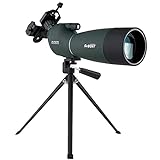
SVBONY SV28 Spotting Scopes with Tripod,Hunting,25-75x70,Angled,Waterproof,Range Shooting Scope,with Phone Adapter,Compact,
View on Amazon- ARS Mark8.8
ARS Mark is a ranking system developed by bestairriflescopes.com. ARS Mark has no relationship or impact from any manufacturers or sales agent websites. Learn more
- BrandSVBONY

- ARS Mark8.8
ARS Mark is a ranking system developed by bestairriflescopes.com. ARS Mark has no relationship or impact from any manufacturers or sales agent websites. Learn more
- BrandREVASRI

- ARS Mark8.8
ARS Mark is a ranking system developed by bestairriflescopes.com. ARS Mark has no relationship or impact from any manufacturers or sales agent websites. Learn more
- BrandSVBONY

- ARS Mark8.8
ARS Mark is a ranking system developed by bestairriflescopes.com. ARS Mark has no relationship or impact from any manufacturers or sales agent websites. Learn more
- BrandGosky

- ARS Mark8.4
ARS Mark is a ranking system developed by bestairriflescopes.com. ARS Mark has no relationship or impact from any manufacturers or sales agent websites. Learn more
- BrandGUANIEE
Last update on 2026-08-01 / Affiliate links / Images, Product Titles, and Product Highlights from Amazon Product Advertising API
Gosky Flagship 25-75x80 Spotting Scope
Distance can expose every weakness in an optic, from washed-out colors to a focus wheel that never quite settles. The Gosky Flagship enters the best spotting scope with rangefinder conversation as a capable viewing scope, but one distinction needs to be clear from the start: the supplied specifications do not mention an integrated electronic rangefinder. What it does offer is a 25-75x magnification range, an 80mm objective lens, BAK4 prism glass, and fully multi-coated optics aimed at detailed observation. That makes it more suitable for visual spotting than for anyone who expects a distance reading to appear inside the eyepiece.
Gosky Flagship 25-75x80 Scope
The upgraded Flagship model sits in an interesting middle ground between basic starter scopes and far more expensive field optics. Its 25x low setting gives a practical starting point for scanning open ground, following birds, or locating marks on a target before increasing power. Pushing toward 75x can reveal more detail, though atmospheric shimmer, tripod movement, and fading light will influence how useful that upper range feels. That’s normal for high-magnification spotting scopes, not a flaw unique to this model.
Gosky pairs the zoom range with a large 80mm objective lens, which is meant to gather more light than smaller 60mm designs. That extra aperture can help during overcast mornings, shaded woodland observation, and the last usable stretch of evening light. It also adds bulk, so this isn’t the sort of scope that disappears into a jacket pocket or tiny daypack. The tradeoff is straightforward: more glass for a brighter view, with more weight to carry and support.
The provided product description states that this model line has sold more than 500,000 units worldwide since 2019. That figure comes from the supplied manufacturer information rather than independent sales verification, so it’s best treated as brand-reported context. Still, the long-running design suggests Gosky hasn’t built this upgraded version around an untested optical layout. Its appeal rests on a familiar formula: usable magnification, a large front lens, common accessories, and controls that don’t demand specialist knowledge.
Optical Clarity And Viewing Comfort
A 23mm eyepiece is one of the more practical details in the specification list. A larger eyepiece can make viewing feel less cramped, especially during longer sessions where a narrow opening forces constant eye repositioning. The benefit isn’t just comfort; it can also make the image easier to acquire after looking away to scan with the naked eye. For bird movement or repeated target checks, that more forgiving viewing window may matter more than an extra line on a feature chart.
The BAK4 prism and FMC optical system are intended to improve brightness, contrast, and color transmission through the scope. Those terms don’t guarantee flawless edge-to-edge sharpness, but they describe a stronger foundation than an uncoated entry-level optic. Fine feather patterns, target-hole contrast, and branches against a gray sky all depend on controlled light transmission rather than magnification alone. A hazy 75x image isn’t much help, while a cleaner image at 40x or 50x can be genuinely useful.
Color accuracy also shapes how pleasant the scope feels over time. Heavy color fringing around bright objects can become distracting, particularly around white birds, reflective targets, or dark branches against a bright sky. The optimized optical design is presented as a way to keep the image natural and detailed, though the supplied information doesn’t provide measured chromatic-aberration results. Realistically, buyers should expect balanced recreational optics, not the correction level of a professional scope costing several times more.
Magnification In Real Outdoor Conditions
The zoom control allows quick shifts between broad observation and closer inspection. Starting around 25x makes it easier to locate a subject because the field of view is wider and hand-induced vibration looks less severe. Once the subject is centered, increasing power can bring out smaller details without moving the entire setup. This scan-then-zoom routine is useful for wildlife, distant scenery, and paper targets alike.
Maximum magnification deserves a little skepticism, though. At 75x, warm air rising from fields or shooting lanes can make the image ripple even if the optics and focus are behaving properly. A lightweight tabletop tripod may also transmit vibration from a bench, deck, or uneven surface. In many real settings, the clearest working range may sit below the printed maximum, and stable detail beats a bigger number every time.
The lack of a stated built-in rangefinder matters for the main keyword. This scope can show a distant object in detail, but the provided specifications don’t indicate that it calculates yardage, angle, or ballistic distance. Pairing it with a separate handheld rangefinder would solve that gap, though it means carrying and switching between two devices. Anyone specifically seeking an all-in-one spotting scope with rangefinder should not assume this Gosky provides electronic ranging simply because it performs well as a spotter.
Weather Protection And Field Handling
Nitrogen filling and O-ring sealing give the body a useful layer of protection against moisture and internal fogging. Sudden temperature changes can make poorly sealed optics cloud internally, leaving the view useless until conditions settle. The Gosky design is built to resist that problem while also handling rain and humid environments. Even so, waterproof protection doesn’t mean the scope should be submerged or stored wet inside its case.
The rubber-armored exterior serves two jobs at once. It adds grip when hands are damp or cold, and it gives the body some protection against ordinary knocks during transport. The subdued finish also avoids the bright, reflective appearance that can feel out of place during wildlife observation. Rubber armor won’t save an optic from a hard drop onto rock, but better handling security lowers the chance of that drop happening in the first place.
A rotatable body makes the eyepiece angle easier to adjust without shifting the tripod. That can be handy at a crowded shooting bench, on a low table, or beside a window where the observer can’t stand directly behind the scope. The retractable sunshade adds another practical touch by limiting stray light and helping protect the objective lens from light rain or accidental fingerprints. Together, these features improve field flexibility without adding a complicated control system.
Tripod Setup And Included Accessories
The sturdy metal base uses a standard 1/4-inch-20 thread, so the scope can connect to many common photographic and spotting-scope tripods. That compatibility is valuable because the included tabletop tripod may suit benches and picnic tables but won’t cover every viewing position. A full-height tripod often makes more sense for standing observation or uneven terrain. The standard mount keeps that upgrade path simple rather than locking the scope into proprietary hardware.
The package includes a carrying case, accessory pouch, lens covers, cleaning cloth, quick phone holder, and tabletop tripod. Those items reduce the number of separate purchases needed before the first outing, which is especially convenient for someone assembling an observation kit from scratch. The phone holder can help capture basic images through the eyepiece, though alignment usually takes patience and magnified footage can reveal every small vibration. It’s a useful extra, but digiscoping convenience shouldn’t be confused with dedicated camera-lens performance.
Lens covers deserve more credit than they usually get. Dust, grit, and careless wiping can damage optical coatings over time, while a simple cover prevents much of that exposure during transport. The cleaning cloth is suitable for light maintenance, but loose particles should be blown away before rubbing the glass. That small habit protects the FMC lens surfaces and helps preserve contrast longer.
Target Shooting And Wildlife Use
Target shooting places different demands on a scope than birdwatching. Shooters care about resolving small marks at distance, maintaining a steady image, and adjusting the eyepiece without leaving an awkward bench position. The 80mm lens and rotatable body address those needs reasonably well, while the zoom lets the observer back off from excessive shimmer. Still, the actual visibility of bullet holes will depend on target color, caliber, distance, light, and atmospheric conditions.
Bird and wildlife observation benefit more from color, brightness, and smooth subject tracking. The lower end of the zoom range should be more comfortable for locating movement, while the upper settings can help inspect plumage, antlers, or distant behavior once the subject pauses. An angled, rotatable scope body can also reduce neck strain during long sessions. The wide practical use is real, though the larger 80mm format favors planned observation over fast, lightweight travel.
Hiking with this scope requires a sensible packing decision. The big objective and accessories add capability, but they also occupy more room than compact binoculars or a smaller spotter. Carrying the scope, tripod, water, and other field gear can turn a casual walk into a loaded outing pretty quickly. It fits better where stationary viewing quality matters more than shaving every possible ounce.
Strengths That Matter In Daily Use
The strongest part of the Gosky package is its balance of optical size and approachable controls. There’s no complicated digital menu to learn, no app required for basic viewing, and no proprietary tripod fitting. Focus, zoom, angle, and sun control remain mechanical and direct. That simplicity makes the core viewing experience easier to manage in changing weather or while wearing gloves.
The accessory bundle also makes the scope feel complete straight from the box. A basic tripod and case are enough to begin viewing without improvising support or risking uncovered lenses. The phone holder adds room for casual image sharing, while the standard mounting thread leaves space for a sturdier setup later. This is a practical package, not a bare optical tube padded with promises.
Outdoor maintenance sometimes extends beyond optics, especially around shooting equipment that needs careful mechanical upkeep. A neutral reference on that separate topic appears in air rifle lubricant guidance, which addresses a different part of range preparation without changing how this spotting scope performs. Keeping those tasks separate makes sense because optical cleaning products and firearm lubricants serve entirely different purposes. The distinction protects both the lens coatings and the moving components of other equipment.
Weaknesses And Buying Tradeoffs
The biggest limitation is simple: the supplied description doesn’t identify an integrated rangefinder. That makes the product a questionable literal match for someone searching only for the best spotting scope with rangefinder. It belongs in the conversation as a spotting alternative that can be paired with a separate ranging device, not as a confirmed all-in-one electronic model. Clear expectations prevent an expensive misunderstanding.
The tabletop tripod is another likely compromise. Compact tripods travel easily and work on firm benches, but they don’t provide the height or footing needed for every outdoor position. Higher magnification magnifies shake too, so a weak support can make good optics feel disappointing. Budgeting for a more stable tripod may improve the experience more than chasing the final few steps of zoom.
Size and weight may also push some buyers toward a smaller objective lens. The 80mm front element helps gather light, yet it creates a bulkier body that’s less pleasant on long hikes. A compact scope can be easier to carry even if it gives up some brightness near dawn or dusk. The right tradeoff depends on whether image brightness or packability causes more frustration in actual use.
Who This Scope Fits Best
This Gosky makes the most sense for observation that begins from a stable position. Benches, decks, blinds, overlooks, and roadside pullouts let the 80mm optics do their job without turning the scope into a burden. The zoom range provides enough flexibility to scan, identify, and inspect while the rotatable body helps accommodate awkward angles. That combination suits patient viewing far better than fast movement through dense terrain.
The scope also fits someone who values a complete accessory package and wants room to improve the support system later. Starting with the supplied tripod keeps initial setup easy, while the 1/4-inch-20 mount accepts many sturdier alternatives. The phone adapter gives casual documentation a place in the kit without making it the main attraction. Its straightforward learning curve is part of the appeal.
Buyers who need automatic distance readings, angle compensation, or ballistic data should look elsewhere or plan to add a separate rangefinder. Those functions aren’t stated in the provided specifications, and they shouldn’t be inferred from the product’s flagship label. Viewed honestly, the Gosky Flagship 25-75x80 is a large-aperture recreational spotting scope with useful weather protection, practical accessories, and flexible mounting. Its value comes from clear observation and adaptable setup, not from electronic ranging features it doesn’t claim to have.
TideWe 700Y Hunting Rangefinder
Long-range observation gets frustrating fast when distance, angle, and movement have to be estimated by eye. The TideWe 700Y Hunting Rangefinder addresses that problem with 6x magnification, rapid laser measurements, and several readout modes packed into a body weighing just 0.35 pounds. It deserves consideration around the best spotting scope with rangefinder topic, though the product is technically a compact laser rangefinder rather than a full-size spotting scope. That distinction shapes nearly every strength and limitation in this review.
TideWe 700Y Rangefinder
The TideWe takes a direct approach: point it, press a button, and read the distance from the LCD. Its supplied specifications state a measurement range from 3 to 1,000 yards, with readings delivered in less than 0.5 seconds and accuracy rated within plus or minus one yard. Those numbers give it enough reach for hunting, target shooting, hiking, and general outdoor distance checks. Still, target reflectivity, weather, hand stability, and terrain can affect how easily any laser rangefinder locks onto a distant object.
Several measurements are available rather than a single straight-line number. The device can display vertical distance, horizontal distance, straight-line distance, angle information, and target speed, depending on the selected operating mode. That range of data helps with sloped ground where the direct distance alone may not tell the whole story. A continuous scan function also keeps updating measurements as the unit moves across different objects or tracks a changing scene.
The controls stay fairly simple, which matters in the field. A short press on the mode button cycles through functions, a long press on the power button starts continuous scanning, and holding the mode button switches between yards and meters. Focus can be adjusted through the plus and minus control around the eyepiece, helping sharpen the view for different eyesight. The straightforward button layout keeps the tool from feeling like a tiny menu system disguised as outdoor gear.
Fast Ranging And Useful Scan Modes
Speed is one of the TideWe’s clearest advantages. A stated response time below half a second means the display should update quickly after the laser receives a usable return. That matters around moving animals, changing shooting positions, or targets that appear briefly between branches. The rapid measurement cycle reduces the pause between spotting an object and understanding how far away it is.
Scan mode brings a different kind of convenience. Holding the power button allows the rangefinder to measure continuously rather than requiring a fresh press for every object. A slow sweep across a field can reveal how distance changes between a near tree line, a fence, and a far slope. It also helps when a small target is difficult to isolate because the display keeps refreshing until the laser settles on the intended surface.
Angle and horizontal-distance information can be especially useful on uneven ground. A target uphill or downhill may sit at one line-of-sight distance while the horizontal component is shorter, which can matter for shot planning and terrain judgment. TideWe places those calculations inside the same handheld unit, so there’s less mental arithmetic under pressure. The multi-function ranging system is more useful than a basic yardage-only display for anyone who regularly works across hills, ridges, or elevated stands.
Speed measurement broadens the feature set, though it may not be the main reason most people buy this model. Tracking a moving object requires steady aim and a clear line of sight, so results can be less convenient than measuring a stationary target. Even so, having the mode available doesn’t complicate basic distance use because the main controls remain compact. It’s an extra tool in the box, not something that gets in the way of ordinary ranging.
Compact Size And Field Handling
The 4.12 by 2.61 by 1.50-inch body is small enough to carry without reorganizing an entire pack. At 0.35 pounds, it adds little weight compared with a large spotting scope, tripod, or binocular setup. The included lanyard keeps it accessible around the neck or wrist, while the storage bag protects it between uses. That portability suits situations where distance readings matter more than prolonged high-magnification observation.
An ergonomic shell gives the hand a natural place to settle around the controls. Compact rangefinders can feel fiddly if buttons sit too close together, but the TideWe’s simple two-button operation reduces accidental mode changes. The camouflage finish also keeps reflections and bright colors to a minimum in wooded settings. It won’t make the device invisible, of course, but the subdued exterior fits hunting environments better than a shiny casing.
The housing is described as durable enough to handle drops during hiking or hunting and weather resistant for difficult outdoor conditions. That language suggests protection from ordinary knocks, moisture, and changing weather, though the supplied information doesn’t give a specific IP rating. Sensible handling still matters around heavy rain, deep water, and hard impacts. Weather resistance is useful insurance, not permission to treat a laser optic like a sealed dive instrument.
The small body also creates an unavoidable tradeoff: it isn’t designed for long observation sessions. Six-power magnification helps identify and center targets, but it can’t match the visual detail, brightness, or stability of an 80mm spotting scope on a tripod. The TideWe favors speed and mobility over patient glassing. That’s exactly what makes it handy, but it also explains why calling it a spotting scope would stretch the definition.
Magnification And LCD Visibility
Six-power magnification gives the rangefinder enough optical reach to isolate objects that would be awkward to measure with the naked eye. It’s useful for locating a deer near a tree line, centering a distant target, or checking a landmark across open terrain. The magnification remains low enough for handheld use without turning every small movement into a violent shake. That balance makes quick target acquisition more realistic than chasing extreme zoom from a pocket-sized device.
The adjustable focus knob helps tune the image and display for different eyesight. A blurry reticle or soft target edge can slow down measurement because the laser needs to be aimed at a specific surface. Turning the eyepiece until the LCD and target look clear improves both comfort and control. It’s a small adjustment, but skipping it can make an otherwise straightforward rangefinder feel harder to use than it really is.
TideWe states that the LCD provides a clear image in low-light conditions. The display should remain readable around dawn, dusk, or shaded woods, though the product description doesn’t specify illuminated reticle levels or automatic brightness control. A clear display still depends on proper focus and enough contrast between the numbers and background. The low-light usability sounds practical, but it shouldn’t be confused with thermal imaging or true electronic night vision.
Related low-light optics solve a different observation problem, especially where identifying shapes matters more than measuring distance. That separate role is covered in night vision binocular options, which focuses on viewing after available light drops beyond what a standard LCD rangefinder can handle. The TideWe remains a daylight and low-light ranging tool rather than a night-vision device. Keeping that distinction straight prevents disappointment after sunset.
Rechargeable Battery And Daily Convenience
A built-in 750mAh lithium-ion battery removes the need to keep disposable cells in every jacket pocket and gear pouch. TideWe states that a full charge supports up to 20,000 measurements, though actual endurance can vary with scan usage, temperature, storage, and charging habits. For ordinary outings, that claimed capacity provides a wide margin between charges. The rechargeable design also keeps operating costs low over repeated use.
Battery convenience comes with one modest catch. A disposable-battery rangefinder can return to service immediately after a fresh cell is inserted, while an internal rechargeable model needs access to charging power. Long trips away from outlets may call for a power bank or a pre-trip charging routine. That’s hardly a deal breaker, but charging discipline becomes part of gear preparation.
The instant readout and simple controls shorten the learning curve. Most tasks require only aiming, pressing the power button, and reading the result, while advanced modes remain available through the mode control. Switching between meters and yards with a long press helps avoid digging through a manual in the field. A tool like this earns its keep by staying quick, and the TideWe largely sticks to that principle.
Strengths For Hunting And Target Shooting
Hunting use favors equipment that stays quiet, light, and close at hand. The TideWe’s small body can hang from the included lanyard without pulling heavily on the neck, and the camouflage shell avoids a bright visual distraction. Fast readings reduce the time spent looking down at controls while an animal is moving. The combination of portable ranging and angle data fits wooded slopes, open fields, and elevated positions particularly well.
Target shooting brings a slightly different benefit. Known distance removes guesswork during setup, confirms whether a marker is placed correctly, and helps track spacing between firing points. The plus-or-minus-one-yard specification is more than precise enough for many recreational range tasks. Scan mode can also map several target positions quickly without forcing repeated button presses.
The TideWe is easier to carry than a scope-and-tripod combination, but it doesn’t replace one for inspecting tiny target details. Six-power magnification may show the target board, yet it won’t reliably reveal small impacts at long distances the way a larger spotting optic might. A practical setup could use this rangefinder for distance and a separate scope for visual inspection. The division of labor adds gear, though each tool then handles the job it was actually built to do.
Weaknesses And Realistic Tradeoffs
The biggest mismatch lies between the keyword and the product category. The TideWe offers a laser rangefinder with six-power optics, not a spotting scope with high zoom and a large objective lens. It can measure distance rapidly, but it can’t provide the long-duration, detailed viewing associated with a conventional spotter. Anyone seeking the best spotting scope with rangefinder in a single body should treat this as a compact alternative, not a direct substitute.
Handheld operation can also make distant ranging less steady. At six power, small wrist movements shift the aiming point enough to bounce between branches, brush, and the intended target. Resting an elbow against the body or using a stable support can improve consistency. The fast processor helps, but it can’t correct careless aim or an obstructed laser path.
Weather resistance is useful, yet the missing protection rating leaves some uncertainty about extreme exposure. The supplied description supports use in rough hunting conditions, but it doesn’t define immersion depth, dust testing, or sealing standards. Keeping the device inside its bag during heavy rain remains the sensible move. A durable shell lowers risk, while careful storage extends the life of the lenses, buttons, and charging components.
The internal battery may eventually hold less charge after many cycles, as rechargeable cells naturally do over time. No replaceable-battery option is mentioned, so long-term serviceability depends on the built-in power system. That tradeoff buys convenience and less battery waste during normal ownership. It simply isn’t as field-repairable as a model powered by common replaceable cells.
Where The TideWe Makes The Most Sense
The TideWe fits outings where distance needs to be known quickly and carrying space is tight. Its lightweight body, six-power view, and sub-half-second stated response suit hunting, target placement, hiking, and basic land measurement. Straight-line, horizontal, vertical, angle, speed, and scan functions cover far more ground than a yardage-only device. The controls remain simple enough that those extra modes don’t overwhelm the main task.
Open terrain and moderate woodland provide the cleanest ranging conditions. Large reflective objects should be easier to measure than small dark targets hidden among leaves, and that’s typical behavior for handheld laser rangefinders. Steady aim, a clear path, and realistic expectations will matter near the far end of the advertised range. The unit’s practical sweet spot lies in quick field measurements rather than laboratory-style precision.
A large spotting scope still has the edge for extended wildlife study, target-hole inspection, and fine visual detail. The TideWe wins on speed, portability, and integrated distance calculations instead. It’s a capable pocket-size ranging tool with useful angle and scan modes, rechargeable power, and a clear operating layout. Its strongest role is helping distance stop being a guess, not replacing every optic already in the field bag.
Leupold RX-1400i TBR/W Gen 2 Rangefinder
Steep terrain has a nasty habit of making a simple distance reading feel more useful than it really is. A straight-line number can look reassuring while leaving angle, wind, and arrow clearance out of the picture, which is why the Leupold RX-1400i brings more calculation into a compact handheld optic. It belongs in the best spotting scope with rangefinder discussion as a specialized ranging tool, although it isn’t a conventional spotting scope with a large objective lens or high-power zoom. Its real strength lies in ballistic distance data, a selectable bow mode, and a bright display built for changing outdoor light.
Leupold RX-1400i Gen 2
The RX-1400i is designed around practical shot information rather than extended observation. Leupold lists a maximum ranging distance of 1,400 yards on reflective objects and 1,200 yards on trees, giving the unit useful reach across open ground. Reflective surfaces generally return a laser more easily than dark, irregular targets, so the difference between those two figures makes sense. Real-world results will still depend on weather, target size, steadiness, and how cleanly the laser reaches the intended object.
The compact format is part of the appeal. A handheld rangefinder can be raised, aimed, and put away far faster than a tripod-mounted scope, especially from a tree stand, hillside, or shooting position where space is tight. That speed doesn’t replace detailed glassing, but it helps answer the immediate question of distance without a pile of setup. The single-purpose efficiency is easy to appreciate once the terrain starts changing quickly.
Model 183727 carries the Gen 2 designation and includes Leupold’s TBR/W and Flightpath technologies. Those features push the device beyond a simple yardage meter by calculating information tied to rifle and archery use. The menus are meant to serve different shooting styles rather than forcing one fixed readout on every situation. That flexibility is useful, though it also means the owner should spend time learning the selected mode before relying on it in the field.
True Ballistic Range And Wind Data
True Ballistic Range with Wind, shortened to TBR/W, is the defining rifle-oriented feature. The system calculates a ballistic range that accounts for steep angles, helping reduce the error that can come from using line-of-sight distance alone. Uphill and downhill shots are where this matters most because gravity acts on the horizontal component of the shot rather than the full visual distance. The rangefinder handles that calculation internally, saving time when the geometry isn’t obvious.
The device can also generate a hold point for a 10-mph wind at a 90-degree angle out to 800 yards. That doesn’t mean the wind will always blow at exactly that speed or angle, of course, so the readout should be treated as a reference rather than a complete environmental solution. Wind can vary between the shooter and target, especially across valleys, open fields, or uneven ground. Still, a consistent baseline is more useful than pure guesswork when conditions are shifting.
Ballistic tools only help if the settings match the firearm, cartridge, and shooting situation. A wrong profile or misunderstood readout can create misplaced confidence, which is worse than admitting uncertainty. The RX-1400i rewards careful setup and familiarity rather than casual button pressing. Its calculated range output becomes meaningful once the selected data reflects the equipment actually being used.
The extra information may feel unnecessary on a flat, known-distance range. In that setting, a basic laser reading often does the job without additional interpretation. The Leupold earns its keep on slopes, long lanes, and uneven ground where angle and wind references begin to matter. That makes it more specialized than a bare-bones rangefinder, but the specialization has a clear purpose.
Flightpath Bow Mode For Archery
Flightpath mode shifts the RX-1400i from rifle calculations to a problem archers know all too well: arrow clearance. The feature is designed to show potential obstructions along the arrow’s path while also calculating angle-compensated range. A branch that appears below the sightline can still interfere with the higher arc of an arrow. That small detail can decide whether a shot is clean or never should have been taken.
The obstruction information is particularly relevant from elevated positions. Tree stands create steep angles, and the arrow’s path may pass through cover that looks harmless from the shooter’s eye level. Flightpath technology adds another layer of awareness instead of relying only on the visible line between bow and target. The benefit is less about flashy electronics and more about catching a problem before release.
Bow mode also helps simplify angled-distance judgment. Archers often need the horizontal or compensated distance rather than the direct line-of-sight figure, especially from above or below the target. The RX-1400i performs that correction inside the unit, keeping the readout focused on a usable shooting reference. Its archery-specific calculation is a meaningful difference from rangefinders that offer only raw distance.
No electronic feature replaces a clear lane and disciplined shot selection. Leaves, twigs, moving animals, and poor visibility can still make a measured distance irrelevant. Flightpath is best viewed as an additional check, not a guarantee that every route is unobstructed. The tool adds information, while judgment still carries the final load.
TOLED Display In Changing Light
The selectable TOLED display uses bright red numbers and letters, which helps the readout stand apart from dark brush, shaded timber, and mixed backgrounds. Brightness can be adjusted to fit changing light rather than locking the user into one intensity. A display that looks crisp at noon can become overpowering near dusk, while a dim reticle may disappear against a dark target. The adjustable display brightness addresses both problems.
Red characters are especially practical against green and brown outdoor scenery. They create immediate contrast without requiring a large or cluttered display. Clear information matters because ballistic and bow modes can present more than one kind of data, and tiny unreadable symbols would undermine the whole system. Leupold’s display approach keeps the numbers prominent without turning the view into a dashboard.
Brightness adjustment also protects night-adapted vision better than running the display at full intensity all the time. A setting that’s too bright can wash out details around the target and make the eye slow to recover after the rangefinder is lowered. Dialing it back for low-light use creates a more comfortable balance. That’s a modest feature on paper, yet it can make repeated ranging less tiring.
The supplied details don’t describe image stabilization, illuminated target outlines, or electronic night vision. The TOLED system improves readability, but it doesn’t turn the unit into a darkness-viewing device. Related low-light equipment serves a different role, just as information about Umarex Glock 45 Gen 5 belongs to a separate equipment category rather than the optical ranging functions discussed here. Keeping those roles distinct prevents unrelated features from being blended into one expectation.
Ranging Performance And Practical Limits
The listed 1,400-yard reflective range gives the RX-1400i plenty of headline reach, but reflective targets are the easiest kind for laser systems to measure. Trees at a stated 1,200 yards offer a more useful outdoor reference because bark and foliage don’t return a beam as cleanly as signs or bright surfaces. Dark animals, small targets, mist, and rain may reduce effective range further. The maximum distance figures should therefore be read as target-dependent capability, not a promise for every object.
Hand stability becomes more important as distance grows. A small movement at the rangefinder can shift the laser from a tree trunk to open space, brush, or a background slope hundreds of yards farther away. Bracing an elbow, using both hands, or resting against a solid surface can make readings more consistent. The device can process good information quickly, but it can’t choose the intended target if the aim wanders.
Open country favors the RX-1400i more than dense cover. Long sightlines give the laser a cleaner path and make it easier to isolate the object being measured. Thick branches can create mixed returns, especially when the target sits behind several layers of vegetation. That isn’t unusual for a laser rangefinder, though it’s worth remembering before blaming the unit for an obstructed signal.
The lack of a stated large optical zoom also separates this model from a true spotting scope. It is built to obtain range and ballistic data, not to study fine target detail for minutes at a time. A spotting scope can reveal hits, plumage, or distant movement, while the Leupold answers distance and trajectory questions much faster. The two tools overlap slightly, but their core jobs remain different.
Strengths In The Field
The strongest part of the RX-1400i is how much relevant shooting information it condenses into one handheld unit. Rifle mode addresses angle and wind reference, while bow mode handles compensated range and possible arrow obstructions. The user isn’t forced to carry separate calculators for every basic field question. That multi-discipline design gives the rangefinder broader utility than a distance-only model.
Leupold also avoids burying the value under decorative extras. The provided specifications focus on ranging distance, ballistic calculation, Flightpath, and display readability. Each feature ties back to a recognizable field problem rather than an app, social function, or novelty mode. The product feels purpose-built, which is refreshing in a category that can get crowded with long feature lists.
The adjustable TOLED display strengthens the package because good calculations are useless if the numbers can’t be read. Changing brightness for open sun, shaded timber, and fading evening light keeps the interface practical across a full day outside. Red characters provide immediate contrast without demanding a large screen. The clear visual feedback supports fast decision-making without much fuss.
Its all-in-one calculation can also reduce gear handling. Pulling out a phone or separate ballistic chart adds time and movement, and both can be awkward with gloves or from an unstable position. The RX-1400i keeps the essential data in the same viewing process as the range measurement. Less shuffling means fewer chances to lose focus on the target or drop something in the brush.
Weaknesses And Tradeoffs
The first limitation is categorical. This is a laser rangefinder, not a traditional spotting scope, so it won’t satisfy someone expecting high magnification, a large objective lens, and tripod-based observation. It can support the search for the best spotting scope with rangefinder by covering the ranging side very well, but it does not combine both functions in a full-size spotter body. Buyers need to decide whether fast calculation or detailed observation matters more.
The ballistic features also demand setup discipline. TBR/W can produce useful data, but only if the selected settings align with the rifle and ammunition. A misunderstood output may look precise while still being wrong for the actual setup. The learning curve isn’t necessarily steep, yet it shouldn’t be skipped.
Wind guidance has built-in limits too. A 10-mph, 90-degree reference gives a stable baseline, while real wind often changes speed, direction, and intensity along the bullet’s path. Terrain can funnel air through one section and leave another nearly still. The rangefinder supplies a calculated hold reference, but field observation remains essential.
Maximum range numbers can tempt people to judge the product only by distance. A clean reading on a reflective target at long range doesn’t guarantee equal performance on a dark animal tucked near brush. Laser return quality matters as much as the printed yardage figure. The RX-1400i appears capable, but realistic expectations will produce far less frustration than chasing the farthest possible number.
Where The RX-1400i Fits Best
The RX-1400i makes the most sense where steep angles, long distances, or archery clearance regularly complicate a shot. Flat-range practice won’t use every feature, but hilly ground and elevated positions give TBR/W and Flightpath a reason to exist. The rangefinder turns those conditions into clearer numerical guidance without adding much setup. Its field-oriented calculations are the main reason to choose it over a simpler model.
Archery use is particularly well served by the obstruction-aware Flightpath mode. Distance alone doesn’t tell the whole story when an arrow rises and falls along a curved path. Potential branches or cover can sit inside that arc even when the target appears visible. The feature addresses a real frustration rather than merely adding another display icon.
Rifle use benefits from the combination of angle correction and wind reference. The technology won’t replace knowledge of the cartridge or careful reading of conditions, but it can speed up the first stage of a decision. That makes it useful for someone who already understands the basics and wants quicker access to calculated data. The best results will come from pairing the electronics with practiced judgment.
A separate spotting scope may still belong in the kit for extended glassing, target inspection, or wildlife observation. The Leupold handles distance and ballistic information with far less bulk, while a spotter handles visual detail and long viewing sessions. Used for the role described in its specifications, the RX-1400i offers a focused mix of long-range measurement, bow-specific guidance, and readable data. Its value is precision-oriented information in a compact format, not the illusion that one handheld optic replaces every other tool.
SVBONY SV28 25-75x70 Spotting Scope
A distant target can look sharp for one second, then turn into a trembling blur as magnification rises and the support underneath starts showing its limits. The SVBONY SV28 approaches the best spotting scope with rangefinder discussion from the optical side, offering a 25-75x zoom range, a 70mm objective lens, an angled body, and a portable tabletop tripod. One point needs saying plainly: the supplied product details don’t mention a built-in laser rangefinder or electronic distance readout. This is a compact spotting scope for seeing faraway detail, not an all-in-one device that calculates yardage.
SVBONY SV28 Spotting Scope
The SV28 keeps its basic controls approachable, which makes a noticeable difference during the first few outings. Magnification changes through the 25-75x zoom range, while the focus control lets the image settle as the subject distance shifts. There’s no long electronic setup or layered menu to work through before observation begins. That simple optical layout suits someone who’d rather spend time looking through the scope than studying a control chart.
The lower end of the zoom range is where most scanning should begin. At 25x, the field of view is broader, vibration looks less severe, and a moving bird or distant target is easier to locate. Once the object is centered, increasing magnification can reveal finer details without forcing the entire tripod to be repositioned. This scan-first approach saves a lot of fumbling, especially around tree lines or crowded shooting backstops.
Seventy-five power sounds tempting, but the printed maximum won’t always be the clearest setting in the field. Heat waves above a range, damp air over water, and small tripod movements can soften the image before the optics reach their limit. Backing the zoom down may produce a cleaner, steadier view with better contrast. That isn’t giving up performance; it’s using the available magnification with a bit of common sense.
The product is described as a fit for beginner-to-novice observation, and the feature set supports that position. It provides enough adjustment to teach basic spotting habits without burying the experience under specialized controls. The scope can move between target shooting, birding, wildlife viewing, and scenery with only minor setup changes. Its entry-friendly design is less about stripped-down construction and more about keeping the essentials easy to reach.
Zoom Range And Image Control
The 25-75x range covers several kinds of observation without requiring different eyepieces. Moderate power can help identify larger wildlife or read broad target markings, while higher power is better reserved for stationary subjects and stable support. The zoom ring also lets the observer react quickly as distance or subject size changes. That flexible viewing range gives the SV28 more room to adapt than a fixed-power optic.
High magnification amplifies flaws in technique just as aggressively as it enlarges the subject. A light touch on the focus control matters because heavy pressure can shake the image and make sharpness harder to judge. The same goes for leaning against the eyepiece, which may shift the tabletop tripod slightly. Developing a steady viewing routine can improve the experience more than constantly chasing the highest zoom setting.
The angled body changes how the scope fits on a bench or low table. Instead of crouching directly behind a straight eyepiece, the observer can look down into the scope from a more relaxed position. That layout is especially useful during repeated target checks or long birding sessions where neck position starts to matter. The angled viewing design also makes it easier for people of different heights to share the same setup.
Focus and zoom need to work together rather than as separate one-time adjustments. Increasing magnification often requires a small refocus, particularly when the atmosphere is unstable or the target has fine detail. A quick twist, a short pause, then another look usually produces better results than spinning both controls at once. The SV28’s straightforward adjustment system encourages that patient rhythm.
Seventy-Millimeter Light Gathering
The 70mm objective lens gives the scope more light-gathering area than many smaller compact models. That extra aperture can help under cloudy skies, near wooded edges, or during the softer light of early morning and late afternoon. More light doesn’t guarantee a flawless picture, but it gives the optical system a stronger starting point. The practical benefit is a brighter usable image when conditions aren’t perfectly sunny.
A larger objective lens also helps support higher magnification, though there are limits. As zoom increases, the apparent image can darken because the available light is spread across a more enlarged view. The 70mm front lens pushes back against that effect better than a tiny travel scope might. Even so, moderate magnification will usually look brighter and more relaxed than the top end.
The built-in extendable sunshade reduces stray light reaching the objective lens. Direct sunlight entering from the side can lower contrast, wash out colors, and create glare that hides small details. Extending the shade can make a distant subject look cleaner without requiring any electronic correction. It also gives the front glass a little extra shelter from fingerprints, light drizzle, and drifting dust.
Lens size brings a carrying tradeoff that shouldn’t be ignored. A 70mm scope stays more portable than many 80mm or larger models, but it still occupies more room than compact binoculars. The SV28 lands in a useful middle zone where light gathering and portability are both taken seriously. It won’t disappear into a pocket, yet it can ride in a car or camping bag without dominating the load.
Weather Resistance And Grip
IP65 protection is one of the more concrete specifications in the product description. That rating indicates resistance to dust ingress and water jets, which is useful around sudden rain, damp grass, and dusty shooting lanes. It doesn’t mean the scope should be submerged or left exposed overnight. The weather-resistant construction is there to handle ordinary outdoor trouble, not careless storage.
The seamless non-slip finish helps the body stay secure in damp hands. Smooth optical tubes can become surprisingly awkward after mist, sweat, or light rain settles on them. A textured exterior reduces the chance of the scope twisting or sliding during setup. That grippy surface sounds minor until the ground is muddy and both hands are already busy with tripod legs and lens covers.
Environmental changes can be rough on optics, particularly when moving from a warm vehicle into cold outside air. The IP65 body adds useful protection against external moisture and dust, though the supplied details don’t state nitrogen purging or full internal fogproof construction. Some temporary surface condensation may still occur during abrupt temperature shifts. Letting the scope acclimate inside its case can protect the optical surfaces and reduce the urge to wipe damp glass too aggressively.
Cleaning should stay gentle and boring, and that’s meant as a compliment. Loose grit needs to come off before a cloth touches the lens, since rubbing dust across coated glass can leave fine scratches. Lens caps also do more good than they get credit for during transport. A little routine care preserves clarity and contrast far longer than frequent heavy cleaning.
Tabletop Tripod Performance
The included desktop tripod is built around bench-level use rather than full-height observation. At a shooting range, it can sit beside equipment and keep the scope aimed downrange without taking up much space. A picnic table, tailgate, or sturdy platform can serve the same purpose during casual wildlife viewing. The compact tripod setup makes sense where a stable surface already exists.
High zoom exposes the tripod’s limitations quickly. Lightweight legs may transmit vibration from the table, nearby movement, or a hand touching the focus control. Hanging weight from a small tripod isn’t always practical, so careful placement matters more. A solid bench and a gentle touch can make the 75x setting far easier to manage.
Uneven ground is where a tabletop tripod becomes less convenient. Low legs can force the observer into an awkward crouch, and soft soil may leave the scope sitting too close to brush. A taller tripod could improve comfort during standing observation, although the supplied description only confirms the included portable desktop model. The SV28’s range-friendly support is useful out of the box, but it isn’t the answer for every field position.
Vehicle use is another natural fit for the compact setup. The scope can be stored without taking over the cargo area, then placed on a hood, table, or other stable surface at a campsite or overlook. That makes spontaneous observation more realistic than hauling a large tripod everywhere. The tradeoff is simple: easy transport in exchange for fewer height and terrain options.
Phone Adapter And Digiscoping
The included phone adapter adds a simple route for recording distant subjects through the eyepiece. It can help capture a bird at rest, save a view from a campsite, or document a target without holding the phone freehand against the scope. Alignment is usually the fiddly part because the phone camera must sit directly over the optical exit point. Once centered, the adapter-based setup can produce useful casual photos and video.
Magnification makes phone vibration more obvious than it looks to the naked eye. Pressing the screen, adjusting the clamp, or touching the tripod can send the image bouncing for several seconds. A timer or remote shutter can reduce that movement if the phone supports one. The best results will usually come from moderate zoom, a still subject, and a stable table.
Phone cameras also shift lenses automatically on some devices, which can complicate alignment. A model with several rear cameras may switch away from the lens positioned over the adapter, leaving a dark or partially blocked view. Locking the preferred camera mode before mounting can prevent a lot of head-scratching. The adapter is useful, but setup patience matters more than the accessory alone.
Digiscoping through the SV28 shouldn’t be judged against a dedicated telephoto camera system. The phone adapter is meant to make sharing and basic documentation easier, not to deliver professional wildlife photography. Atmospheric haze and scope vibration still affect the final image. Used with realistic expectations, it adds practical recording value without changing the core purpose of the optic.
Target Shooting And Outdoor Observation
Target shooting is one of the SV28’s most natural jobs. The zoom range allows a broad look at the target area first, followed by closer inspection once the scope is centered. The desktop tripod fits neatly on many shooting benches, while the angled eyepiece can reduce awkward neck movement between shots. Its bench-side convenience is more valuable than carrying excessive optical bulk that never leaves the range.
Actual bullet-hole visibility depends on more than magnification. Target color, caliber, distance, mirage, lighting, and paper condition all affect what can be resolved. A clean, high-contrast target may be readable at a distance where dark marks on a cluttered background are not. The SV28 provides the optical tools, but field conditions decide how much detail survives.
Birding asks for faster subject location and smoother tracking. Starting at 25x keeps the field wider, then the zoom can rise after the bird settles on a branch or shoreline. The angled body is comfortable for patient observation, while the 70mm lens helps when the subject sits in shade. The scope favors stationary or slow-moving wildlife more than quick overhead flight.
Other shooting equipment involves separate care and performance concerns that don’t belong inside an optical review. A neutral reference for that neighboring topic appears in Gamo air rifles, while the SV28 itself remains focused on distant viewing and target inspection. Keeping those categories separate avoids pretending that one product changes the operation of another. The scope’s role is visual confirmation, nothing more complicated than that.
Strengths That Stand Out
The SV28’s strongest quality is its accessible balance. It offers a broad zoom range, a useful 70mm objective, weather resistance, an angled body, a phone adapter, and a compact tripod without turning setup into a project. Each feature supports ordinary viewing rather than adding digital clutter. That practical feature mix makes the scope approachable for casual range and outdoor use.
Portability is another real advantage. The scope is described as lightweight enough for observation trips, family camping, and storage in a vehicle. It takes more space than binoculars but less commitment than a large premium spotter paired with a heavy field tripod. The manageable size encourages bringing it along instead of leaving it at home because the kit feels like a chore.
The IP65 body and non-slip finish also suit unpredictable outdoor routines. Rain doesn’t always arrive on schedule, and shooting benches aren’t exactly clean-room environments. Dust, damp hands, and hurried packing are normal, so a delicate glossy shell would be a poor match. The SV28’s protected exterior handles those everyday annoyances with fewer worries.
The accessory package lowers the barrier to first use. A scope without support or a phone adapter would require extra purchases before certain features became practical. Here, the basic pieces arrive together, even though the tabletop tripod may eventually feel limiting. That ready-to-use package is a sensible strength for an entry-level optical setup.
Weaknesses And Honest Tradeoffs
The lack of an integrated rangefinder is the main mismatch with the keyword. The SV28 can magnify a target and help judge visual detail, but the supplied specifications don’t describe laser ranging, angle compensation, or digital yardage. A separate handheld rangefinder would be needed for precise distance measurements. Calling it the best spotting scope with rangefinder without that clarification would create the wrong expectation.
The tabletop tripod can also become the weak link at high magnification. Compact support is convenient for transport, yet every vibration becomes more visible near 75x. A heavier tripod or more stable mounting surface may improve clarity more than pushing the zoom ring farther. The scope’s optical potential depends heavily on what’s holding it still.
Seventy millimeters offers useful light gathering, but it won’t behave like a much larger premium objective in difficult twilight. Brightness and sharpness may drop as zoom rises, especially under cloudy skies or through atmospheric haze. The product description positions the SV28 as a beginner-to-novice model, and expectations should stay aligned with that role. It’s built for accessible observation, not elite low-light glassing.
The phone adapter adds value, though it may take repeated adjustments before the camera lines up cleanly. Different phone sizes, camera positions, and protective cases can affect fit. Removing a thick case may be necessary, and the setup can become slow if a subject won’t stay put. That alignment tradeoff is common with universal adapters rather than a unique flaw of this package.
Best-Fit Situations For The SV28
The SV28 feels most at home on a stable bench, picnic table, campsite surface, or vehicle-supported observation point. Those settings make the included tripod useful and allow the zoom range to work without constant repositioning. Target shooting, shoreline birding, scenic viewing, and stationary wildlife observation all fit that pattern. The portable bench setup is where the package feels most coherent.
Family camping also suits the scope’s straightforward controls. Different people can share the angled eyepiece, adjust focus, and move through the zoom range without learning a complicated system. The phone adapter adds a casual way to save a distant view or animal sighting. Its shared-use simplicity matters more in that setting than advanced optical terminology.
Long hikes over rough terrain may expose the limits of the tabletop support. Carrying the scope itself should remain manageable, but observation without a raised stable surface can become awkward. A separate taller tripod would add versatility while also increasing pack weight. The right decision comes down to whether compact transport or standing comfort matters more on a given trip.
The SV28 is ultimately a straightforward 25-75x70 spotting scope with practical accessories, a weather-resistant body, and enough optical flexibility for several outdoor routines. It doesn’t supply the electronic ranging functions implied by the main keyword, and it shouldn’t be treated as though it does. Its better role is clear: provide distant visual detail in a package that’s easy to carry, set up, and understand. That honest positioning makes its strengths easier to appreciate and its compromises much easier to live with.
REVASRI 1000-Yard Hunting Laser Rangefinder
Distance can look deceptively simple across an open field, right up until angle, elevation, brush, and a moving target throw the estimate sideways. The REVASRI model enters the best spotting scope with rangefinder discussion as a compact laser tool built around fast measurements rather than long, tripod-based observation. Its 6.5x magnification, seven operating functions, continuous scanning, and rechargeable battery cover a broad mix of hunting, shooting, golf, and outdoor measurement needs. Still, this is a handheld rangefinder, not a full-size spotting scope with a large objective lens and high zoom.
REVASRI 1000-Yard Rangefinder
The REVASRI keeps a surprising number of functions inside a body measuring just 3.8 by 1.4 by 2.6 inches. At 4.23 ounces, it can ride in the included pouch or hang from the lanyard without becoming another brick in the field bag. That compact size matters during long walks, especially when binoculars, water, and other equipment are already competing for space. Small doesn’t mean stripped down here, though, because the device offers seven distinct operating modes.
Those functions include standard ranging, all-in-one measurement, continuous scanning, speed measurement, two-point height measurement, golf distance compensation, and storage mode. The rangefinder also remembers the mode used before shutdown, so it can reopen in the same setting during the next session. That mode memory saves a few button presses and reduces the chance of cycling through the wrong function while a target is still visible. It’s the sort of convenience that sounds minor indoors but feels much more useful outside.
The supplied specifications list a maximum range of 1,000 yards with plus-or-minus-one-yard distance accuracy. Angle readings are rated within plus or minus one degree, which is suitable for many recreational hunting, shooting, golf, and measuring tasks. Target surface, weather, steadiness, and obstructions can still affect laser returns, so the farthest number shouldn’t be treated as guaranteed performance on every object. The listed accuracy gives a helpful baseline, while actual field conditions determine how consistently the unit reaches it.
Seven Modes Without A Complicated Routine
A long feature list can become a headache when every task requires digging through layered menus. REVASRI avoids some of that frustration by keeping its main functions available through a compact control system and saving the last-used mode. The storage function makes repeat use less fiddly, particularly when one type of measurement dominates an outing. That simple mode recall keeps the device from feeling like a pocket calculator with an eyepiece attached.
All-in-one mode provides several measurements together rather than forcing separate readings for each variable. Angle, horizontal distance, height, and straight-line distance can appear as part of the same process, giving more context than a single yardage figure. Uneven ground is where this becomes useful because a hillside target may sit at a very different horizontal distance than the visual line suggests. The combined readout helps make terrain easier to interpret without mental guesswork.
Speed measurement broadens the device beyond stationary targets, though it asks more from the person holding it. A moving object must stay aligned long enough for the laser and processor to produce a usable result. That can be tricky through brush or across cluttered backgrounds, and no specification can remove that basic challenge. Still, the speed mode adds flexibility without interfering with ordinary distance checks.
Continuous Scan And Target Acquisition
Continuous scanning is one of the more practical features in open terrain. One press allows the rangefinder to update distance and related measurements as the aim moves from one object to another. Angle, height, horizontal range, and straight-line range change along with the selected target. The live measurement flow makes it easier to map a field edge, track elevation changes, or separate a near branch from a farther object.
Target acquisition becomes less frustrating when several possible laser returns sit close together. A quick sweep can reveal which reading belongs to foreground brush and which belongs to the intended tree, marker, or animal. The operator still needs a steady hand, but scan mode provides more information than repeated single measurements. That continuous feedback is especially handy when the target doesn’t stand alone against a clean background.
Golf mode uses scanning to lock onto a selected object, such as a pin or another distinct target. That same basic behavior can help in broad hunting areas where a single object must be separated from the surroundings. The device isn’t limited to one sport even though the mode names sound specific. Its target-locking behavior is simply another way of making a laser return easier to interpret.
Optics And Display Clarity
The 6.5x magnification gives the REVASRI a little more visual reach than many basic handheld rangefinders. It brings distant objects closer without pushing magnification so far that every hand movement ruins the view. That balance favors quick aiming, which is exactly what a compact rangefinder needs. The 6.5x optical view won’t replace a spotting scope, but it can help isolate a target before the laser fires.
Multilayer-coated glass is intended to improve light transmission and reduce reflections through the optical path. The supplied description also mentions a transmissive LCD designed to keep the image bright and readable. Clear numbers matter because several modes can present more than one type of measurement at once. The coated optics and LCD work together to keep both the subject and readout visible without unnecessary clutter.
Eyeglass compatibility is another useful detail in the provided description. A cramped eyepiece can force constant repositioning, especially if glasses keep the eye farther from the ocular lens. REVASRI states that the view remains clear while wearing eyeglasses, which can make repeated measurements less tiring. That viewing comfort matters more during a long day than it does during a quick indoor test.
Height And Angle Measurement
Two-point height measurement gives the rangefinder a role beyond shooting and golf. By measuring two separate points, the device can estimate the height of an object such as a tree, structure, or elevated feature. That function may prove useful during land checks, outdoor planning, or general field measurement. The height mode adds genuine utility rather than another decorative setting.
Angle data also changes how distance should be interpreted on sloped ground. A direct laser reading tells how far the target sits from the device, but it doesn’t automatically describe the horizontal component. REVASRI provides angle and horizontal distance information to help separate those values. That terrain-aware measurement is more informative than treating every line of sight as flat.
The listed plus-or-minus-one-degree angle accuracy is adequate for many ordinary outdoor calculations. It isn’t a survey instrument, and the product details don’t present it as one. Expecting professional mapping precision from a 4.23-ounce hunting rangefinder would be missing the point. Its strength is fast practical estimation in a body small enough to carry without fuss.
Rechargeable Power And Portability
A built-in lithium-ion battery removes the recurring need for disposable cells. Charging through the included USB-C cable is straightforward, especially around a vehicle, wall adapter, or portable power bank. That rechargeable setup keeps routine ownership simple and avoids hunting for an uncommon battery size before leaving home. The tradeoff is that a depleted internal battery can’t be swapped instantly in the field.
Pre-trip charging becomes part of the preparation routine, much like checking a flashlight or phone. Cold temperatures, long storage, and frequent scanning may influence runtime, although the supplied description doesn’t state a specific measurement count per charge. A small power bank can provide a backup on extended outings where outlets aren’t nearby. The USB-C connection makes that backup easier to manage than a proprietary charging system would.
The low weight may be the product’s most immediately noticeable advantage. At 120 grams, it can stay accessible instead of being buried deep in a pack because it feels cumbersome. The included pouch, lanyard, cleaning cloth, cable, and manual round out the carrying setup. That portable kit suits quick distance checks far better than hauling a large optic and tripod for every short outing.
Rain Resistance And Field Care
The rangefinder is described as rain-proof, which gives it some protection against changing outdoor conditions. Light rain, damp grass, and moisture in a hunting or golf bag are common enough to make that feature useful. The supplied information doesn’t list a formal IP rating, so submersion and prolonged heavy exposure would be unwise. The rain-resistant body should be treated as practical weather protection rather than unlimited waterproofing.
Lens care stays simple with the included cleaning cloth, though loose dust should be removed before wiping. Grit rubbed across coated glass can create fine scratches that reduce contrast over time. The case also helps prevent keys, tools, and other hard objects from contacting the lenses during transport. Those small habits preserve the multilayer coatings and keep the display easier to read.
The compact shell also needs protection from hard drops despite its outdoor focus. Lightweight construction makes the rangefinder easier to carry, but it doesn’t turn the optics or electronics into impact-proof components. Keeping the lanyard attached can prevent the most common slips while aiming or changing modes. A little caution supports long-term reliability better than testing how much punishment the housing can take.
Hunting And Shooting Use
Hunting often rewards speed more than prolonged setup. The REVASRI can be lifted, aimed, and used without extending tripod legs or adjusting a large eyepiece. Continuous scan mode helps across a broad area, while angle and horizontal-distance readings add useful terrain context. The quick handheld operation makes sense where movement, space, and timing matter.
Shooting use benefits from confirming target distance rather than relying on range markers or visual estimates. The plus-or-minus-one-yard specification provides enough precision for many recreational setups, while all-in-one mode keeps slope-related information close at hand. A separate spotting scope may still be needed to inspect small impacts at longer distances. The REVASRI handles measurement rather than detailed target observation, and that difference should remain clear.
Equipment selection for pest-control shooting introduces a separate set of practical considerations beyond laser distance measurement. That neighboring subject is addressed in air rifles for pest control, while the REVASRI remains focused on calculating range, angle, height, and speed. The two categories may appear in the same field bag, but one doesn’t change the operating limits of the other. Keeping their roles separate leads to more realistic expectations.
Strengths That Earn Attention
The strongest feature is the amount of measurement information available from one compact device. Seven modes cover ordinary ranging, continuous scanning, speed, height, angle-related data, golf compensation, and saved settings. That broad measurement toolkit makes the REVASRI useful across more than one outdoor routine. It avoids being boxed into a single task without pretending to replace specialized professional instruments.
Mode memory is another sensible advantage. Reopening the last-used setting cuts down on repetitive navigation and makes the rangefinder feel more predictable. That helps during activities where the same mode is used over and over, such as scanning or angle-aware ranging. The saved operating state is a small piece of design that supports faster field use.
Portability ties the whole package together. A feature-rich device loses much of its value if it’s too bulky to keep nearby, but the REVASRI stays small and light enough for a pocket, pouch, or lanyard. USB-C charging also fits easily into common travel setups. The combination of low weight and rechargeable power gives the unit a practical everyday edge.
Weaknesses And Real Tradeoffs
The largest mismatch is the product category itself. REVASRI makes a laser rangefinder, not a conventional spotting scope with high magnification, a broad objective lens, and tripod support. It contributes to a best spotting scope with rangefinder setup by handling distance, but it doesn’t deliver extended high-detail observation. A separate spotting optic would still be needed for reading small target marks or studying wildlife for long periods.
Continuous scan mode can also reveal the limits of handheld steadiness. At longer distances, a slight movement may shift the laser from the intended target to a branch, background slope, or nearby object. Bracing the hand or elbow can improve consistency without adding much setup time. The laser accuracy depends partly on giving the device a clean, steady target.
The internal battery offers convenience but less field flexibility than replaceable cells. Once the charge is gone, the rangefinder needs a cable and power source rather than a quick battery swap. The supplied details don’t state runtime, so careful charging before a long trip makes sense. That power tradeoff is manageable, though it shouldn’t be ignored.
Rain-proof construction is reassuring, but the missing formal protection rating leaves some uncertainty around severe weather. Heavy downpours, deep water, and long exposure could exceed what the housing is meant to handle. Packing the device in its case during rough conditions remains the safer choice. The rangefinder is made for outdoor use, not careless treatment.
Where The REVASRI Fits Best
The REVASRI fits situations where quick measurements matter and carrying capacity is limited. Hunting, recreational shooting, golf, hiking, and outdoor property checks all make use of its compact body and multiple modes. Scan, angle, height, and horizontal-distance data provide more context than a single raw number. The best-fit role is fast field measurement rather than patient long-range observation.
Broad open spaces give the laser the cleanest chance to reach and return from the intended target. Dense brush, small dark objects, and overlapping surfaces can make readings harder to isolate, just as they do with many handheld rangefinders. Continuous scanning can help sort those returns, but it can’t remove physical obstructions. The device performs most naturally with clear sightlines and steady aim.
A full optical kit may pair this rangefinder with binoculars or a spotting scope, letting each tool handle a separate job. The REVASRI supplies quick distance and geometry data, while the larger optic handles detailed viewing and long observation sessions. That arrangement adds another item to the bag, but it avoids expecting one compact device to do everything. Used within its stated capabilities, the REVASRI offers portable ranging, flexible measurement modes, and simple rechargeable operation without piling on unnecessary complexity.

10 Top Picks: Best Youth Air Rifles for 13-Year-Olds

12 Best Rifle Scopes For 5.56 Under 150 Dollars - (2026 Top Picks)

Top 10 Rifle Scopes for Coyote Hunting in 2026

12 Best Benchrest Rifle Scopes of 2026 For Tight Groups

Top 5 Airsoft Rifles: Unleash the Action in 2026

Unveil the Best Straight Wall Deer Rifles: Top Picks for 2026

Top Ammo Choices for Air-Powered Rifles: Boost Your Performance in 2026

Best Quick Detach Scope Rings for Accurate and Convenient Shooting







