
8 Best Starter Thermal Scope of 2026 For Night Predator Hunting

The biggest mistake with entry-level thermal gear is confusing heat detection with target identification. Spotting a glowing speck at two hundred yards is easy, but knowing whether that heat signature is a stray calf or a destructive coyote before taking a shot requires actual visual definition. Underpowered budget sensors turn nighttime predators into blurry pixel blobs, creating genuine safety risks in the dark. Add in choppy refresh rates that stutter when a hog bolts, complex software menus that make sighting in a chore, and mounts that loosen under recoil, and a promising evening hunt quickly turns into expensive frustration.
Night hunting should bring quiet confidence, not guesswork. Stepping into the field with a dependable setup means picking a core sensor resolution that matches your hunting terrain, along with a smooth fifty-hertz refresh rate that keeps up with sprinting targets. Straightforward one-shot zeroing and solid rail hardware ensure crosshairs stay locked on point without endless tweaking. The right starter thermal scope balances sharp contrast, reliable battery life, and rugged mounting so you can protect your land after sundown, and the breakdown below highlights the models that deliver true performance without the headaches.

- ARS Mark9.0
ARS Mark is a ranking system developed by bestairriflescopes.com. ARS Mark has no relationship or impact from any manufacturers or sales agent websites. Learn more
- BrandRIX

- ARS Mark8.9
ARS Mark is a ranking system developed by bestairriflescopes.com. ARS Mark has no relationship or impact from any manufacturers or sales agent websites. Learn more
- BrandRIX

- ARS Mark8.3
ARS Mark is a ranking system developed by bestairriflescopes.com. ARS Mark has no relationship or impact from any manufacturers or sales agent websites. Learn more
- BrandAGM Global Vision

- ARS Mark7.3
ARS Mark is a ranking system developed by bestairriflescopes.com. ARS Mark has no relationship or impact from any manufacturers or sales agent websites. Learn more
- BrandAGM Global Vision

- ARS Mark7.8
ARS Mark is a ranking system developed by bestairriflescopes.com. ARS Mark has no relationship or impact from any manufacturers or sales agent websites. Learn more
- BrandCVLIFE
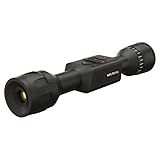
- ARS Mark9.6
ARS Mark is a ranking system developed by bestairriflescopes.com. ARS Mark has no relationship or impact from any manufacturers or sales agent websites. Learn more
- BrandATN

- ARS Mark9.3
ARS Mark is a ranking system developed by bestairriflescopes.com. ARS Mark has no relationship or impact from any manufacturers or sales agent websites. Learn more
- BrandGOYOJO

- ARS Mark8.7
ARS Mark is a ranking system developed by bestairriflescopes.com. ARS Mark has no relationship or impact from any manufacturers or sales agent websites. Learn more
- BrandBansainong
Last update on 2026-09-27 / Affiliate links / Images, Product Titles, and Product Highlights from Amazon Product Advertising API
Is a 256 sensor resolution clear enough for night predator hunting?
Yes, a 256 resolution sensor provides sufficient clarity for close to moderate ranges, but identification distance is more limited than with higher-resolution sensors. Optic models like the GOYOJO GRS225 feature a 256x192 sensor, while the AGM RattlerV2 19-256 and AGM Rattler V2 25-256 use 256-level cores to deliver listed detection ranges between 950 and 1250 yards. Upgrading to a 384x288 core, found in units like the CVLIFE 25mm or RIX Storm-S3, packs more pixels across the target silhouette to help confirm coyotes versus farm animals at extended distances. If you hunt open pastures where positive identification is critical beyond closer tree lines, verify sensor dimensions in the product specifications before deciding.
How does a one-shot zero feature work on a thermal rifle scope?
A one-shot zero feature saves sight-in coordinates digitally inside the optic menu instead of requiring mechanical turret clicks. After taking an initial shot at an insulated thermal target, models like the ATN Thor LTV let you freeze the screen view and digitally adjust the crosshair reticle directly onto the bullet hole. Standard daytime optics configured for accurate holdovers require manual windage and elevation adjustments on physical knobs, whereas digital thermal software saves the offset electronically. You then fire a second confirmation shot to verify point of impact on the target.
What base magnification works best for tight woods versus open fields?
A low base magnification suits dense brush, while higher optical magnification is preferable for open ground. Optic configurations like the AGM RattlerV2 19-256 offer a 2.5X base magnification, providing a wide viewing area that helps you locate animals quickly between thick trees. In contrast, models such as the RIX Storm-S2 and AGM Rattler V2 25-256 provide 3.5X base magnification, and the RIX Storm-S3 offers 3.5x-14.0X magnification to bring distant fields into clear focus without immediately degrading digital clarity. Check your local terrain to ensure the native optical zoom matches your expected target distances.
How does listed detection range differ from actual animal identification?
Detection range indicates the distance at which an optic registers radiant heat, while positive identification requires being close enough to discern body structure and movement. A thermal scope such as the RIX Storm-S3 lists a 1968 yards detection range, and the RIX Storm-S2 lists a 1422 yards detection range, but at those outer distances a target appears only as a cluster of warm pixels. Identification occurs much closer to the shooter, where screen setups like the 1080x760 HD display on the CVLIFE 25mm optic render distinct features like head shape, ears, and tail position. Never pull the trigger on an unconfirmed heat signature; verify the animal completely before taking aim.
Why is a 50Hz refresh rate necessary for hunting running pests?
A 50Hz refresh rate updates the viewing screen 50 times per second, which keeps fast-moving targets clear and prevents video stutter. Thermal scopes such as the CVLIFE 25mm 384x288, RIX Storm-S3, and GOYOJO GRS225 operate at a 50Hz refresh rate so that running coyotes or feral hogs track smoothly across the display. Slower frame rates can introduce screen lag, causing your reticle to lag behind the animal's actual location during rapid swings. When comparing entry thermal optics, confirm the refresh rate specification to ensure seamless motion tracking.
How do battery life and weatherproof ratings impact night hunts?
Adequate runtime and moisture resistance prevent your digital optic from shutting down in cold, damp night conditions. The ATN Thor LTV lists a 10h+ battery power life, allowing full nighttime hunts without relying on dangling external power packs. For harsh environmental exposure, the GOYOJO GRS225 provides an IP67 waterproof rating to protect electronic components against driving rain and heavy condensation. Unlike traditional glass scopes used for close-range pesting that function without batteries, thermal optics are entirely electronic, so confirm both battery duration and housing weather ratings before heading afield.

10 Top Picks: Best Youth Air Rifles for 13-Year-Olds

12 Best Rifle Scopes For 5.56 Under 150 Dollars - (2026 Top Picks)

Top 10 Rifle Scopes for Coyote Hunting in 2026

12 Best Benchrest Rifle Scopes of 2026 For Tight Groups

Top 5 Airsoft Rifles: Unleash the Action in 2026

Unveil the Best Straight Wall Deer Rifles: Top Picks for 2026

Top Ammo Choices for Air-Powered Rifles: Boost Your Performance in 2026

Best Quick Detach Scope Rings for Accurate and Convenient Shooting







