
11 Best Target Rifle Scopes For 300 Yards of 2026 To Shoot Tight Groups

A rifle rests steady on a concrete bench at the three-hundred-yard line, but the view through the glass tells a frustrating story. The thick crosshairs swallow the bullseye completely, leaving the shooter guessing where the reticle truly intersects. A slight shift in cheek weld makes the target image swim and the aiming point drift, turning a steady trigger press into an unexpected flyer on the target backer. Box after box of match ammunition disappears into erratic patterns simply because a standard hunting optic cannot eliminate optical shift at this distance.
Punching tight, repeatable clusters at mid-range demands sharp resolution and mechanical consistency rather than oversized glass built for extreme distances. Resolving small scoring rings takes reliable parallax adjustment alongside clean magnification between 9x and 18x, locking the target image onto the same optical plane as the reticle. When paired with fine holdover marks that keep the bullseye visible, every adjustment tracks cleanly and shots land where intended. Matching the glass to this distance turns frustrating bench sessions into predictable, tight groupings right across the 300-yard line.

- ARS Mark9.6
ARS Mark is a ranking system developed by bestairriflescopes.com. ARS Mark has no relationship or impact from any manufacturers or sales agent websites. Learn more
- BrandSig Sauer

- ARS Mark9.6
ARS Mark is a ranking system developed by bestairriflescopes.com. ARS Mark has no relationship or impact from any manufacturers or sales agent websites. Learn more
- BrandVortex
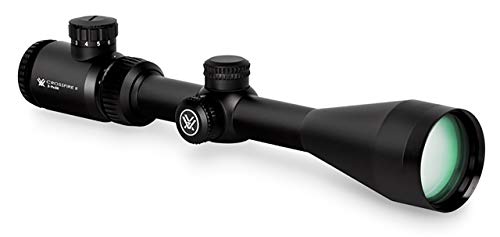
- ARS Mark9.4
ARS Mark is a ranking system developed by bestairriflescopes.com. ARS Mark has no relationship or impact from any manufacturers or sales agent websites. Learn more
- BrandVortex

- ARS Mark9.2
ARS Mark is a ranking system developed by bestairriflescopes.com. ARS Mark has no relationship or impact from any manufacturers or sales agent websites. Learn more
- BrandUUQ

- ARS Mark9.0
ARS Mark is a ranking system developed by bestairriflescopes.com. ARS Mark has no relationship or impact from any manufacturers or sales agent websites. Learn more
- BrandBushnell
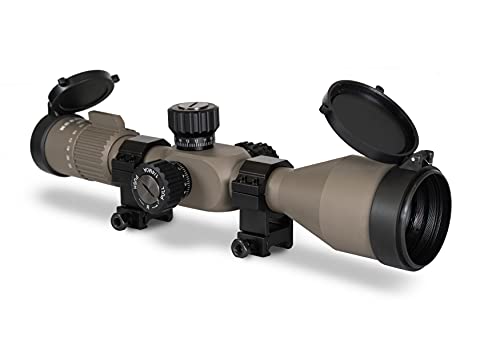
- ARS Mark8.8
ARS Mark is a ranking system developed by bestairriflescopes.com. ARS Mark has no relationship or impact from any manufacturers or sales agent websites. Learn more
- BrandMonstrum

- ARS Mark8.6
ARS Mark is a ranking system developed by bestairriflescopes.com. ARS Mark has no relationship or impact from any manufacturers or sales agent websites. Learn more
- BrandCVLIFE

- ARS Mark8.4
ARS Mark is a ranking system developed by bestairriflescopes.com. ARS Mark has no relationship or impact from any manufacturers or sales agent websites. Learn more
- BrandBARSKA

- ARS Mark8.4
ARS Mark is a ranking system developed by bestairriflescopes.com. ARS Mark has no relationship or impact from any manufacturers or sales agent websites. Learn more
- BrandCVLIFE

- ARS Mark-
ARS Mark is a ranking system developed by bestairriflescopes.com. ARS Mark has no relationship or impact from any manufacturers or sales agent websites. Learn more
- BrandSimmons

- ARS Mark-
ARS Mark is a ranking system developed by bestairriflescopes.com. ARS Mark has no relationship or impact from any manufacturers or sales agent websites. Learn more
- BrandSimmons
Last update on 2026-09-27 / Affiliate links / Images, Product Titles, and Product Highlights from Amazon Product Advertising API
How much magnification is needed to shoot paper targets at 300 yards?
Variable optics reaching 16x, 18x, or 20x magnification give you the visual detail required to clearly distinguish scoring rings at 300 yards. While standard 3-9x configurations work well for broad silhouettes, higher magnification ranges like 4-16x, 3-18x, or 6.5-20x allow precise placement without straining to spot target edges. Increasing magnification also helps you resolve the bullseye instead of centering your reticle on a blurred circle. Check the upper zoom rating on your optic to ensure it delivers the target definition your shooting discipline requires.
Is parallax adjustment necessary for shooting at 300 yards?
Yes, parallax adjustment is critical when shooting targets at 300 yards to prevent point-of-impact shift. Scopes equipped with an adjustable objective or a side focus dial allow you to bring the reticle and target image into the exact same focal plane. For instance, some side focus dials adjust from 20 yards up to 400 yards, which directly covers the 300-yard line. Without parallax correction, slight movements of your eye behind the scope can cause the crosshair to drift across the target face and open up your groups.
Which reticle design best handles bullet drop at 300 yards?
Reticles featuring dedicated reference marks, such as Mil-Dot scales or custom Bullet Drop Compensation (BDC) patterns, provide the cleanest holdover control. A BDC reticle with holdover dots calibrated out to 500 yards or a standardized Mil-Dot reticle lets you compensate for trajectory drop without touching your dials. You can also explore optics configured for accurate holdovers to ensure your subtensions stay organized. Plain crosshairs lack these elevation reference points, forcing you into visual guessing that can cost you clean hits.
Should target shooters choose a first focal plane or second focal plane reticle?
Your choice depends on whether you plan to adjust your magnification setting while calculating distance and holdovers. On a first focal plane (FFP) optic, the reticle scales dynamically with the zoom level, keeping ranging data and holdover subtensions consistent at any power. On a second focal plane (SFP) scope, the reticle stays the same visual size across the entire range, with holdover points typically calibrated for maximum zoom. For bench shooting where the scope stays parked at full power, an SFP reticle provides a thin aiming point that will not thicken over the bullseye.
How do 1/8 MOA click adjustments help when shooting at 300 yards?
Finer adjustment increments like 1/8 MOA per click give you precise control to walk bullet impacts into the center ring. Coarser hunting adjustments can move your point of impact too far across paper targets at 300 yards, making it difficult to split bullseyes. Scopes designed for target work frequently incorporate 1/8 MOA clicks or dedicated target turrets to enable tiny corrections. Verify the adjustment graduations listed in the manufacturer specifications to match your group precision goals.
What tube diameter and mounting specifications must be verified before setup?
Verify whether your scope body uses a 1-inch or 30mm tube, and ensure your mounting rings match your receiver rail. Target scopes commonly utilize 30mm tubes for added internal room or 1-inch tubes for traditional setups, with rings attaching to standard 20mm rails or specific bases. Objective lens diameters like 44mm or 50mm also demand rings tall enough to prevent contact with the barrel. Review ring measurements for proper barrel clearance so your optic sits cleanly aligned without touching metal.

10 Top Picks: Best Youth Air Rifles for 13-Year-Olds

12 Best Rifle Scopes For 5.56 Under 150 Dollars - (2026 Top Picks)

Top 10 Rifle Scopes for Coyote Hunting in 2026

12 Best Benchrest Rifle Scopes of 2026 For Tight Groups

Top 5 Airsoft Rifles: Unleash the Action in 2026
Unveil the Best Straight Wall Deer Rifles: Top Picks for 2026

Top Ammo Choices for Air-Powered Rifles: Boost Your Performance in 2026

Best Quick Detach Scope Rings for Accurate and Convenient Shooting







