
9 Best Thermal Hunting Scope 2 of 2026 For Clear Predator Identification

Is that glowing shape at two hundred yards a coyote slinking along the tree line, or just a neighbor's calf? Making that critical call in pitch darkness demands optical clarity that entry-level sensors simply cannot deliver. Nothing frustrates a freezing stand faster than raising a rifle only to squint at pixelated heat blobs that blur into mush the instant digital zoom engages. Laggy frame rates make matters worse, introducing jumpy display stutter the moment an animal breaks into a trot, causing hesitant trigger pulls and clean misses.
Stepping into the field with modern second-generation glass changes the entire experience, transforming vague heat signatures into crisp, unmistakable silhouettes. Clean identification starts by balancing thermal sensor resolution with native optical magnification, preserving critical animal outline details without sacrificing situational awareness. A fluid 50Hz refresh rate eliminates choppy display lag when tracking moving game, while a rugged, recoil-rated mount keeps zero locked through hard recoil. The profiles below match dependable second-generation optics to real hunting distances, delivering absolute target confidence on every late-night set in 2026.
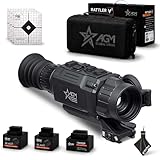
- ARS Mark8.1
ARS Mark is a ranking system developed by bestairriflescopes.com. ARS Mark has no relationship or impact from any manufacturers or sales agent websites. Learn more
- BrandAGM Global Vision

- ARS Mark8.9
ARS Mark is a ranking system developed by bestairriflescopes.com. ARS Mark has no relationship or impact from any manufacturers or sales agent websites. Learn more
- BrandRIX

- ARS Mark7.3
ARS Mark is a ranking system developed by bestairriflescopes.com. ARS Mark has no relationship or impact from any manufacturers or sales agent websites. Learn more
- BrandAGM Global Vision

- ARS Mark8.3
ARS Mark is a ranking system developed by bestairriflescopes.com. ARS Mark has no relationship or impact from any manufacturers or sales agent websites. Learn more
- BrandAGM Global Vision
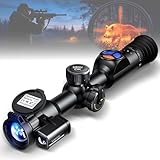
- ARS Mark8.2
ARS Mark is a ranking system developed by bestairriflescopes.com. ARS Mark has no relationship or impact from any manufacturers or sales agent websites. Learn more
- BrandGOYOJO

- ARS Mark9.3
ARS Mark is a ranking system developed by bestairriflescopes.com. ARS Mark has no relationship or impact from any manufacturers or sales agent websites. Learn more
- BrandGOYOJO

- ARS Mark9.6
ARS Mark is a ranking system developed by bestairriflescopes.com. ARS Mark has no relationship or impact from any manufacturers or sales agent websites. Learn more
- BrandATN
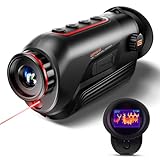
- ARS Mark7.9
ARS Mark is a ranking system developed by bestairriflescopes.com. ARS Mark has no relationship or impact from any manufacturers or sales agent websites. Learn more
- BrandGOYOJO

- ARS Mark9.0
ARS Mark is a ranking system developed by bestairriflescopes.com. ARS Mark has no relationship or impact from any manufacturers or sales agent websites. Learn more
- BrandRIX
Last update on 2026-09-29 / Affiliate links / Images, Product Titles, and Product Highlights from Amazon Product Advertising API
Does a 256 thermal sensor provide enough detail to identify a coyote versus livestock?
Yes, a 256x192 sensor provides enough resolution to identify animal silhouettes at common night hunting distances when paired with the right optical magnification. Optics featuring a 25mm lens and 3.5X base magnification, such as the RIX Storm-S2 with a 1422 yards detection range or the AGM Rattler V2 25-256 with a 1250 yards detection range, give you distinct anatomical outlines before taking a shot. In contrast, compact models like the AGM RattlerV2 19-256 feature a 19mm lens and 2.5X base magnification for a 950 yards detection range, which works well in tighter cover but shows coarser pixels at longer distances. For hunters managing open fields where positive recognition beyond several hundred yards is mandatory, stepping up to a 384x288 sensor like the ATN Thor 6 Elite or the RIX Storm-S3 ensures body contours remain defined rather than blurring into heat blobs.
What makes a V2 or S2 model an improvement over older thermal optics?
Second-generation models improve hunting performance by incorporating refined 12um sensor cores, lighter housings, and responsive 50Hz refresh rates. Modern options like the RIX Storm-S2 weigh just 0.9lb, while the RIX Storm-S3 comes in at 0.97lb, reducing overall rifle strain compared to bulkier legacy setups. The AGM Rattler V2 lineup adds high-sensitivity thermal optics with waterproof and durable housing to handle harsh conditions. Advanced firmware and hardware integrations also expand your capabilities, with options like the GOYOJO GRS225-RF including a rangefinder and ballistic calculator to simplify shooting solutions under darkness.
How does base optical magnification affect predator identification?
Base optical magnification determines your native field of view and target sharpness before digital zoom magnifies the sensor pixels. A 2.5X base magnification provides an expansive view ideal for spotting nearby heat signatures, making it practical for tight brush or situations where you might otherwise choose optics for close-range pesting. Stepping up to 3.5X base magnification on a 25mm lens concentrates your resolution on distant targets, keeping silhouettes recognizable across open pastures. Variable setups take this balance further, with the RIX Storm-S3 scaling from 3.5x-14.0X magnification and the ATN Thor 6 Elite spanning 2.5-20x magnification for extended coyote stands.
Why is a 50Hz refresh rate necessary for hunting moving targets?
A 50Hz refresh rate updates the display screen 50 times each second, delivering smooth panning and real-time motion tracking when predators or hogs break into a run. Models such as the RIX Storm-S2, Storm-S3, and GOYOJO GRS225 operate at 50Hz, eliminating the visual stutter that causes hunters to misjudge target lead. By comparison, observation units with a 25 Hz rate can present noticeable frame drag during sudden weapon swings. Maintaining a high refresh rate ensures the reticle and animal profile stay synchronized as you swing through the shot.
Can you mount a handheld thermal monocular to a rifle instead of a dedicated scope?
No, handheld thermal monoculars lack weapon mounting hardware, internal aiming reticles, and recoil reinforcement. Units like the GOYOJO Thermal Monocular feature a 10mm focal lens and a 25 Hz refresh rate designed specifically for scouting and handheld scanning. Dedicated weapon optics like the GOYOJO GRS225 feature multiple reticles, IP67 weather resistance, and recoil-activated video engineered to endure repeated discharge shock. Handheld scanners serve to locate heat sources across pastures, but taking an ethical night shot requires a purpose-built thermal riflescope.
How do you ensure a thermal hunting scope mounts properly and holds zero?
Confirm the scope model includes a dedicated mount designed for standard Picatinny rails and check that its housing is rated for the recoil of your firearm. Thermal riflescopes with waterproof and durable construction protect internal sensor boards from moisture and heavy shock during night operations. Verifying your rail height and eye relief is just as important as it is when setting up traditional glass for clear sight alignment, ensuring your eye centers quickly behind the display without straining your neck. Review the manufacturer torque specifications in the product manual before zeroing to prevent the mount from shifting under repeated recoil.

10 Top Picks: Best Youth Air Rifles for 13-Year-Olds

12 Best Rifle Scopes For 5.56 Under 150 Dollars - (2026 Top Picks)

Top 10 Rifle Scopes for Coyote Hunting in 2026

12 Best Benchrest Rifle Scopes of 2026 For Tight Groups

Top 5 Airsoft Rifles: Unleash the Action in 2026

Unveil the Best Straight Wall Deer Rifles: Top Picks for 2026

Top Ammo Choices for Air-Powered Rifles: Boost Your Performance in 2026

Best Quick Detach Scope Rings for Accurate and Convenient Shooting







