
Best Thermal Rifle Scope Under 100: 2026 Reality Check

A search for the best thermal rifle scope under 100 often starts with a simple goal: see heat in darkness without draining an entire paycheck. The price sounds attractive, especially after scrolling past thermal optics that cost hundreds or even thousands of dollars. Here’s the catch, though. A true rifle-rated thermal scope with dependable heat detection, a usable display, recoil resistance, and reliable zero retention rarely lands below the $100 mark.
Many products in this price range use words such as thermal, infrared, and night vision as though they mean the same thing. They don’t. Thermal imaging detects differences in heat, while digital night vision usually needs ambient light or an infrared illuminator to create a visible image. That distinction matters because a low-cost digital device may show shapes in darkness but won’t reveal a warm animal hidden behind light brush the way a genuine thermal sensor can.
Budget listings can still serve a purpose, but expectations need to stay grounded. Some compact viewers, phone accessories, and entry-level infrared devices help with checking a backyard, observing wildlife near a feeder, or learning how nighttime optics behave. Most aren’t built to handle repeated recoil, heavy rain, freezing weather, or precise aiming. Mounting a fragile viewer on a rifle may cause shifting, damaged electronics, or a wandering point of impact, and that’s not a small compromise.
Detection range also deserves a close look because advertised distances can be misleading. A device might detect that something warm exists at a distance while failing to show enough detail for identification. Seeing a glowing patch isn’t the same as telling whether it’s a raccoon, a dog, or a deer. Low-resolution sensors, narrow fields of view, screen lag, and short battery life can turn an inexpensive bargain into a frustrating piece of gear after the first night outside.
A smarter approach is to decide which job actually needs to be done. For scanning around property, a handheld thermal viewer may offer more value than a questionable rifle-mounted unit. For short-range nighttime observation, a digital night-vision monocular with a decent infrared light can be practical, though it won’t provide true heat imaging. For dependable aiming, saving for a recoil-rated thermal optic is usually safer than forcing a sub-$100 gadget into a role it wasn’t designed to fill.
Details such as refresh rate, sensor resolution, weather sealing, mounting hardware, and return coverage matter more than flashy zoom numbers. Digital magnification often enlarges pixels rather than revealing new detail, so an 8x claim can look blocky and hard to interpret. Also, tiny batteries tend to fade faster in cold weather, right when nighttime equipment is most likely to be needed. The honest answer isn’t as exciting as a bargain headline, but it saves money and disappointment: below $100, focus on basic observation tools and accessories rather than expecting a full thermal rifle scope.
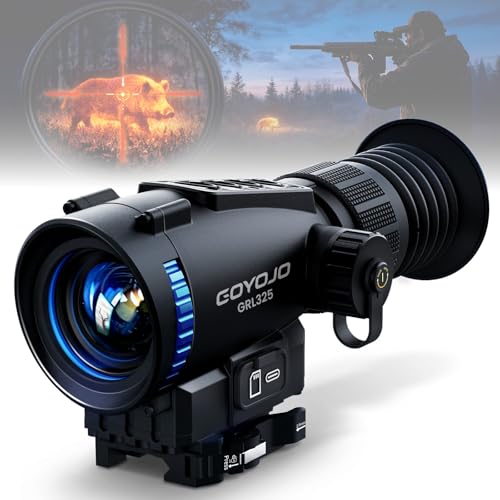
- ARS Mark9.4
ARS Mark is a ranking system developed by bestairriflescopes.com. ARS Mark has no relationship or impact from any manufacturers or sales agent websites. Learn more
- BrandGOYOJO

- ARS Mark9.2
ARS Mark is a ranking system developed by bestairriflescopes.com. ARS Mark has no relationship or impact from any manufacturers or sales agent websites. Learn more
- BrandRIX

- ARS Mark9.2
ARS Mark is a ranking system developed by bestairriflescopes.com. ARS Mark has no relationship or impact from any manufacturers or sales agent websites. Learn more
- BrandAGM Global Vision

- ARS Mark8.8
ARS Mark is a ranking system developed by bestairriflescopes.com. ARS Mark has no relationship or impact from any manufacturers or sales agent websites. Learn more
- BrandATN

- ARS Mark8.4
ARS Mark is a ranking system developed by bestairriflescopes.com. ARS Mark has no relationship or impact from any manufacturers or sales agent websites. Learn more
- BrandAthlon Optics

- ARS Mark8.4
ARS Mark is a ranking system developed by bestairriflescopes.com. ARS Mark has no relationship or impact from any manufacturers or sales agent websites. Learn more
- BrandTriton

- ARS Mark7.6
ARS Mark is a ranking system developed by bestairriflescopes.com. ARS Mark has no relationship or impact from any manufacturers or sales agent websites. Learn more
- BrandCYBERDYNE

- ARS Mark7.2
ARS Mark is a ranking system developed by bestairriflescopes.com. ARS Mark has no relationship or impact from any manufacturers or sales agent websites. Learn more
- BrandKOLINLOV

- ARS Mark7.2
ARS Mark is a ranking system developed by bestairriflescopes.com. ARS Mark has no relationship or impact from any manufacturers or sales agent websites. Learn more
- BrandHusk Masida
Last update on 2026-07-26 / Affiliate links / Images, Product Titles, and Product Highlights from Amazon Product Advertising API
GOYOJO GRL325 Thermal Scope Review
Dark fields have a habit of making distance, brush, and movement harder to judge than expected. A warm shape may appear clearly enough to notice yet remain too vague to identify, especially through entry-level optics with sluggish screens or muddy digital zoom. The GOYOJO GRL325 enters the crowded search for the best thermal rifle scope under 100 with a 384×288 sensor, 55Hz refresh rate, and a 25mm objective lens. Those specifications put image clarity and fluid tracking near the center of the conversation, although its actual selling price should be checked because the listed hardware would be unusual in a true sub-$100 thermal optic.
GOYOJO GRL325 Thermal Scope
The GRL325 is built around a 384×288 thermal resolution paired with a 12μm sensor. That combination offers more image information than very low-resolution thermal viewers, which can make an animal look like little more than a glowing blob. Fine outlines, leg movement, and separation from nearby vegetation should appear more distinct at sensible distances. Still, thermal resolution doesn’t magically reveal every detail, and identification becomes less certain as range, weather, and digital magnification increase.
A claimed NETD below 25mK is another meaningful specification because lower thermal sensitivity values generally indicate a stronger ability to display small temperature differences. That matters on humid evenings, during mild weather, or near sunrise, when the temperature gap between an animal and the background may shrink. Better sensitivity can preserve texture in grass, trees, and terrain instead of washing the scene into large flat patches. The result should feel less like staring at a rough heat map and more like reading the shape of the land.
The 25mm objective lens balances field of view and reach without turning the scope into an oversized piece of equipment. GOYOJO advertises detection at up to 1,640 yards, but detection and identification aren’t interchangeable terms. Spotting that a heat source exists at long range is far easier than determining exactly what it is, especially in brush or uneven terrain. Realistic expectations matter here, since the usable identification distance will be shorter and will vary with target size, weather, and viewing conditions.
Image Quality And Tracking
The 55Hz refresh rate is one of the stronger features on the specification sheet. A faster refresh rate makes moving animals and quick scanning feel smoother, with less dragging or stuttering as the scope pans across a field. That difference becomes noticeable while following a moving heat signature or shifting between fence lines and wooded edges. A slow display can make the scene feel disconnected, while 55Hz should keep motion more natural and easier to interpret.
Six image modes give the display more flexibility across changing backgrounds. One palette may separate a warm animal cleanly from cool vegetation, while another can reduce eye fatigue or preserve more environmental detail. The value isn’t the number alone; it’s the ability to match thermal contrast to fog, brush, open ground, and temperature conditions. Switching palettes can help, but it won’t rescue an image blocked by thick cover or distorted by heavy rain.
Digital magnification deserves a little skepticism because enlarging a thermal image also enlarges its pixels. The native 384×288 resolution gives the GRL325 a better starting point than bargain devices with smaller sensors, yet aggressive zoom will still soften edges and reduce fine detail. Moderate magnification should be more useful for checking a known heat source than pushing the zoom to its limit. That’s a common tradeoff with thermal optics, and this model doesn’t get a free pass.
The scope’s six viewing options may also make prolonged observation less tiring. Bright white-hot palettes can feel harsh after extended use, while darker modes may be easier on the eye in a blind or vehicle. Display comfort sounds minor until a bright screen ruins night adaptation or causes eye strain after repeated checks. Having several palettes lets the image fit the situation rather than forcing the same visual style every time.
Recording, Zeroing, And Field Use
Internal recording is handled through 64GB of built-in storage, so photos and videos don’t depend on a separate memory card. That removes one tiny item from the packing list and avoids the annoyance of discovering an empty card slot after reaching the field. Recorded footage can help review animal movement, verify what appeared near a feeder, or preserve a useful observation. File management still matters, though, because internal memory eventually fills and requires occasional cleanup.
The manual zeroing process is described as a straightforward point-of-impact adjustment. After firing a group, the reticle can be shifted toward the impact location while the original aim point remains steady. That approach is common in digital thermal scopes and can reduce wasted ammunition when performed carefully. Zero retention is the bigger long-term question, since an easy setup means little if the point of impact drifts after recoil, transport, or temperature changes.
Mounting stability deserves the same attention as sensor specifications. A thermal scope adds weight above the receiver, and loose hardware can create misses that look like an optic problem. Proper torque, a solid rail, and repeatable mounting pressure help the GRL325 maintain alignment. A relevant reference is the accurate PCP air rifle discussion, where consistent mounting and predictable shot placement matter just as much as optic clarity.
The housing and controls also need to remain manageable with gloves or cold fingers. A button layout that feels simple indoors may become awkward in darkness, especially when switching palettes, recording video, or adjusting zoom by touch. The GRL325’s feature set is broad enough to be useful, but too many menu layers could slow down quick changes. Control simplicity often separates an optic that feels natural outdoors from one that demands constant attention.
Pros And Everyday Advantages
The strongest advantage is the combination of 384×288 resolution and a 55Hz refresh rate. Those two specifications address the most common frustrations with cheaper thermal devices: unclear shapes and choppy motion. The image should remain more readable while panning, and moving heat sources should be easier to follow without excessive blur. For field scanning, that pairing carries more practical weight than inflated zoom claims.
Thermal sensitivity below 25mK could also help during difficult temperature conditions. Warm afternoons followed by mild evenings often leave the ground, trees, and structures holding residual heat, which can reduce target contrast. A sensitive sensor has a better chance of showing subtle edges instead of blending everything together. Environmental detail is especially helpful near brush lines, where a heat signature may otherwise merge into a cluttered background.
The six image modes and built-in recording add useful flexibility without requiring extra accessories. Different palettes suit different eyes, and 64GB of storage leaves room for a large amount of field footage before files need to be removed. The stated five-year warranty is also reassuring on paper because thermal electronics aren’t cheap or simple to repair. Warranty value, however, depends on clear terms and responsive service, so the policy details deserve a careful read.
- Pros: 384×288 thermal resolution provides a more detailed base image than many low-resolution entry models.
- Pros: The 55Hz refresh rate supports smoother scanning and tracking.
- Pros: Six color palettes help adapt contrast to changing terrain and weather.
- Pros: Built-in 64GB storage removes the need for a separate memory card.
- Pros: Manual zeroing is designed to reduce unnecessary adjustment shots.
- Pros: The stated five-year warranty adds longer-term support coverage.
Cons And Realistic Tradeoffs
The biggest concern is the relationship between this product and the phrase best thermal rifle scope under 100. A 384×288 sensor, 55Hz display, 64GB storage, and five-year warranty would be extremely aggressive at a price below $100. Pricing can change, listings can use coupons, and search results sometimes place products beside keywords they don’t truly match. The current checkout price should be verified rather than assuming the scope fits that budget.
The advertised 1,640-yard detection figure may also create expectations the optic can’t consistently meet for identification. Large animals, vehicles, and other strong heat sources may register at impressive distances under favorable conditions. Smaller targets in brush will be a different story, and recognizing species or orientation will require a much shorter range. Detection range is useful for awareness, but identification range is the number that shapes real field decisions.
Battery information isn’t included in the supplied specifications, leaving an important practical gap. Thermal scopes draw power through the sensor, display, processor, and recording hardware, so runtime can change with brightness, temperature, and video use. Cold weather usually puts extra pressure on batteries, and internal packs may be harder to replace in the field than removable cells. Power management should be checked closely before depending on the scope for a long night.
The GRL325 also appears feature-rich, which can mean a learning curve for menu navigation and calibration behavior. Thermal optics sometimes require periodic image correction, and that brief interruption can be distracting during active tracking. Recording controls, palette selection, zoom, and zeroing all need to feel predictable under pressure. A busy interface isn’t automatically bad, but it can frustrate anyone expecting the simplicity of a traditional glass optic.
- Cons: The actual price may not match a strict sub-$100 budget.
- Cons: Long-range detection does not guarantee reliable long-range identification.
- Cons: Battery type and expected runtime aren’t stated in the supplied details.
- Cons: Digital zoom will reduce detail as magnification increases.
- Cons: Warranty quality depends on the terms and responsiveness behind the claim.
- Cons: Menu depth and calibration behavior may require practice before field use feels natural.
RIX Storm S1 Thermal Scope Review
A heavy optic can turn a balanced rifle into a front-loaded chore before the night has properly started. Dim controls, slow menus, and smeared movement make the problem worse, especially once gloves and cold fingers enter the picture. The RIX Storm S1 takes a leaner route for anyone researching the best thermal rifle scope under 100, pairing a sub-one-pound aluminum body with a 192×144 sensor, 50Hz refresh rate, and 3.5x native magnification. Its listed hardware clearly aims above toy-grade infrared gear, though the current selling price still needs careful attention because genuine thermal technology rarely stays within a strict two-digit budget.
RIX Storm S1
The Storm S1 centers its imaging system around a 192×144 thermal detector with a 12μm pixel pitch. That resolution sits on the entry side of dedicated thermal scopes, so expectations should stay tied to detection and practical short-to-moderate-range recognition rather than crisp photographic detail. Warm animals should stand apart from cooler ground and vegetation, but small body features may soften as distance grows. The scope’s value depends less on raw pixel count and more on how well the processor turns limited sensor data into a readable scene.
RIX addresses that limitation with its RET image-enhancement technology, an algorithm-based system intended to improve edge definition and perceived detail. The company says the processed image can approach the appearance of a 256-class detector, though software can’t physically add native sensor pixels that aren’t there. In practice, enhancement may clean up outlines, reduce visual roughness, and make heat signatures easier to interpret. Still, thick brush, moisture, and strong digital magnification can expose the limits of the underlying 192×144 array.
A NETD rating below 25mK gives the S1 a potentially useful advantage during low-contrast weather. Thermal sensitivity matters after a warm day, around damp terrain, or near dawn, when the temperature difference between an animal and its surroundings may be narrow. A sensitive detector can preserve more subtle separation between grass, branches, soil, and warm bodies. That doesn’t turn fog or dense cover invisible, but it can keep the picture from flattening into an indistinct patchwork.
The supplied 19mm objective lens favors a compact build and a manageable field setup. RIX lists observation out to 1,094 yards, yet that number should be read as a detection-style claim rather than a promise of positive identification at that distance. A large heat source may register far away, while a smaller animal among trees will require considerably closer viewing. Detection distance and identification distance aren’t the same thing, and mixing them up is how budget optics end up disappointing people.
Motion, Magnification, And Image Behavior
The 50Hz refresh rate is a welcome specification because entry-level thermal viewers often feel jerky during a fast pan. At 50Hz, movement should appear smoother while sweeping a field, following an animal, or shifting between several warm objects. Fluid motion makes direction and speed easier to judge, and it also reduces the disconnected feeling that comes with slower displays. For practical nighttime scanning, refresh rate may matter more than an oversized zoom number printed on a listing.
Native magnification starts at 3.5x and extends digitally to 7x. That base view suits smaller targets at moderate distances, though it may feel tight during close-range scanning or in dense woods. Digital zoom enlarges the sensor image rather than creating additional detail, so the scene will become blockier as magnification rises. Moderate zoom use is likely to deliver the cleanest balance between target size and image clarity.
The higher native magnification can be handy across open fields, fence lines, and broad pasture where heat sources appear relatively small. In cramped terrain, however, a narrower field of view may make it harder to relocate a moving animal after losing it behind brush. That’s the give-and-take here. Longer visual reach comes at the cost of some close-range awareness, and the right balance depends heavily on terrain.
RET processing may help the S1 hold together better at its base magnification, especially where the background has uneven heat. Fine branches and grass can still create clutter, and no algorithm can fully separate a partly hidden animal from every obstacle. Palette selection, brightness, and contrast settings will need a little adjustment as weather shifts. The scope appears built to make those changes approachable rather than burying them under overly technical menus.
Controls, Recording, And Carry Comfort
The menu system is presented as one of the S1’s easier traits. RIX says the interface can be operated with little learning time, which matters because night equipment quickly becomes irritating when every adjustment requires several button presses. Simple navigation helps with switching display settings, starting a recording, or changing magnification without staring at a manual in the dark. A tidy interface also reduces the chance of changing the wrong setting while trying to respond quickly.
Physical controls receive similar attention through the button layout and battery-compartment design. Raised, distinct buttons are easier to recognize by touch, especially with gloves covering the fingertips. That small detail can make the scope less fussy during cold weather or hurried adjustments. Glove-friendly operation isn’t flashy, but it often decides whether a device feels natural or awkward after sunset.
Recording and Wi-Fi connectivity add another layer beyond basic observation. Captured footage can document animal movement, preserve an unusual sighting, or help review what happened after a fast encounter. Wi-Fi may also simplify transferring or viewing files, depending on the accompanying software and connection stability. Wireless convenience is useful, though it may draw additional battery power and introduce another menu or app to manage.
The aluminum-alloy housing weighs less than one pound and measures roughly 5.3 by 2.5 by 2.2 inches. That compact footprint reduces bulk above the receiver and makes the S1 less tiring to carry than many larger thermal scopes. It can also function as a handheld viewer, which gives the optic a second role during scouting or property observation. From a practical angle, the laser sight for SIG P365 reference reflects the same broader concern with keeping mounted equipment compact and controls easy to reach.
Pros, Weak Spots, And Practical Limits
The Storm S1’s main strength is the way its features work together rather than one spectacular specification. A 50Hz screen, sensitive detector, compact metal body, and straightforward menu address several frustrations that plague low-cost thermal gear. The unit shouldn’t feel like a brick on the rifle, and motion ought to look smoother than it does through slower entry-level viewers. Its dual use as a scope and handheld device also stretches the usefulness of one piece of equipment.
The five-year service promise adds some reassurance, particularly because thermal electronics aren’t easy to repair at home. RIX also states that support replies are provided within 24 hours, although actual response quality can vary and isn’t proven by the supplied description alone. Warranty terms deserve a close read for exclusions involving mounts, impact damage, batteries, or water exposure. Long warranty coverage only carries weight when the claim process is clear and practical.
The largest weakness remains the native 192×144 resolution. Image enhancement may make outlines cleaner, but it won’t match the natural detail of a true 256×192 or 384×288 detector under every condition. Identification confidence will drop faster with distance, digital zoom, heavy vegetation, and poor thermal contrast. The S1 is better framed as a compact entry thermal scope than as a substitute for higher-resolution equipment.
Battery life, recoil rating, weather protection, eye relief, and mounting details aren’t included in the supplied information. Those omissions matter because field reliability depends on far more than sensor numbers. A clear image won’t help much if the battery fades early, the mount shifts, or the controls struggle in rain. The absence of those figures doesn’t prove a flaw, but it does leave several practical questions unanswered.
- Pros: The sub-one-pound aluminum body reduces added rifle weight.
- Pros: A 50Hz refresh rate supports smoother scanning and tracking.
- Pros: RET processing may improve perceived edges and scene definition.
- Pros: The simple menu and tactile controls reduce nighttime fumbling.
- Pros: Recording, Wi-Fi, and handheld use broaden its everyday utility.
- Pros: The stated five-year service coverage is longer than many basic electronics warranties.
The price positioning also needs a reality check. Anyone searching for the best thermal rifle scope under 100 may see the S1 mentioned around budget-focused pages, but a real 12μm thermal sensor, metal housing, recording system, and Wi-Fi connection would be unusual below $100. Discounts and listing prices change, so the actual checkout figure matters more than the surrounding keyword. Budget-friendly and under $100 are two very different claims.
The 3.5x base magnification creates another tradeoff. It helps warm targets fill more of the display at distance, yet it narrows the view in close cover and can make broad scanning feel cramped. A separate handheld scanning routine may help, and the S1’s compact body supports that role. Still, repeatedly removing and remounting any optic raises questions about return-to-zero consistency.
Wi-Fi and recording features are useful but can complicate an otherwise simple device. Wireless pairing may be affected by phone compatibility, app behavior, or firmware changes, none of which are detailed in the provided specifications. Recording also consumes storage and power, so it shouldn’t be treated as free background functionality. Extra electronics add convenience while creating more things that may require occasional troubleshooting.
- Cons: The 192×144 native sensor limits fine detail at longer distances.
- Cons: Digital magnification up to 7x will magnify pixels as well as targets.
- Cons: The 1,094-yard claim shouldn’t be treated as dependable identification range.
- Cons: Battery runtime and battery format aren’t stated in the supplied details.
- Cons: Weather sealing, recoil tolerance, and mounting specifications remain unclear.
- Cons: The current price may sit well above a strict $100 ceiling.
AGM RattlerV2 19-256 Thermal Scope Review
Short nights in the field expose weak optics fast. A narrow view makes scanning tedious, slow refresh rates turn movement into a blur, and bulky housings throw rifle balance off before the first real opportunity appears. The AGM RattlerV2 19-256 enters the conversation around the best thermal rifle scope under 100 with a 256×192 sensor, 50Hz refresh rate, 2.5x base magnification, and a compact 19mm Germanium lens. Its feature set clearly sits beyond bare-bones thermal gear, so the actual selling price deserves verification before placing it inside a strict sub-$100 budget.
AGM RattlerV2 19-256
The RattlerV2 uses a 256×192 thermal sensor, which gives it a noticeable detail advantage over lower-resolution 160-class and 192×144 units. Animals should show cleaner body outlines, more readable movement, and better separation from nearby brush at practical distances. That extra resolution doesn’t turn the image into daylight glass, but it gives the processor more information to work with. For quick recognition in uneven terrain, those added pixels matter more than an inflated digital zoom figure.
A 19mm Germanium objective keeps the front end compact while supporting a broad viewing area. The listed 9.3° by 6.9° field of view translates to roughly 49 feet at 100 yards, which is useful for sweeping fence lines, field edges, and woodland openings. A wider image reduces the constant back-and-forth panning that makes narrow thermal scopes tiring to use. It also helps keep moving heat signatures inside the display after they change direction.
The 2.5x native magnification strikes a sensible middle ground. It offers more reach than a 1x-style scanner without making close-range observation feel like looking through a drinking straw. Across mixed ground, that balance can make target acquisition quicker and tracking less frustrating. Base magnification matters because it preserves native image quality, unlike digital enlargement that stretches the available pixels.
AGM lists detection out to 950 yards, but that number needs the right interpretation. A large warm object may appear at that distance under favorable conditions, yet positive identification will happen much closer. Brush, humidity, target size, and background temperature all change what the sensor can separate. Detection range tells you that heat is present, while identification range determines whether the image provides enough detail for a responsible decision.
Refresh Rate And Moving Target Clarity
The jump from 25Hz to 50Hz refresh is one of the most practical upgrades in this version. Motion appears smoother during fast scans, and a moving animal should travel across the display with less stutter. That fluidity makes speed and direction easier to read, especially while swinging across an open field. Lower refresh rates can feel delayed, while 50Hz keeps the image closer to natural movement.
Smoother playback also reduces the strain that comes from watching a scene lag behind the rifle. A thermal image doesn’t need to look cinematic, but it should react quickly enough that aiming and observation feel connected. The RattlerV2’s refresh rate supports that connection without making the operator fight the display. Tracking confidence often comes from this kind of responsiveness rather than raw detection distance.
The 256×192 sensor gives the faster screen a more useful image to refresh. A high frame rate attached to a weak sensor can still produce a smooth but vague picture, which isn’t much help. Here, the combination should preserve clearer target edges while movement stays fluid. That pairing is especially valuable around tall grass, light cover, and uneven ground where a heat signature can disappear quickly.
Weather still sets the rules, of course. Heavy rain, fog, and warm backgrounds can flatten thermal contrast regardless of refresh rate. The scope may follow movement smoothly while offering less certainty about shape or species. Environmental limits remain part of thermal use, and no specification sheet can erase them.
Zoom, Focus, And Practical Viewing
Digital zoom ranges from 2.5x to 20x, giving plenty of room to enlarge a heat source once it’s located. The catch is straightforward: digital zoom magnifies pixels along with the target. At moderate settings, it can help inspect orientation or movement, but high settings will soften edges and make the image more blocky. Native detail always carries more weight than the maximum zoom number.
The short-throw focus ring is a quieter improvement, yet it may be one of the most appreciated. Thermal focus often needs small adjustments as range changes, and a long, stiff ring can slow that process. A shorter rotation lets the image snap into useful clarity with less fumbling. That’s handy in darkness, doubly so with gloves on or while working from an awkward position.
The upgraded lens cap also solves a common annoyance. Loose caps catch on brush, swing into the housing, or disappear after a few trips. A better cap protects the Germanium lens without becoming another piece of gear to babysit. Lens protection matters because the front element is both delicate and expensive compared with ordinary glass.
The 19mm lens and 2.5x base view also fit woodland edges and mixed cover better than a heavily magnified setup. Open-country observation may leave some wishing for more native reach, but the digital zoom can provide limited assistance after a target is located. Across shorter lanes and feeder areas, the wider view may prove more useful than extra magnification. There’s no free lunch here, just a deliberate balance between awareness and reach.
Handling, Rifle Balance, And Field Routine
The redesigned body aims to make the scope easier to live with rather than merely more impressive on paper. Compact thermal optics keep weight closer to the receiver, which helps preserve natural handling. A front-heavy rifle becomes tiring during long carries and slower to settle from unsupported positions. Balanced mounting can improve comfort even before image quality enters the discussion.
Control placement also matters after sunset. Buttons that feel obvious at a desk can become confusing with gloves, darkness, and time pressure. The RattlerV2’s updated body suggests a more refined layout, though the supplied details don’t describe every control or menu step. A sensible interface should let magnification, palette changes, and recording functions happen without breaking concentration.
Mounting consistency deserves just as much attention as electronics. A stable rail, correct ring pressure, and proper torque help keep the optic aligned after travel and recoil. From a practical angle, the competition rifle scopes discussion reflects the same need for repeatable mounting and dependable point-of-impact behavior. Even a sharp thermal image loses value if the optic shifts between sessions.
Battery information, recoil limits, weather rating, and storage capacity aren’t included in the supplied description. Those missing details leave questions about long-night runtime and hard-use durability. Cold temperatures can shorten battery life, while repeated recoil tests the mount and internal components. Field reliability depends on these quieter specifications, not just sensor resolution and detection distance.
Pros And Strongest Practical Benefits
The biggest strength is the combination of a 256×192 detector and 50Hz refresh rate. That pairing supports clearer outlines and smoother movement than many lower-tier thermal devices. It won’t match the detail of a 384-class sensor, but it offers enough resolution to make practical observation more comfortable. The faster screen keeps those extra pixels useful while scanning or tracking.
The broad field of view is another real advantage. Nearly 49 feet at 100 yards gives the operator room to search without constant panning. That can shorten the time between spotting movement and centering it in the reticle. Wide-area awareness is particularly valuable in brush, timber openings, and smaller properties where encounters may happen suddenly.
The short-focus ring, revised lens cap, and updated body show attention to everyday handling. None of those features sounds dramatic alone, but together they reduce small annoyances that build up during repeated use. Faster focusing, better protection, and a tidier package make the scope less demanding in the field. Practical refinements often matter more after several hours than another line on the specification chart.
- Pros: The 256×192 sensor offers more native detail than lower-resolution entry units.
- Pros: A 50Hz refresh rate supports smoother scanning and tracking.
- Pros: The 2.5x base magnification balances reach and field awareness.
- Pros: The wide field of view helps locate and follow moving heat sources.
- Pros: The short-throw focus ring speeds up range adjustments.
- Pros: The upgraded lens cap gives the Germanium objective better day-to-day protection.
Cons And Realistic Tradeoffs
The first drawback is price positioning. A legitimate 256×192 thermal scope from an established optics brand is unlikely to remain inside a strict best thermal rifle scope under 100 ceiling. Search pages often mix budget language with products costing several times more. The checkout price, warranty terms, and included accessories need to be judged separately from the keyword surrounding the listing.
Digital zoom reaching 20x sounds generous, but the image won’t remain equally sharp throughout that range. Each step beyond the native 2.5x view enlarges the same sensor data. At higher settings, target edges become rougher and background details merge together. Maximum magnification is more useful for enlarging a known heat source than for creating new identifying detail.
The 950-yard detection claim may also tempt readers to expect reliable identification at extreme distance. Real usable range will shrink with small targets, warm weather, light cover, and poor atmospheric conditions. A distant heat signature may show presence without providing enough shape to make a confident call. That gap between detection and recognition is a standard thermal limitation, not a flaw unique to this model.
Missing battery, storage, weatherproofing, and recoil specifications make the field picture incomplete. Those details affect how long the scope can stay active, how well it handles rain, and whether repeated firing changes zero. The absence of information isn’t proof of weak construction, but it prevents a full durability assessment. Long-term dependability needs more than a strong sensor and a smooth display.
- Cons: The actual selling price may sit far above a $100 budget.
- Cons: High digital zoom settings will reduce visible detail.
- Cons: The listed 950-yard figure reflects detection, not guaranteed identification.
- Cons: Battery life and battery format aren’t stated in the supplied details.
- Cons: Weather sealing and recoil tolerance remain unspecified.
- Cons: The 2.5x base magnification may feel limited across very large open fields.
ATN ThOR LTV Ultra-Light Thermal Scope Review
Extra weight over the receiver sounds harmless until a rifle starts feeling nose-heavy after an hour of carrying, scanning, and settling into awkward positions. A cluttered menu can be just as tiring, especially in darkness when every missed button press breaks concentration. The ATN ThOR LTV approaches the search for the best thermal rifle scope under 100 with a 12-micron sensor, 60Hz refresh rate, video recording, One Shot Zero, and a relatively light 1.4-pound body. Those features place it well beyond the usual sub-$100 gadget category, so its real purchase price should be separated from the budget keyword surrounding it.
ATN ThOR LTV
The ThOR LTV is built around a 12-micron thermal sensor, a specification that helps the optic maintain useful detail without requiring an oversized housing. Smaller pixel pitch can support a tighter, more compact optical system while still providing enough information for heat detection and target separation. The practical result should be a scope that feels less bulky on the rifle than many older thermal designs. Sensor resolution isn’t included in the supplied details, though, so a complete judgment of native image detail isn’t possible from pixel pitch alone.
A 60Hz refresh rate gives the display a smoother feel during movement. Fast panning across a field, following an animal through gaps in brush, or shifting between several heat sources should look less choppy than it would through a 25Hz or 30Hz unit. That fluidity matters because thermal images can become tiring when motion lags behind the rifle. Sixty frames per second won’t add detail that the detector never captured, but it can make existing detail easier to interpret while the scene is moving.
ATN describes the image as clear and free from distracting distortion, yet the actual result will still depend on weather, focus, target distance, and background temperature. Warm soil after sunset can reduce contrast, while rain and fog may soften the entire scene. A strong refresh rate helps with motion, but it can’t punch through every environmental limit. Thermal clarity remains a balance of sensor quality, processing, optics, and conditions rather than one headline number.
The scope’s compact profile also fits rifles that become awkward with larger housings. At 1.4 pounds, it isn’t featherweight compared with a basic day optic, but it is manageable for a thermal scope with recording hardware and onboard processing. The reduced bulk can help preserve a more natural hold from a blind, rest, or standing position. Rifle balance is one of those quiet factors that becomes more obvious the longer the night drags on.
SharpIR Image Processing
SharpIR technology is designed to improve perceived edge definition and image sharpness through software processing. That can help a warm target stand out more clearly from uneven grass, branches, or a patchy background. Cleaner edges may also make body orientation easier to read at sensible distances. Still, software enhancement cannot create genuine sensor detail that wasn’t recorded in the first place.
Image processing often works best at lower and moderate magnification, where the detector still has enough native information to shape. Heavy digital enlargement exposes pixel limits quickly, even if sharpening is active. The result may look more defined around the edges while still lacking fine identifying features. That’s not a knock unique to the ThOR LTV; it’s simply how digital thermal magnification behaves.
SharpIR may prove especially useful in low-contrast scenes where the target and background sit close in temperature. A softer processor can turn those conditions into a flat wash of gray or white, while stronger enhancement may preserve enough separation to make movement readable. The improvement will likely feel most meaningful around fence lines, brush edges, and rolling ground. Perceived detail matters because a cleaner outline reduces the time spent second-guessing a heat signature.
Processing also needs restraint. Excessive sharpening can produce artificial-looking edges, halos, or a brittle image that appears detailed without actually carrying more information. A good thermal display should remain readable rather than merely dramatic. The ThOR LTV’s value here depends on how naturally SharpIR balances contrast, noise, and edge definition across changing conditions.
One Shot Zero And Setup
One Shot Zero is meant to shorten the sight-in process by letting the reticle move toward the first point of impact. The rifle stays aimed at the original point while the digital reticle is adjusted to match where the shot landed. That can reduce wasted ammunition and save time at the range. Efficient zeroing is particularly useful with specialized ammunition or limited range access.
The feature still depends on a solid shooting setup. A poor rest, inconsistent shoulder pressure, loose mount, or single errant shot can lead to a false correction. A small confirmation group after adjustment remains sensible because one impact never tells the whole story. One Shot Zero simplifies the process, but it doesn’t replace stable fundamentals.
Mounting deserves equal attention because digital correction can’t compensate for hardware that shifts under recoil. Rail condition, screw torque, and mount alignment all influence repeatability. A properly installed optic should return to the same point after transport, handling, and normal firing. Zero retention matters more over time than how quickly the first adjustment is completed.
The 90mm eye relief provides breathing room between the eyepiece and the shooter. That distance can make the optic more comfortable across different platforms while reducing the cramped feeling found on shorter-eye-relief designs. It may also help maintain a consistent head position behind the display. From a practical angle, the air rifles for kids reference touches on the same broader issue of fit, manageable weight, and comfortable shooting geometry.
Recording And Everyday Operation
Built-in HD video recording gives the ThOR LTV a useful role beyond aiming. Footage can preserve animal movement, document an unusual sighting, or help review what happened during a brief encounter. It also removes the need to mount a separate camera beside the scope. Integrated recording keeps the rifle setup cleaner and reduces the number of batteries and brackets that need attention.
Video quality will depend on the recorded output and the native thermal sensor, which isn’t specified in the supplied description. HD file resolution doesn’t automatically mean the thermal image itself contains high-definition sensor detail. The recording can still look clean and easy to share while reflecting the limits of the detector. That distinction matters because file format and thermal resolution are two different things.
Recording also uses storage and battery power. Long sessions, frequent clips, and a bright display can shorten runtime compared with simple observation. Storage capacity and battery specifications aren’t included here, leaving a gap in the field picture. Power planning deserves attention before relying on recording during a full night outside.
The LTV line is presented as straightforward rather than overloaded with complicated menus. That approach suits situations where quick access matters more than a deep stack of settings. Fewer distractions can make palette changes, zoom adjustments, and recording controls easier to remember in darkness. Simple operation isn’t glamorous, but it often keeps an optic from becoming a nuisance.
Pros And Strong Points
The ThOR LTV’s strongest trait is the combination of 60Hz motion and a compact 1.4-pound body. Smooth tracking is easier to appreciate when the rifle still handles naturally and doesn’t feel burdened by an oversized housing. The scope should remain manageable during long carries or repeated scanning. That balance between image behavior and physical weight is more useful than chasing one extreme specification.
SharpIR processing adds another practical layer by cleaning up the displayed image. Better-defined edges can reduce hesitation around partially obscured heat sources, especially where vegetation creates visual clutter. The benefit is likely to vary with distance and weather, but it addresses a real weakness of entry thermal optics. Image refinement can make a modest detector feel easier to read without pretending it has more native pixels.
One Shot Zero and built-in video recording also reduce the need for extra steps and accessories. Zeroing can be faster, while footage stays inside the scope rather than depending on a separate camera. Both features support a cleaner field routine. They don’t guarantee accuracy or perfect footage, yet they remove small complications that tend to pile up.
- Pros: The 12-micron sensor supports a compact thermal design.
- Pros: A 60Hz refresh rate provides smoother motion during scanning.
- Pros: SharpIR processing may improve perceived edges and target separation.
- Pros: One Shot Zero can reduce time and ammunition spent during setup.
- Pros: Built-in HD recording avoids the need for a separate camera.
- Pros: The 1.4-pound body is manageable for a recording thermal scope.
- Pros: The 90mm eye relief supports a more comfortable head position.
Cons And Practical Limitations
The biggest unanswered question is native sensor resolution. Pixel pitch and refresh rate are useful specifications, but they don’t reveal how much actual thermal detail reaches the display. A lower-resolution sensor can still look smooth at 60Hz while losing fine identification detail at distance. Resolution matters because image processing can sharpen edges but can’t replace missing information.
The price also creates a mismatch with the phrase best thermal rifle scope under 100. A true thermal scope with a 12-micron detector, onboard recording, image processing, and digital zeroing would be unusual at a two-digit price. Search pages sometimes place premium and entry models under the same budget phrase without reflecting current checkout cost. The real listing price needs to carry more weight than the surrounding keyword.
Battery type, expected runtime, storage capacity, weather sealing, and recoil limits aren’t stated in the supplied details. Those missing specifications affect how useful the scope will be during cold weather, long sessions, rain, and repeated firing. A smooth image isn’t enough if the battery fades early or the housing isn’t suited to the conditions. Field durability depends on these less glamorous details.
The 1.4-pound weight is light within the thermal category, yet it still adds noticeable mass compared with a traditional scope. Smaller rifles or already accessorized platforms may feel top-heavy once mounts, batteries, and other equipment join the setup. Eye relief and body shape also need to match the available rail space. Compact doesn’t automatically mean effortless on every platform.
- Cons: Native thermal resolution isn’t included in the supplied specifications.
- Cons: The actual price may be far above a strict $100 limit.
- Cons: Battery format and expected runtime remain unspecified.
- Cons: Storage capacity for recorded video isn’t stated.
- Cons: Weather resistance and recoil tolerance aren’t detailed.
- Cons: Image enhancement can’t replace genuine native sensor detail.
- Cons: A 1.4-pound optic may still affect balance on smaller rifles.
Athlon Cronus ATS PRO Thermal Scope Review
Night optics get frustrating fast when the image looks decent but the controls feel buried, the mount takes forever to settle, or the reticle still leaves too much guesswork at distance. The Athlon Cronus ATS PRO takes a more feature-heavy route, pairing thermal imaging with a ballistic calculator, wireless app control, automatic shot recording, and a quick-release mount. It appears in searches around the best thermal rifle scope under 100, yet its hardware and electronics suggest a much higher price class than that phrase implies. The real appeal lies less in bargain positioning and more in combining observation, holdover data, and recording inside one compact system.
Athlon Cronus ATS PRO
The optic uses a 256×192 thermal sensor with a 12µm pixel pitch. That resolution sits above bare-bones thermal viewers and should provide enough detail for clear heat separation at practical distances, though it won’t match the finer outlines produced by a 384-class detector. Athlon lists a NETD rating of 35mK or better, which indicates respectable sensitivity to small temperature differences. Warm targets should remain visible against mixed ground, brush, and cooler vegetation, but humidity and warm backgrounds can still flatten the scene.
The 12µm sensor helps keep the optical package compact while maintaining useful detection capability. Smaller pixel pitch can support a narrower focal system without requiring an oversized front lens, which helps with weight and mounting balance. Still, sensor resolution remains the main ceiling on identification detail. Digital processing can sharpen outlines, but distant features will soften once the image is enlarged beyond its native limits.
Athlon pairs the detector with a 0.39-inch OLED display carrying a 1024×768 resolution. The display resolution is far higher than the sensor resolution, so menus, reticles, and processed imagery can appear crisp even though the incoming thermal data remains 256×192. High contrast is especially useful in darkness because subtle edges are easier to read without pushing brightness too high. The result should feel cleaner than a low-resolution screen that makes every menu and heat signature look coarse.
Seven color palettes add room to tailor the image to weather, terrain, and personal preference. White-hot may feel natural for quick scanning, while darker palettes can reduce eye fatigue during longer observation. Brightness and contrast adjustments for each palette give the optic more flexibility than a simple preset-only system. Display tuning matters because the same palette rarely behaves equally well in open fields, damp woods, and warm evening ground.
Ballistic Calculator And Holdover Data
The built-in ballistic calculator is the feature that separates this scope from simpler thermal units. Athlon’s app supports common calibers, cartridges, and custom loads, then provides customized holdover information for the optic. That can reduce rough guesswork once distance, ammunition, and rifle data are entered correctly. Ballistic accuracy, however, depends entirely on honest inputs rather than the presence of software alone.
Muzzle velocity, sight height, projectile weight, ballistic coefficient, and environmental conditions all influence the result. A factory velocity printed on an ammunition box may differ from what a specific barrel actually produces. Small input errors grow more meaningful as distance increases, so app-generated holdovers still need confirmation on a controlled range. The calculator is a tool, not a shortcut around proper zeroing and data verification.
The feature becomes more useful when several loads or rifles are kept in rotation. Instead of relying on handwritten notes or memory, profiles can organize known settings and holdover behavior. From a practical angle, the ammo for 177 air rifle reference touches on the same relationship between projectile choice, velocity, and repeatable point of impact. Different ammunition can shift trajectory enough that one saved profile won’t automatically suit every load.
App-based control also offers an alternative to navigating every setting through physical buttons. That can make profile editing, image management, and setup easier before heading outside. Phone control isn’t always convenient in rain, cold, or poor reception, though, and wireless pairing can introduce its own small headaches. On-device controls still need to remain practical when the phone stays in a pocket.
Recording And Wireless Features
Wi-Fi and Bluetooth support connect the scope with compatible Apple and Android devices. The app can handle video, audio, image downloads, and some optic controls without removing storage media. That makes reviewing footage less cumbersome after a session. Wireless transfer is convenient, although file size, battery drain, and connection stability will affect how smooth the process feels.
Automatic shot recording is more interesting than a basic manual record button. The system captures a 10-second clip, including three seconds before the shot and seven seconds after it, along with five still images. That pre-shot buffer can preserve the moment leading up to the trigger rather than starting too late. For reviewing movement or documenting an event, the extra context may prove more valuable than a longer clip that begins after the action.
Adjustable shot sensitivity allows the trigger to be tuned for different calibers. That matters because recoil impulse varies widely, and a fixed threshold could miss lighter shots or activate during unrelated bumps. Proper sensitivity should reduce false recordings while still capturing the intended event. Automatic recording sounds simple, but calibration will determine whether it feels dependable or fussy.
Recording features also bring practical tradeoffs. Video and still images consume storage, while Wi-Fi, Bluetooth, the OLED display, and thermal processing all draw battery power. The supplied details don’t specify runtime or storage capacity, leaving two meaningful questions unanswered. A feature-rich optic can burn through power faster than expected if every wireless and recording function stays active.
Mounting And Field Handling
The included quick-release Picatinny mount supports faster installation and removal. That can be useful when the optic moves between compatible platforms or needs to come off for transport and storage. A quick-release system is only as useful as its repeatability, though. Return-to-zero performance matters far more than how quickly the lever opens.
Mounting surfaces should remain clean, properly seated, and locked with consistent pressure. Any play between the rail and mount can shift point of impact, especially after repeated removal. Thermal scopes add more mass and electronics than basic sights, so the mounting interface carries a heavier job. A solid connection keeps the ballistic calculator and digital reticle tied to the rifle’s actual zero.
The quick-release design may also help preserve flexibility around rail space. Larger thermal units can crowd charging handles, backup sights, and other accessories, while a removable mount makes configuration changes easier. Still, the supplied specifications don’t include the optic’s full dimensions or weight. Platform balance can’t be judged completely without knowing how much mass sits above the receiver.
Export restrictions deserve attention as well. The product is controlled under ITAR, which limits export and certain transfers under U.S. law. That doesn’t affect ordinary domestic use in the same way it affects international movement, but it isn’t paperwork to shrug off. Legal transfer limits should be understood before travel, resale, or shipment outside approved channels.
Pros And Useful Strengths
The scope’s biggest strength is integration. Thermal imaging, ballistic data, automatic recording, wireless file management, and quick-release mounting all sit inside one system. That reduces the need to juggle separate devices during setup. Feature coordination is more meaningful here than any single flashy specification.
The OLED display also gives the 256×192 sensor a cleaner presentation. Menus and reticles should look sharp, while palette controls allow the image to be shaped for different backgrounds. Seven palettes may sound excessive, but several can prove useful as temperature and terrain change. The ability to fine-tune contrast and brightness adds practical value beyond simple color preference.
Auto Shot recording is another clear benefit because it captures activity before and after recoil. Manual recording often starts late, especially during fast-moving moments. A buffered clip removes that timing problem and preserves more of the sequence. Hands-off documentation makes sense for anyone who wants footage without constantly thinking about a record button.
- Pros: The 256×192 sensor provides usable native thermal detail for practical observation.
- Pros: The 1024×768 OLED display supports sharp menus, reticles, and high contrast.
- Pros: Seven palettes with adjustable brightness and contrast suit changing terrain.
- Pros: The ballistic calculator supports common cartridges and custom loads.
- Pros: Wi-Fi and Bluetooth simplify app control and media transfer.
- Pros: Auto Shot captures footage before and after recoil.
- Pros: The quick-release Picatinny mount supports easier configuration changes.
Cons And Realistic Drawbacks
The most obvious drawback is the mismatch with the phrase best thermal rifle scope under 100. A thermal optic with an OLED display, ballistic software, wireless connectivity, and automatic recording is unlikely to stay within a strict two-digit budget. Search results often group products by general affordability rather than exact price. The current listing price needs to be checked without assuming the keyword reflects reality.
The 256×192 sensor also places a clear limit on long-range detail. The high-resolution OLED can make the image look polished, yet it can’t increase the native information coming from the detector. Heavy digital enlargement will reveal blocky edges and reduced target definition. Display sharpness and sensor sharpness are related, but they aren’t the same thing.
Ballistic software adds setup work that simpler scopes avoid. Incorrect velocity, projectile data, or sight height can produce misleading holdovers even if the app performs its calculations correctly. Wireless pairing and profile management also create more steps before the system reaches its full usefulness. The extra capability rewards careful setup, but it may feel like overkill for short-range use.
Battery runtime, storage capacity, weather rating, weight, and recoil limits aren’t included in the supplied description. Those details shape whether the scope remains practical through cold nights, rain, long recording sessions, and repeated firing. Without them, durability and endurance remain harder to judge. The feature list is strong, but the missing field specifications leave a few loose ends.
- Cons: The selling price may sit far above a $100 ceiling.
- Cons: The 256×192 detector limits fine detail at longer distances.
- Cons: Ballistic results depend on accurate load and rifle inputs.
- Cons: Wireless features may increase setup time and battery use.
- Cons: Storage capacity and battery runtime aren’t stated.
- Cons: Weight, weather sealing, and recoil tolerance remain unspecified.
- Cons: ITAR controls restrict certain exports and transfers.

10 Top Picks: Best Youth Air Rifles for 13-Year-Olds

12 Best Rifle Scopes For 5.56 Under 150 Dollars - (2026 Top Picks)

Top 10 Rifle Scopes for Coyote Hunting in 2026

12 Best Benchrest Rifle Scopes of 2026 For Tight Groups

Top 5 Airsoft Rifles: Unleash the Action in 2026

Unveil the Best Straight Wall Deer Rifles: Top Picks for 2026

Top Ammo Choices for Air-Powered Rifles: Boost Your Performance in 2026

Best Quick Detach Scope Rings for Accurate and Convenient Shooting







