
Best Thermal Scope for Birding 2026 Field Guide

A best thermal scope for birding can reveal warm-bodied birds that ordinary glass may miss before sunrise, after sunset, or behind patchy vegetation. That doesn't mean every glowing shape becomes an instant identification, though. Thermal imaging is better at locating movement and heat signatures than showing feather colors, fine markings, or subtle bill shapes. Used alongside regular binoculars, it can cut down the frustrating minutes spent staring into a dark hedge and wondering whether anything is actually there.
Sensor resolution has a direct effect on how clearly a small bird separates from branches, leaves, and background heat. A low-resolution image may show a bright dot, while a sharper sensor can reveal a more recognizable body outline, posture, and movement pattern. Detection range numbers often look impressive on a product page, but long-distance detection isn't the same as confident recognition. Small subjects demand more detail than deer-sized animals, so usable clarity matters more than an oversized range claim.
Lens choice affects the balance between reach and field awareness. A narrow view can help isolate a distant heat source, yet it also makes fast-moving birds harder to track, especially in tangled woodland. Wider lenses feel more natural while scanning tree lines, reed beds, and backyard edges, though they may provide less apparent detail at distance. A moderate field of view usually makes patient observation less tiring and reduces the constant back-and-forth panning that can turn a quiet outing into a chore.
Refresh rate deserves attention because birds rarely sit still for long. A smoother image helps follow quick hops, short flights, head movements, and sudden changes in direction without a distracting trail or jerky delay. Digital zoom can bring a heat signature closer on screen, but pushing it too far often enlarges pixels rather than uncovering new detail. Well, that's the rub: native image quality usually matters more than a large zoom number printed on the box.
Battery life can make or break an early-morning walk. Cold weather, screen brightness, recording, wireless features, and frequent menu use may drain power faster than the headline estimate suggests. Replaceable batteries or USB power-bank support add flexibility during longer sessions, while an automatic sleep mode helps conserve energy between sightings. A bulky battery compartment, however, can upset balance and make one-handed scanning less comfortable after an hour or two.
Weather resistance matters around misty fields, damp woodland, coastal paths, and sudden drizzle. A protected housing is useful, but it shouldn't be mistaken for permission to leave the device soaking in rain or toss it into a wet bag. Lens caps, a padded case, and a simple cleaning cloth still earn their keep. Thermal lenses also require careful handling because common glass cleaners may not suit the specialized lens material.
Recording features are handy for reviewing behavior, documenting a location, or sharing an unusual sighting. Still, thermal footage won't replace a detailed color photograph when plumage is central to identification. Wi-Fi connections and companion apps can also add setup time, phone battery drain, and the occasional connection headache. Simple onboard controls often feel more dependable in the dark, especially with gloves on or while trying not to lose a moving subject.
Thermal optics also have clear limits. Glass blocks thermal radiation, so scanning through a closed window usually produces little useful information beyond reflections and surface temperatures. Warm rocks, sun-heated trunks, roof vents, and small mammals can create misleading shapes as the landscape changes temperature. Realistic expectations help: the device is a locating tool, not a magic species-identification machine, and conventional optics remain essential for confirming what the heat signature actually is.

- ARS Mark9.2
ARS Mark is a ranking system developed by bestairriflescopes.com. ARS Mark has no relationship or impact from any manufacturers or sales agent websites. Learn more
- BrandRIX

- ARS Mark9.2
ARS Mark is a ranking system developed by bestairriflescopes.com. ARS Mark has no relationship or impact from any manufacturers or sales agent websites. Learn more
- BrandAGM Global Vision

- ARS Mark8.8
ARS Mark is a ranking system developed by bestairriflescopes.com. ARS Mark has no relationship or impact from any manufacturers or sales agent websites. Learn more
- BrandTOPDON
- ARS Mark8.6
ARS Mark is a ranking system developed by bestairriflescopes.com. ARS Mark has no relationship or impact from any manufacturers or sales agent websites. Learn more
- BrandGOYOJO

- ARS Mark8.0
ARS Mark is a ranking system developed by bestairriflescopes.com. ARS Mark has no relationship or impact from any manufacturers or sales agent websites. Learn more
- Brandi4SEE

- ARS Mark8.0
ARS Mark is a ranking system developed by bestairriflescopes.com. ARS Mark has no relationship or impact from any manufacturers or sales agent websites. Learn more
- BrandMiLESEEY

- ARS Mark7.2
ARS Mark is a ranking system developed by bestairriflescopes.com. ARS Mark has no relationship or impact from any manufacturers or sales agent websites. Learn more
- BrandHusk Masida
Last update on 2026-08-01 / Affiliate links / Images, Product Titles, and Product Highlights from Amazon Product Advertising API
RIX Storm S1 Thermal Scope
Small birds rarely cooperate with slow scanning, especially around shaded tree lines where branches, warm leaves, and sudden movement all compete for attention. The RIX Storm S1 enters the best thermal scope for birding conversation as a compact, sub-one-pound device that can be carried by hand rather than treated strictly as a mounted optic. Its 192 × 144 sensor, 19mm objective lens, and 50Hz refresh rate create a practical locating tool for detecting warm shapes in dim conditions. Still, its rifle-scope roots bring compromises that birdwatchers need to understand before expecting it to replace ordinary binoculars.
RIX Storm S1
The Storm S1's strongest physical advantage is its unusually small aluminum-alloy body. Measuring about 5.3 × 2.5 × 2.2 inches and weighing less than one pound, it won't hog much room in a field bag beside binoculars, a notebook, and a spare battery pack. That compact metal housing also feels better suited to rough outdoor handling than a bulky plastic thermal viewer. Carried by hand, though, the rifle-style shape may feel less natural than a purpose-built thermal monocular with a sculpted grip.
A 192 × 144 thermal sensor sits at the modest end of today's thermal-resolution range. RIX tries to stretch that hardware with its RET image-enhancement technology, which processes the image to improve edge definition and apparent detail. The result should help separate a perched warm shape from a cooler branch more clearly than the raw detector numbers might suggest. Even so, software enhancement can't fully recreate the fine detail produced by a native 256-resolution sensor, particularly around small birds or cluttered foliage.
The 50Hz refresh rate is a welcome specification for watching quick movement. Birds hop, flick their heads, and disappear between branches in a blink, so smooth motion rendering matters more here than it does while observing a slow-moving animal in an open field. A slower display can smear movement or make tracking feel disconnected, while 50Hz generally keeps the view responsive. That said, the narrow thermal image still demands steady panning, and a fast refresh rate won't widen the field of view.
The controls are designed for operation in darkness, with buttons and a battery-cover layout that can be located by touch. RIX also describes the menu as simple enough to learn without spending much time in the manual, which helps during chilly dawn outings when nobody wants to dig through nested settings. Glove-friendly operation is another practical benefit on cold mornings. The catch is that a simplified interface can still feel unfamiliar to someone expecting the one-handed ergonomics of a conventional birding monocular.
Thermal Image Quality In Brush And Low Light
Thermal imaging solves one very specific frustration: it shows heat where visible-light optics show shadows. A bird tucked into a dark hedge may appear as a bright shape even when plumage detail is impossible to see through binoculars. The Storm S1's NETD below 25mK suggests sensitivity to relatively small temperature differences, which can help in cool woodland, before sunrise, or after the ground has lost daytime heat. Warm afternoons are tougher because heated bark, rocks, roofs, and leaves can reduce contrast.
The 19mm detection lens and 3.5x base magnification give this scope a tighter starting view than many low-power thermal monoculars. That can help place more pixels across a distant subject, but it also makes nearby scanning feel narrower and more deliberate. For bird detection at woodland distances, a wide view often matters because movement can happen anywhere in the canopy. The Storm S1 leans more toward examining a suspected heat source than sweeping broad habitat quickly.
Digital magnification extends from 3.5x to 7.0x, which sounds useful on paper but comes with the usual digital-zoom tradeoff. Increasing magnification enlarges the existing sensor image rather than creating extra captured detail. At 7.0x, pixelation becomes more noticeable, especially around small subjects, thin legs, bills, and overlapping branches. The lower setting will usually provide a cleaner, more stable picture, while higher zoom is better treated as a brief inspection tool.
The advertised 1,094-yard observation claim needs sensible context. A thermal device may detect a large warm object at that distance, yet detection isn't the same as recognizing a small bird, much less identifying a species. For birding, usable recognition distance will be far shorter and will shift with bird size, weather, humidity, background temperature, and intervening vegetation. No thermal scope can see cleanly through solid branches, dense trunks, walls, or ordinary window glass.
Handheld Use, Recording, And WiFi
The option to use the S1 as a handheld viewer broadens its usefulness beyond its original mounting purpose. Its low weight should reduce wrist fatigue during short scanning sessions, and the small body slips into a jacket pocket more easily than many full-size scopes. That dual-purpose design may appeal to someone who wants one thermal device for several outdoor activities. Still, the eyepiece position, button placement, and overall balance remain influenced by rifle-scope design rather than birdwatching ergonomics.
Recording can preserve a sighting for later review, particularly when a warm shape moves too quickly to study in the moment. Footage may reveal movement patterns, perch location, and relative size, while still falling short on color, feather markings, and subtle anatomy. Thermal video is supporting evidence, not a substitute for a clear daylight photograph or conventional optical observation. Memory management also matters because repeated clips can fill storage faster than expected during an active morning.
WiFi connectivity adds a way to view or transfer material through a compatible mobile device. That can make it easier to share a thermal clip without removing storage media, though wireless pairing often adds another menu, another battery drain, and another possible point of failure. A direct onboard recording workflow remains more dependable in damp woods or cold weather where phones and touchscreens can become fussy. Keeping wireless features off until needed may also help preserve operating time.
The supplied description emphasizes intuitive controls, but birding in darkness puts every button decision under pressure. A bright screen can spoil dark adaptation, while a dim screen may hide subtle temperature differences. Palettes, brightness, contrast, and calibration behavior all affect real-world viewing comfort, even though the provided specifications don't explain each setting in detail. Expect a short learning period before the device feels natural enough to operate without looking away from the habitat.
Pros That Matter In The Field
Low carrying weight is the clearest advantage. A thermal device that stays in the car because it's bulky doesn't help locate a hidden owl or a small bird moving through reeds. The Storm S1's sub-one-pound build makes it easier to carry alongside regular optics instead of forcing a choice between them. Its aluminum housing also offers a firmer, more substantial shell than many inexpensive handheld viewers.
The 50Hz display suits subjects that move unpredictably. Smooth rendering helps keep a hopping bird within the frame and reduces the laggy feeling that can make lower-refresh thermal devices tiring to use. RET processing may also give the modest detector a cleaner-looking image under favorable conditions. Together, those features make the S1 more usable than its sensor resolution alone might imply.
Simple physical controls deserve credit during early starts and cold-weather observation. Raised, easy-to-locate buttons are less troublesome than tiny flush controls, particularly while wearing gloves. A menu designed around quick access can reduce the temptation to stop scanning and pull out a manual. That convenience matters because a bird can vanish while someone is still wrestling with display settings.
Recording and WiFi support add value for documenting behavior and revisiting uncertain sightings. The compact body can also serve more than one outdoor purpose, which may make the purchase easier to justify than a single-use device. A relevant reference is underlever air rifle options, although that equipment belongs to a separate shooting-focused setup rather than the birding role discussed here. The Storm S1's handheld flexibility is the more relevant feature for non-shooting observation.
Cons And Practical Tradeoffs
The 192 × 144 detector is the main limitation for birding. Small birds occupy relatively few pixels, and branches can blend into their outlines when temperature differences are weak. RET processing may sharpen the presentation, but it can't recover plumage details that the sensor never captured. Anyone expecting crisp species identification from thermal imagery will likely be disappointed.
The 3.5x base magnification narrows the scene from the moment the scope powers on. That can be handy across an open field, yet it makes close-range searching in woodland more difficult because birds cross the frame quickly. Purpose-built thermal monoculars often begin with lower magnification for broader situational awareness. The S1 therefore favors targeted observation over casual sweeping.
Rifle-oriented design creates another mismatch. Reticle functions, mounting geometry, and the straight scope body may add little to a birdwatching routine while still affecting handling and menu organization. The device can be used by hand, but that doesn't automatically make it as comfortable as an ergonomic monocular. Long scanning sessions may call for a wrist strap, stable support, or frequent breaks.
Thermal identification limits remain unavoidable regardless of brand. Feather colors, eye rings, wing bars, and other field marks won't appear in a heat image, so standard binoculars still have to confirm the species. Direct sunlight and warm backgrounds can also flatten contrast, while fog, rain, and high humidity may shorten practical viewing distance. This scope makes more sense as a locating aid than as the only optic in the bag.
Where The Storm S1 Fits Best
Cool dawns, shaded woodland edges, open fields, and quiet evening observation give the Storm S1 its most favorable conditions. A warm bird against a cooler background produces stronger contrast, allowing the sensitive thermal detector to do useful work without relying on visible light. Short scanning sessions suit the compact form particularly well. Dense, sun-warmed vegetation at midday will be far less forgiving.
The device also suits situations where portability matters more than maximum resolution. Carrying several pounds of optics on a long walk gets old quickly, and the small aluminum body keeps the thermal addition manageable. Still, saving weight means accepting a modest detector and a tighter field of view. That trade makes sense only when easy transport outranks fine thermal detail.
Occasional use is another reasonable fit, since the straightforward interface reduces the barrier to pulling the scope from storage after several weeks. Complicated menus are easy to forget, while tactile buttons and simple navigation help restore confidence quickly. The stated five-year service coverage may also ease concerns about long-term ownership, though exact warranty terms should be read carefully. Response-time promises don't guarantee that every issue will be resolved in the same way.
Frequent bird surveys, tiny-subject identification, and wide-area canopy scanning call for more specialized equipment. A higher-resolution thermal monocular with lower base magnification would provide a wider scene and more pixels on small heat signatures. The Storm S1 instead delivers compact detection, smooth motion, and basic recording in a body originally shaped for another purpose. Its limitations are manageable during focused observation, but they're hard to ignore during long, detail-heavy birding sessions.
AGM RattlerV2 19-256 Thermal Scope
Dense branches can turn a quiet dawn into twenty minutes of staring at the same patch of darkness, hoping a slight twitch wasn't just the wind. The AGM RattlerV2 19-256 approaches the best thermal scope for birding role with a 256 × 192 sensor, 50Hz refresh rate, and a relatively wide 9.3° × 6.9° field of view. Those numbers point toward quicker scanning and smoother tracking, two traits that matter when a small warm shape hops between reeds or vanishes behind a trunk. Its rifle-scope design still brings baggage, though, and it shouldn't be mistaken for a dedicated birding monocular.
AGM RattlerV2 19-256
The upgraded body houses a 19mm germanium lens paired with a 256 × 192 thermal detector. That native resolution gives the RattlerV2 more image information than entry-level 192 × 144 models, which can help separate a compact bird shape from nearby branches. Fine feather patterns still won't appear, of course, because thermal imaging records temperature differences rather than visible color. Even so, a cleaner outline can mean the difference between spotting an animal quickly and dismissing it as background clutter.
A 2.5x base magnification feels more forgiving for general scanning than a tighter 3.5x starting view. The lower base power keeps more habitat inside the frame, which helps around tree lines, hedges, marsh edges, and backyard cover. Fast movement is easier to follow because the subject has more room before slipping beyond the screen. That wider perspective also reduces the constant panning that can make a long observation session feel like work.
The scope's physical design is still rooted in hunting, not casual nature observation. Buttons, mounting geometry, and the straight housing may feel less natural in one hand than a rounded thermal monocular with a wrist strap. Handheld comfort therefore depends on session length, grip position, and whether the eyepiece aligns comfortably without awkward wrist angles. A compact support or monopod may reduce fatigue during longer stationary watches.
The upgraded focus ring uses a shorter throw, meaning it requires less rotation to shift focus. That sounds minor until a bird changes distance and disappears while the operator is still turning a stiff ring. Faster focus adjustment can help regain a usable image before the subject moves again. The tradeoff is that short-throw focus may feel more sensitive, so a small twist can overshoot the sharpest point until the motion becomes familiar.
Image Detail Around Branches And Reeds
The 256 × 192 sensor is one of the strongest reasons this model fits the conversation. Small heat signatures need every available pixel, especially when branches, cattails, or warm leaves break up the outline. Higher native detail improves shape recognition compared with lower-resolution detectors, although it still won't provide the certainty of daylight glass. A perched owl may show a recognizable silhouette, while a tiny songbird could remain little more than a moving warm form.
Thermal contrast changes dramatically with weather and time of day. Cool mornings often create a cleaner separation between a warm bird and its surroundings, while sun-heated bark and rocks can glow with confusing intensity by afternoon. The RattlerV2's thermal sensitivity and image clarity are most useful when background temperatures haven't flattened into one warm mass. Fog, rain, and high humidity can also shorten practical visibility even when the listed detection range looks generous.
The claimed 950-yard detection range needs a realistic reading. Detection usually means noticing that a sizable heat source exists, not identifying a small bird at that distance. Bird recognition will happen much closer and will depend on body size, posture, movement, weather, and how much vegetation sits between the scope and the subject. Solid branches, trunks, walls, and ordinary window glass remain barriers rather than something thermal optics can see through.
A germanium lens is standard for thermal imaging because ordinary optical glass doesn't transmit the relevant infrared energy effectively. The material supports clear thermal transmission, but it also deserves careful handling. Lens protection matters because dust, moisture, and careless cleaning can degrade the viewing surface over time. The upgraded cap helps, provided it stays closed while the device rides in a pack or rests on a bench.
Field Of View And Motion Tracking
The 9.3° × 6.9° field of view covers roughly 49 feet at 100 yards, according to the supplied specification. That wider viewing window is useful for locating movement before trying to study it in detail. A narrow thermal scope may give a larger-looking subject but can feel like searching through a drinking straw. Here, the 2.5x starting magnification offers a better balance between reach and situational awareness.
The improved 50Hz refresh rate doubles the earlier 25Hz rate associated with the previous design. Motion should look smoother as birds hop, turn, or cross an opening, with less of the stuttering sensation that can make tracking tiring. This is especially helpful while panning across reeds or following short flights between trees. Refresh rate doesn't create extra detail, but it makes the detail that exists easier to follow.
Digital zoom extends from 2.5x to 20x, giving plenty of apparent enlargement but not twenty times more captured information. Each step beyond the optical base magnifies the sensor pixels, so edges become blockier and subtle shapes start to dissolve. Moderate digital zoom can help inspect a stationary heat source, while the highest settings are better treated as temporary aids rather than clean identification tools. Small birds expose this limitation faster than larger animals because they begin with fewer pixels across the body.
Scanning technique matters as much as magnification. Slow, overlapping sweeps help prevent a warm shape from slipping between passes, while sudden jerks can turn the scene into a blur of changing temperatures. The scope's wide base view makes that disciplined movement easier, particularly in open woodland and field edges. Dense canopy work remains challenging because warm branches and partial cover can fragment the image into several bright patches.
Pros That Stand Out In Real Use
Native 256 × 192 resolution is the most meaningful advantage for small-subject observation. It offers more usable detail than 192-class sensors without pushing the device into the size and cost of much higher-resolution systems. That extra definition may reveal body shape, orientation, and movement pattern more clearly. It won't replace plumage-based identification, but it can shorten the search for a hidden bird considerably.
The 50Hz display is another clear strength. Quick subjects look more natural in motion, and panning feels less disconnected from what the hands are doing. A smooth screen also reduces eye strain during repeated scanning because the image doesn't appear to jump through the scene. For birding, that benefit is often more practical than an oversized maximum zoom number.
The 2.5x starting magnification and broad field of view suit general observation better than a high-power base setting. More branches, reeds, or open ground remain visible, making it easier to notice where a heat signature entered the frame. The short-throw focus ring supports quick corrections once the subject changes distance. Together, those features make the RattlerV2 less fussy during active scanning.
The upgraded lens cap addresses a basic but important field concern. A thermal lens can pick up dust, moisture, and accidental fingerprints quickly, and protection is easier than repeated cleaning. Better front-lens coverage helps during transport through brush or while moving between locations. From a practical angle, plastic welder gun use belongs to an entirely separate repair topic and has no direct bearing on thermal observation performance.
Cons And Limits Worth Knowing
Rifle-scope ergonomics remain the biggest mismatch for birding. The device can be held by hand, but its body shape, controls, and eye position weren't created around relaxed nature watching. Long sessions may cause more wrist or neck fatigue than a purpose-built monocular. Mounting-related features may also add complexity without offering much benefit during non-shooting use.
Thermal identification is inherently limited. Color, wing bars, eye rings, bill tone, and fine feather texture won't appear, no matter how crisp the heat image looks. The scope helps locate and track, while conventional binoculars or a spotting scope handle visual confirmation. Anyone expecting one device to cover both jobs may feel let down.
The 20x digital zoom looks impressive in a feature list but carries a steep clarity penalty. High magnification enlarges noise, pixel blocks, and heat shimmer along with the subject. At close or moderate distances, lower zoom levels will usually preserve more meaningful shape information. The top end is more useful for checking whether a distant hot spot is moving than for making a confident identification.
Warm weather can flatten the scene and expose another weakness. Sunlit trunks, rocks, rooftops, and dense leaves may produce strong heat signatures that compete with animals for attention. Background temperature clutter can make a small bird harder to isolate even with a capable sensor. Early morning, cool evening, and shaded habitats usually give the scope a cleaner canvas.
Where The RattlerV2 Makes The Most Sense
Cool woodland edges, open fields, marsh margins, and quiet dawn observation suit this scope better than hot midday canopy work. The wide field of view helps cover habitat efficiently, while the 50Hz display keeps sudden movement readable. A warm bird against cooler surroundings can stand out quickly enough to guide standard optics toward the right branch. Dense foliage still demands patience because thermal energy can't pass cleanly through solid cover.
The RattlerV2 also makes sense where one thermal device needs to serve several outdoor roles. Its sensor resolution, magnification range, and detection capability provide more flexibility than a basic pocket viewer. Multi-purpose value can justify the rifle-oriented shape for someone who doesn't need a birding-only instrument. A dedicated naturalist who spends hours scanning by hand may still prefer softer ergonomics and a lower-profile control layout.
Intermediate-distance observation is the sweet spot. The 2.5x base view keeps nearby habitat manageable, while modest digital zoom offers extra inspection without immediately destroying image quality. Short-focus adjustment helps as subjects move from foreground branches to more distant perches. Close-range woodland work may still feel tighter than a 1x thermal monocular, while extreme-distance claims shouldn't drive expectations.
Careful pairing with regular binoculars produces the most useful setup. The thermal scope locates warm movement in difficult light, and visible-light optics handle species detail, plumage, and behavior. Detection and confirmation remain separate tasks, and the RattlerV2 is far better at the first than the second. Its 256-class sensor and wide base view make that locating role credible, provided the rifle-style handling and digital-zoom limits fit the way it will actually be carried.
AGM RattlerV2 19-256 Thermal Scope
Dense branches can turn a quiet dawn into twenty minutes of staring at the same patch of darkness, hoping a slight twitch wasn't just the wind. The AGM RattlerV2 19-256 approaches the best thermal scope for birding role with a 256 × 192 sensor, 50Hz refresh rate, and a relatively wide 9.3° × 6.9° field of view. Those numbers point toward quicker scanning and smoother tracking, two traits that matter when a small warm shape hops between reeds or vanishes behind a trunk. Its rifle-scope design still brings baggage, though, and it shouldn't be mistaken for a dedicated birding monocular.
AGM RattlerV2 19-256
The upgraded body houses a 19mm germanium lens paired with a 256 × 192 thermal detector. That native resolution gives the RattlerV2 more image information than entry-level 192 × 144 models, which can help separate a compact bird shape from nearby branches. Fine feather patterns still won't appear, of course, because thermal imaging records temperature differences rather than visible color. Even so, a cleaner outline can mean the difference between spotting an animal quickly and dismissing it as background clutter.
A 2.5x base magnification feels more forgiving for general scanning than a tighter 3.5x starting view. The lower base power keeps more habitat inside the frame, which helps around tree lines, hedges, marsh edges, and backyard cover. Fast movement is easier to follow because the subject has more room before slipping beyond the screen. That wider perspective also reduces the constant panning that can make a long observation session feel like work.
The scope's physical design is still rooted in hunting, not casual nature observation. Buttons, mounting geometry, and the straight housing may feel less natural in one hand than a rounded thermal monocular with a wrist strap. Handheld comfort therefore depends on session length, grip position, and whether the eyepiece aligns comfortably without awkward wrist angles. A compact support or monopod may reduce fatigue during longer stationary watches.
The upgraded focus ring uses a shorter throw, meaning it requires less rotation to shift focus. That sounds minor until a bird changes distance and disappears while the operator is still turning a stiff ring. Faster focus adjustment can help regain a usable image before the subject moves again. The tradeoff is that short-throw focus may feel more sensitive, so a small twist can overshoot the sharpest point until the motion becomes familiar.
Image Detail Around Branches And Reeds
The 256 × 192 sensor is one of the strongest reasons this model fits the conversation. Small heat signatures need every available pixel, especially when branches, cattails, or warm leaves break up the outline. Higher native detail improves shape recognition compared with lower-resolution detectors, although it still won't provide the certainty of daylight glass. A perched owl may show a recognizable silhouette, while a tiny songbird could remain little more than a moving warm form.
Thermal contrast changes dramatically with weather and time of day. Cool mornings often create a cleaner separation between a warm bird and its surroundings, while sun-heated bark and rocks can glow with confusing intensity by afternoon. The RattlerV2's thermal sensitivity and image clarity are most useful when background temperatures haven't flattened into one warm mass. Fog, rain, and high humidity can also shorten practical visibility even when the listed detection range looks generous.
The claimed 950-yard detection range needs a realistic reading. Detection usually means noticing that a sizable heat source exists, not identifying a small bird at that distance. Bird recognition will happen much closer and will depend on body size, posture, movement, weather, and how much vegetation sits between the scope and the subject. Solid branches, trunks, walls, and ordinary window glass remain barriers rather than something thermal optics can see through.
A germanium lens is standard for thermal imaging because ordinary optical glass doesn't transmit the relevant infrared energy effectively. The material supports clear thermal transmission, but it also deserves careful handling. Lens protection matters because dust, moisture, and careless cleaning can degrade the viewing surface over time. The upgraded cap helps, provided it stays closed while the device rides in a pack or rests on a bench.
Field Of View And Motion Tracking
The 9.3° × 6.9° field of view covers roughly 49 feet at 100 yards, according to the supplied specification. That wider viewing window is useful for locating movement before trying to study it in detail. A narrow thermal scope may give a larger-looking subject but can feel like searching through a drinking straw. Here, the 2.5x starting magnification offers a better balance between reach and situational awareness.
The improved 50Hz refresh rate doubles the earlier 25Hz rate associated with the previous design. Motion should look smoother as birds hop, turn, or cross an opening, with less of the stuttering sensation that can make tracking tiring. This is especially helpful while panning across reeds or following short flights between trees. Refresh rate doesn't create extra detail, but it makes the detail that exists easier to follow.
Digital zoom extends from 2.5x to 20x, giving plenty of apparent enlargement but not twenty times more captured information. Each step beyond the optical base magnifies the sensor pixels, so edges become blockier and subtle shapes start to dissolve. Moderate digital zoom can help inspect a stationary heat source, while the highest settings are better treated as temporary aids rather than clean identification tools. Small birds expose this limitation faster than larger animals because they begin with fewer pixels across the body.
Scanning technique matters as much as magnification. Slow, overlapping sweeps help prevent a warm shape from slipping between passes, while sudden jerks can turn the scene into a blur of changing temperatures. The scope's wide base view makes that disciplined movement easier, particularly in open woodland and field edges. Dense canopy work remains challenging because warm branches and partial cover can fragment the image into several bright patches.
Pros That Stand Out In Real Use
Native 256 × 192 resolution is the most meaningful advantage for small-subject observation. It offers more usable detail than 192-class sensors without pushing the device into the size and cost of much higher-resolution systems. That extra definition may reveal body shape, orientation, and movement pattern more clearly. It won't replace plumage-based identification, but it can shorten the search for a hidden bird considerably.
The 50Hz display is another clear strength. Quick subjects look more natural in motion, and panning feels less disconnected from what the hands are doing. A smooth screen also reduces eye strain during repeated scanning because the image doesn't appear to jump through the scene. For birding, that benefit is often more practical than an oversized maximum zoom number.
The 2.5x starting magnification and broad field of view suit general observation better than a high-power base setting. More branches, reeds, or open ground remain visible, making it easier to notice where a heat signature entered the frame. The short-throw focus ring supports quick corrections once the subject changes distance. Together, those features make the RattlerV2 less fussy during active scanning.
The upgraded lens cap addresses a basic but important field concern. A thermal lens can pick up dust, moisture, and accidental fingerprints quickly, and protection is easier than repeated cleaning. Better front-lens coverage helps during transport through brush or while moving between locations. From a practical angle, plastic welder gun use belongs to an entirely separate repair topic and has no direct bearing on thermal observation performance.
Cons And Limits Worth Knowing
Rifle-scope ergonomics remain the biggest mismatch for birding. The device can be held by hand, but its body shape, controls, and eye position weren't created around relaxed nature watching. Long sessions may cause more wrist or neck fatigue than a purpose-built monocular. Mounting-related features may also add complexity without offering much benefit during non-shooting use.
Thermal identification is inherently limited. Color, wing bars, eye rings, bill tone, and fine feather texture won't appear, no matter how crisp the heat image looks. The scope helps locate and track, while conventional binoculars or a spotting scope handle visual confirmation. Anyone expecting one device to cover both jobs may feel let down.
The 20x digital zoom looks impressive in a feature list but carries a steep clarity penalty. High magnification enlarges noise, pixel blocks, and heat shimmer along with the subject. At close or moderate distances, lower zoom levels will usually preserve more meaningful shape information. The top end is more useful for checking whether a distant hot spot is moving than for making a confident identification.
Warm weather can flatten the scene and expose another weakness. Sunlit trunks, rocks, rooftops, and dense leaves may produce strong heat signatures that compete with animals for attention. Background temperature clutter can make a small bird harder to isolate even with a capable sensor. Early morning, cool evening, and shaded habitats usually give the scope a cleaner canvas.
Where The RattlerV2 Makes The Most Sense
Cool woodland edges, open fields, marsh margins, and quiet dawn observation suit this scope better than hot midday canopy work. The wide field of view helps cover habitat efficiently, while the 50Hz display keeps sudden movement readable. A warm bird against cooler surroundings can stand out quickly enough to guide standard optics toward the right branch. Dense foliage still demands patience because thermal energy can't pass cleanly through solid cover.
The RattlerV2 also makes sense where one thermal device needs to serve several outdoor roles. Its sensor resolution, magnification range, and detection capability provide more flexibility than a basic pocket viewer. Multi-purpose value can justify the rifle-oriented shape for someone who doesn't need a birding-only instrument. A dedicated naturalist who spends hours scanning by hand may still prefer softer ergonomics and a lower-profile control layout.
Intermediate-distance observation is the sweet spot. The 2.5x base view keeps nearby habitat manageable, while modest digital zoom offers extra inspection without immediately destroying image quality. Short-focus adjustment helps as subjects move from foreground branches to more distant perches. Close-range woodland work may still feel tighter than a 1x thermal monocular, while extreme-distance claims shouldn't drive expectations.
Careful pairing with regular binoculars produces the most useful setup. The thermal scope locates warm movement in difficult light, and visible-light optics handle species detail, plumage, and behavior. Detection and confirmation remain separate tasks, and the RattlerV2 is far better at the first than the second. Its 256-class sensor and wide base view make that locating role credible, provided the rifle-style handling and digital-zoom limits fit the way it will actually be carried.
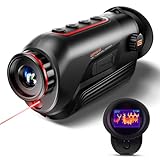
GOYOJO 256x192 Thermal Monocular
A faint rustle in thick cover can waste several minutes when ordinary optics show nothing but overlapping branches and flat shadows. The GOYOJO monocular approaches the best thermal scope for birding role with a 256 × 192 sensor, a 12μm detector, and a compact 10mm focal lens built around heat detection rather than visible light. Its six display palettes, replaceable battery system, onboard image storage, and app connection give it more flexibility than a bare-bones thermal viewer. The slower 25Hz refresh rate, however, creates a real tradeoff for tracking quick birds and smooth handheld panning.
GOYOJO Thermal Monocular
The 256 × 192 thermal resolution gives small heat signatures a better chance of standing apart from cool branches, shaded trunks, and damp vegetation. That resolution won't reveal feather colors or tiny field marks, but it can show a recognizable body outline under favorable conditions. A bird tucked into dark foliage may appear long before standard binoculars can gather enough light. Still, partial cover can break the heat shape into separate patches, so patience remains part of the deal.
A 12μm infrared detector allows the device to package its thermal sensing into a compact format while retaining useful scene detail. Smaller pixel pitch alone doesn't guarantee a sharper view, yet it supports a sensible balance between sensor size, lens dimensions, and portability. The 10mm lens leans toward a broader scene rather than narrow long-distance inspection. That arrangement suits scanning nearby habitat, though distant birds may occupy too few pixels for confident shape recognition.
The monocular format feels more natural for wildlife observation than a long rifle-style housing. One-handed scanning, quick storage, and easier movement between binoculars and thermal viewing all count as practical handling benefits. The body can still become tiring during prolonged observation because every small hand movement shows up on the display. Bracing an elbow against the chest or using a stable rest helps calm the image without turning the outing into a gear-heavy exercise.
Image Clarity In Real Birding Conditions
Thermal contrast usually looks strongest during cool mornings, shaded evenings, and periods when the background has shed daytime heat. A warm bird against cool leaves creates the kind of separation that lets the 256-class sensor earn its keep. Hot rocks, sunlit bark, roof vents, and warm ground can produce competing signatures later in the day. So, yes, timing matters almost as much as the detector itself.
The six available palettes include White-Hot, Black-Hot, Red-Hot, Rainbow, Iron-Red, and Glimmer. White-Hot and Black-Hot generally keep the scene simple, while brighter color modes can make small temperature differences easier to notice in cluttered cover. Multiple thermal palettes are useful because no single view handles every background equally well. Some color schemes also become visually busy around mixed vegetation, so constant switching can distract more than it helps.
The 4X digital zoom enlarges the displayed image without adding new sensor detail. At moderate enlargement, it may help inspect whether a heat signature has a perched posture, upright stance, or quick hopping movement. Push the zoom too far and edges become blockier, especially around small birds, thin legs, and narrow branches. Native resolution remains the limiting factor, and digital magnification can't pull missing feather detail out of thin air.
Thermal imaging also has physical limits that no menu setting can sidestep. Solid trunks, thick branches, walls, and ordinary window glass block or distort thermal observation rather than becoming transparent. Heat detection isn't visual identification, either, since plumage colors, eye rings, wing bars, and bill markings won't appear. The device makes more sense as a locating tool that points regular optics toward the right patch of habitat.
Refresh Rate And Moving Subjects
The 25Hz refresh rate is the most noticeable compromise in this specification set. Slow-moving wildlife and stationary heat sources should remain manageable, but fast hops and short flights may look less fluid than they would on a 50Hz display. Panning across a tree line can also produce a mild stepping or trailing effect. It isn't unusable, though the difference becomes clearer once the scene gets busy.
Careful scanning technique can soften that limitation. Slow sweeps with overlapping coverage give the sensor time to present each part of the scene without abrupt motion. A steady viewing rhythm also reduces the chance of skipping over a small warm shape between branches. Quick side-to-side searching, by contrast, makes the display feel more sluggish and can turn fine detail into a moving blur.
Perched owls, roosting birds, and slow movement along field edges fit the 25Hz display better than swallows darting through open air. The monocular can still reveal quick activity, but following it continuously may feel a little choppy. Stationary observation is therefore a stronger use case than rapid tracking. That distinction matters because a product can detect heat well and still feel awkward during high-speed movement.
The 10mm focal lens may help offset some tracking difficulty by keeping a broader area visible. A wider scene gives the subject more room before it slips beyond the frame, which is handy around brush piles and low canopy. Field awareness often matters more than raw enlargement while the observer is still trying to locate movement. Once the heat source is centered, digital zoom can provide a closer look, albeit with the clarity tradeoff already mentioned.
Battery, Storage, And Wireless Sharing
Replaceable batteries provide more flexibility than a sealed internal pack during longer outings. The supplied description states more than six hours of continuous use, allowing a spare set to extend operating time without waiting for the entire unit to recharge. Field-replaceable power is especially useful on cold mornings, when battery performance may drop faster than expected. Actual runtime can still shift with screen brightness, wireless use, recording activity, and ambient temperature.
The included 16GB image storage supports saving thermal captures without relying on a phone for every sighting. Stored images can help document location, body position, and movement patterns, although they won't replace visible-light photographs for species confirmation. Space management deserves occasional attention because repeated captures can accumulate quietly. A quick review after an active outing keeps the storage from becoming a digital junk drawer.
The dedicated app allows real-time thermal image sharing and connected viewing. That can be useful during group observation because one person can aim the monocular while others see the same heat scene on a phone. Wireless collaboration also helps reduce repeated passing of the device, which often causes the subject to disappear before everyone gets a look. The tradeoff is extra battery drain, another connection step, and possible interruptions from phone settings or wireless instability.
Offline recording through the app adds flexibility in locations without cellular service, since the connection runs locally rather than depending on internet access. Still, direct viewing through the eyepiece remains the simplest approach when a bird is moving and time is short. App-based monitoring suits stationary watches better than sudden sightings that last only a few seconds. A phone screen may also appear too bright during dark observation unless its brightness is turned down beforehand.
Weather Resistance And Outdoor Durability
The IP65 rating indicates protection against dust and water jets, giving the monocular a reasonable defense against damp trails, blowing grit, and wet vegetation. It shouldn't be treated as fully submersible, and prolonged exposure to heavy rain still deserves caution. Weather resistance reduces anxiety, but it doesn't eliminate basic care. Wiping the housing dry before storage helps prevent moisture from lingering around battery compartments and seals.
Impact resistance is valuable because compact optics tend to ride in pockets, side pouches, and crowded field bags. The description presents the unit as prepared for demanding outdoor situations, though no specific drop rating is supplied here. A protective case and lens cap remain sensible because scratches and hard knocks are easier to prevent than repair. The thermal lens also needs gentle cleaning with materials suited to its surface.
Rain, fog, and humid air can affect more than the housing. Moisture in the atmosphere absorbs and scatters infrared energy, reducing contrast and shortening practical observation distance. Weatherproof construction keeps the device functioning, but it can't force a clear thermal image through unfavorable air. That difference is easy to overlook when durability claims and viewing performance appear side by side.
Cold conditions may produce cleaner separation between warm wildlife and cool surroundings, yet they can also reduce battery efficiency. Keeping spare batteries protected inside a jacket pocket can preserve more of their charge. Seasonal tradeoffs run throughout thermal observation: cooler backgrounds improve contrast, while low temperatures demand better power planning. A little preparation prevents a promising morning from ending with a dark screen.
Strengths, Weaknesses, And Practical Fit
The GOYOJO's main strengths are its 256 × 192 sensor, six viewing palettes, replaceable power, and compact monocular shape. Those features support quick heat detection without forcing a large, mount-oriented device into the field bag. The 16GB storage and app connection also add useful documentation options. For patient scanning near woodland edges, marshes, and shaded cover, the specification set feels sensible rather than overloaded.
The biggest weakness is the 25Hz motion rendering. It handles still subjects and deliberate panning more comfortably than rapid tracking, which can frustrate anyone following restless birds through dense branches. Digital zoom adds another compromise because enlargement quickly exposes the limits of the native image. The device can point out where something warm is hiding, but it won't consistently show what species created the signature.
The phrase "penetrating vegetation" needs careful interpretation even though thermal devices are often described that way. Heat may appear through small gaps in leaves or thin, irregular cover, but the sensor doesn't see through dense solid material. Partial-obstruction detection is the realistic benefit, not an unobstructed view through a wall of foliage. This distinction helps keep expectations grounded and prevents ordinary physical limits from looking like product failure.
Group outings may benefit from the shared app view, while solo walks gain more from the straightforward eyepiece and replaceable batteries. A neutral reference from another outdoor discipline appears in large bore air rifles, although that subject concerns shooting equipment rather than wildlife observation. The GOYOJO's relevant value here lies in portable heat detection, not in any connection to weapon-mounted use. Its monocular form keeps the birding role clearer and more comfortable.
Small-songbird identification, long-distance detail, and fast aerial tracking remain outside this model's strongest territory. Slow scanning, cool backgrounds, and nearby to moderate observation distances give it a fairer shot at producing useful information. Realistic expectations turn the GOYOJO into a practical locating aid rather than an overpromised replacement for binoculars. Used with regular optics, it can reduce blind searching while leaving color, markings, and final identification to visible-light glass.
i4SEE EM10-256 Thermal Monocular
Cold fingers, dim brush, and a bird that refuses to sit still can turn a promising outing into a long stare at empty branches. The i4SEE EM10-256 enters the best thermal scope for birding conversation with a 256 × 192 detector, 50Hz frame rate, and a 10mm F1.0 lens built for broad thermal awareness rather than narrow long-range tunnel vision. Its 1.43-inch AMOLED touchscreen also changes the usual thermal-viewing routine because the screen can be read without pressing an eye against a traditional eyepiece. That setup brings real comfort and portability benefits, though bright-screen handling and modest sensor resolution still create tradeoffs.
i4SEE EM10-256
The heart of the device is a 256 × 192 uncooled VOx detector paired with a 12μm pixel pitch. That specification gives the monocular enough thermal detail to separate a warm bird from cooler branches under favorable conditions, especially near dawn or after sunset. Small subjects can still look blocky at distance, but body shape and movement may remain easier to spot than through ordinary optics in deep shade. The result is more of a locating tool than a species-identification instrument.
A 10mm F1.0 lens favors a broad field of awareness, which suits woodland edges, reed beds, backyard cover, and open trail margins. The lower focal length keeps more of the scene visible, making quick movement easier to catch before it slips outside the frame. That wider perspective can feel far less frustrating than scanning through a narrow high-magnification thermal scope. Distant birds, however, occupy fewer pixels, so fine shape recognition drops off sooner.
The stated detection range reaches up to 500 meters, or roughly 550 yards. That figure should be treated as heat-source detection, not detailed bird recognition, because small birds won't remain clearly identifiable anywhere near the maximum range. Larger warm objects are easier to notice at distance, while a songbird may become little more than a bright dot. Real clarity depends heavily on bird size, temperature contrast, humidity, and intervening cover.
The monocular weighs only 205 grams, about 7.23 ounces, which makes it one of the more appealing aspects of the design. A pocket-sized thermal viewer is much easier to carry alongside binoculars than a long metal scope or a bulky handheld unit. That low weight also helps reduce wrist fatigue during repeated short scans. Extended use can still tire the hand, especially because touchscreen interaction encourages the device to stay held in front of the body.
Thermal Clarity And Motion Handling
The 50Hz refresh rate gives the EM10-256 a clear advantage over slower 25Hz models during motion. Birds hop, turn, flutter, and disappear without warning, so smooth frame delivery matters more than it might with slow-moving wildlife. Panning across a hedge should feel more natural, with less visible stepping or lag. That smoother motion doesn't add extra sensor detail, but it makes existing detail easier to follow.
A NETD rating of 30mK indicates the sensor is designed to distinguish relatively small temperature differences. In practical terms, thermal sensitivity may help reveal a warm body against cooler leaves, bark, or damp ground. Contrast tends to look stronger during cool mornings and shaded evenings than under hot midday conditions. Sun-warmed branches and rocks can create competing signatures that clutter the scene.
Multiple palettes such as White Hot, Black Hot, and Red Hot let the display adapt to different backgrounds. Palette flexibility is useful because a color scheme that works in open ground may feel noisy in dense foliage. White Hot and Black Hot often provide a simpler view, while Red Hot can draw attention to the warmest areas quickly. Constant palette switching can become distracting, though, so settling on one or two dependable modes usually keeps the scan more fluid.
Thermal imaging still won't reveal feather color, wing bars, eye rings, or subtle bill shape. A bright outline can point toward the correct branch, but visible-light confirmation remains necessary for reliable species identification. The device also can't see through solid trunks, walls, or ordinary window glass. Thin gaps in foliage may reveal partial warmth, yet dense cover will still block the view.
AMOLED Touchscreen Experience
The 1.43-inch full-color AMOLED touchscreen is the most unusual feature in this design. Instead of pressing an eye into a small eyecup, the observer can hold the unit at a comfortable distance and view the scene directly. That open-screen format reduces pressure around the eye and may feel less claustrophobic during longer sessions. It also makes sharing a sighting easier because another person can see the display without taking the device.
Touch controls bring their own learning curve. A smooth screen is easy to navigate in mild weather, but cold fingers, gloves, moisture, or rain can make precise input less dependable. The one-button, one-ring control layout helps by keeping essential actions from relying entirely on touch. Physical control remains valuable when the screen is wet or attention needs to stay on a moving subject.
Brightness deserves careful handling during low-light observation. AMOLED panels can produce strong contrast and rich color, yet a bright display may interfere with dark adaptation and make ordinary binocular use feel temporarily uncomfortable. Screen dimming becomes important during dawn, dusk, and nighttime sessions. Lower brightness may also reduce battery drain, though the supplied details don't give runtime figures for different brightness settings.
The screen is convenient for short shared looks, but it can be less private than an eyepiece in complete darkness. A glowing display may be visible to others nearby and can reflect against the face. Display visibility is a practical tradeoff rather than a flaw, especially during quiet observation where minimal disturbance matters. Shielding the screen slightly with the hand can help without changing the device itself.
Battery Life And Fast Charging
The built-in battery is rated for up to six hours of continuous use. That six-hour operating window should cover a long morning or evening session under normal conditions, though actual runtime may change with WiFi, Bluetooth, recording, screen brightness, and ambient temperature. Cold weather often reduces available battery capacity faster than expected. A sealed battery also means the outing depends on charging access rather than a quick battery swap.
The 20W quick-charging feature partly offsets that limitation. According to the supplied description, ten minutes of charging can provide about one hour of operation. Rapid power recovery is handy during a drive between locations, a lunch break, or a pause at camp. A compatible power bank can also keep the monocular useful during longer days away from an outlet.
Charging speed doesn't remove the need for planning. A depleted built-in battery can't be replaced instantly, and using the device while connected to a cable may feel awkward in the field. Power-bank dependence adds another item to the bag, plus a cable that can snag or loosen during movement. For short outings, the simplicity is fine; for all-night use, removable batteries would offer more flexibility.
Battery preservation becomes easier when wireless features stay off until needed. WiFi, Bluetooth, video recording, and a bright screen can all increase power demand. Selective feature use helps stretch the stated runtime without sacrificing the core thermal view. A few minutes of setup before heading out can prevent a dead unit near the end of the session.
Connectivity, Recording, And Storage
The EM10-256 supports both 2.4GHz and 5GHz WiFi, Bluetooth, mobile app control, and OTA updates. That dual-band wireless support gives flexibility in different environments, though actual connection quality still depends on distance and interference. App viewing can help share the thermal scene with someone standing nearby. It may also reduce repeated handling when several people are observing the same area.
Video recording includes synchronized audio and uses the built-in 16GB memory. Audio-linked thermal footage can preserve behavior, timing, calls, and environmental sounds alongside the heat image. That combination may be useful for reviewing a sighting later, especially when the subject moved too quickly for careful observation. Storage will eventually need management, since repeated clips can accumulate faster than still images.
OTA updates allow software improvements without opening the device or using removable media. That update pathway can help maintain app compatibility and address interface issues over time, though no future feature changes should be assumed. Wireless updating also means the process depends on stable power and a reliable connection. Interrupting an update is never a pleasant prospect, so charging first remains the sensible move.
Phone control adds convenience, but it also adds another layer between the observer and the bird. Pairing, app permissions, and connection delays can feel clumsy during a brief sighting. Direct device control remains quicker for sudden movement, while the app suits stationary observation and group viewing better. The feature is useful, just not equally useful in every moment.
Pros That Stand Out
Low weight is the clearest everyday strength. At just 205 grams, the monocular won't dominate a shoulder bag or force a compromise with regular binoculars. Carrying it on longer walks should feel more reasonable than hauling a full-size thermal scope. The compact body also makes spontaneous scanning less of a production.
The combination of 256 × 192 resolution and a 50Hz refresh rate gives a balanced viewing experience for nearby and moderate-range observation. The image won't rival higher-resolution thermal systems, but motion should remain smooth enough for restless birds. A wide 10mm lens keeps more habitat inside the frame. That mix favors locating activity rather than staring at one narrow distant target.
The AMOLED screen offers a more relaxed alternative to a tight eyepiece. Reduced eye pressure matters during repeated checks, and the open display helps multiple people share a view. Touch input also makes settings feel more familiar to anyone accustomed to smartphones. Physical controls provide a useful backup when touch operation becomes inconvenient.
The IP67 rating adds protection against dust and temporary water exposure, while the supplied five-year warranty adds some reassurance around long-term ownership. Rugged outdoor construction suits damp trails, sudden rain, and dusty campsites better than an unsealed electronic viewer. From a separate shooting-related angle, high quality air rifles belong to a different equipment category and don't affect this monocular's birding performance. The relevant strength here remains portability combined with weather resistance.
Cons And Realistic Tradeoffs
The 256 × 192 sensor remains modest for identifying very small birds at distance. Warm outlines may appear clearly enough to locate movement, but subtle shape details fade quickly as range increases. Digital enlargement would magnify pixels rather than create missing information. Anyone expecting crisp species-level recognition from heat imagery may come away disappointed.
The built-in battery limits field flexibility despite quick charging. No instant battery swap means power planning matters during long outings, especially in cold weather. A power bank helps, though it adds cable management and extra weight. Removable cells would better suit continuous overnight observation.
The touchscreen can be awkward in rain or with thick gloves. Wet-screen operation is rarely as smooth as the product photos make it look, and bright displays can disturb dark adaptation. The one-button, one-ring design softens the issue but doesn't erase it. Careful brightness adjustment and some practice are part of the ownership routine.
The quoted 500-meter detection range can create inflated expectations if read without context. Detection isn't recognition, especially with small birds that occupy only a handful of pixels at long distance. Humidity, fog, warm vegetation, and partial cover can shorten practical visibility. The useful working range for birding will often be far closer than the headline number.
Best Use Cases And Poor Fits
Cool dawns, shaded woodland edges, marsh borders, campsites, and quiet backyard observation suit this monocular well. The wide thermal view helps locate movement without sweeping through an overly narrow scene. Smooth 50Hz motion keeps short hops and branch changes easier to follow. Regular binoculars can then handle color, plumage, and final identification.
Long hikes also favor the EM10-256 because its 7.23-ounce weight barely changes the feel of a day pack. Travel-friendly dimensions matter when thermal viewing is only one part of the outing. The rugged rating supports use around dust and moisture, though protective storage still makes sense. Small devices are easy to drop, lose, or scratch if tossed loosely into a crowded bag.
Fast aerial tracking and long-distance species identification aren't this model's strong suit. The touchscreen format is better for deliberate scanning than following a bird through rapid, unpredictable flight. Moderate-range locating fits the hardware more naturally than extreme-range detail work. Higher-resolution optics would be more suitable where tiny heat signatures need careful interpretation.
Shared observation is another natural fit because the open screen and wireless connection let several people follow the same thermal scene. Group visibility can reduce the usual passing back and forth that causes a subject to vanish between turns. App control becomes more useful in stationary setups than during quick roadside stops. The device performs best as a lightweight heat-finding companion, not as a replacement for every other optic in the bag.

10 Top Picks: Best Youth Air Rifles for 13-Year-Olds

12 Best Rifle Scopes For 5.56 Under 150 Dollars - (2026 Top Picks)

Top 10 Rifle Scopes for Coyote Hunting in 2026

12 Best Benchrest Rifle Scopes of 2026 For Tight Groups

Top 5 Airsoft Rifles: Unleash the Action in 2026

Unveil the Best Straight Wall Deer Rifles: Top Picks for 2026

Top Ammo Choices for Air-Powered Rifles: Boost Your Performance in 2026

Best Quick Detach Scope Rings for Accurate and Convenient Shooting







