
Best Thermal Scope for Crossbow 2026 Field Guide

A dependable best thermal scope for crossbow setup should make hidden heat easier to interpret without turning the crossbow into a nose-heavy brick. Clear imaging matters, sure, but raw detection distance can be misleading because spotting a warm shape isn't the same as identifying it responsibly. A useful optic balances sensor resolution, base magnification, refresh rate, lens size, and display clarity at the shorter distances where crossbows are normally used. Fancy numbers on a product page won't help much if branches, grass, humidity, or warm ground smear the image into an unclear blob.
Mounting deserves just as much attention as the thermal core. Many crossbows use a Picatinny-style rail, yet rail length, slot position, mount height, and eye relief can still create an awkward fit. A scope that sits too far forward may strain the neck, while one mounted too high can ruin a natural cheek position and slow down target acquisition. A secure, repeatable mount also helps preserve zero after transport, minor bumps, or repeated cocking and shooting sessions.
Base magnification is another detail that often gets buried beneath maximum digital zoom claims. Too much starting magnification narrows the field of view, making it harder to track movement at close range or scan tight woodland lanes. Digital zoom enlarges pixels rather than adding genuine optical detail, so the picture may become blocky long before the advertised maximum is reached. A modest base power paired with a wide field of view usually feels more natural on a crossbow than a long-range configuration built around distant rifle shots.
Controls need to stay simple because cold fingers, gloves, darkness, and adrenaline don't mix well with tiny buttons or layered menus. Raised controls, a clear focus ring, quick palette changes, and an uncomplicated zeroing screen reduce fumbling in the field. Battery life should cover the full outing with room to spare, though carrying a compatible spare is still sensible because cold weather can shorten runtime. USB-C charging is convenient around camp, but a replaceable battery system may be more practical during longer trips away from power.
Image quality also changes with weather and terrain. Thermal contrast often looks stronger during cool evenings, while hot ground, wet air, dense vegetation, and lingering daytime heat can flatten details. Higher sensor resolution can preserve edges and body shape more clearly, but lens quality, focus adjustment, display resolution, and software processing still shape what reaches the eye. Realistic expectations matter here because no thermal optic can see cleanly through thick trees, solid walls, or heavy cover.
Weight and balance may expose a poor match faster than any specification sheet. A bulky optic can shift the center of gravity forward, making an already wide crossbow tiring to hold from an unsupported position. Compact housings feel better in cramped blinds and narrow shooting lanes, though smaller lenses may gather less thermal detail at distance. The right compromise keeps handling predictable without sacrificing the image quality needed for positive identification.
Recording features, multiple reticles, picture-in-picture views, rangefinding tools, and several color palettes can be useful, but they shouldn't distract from the basics. White-hot and black-hot modes usually provide a clean starting point, while brighter palettes may help separate heat sources in certain backgrounds. Video recording is handy for reviewing shot placement or observing animal movement, though it can consume storage and battery power. Built-in range estimation can help, but it shouldn't replace verified distance markers or a separate rangefinder where precise yardage matters.
Local rules deserve a careful look before mounting any thermal optic. Regulations may differ by state, province, season, time of day, property type, and animal species, and some areas restrict thermal devices even where crossbows are otherwise legal. Ethical use also requires a clear identification rather than a quick reaction to an unidentified heat signature. The best thermal scope for crossbow use is ultimately the one that supports deliberate decisions, fits the rail correctly, holds zero, and remains manageable during the actual conditions of the hunt.

- ARS Mark9.4
ARS Mark is a ranking system developed by bestairriflescopes.com. ARS Mark has no relationship or impact from any manufacturers or sales agent websites. Learn more
- BrandGOYOJO

- ARS Mark9.2
ARS Mark is a ranking system developed by bestairriflescopes.com. ARS Mark has no relationship or impact from any manufacturers or sales agent websites. Learn more
- BrandAGM Global Vision

- ARS Mark9.2
ARS Mark is a ranking system developed by bestairriflescopes.com. ARS Mark has no relationship or impact from any manufacturers or sales agent websites. Learn more
- BrandRIX

- ARS Mark8.4
ARS Mark is a ranking system developed by bestairriflescopes.com. ARS Mark has no relationship or impact from any manufacturers or sales agent websites. Learn more
- BrandTriton
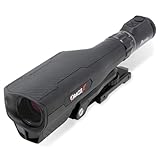
- ARS Mark8.4
ARS Mark is a ranking system developed by bestairriflescopes.com. ARS Mark has no relationship or impact from any manufacturers or sales agent websites. Learn more
- BrandBurris

- ARS Mark8.0
ARS Mark is a ranking system developed by bestairriflescopes.com. ARS Mark has no relationship or impact from any manufacturers or sales agent websites. Learn more
- BrandTRV

- ARS Mark7.6
ARS Mark is a ranking system developed by bestairriflescopes.com. ARS Mark has no relationship or impact from any manufacturers or sales agent websites. Learn more
- BrandCYBERDYNE
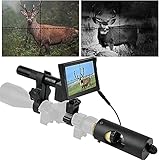
BESTSIGHT Night Vision Scope,DIY Night Vision(Day and Night),Quick Installation Barrle,5"
View on Amazon- ARS Mark7.4
ARS Mark is a ranking system developed by bestairriflescopes.com. ARS Mark has no relationship or impact from any manufacturers or sales agent websites. Learn more
- BrandBESTSIGHT
Last update on 2026-08-01 / Affiliate links / Images, Product Titles, and Product Highlights from Amazon Product Advertising API
GOYOJO GRL335 Thermal Scope
Dark fields can turn familiar ground into a patchwork of guesses, especially when brush, shadows, and uneven terrain swallow visible detail. The GOYOJO GRL335 Thermal Scope approaches that problem with a 384×288 thermal sensor, a 35mm objective lens, and a 1024×768 OLED display built to present heat signatures without relying on ambient light. That combination gives the best thermal scope for crossbow conversation a serious long-range angle, though its 4X starting magnification shapes where it feels most comfortable. Open lanes and broad field edges suit it better than cramped woods where targets may appear suddenly at short range.
GOYOJO GRL335 Scope
The first thing worth separating is detection from identification. GOYOJO lists a detection range of up to 1,968 yards, which means the optic may reveal that a heat source exists at considerable distance under suitable conditions. It doesn't mean every distant signature will show enough shape and context for a responsible decision, especially through grass, branches, humidity, or lingering ground heat. For crossbow use, the greater benefit is having extra scanning reach before narrowing attention to realistic shooting distances.
A 35mm objective lens gives the GRL335 a useful balance between thermal gathering ability and manageable physical size. Larger objectives often support better detail at distance, but they can add bulk and narrow the viewing experience, so the 35mm format lands in a practical middle ground. The optic measures 6.30 × 3.35 × 3.15 inches, keeping it shorter than many elongated traditional scopes. That compact footprint can make rail placement less awkward, although mount height and eye position still need careful checking on a particular crossbow.
The stated weight of 1.22 pounds sounds modest for a thermal sight, yet it remains meaningful once mounted above a crossbow's rail. Crossbows already carry substantial weight toward the front, and adding more mass can make unsupported aiming feel less steady after several minutes. From a rest, shooting rail, or stable blind position, the added weight should be easier to manage. Anyone accustomed to a light conventional optic may need time to adjust to the changed balance.
The housing is described as tough enough for harsh field conditions, and the scope is rated to withstand recoil shocks up to 1000 g for 0.4 milliseconds. A crossbow doesn't create rifle-style rearward recoil, but it produces its own sharp vibration and mechanical shock during the shot cycle. That recoil tolerance suggests the unit was designed with repeated impact in mind rather than being limited to handheld observation. Still, secure mounting hardware and correctly tightened fasteners remain essential because durability claims can't compensate for a loose rail connection.
Thermal Detail And Display Quality
The 384×288 thermal resolution sits at a useful level for distinguishing body outlines, movement, and heat contrast without jumping into the cost and power demands of larger sensors. Resolution alone doesn't control the final image, though. Lens quality, focusing, environmental contrast, display processing, and magnification all affect how much detail reaches the eye. The GRL335 pairs its sensor with a 1024×768 OLED, giving the thermal image a crisp viewing surface rather than squeezing it onto a low-resolution screen.
That 1024×768 OLED display should help menus, reticles, and heat boundaries look cleaner, particularly during prolonged observation. OLED panels are valued in thermal optics because dark areas can remain visually deep while bright signatures stand apart with strong contrast. Low-contrast weather may still soften the scene, despite the product's claim of consistently sharp imaging. Warm afternoons, wet vegetation, fog, and sun-heated rocks can reduce separation between an animal and its surroundings.
Six selectable thermal image modes let the scene be interpreted in different ways rather than forcing one palette on every location. A simple white-hot or black-hot view may keep woodland details calm and readable, while another palette can make an isolated heat source stand out against a complicated background. The six imaging modes also help accommodate personal viewing preferences because some eyes pick up subtle edges more easily in one palette than another. More modes don't automatically create more detail, but they can make existing information easier to read.
Thermal imaging works in daylight as well as darkness because it reads temperature differences instead of visible illumination. Moonlight isn't required, and bright daylight won't prevent the sensor from detecting heat, although environmental temperatures still influence contrast. The thermal optic can therefore support early-morning observation, evening tracking, and daytime scanning in thick visual cover. It won't see through solid objects or dense vegetation, so a strong heat signature may still appear fragmented behind branches.
Magnification And Crossbow Handling
The GRL335 offers 4X to 16X magnification, giving it more reach than a low-power thermal designed mainly for close-range scanning. Four-power base magnification can make a distant field edge easier to inspect, but it also reduces the field of view compared with a 1X or 2X starting point. That tradeoff matters on a crossbow, where encounters often happen at shorter distances than centerfire rifle shots. Tight timber, narrow lanes, and quick lateral movement may feel less forgiving through a 4X starting view.
Higher magnification sounds tempting, yet image enlargement always deserves realistic expectations. As magnification increases, visible movement becomes more pronounced and the scene may lose some perceived sharpness, depending on how the zoom system processes the sensor image. The 16X maximum is better treated as an inspection tool than the default aiming setting. Moderate power should preserve a broader scene, steadier reticle movement, and easier target reacquisition.
The 55Hz refresh rate is a particularly relevant strength because it updates the image quickly enough to keep movement looking fluid. Animals crossing a field, turning through brush, or changing direction can be followed without the choppy effect associated with slower thermal displays. Smooth motion also makes panning less tiring because the background doesn't appear to jump from frame to frame. For crossbow use, that responsiveness helps during observation even when the eventual shot distance remains relatively short.
Rail fit deserves a dry setup before any field trip. The scope's compact body may save space, but the final eye position depends on the included mounting arrangement, the crossbow rail length, stock geometry, and how naturally the shooter settles behind the optic. Consistent eye alignment matters because an uncomfortable head position can slow aiming and create uneven cheek placement. A stable rest is also useful during zeroing, especially with magnification beginning at 4X.
Recording And Field Controls
Built-in 64GB storage gives the GRL335 room to save footage without immediately relying on removable media. Recording can document animal patterns, review movement through a particular lane, or preserve outdoor observations that would otherwise vanish once the screen is switched off. It may also help examine aiming behavior after a session, though recorded footage shouldn't be treated as proof that every shot setup was sound. Battery consumption and file organization remain practical considerations during repeated recording.
Smart recording control sounds useful, but easy access matters more than the label attached to the feature. Controls should be learned in daylight before relying on them in darkness, since small buttons and menu layers become harder to manage with gloves or cold hands. The recording system is most valuable when it can be started without pulling attention away from the scene. A few practice runs can also prevent accidental recordings from filling storage with long clips of empty ground.
The stated six-to-eight-hour battery life should cover many evening or overnight sessions, provided the battery begins fully charged and operating conditions are favorable. Cold weather, frequent recording, high display brightness, and repeated menu use can shorten practical runtime. Carrying a compatible backup power plan is sensible on longer outings, particularly where returning to a vehicle isn't convenient. Power management matters because a thermal optic becomes ordinary dead weight once the battery is exhausted.
Thermal equipment often sits alongside other specialized outdoor gear, even though each platform has its own mounting and handling requirements. A separate equipment category is discussed in inexpensive PCP air rifles, which provides a neutral point of reference for readers comparing compact shooting platforms rather than forcing a direct connection to this crossbow-focused optic. The GRL335 itself is better evaluated through its thermal sensor, magnification range, rail compatibility, and field endurance. Mixing unrelated platform expectations can otherwise lead to poor assumptions about eye relief, recoil behavior, and practical distance.
Where The GRL335 Makes Sense
Open fields, agricultural edges, and broad clearings play to the GRL335's long detection capability and 4X base magnification. Heat sources can be noticed before they enter a close shooting lane, giving more time to observe movement and confirm what is actually present. The 55Hz refresh rate supports smooth scanning across those wider areas without turning every pan into a stuttering blur. In dense woods, however, the narrower starting view may feel less natural than a lower-magnification thermal.
The combination of a 384×288 sensor and high-resolution OLED makes sense for someone who values recognizable outlines and cleaner display presentation without moving into a much larger optic. Six image palettes add flexibility across shifting backgrounds, though most people will probably settle on one or two modes after some field practice. Recording and generous internal storage extend its role beyond aiming by supporting observation and documentation. Those extras are useful, but they shouldn't outweigh fit, balance, and clear identification.
Crossbow compatibility isn't guaranteed merely because the unit is described as a rifle scope. Rail dimensions may match, yet the mounting position, stock shape, eye alignment, and available clearance can vary widely between crossbows. The scope's 1.22-pound weight may also feel more noticeable on compact or front-heavy models. Measuring usable rail space and checking the complete mounted height before committing can prevent an uncomfortable setup.
The GRL335 may be a poor fit for close woodland lanes where a very wide field of view is more valuable than distant scanning reach. It may also feel excessive for brief backyard observation, short-range target work, or situations where recording and multiple palettes won't be used. Its 4X base magnification rewards deliberate positioning rather than snap viewing at very close range. Legal restrictions on thermal optics, nighttime hunting, and species-specific use also need verification for the exact location and season.
Practical Strengths And Tradeoffs
The strongest part of this package is the way its major specifications support one another. A 35mm lens, 384×288 thermal sensor, 1024×768 OLED, and 55Hz refresh rate create a sensible chain from heat capture to final display. None of those figures should be judged in isolation, since a sharp screen can't recover detail the sensor never captured. Together, they point toward an optic designed for smooth observation and meaningful distance rather than a bare-bones thermal viewer.
Its compact dimensions help limit bulk, but 1.22 pounds is still enough to affect a crossbow's handling. The difference may be minor from a supported rest and much more obvious while standing or holding on target. A sling, shooting sticks, or blind rail can reduce fatigue during longer sessions. That isn't a flaw unique to GOYOJO; it is a normal compromise that comes with adding batteries, a display, a thermal core, and recording hardware above the rail.
The recoil specification and durable housing support confidence in repeated field use, yet durability also depends on storage and handling between outings. Lens surfaces need protection from dust, fingerprints, and moisture, while mounting screws should be checked periodically rather than ignored after the first zeroing session. The 1000 g recoil rating is reassuring, but it doesn't make careless transport harmless. A padded case can protect the optic from impacts that differ from the controlled shock of firing.
The GOYOJO GRL335 brings considerable reach, responsive imaging, and substantial recording capacity to the best thermal scope for crossbow discussion. Its long detection claim is useful for scanning, while the more practical benefits come from the 55Hz image, six palettes, OLED display, and compact body. The main caveats are the 4X starting magnification, added weight, platform-specific mounting fit, and the gap between detecting heat and identifying it clearly. Those tradeoffs make it a stronger match for open terrain and supported shooting positions than fast, close-range work in tangled cover.
AGM RattlerV2 19-256 Thermal Scope
Close cover punishes optics that begin with too much magnification, leaving little room to track movement before a heat signature slips beyond the screen. The AGM RattlerV2 19-256 takes a more practical route with 2.5X base magnification and a 49-foot field of view at 100 yards. Those numbers make it a compelling candidate for the best thermal scope for crossbow, especially where shooting lanes are short and animals may appear without much warning. Its compact thermal system favors situational awareness over extreme long-range detail, which is often the more useful tradeoff on a crossbow.
AGM RattlerV2 19-256
The upgraded scope body gives this RattlerV2 a more refined foundation than a bare-bones thermal viewer. Its layout is built around a 19mm germanium lens, a 256×192 thermal sensor, and a 50Hz refresh rate. That combination isn't chasing the largest specification in every category. Instead, it aims for manageable size, responsive imaging, and a field of view that suits practical hunting distances.
A 256×192 sensor sits below the resolution of pricier 384-class thermals, so fine details at longer distances won't look as sharply defined. That limitation deserves plain talk because digital zoom can't restore information the sensor never captured. At moderate crossbow ranges, though, the sensor can still reveal heat contrast, movement, and body shape under suitable conditions. Clear identification still depends on distance, weather, vegetation, and the temperature difference between the animal and its surroundings.
The stated detection range reaches up to 950 yards, but detection shouldn't be confused with positive identification. A distant warm object may appear on the display without showing enough shape to tell exactly what it is. Crossbow shots normally occur far inside that maximum range, making the extra reach more useful for early observation than aiming. Spotting movement ahead of time can reduce frantic scanning once an animal enters a realistic lane.
The upgraded body also matters during mounting and transport. Crossbows can be bulky through the limbs and front-heavy through the rail, so a thermal optic needs to avoid making the setup unnecessarily awkward. The provided description doesn't specify the complete mounted weight or dimensions, so those details shouldn't be guessed. Rail fit, eye position, and clearance should be checked against the individual crossbow rather than assumed from the rifle-scope label.
A Field Of View Built For Shorter Lanes
The 9.3° × 6.9° field of view translates to roughly 49 feet at 100 yards, giving the RattlerV2 a reasonably broad visual window. That width helps while scanning tree lines, brushy corners, or field entrances where movement can come from either side. A narrow view makes every small pan feel exaggerated, while this broader frame offers more surrounding information. On a crossbow, that can mean less time hunting for a moving heat signature inside the display.
The 2.5X starting magnification supports that wider perspective better than a 4X or 5X base power would. It still provides visible enlargement, but it doesn't immediately tunnel the view into a small patch of terrain. Close shots may still feel tighter than they would through a true 1X thermal, especially inside thick woods. Even so, 2.5X lands in a workable middle ground for many fixed lanes and supported positions.
Magnification extends from 2.5X to 20X through digital zoom, offering plenty of enlargement on paper. The catch is familiar: digital zoom magnifies pixels along with the target, so image texture becomes rougher as power climbs. Lower and middle settings should retain more useful visual information than the upper end. The 20X setting is better treated as a temporary inspection tool rather than the default viewing mode.
Crossbow accuracy also depends heavily on verified distance, and magnification can make targets appear more reachable than they really are. Thermal vision doesn't calculate bolt drop, compensate for range errors, or replace knowledge of the crossbow's trajectory. A heat signature may look large on the screen while still sitting well beyond an ethical shot. The wide starting view is therefore more valuable for observation than the maximum zoom is for stretching distance.
Smoother Motion With A 50Hz Refresh Rate
The jump from 25Hz to a 50Hz refresh rate is one of the most meaningful updates listed for this model. Faster refresh makes moving animals appear smoother, and it reduces the stuttering sensation that can show up while panning across a field. That fluidity isn't just cosmetic. It makes changes in direction easier to follow and keeps the background from turning into a distracting sequence of jumps.
A crossbow setup benefits from smooth motion because the aiming window may be brief. Animals rarely stand exactly where expected, and a slow display can make a simple walk across a lane feel harder to track. The 50Hz image should remain more natural during those transitions, provided the target stays visible through brush and terrain. Responsive thermal movement can ease visual strain during longer scanning sessions as well.
The upgraded short-throw focus ring supports quicker image refinement after distance changes. Long focus rotations can be frustrating when a heat source moves from a nearby lane toward a distant field edge. A shorter focusing motion reduces the amount of adjustment needed, which can keep one hand from lingering around the lens. Fine focus still takes practice, particularly while wearing gloves or working in darkness.
Focus quality becomes even more important with a 256×192 sensor because a slightly soft image can hide details that are already limited by resolution. Adjusting the ring for the actual observation distance should produce more useful results than leaving it in one position all night. Temperature, humidity, and vegetation may still flatten edges despite careful focusing. The scope can improve visibility, but it can't remove every environmental obstacle between the lens and the heat source.
Lens Design And Thermal Image Limits
The 19mm germanium objective lens helps collect infrared energy for the thermal sensor rather than ordinary visible light. Germanium is standard material in thermal optics because it transmits the infrared wavelengths these devices need. A 19mm lens also supports the RattlerV2's relatively broad field of view and modest base magnification. Larger lenses may provide more reach or detail, but they often bring extra size, cost, and a narrower viewing angle.
Thermal contrast can change dramatically through the evening. Cool air against a warm animal may create a clean outline, while sun-heated soil, rocks, and tree trunks can clutter the picture shortly after sunset. Rain, fog, wet leaves, and dense grass may further reduce apparent separation. The thermal sensor detects temperature differences, not hidden objects through solid cover.
The upgraded lens cap sounds minor, yet protection matters on a germanium lens. Dirt, moisture, branches, and careless storage can affect an exposed objective during travel or setup. A better cap should be easier to manage and more dependable than a loose cover that swings into the viewing path. The exact mechanism isn't described, so its operation and retention shouldn't be embellished.
Optics on other shooting platforms raise different questions about projectile choice and performance. A separate equipment reference appears in pellets for .22 air rifles, though that topic doesn't change how this thermal scope should be judged on a crossbow. The relevant factors here remain field of view, mounting compatibility, image clarity, and dependable tracking. Forcing air-rifle expectations onto crossbow equipment would muddy those distinctions.
Crossbow Fit And Real-World Handling
A rifle-scope format doesn't automatically guarantee a comfortable crossbow fit. Rail length, mounting slots, comb height, and the distance from the stock to the display all influence whether the sight picture appears naturally. Eye alignment should feel repeatable without stretching the neck or lifting the cheek away from the stock. An awkward setup can slow target acquisition even if the thermal image itself looks clear.
The 2.5X base power should pair well with blinds, shooting rails, and known lanes where the expected distances remain moderate. Unsupported standing shots may still expose every small movement, particularly after the thermal optic adds weight above the rail. A stable rest can reduce wobble and make zeroing less frustrating. Crossbow vibration also calls for correctly tightened mounting hardware and periodic checks after transport.
The 950-yard detection claim may sound oversized beside normal crossbow distances, but it can still serve a practical purpose. Early detection gives more time to observe direction, pace, and surrounding heat signatures before anything reaches a shooting lane. That added awareness can prevent rushed decisions. It doesn't expand the crossbow's effective range or justify taking shots beyond proven bolt performance.
Dense woods present the clearest tradeoff. The wide field of view and 2.5X base magnification are helpful, but the 256×192 sensor may struggle to separate fine details through layered branches and warm vegetation. Open fields and cleaner lane edges should make better use of the available image. Realistic terrain expectations matter more than choosing a scope solely by its maximum detection number.
Strengths, Weaknesses, And Best Use Cases
The RattlerV2's strongest feature set centers on practical movement tracking. Its 50Hz refresh rate, wide viewing angle, and moderate starting magnification work together rather than pulling the scope in conflicting directions. That balance can make scanning feel less cramped than it would through a higher-powered thermal. The short-throw focus ring adds another useful layer for quickly shifting between viewing distances.
Resolution is the main compromise. A 256×192 thermal core can show useful heat information, but it won't preserve fine details like a higher-resolution sensor at the same distance. Heavy digital zoom makes that difference more obvious, especially near the 20X maximum. Buyers expecting crisp long-range identification from a compact entry-level sensor may come away disappointed.
The upgraded lens cap and body design address everyday usability rather than flashy extras. Those details matter during repeated setup, transport, and storage because small annoyances tend to grow after several cold or dark outings. Still, the supplied description doesn't mention recording capacity, battery runtime, waterproof rating, or included accessories. Those features shouldn't be assumed, and they may affect the final fit for longer sessions.
The AGM RattlerV2 19-256 earns attention in the best thermal scope for crossbow discussion through its sensible 2.5X base power and 49-foot field of view at 100 yards. It appears better suited to moderate-distance lanes, open field edges, and situations where smooth tracking matters more than extreme image detail. The 50Hz refresh rate is a meaningful strength, while the 256×192 resolution and digital zoom remain clear limitations. Its appeal rests on choosing a broad, responsive viewing experience without pretending it performs like a higher-resolution thermal system.
RIX Storm S1 Thermal Scope
Heavy optics can turn a compact crossbow into an awkward front-loaded rig before the first shot is ever taken. The RIX Storm S1 Thermal Scope addresses that frustration with an aluminum-alloy body weighing less than one pound and measuring only 5.3 × 2.5 × 2.2 inches. That compact build gives it a credible place in the best thermal scope for crossbow discussion, particularly where balance, rail space, and ease of carry matter more than chasing the largest sensor available. Its 192×144 thermal core is modest, though, so the real appeal comes from smart processing, manageable magnification, and a design that doesn't overwhelm the platform.
RIX Storm S1
The Storm S1 is built around a 192×144 thermal sensor, a 19mm detection lens, and a 50Hz refresh rate. Those specifications place it toward the entry side of dedicated thermal optics rather than among high-resolution flagship models. Still, the scope isn't pretending to be something it isn't. It leans on compactness, practical controls, and RIX's image-processing technology to squeeze more usable detail from a smaller detector.
RIX lists target observation out to 1,094 yards, but that number needs sensible interpretation. Detection or observation at long range doesn't guarantee enough shape, detail, or background context for positive identification. A warm object may stand out far across a field while remaining too vague to classify responsibly. Crossbow distances are far shorter, so that extended reach is better viewed as a scanning advantage than a reason to stretch shot distance.
The 3.5X base magnification sits in an interesting middle ground. It offers more reach than a low-power 1X or 2X optic, helping distant heat signatures appear larger without immediately jumping to extreme digital enlargement. On the flip side, 3.5X can feel tight in dense timber or cramped lanes where movement happens close and fast. Open edges, fixed blinds, and known shooting corridors suit this magnification better than quick scanning in tangled cover.
The aluminum housing gives the S1 a sturdier feel than a plastic-bodied handheld viewer while keeping weight under control. That matters on a crossbow because every ounce above the rail changes the balance point and can make unsupported aiming more tiring. A sub-one-pound thermal scope won't erase front-heaviness, but it limits how much worse the problem becomes. The small footprint also leaves more room for mounting adjustments on shorter rails.
Image Processing Beyond The Sensor Number
The raw 192×144 resolution is the most obvious limitation, yet RIX tries to offset it with RET image enhancement. The company describes this processing as improving the detector image toward the appearance of a 256-class sensor. That doesn't physically add sensor pixels, so expectations should stay grounded. What it may do is sharpen edges, strengthen contrast, and present heat boundaries in a way that looks cleaner than the base resolution suggests.
Image enhancement can be genuinely useful at moderate distances where body shape and movement matter more than tiny surface details. A cleaner outline helps separate an animal from warm brush, uneven ground, or leftover daytime heat. Still, software can't recover information that never reached the detector in the first place. Fine identification at long range will remain more challenging than it would be through a native higher-resolution thermal core.
The 19mm lens supports the compact design while giving the sensor a practical field-oriented view. Larger lenses often provide more reach and stronger detail at distance, but they can add bulk, cost, and a narrower viewing window. A 19mm objective makes more sense on a crossbow that may be carried through brush or used from a confined blind. The tradeoff is that distant heat signatures may appear less defined than they would through a larger objective paired with a higher-resolution sensor.
Environmental conditions still have the final say over image clarity. Cool evenings can create strong temperature separation, while warm soil, wet leaves, fog, and dense vegetation may flatten the scene. The S1 can highlight heat, but it can't see through solid cover or make every warm shape instantly recognizable. Thermal contrast changes from one hour to the next, so a clean picture one night doesn't guarantee the same result under different weather.
Smooth Viewing And Practical Magnification
A 50Hz refresh rate gives the Storm S1 one of its more practical strengths. Moving animals should appear smoother than they would on a slower 25Hz display, and panning across a field should produce less visual stutter. That smoother motion can make tracking easier when a heat signature changes direction or crosses a narrow lane. It also reduces the tiring stop-start feeling that can creep in during longer scanning sessions.
Magnification ranges from 3.5X to 7X, which is restrained compared with scopes advertising huge digital zoom numbers. That limited range is actually sensible for a 192×144 sensor because extreme enlargement would quickly expose pixelation and soften edges. Seven-power viewing can help inspect a distant heat source, but the base setting will likely preserve a cleaner image and broader scene. More zoom isn't always more information, and this scope doesn't overcomplicate that point.
Crossbow aiming benefits from a view that remains steady and understandable. Higher magnification exaggerates every small wobble, especially while standing or holding without a rest. The S1's moderate zoom ceiling keeps that effect from becoming ridiculous, though 3.5X may still feel busy at very close distances. A shooting rail, tripod-supported rest, or stable blind position can make the magnified thermal view easier to manage.
The long observation claim shouldn't distract from bolt trajectory and verified effective range. Thermal magnification can make a target look closer than it really is, creating false confidence if distance isn't independently confirmed. The scope doesn't change arrow drop, broadhead behavior, or the mechanical limits of the crossbow. Distance discipline remains just as important in a thermal image as it does through ordinary glass.
Controls Designed For Dark Conditions
The S1's operating menu is described as simple enough to reduce the learning curve. That matters because layered menus become frustrating fast once gloves, darkness, and cold fingers enter the picture. A clear control layout lets more attention stay on the field rather than on remembering which button opens which setting. Practice still helps, but the scope appears designed to avoid making basic functions feel like a puzzle.
The button and battery-cover layout is intended for quick, accurate use in the dark. Raised or clearly separated controls can prevent accidental input when visibility is poor, especially while wearing gloves. That kind of detail rarely looks exciting in a specification list, yet it often decides whether a scope feels cooperative or irritating after an hour outside. Glove-friendly operation is a real advantage during cold-weather sessions.
Recording adds another layer of usefulness beyond aiming. The S1 can save thermal footage, giving a way to review movement, document wildlife activity, or preserve a sequence that happened too quickly to study in real time. Recording may also consume battery power and storage, so it shouldn't be left running without purpose. Built-in recording is most useful when the controls are familiar enough to activate without losing track of the scene.
WiFi connectivity broadens how recorded material can be handled or viewed, though the supplied details don't explain the exact app functions or transfer process. That means claims about streaming range, connection stability, or phone compatibility shouldn't be invented. The feature still has clear potential for moving footage without removing storage media. WiFi support is a convenience, not a substitute for dependable thermal performance.
Crossbow Balance And Handheld Flexibility
The S1's compact body is one of the strongest reasons to consider it for a crossbow. At less than one pound, it adds less top weight than many larger thermal rifle scopes. That can help preserve a more natural hold, especially on crossbows that already feel nose-heavy before accessories are installed. Lightweight construction also makes transport easier through brush, ladders, and tight blind doors.
Its 5.3-inch length helps with rail placement, but fit still depends on the individual crossbow. Mount height, available rail slots, stock geometry, and eye position all affect whether the display sits comfortably in front of the face. A compact optic can still feel awkward if the mount forces the head too high or too far forward. Rail compatibility needs to be judged on the complete setup, not the scope body alone.
The ability to use the S1 as a handheld device adds practical value. Scanning by hand can reduce the need to sweep the entire crossbow across a field, which is less tiring and often less conspicuous. Once a heat signature is located, the optic can serve its mounted role without making every observation start from an aiming position. That dual-purpose design is useful where budget or pack space doesn't allow separate handheld and weapon-mounted thermal devices.
Handheld use also exposes the tradeoff of 3.5X base magnification. It can help inspect distant terrain, but it may feel narrow while sweeping nearby brush or searching a broad area. A lower-power monocular would offer a wider scanning view, though it wouldn't necessarily serve as well on the rail. The S1 compromises by covering both roles without being flawless at either one.
Budget Position And Practical Limitations
The Storm S1 is presented as a budget-friendly thermal scope, and its feature set reflects that position. The sensor resolution is modest, but the 50Hz refresh rate, RET processing, recording, WiFi, compact aluminum body, and simple controls add meaningful value around it. This isn't a stripped-down heat viewer with no field features. It is a practical package built around accepting lower native resolution in exchange for broader usability.
The included five-year quality and customer service statement adds reassurance, and the provided description says responses are offered within 24 hours. That support promise may matter to anyone uneasy about buying a more affordable thermal optic. Still, service quality, turnaround, and warranty handling shouldn't be assumed beyond what was stated. The five-year support period is encouraging, but the exact terms deserve careful reading.
A related archery reference appears naturally in archery arrows for beginners, though arrow selection and thermal imaging solve very different problems. The connection is simply that both affect how a crossbow or bow setup behaves in real use. The Storm S1 should still be judged by image clarity, mounting fit, weight, controls, and realistic viewing distance. Mixing projectile advice with optic expectations would blur two separate decisions.
The biggest weakness remains the 192×144 detector. RET processing may improve perceived clarity, but it won't make the S1 equal to a native 384-class thermal at distance. The 3.5X base view may also feel restrictive in tight cover, and the supplied information doesn't specify battery life, waterproof rating, storage capacity, or included mounting accessories. Those omissions matter because field endurance and setup costs can influence the final value as much as image quality.
Where The Storm S1 Fits Best
Open fields, fixed shooting lanes, and moderate-distance observation suit the S1 better than thick brush at arm's length. The 3.5X base magnification and 1,094-yard observation claim give it a stronger long-view personality than a wide-angle close-range thermal. Its 50Hz refresh rate keeps movement fluid, which helps while watching field edges or tracking an animal across an opening. Supported shooting positions will also make the magnified image easier to hold steady.
Occasional use is another sensible match. The simple menu, compact size, and handheld capability reduce the amount of extra equipment and training needed before an outing. Someone who doesn't use thermal gear every week may appreciate controls that don't require relearning after months in storage. Ease of operation carries more weight in that situation than a long list of rarely used settings.
The Storm S1 may disappoint anyone expecting sharp long-range identification or a broad 1X-style scanning view. Dense vegetation, warm weather, and maximum magnification will expose the limits of the smaller sensor more quickly. It also won't suit every crossbow without checking mount position and eye alignment first. Realistic expectations are the difference between seeing it as a capable compact thermal and judging it against equipment built around a much larger budget.
The RIX Storm S1 stands out in the best thermal scope for crossbow category through low weight, a compact aluminum body, smooth 50Hz imaging, simple controls, and useful handheld flexibility. RET processing gives the lower-resolution sensor a better chance of producing readable outlines, while the 3.5X to 7X magnification range avoids excessive zoom. Its limitations are clear rather than hidden: modest native resolution, a somewhat narrow close-range view, and missing detail on battery endurance and environmental protection. For open lanes and infrequent outings, that balance may make more sense than carrying a heavier, more complicated thermal scope.
Triton StarStrike Gen II Night Vision Scope
Pitch-black woods can make ordinary glass nearly useless, but not every darkness-solving optic works the same way. The Triton StarStrike Gen II uses infrared night vision rather than heat detection, so it doesn't technically belong in the same category as the best thermal scope for crossbow. That distinction matters because infrared imaging depends on a sensor and illuminator, while thermal equipment reads temperature differences without needing reflected infrared light. Still, its expanded field of view, 5-20X magnification, recording tools, and reinforced housing may appeal to someone who understands that tradeoff and specifically wants digital night vision.
Triton StarStrike Gen II
The upgraded fixed magnifier is one of the clearest changes in the Gen II design. Triton pairs it with a wider objective lens to provide an expanded field of view, aiming to improve awareness and target acquisition compared with the older removable 2X magnifier arrangement. A fixed system also removes one loose component from the setup, which can simplify preparation in darkness. The catch is that the optic remains tied to its built-in magnification behavior rather than offering the flexibility of removing the magnifier altogether.
The listed 5-20X magnification range gives the StarStrike a long-range personality, at least on paper. Higher power can help inspect distant details, but it also narrows the view, exaggerates small movements, and makes close encounters harder to follow. That can be a meaningful limitation on a crossbow because practical shot distances tend to be much shorter than the ranges associated with high-powered rifle optics. A stable rest and clearly established lanes would suit this design better than quick movement through dense brush.
This scope is described as combining infrared illuminators, an advanced sensor, and image-processing algorithms to produce detailed images in darkness. The important phrase is infrared night vision, not thermal imaging. Animals, branches, fences, and other objects are shown through reflected infrared light rather than heat contrast, so environmental performance differs from a thermal scope. Fog, vegetation, reflective surfaces, and illuminator reach can all influence how clearly the scene appears.
Daytime color rendition is also part of the feature set, giving the optic a broader operating window than a darkness-only device. That may reduce the need to swap scopes between daylight and evening use, though digital daytime color rarely feels identical to conventional glass. The day-and-night flexibility is useful for long sessions that begin before sunset. It doesn't erase the bulk, battery dependence, or electronic delay that can accompany digital optics.
Night Vision Is Not Thermal Imaging
The biggest issue in placing this model under the best thermal scope for crossbow keyword is simple: the StarStrike Gen II isn't described as a thermal scope. Thermal optics detect emitted heat and can reveal a warm animal against a cooler background without an illuminator. This model relies on infrared technology, meaning the image comes from light reflected back to its sensor. Those systems can both operate after dark, but they solve the visibility problem in different ways.
Infrared illumination can produce recognizable detail because it resembles a monochrome camera view rather than a heat map. Branches, fur texture, ground features, and fencing may appear more familiar than they would through basic thermal palettes. On the other hand, the illuminator can reflect from nearby grass, leaves, or obstacles and wash out portions of the image. Foreground reflection is especially relevant from blinds or tight woodland lanes where vegetation sits close to the objective.
Thermal equipment usually has an advantage for initial detection because a heat source can stand out even when its visible outline blends into the background. Digital night vision may provide more conventional visual detail once the subject is illuminated, but spotting a camouflaged animal can take longer. The StarStrike therefore makes more sense for identifying visible shapes in darkness than scanning solely by temperature contrast. Thick cover can still block the image regardless of how powerful the infrared illuminator may be.
Crossbow use adds another wrinkle because the illuminator, display, sensor, and magnifier all sit above the rail. The product details don't provide its weight or dimensions, so balance can't be judged accurately from the supplied information. A tall or heavy setup may alter cheek position and make unsupported aiming feel awkward. Mounting fit should be evaluated separately from image quality, particularly on compact crossbows with limited rail space.
Recording Features And Storage
Built-in recording gives the StarStrike Gen II a practical role beyond aiming. It can capture Super-HD 1080p video and still photos, allowing nighttime activity to be reviewed after the session. That can help document movement patterns, check how quickly a subject crossed a lane, or preserve outdoor footage without attaching a separate camera. Recording doesn't prove shot quality or identification, but it can provide useful visual records.
A 32GB microSD card is included, which means the recording feature is usable without buying storage immediately. The optic supports cards up to 64GB, according to the supplied description. Triton recommends a 120 MB per second write speed, so an eventual replacement card needs to meet the stated performance requirement rather than being chosen by capacity alone. Slower media may struggle with sustained video writing, although no specific failure behavior is provided.
Video resolution sounds impressive, but file size and battery draw deserve attention during long outings. Repeated recording can fill storage sooner than expected, especially if clips are left running while nothing meaningful is happening. The recording controls need to be familiar before darkness sets in because fumbling through menus can pull attention away from the scene. A little daylight practice goes a long way here, no two ways about it.
The recording system also makes the scope useful as an observation device, not merely an aiming optic. Footage can preserve events that disappear too quickly for careful study in real time. Still, using a mounted crossbow for general scanning can be tiring and may require sweeping the entire platform across the landscape. A dedicated handheld device remains easier for extended observation, while the StarStrike is better kept aligned with a known lane.
Battery Runtime And Power Planning
The stated battery runtime is 120 minutes on medium settings, which is one of the most noticeable limitations in the package. Two hours may cover a short session, but it leaves little margin for early setup, prolonged observation, repeated recording, or unexpected delays. Cold weather and higher brightness or illumination settings may affect endurance, though the supplied information doesn't quantify those changes. A thermal or night-vision optic becomes dead weight once power runs out.
USB-C quick charging makes recovery simpler than relying on an older proprietary connector. The port can also provide continuous external power while connected to a compatible source, which may help in a blind or stationary position. A power bank introduces another cable and another object that needs protection from snagging, moisture, and movement. That arrangement is easier to manage from a supported setup than while walking through brush.
Battery planning should begin before the optic is mounted for the evening. Fully charging the unit, checking the cable, and confirming the external power source can prevent a short runtime from ending the session early. The two-hour internal runtime is workable for limited use but far less forgiving than a six-hour or eight-hour battery. Anyone expecting an all-night optic will need a realistic power strategy rather than relying on the internal cell alone.
Continuous power also changes how the crossbow handles. A cable running toward a stock pouch or external battery can interfere with shoulder placement or snag during repositioning. Careful routing can reduce that annoyance, but the supplied description doesn't mention cable management accessories. Stationary hunting positions make the feature more practical than mobile use where equipment needs to remain clean and compact.
Recoil Resistance And Crossbow Durability
The StarStrike Gen II is described as having a reinforced housing and 50-caliber shockproofing. A crossbow doesn't produce the same rearward recoil impulse as a high-caliber firearm, but its limbs and string generate sharp vibration during the shot. A housing built for substantial firearm recoil suggests a useful margin against repeated mechanical shock. That claim doesn't guarantee the mount will stay tight, so rail hardware still needs proper installation and periodic inspection.
Durability matters beyond the moment of firing. Crossbows are carried through doorways, blinds, vehicles, brush, and ladder stands where an optic can take accidental knocks. The reinforced housing may help protect the electronics, but the product details don't specify a waterproof rating, operating temperature range, or impact standard. Shock resistance is only one part of field durability, and missing environmental details shouldn't be filled in with assumptions.
The VisionGuard Eternal Warranty covers manufacturer defects according to the supplied information. A lifetime defect warranty can reduce some concern around electronic components that aren't easy to repair at home. Warranty language still deserves a careful read because manufacturer defects, accidental damage, battery wear, and environmental exposure may be treated differently. The description doesn't provide those exclusions, so coverage shouldn't be described more broadly than stated.
Crossbow compatibility also depends on the supplied or required mount, which isn't detailed here. A recoil-resistant body won't help if the mounting system places the screen at an uncomfortable height or fails to provide proper eye position. The long 5-20X format may demand more careful placement than a compact low-power thermal. Comfortable alignment matters every time the stock reaches the shoulder, not merely during zeroing.
Field Of View And Target Acquisition
The wider objective lens is intended to improve the field of view over the previous removable magnifier arrangement. That change can make scanning feel less like peering through a narrow tube, particularly at the lower end of the magnification range. Better situational awareness matters when several shapes, branches, or animals occupy the same area. Still, no numerical field-of-view specification is included, so the actual width shouldn't be estimated.
Five-power minimum magnification remains fairly strong for short crossbow lanes. A nearby subject can fill the display quickly, leaving little background information for tracking direction or confirming surroundings. The expanded objective may soften that drawback, but it can't make 5X behave like a 1X optic. Open fields and longer corridors are likely a more natural fit than tight cover with abrupt movement.
The 20X upper setting is likely to be most useful for stationary observation rather than active tracking. High magnification amplifies hand movement and narrows the visible area, so acquiring a moving subject can become frustrating. Digital image quality may also soften as zoom increases, depending on how the scope handles enlargement. The supplied description promises clarity across zoom levels, but it doesn't provide sensor resolution or detailed zoom methodology for closer evaluation.
Crossbow trajectory also puts a hard boundary around what magnification can accomplish. A larger image doesn't flatten arrow drop, eliminate range error, or extend proven shooting distance. The optic may show a distant target clearly while the crossbow remains unsuitable for the shot. Magnification and effective range are related only through visibility, not through projectile performance.
Practical Fit And Related Equipment
The StarStrike Gen II fits a narrow but understandable role. It suits darkness where infrared illumination is acceptable, recording matters, and a supported shooting position can handle the high magnification. The 1080p recording, included memory card, wider fixed magnifier, and continuous USB-C power provide a useful set of electronic features. Its short battery runtime and lack of true thermal detection remain the main compromises.
Equipment choices on other shooting platforms follow different rules, even if the optics and accessories occasionally look similar. A separate reference appears in CO2 air rifles under $100, though that category has different recoil, range, mounting, and projectile considerations. The StarStrike should be assessed around night-vision performance and crossbow ergonomics rather than borrowed assumptions from inexpensive air rifles. Keeping those distinctions clear prevents unrelated specifications from muddying the decision.
This optic may be appealing where recognizable infrared detail matters more than heat-based detection. The daytime color capability also gives it more flexibility across changing light, while the reinforced housing supports confidence around vibration and handling. Yet the 120-minute runtime is hard to ignore, and external power may become part of the normal setup rather than an occasional backup. That adds another layer of preparation to what might otherwise look like a straightforward scope.
The Triton StarStrike Gen II shouldn't be presented as the best thermal scope for crossbow because it is an infrared digital night-vision scope, not a thermal device. Its strengths are a wider fixed magnifier, 5-20X viewing, 1080p recording, included 32GB storage, USB-C power, and reinforced shock resistance. Its weaker points include limited internal battery life, potentially restrictive close-range magnification, and reliance on infrared illumination. It makes the most sense where those night-vision traits match the setting and true thermal detection isn't the priority.
Burris Oracle X Rangefinding Crossbow Scope
Misjudging distance by a few yards can shift a crossbow bolt far enough to turn a clean opportunity into a frustrating miss. The Burris Oracle X Rangefinding Crossbow Scope tackles that problem with an integrated laser rangefinder and an aiming point that adjusts for both distance and shot angle. It doesn't qualify as the best thermal scope for crossbow because it provides neither thermal imaging nor night vision, yet it addresses a different problem with unusual precision. For daylight or legal-light shooting, its ability to combine ranging and trajectory guidance in one optic may be more useful than carrying a separate rangefinder.
Burris Oracle X
The Oracle X is presented as the first advanced rangefinding scope developed specifically for crossbows. Burris built it on experience gained from its Eliminator rangefinding riflescope platform, then adapted the concept to the steeper trajectory of crossbow bolts. The defining feature is the built-in laser rangefinder, which measures distance without requiring the shooter to lower the crossbow or reach for another device. That streamlined workflow can reduce wasted movement at the exact moment an animal enters a clear lane.
Range readings appear at the push of a button, either through the scope-mounted control or the supplied wireless remote. The remote option is especially interesting because it allows the rangefinder to be triggered while the shooting hand stays in a familiar position. Less fumbling means fewer chances to shift the crossbow, bump a rest, or lose sight of a target behind brush. The dual activation system also offers a fallback if one control position feels awkward on a particular setup.
The scope does more than display raw yardage. It calculates an exact aiming point based on the measured distance and the angle of the shot, which matters because elevated stands and steep downhill lanes can change effective trajectory. A conventional reticle leaves the shooter to estimate holdover from memorized marks. The Oracle X moves that calculation into the optic, helping reduce the mental math that can feel surprisingly difficult under pressure.
Burris describes the housing as lightweight and robust enough for demanding weather conditions. Exact dimensions, weight, waterproof ratings, and operating temperature limits weren't provided, so those details shouldn't be guessed. The important practical question is how the complete unit affects balance once mounted above the rail. Even a well-designed electronic scope can make a compact crossbow feel taller or more top-heavy than a simple fixed-power optic.
Why It Is Not A Thermal Scope
The keyword best thermal scope for crossbow suggests an optic that detects heat signatures, but the Oracle X doesn't perform that job. It is a rangefinding crossbow scope designed to measure distance and calculate an aiming solution through a conventional sighting view. Animals won't glow against a cooler background, and hidden heat sources won't appear through darkness. That distinction isn't a minor technicality because thermal detection and ballistic ranging solve completely different field problems.
A thermal optic helps locate warm animals when visible detail disappears, while the Oracle X helps place an accurate shot once the target can already be seen. In daylight, that trade can make sense because range uncertainty often causes more trouble than visibility. In complete darkness, however, the scope offers no stated thermal or infrared viewing capability. Available light remains necessary for seeing the scene through the optic.
The mismatch doesn't make the Oracle X less capable within its actual role. In fact, presenting it honestly reveals a sharper use case than trying to force it into a thermal category. It suits situations where legal shooting light, clear lanes, and variable distances create uncertainty about which aiming mark to use. The rangefinding system turns that uncertainty into a measured distance and an adjusted aiming point.
Dense cover can still limit the laser's practical behavior because branches, grass, or nearby objects may sit between the scope and the intended target. The provided description doesn't state how the unit handles partial obstructions or reflective backgrounds. Careful ranging technique remains necessary, especially in layered woodland scenes. An electronic aiming solution is only as useful as the distance reading it receives.
Distance And Angle Compensation
Crossbow bolts follow a noticeably curved trajectory compared with high-velocity rifle bullets. A small distance error can therefore create a meaningful vertical shift, particularly as yardage increases. The Oracle X measures the target and calculates a corresponding drop-compensated aiming point rather than leaving the shooter to choose among several static reticle marks. That feature directly addresses one of the most common sources of hesitation with multi-line crossbow reticles.
Angle compensation adds another layer of usefulness from tree stands or sloped terrain. A target may be farther away by line of sight than the horizontal distance that actually governs projectile drop. Guessing that difference isn't easy once the lane becomes steep. The Oracle X factors the shot angle into its calculation and displays an adjusted point rather than merely presenting straight-line yardage.
The system can also reduce clutter in the decision-making process. Instead of ranging with a handheld device, returning it to a pocket, shouldering the crossbow, and matching yardage to a reticle mark, the shooter can complete those steps through one sight. That doesn't guarantee a good shot, but it removes several opportunities for movement and confusion. In a quiet stand, fewer motions can make a noticeable difference.
Electronic assistance shouldn't replace verified crossbow data. The scope still needs to be set up around the actual bolt speed, trajectory, and zeroing behavior of the crossbow configuration. Broadhead choice, bolt weight, string condition, and mechanical consistency can all influence point of impact. The calculated aiming point is most trustworthy after the complete setup has been confirmed across known distances.
Zoom That Preserves The Aiming Solution
The Oracle X uses a 2X to 7X zoom range, giving it enough flexibility for both wider lane awareness and closer inspection at distance. Two-power viewing is a sensible starting point for many crossbow situations because it keeps more of the surroundings visible. Seven-power magnification can help define a smaller aiming area, though it also makes every shake and body movement more noticeable. A supported position will make the upper end easier to use.
The notable trick is that the aiming point changes to remain accurate throughout the zoom range. Ordinary second-focal-plane reticles may only preserve holdover relationships at one magnification setting, depending on their design. The Oracle X avoids forcing the shooter to remember a special power level before taking the shot. Its zoom-aware aiming point updates as magnification changes.
That feature can reduce a subtle but real source of error. A target may first appear at low power, then prompt a quick turn of the magnification ring for a clearer view. With a static holdover system, changing zoom can complicate the relationship between reticle marks and trajectory. The Oracle X keeps the calculated point tied to the current view, which makes the adjustment feel more natural.
High magnification still has limits. Seven-power can narrow the field of view and make it harder to relocate a moving animal after a brief obstruction. Close shots may feel slower if the scope is left near maximum power. The 2X lower setting is likely the more forgiving choice for tight lanes, with higher magnification reserved for longer, stationary opportunities.
Remote Operation And Crossbow Ergonomics
The wireless remote offers a practical way to activate ranging without reaching toward the scope body. On a crossbow, that matters because the forward grip, trigger hand, cheek position, and support rest all contribute to stability. A poorly placed control can force an awkward movement that shifts the reticle off target. The remote range activation may help keep the shooting position more settled.
Left-handed and right-handed adaptability broadens the mounting possibilities. Controls and accessories that favor only one side can become irritating, particularly around bulky crossbow stocks and quivers. Burris designed the Oracle X to accommodate either orientation rather than treating left-handed use as an afterthought. That ambidextrous mounting approach also helps when rail space or surrounding accessories dictate where the remote can sit.
Remote placement deserves a little experimentation before the season begins. A button that feels convenient on a workbench may become awkward once gloves, a cocking device, or a shooting rail enter the picture. The activation point should be reachable without changing grip pressure or lifting the head. Familiarity matters because even a simple electronic control can feel clumsy if it's used for the first time in low light.
The scope-mounted range button remains useful as a backup or for bench setup. Two activation methods offer flexibility, but they also mean the shooter should understand exactly how each responds. Accidental ranging or delayed input could distract from the aiming sequence if the controls aren't practiced. The button layout should become second nature before relying on the system in a live situation.
Setup Demands And Realistic Expectations
The Oracle X simplifies aiming only after the initial configuration is done correctly. Rangefinding electronics can't compensate for a loose mount, inconsistent bolt speed, or a zero that was rushed. A stable bench, measured targets, and repeatable shooting form remain necessary during setup. The electronic trajectory system depends on accurate information from the crossbow and careful confirmation at several distances.
Environmental conditions may affect ranging even though the supplied description doesn't list exact limitations. Rain, fog, reflective objects, branches, and uneven backgrounds can complicate laser readings in many optical systems. The correct response isn't blind trust in the displayed number. A reading should make sense alongside the known layout of the lane and established yardage markers.
The scope also relies on electronic power, though battery type and runtime weren't included in the provided details. That omission matters because a conventional scope remains usable without batteries while the Oracle X's advanced features do not. Carrying the correct spare battery would be prudent once the requirements are confirmed. Power dependence is the price of having instant ranging and automatic aiming guidance inside the optic.
A related equipment category appears in semi-auto air rifles for hunting, though those platforms have their own trajectory, power, legal, and optic requirements. The shared lesson is that projectile behavior and range estimation need to match the actual shooting system. The Oracle X is designed around crossbow trajectory rather than air-rifle ballistics. Treating those setups as interchangeable would invite poor assumptions about mounting, drop, and practical distance.
Where The Oracle X Earns Its Keep
Variable-distance lanes reveal the strongest reason to own this scope. A trail may cross at 23 yards, bend near a tree at 34 yards, and open into a farther clearing beyond that. Static reticle marks can handle those distances, but only after the shooter knows exactly where the animal stands. The Oracle X combines distance measurement and aiming correction into a single view.
Elevated hunting positions are another logical fit. Steep angles can make raw line-of-sight yardage misleading, particularly where the ground drops sharply from the stand. The built-in angle calculation reduces the need to estimate the difference under pressure. That benefit is practical, not flashy, and it directly addresses the curved flight path of a bolt.
The scope makes less sense where every lane has been permanently marked and shots occur at one familiar distance. A simple fixed reticle may be lighter, less complicated, and independent of electronic power. The Oracle X also won't help locate an animal hidden in darkness because it lacks thermal detection. Its best-fit conditions involve visible targets, uncertain range, changing shot angles, and enough time to obtain a clean laser reading.
Legal restrictions should be checked because electronic rangefinding scopes may be regulated differently across locations or seasons. Rules for crossbows, electronic sights, illuminated reticles, and rangefinding devices can vary. The provided product information doesn't address those regulations. A technically capable setup still needs to match the laws governing the exact hunting area.
Strengths And Limitations In Plain Terms
The Oracle X's central strength is obvious: it removes the separate rangefinder from the aiming sequence. The scope measures distance, accounts for angle, and displays a calculated drop point while the shooter remains behind the crossbow. Its aiming point also stays accurate through the 2X to 7X zoom range. Those features work together rather than feeling like unrelated extras.
The design's biggest limitation in this category is equally clear. It isn't a thermal optic and offers no stated heat-detection ability, so it cannot honestly be ranked as the best thermal scope for crossbow. Low-light performance will depend on visible conditions and whatever illumination features are actually present, none of which were specified. Anyone needing heat-based detection should look at a genuine thermal sensor instead.
Electronic dependence adds another tradeoff. The supplied description doesn't state battery runtime, rangefinder distance limits, total weight, or environmental protection ratings. Those missing specifications make it difficult to judge endurance and handling in exact terms. The Burris Forever Warranty provides some reassurance against covered defects, but it doesn't erase the need to understand the unit's operating requirements.
The Burris Oracle X is best understood as an advanced rangefinding crossbow scope built for solving yardage and trajectory uncertainty. Its laser rangefinder, angle-aware aiming point, wireless remote, ambidextrous mounting, and zoom-responsive correction create a tightly focused tool for visible-light shooting. It may be especially valuable in elevated stands and lanes with several possible distances. Calling it thermal would be inaccurate, but judging it on its actual purpose reveals a sophisticated solution to one of crossbow shooting's most stubborn problems.

10 Top Picks: Best Youth Air Rifles for 13-Year-Olds

12 Best Rifle Scopes For 5.56 Under 150 Dollars - (2026 Top Picks)

Top 10 Rifle Scopes for Coyote Hunting in 2026

12 Best Benchrest Rifle Scopes of 2026 For Tight Groups

Top 5 Airsoft Rifles: Unleash the Action in 2026

Unveil the Best Straight Wall Deer Rifles: Top Picks for 2026

Top Ammo Choices for Air-Powered Rifles: Boost Your Performance in 2026

Best Quick Detach Scope Rings for Accurate and Convenient Shooting







