
7 Best Thermal Scope For Hog Hunting of 2026 For Clear Night Identification

Thermal sensor resolution is the single detail that separates a dependable night optic from an expensive liability across pitch-black pastures. Low-resolution sensors reduce distant heat signatures into blurry glowing blobs, making it dangerously easy to confuse a bedded calf or a resting deer with a rooting boar at eighty yards. Couple poor thermal sensitivity with a choppy frame rate, and tracking a scattered sounder across an open hayfield becomes sheer guesswork. A running pig stutters across the display screen like a corrupted video feed, ruining shot placement on moving targets, wasting costly brass, and leaving wounded animals in the brush.
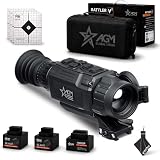
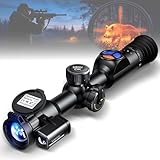
Night hunting changes entirely when body profiles, leg joints, and snouts appear sharp against the cool midnight soil. Stepping up to a sensor of at least 256x192 or 384x288 with modest base magnification delivers clear animal identification before touching the trigger. Locking that resolution to a 50Hz refresh rate eliminates frame stutter on sprinting sounders, while a dedicated rifle mount preserves zero against heavy recoil. Here is how the top options balance optical clarity, fluid motion, and rugged hardware to secure your property this 2026.

- ARS Mark8.3
ARS Mark is a ranking system developed by bestairriflescopes.com. ARS Mark has no relationship or impact from any manufacturers or sales agent websites. Learn more
- BrandAGM Global Vision
- ARS Mark8.7
ARS Mark is a ranking system developed by bestairriflescopes.com. ARS Mark has no relationship or impact from any manufacturers or sales agent websites. Learn more
- BrandAGM Global Vision

- ARS Mark7.3
ARS Mark is a ranking system developed by bestairriflescopes.com. ARS Mark has no relationship or impact from any manufacturers or sales agent websites. Learn more
- BrandAGM Global Vision

- ARS Mark8.9
ARS Mark is a ranking system developed by bestairriflescopes.com. ARS Mark has no relationship or impact from any manufacturers or sales agent websites. Learn more
- BrandRIX
- ARS Mark7.9
ARS Mark is a ranking system developed by bestairriflescopes.com. ARS Mark has no relationship or impact from any manufacturers or sales agent websites. Learn more
- BrandGOYOJO
- ARS Mark8.2
ARS Mark is a ranking system developed by bestairriflescopes.com. ARS Mark has no relationship or impact from any manufacturers or sales agent websites. Learn more
- BrandGOYOJO

- ARS Mark7.7
ARS Mark is a ranking system developed by bestairriflescopes.com. ARS Mark has no relationship or impact from any manufacturers or sales agent websites. Learn more
- BrandGOYOJO
Last update on 2026-09-29 / Affiliate links / Images, Product Titles, and Product Highlights from Amazon Product Advertising API
Can a 256 thermal sensor distinguish a hog from livestock in open pastures?
Yes, a 256 sensor can separate feral hogs from livestock, but target identification range depends heavily on base magnification and sensor resolution. Scopes with 256x192 or 12um 256 sensors provide detection ranges from 950 yards to 1422 yards with 2.5X or 3.5X base magnification. While these optics detect heat signatures across large pastures, distinguishing body contours to confirm a hog rather than a calf requires watching movement patterns. For crisp anatomical separation and longer confirmation ranges, a 384x288 sensor with sub-20mK sensitivity and an 1800yd detection range provides cleaner definition of animal silhouettes.
Is a 50Hz or 55Hz refresh rate necessary for tracking moving hogs?
A 50Hz or 55Hz refresh rate is critical for keeping sight of sprinting hogs without screen stutter. When sounders scatter after the first shot, rapid refresh rates render fluid motion across the display screen, helping you track fleeing pigs and time follow-up shots accurately. In contrast, lower rates like 25Hz create noticeable display lag that turns moving animals into jerky frames. Choosing an optic with a 50Hz or 55Hz refresh rate ensures the sight picture updates fast enough to match sudden direction changes across dark fields.
How do you verify whether a thermal unit is a rifle scope or a handheld monocular?
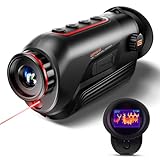
Check the mounting hardware and reticle options on the product specifications. A dedicated thermal riflescope includes mounting provisions such as a QD mount for attaching directly to weapon rails, alongside internal reticles and zeroing profiles. A handheld monocular, such as a compact 10mm unit with a 25Hz rate, is built strictly for scanning pastures by hand and lacks aiming reticles or rail attachment hardware. Always confirm the product description explicitly states riflescope or lists mounting systems before purchasing an optic meant for your firearm.
What base magnification and zoom range work best for night hog hunting?
A base magnification between 2.5X and 3.5X offers the ideal balance between target detail and a wide field of view. A 2.5X base magnification on a 19-256 optic lets you scan wider pastures for scattered sounders, while a 3.5X base on a 25mm optic brings distant targets closer instantly. For open agricultural terrain where sounders stay far from fence lines, scopes offering a 3-24x zoom range provide the flexibility to verify distant heat sources before moving into shooting position.
How do rangefinders and ballistic calculators improve nighttime shot placement?
Thermal images display heat signatures without natural daytime visual depth, making distance estimation deceptive across flat, open ground. Scopes equipped with a built-in rangefinder and ballistic calculator determine precise target distance and calculate the required point of impact automatically. While daytime marksmen might rely on traditional reticle markings for accurate holdovers, digital ballistics inside the thermal scope remove the guesswork when pigs are foraging at unexpected distances.
What mounting hardware should you check before buying a thermal riflescope?
Confirm that the optic includes compatible mounting hardware, such as a factory QD mount, to lock firmly onto your firearm rail. Quick-detach mounts allow you to remove and reinstall the optic while preserving your zero. You should also check the overall weight of the housing, as a compact 0.9lb riflescope helps maintain better rifle balance when scanning offhand or tracking fast sounders across broken ground.

10 Top Picks: Best Youth Air Rifles for 13-Year-Olds

12 Best Rifle Scopes For 5.56 Under 150 Dollars - (2026 Top Picks)

Top 10 Rifle Scopes for Coyote Hunting in 2026

12 Best Benchrest Rifle Scopes of 2026 For Tight Groups

Top 5 Airsoft Rifles: Unleash the Action in 2026
Unveil the Best Straight Wall Deer Rifles: Top Picks for 2026

Top Ammo Choices for Air-Powered Rifles: Boost Your Performance in 2026

Best Quick Detach Scope Rings for Accurate and Convenient Shooting







