
Best Traditional Broadhead for Turkey 2026 Top Picks

A best traditional broadhead for turkey setup has to solve a slightly different problem than a broadhead intended mainly for larger-bodied game. Turkeys present a compact vital area, thick feathers, and plenty of opportunity for a marginal hit to turn into a frustrating recovery. That puts extra value on a razor-sharp fixed blade, predictable arrow flight, and a head that matches the bow instead of simply looking aggressive in the package. Bigger isn't automatically better, either, because extra blade area can make a poorly tuned traditional arrow behave like a tiny weather vane.
Arrow tuning deserves just as much attention as blade design. Traditional bows usually don't give the broadhead the same speed cushion associated with faster modern setups, so clean flight helps preserve the energy already available. A head that leaves the bow straight wastes less momentum correcting itself downrange, and that matters even more once feathers, breeze, or a less-than-perfect release enter the picture. Frankly, a modest fixed head flying cleanly can make more sense than an oversized model that looks impressive but refuses to group with field points.
Blade sharpness is another place where shortcuts come back to bite. A cut-on-contact broadhead begins slicing as soon as the tip reaches the target rather than relying on a bulky point to force its way through first. That characteristic pairs naturally with traditional equipment because efficient penetration matters when speed is limited. Still, sharpening takes patience, and some traditional-style heads arrive needing more edge work than newcomers expect, so maintaining the bevel should be treated as part of the setup rather than an afterthought.
Broadhead weight also changes more than the number printed on the package. Heavier heads can increase front-of-center balance and often fit the deliberate feel many traditional archers prefer, but adding weight at the nose can alter dynamic spine and move impact compared with the existing field-point tune. So, swapping from a lighter practice point to a much heavier hunting head the night before a hunt is asking for trouble. Matching practice weight to hunting weight, then confirming broadhead groups before season, keeps surprises off the menu.
There is a practical tradeoff between wide cutting diameter and forgiving flight. A wider head creates more blade surface, yet that same surface can catch air and expose weaknesses in arrow tune. Turkey hunting often happens at relatively close ranges, but short distance doesn't magically fix a fishtailing arrow. A compact, sturdy two-blade or carefully designed multi-blade head may provide the cleaner balance, especially from recurves and longbows where consistency tends to matter more than chasing the largest possible wound channel.
Construction matters in a quieter way. One-piece steel broadheads remove small screws, moving parts, and replacement blades from the equation, which can appeal to anyone who likes simple equipment that can be sharpened and reused. The downside is maintenance: steel edges can dull from practice targets, transport, or contact with hard material, and rust protection may require attention depending on the finish. Replaceable-blade designs simplify edge renewal, but they add components and may not deliver the old-school simplicity that draws many people toward traditional tackle in the first place.
Shot placement still carries more weight than any feature list. A broadhead can't compensate for poor flight, rushed distance judgment, or an angle that leaves little room for error. The sensible approach is to select a traditional turkey broadhead that groups predictably, sharpen it properly, verify the bow's tune, and practice with an identical-weight setup before heading afield. That combination isn't flashy, but it tackles the frustrations that matter most: inconsistent impact, weak penetration, difficult sharpening, and equipment that behaves differently once the hunting head is screwed on.

- ARS Mark9.6
ARS Mark is a ranking system developed by bestairriflescopes.com. ARS Mark has no relationship or impact from any manufacturers or sales agent websites. Learn more
- BrandDEEPOWER
- ARS Mark9.0
ARS Mark is a ranking system developed by bestairriflescopes.com. ARS Mark has no relationship or impact from any manufacturers or sales agent websites. Learn more
- Brandmagnus
- ARS Mark9.0
ARS Mark is a ranking system developed by bestairriflescopes.com. ARS Mark has no relationship or impact from any manufacturers or sales agent websites. Learn more
- BrandJIANZD

- ARS Mark8.4
ARS Mark is a ranking system developed by bestairriflescopes.com. ARS Mark has no relationship or impact from any manufacturers or sales agent websites. Learn more
- BrandSinbadteck

- ARS Mark8.4
ARS Mark is a ranking system developed by bestairriflescopes.com. ARS Mark has no relationship or impact from any manufacturers or sales agent websites. Learn more
- BrandSOPOGER

- ARS Mark8.0
ARS Mark is a ranking system developed by bestairriflescopes.com. ARS Mark has no relationship or impact from any manufacturers or sales agent websites. Learn more
- BrandKEAUP
- ARS Mark8.0
ARS Mark is a ranking system developed by bestairriflescopes.com. ARS Mark has no relationship or impact from any manufacturers or sales agent websites. Learn more
- BrandKEAUP

- ARS Mark5.4
ARS Mark is a ranking system developed by bestairriflescopes.com. ARS Mark has no relationship or impact from any manufacturers or sales agent websites. Learn more
- BrandDEEPOWER
Last update on 2026-08-13 / Affiliate links / Images, Product Titles, and Product Highlights from Amazon Product Advertising API
DEEPOWER 150 Grain Turkey Broadheads Review
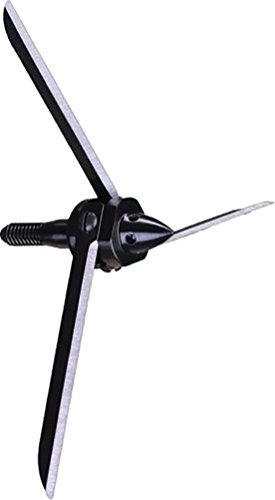
Wide blades sound reassuring on a turkey arrow until tuning gets sloppy and that extra surface starts working against clean flight. The best traditional broadhead for turkey has to balance cutting coverage, point weight, blade strength, and predictable behavior rather than winning on one oversized specification alone. DEEPOWER builds this model around a 150-grain fixed-blade setup with four stainless-steel blades and a stated 4-inch cutting diameter. That combination gives it a very specific personality: broad cutting coverage for turkey hunting, paired with a design that deserves careful setup before the first serious shot.
DEEPOWER 150 Grain Turkey Broadheads
The centerpiece is the 4-inch cutting diameter, and that immediately separates this head from compact fixed-blade designs. Turkey hunting presents a relatively small vital area beneath heavy feathers, so a broad cutting path can be appealing when the goal is to put more blade surface through the impact zone. DEEPOWER uses four blades measuring 2-1/8 inches, creating a profile that is clearly shaped around turkey hunting rather than general-purpose use. The wide four-blade layout is the main reason to consider this model, but it's also the feature that makes proper arrow tuning especially important.
The head weighs 150 grains, which is substantial enough to affect the way an existing arrow setup behaves. Adding more point weight changes the load at the front of the shaft, and that can alter dynamic spine, balance, and point of impact compared with lighter field points. A recurve arrow already tuned around 150-grain practice points may transition more naturally, while an arrow built around a much lighter point could need additional adjustment. That makes point-weight compatibility one of the first practical checks instead of something to think about after the broadhead is installed.
DEEPOWER lists compatibility with recurve bows, compound bows, and crossbows, which gives the six-pack flexibility across several common hunting platforms. That doesn't mean one arrow or bolt configuration will behave identically from every bow, though. Shaft spine, overall arrow weight, fletching, bow speed, and release characteristics still affect broadhead flight. The product offers broad platform compatibility, but system-specific tuning remains the part that determines whether those large blades track cleanly downrange.
The package also includes installation tools, a practical addition with four exposed blades surrounding the ferrule. Tightening a hunting head by gripping sharpened steel is hardly a smart habit, so a dedicated tool makes setup less awkward and keeps fingers farther from the cutting surfaces. The supplied information doesn't describe the tool in enough detail to judge its construction, and there's no reason to invent that information. Its value is straightforward: it supports safer, cleaner installation before practice and hunting.
Four-Inch Cutting Diameter And Its Tradeoffs
A 4-inch cutting diameter gives this DEEPOWER broadhead its strongest turkey-specific advantage. Instead of concentrating all of the cutting action close to the ferrule, the wide blade arrangement reaches farther around the point of impact. That can be appealing on a bird where a little positional error matters more than it might on much larger game. Still, the extra blade width can't replace accurate shot placement, and treating diameter as a substitute for precision would be asking the broadhead to do something it can't do.
Large fixed blades also bring an aerodynamic tradeoff that shouldn't be swept under the rug. More blade surface means more area for airflow to act on, so a poorly tuned arrow can become less forgiving once this head replaces a compact field point. DEEPOWER describes the design as aerodynamic and intended to provide greater stability and accuracy, but no supplied test data supports assigning exact performance numbers. The sensible expectation is that clean arrow flight depends on the bow, shaft, fletching, and release working together with the head.
That relationship becomes especially noticeable on a traditional bow. Recurves tend to expose problems with shaft spine and launch consistency fairly quickly, and a broad fixed head can make those weaknesses even easier to see. A well-matched arrow may carry the DEEPOWER head without drama, while an arrow that's already marginal can start showing wider groups or different impact behavior. So, the wide profile isn't automatically a weakness, but it does demand more respect for proper tuning.
The specialized shape also means this isn't necessarily the broadhead someone would choose for every hunting situation. A compact fixed head may be easier to tune for general-purpose use, while DEEPOWER's turkey-focused geometry deliberately trades some aerodynamic subtlety for more cutting coverage. That distinction matters because specialized gear makes the most sense when its defining feature matches the job at hand. Here, the 4-inch diameter is both the major strength and the biggest setup consideration.
420 Stainless Steel And Fixed-Blade Construction
DEEPOWER makes the four blades from 420 stainless steel, giving the head a material suited to equipment that may see damp grass, humidity, dirt, and repeated handling. Stainless steel can help reduce corrosion concerns compared with unprotected carbon steel, which is useful during a hunting season where gear isn't always kept perfectly dry. The provided details describe the blades as sharp and durable, but they don't state hardness, blade thickness, or edge geometry. Because of that, the reliable assessment is the stainless-steel construction itself rather than unsupported claims about exact edge life.
The fixed-blade design keeps the working concept simple. There is no mechanical deployment system described, so all four cutting blades are already in position before the arrow is released. That straightforward approach can fit naturally with traditional archery, where fewer moving parts often appeal to people who prefer equipment they can inspect at a glance. The tradeoff, again, is that large fixed blades put more emphasis on flight tuning than a smaller or lower-profile head might.
Blade condition still deserves attention even with stainless steel. An exposed hunting edge can be nicked or dulled by careless storage, contact with other gear, or repeated handling during setup. DEEPOWER doesn't provide details about replaceable blades or a specific sharpening system, so it would be misleading to claim either is part of the package. A careful inspection before use keeps the focus on what matters: sharp, undamaged blades that are ready for the intended hunt.
The broad four-blade shape also changes how the heads should be stored. Loose broadheads rolling around in a gear bag can damage edges and create a genuine handling hazard. Keeping the fixed blades protected preserves their condition and makes preseason organization less troublesome. It's a simple maintenance habit, but with four exposed blades and a large cutting diameter, it carries more weight than it would with an ordinary practice point.
150-Grain Weight And Traditional Bow Tuning
The 150-grain broadhead weight is particularly relevant for a traditional setup because point weight plays a major role in how an arrow flexes during launch. Moving from a lighter practice point to this heavier head can weaken the arrow dynamically and shift impact behavior, even though the shaft itself hasn't changed. That's not a flaw in the DEEPOWER design; it's simply part of arrow tuning. The head works best when shaft spine and point weight are considered together rather than treated as separate choices.
Matching practice points to the same 150-grain weight can remove one obvious variable. Shooting lighter field points for months and attaching a heavier broadhead shortly before the hunt can create confusion if groups suddenly shift. A matching practice weight gives a more relevant baseline, then actual broadhead shooting can reveal whether anything else needs adjustment. That makes preseason verification far more useful than assuming the head will land exactly where lighter points did.
Heavier point weight may also move the arrow's balance farther forward, but the supplied information doesn't include completed arrow weight or front-of-center measurements. Assigning a percentage would therefore be fabricated. What can be said confidently is that a 150-grain point places more mass at the front than a lighter head on the same shaft. Whether that change is beneficial depends on the complete arrow, draw characteristics, and tuning of the bow.
This is where DEEPOWER fits naturally into the best traditional broadhead for turkey discussion. The combination of substantial point weight and a very wide fixed-blade profile can suit a deliberately built turkey arrow, particularly for someone who doesn't mind spending time dialing in the setup. It won't be equally convenient for every shaft already sitting in the quiver. The difference is that this broadhead asks the arrow to be built around its dimensions instead of disappearing into an existing lightweight setup.
Compatibility Across Recurve, Compound, And Crossbow
DEEPOWER states that the broadheads work with recurve bows, compound bows, and crossbows. That broad compatibility is useful because the six-pack isn't confined to one bow style, and it gives the product a little more flexibility than a highly platform-specific hunting head. Still, compatibility should be separated from optimization. A crossbow bolt, compound arrow, and traditional shaft can all accept a hunting head while having very different weight and tuning requirements.
Recurve use is particularly interesting because traditional archery tends to put more emphasis on the relationship between shaft spine and point weight. The 150-grain fixed head may pair naturally with an arrow already built around substantial front weight, but a lighter setup may react very differently after the swap. The 4-inch blade diameter also means any launch inconsistency has more surface area to influence. Recurve compatibility is therefore meaningful, but actual broadhead groups matter more than the label on the package.
Compound bows and crossbows bring different variables into the picture. Higher launch speeds, different rests, bolt specifications, and manufacturer point-weight recommendations all influence whether the DEEPOWER broadhead is appropriate for a particular setup. The supplied description gives broad compatibility but doesn't provide equipment-specific limits. Respecting the bow or crossbow manufacturer's recommendations keeps that compatibility claim in proper context.
Youth recreational archery sits in an entirely different equipment category from four-blade hunting heads, and that distinction is reflected in a separate reference about bow and arrow options for kids. The DEEPOWER model is a sharp hunting broadhead designed for turkey use, not a casual target point or beginner accessory. Its four exposed blades require deliberate handling, secure storage, and careful installation. That difference is practical rather than promotional, and it helps keep hunting equipment and recreational gear in their proper lanes.
Accuracy Depends On The Whole Arrow System
DEEPOWER describes the head as having an aerodynamic design intended to improve stability and accuracy. That's particularly important with four large blades, but broadhead shape is only part of the flight equation. Shaft spine, fletching, point alignment, release consistency, and overall tune determine how cleanly the arrow travels after leaving the bow. Without supplied testing numbers, the fair way to judge this feature is as a design intention rather than a guaranteed accuracy result.
Broadhead alignment deserves special attention. A head that doesn't sit squarely and concentrically with the shaft can introduce wobble, and the large blade surface gives airflow more opportunity to act on that wobble. The included installation tool may make threading and tightening easier, but installation alone doesn't prove perfect alignment. Shooting the completed arrow is still the practical way to see whether the head and shaft behave as one system.
Fletching contributes to the equation as well. The supplied product details don't specify a required vane or feather size, so recommending an exact configuration would go beyond the information provided. What is clear is that a four-blade fixed broadhead puts greater emphasis on stabilization than an ordinary field point. The rear of the arrow has to keep the front under control, making fletching and tuning part of the same conversation.
That also explains why broadhead practice is so important with this model. A field point can group well while a large hunting head exposes a problem that wasn't obvious before. DEEPOWER's wide cutting profile brings a clear hunting benefit, but it can't compensate for an arrow that leaves the bow poorly. The strongest setup is one where the broadhead, shaft, and bow already agree before hunting pressure enters the picture.
Practical Strengths And Weaknesses
The clearest strength is specialization. DEEPOWER gives this head a stated 4-inch cutting diameter, four 2-1/8-inch blades, and a 150-grain weight specifically oriented toward turkey hunting. Those specifications create a very different product from a tiny all-purpose fixed head. For a dedicated turkey arrow, the wide cutting coverage is an easy feature to understand and evaluate.
The main weakness comes from the same oversized blade arrangement. More fixed-blade surface can make tuning problems more noticeable, especially with a traditional bow where shaft behavior is already sensitive to point weight and release consistency. Someone who wants the least demanding setup possible may prefer something smaller and less exposed to airflow. DEEPOWER asks for more attention to spine, alignment, and flight in exchange for its unusually broad cutting diameter.
The six-pack quantity is useful because it provides several matching heads with the same stated weight and blade configuration. Included installation tools also remove one small frustration from mounting a broadhead surrounded by sharpened edges. Those practical details don't replace tuning, but they make preparation more orderly and reduce the need to mix different point designs across hunting arrows. Consistency is a quiet benefit here, especially when working with a specialized turkey setup.
Some technical details remain unknown, and that's worth acknowledging rather than filling the gaps with guesses. The supplied description doesn't state blade thickness, ferrule material, sharpening angle, replacement-blade availability, or measured penetration results. What is clearly documented is enough to understand the product: 420 stainless-steel blades, four fixed cutting surfaces, 150-grain weight, a stated 4-inch cutting diameter, broad bow compatibility, and installation tools. Those traits make the DEEPOWER head a distinctly purpose-built option whose biggest strength and biggest tradeoff both come from its unusually wide fixed-blade design.
Magnus Bullhead 3-Blade Fixed Broadheads
Big turkey broadheads tend to ask for more discipline than their simple shape suggests, especially once a wide fixed-blade profile replaces an ordinary field point. That makes setup, arrow behavior, and blade configuration matter just as much as the name stamped on the package. The best traditional broadhead for turkey should make sense as part of the entire bow-and-arrow system rather than relying on exaggerated claims about what one head can accomplish. Magnus keeps the Bullhead specification straightforward here with a 100-grain weight, three fixed blades, and three broadheads in the package.
Magnus Bullhead 3-Blade Fixed Broadheads
The Bullhead's most obvious characteristic is its three-blade fixed design. There isn't a mechanical deployment system mentioned in the supplied information, so the basic appeal comes from a broadhead whose cutting surfaces are already positioned before the shot. That approach fits naturally into a traditional turkey broadhead discussion because simplicity has real value around hunting gear. Fewer operating steps mean there is less to think about mechanically, although arrow setup still deserves careful attention.
The stated 100-grain weight also makes this Magnus model meaningfully different from heavier turkey heads built around 125 or 150 grains. A lighter point can fit more naturally into arrows already tuned around common 100-grain field points, reducing one obvious setup change before broadhead testing begins. Still, identical weight doesn't automatically guarantee identical impact or flight because a fixed-blade hunting head presents a different aerodynamic shape. That's why broadhead verification remains worthwhile before treating field-point groups as the final answer.
Magnus packages the Bullhead as a 3-pack, keeping the product focused and fairly straightforward. Three matching heads make it easier to keep the same blade configuration and point weight across several hunting arrows instead of mixing styles in the quiver. The supplied description doesn't provide blade dimensions, ferrule material, edge specifications, or replacement-part details, so those points shouldn't be filled in with guesses. The reliable picture is simply a 100-grain, three-blade fixed broadhead designed around turkey hunting.
That limited specification sheet actually makes the evaluation cleaner. There aren't dozens of secondary features competing for attention, so the decision comes down to whether a fixed three-blade head at 100 grains fits the arrow setup and hunting style being used. Someone already practicing with 100-grain points may appreciate the familiar weight, while a heavier traditional arrow system might favor something different. The Bullhead makes the most sense when its weight and fixed-blade format align with the rest of the equipment rather than forcing the bow to accommodate an arbitrary choice.
Three Fixed Blades Keep The Design Direct
Three blades create a different profile from the two-blade heads often associated with traditional archery. The extra cutting surface can be attractive on turkey-sized game, but it also places more metal into the airflow than a simple two-blade point. That makes arrow tuning an important part of the conversation instead of an afterthought. A broadhead can be perfectly usable in the right setup and still expose poor alignment or shaft behavior once it leaves the string.
The fixed configuration is easier to understand because nothing has to open after contact. That simplicity is a practical strength, especially for anyone who prefers gear with fewer moving components and fewer variables to inspect before a hunt. At the same time, fixed blades remain exposed throughout flight, so they can influence steering more than a field point does. The Bullhead therefore benefits from the same basic discipline as other traditional fixed broadheads: good shaft matching, clean release, and actual broadhead practice.
A three-blade layout also changes the maintenance conversation a little. Each cutting edge needs to remain in suitable condition, and one damaged blade can affect both cutting performance and overall balance. The supplied product description doesn't state whether the blades are replaceable or how they should be sharpened, so making specific maintenance claims would be misleading. The sensible takeaway is that blade inspection matters before use, especially on a head built around several exposed cutting surfaces.
The Bullhead's design won't suit every preference, and that's worth saying plainly. Some traditional archers favor two-blade heads because they like a narrower profile and simpler sharpening geometry, while others may prefer the three-blade configuration for its broader cutting pattern. Neither preference makes the other automatically wrong. The useful question is whether this head's fixed-blade structure fits the bow, arrow, and level of tuning effort someone is prepared to put in.
100-Grain Weight Makes Setup More Familiar
The 100-grain specification may be one of the Bullhead's most practical characteristics. Many arrows are commonly practiced with using 100-grain field points, so keeping the hunting head at the same stated weight removes one major variable from the transition. That doesn't mean the arrow will behave exactly the same, but it avoids adding a point-weight change on top of a blade-profile change. For someone trying to keep a turkey setup straightforward, that weight consistency can make the tuning process less confusing.
Traditional bows can be sensitive to changes at the front of the shaft, and point weight influences dynamic spine. A 100-grain head may work nicely with an arrow already tuned around that load, while a shaft built for a substantially heavier point could react differently after the switch. The Bullhead therefore shouldn't be judged in isolation from shaft spine and bow setup. Its lighter stated weight is a useful characteristic, not a guarantee that every traditional arrow will like it.
Field-point matching is also useful during preseason practice. Shooting a 100-grain field point provides a more relevant starting point than practicing with one weight and hunting with another. Even then, the broadhead's blades can change flight enough that actual hunting-head groups deserve attention before the season begins. The difference between point shape and point weight is easy to overlook, yet both influence the finished arrow in different ways.
That balance is exactly why the Magnus model deserves consideration under the best traditional broadhead for turkey keyword without pretending it is automatically the right choice for every bow. The 100-grain weight can reduce one layer of setup complexity, while the fixed three-blade shape introduces its own aerodynamic considerations. In practical terms, the strength is familiarity at the front of the arrow; the tradeoff is still the need to verify flight with the actual broadhead attached.
Arrow Flight Matters More Than The Label
Broadheads don't fly in isolation. Shaft straightness, spine, fletching, release consistency, and point alignment all contribute to what happens after the string moves forward. A fixed three-blade broadhead can highlight problems that weren't obvious while shooting field points because the blade surface gives airflow more opportunity to influence the arrow. That doesn't make the Magnus Bullhead difficult by definition, but it does make proper tuning more valuable.
Alignment deserves particular attention because a hunting head should sit squarely with the shaft. Any visible wobble can undermine confidence, especially with exposed blades at the front of the arrow. The provided information doesn't mention installation tools, spin-testing recommendations, or a specific setup procedure, so there is no reason to invent one. The practical point is simply that clean broadhead alignment belongs on the checklist before judging accuracy.
Traditional archery rewards consistency more than shortcuts. A recurve or longbow setup that groups nicely with field points may still need adjustment once the Bullhead is installed, and that's normal rather than automatically a product flaw. Small differences in release or shaft reaction can become more noticeable with a fixed hunting head. The Bullhead's 100-grain weight keeps one variable familiar, while the blade profile still asks the arrow to prove itself in actual practice.
Other archery components affect that same balance, even though they serve completely different roles in the shot. A separate equipment reference appears in archery stabilizers for hunting, where bow balance and shot feel are the focus rather than turkey broadhead geometry. The Magnus Bullhead itself remains a fixed hunting point, so its evaluation should stay centered on blade configuration, weight, and how the finished arrow behaves. Keeping those equipment roles separate makes it easier to judge each component without forcing an artificial connection.
Strengths And Limitations Worth Considering
The Bullhead's main strength is its uncomplicated specification. Three fixed blades, a 100-grain weight, and a three-pack format create a product that's easy to understand without wading through a pile of secondary claims. That simplicity can be appealing for turkey hunting because the broadhead's job is clear and the point weight is familiar to many setups. The fixed-blade design also avoids relying on a described opening mechanism after impact.
The primary limitation is the lack of detailed technical information in the supplied description. Blade width, cutting diameter, steel type, ferrule material, blade thickness, sharpening method, and replacement-blade details aren't provided here. Those missing specifications make it impossible to responsibly claim advantages in durability, cutting size, or edge retention over competing heads. A useful review has to stay grounded in the confirmed 100-grain three-blade configuration rather than filling gaps with assumptions.
Another tradeoff comes from the nature of fixed blades themselves. They offer simple construction, but exposed blade surface can require more attention to broadhead flight than a field point. Someone who dislikes tuning or rarely practices with actual hunting heads may find that extra preparation inconvenient. A person already accustomed to checking arrow behavior before season may see it as ordinary maintenance rather than a drawback.
The three-pack quantity is enough to create a small set of matching hunting arrows, although it offers fewer heads than larger multipacks. That may be perfectly adequate for a carefully prepared turkey setup, but someone wanting numerous practice and backup heads could prefer a larger package. The Bullhead's appeal is therefore fairly specific: 100-grain familiarity, a simple three-blade fixed configuration, and a turkey-oriented role without extra features getting in the way. Its usefulness depends on whether those straightforward traits match the bow-and-arrow system already in hand.
JIANZD 150 Grain Traditional Broadheads
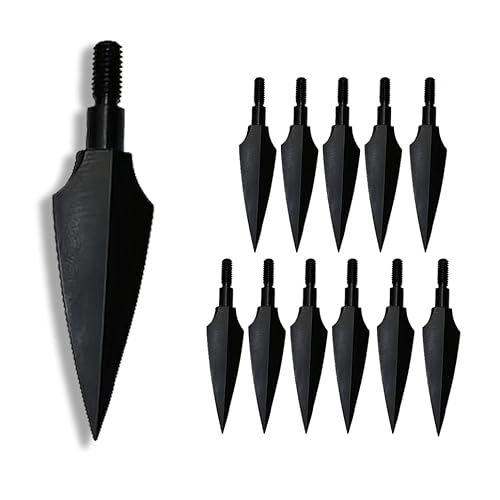
Extra weight at the nose of an arrow can be useful, but it can also expose a shaft that was never happy with heavier points in the first place. That practical tension matters while considering the best traditional broadhead for turkey, where simple construction means little if the finished arrow doesn't behave consistently. JIANZD keeps the formula old-school with a 150-grain leaf-shaped broadhead made from carbon steel, a solid screw-in format, and twelve matching heads in a portable plastic case. The appeal is less about bells and whistles and more about durable material, straightforward installation, and having enough identical points to build a consistent set without juggling several designs.
JIANZD 150 Grain Traditional Broadheads
JIANZD takes a remarkably uncomplicated route with the solid leaf-shaped design. The supplied details describe carbon-steel construction and sharp blades rather than mechanical parts, replaceable assemblies, or moving sections. That gives the head a traditional character that fits naturally with recurves while still being listed for compound bows and crossbows. For a turkey broadhead setup, fewer moving pieces can make inspection simpler because the important surfaces are visible before the arrow ever leaves the bow.
Each broadhead weighs 150 grains, and that number deserves more attention than it sometimes gets. Point weight affects how an arrow reacts during launch, particularly on a recurve where shaft spine and front-end mass work hand in hand. An arrow already tuned around 150-grain points may accept the change more easily, while one built around something noticeably lighter could behave differently. The heavier point weight is therefore a useful characteristic only when the shaft and bow are comfortable with it.
The package contains 12 matching broadheads, which is a practical advantage for anyone trying to keep several arrows configured the same way. A larger set makes it easier to maintain consistent point weight across practice, backup, and hunting arrows without mixing unrelated heads. JIANZD also includes a portable plastic storage case, giving those sharp steel points a defined place rather than leaving them loose among other gear. That storage case may sound minor, but exposed broadheads are exactly the kind of equipment that benefits from organized handling.
The stated compatibility covers carbon arrows, fiberglass arrows, aluminum arrows, bowfishing arrows, and crossbow bolts. That breadth is convenient, but it shouldn't be mistaken for a promise that every shaft will react the same way to a 150-grain point. Insert fit, shaft spine, total arrow weight, and the launching platform all still matter. JIANZD makes the physical installation straightforward; the finished arrow setup still determines whether that compatibility becomes useful in practice.
Carbon Steel Gives The Head A Workmanlike Feel
The use of carbon steel is central to the product's identity. JIANZD describes the material as sturdy and the broadheads as durable and reusable, which suits a solid traditional-style point better than a delicate multipart construction would. No steel hardness, heat-treatment specification, or blade-thickness measurement is provided, though, so exact durability claims would be speculation. The fair takeaway is that solid steel construction gives the head a simple, robust foundation without pretending to know numbers the manufacturer details don't provide.
Carbon steel also brings a realistic ownership tradeoff. Moisture and careless storage aren't kind to ordinary carbon steel, so keeping the heads dry after exposure to damp grass, rain, or humid conditions is a sensible routine. The supplied information doesn't identify a corrosion-resistant coating, which means there is no basis for claiming special rust protection. In practical terms, maintenance matters a little more here than it would with a head explicitly built around stainless material.
JIANZD describes the blades as sharp, but there isn't a stated sharpening angle or a product-specific sharpening method in the provided details. That's an important distinction because reusable doesn't mean maintenance-free. Edges can pick up wear from practice, storage, or contact with hard material, and a visual inspection before use is a reasonable habit. The reusable blade concept makes the most sense for someone comfortable checking condition instead of assuming every head stays ready forever.
The portable case helps with that upkeep in a surprisingly practical way. Twelve loose carbon-steel heads can bang against each other, nick edges, and turn an ordinary gear bag into a hand hazard. Keeping the sharp points contained supports both blade protection and safer organization between trips. It also fits the product's general personality: simple equipment, little fuss, but a bit of care goes a long way.
150 Grains Makes Arrow Matching More Important
A 150-grain broadhead adds meaningful mass at the front of the shaft, and that can change the way an arrow bends as it leaves the bow. Traditional equipment tends to make that relationship especially noticeable because point weight and shaft spine are closely tied to clean flight. A head that screws in perfectly can still be a poor match if the shaft reacts badly to the extra weight. That makes arrow tuning one of the most important realities behind this otherwise simple design.
Practice points close to the same weight can reduce unnecessary guesswork. Switching from a much lighter field point straight to a 150-grain hunting head changes both weight and shape at once, making it harder to tell which variable caused a shift in impact. Keeping the practice weight consistent gives a cleaner baseline before the broadhead itself is evaluated. It's not glamorous, but it can save a fair amount of head-scratching later.
The heavier nose may suit some traditional arrows nicely, especially those already built around substantial front weight. Still, JIANZD doesn't provide completed arrow weights, spine charts, or front-of-center measurements in the supplied description. Assigning a specific balance benefit would therefore go beyond the available information. The honest point is simply that 150 grains changes the front-end load, and whether that change is helpful depends on the rest of the setup.
That characteristic is particularly relevant to the best traditional broadhead for turkey discussion. A simple solid head can be appealing, but traditional archery rarely rewards treating one component in isolation. Shaft behavior, point weight, release consistency, and broadhead alignment all contribute to the finished result. The JIANZD head brings substantial point mass; the bow and arrow still have to make peace with it.
Screw-In Fit And Broad Arrow Compatibility
The screw-in design keeps installation refreshingly direct. JIANZD states that these heads are compatible with several common arrow materials, so the product isn't restricted to one narrow shaft category. That flexibility can make it easier to maintain more than one archery setup without needing a completely different broadhead format for each. Still, compatible threading should be matched with the correct insert because proper seating and alignment matter once the arrow starts moving.
Carbon, fiberglass, and aluminum arrows aren't identical just because the same broadhead can attach to them. Their stiffness, construction, length, and insert systems can differ, which means a 150-grain point may influence each setup differently. Bowfishing arrows and crossbow bolts add another layer of variation. The broad compatibility is useful, but the weight of the head remains constant even while everything behind it changes.
Other archery equipment solves a completely different part of the shooting process, and that distinction is easy to see in best release aid target archery, where release consistency is the subject rather than broadhead construction. JIANZD's role stays firmly at the front of the arrow, where material, weight, fit, and edge condition matter most. Keeping those functions separate avoids pretending unrelated accessories solve the same problem. The broadhead does one job, and its usefulness depends on how well it fits the arrow system around it.
The main strength of the package is straightforward quantity combined with simple construction. Twelve carbon-steel heads, each weighing 150 grains, provide a consistent set without adding mechanical complexity or a long list of moving components. The main weakness is equally practical: carbon steel deserves care around moisture, while several technical details such as blade thickness, cutting diameter, steel hardness, and sharpening angle aren't supplied. That leaves the JIANZD broadhead best understood for what is actually documented: a reusable, leaf-shaped, screw-in traditional 150-grain head packaged in useful quantity for several compatible arrow types.
Sinbadteck 200Gr 4-Blade Turkey Broadheads
A heavier broadhead can make an otherwise familiar arrow setup feel surprisingly different, especially after months of practicing with lighter field points. That shift matters with the best traditional broadhead for turkey, because a fixed head needs to work with the shaft rather than simply screw into it. Sinbadteck approaches the job with a 200-grain design, four fixed blades, a standard screw-in thread, and an aluminum ferrule. The setup is straightforward, but that substantial point weight makes careful arrow matching far more important than the easy installation might suggest.
Sinbadteck 200Gr 4-Blade Turkey Broadheads
The most obvious feature is the four fixed blades, which remain in their cutting position instead of relying on a deployment mechanism. Sinbadteck describes those blades as extremely sharp and pairs them with a hybrid tip intended for field practice and hunting. The supplied details also list a 1.88-inch specification, giving the head a clearly defined hunting-oriented profile. What isn't provided is blade thickness or exact blade material, so there's no reason to invent those specifications.
The 200-grain weight is arguably the more important part of the design. Sinbadteck lists a weight tolerance of 200 grains plus or minus 1 grain, which gives a specific range rather than a vague heavyweight label. A point this heavy can change the way a shaft reacts during launch, particularly on recurves where dynamic spine is closely tied to point mass. That makes the head better suited to a deliberately matched setup than an impulsive swap from a much lighter field point.
Sinbadteck packages three broadheads, and the hunting shaft isn't included. That gives enough matching heads for a compact hunting setup while keeping the package simple. Three heads may be adequate for a carefully prepared quiver, though someone wanting numerous practice and backup heads could prefer a larger pack. The 3-piece quantity is therefore practical but not especially generous.
Heavy Point Weight Requires Thoughtful Arrow Matching
A 200-grain broadhead puts a considerable amount of mass at the front of an arrow. Add that to a shaft tuned around a much lighter point and the arrow can react differently as the string drives it forward. Traditional bows tend to make those changes fairly obvious because shaft spine, point weight, and release quality work so closely together. The main strength is substantial front-end mass, but the corresponding tradeoff is a greater need for proper tuning.
Practice-point weight matters here too. Using a 100-grain field point and then attaching a 200-grain hunting head changes both weight and front-end geometry at the same time. If the impact point moves, it becomes harder to tell whether the difference came from the extra mass, the fixed blades, or both. A similar-weight practice point gives a more useful baseline before the actual broadhead is evaluated.
Sinbadteck doesn't provide completed arrow weight, shaft-spine recommendations, or front-of-center numbers in the supplied description. That means assigning a specific balance percentage or claiming an automatic penetration advantage would be speculation. What can be said confidently is that 200 grains adds meaningful nose weight to the system. Whether that weight helps or complicates the setup depends on the bow and shaft behind it.
Four Fixed Blades Keep The Design Straightforward
The fixed-blade construction removes one mechanical variable from the equation. There isn't a folding or opening system described, so the blades are already exposed from the moment the arrow is released. That simplicity can appeal to traditional archers who prefer equipment with fewer moving components. The flip side is that exposed blade surface remains in the airflow throughout the shot, making clean arrow flight especially important.
Sinbadteck describes the broadheads as delivering remarkable precision, but there are no supplied group sizes, test distances, or independent accuracy figures. Accuracy still depends on shaft alignment, spine, fletching, insert fit, bow tune, and release consistency. The head may be precisely constructed, but that doesn't override problems elsewhere in the setup. The realistic expectation is that proper broadhead alignment and a well-matched arrow remain essential.
The manufacturer also specifically positions the design for turkey hunting and mentions turkey-neck hits. That application matches the product's stated purpose, but there are no hunting statistics or measured field results in the details provided. It would therefore be misleading to turn the wording into a guaranteed outcome. The reliable facts are the four fixed blades, the 200-grain weight, and the hunting-oriented design.
Aluminum Ferrule And Standard Screw-In Installation
The screw-in ferrule is described as being made from aircraft-quality aluminum. Sinbadteck presents that material as durable and reliable, although no exact alloy number or laboratory strength data is supplied. That limits how far durability claims can reasonably go. The useful takeaway is the combination of an aluminum ferrule with a heavy four-blade broadhead rather than an unsupported claim about specific impact resistance.
Installation uses a standard screw-in insert thread compatible with crossbows, recurve bows, and compound bows according to the supplied description. That broad compatibility removes the hassle of dealing with a proprietary attachment system. Still, physical thread fit doesn't guarantee that every arrow or bolt is suited to a 200-grain point. The bow and shaft combination still needs to support that amount of front-end weight.
Traditional setups make that distinction particularly important. A recurve may accept the broadhead physically without complaint, yet the shaft can still behave dynamically weak if it wasn't selected for a heavy point. That's why the best traditional broadhead for turkey isn't simply the head with the easiest installation. The more meaningful fit is the one between point weight, shaft spine, and actual broadhead flight.
Practical Hunting Setup And Equipment Tradeoffs
The 1.88-inch specification gives the Sinbadteck head a concrete size reference, although the supplied description doesn't provide enough additional blade measurements for a full dimensional breakdown. That means it's better to avoid guessing about exact cutting width or blade geometry beyond what is stated. The head is clearly intended for hunting use and carries four fixed blades around a heavy point. Those known characteristics already give it a distinct place among traditional-style turkey broadheads.
Other shooting gear solves different problems entirely, so forcing unrelated equipment into the broadhead discussion would muddy the review. A separate reference for optics appears in best quality glass rifle scopes, where visual clarity and sighting equipment are the subject rather than arrowhead design. The Sinbadteck broadhead remains centered on point weight, blade configuration, and screw-in compatibility. Keeping those categories separate makes the product assessment more useful and avoids pretending the two types of equipment affect each other.
The main weakness is that 200 grains won't slide seamlessly into every existing arrow setup. A lighter shaft configuration may require tuning changes, while the four fixed blades can expose alignment or flight issues more readily than a simple field point. Someone hoping for a completely neutral swap may find the head more demanding than expected. In a setup already built around substantial point mass, though, the weight becomes far easier to accommodate.
Support, Limitations, And Realistic Expectations
Sinbadteck includes a 45-day return period and lifetime technical support in the supplied product details. Those service terms don't affect flight or blade behavior, but they are practical ownership details worth noting. The support may be useful if questions arise about fit or product issues. Still, the real performance story remains tied to the 200-grain construction and how well it matches the arrow system.
Several technical details remain unspecified. Blade thickness, exact blade material, sharpening angle, ferrule alloy number, measured penetration data, and controlled grouping results aren't provided. That limits direct performance comparisons with other broadheads and prevents any responsible claim that this model is automatically sharper, stronger, or more accurate. The difference has to be judged from the documented specifications rather than invented measurements.
The Sinbadteck design ultimately stands out for its heavy 200-grain weight, four fixed blades, aluminum screw-in ferrule, and stated compatibility with crossbow, recurve, and compound setups. Those traits create a broadhead that favors deliberate equipment matching over plug-and-play convenience. Its strength is the simple, heavyweight fixed-blade format, while its limitation is the extra tuning attention that such a substantial point can demand. That balance makes the head most sensible in an arrow setup already prepared to handle serious front-end mass.
SOPOGER 125 Grain Traditional Broadheads
A traditional arrow can feel perfectly settled until a different point goes on the front and suddenly the whole setup starts talking back. That tension matters with the best traditional broadhead for turkey, where point weight, shaft response, blade shape, and simple maintenance can matter just as much as the name on the package. SOPOGER keeps this version fairly old-school with a 125-grain carbon-steel broadhead, a trigonous spear-style profile, standard screw-in threading, and a 12-piece package. The appeal is easy to understand: plenty of matching heads, straightforward installation, and a classic fixed design without a pile of moving parts.
SOPOGER 125 Grain Traditional Broadheads
The first thing that stands out is the carbon-steel construction. SOPOGER describes these arrow tips as sharp, durable, and corrosion-resistant, which fits the practical demands of repeated range sessions and field use. The supplied information doesn't give steel hardness, blade thickness, or a specific coating formula, so there's no solid basis for inventing exact durability numbers. What is clear is that the solid steel body favors simplicity and reusability rather than a complicated multi-piece mechanism.
This version uses a 125-grain trigonous design, while SOPOGER also lists 100-grain choices in the broader lineup. That difference matters because adding or removing point weight can change how an arrow reacts during launch, particularly on a recurve where shaft behavior tends to be pretty honest. A shaft already set up around 125-grain points may feel more familiar with this head than one built around a much lighter tip. The real benefit is having a defined weight option instead of being forced into a single point mass for every bow setup.
The package contains 12 broadheads, and that's a useful distinction from smaller three-piece hunting packs. A dozen matching points can make it easier to keep several arrows consistent in both weight and profile instead of mixing different heads across a quiver. SOPOGER specifically positions the set for long-term archery training and hunting use, so the larger quantity lines up with repeated practice rather than one-and-done use. The 12-pack format is a practical strength for anyone who prefers keeping equipment uniform.
The matte spear-style body also gives the head a noticeable traditional archery look. SOPOGER describes the design as blending vintage aesthetics with practical function, and that fits naturally with recurves and other simple bow setups. Appearance won't correct a bad shaft match, of course, but it does give the broadhead a clear identity. The classic profile feels more at home beside traditional tackle than a highly mechanical-looking head would.
Carbon Steel Brings Strength With Some Upkeep
Carbon steel is a sensible material for a reusable traditional-style broadhead because it supports a solid, straightforward construction. SOPOGER calls the heads durable and corrosion-resistant, although the supplied description doesn't include controlled corrosion tests or material-hardness figures. That means the material claim should stay grounded rather than being stretched into promises about years of maintenance-free use. The main strength is the sturdy fixed format, not an unsupported claim about exact service life.
Maintenance is where the material brings a realistic tradeoff. Moisture, dirt, and damp storage can be rough on metal equipment, so keeping the carbon-steel surfaces clean and dry is still sensible even with corrosion resistance listed as a feature. SOPOGER doesn't identify the protective finish chemistry, which leaves some uncertainty about long-term exposure. A little care goes a long way, and that's part of the bargain with reusable traditional hardware.
The product description also emphasizes sharp arrow tips, but no sharpening angle or maintenance procedure is supplied. That means it would be misleading to prescribe a specific resharpening method as though it came from the manufacturer. Reusable heads still benefit from inspection after practice, transport, or contact with harder surfaces. The practical weakness is that solid steel equipment rewards owners who are willing to check condition instead of assuming the edge stays unchanged forever.
The matte finish adds a subdued look without changing those basic upkeep needs. SOPOGER doesn't say whether the finish is mainly cosmetic, protective, or a bit of both. Because of that, claims about extra rust protection would go beyond the information provided. The documented difference is visual: the dark matte body reinforces the traditional spear-head character instead of looking polished or overly modern.
Standard Threads Make Installation Straightforward
The standard screw-in thread is one of the simplest parts of the design. SOPOGER states compatibility with recurve bows, compound bows, and crossbows, and it says the heads can be installed without additional archery accessories. That broad fit can save some setup hassle because the product isn't tied to one proprietary mounting system. The important benefit is straightforward physical installation across several common bow styles.
Physical fit and arrow behavior aren't the same thing, though. A broadhead can thread perfectly into an insert while the finished arrow still reacts differently because of shaft spine, length, total mass, or point weight. The 125-grain specification therefore matters beyond installation convenience. A clean screw-in connection solves the attachment problem, but the bow and arrow still decide whether the overall setup feels balanced.
That distinction becomes especially relevant with the best traditional broadhead for turkey keyword. Recurve setups often respond noticeably to changes at the front of the shaft, so keeping point weight close to the existing practice setup can reduce one variable. The 125-grain version may fit nicely where that weight is already part of the tune, while another arrow could behave differently after the swap. The key factor is compatibility with the complete arrow system, not simply whether the threads line up.
Different shooting equipment belongs to separate conversations, and an unrelated equipment reference can be found in best affordable break barrel air rifle, where the subject shifts away from archery hardware. The SOPOGER broadhead remains focused on arrow-point weight, material, thread fit, and fixed geometry. Keeping those categories apart avoids pretending that unrelated products solve the same problem. That makes the broadhead assessment cleaner and more useful.
Aerodynamic Claims Need Practical Expectations
SOPOGER describes an aerodynamic structure intended to improve flight stability and target penetration. The supplied information doesn't include measured group sizes, test distances, or controlled penetration figures, so those claims shouldn't be converted into hard numbers. Arrow flight still depends on shaft straightness, spine, insert alignment, fletching, and release consistency. The broadhead contributes to the system, but it can't determine accuracy all by itself.
The manufacturer also mentions a rotating arrow design intended to support stability in flight. Without controlled test data, that wording is better treated as a design intention rather than proof of identical behavior from every bow. A well-matched shaft may behave consistently, while a poor setup can still show unwanted flight even with a carefully shaped head. The realistic benefit is a geometry intended around stability, not a guarantee of perfect groups.
SOPOGER positions the heads for range calibration, short-distance archery, and small-game hunting. Those stated uses explain the intended role, but the supplied description doesn't provide verified success rates, hunting statistics, or measured trajectory data. The reliable facts remain the 125-grain weight, carbon-steel material, spear-style profile, and screw-in compatibility. Those details give enough information to judge the basic design without filling gaps with made-up numbers.
The difference between a broadhead and a simple field point also matters during setup. Even if both weigh 125 grains, the fixed spear-shaped profile presents a different front shape to the airflow than a narrow practice tip. That can make alignment and arrow tuning more noticeable once the hunting point is installed. Weight matching helps, but geometry still matters, so identical behavior shouldn't simply be assumed.
Vintage Styling Has A Practical Side
The classic spear-head appearance isn't just there to make the product look traditional. SOPOGER says the matte body is intended to preserve vintage archery aesthetics while also supporting weight balance and technical setup. The supplied information doesn't include balance measurements, so exact claims about front-of-center changes would be speculative. Still, the design clearly aims to combine a traditional look with a functional 125-grain point weight.
That style can make sense for someone who prefers traditional equipment without wanting a purely decorative piece. The head is still a working screw-in point intended for repeated archery use rather than a display item. The matte finish, solid steel construction, and spear-like profile all reinforce that practical old-school character. It's a coherent design rather than a modern head dressed up with a vintage label.
The 125-grain option also gives the traditional styling a more useful role because the head isn't limited to appearance alone. Weight selection affects the actual arrow setup, and SOPOGER's availability of 100-grain and 125-grain versions provides some room to match different configurations. That doesn't mean one weight covers every draw length or bow speed automatically. The meaningful difference is having more than one point-weight choice within the same general design family.
There's a practical limitation here too. SOPOGER doesn't provide detailed blade dimensions, exact cutting diameter, steel hardness, or sharpening geometry in the supplied description. That makes technical comparison with highly specified competitors harder. The weakness isn't necessarily the construction itself; it's the lack of deeper measurements for someone who likes evaluating every part of an arrow setup on paper before using it.
Strengths And Weaknesses Stay Easy To Read
The biggest strength is the combination of a 12-piece quantity, carbon-steel construction, standard threading, and a clear 125-grain specification. Those features make the SOPOGER head easy to understand without wading through complicated mechanisms or unsupported claims. Several arrows can be kept on the same point weight and profile, which reduces the annoyance of mixing mismatched heads. The cost-effective combination described by SOPOGER is most convincing through quantity and consistency rather than flashy extras.
The main weakness is that the broad compatibility claim can sound simpler than the real setup process. Recurve, compound, and crossbow compatibility means the thread format is broadly usable, but those platforms don't all react the same way to a 125-grain point. Shaft spine and overall arrow construction still matter. The tradeoff is easy installation paired with the normal tuning considerations that come with changing broadhead shape or weight.
Another limitation is the lack of verified performance measurements in the supplied information. There are no controlled accuracy groups, penetration depths, blade-hardness figures, or cutting-diameter numbers provided. That means claims such as improved stability or penetration should be treated as manufacturer descriptions rather than quantified results. A responsible review stays centered on the documented specifications instead of filling missing gaps with invented data.
SOPOGER also states that support is available for questions during everyday use, adding a service detail beyond the physical product. The more meaningful difference remains the combination of traditional spear styling, carbon-steel construction, 125-grain weight, standard screw-in compatibility, and a 12-piece package. Someone who wants stainless construction or a deeply documented specification sheet may see clear compromises. A traditional arrow setup already comfortable with 125-grain fixed points, however, is where these supplied characteristics fit together most naturally.


12 Best 22 Pcp Air Rifle For Hunting of 2026 With Quiet Power

7 Best 22 Pcp Air Rifle Under 300 of 2026 For Backyard Pest Control

10 Best 22 Break Barrel Air Rifles of 2026 For Backyard Pest Control

10 Best 30 Caliber Pcp Air Rifle of 2026 For Medium Game

Top Best 177 Air Rifle Under 100: Budget-Friendly Picks for 2026

How to Safely Reload Shotgun Shells at Home

11 Best Co2 Air Rifle For Pest Control of 2026 To Ensure Humane Dispatch

12 Best Inexpensive Air Rifles of 2026 For Dependable Backyard Accuracy






