
7 Best Varmint Scope of 2026 For Pinpoint Shots on Small Pests

A rifle scope can promise crisp long-range clarity on the box, but scanning a fence line only to watch a target blur turns that magnification into dead weight. Small pests vanish into scrub when fixed focus cannot dial down to rimfire distances, while heavy reticles blot out tiny vitals instead of framing a clean hold. Buying the wrong optic format wastes valuable range trips. An oversized objective bell can easily bind against the rifle barrel, while daytime glass leaves you helpless the moment predators start prowling after dark.
Dropping elusive varmints on the first shot demands optical clarity that exposes subtle movement across open pastures. An adjustable objective eliminates parallax error so targets stay sharp from twenty yards out to several hundred, while fine hash marks let you hold over drop without covering the animal. Choosing between high daytime power and dedicated thermal imaging settles the hour-of-day dilemma, giving your pest rifle a purpose-built view. Here is how the top optics compare so you can place every pasture shot with complete confidence.
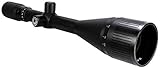
- ARS Mark8.9
ARS Mark is a ranking system developed by bestairriflescopes.com. ARS Mark has no relationship or impact from any manufacturers or sales agent websites. Learn more
- BrandBarska

- ARS Mark8.9
ARS Mark is a ranking system developed by bestairriflescopes.com. ARS Mark has no relationship or impact from any manufacturers or sales agent websites. Learn more
- BrandAGM Global Vision
- ARS Mark8.6
ARS Mark is a ranking system developed by bestairriflescopes.com. ARS Mark has no relationship or impact from any manufacturers or sales agent websites. Learn more
- BrandAGM Global Vision

- ARS Mark8.5
ARS Mark is a ranking system developed by bestairriflescopes.com. ARS Mark has no relationship or impact from any manufacturers or sales agent websites. Learn more
- BrandAGM Global Vision

- ARS Mark7.8
ARS Mark is a ranking system developed by bestairriflescopes.com. ARS Mark has no relationship or impact from any manufacturers or sales agent websites. Learn more
- BrandBarska
- ARS Mark7.3
ARS Mark is a ranking system developed by bestairriflescopes.com. ARS Mark has no relationship or impact from any manufacturers or sales agent websites. Learn more
- BrandAGM Global Vision

- ARS Mark7.3
ARS Mark is a ranking system developed by bestairriflescopes.com. ARS Mark has no relationship or impact from any manufacturers or sales agent websites. Learn more
- BrandBarska
Last update on 2026-10-04 / Affiliate links / Images, Product Titles, and Product Highlights from Amazon Product Advertising API
Does an adjustable objective eliminate parallax blur at close rimfire distances?
Yes, an adjustable objective physically shifts the front lens assembly to align the reticle directly onto the target plane at varying yardages. Without an adjustable objective, aiming at small targets at short rimfire ranges introduces parallax error, causing the crosshairs to wander whenever your cheek weld or eye alignment shifts behind the eyepiece. Glass such as the BARSKA 6-24x42 AO Varmint Mil-Dot and the Barska AC11084 10-40x50 Mil Dot scope features an adjustable objective to keep both the reticle and small targets crisp. Always verify the minimum focus distance in the product manual before mounting glass on a rimfire, or consider dedicated optics built for close-range pesting.
Do I need high daytime magnification or thermal imaging with a rangefinder?
Your choice depends entirely on your target species and hunting hours. High-magnification daytime optics, like 6-24x or 10-40x scopes, give the optical clarity needed to resolve ground squirrels and prairie dogs under bright daylight across open fields. Thermal systems like the AGM Global Vision Varmint V2 series solve the opposite problem by revealing predator heat signatures in total darkness or heavy brush where daytime glass fails. When pairing night predator hunting with pasture shooting, models like the AGM Global Vision Varmint V2 LRF 35-384 also incorporate a built-in laser rangefinder to solve distance estimation without needing separate handheld gear.
Will a large objective lens clear my rifle barrel with standard rings?
Large objective bells usually require high-profile rings to prevent the scope housing from contacting the rifle barrel. Scopes such as the BARSKA AC13524 10-40x60 and the AC11084 10-40x50 feature wide front lenses that sit lower toward the bore line than standard rings allow on flat receiver rails. Contact between the bell and the barrel can distort your sight alignment and damage the scope tube under recoil. Confirm your rail thickness, base height, and barrel contour, or verify setups for proper barrel clearance before selecting your ring height.
Why is a built-in laser rangefinder helpful on a thermal varmint scope?
Thermal displays flatten depth perception, making it difficult to judge how far away a predator is across flat pastures or dark fence lines. Units like the AGM Global Vision Varmint V2 50-640 LRF and AGM Global Vision Varmint V2 50-384 LRF include an integrated laser rangefinder that measures target distance immediately on the internal display. Knowing the exact yardage prevents high or low misses caused by misjudged bullet drop over open ground. This allows you to set your elevation hold quickly while a coyote or hog remains stationary.
How do fine reticles like Trace MOA V2 and Mil-Dot improve small-target accuracy?
Fine reticle crosshairs preserve target visibility by covering only a fraction of an inch on small pests at long yardages. The BARSKA AC13524 uses a Trace MOA V2 reticle calibrated for precise elevation holdovers, while the BARSKA 6-24x42 AO utilizes a Mil-Dot reticle for clean wind and drop leads. Thick hunting crosshairs often blot out small rodents completely past 100 yards, turning holdovers into pure guesswork. Fine sub-tensions let you bracket elusive pests precisely without obscuring the animal behind heavy lines.
What thermal sensor resolution is needed for nighttime predator hunting?
A 384x288 sensor provides dependable detection across standard pasture distances, while a 640 sensor delivers sharper detail at higher digital magnification. The AGM Global Vision Varmint V2 LRF 35-384 uses a 384x288 thermal sensor with a 50 Hz refresh rate, 12-micron core, 20mK thermal sensitivity, and a 35 mm lens to expose heat signatures through brush and darkness. Stepping up to 640 models like the AGM Global Vision Varmint V2 35-640 LRF or 50-640 LRF keeps the target image cleaner when zooming in on smaller varmints along distant tree lines.

10 Top Picks: Best Youth Air Rifles for 13-Year-Olds

12 Best Rifle Scopes For 5.56 Under 150 Dollars - (2026 Top Picks)

Top 10 Rifle Scopes for Coyote Hunting in 2026

12 Best Benchrest Rifle Scopes of 2026 For Tight Groups

Top 5 Airsoft Rifles: Unleash the Action in 2026

Unveil the Best Straight Wall Deer Rifles: Top Picks for 2026

Top Ammo Choices for Air-Powered Rifles: Boost Your Performance in 2026

Best Quick Detach Scope Rings for Accurate and Convenient Shooting







