
Best Vortex Scope for 300 Blackout 2026 Picks

A best Vortex scope for 300 Blackout should match the cartridge’s practical strengths instead of burying them beneath excessive magnification and extra bulk. The 300 Blackout cartridge often earns its keep at short and moderate distances, where a wide field of view and quick reticle recognition matter more than chasing tiny targets several hundred yards away. A scope that feels balanced on the rifle also makes offhand handling less awkward, especially around thick brush, compact shooting lanes, or a crowded range bench. Bigger isn’t always better, and that lesson saves both money and frustration.
Low-power variable optics make a strong case because they allow fast work at the lowest setting while leaving enough magnification for a more careful shot farther out. A 1-4x, 1-6x, or similar range keeps the rifle lively rather than turning it into a front-heavy setup. Still, a traditional 2-7x or 3-9x model can make sense when most shooting happens from a supported position and close-range speed isn’t the main concern. The right answer depends less on impressive numbers and more on how the rifle actually gets carried, aimed, and stored.
Reticle design deserves a hard look, too. A simple center aiming point stays easy to read in dim timber and won’t make the sight picture feel like a road map, while a hash-mark reticle offers references for elevation and wind corrections. Those markings only help when their spacing makes sense at the chosen magnification, though, so cramming extra lines into the view can create more noise than value. Fast target acquisition usually comes from a clean view, forgiving eye position, and controls that don’t demand fiddling at the worst moment.
Subsonic and supersonic ammunition can follow noticeably different trajectories, which complicates any one-size-fits-all zero. A dedicated ballistic reticle may sound handy, but its hold points won’t automatically match every barrel length, load, suppressor setup, or environmental condition. A straightforward reticle paired with verified holds often proves easier to trust. Well, ammunition labels can promise plenty, but paper targets reveal what the rifle and load are really doing.
Eye relief, turret feel, and illumination controls shape the day-to-day experience more than glossy product photos suggest. Generous eye relief helps maintain a comfortable head position, while tactile adjustments make zeroing less of a guessing game. Illumination can improve contrast against dark backgrounds, yet it adds battery dependence and may create distracting glare when set too bright. A non-illuminated model remains a sensible route for daylight shooting, especially where simplicity and lighter weight carry more value than a glowing center dot.
Durability still matters, but realistic expectations matter just as much. A hunting rifle that rides in a soft case and sees a few weekends each season faces different abuse than a working setup exposed to rain, dust, vehicle racks, and repeated knocks. Lens caps, sensible mounting hardware, and properly torqued rings prevent many headaches before rugged construction ever gets tested. Reliable zero retention should sit above decorative features on the priority list.
Price differences often reflect optical clarity, adjustment consistency, illumination systems, and construction details rather than a dramatic change in basic function. Entry-level glass can handle bright daylight and ordinary range distances, though image contrast may soften near dusk or around shadowed targets. Spending more makes the most sense when those tougher lighting conditions happen often, not simply because a higher model number looks reassuring. A practical setup leaves room in the budget for solid rings, dependable ammunition, and enough range time to learn the chosen reticle.

- ARS Mark9.6
ARS Mark is a ranking system developed by bestairriflescopes.com. ARS Mark has no relationship or impact from any manufacturers or sales agent websites. Learn more
- BrandVortex
- ARS Mark9.4
ARS Mark is a ranking system developed by bestairriflescopes.com. ARS Mark has no relationship or impact from any manufacturers or sales agent websites. Learn more
- BrandVortex

- ARS Mark9.2
ARS Mark is a ranking system developed by bestairriflescopes.com. ARS Mark has no relationship or impact from any manufacturers or sales agent websites. Learn more
- BrandVortex
- ARS Mark9.2
ARS Mark is a ranking system developed by bestairriflescopes.com. ARS Mark has no relationship or impact from any manufacturers or sales agent websites. Learn more
- BrandVortex

- ARS Mark9.2
ARS Mark is a ranking system developed by bestairriflescopes.com. ARS Mark has no relationship or impact from any manufacturers or sales agent websites. Learn more
- BrandVortex

- ARS Mark9.2
ARS Mark is a ranking system developed by bestairriflescopes.com. ARS Mark has no relationship or impact from any manufacturers or sales agent websites. Learn more
- BrandVortex
Last update on 2026-07-30 / Affiliate links / Images, Product Titles, and Product Highlights from Amazon Product Advertising API
Vortex Strike Eagle for 300 Blackout
Compact rifles lose their easy handling quickly once a bulky optic lands on top, and that balance problem matters more than flashy magnification numbers. The Vortex Strike Eagle 1-6x24 keeps the package relatively streamlined while offering the speed and flexibility expected from the best Vortex scope for 300 Blackout. Its true 1x setting supports close shots with both eyes open, while the upper end provides enough enlargement for targets that look awfully small through an unmagnified sight. This combination makes sense for a cartridge that may be used across short shooting lanes, open range bays, and moderate distances without changing optics.
Vortex Strike Eagle 1-6x24
The updated Strike Eagle follows a straightforward low-power variable optic layout: a 1-6x magnification range, a 24mm objective lens, and a one-piece 30mm tube. Nothing about that recipe is exotic, yet the proportions suit a handy 300 Blackout rifle better than a tall, long-range scope with more magnification than the cartridge usually needs. At 1x, the optic can cover close targets without forcing the shooter to stare through a narrow tunnel. Turn the ring toward 6x, and the sight picture becomes more useful for deliberate aiming at smaller marks or partially hidden targets.
The second focal plane design keeps the BDC3 reticle the same apparent size throughout the magnification range. That gives the center aiming area a familiar look at every setting, which can feel less distracting during quick transitions. The tradeoff is that the marked holdovers are calibrated for use at a designated magnification rather than remaining proportionally accurate at every power. That’s not a deal breaker, but it does mean the reticle deserves some range time before anyone treats its lower marks as gospel.
Vortex also redesigned the magnification ring with a thread-in throw lever, a small change that pays off when speed matters. The lever provides a positive surface to grab with bare fingers or gloves, rather than requiring a tight pinch around the entire ring. Magnification indicators can be viewed without lifting away from the optic, so checking the setting takes less movement. It’s a practical refinement, especially on a rifle that may shift from close shooting to a more supported position within the same session.
Speed At Low Magnification
A true 1x low setting is the feature that gives this scope its personality. The view feels more natural than it does through optics that begin around 1.5x or 2x, where close objects can appear slightly enlarged and visually awkward. With a reasonably consistent cheek weld, the illuminated center draws attention toward the aiming point without requiring the slow, careful alignment associated with higher-power glass. That makes the scope easier to live with around short bays, wooded lanes, or targets placed at mixed distances.
Speed still depends on proper mounting and eye position, so the optic won’t magically erase sloppy setup. Rings that place the tube too high can create a floating cheek weld, while mounting it too far forward or backward may tighten the usable eye box. A well-positioned scope supports fast target acquisition because the full image appears as soon as the rifle reaches the shoulder. Poor placement, by contrast, turns even a capable LPVO into a frustrating black-ring hunt.
The low end also provides a broader field of view than a conventional hunting scope set at 3x. That wider view helps the eye track movement and retain awareness around the target rather than becoming locked into a tiny section of the scene. Still, an LPVO isn’t identical to a red dot because the shooter must respect eye relief and head position. Close-range performance is quick once the rifle fits properly, but it won’t be quite as forgiving from twisted or improvised positions.
BDC3 Reticle And Holdover Use
The illuminated BDC3 reticle uses a bold central pattern intended to pull the eye inward quickly. Against dark targets, shaded berms, or uneven backgrounds, that illumination can keep the aiming point from disappearing into the scenery. Brightness should be kept only as high as needed, though, because an overly intense setting can bloom and obscure a small target. The reticle works best as a guiding reference rather than a glowing billboard.
Vortex describes the holdover system as usable out to 650 yards on targets of known distance. That figure reflects the reticle’s available references, not a promise that every 300 Blackout rifle, barrel length, and ammunition combination will share the same trajectory. Subsonic and supersonic loads can produce dramatically different drops, and even two supersonic loads may disagree once distance grows. Shooters should verify each hold on paper or steel rather than assuming a printed mark matches the rifle automatically.
For typical 300 Blackout distances, the reticle’s greatest benefit may be its ability to provide repeatable visual references without touching the turrets. A confirmed hold for 150 or 200 yards can be faster than dialing elevation, especially when the target distance is already known. The fixed-size reticle remains easy to see at lower power, but the ballistic marks become more precise near maximum magnification. That arrangement favors quick center aiming up close and more deliberate holdover use at the top end.
Glass Clarity And Low-Light Behavior
Anti-reflective coatings cover the air-to-glass surfaces to improve light transmission and clarity. In practical terms, they help preserve contrast around shaded targets and reduce some of the washed-out appearance that inexpensive untreated glass can show. The 24mm objective won’t gather light like a much larger hunting scope, so expectations should stay grounded during the final minutes of legal light. Its advantage lies in keeping the scope compact while delivering a usable image across common daytime and transitional conditions.
The fast-focus dial on the eyepiece lets the reticle be adjusted to the shooter’s vision. Once set correctly, the pattern should appear sharp immediately rather than slowly snapping into focus after the eye strains for a moment. This reticle focus adjustment is separate from focusing on the target, a distinction that sometimes trips up first-time LPVO owners. Setting it carefully against a plain background can reduce eye fatigue and make the illuminated portions look cleaner.
Image quality generally matters most near the edges of the day, where dark branches, brown targets, and uneven shadows start blending together. The Strike Eagle’s coatings help, yet the scope remains positioned as a practical, value-conscious LPVO rather than oversized twilight glass. At 6x, the smaller exit pupil may also make exact eye alignment feel less forgiving. That’s the honest tradeoff behind a compact 1-6x design: useful reach without the weight and bulk of a larger objective.
Construction And Field Durability
The one-piece aircraft-grade aluminum tube provides a solid foundation for the internal adjustment system. A 30mm diameter also leaves room for a broad adjustment range while fitting widely available mounts and rings. The body is designed to handle recoil and ordinary impacts, which suits a rifle that may ride in a vehicle, brush against a barricade, or take the occasional bump against a range bench. Solid construction doesn’t excuse careless handling, but it reduces anxiety over routine field use.
Nitrogen purging and O-ring sealing support fogproof and waterproof performance. Internal fogging can ruin a shooting session because wiping the outside lenses won’t clear moisture trapped inside the tube. Sealing also helps keep fine dust and humidity away from internal surfaces, two concerns that tend to appear long before dramatic weather does. External lens caps still make sense, since waterproofing won’t prevent scratches from grit or careless storage.
Shock resistance matters on 300 Blackout setups even though the cartridge isn’t known for brutal recoil. Impacts from transport, sling movement, and accidental contact often place more stress on an optic than the shot itself. Reliable durability also depends on proper ring torque, a secure base, and even pressure across the tube. Overtightened rings can create their own problems, while loose hardware may imitate an optic failure by allowing the zero to wander.
Controls And Everyday Handling
The magnification ring is one of the most frequently touched controls, and the included throw lever makes it noticeably easier to operate. A quick push can move the optic between its low and high settings without breaking the firing-hand grip. The visible power markings add another layer of practical usability, especially when the rifle has been carried or stored and the previous setting isn’t immediately remembered. Those little details don’t sound dramatic, but they cut down on fumbling.
The fast-focus eyepiece and illumination controls are simple enough to learn without turning the scope into a gadget-filled distraction. Battery-powered illumination does add a maintenance item, so carrying a spare battery is sensible if the reticle light plays an important role. The etched pattern remains visible without power, which preserves basic aiming capability after a dead battery. That distinction separates an illuminated riflescope from electronic sights that depend entirely on a powered emitter.
Weight and balance deserve attention once a mount is added. A sturdy cantilever mount can contribute a noticeable amount to the finished setup, and placing that mass too far forward may make the rifle feel nose-heavy. The Strike Eagle is still more substantial than a micro red dot, but it returns magnification flexibility that a simple dot can’t provide alone. The decision comes down to whether that extra range of use earns its place on the rifle.
Pros And Cons In Real Use
Pros: The true 1x setting, useful 6x upper range, and illuminated BDC3 reticle create a broad operating window without demanding a second optic. The throw lever speeds up magnification changes, while visible power markings reduce uncertainty during position changes. Anti-reflective coatings and a fast-focus eyepiece support a cleaner view, and the sealed one-piece tube is built for ordinary rain, recoil, and transport abuse.
Cons: The second focal plane reticle requires the correct magnification for its holdover references to line up as intended. Its generic ballistic marks also won’t automatically match the wide trajectory differences between subsonic and supersonic 300 Blackout ammunition. At 6x, eye placement becomes more demanding, and the 24mm objective can’t match the low-light brightness of a larger hunting optic. The scope and mount will also add more weight than a compact red dot.
The biggest strength is range flexibility, not extreme precision or featherweight handling. It covers close work, moderate-distance target shooting, and general field use without forcing the rifle into a narrowly defined role. The main weakness appears when expectations drift beyond the cartridge, the reticle calibration, or the optic’s compact design. Someone expecting effortless red-dot forgiveness at 1x and large-objective brightness at 6x will run into compromises on both ends.
A separate equipment category sometimes enters the same conversation because reduced noise and backyard practice create different priorities. From a practical angle, a relevant reference is a quiet air pistol, although that subject has no direct bearing on the Strike Eagle’s optical performance or 300 Blackout trajectory. Keeping those roles separate avoids pretending that unrelated equipment solves the same shooting problem. The Strike Eagle belongs on a rifle that benefits from variable magnification, an etched reticle, and verified holdovers.
Setup Limits Worth Respecting
A 50-yard or 100-yard zero can both be workable, but the better choice depends on ammunition speed, barrel length, and the distances that appear most often. Subsonic ammunition usually develops more pronounced drop, so verified trajectory data matters much earlier than it does with flatter supersonic loads. The BDC markings should be treated as reference points to map, not fixed labels that somehow know the rifle’s exact configuration. A simple range card can prevent memory from becoming the weakest part of the system.
Mount height influences cheek pressure, head angle, and how quickly the full sight picture appears. Higher mounts may feel quicker from an upright stance, while lower placements can support a firmer cheek weld on traditional stocks. Neither approach is universally correct because rifle fit changes with stock shape, facial structure, and shooting position. The sensible setup is the one that repeatedly presents a full image without neck strain or searching.
The Strike Eagle also makes less sense where nearly every shot occurs at one fixed, close distance. A red dot may be lighter and more forgiving in that narrow role, while a higher-magnification scope may provide finer aiming for a rifle used mostly from a bench. The 1-6x format earns its keep through variety, not specialization. Its compromises become worthwhile when the rifle genuinely moves between fast close shots and measured aiming farther downrange.
Vortex Crossfire II 4-12x44 For 300 Blackout
A compact 300 Blackout rifle can feel oddly burdened once a large optic sits over the receiver, especially if most shots happen inside ordinary hunting or range distances. The Vortex Crossfire II 4-12x44 takes a different route from a low-power optic, giving the best Vortex scope for 300 Blackout discussion a more deliberate, magnification-heavy option. Its appeal lies in careful aiming, visible holdover references, and a larger 44mm objective rather than rapid point-blank transitions. That distinction matters because this scope fits a supported shooting style better than a rifle built mainly for fast movement in tight spaces.
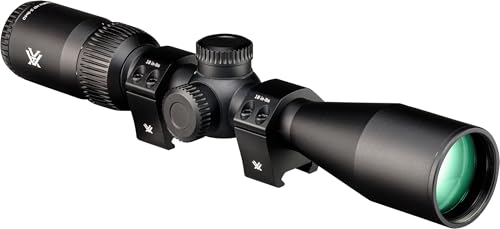
Vortex Crossfire II 4-12x44
The 4-12x magnification range sets this model apart from compact 1-6x scopes commonly paired with 300 Blackout rifles. Four power offers enough enlargement for a clear view of smaller targets, while 12 power supports closer inspection and more deliberate shot placement from a bench, blind, or stable field position. That extra reach can be useful when target identification matters more than raw speed. Still, the scope starts at 4x, so it won’t feel as natural during sudden, very close encounters.
A 44mm objective gives the optic a broader front lens than many low-power models. Combined with fully multi-coated lenses, the design is intended to provide a bright, clear picture across its magnification range. The larger objective can help retain a usable image as light begins to fade, although the scope remains dependent on proper eye alignment and realistic lighting conditions. It also adds physical size, which may make a short rifle feel taller and more forward-weighted once rings are installed.
The Crossfire II’s basic layout feels familiar rather than fussy. A fast-focus eyepiece, capped turrets, and a traditional variable-power ring keep the controls easy to recognize. That simplicity helps reduce the number of small adjustments demanding attention during setup. The practical control arrangement suits someone who would rather zero the rifle, verify the reticle, and leave the turrets protected during routine use.
Dead-Hold BDC Reticle Behavior
The Dead-Hold BDC reticle is designed for shooting across varying distances where holdover becomes a concern. Its lower reference marks provide visual aiming points without requiring the elevation turret to be dialed for every change in range. That can save time once the marks have been matched to a specific load. The important phrase is “matched to,” because no generic reticle automatically knows the velocity, barrel length, or bullet weight leaving a particular 300 Blackout rifle.
Subsonic and supersonic ammunition follow very different paths after leaving the muzzle. A hold mark that lines up reasonably well with one supersonic load may be far off with a heavier subsonic cartridge. The trajectory difference becomes more noticeable as distance increases, so assumptions can pile up quickly. Range verification is the only sensible way to learn what each mark represents with the actual rifle and ammunition combination.
The reticle also rewards a more patient shooting rhythm. At higher magnification, the aiming references are easier to place precisely on a small target, especially from a rest. That precision is useful for paper targets, careful hunting shots, or zero confirmation, but it doesn’t turn 300 Blackout into a flat-shooting long-range cartridge. The reticle’s real value comes from repeatable references, not from stretching the cartridge beyond its practical limits.
Eye Relief And Sight Picture
Long eye relief and an ultra-forgiving eye box are especially welcome on a scope that reaches 12 power. A forgiving eye box can make it easier to obtain a full image without sliding the head around in search of the narrow sweet spot. This matters during supported field positions where cheek placement may change slightly from shot to shot. It also reduces some of the irritation that often appears when a scope looks clear on the bench but becomes finicky from kneeling or seated positions.
The fast-focus eyepiece lets the reticle be sharpened to the shooter’s eyesight. Proper adjustment should make the pattern appear crisp as soon as the eye looks through the scope, rather than slowly coming into focus after a moment of strain. That reticle clarity becomes more important at higher power, where small visual imperfections are easier to notice. Once set, the eyepiece usually needs little attention unless the optic is shared between people with very different vision.
Magnification still changes the overall viewing experience. At 4x, the image is more forgiving and the field of view feels broader, while 12x demands steadier positioning and exposes every small movement in the rifle. Resting elbows, using a stable bag, or shooting from a supported platform makes the upper range far easier to use. The higher-power tradeoff is simple: finer detail arrives with a narrower view and greater sensitivity to wobble.
Turrets And Zeroing Routine
The capped reset turrets use finger-adjustable MOA clicks, so sighting in doesn’t require a coin or screwdriver. After the rifle is zeroed, the turret indicators can be reset to zero, making later corrections easier to track. That feature is handy for documenting small changes or confirming whether the optic has moved from its original setting. The caps then protect the adjustments from accidental contact during transport or field use.
Capped turrets fit the role of this scope better than exposed tactical controls would. The Dead-Hold BDC reticle handles most ordinary elevation references, so constant dialing isn’t necessary for every shot. Keeping the turrets covered reduces the chance of a backpack strap, case lining, or careless hand changing the setting. The set-and-protect approach also suits rifles that spend more time hunting or practicing than moving through formal long-range stages.
MOA clicks are easy to work with once the adjustment system is understood, but they still require a consistent zeroing process. Groups should be large enough to show a real pattern rather than chasing individual bullet holes around the target. Ammunition changes may shift the impact point, particularly between subsonic and supersonic loads. The zeroing limitation isn’t caused by the scope; it comes from expecting one setup to cover dramatically different ballistic behavior without rechecking the rifle.
Optical Clarity In Practical Conditions
Anti-reflective, fully multi-coated lenses are intended to improve brightness and image clarity. Those coatings help reduce light loss across the glass surfaces and preserve contrast around the target. In bright daylight, the difference may seem subtle because almost any serviceable scope has plenty of available light. Shaded woods, cloudy afternoons, and the edges of legal shooting hours tend to reveal more about how well an optic handles contrast.
The 44mm objective supports a brighter image than a much smaller front lens under comparable conditions, but magnification also affects perceived brightness. At 12x, the exit pupil becomes smaller, so the image can appear less forgiving in dim conditions than it does at 4x or 6x. Dropping the power a little often restores a more comfortable sight picture. That low-light adjustment is easy to overlook, yet it can be more useful than stubbornly staying at maximum magnification.
Color fidelity and edge sharpness aren’t described in the supplied specifications, so they shouldn’t be dressed up with unsupported claims. The honest assessment rests on the stated coatings, objective size, and intended bright, clear view. Those features give the scope a sensible optical foundation for ordinary hunting and target work. The realistic expectation is dependable visibility, not boutique-level glass performance at every hour of the day.
Tube Construction And Weather Resistance
A single-piece tube made from aircraft-grade aluminum provides the core structure. Fewer structural joints generally support better strength and alignment than a body assembled from several major sections. The tube is also described as shockproof, which helps it tolerate recoil and everyday bumps during transport. That matters even with a moderate-recoiling cartridge because hard knocks from cases, benches, and vehicle racks can be tougher on an optic than the shot itself.
O-ring sealing and nitrogen purging provide waterproof and fogproof performance. External moisture can still collect on the lenses, but the sealing helps prevent water from entering the scope body. Nitrogen purging is intended to reduce internal fogging during temperature changes, such as leaving a warm vehicle and stepping into cold air. That protection won’t eliminate the need for lens caps or sensible storage, but it addresses the weather problems that can end a day quickly.
Mounting quality remains part of the durability equation. Even a sturdy scope can lose zero if the base shifts, the rings are uneven, or the screws are tightened carelessly. Correct ring spacing and proper torque help protect the one-piece tube from unnecessary stress. A stable mounting job also keeps the long eye relief usable instead of forcing the scope into an awkward position dictated by poorly chosen hardware.
Strengths And Practical Tradeoffs
The main strength is deliberate aiming across changing distances. The 4-12x range, Dead-Hold BDC reticle, resettable MOA turrets, and 44mm objective all support a rifle used from steady positions. Long eye relief and a forgiving eye box make that package easier to operate without demanding an unnaturally precise head position. The result is a scope that favors measured shooting rather than hurried transitions.
The clearest weakness is the 4x minimum magnification. Close targets can fill the sight picture quickly, and the narrower field of view isn’t as comfortable for fast movement as a true 1x optic. The larger objective and higher magnification range also add bulk to a cartridge platform often appreciated for compact handling. On a short rifle, that size may feel out of proportion unless the shooting role genuinely benefits from it.
The BDC reticle introduces another tradeoff because its marks require real verification. They provide useful references, yet they aren’t automatically calibrated to every 300 Blackout load. Switching from a supersonic hunting cartridge to a heavy subsonic load may change the meaning of each mark considerably. That ballistic limitation is manageable, but only if the rifle’s holds are recorded rather than guessed.
Some shooting topics sit nearby without sharing the same equipment role. From a neutral reference point, air rifles for pigeons belong to a separate category with different power, range, and legal considerations. That subject doesn’t change how the Crossfire II performs on a 300 Blackout rifle. Keeping the distinction clear prevents unrelated gear from being treated as interchangeable.
Where This Scope Makes Sense
A supported shooting position brings out the 4-12x44 configuration at its best. The higher magnification helps place the Dead-Hold references carefully, and the capped turrets stay out of the way after zeroing. A blind, bench, or stable rest also reduces the movement that becomes obvious at 10x or 12x. Under those conditions, the scope’s size feels more justified because the rifle isn’t being snapped rapidly between close targets.
Mixed-distance hunting can also suit the design, provided the shortest expected shots aren’t extremely close. Four power is workable in many open settings, but dense cover may expose the limitations of the narrower view. The best-fit environment includes enough space to use magnification and enough time to settle the rifle before pressing the trigger. Thick brush and fast-moving targets point toward a lower-powered alternative.
Bench shooting provides another reasonable use because the optic offers visible target detail and repeatable MOA adjustments. The fast-focus eyepiece and forgiving eye box make longer sessions less irritating than a scope that constantly demands perfect alignment. Still, 12x won’t correct poor ammunition consistency, unstable rests, or an unverified zero. The scope supports precision, but the rifle, load, and shooting technique still determine what appears on the target.
Limits That Should Stay In View
The Crossfire II can help a 300 Blackout rifle reach its practical accuracy potential, but it can’t rewrite the cartridge’s trajectory. The Dead-Hold reticle may provide references beyond ordinary distances, yet bullet drop and retained energy remain tied to the chosen load. A higher magnification setting can make a distant target look closer without making the shot easier in every other respect. The magnification illusion is worth remembering because visual detail and ballistic capability aren’t the same thing.
Subsonic ammunition deserves special caution as distance increases. Its steep trajectory makes range estimation errors more costly, and a small mistake can move impact far from the intended point. The reticle helps only after its marks have been confirmed with that exact ammunition and rifle configuration. The verified holdover matters more than the printed shape of the reticle.
Size may also become a deciding factor on lightweight builds. The 44mm objective generally requires suitable ring height, and the scope’s length can affect where it sits over the receiver. Those mounting choices influence cheek weld, balance, and access to the charging handle. The fit tradeoff is acceptable on a precision-oriented setup, but it may feel cumbersome on a rifle intended to remain short, quick, and easy to carry.
Vortex Crossfire HD 1-4x24 For 300 Blackout
Fast handling can disappear in a hurry once a compact rifle gets saddled with too much glass, too much weight, and too many controls. The Vortex Crossfire HD 1-4x24 takes a more restrained path, which gives the best Vortex scope for 300 Blackout conversation a sensible option for close and moderate distances. Its low magnification range, illuminated center dot, and Dead-Hold 2A BDC reticle all lean toward quick sight acquisition without turning the rifle into a bulky bench setup. That balance won’t satisfy every shooting role, but it addresses the common frustration of wanting magnification without losing the rifle’s lively feel.
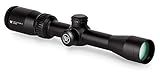
Vortex Crossfire HD 1-4x24
The 1-4x magnification range is the heart of this model. At the low end, the scope is designed for fast engagement at short distances, while 4x provides enough enlargement for more deliberate aiming farther out. That spread fits the practical side of 300 Blackout well because the cartridge is often used where speed, field of view, and manageable size matter more than very high magnification. Put plainly, the scope doesn’t chase numbers that the rifle may never need.
A 24mm objective keeps the front end compact and works with the scope’s 30mm tube to maintain a streamlined profile. The smaller objective also helps avoid the tall mounting height that larger hunting scopes sometimes require. That can support a more natural cheek weld, which matters because consistent eye alignment is a big part of fast target acquisition. The tradeoff is that a 24mm objective won’t gather light like a much larger lens, especially at the upper end of the magnification range.
The second focal plane layout keeps the reticle the same apparent size as magnification changes. This makes the aiming pattern easy to recognize at both 1x and 4x, without the reticle shrinking at low power or growing at high power. The catch is that the BDC references are intended to correspond correctly at a specific magnification. That’s manageable, though it means the holdover marks should be verified before they’re trusted.
HD Optical System And Image Quality
The supplied description centers heavily on the HD Optical System, which uses selected glass elements to improve resolution, reduce chromatic aberration, and preserve color fidelity. Those claims matter most around fine edges, dark branches, light-colored targets, and high-contrast backgrounds where color fringing can make the image feel messy. Cleaner edge definition can reduce visual strain when the target is partially obscured or poorly separated from its surroundings. That’s the kind of improvement that sounds subtle on paper but can make the sight picture easier to process.
Edge-to-edge clarity is another stated benefit. A scope with a sharp center but a soft outer field can feel cramped because the eye naturally ignores the blurred edges. Better clarity across the full image supports situational awareness, especially at low magnification where the shooter is trying to keep track of more than the exact aiming point. The wider usable view also makes the scope feel less tunnel-like during quick transitions.
Fully multi-coated lenses add anti-reflective treatment to every air-to-glass surface. That design is intended to improve light transmission and maintain clarity when available light begins to fade. No 24mm optic should be mistaken for a large-objective twilight scope, but efficient light handling still matters in timber, overcast weather, and shaded range lanes. The coatings help the scope make better use of the light it receives rather than pretending the small objective can rewrite physics.
Illuminated Dead-Hold 2A BDC Reticle
The Dead-Hold 2A BDC reticle combines holdover and windage references with an illuminated floating center dot. That pairing solves two separate problems: the outer markings provide references for distance and wind, while the center dot gives the eye a quick focal point. In low light or against a dark target, the illuminated dot can remain visible when a plain black center would start blending into the background. The design aims to stay fast without stripping away useful ballistic guidance.
The floating dot also helps reduce visual clutter around the exact point of aim. Rather than covering a small target with a thick center intersection, the reticle leaves a defined aiming reference surrounded by space. That can help with precise shot placement at 4x, particularly on smaller targets or narrow scoring zones. At 1x, the illuminated center still acts as a quick visual anchor without demanding a slow, careful sight picture.
BDC markings require some homework, especially with 300 Blackout. Subsonic and supersonic ammunition can follow dramatically different trajectories, so a hold that fits one load may be badly off with another. Barrel length, muzzle velocity, and zero distance also influence where the reticle marks land. The reticle’s real strength is repeatability after verification, not automatic accuracy with every load.
Fast Focus And Close-Range Handling
The fast-focus eyepiece lets the shooter sharpen the reticle quickly. A properly focused reticle should appear crisp as soon as the eye enters the scope, which reduces hesitation and eye strain. This adjustment is especially useful if the scope changes hands or if eyesight changes over time. The fast-focus control isn’t flashy, but it directly affects whether the reticle looks clean or slightly fuzzy.
At 1x, the optic is intended to support rapid target acquisition in timber, around short shooting lanes, or on a range with targets placed at mixed distances. The lower setting preserves a broader field of view than a conventional hunting scope that begins at 3x or 4x. That broader image can make transitions feel more natural because the eye doesn’t lose as much of the surrounding scene. Still, this remains a magnified optic with an eye box, so it won’t match the unlimited eye-position freedom of a simple red dot.
Four power changes the personality of the scope without making it overly specialized. Small targets become easier to define, and the reticle references become more useful for deliberate holds. The upper setting is enough for careful aiming at practical 300 Blackout distances while keeping the scope short and straightforward. The 1-4x range works best as a bridge between red-dot speed and hunting-scope precision.
Construction And Field Protection
The body uses aircraft-grade aluminum, giving the scope a single solid housing for the optical and adjustment systems. The matte black anodized finish reduces glare that might otherwise reflect from the tube in bright conditions. That finish also keeps the optic visually subdued on the rifle, which matters in hunting environments where shiny surfaces can draw attention. It’s a practical surface treatment rather than decoration.
Waterproof and fogproof construction supports use through wet weather and sudden temperature changes. Moisture trapped inside an optic can ruin visibility because the inner lens surfaces can’t be wiped clean in the field. Fog resistance helps prevent that problem, while waterproof sealing reduces the chance of rain entering the tube. These weather-resistant features won’t replace lens caps or careful storage, but they reduce the risk of a damp day ending the session early.
Shockproof construction is also part of the stated design. Recoil from 300 Blackout is moderate, yet field impacts, vehicle transport, and accidental bumps can be harder on an optic than the shot itself. A solid tube helps preserve internal alignment through that ordinary abuse. The durability claim makes the most sense as protection against realistic field wear, not permission to treat the scope carelessly.
Warranty Coverage And Ownership Value
The scope is backed by Vortex’s unlimited, unconditional, lifetime VIP Warranty. According to the supplied details, the warranty is fully transferable and promises repair or replacement if the item becomes damaged or defective. That adds a layer of long-term reassurance because ownership isn’t tied only to the original buyer. The transferable warranty can also matter if the optic changes hands later.
The coverage has limits. Loss, theft, deliberate damage, and cosmetic damage that doesn’t affect performance aren’t included. Those exclusions are reasonable because a warranty is meant to address functional problems, not every possible ownership mishap. The practical benefit lies in support for genuine damage or defects that interfere with use.
Warranty value is easy to overlook until an optic develops a problem after years of service. A long coverage period can make a moderately priced scope feel like a safer purchase because the support doesn’t disappear after a short window. That doesn’t change the optical specifications, but it affects the ownership experience. For anyone who keeps equipment for a long time, service support can matter almost as much as another small feature.
Strengths And Weaknesses
The clearest strength is balance. The Crossfire HD 1-4x24 offers a true low-power role, useful 4x magnification, an illuminated center dot, and BDC references without turning the rifle into a long, heavy setup. The HD optical design and fully multi-coated lenses also support a cleaner image across the field of view. That combination fits a rifle expected to move between close and moderate distances.
Another strength is simplicity. The fast-focus eyepiece, familiar magnification range, and second focal plane reticle don’t demand a complicated learning curve. Shooters can focus on zeroing, verifying holds, and learning the illumination setting rather than managing a crowded control layout. The optic provides enough capability to be useful without becoming a small mechanical project.
The obvious weakness is limited magnification for small or distant targets. Four power may be plenty for practical 300 Blackout use, but it won’t offer the target detail of a 2-10x or 4-12x scope. The 24mm objective also places realistic limits on low-light brightness, especially at maximum magnification. Anyone prioritizing twilight hunting or tiny targets may want a larger and more powerful optic.
A separate limitation comes from the BDC system. The Dead-Hold 2A marks won’t automatically align with every ammunition type, barrel length, or zero distance. That means subsonic and supersonic loads may require separate notes or entirely different holds. The ballistic tradeoff is manageable, but only after careful confirmation on the range.
Where The Crossfire HD Fits Best
This scope makes sense on a 300 Blackout rifle that needs to stay compact while gaining more precision than a red dot can provide. Short-range drills, woodland hunting, range practice, and mixed-distance use all fit the design. The illuminated dot supports fast aiming, while 4x magnification helps with smaller targets and clearer identification. The best-fit role is general-purpose use rather than a narrow long-range specialty.
Dense cover is another environment where the low end earns its place. A wide view at 1x makes it easier to follow movement and avoid losing the target behind brush. The HD glass and illumination may also help separate the reticle from dark backgrounds. Still, thick timber rewards quick handling, so mount height and eye relief should be set carefully to preserve the scope’s close-range advantage.
Range use brings out the other side of the optic. At 4x, paper targets become easier to read, and the reticle’s holdover references can be mapped to actual impacts. That process turns the BDC from a generic pattern into a useful reference system. A nearby equipment category sometimes enters the same discussion, and one neutral example appears in Pinty rifle scopes, though those models should be evaluated separately because their designs and intended roles may differ.
Realistic Limits To Keep In Mind
The Crossfire HD can make a 300 Blackout rifle easier to aim, but it can’t flatten the cartridge’s trajectory. Magnification only enlarges the target image; it doesn’t change bullet drop, wind drift, or retained energy. That distinction matters because a clear target at 4x can tempt someone to assume the shot is simpler than it really is. The scope improves visibility, not the cartridge’s external ballistics.
Subsonic ammunition demands especially careful range estimation. Its curved trajectory means small distance errors can produce much larger vertical misses than flatter supersonic loads. The BDC marks may help after they’ve been matched to the rifle, but they shouldn’t be treated as universal. The verified hold remains more useful than any printed expectation.
The 1-4x format also involves a deliberate compromise. It offers more flexibility than a fixed red dot and less weight than a high-magnification hunting scope, but it can’t fully replace either one. Close-range eye-box demands remain, and distant target detail has a ceiling. The difference lies in balanced capability, which is exactly why this scope fits some 300 Blackout setups better than optics built for more extreme roles.
Vortex Triumph HD 3-9x40 Scope Kit
Scope shopping gets messy fast once rings, lens protection, reticle style, and mounting height all become separate decisions. The Vortex Triumph HD 3-9x40 Scope Kit trims away some of that hassle, placing it squarely in the conversation around the best Vortex scope for 300 Blackout for a straightforward hunting setup. Its 3-9x magnification, 40mm objective, Dead-Hold BDC reticle, low rings, and neoprene cover arrive as one coordinated package. That bundled approach won’t suit every rifle configuration, but it can spare a newer setup from becoming a pile of mismatched parts.
Vortex Triumph HD 3-9x40 Kit
The kit starts with a familiar 3-9x40 configuration, a format that has earned its place on hunting rifles because it covers common field distances without piling on excessive controls. Three power gives a reasonably broad view for open woods and ordinary shooting lanes, while 9x provides finer aiming for smaller targets or more careful shots from a rest. That range also keeps the scope easier to understand than models with oversized magnification spans. Turn the ring, settle the reticle, and get on with the shot.
Vortex includes 1-inch Hunter Rings with a stated 0.90-inch low height. Bundled rings remove one shopping decision, and the lower profile may help preserve a natural cheek weld on rifles whose rail and stock geometry allow enough objective clearance. Still, ring compatibility deserves a careful look because receiver height, rail design, barrel contour, and available clearance vary from rifle to rifle. A supplied mount is convenient, but convenience doesn’t override proper fit.
The neoprene cover rounds out the package by protecting the optic during storage and transport. Soft protection helps keep dust, minor scuffs, and loose debris away from the lenses and adjustment areas. It won’t replace a hard case during rough travel, yet it addresses the everyday annoyance of pulling a dusty scope from a cabinet or range bag. The complete-kit approach feels practical rather than flashy, which suits a rifle meant to be used instead of endlessly accessorized.
HD Glass And Image Control
The stated HD optical system uses selected glass elements to improve resolution, reduce chromatic aberration, and maintain color fidelity. Chromatic aberration often appears as colored fringing around high-contrast edges, such as a dark branch against a bright sky. Reducing that visual spill can make outlines look cleaner and less tiring to inspect through the scope. The benefit becomes especially relevant when a target blends into brush, shadow, or uneven ground.
Edge-to-edge sharpness also matters more than it sounds. A scope with a clear center and blurry outer field can make the image feel cramped, forcing the eye to remain glued to a narrow sweet spot. Better peripheral clarity supports faster visual processing because the whole sight picture remains useful rather than only the middle. That can help while scanning a lane, following movement, or settling into an imperfect field position.
The Triumph HD also uses fully multi-coated lenses with anti-reflective treatments. Those coatings are intended to increase light transmission and improve clarity during dimmer periods, such as shaded timber or late-afternoon hunting. A 40mm objective offers more light-gathering area than compact 24mm designs, though magnification and eye alignment still influence how bright the view appears. The low-light advantage should be read as better use of available light, not a promise that darkness suddenly looks like noon.
Magnification For 300 Blackout
The 3x low end fits deliberate hunting better than close-quarters speed. It gives enough magnification to define a target clearly while maintaining a usable field of view across open trails, field edges, and moderate shooting lanes. On a short 300 Blackout rifle, however, 3x may feel restrictive if targets appear suddenly at very close range. That limitation doesn’t make the scope poorly designed; it simply reveals where its priorities sit.
Nine power offers a more precise view for zeroing, checking group placement, or aiming at smaller marks. The extra enlargement can make a supported shot feel calmer because the target occupies more of the sight picture. Then again, higher magnification also exposes every wobble in the rifle, so 9x may feel jumpy from an unsupported position. The useful upper range shines most from a bench, blind, bipod, or steady field rest.
Magnification can’t change the external ballistics of 300 Blackout. A distant target may look larger at 9x, but bullet drop, wind drift, and velocity remain exactly what the ammunition and barrel produce. Supersonic loads generally provide a flatter path than heavy subsonic loads, while subsonics can require substantial holdover sooner. The scope improves aiming detail, yet careful distance judgment and verified trajectory data still carry the load.
Dead-Hold BDC Reticle Use
The Dead-Hold BDC reticle uses a customized hashmark design for holdover and windage references. Those marks give the eye repeatable points below and beside the primary aiming area, reducing the need to guess how far above or into the wind to hold. That’s useful across varying distances, especially after the reticle has been mapped to a specific cartridge and zero. The pattern provides a framework, not a universal ballistic answer.
Second focal plane construction keeps the reticle the same apparent size while magnification changes. This makes the central pattern easy to see at lower power, but the hashmarks correspond as intended only at the designated magnification. Someone using the marks at an intermediate setting may see different real-world spacing than expected. The reticle calibration therefore deserves practice at the actual power setting used for holdovers.
Three-hundred Blackout creates an extra wrinkle because ammunition choices can vary so sharply. A supersonic hunting load and a heavy subsonic load may require entirely different vertical references at the same distance. Barrel length, zero range, and actual muzzle velocity can shift those relationships again. The honest way to use the BDC is to record verified impacts rather than treating each hashmark as a fixed yardage label.
Fast Focus And Field Simplicity
The fast-focus eyepiece allows the reticle to be adjusted for the shooter’s eyesight. A properly focused reticle should look sharp almost immediately, without forcing the eye to strain until the lines finally settle into clarity. That adjustment can reduce fatigue during longer sessions and make fine hashmarks easier to read. The focus control is simple, but it has a direct effect on how usable the reticle feels.
Simple operation is one of the Triumph HD kit’s strongest themes. The design avoids a crowded set of exposed controls, electronic menus, or complicated illumination settings. That keeps attention on magnification, reticle placement, and shooting position rather than on remembering which knob does what. For a rifle carried through brush or handled with gloves, fewer distractions can be a real advantage.
Simplicity also brings a tradeoff because the supplied description doesn’t include an illuminated reticle. In dark timber, a black reticle may blend into a shaded target more easily than an illuminated center dot would. The improved glass and light transmission help preserve the image, but they don’t make the reticle glow. The non-illuminated design favors battery-free reliability while giving up some contrast against very dark backgrounds.
Construction And Weather Protection
The scope body is built from aircraft-grade aluminum and finished with a low-glare matte black anodized surface. Aluminum provides a sturdy housing without introducing the weight of heavier materials, while the matte finish cuts reflections that could flash in direct light. That subdued exterior also blends more naturally with common rifle finishes. The result feels field-oriented rather than decorative.
Waterproof and fogproof construction supports use in rain, damp brush, and sudden temperature swings. Internal fogging is especially troublesome because moisture inside the tube can’t be wiped away with a cloth. Sealing and internal treatment are intended to prevent that problem while keeping water away from the optical system. The weather resistance won’t stop external droplets from collecting on the lenses, so the neoprene cover and ordinary lens care still matter.
Shockproof construction addresses recoil and the bumps that happen during transport. A 300 Blackout rifle doesn’t generate punishing recoil, but scopes often suffer more from hard cases, vehicle racks, door frames, and careless placement than from firing. Properly installed rings remain part of that durability story because uneven or excessive torque can stress the tube. The rugged housing works best when the mounting job is just as careful.
Included Rings And Mounting Limits
The included 1-inch rings are an obvious setup benefit because the scope uses a 1-inch tube and arrives with compatible hardware from the same kit. That can prevent the common mistake of ordering 30mm rings for a 1-inch scope or choosing a height that looks right in a product photo but sits awkwardly on the rifle. Low rings may support a comfortable cheek weld and a compact profile. Provided the objective clears the barrel, handguard, and rail, the setup can feel pleasantly natural.
Low height isn’t automatically correct for every rifle. Some 300 Blackout platforms use full-length top rails and straight-line stocks that may require different ring or mount geometry to place the eyepiece comfortably. Eye relief also determines how far forward or backward the scope must sit, and individual facial structure changes what feels natural. The mounting limitation is worth acknowledging because bundled rings simplify the first step without guaranteeing final compatibility.
A careful dry fit should confirm objective clearance, charging-handle access, and a full sight picture from the normal shooting position. The scope should not be positioned solely by how it looks on the rail. Moving it a small amount can dramatically improve eye relief and reduce the urge to crawl forward on the stock. The correct mounting position is the one that brings a full image into view without stretching the neck or shifting the cheek.
Warranty And Ownership Practicality
Vortex backs the kit with its unlimited, unconditional, lifetime VIP Warranty. The supplied details describe the coverage as fully transferable, with repair or replacement for an item that becomes damaged or defective. Transferability matters because support follows the product rather than stopping when ownership changes. That adds practical value over the long haul, especially for equipment intended to remain useful across many seasons.
The warranty doesn’t cover loss, theft, deliberate damage, or cosmetic damage that doesn’t hinder performance. Those exclusions draw a clear line between functional support and ordinary ownership mishaps. A scratched finish that still performs normally is treated differently from damage that prevents the scope from working. The coverage boundary is broad but not limitless, which keeps expectations grounded.
Long warranty support doesn’t replace careful handling, yet it can reduce anxiety around real failures or accidental functional damage. Optics live through recoil, weather, storage changes, and repeated transport, so long-term service has meaningful value. The supplied neoprene cover helps with routine protection, while the warranty addresses larger performance problems. Together, those details improve the ownership experience beyond the first range trip.
Strengths And Weaknesses
The biggest strength is the coordinated package. Scope, low rings, and a neoprene cover arrive together, reducing the number of separate parts needed before mounting and zeroing. The 3-9x range is familiar, the 40mm objective is practical, and the Dead-Hold BDC reticle offers useful references without cluttering the entire image. That combination supports a straightforward hunting rifle rather than a gadget-heavy build.
Optical design is another clear strength. Selected glass elements, reduced chromatic aberration, edge-to-edge sharpness, fully multi-coated lenses, and improved light transmission all target real visual problems. Cleaner edges and steadier color help separate targets from tangled backgrounds, while anti-reflective coatings support visibility as the light softens. None of that removes the need for proper focus and eye position, but it gives the scope a solid optical foundation.
The main weakness is limited close-range speed. A 3x minimum magnification narrows the view and requires more deliberate eye alignment than a true 1x LPVO or red dot. Compact 300 Blackout rifles often shine in tight spaces, and this scope may feel slower there. Its personality leans toward open woods, blinds, field edges, and supported positions rather than sudden point-blank shooting.
The supplied rings introduce another possible tradeoff. They simplify purchasing, yet their low height may not fit every rail, stock, or receiver arrangement. A different mount may be necessary if the objective lacks clearance or the eyepiece sits too low for a comfortable head position. That doesn’t erase the value of the kit; it simply means rifle geometry gets the final say.
Practical Fit For 300 Blackout
The Triumph HD fits a 300 Blackout setup that favors deliberate hunting and conventional scope handling. Three power supports common field shots where a little enlargement helps with target definition, and 9x gives room for precise aiming from a stable position. The 40mm objective also makes sense for wooded or transitional light without becoming as bulky as larger 50mm designs. This isn’t a close-quarters specialist, and it doesn’t pretend to be.
Supersonic ammunition is likely to make fuller use of the magnification range and BDC references across moderate distances. Subsonic ammunition can still be used, though the steeper trajectory makes careful range verification far more important. The reticle’s hashmarks become genuinely useful only after actual impacts reveal what each one means. The best Vortex scope for 300 Blackout is ultimately the optic whose magnification and reticle match the chosen load and shooting routine.
Unrelated equipment topics sometimes appear beside rifle restoration and maintenance discussions. As a neutral side reference, paint for restoring air rifles addresses finish repair rather than optical setup or 300 Blackout performance. That separation matters because surface restoration, scope mounting, and ballistic verification solve completely different problems. The Triumph HD’s role remains focused on magnified aiming, simplified setup, and repeatable holdover references.
Realistic Limits In The Field
The Triumph HD can sharpen the sight picture, but it can’t correct poor range estimation or inconsistent ammunition. Higher magnification often gives a false sense that a shot has become easier simply because the target looks larger. Wind, bullet drop, and shooting stability remain stubbornly real. The optical advantage helps the eye, while disciplined setup and verified data help the shot.
Nine power may also be more than necessary for many practical 300 Blackout distances. Extra magnification can shrink the field of view and exaggerate movement, especially while standing or kneeling. Dropping to 4x, 5x, or 6x may produce a steadier, more comfortable image. The usable setting is often lower than the maximum number printed on the ring.
The kit’s strongest value appears where simplicity matters more than extreme specialization. A rifle that needs red-dot speed at a few yards will likely feel better with a different optic, while a dedicated long-range rig may call for more magnification and adjustment capability. The Triumph HD sits between those poles with a familiar hunting format, useful reticle, included mounting hardware, and solid weather protection. Its best-fit role is a practical field rifle that benefits from clear glass without demanding a complicated operating routine.
Vortex Venom 1-6x24 Riflescope
A rifle can feel quick and balanced right up until an oversized optic turns it into a front-heavy contraption. The Vortex Venom 1-6x24 avoids that mismatch by keeping its magnification range practical for short and mid-range work, which earns it a serious place among options for the best Vortex scope for 300 Blackout. A true 1x setting, illuminated BDC3 reticle, included throw lever, and protected 30mm tube give the setup useful flexibility without burying the shooter beneath complicated controls. It’s built around speed, but there’s enough precision baked in to handle more deliberate shots when the distance stretches.
Vortex Venom 1-6x24
The 1-6x magnification range gives this scope a broad working window without drifting into magnification that most 300 Blackout setups rarely need. At 1x, the rifle stays useful for close targets, short lanes, and quick transitions. Rotating up toward 6x brings smaller targets into clearer view and makes reticle references easier to place with care. That range suits a cartridge often used at practical distances rather than as a dedicated long-range round.
A second focal plane system keeps the reticle the same apparent size across the entire magnification range. The pattern remains easy to see at low power instead of shrinking into a thin web of lines. At higher power, it doesn’t expand and crowd the sight picture either. The reticle consistency feels familiar from one setting to the next, though its ballistic references still require use at the intended magnification.
The single-piece 30mm tube is made from aircraft-grade aluminum and designed to be shockproof. That construction provides a firm housing for the lenses and internal adjustments while keeping the overall format suitable for an LPVO. Recoil from 300 Blackout isn’t punishing, but transport knocks, barricades, range bags, and truck racks can be harder on glass than firing. A sturdy tube matters because real equipment rarely lives a gentle life.
Fast Handling At One Power
The low end gives the Venom its quickest personality. A true 1x view supports both-eyes-open aiming and helps preserve awareness outside the scope. That’s useful around close targets, wide transitions, and shooting positions where the rifle comes up quickly. The scope still requires a usable eye position, so it won’t offer quite the same freedom as a simple red dot.
Mount placement has a huge influence on that speed. Too far forward, and the full image may disappear unless the head stretches toward the optic. Too far back, and the shooter may feel crowded behind the eyepiece. Proper eye relief allows rapid target acquisition because the sight picture appears naturally as the stock reaches the shoulder.
The included throw lever makes magnification changes easier, especially while wearing gloves. Rather than pinching the adjustment ring and fighting for grip, the shooter gets a defined control surface that can be pushed in either direction. That small feature pays off during mixed-distance drills or field situations where the rifle shifts from a close lane to a steadier shot. The fast magnification control feels practical, not ornamental.
BDC3 Reticle And Illumination
The illuminated BDC3 reticle is designed for quick short- to mid-range engagements. Illumination pulls attention toward the center of the sight picture, which can help when a dark reticle would otherwise blend into brush, shadow, or a dark target face. Brightness still needs restraint because too much illumination may bloom around the aiming area. A low, visible setting usually keeps the center useful without washing out fine detail.
Holdover references provide repeatable points for distance without forcing constant turret adjustments. That’s handy on a rifle intended to move between several known ranges during one session. Still, 300 Blackout ammunition varies dramatically, especially between subsonic and supersonic loads. The BDC marks should be treated as positions to verify, not yardage labels guaranteed to match every barrel and cartridge.
The ranging feature at the top of the reticle is described as capable of ranging a silhouette target out to 600 yards. That feature can provide a visual estimate when the target matches the intended size and is presented clearly enough to read against the scale. It doesn’t mean 600 yards becomes a routine or suitable distance for every 300 Blackout setup. The ranging reference helps estimate distance, while ammunition choice and actual trajectory still determine what happens after the trigger breaks.
Optical Performance In Dim Light
The Venom uses an XD optical system intended to deliver a clear picture across the magnification range. Fully multi-coated lenses help manage light transmission and reduce reflections across air-to-glass surfaces. Those coatings become more meaningful in shaded timber, cloudy weather, or the dim edges of a shooting day. Bright midday conditions rarely expose much difference, but uneven light tends to reveal an optic’s limitations quickly.
A 24mm objective keeps the scope compact, though it naturally gathers less light than a larger hunting objective. At lower power, the image can remain comfortable because the exit pupil is relatively generous. Turning to 6x makes eye alignment more demanding and may reduce perceived brightness in poor light. The compact optical design trades some twilight advantage for speed, balance, and lower bulk.
Clarity also depends on reticle focus and a consistent head position. A clean optical system can’t compensate for an eyepiece that hasn’t been adjusted to the shooter’s eyesight. Nor can it erase the black ring caused by sitting outside the eye box. The useful image quality comes from the glass, setup, and shooting position working together rather than from one specification alone.
Turrets And Adjustment Feel
Textured tactile turrets provide a surface that’s easier to grip with bare hands or gloves. That texture helps during zeroing because adjustments can be made without fumbling for a coin or slipping across a smooth cap. The stated design also supports fine-tuning without slowing the setup unnecessarily. The tactile controls are especially welcome on cold days when fingertip sensitivity isn’t exactly at its best.
Turret adjustments still deserve a methodical approach. Shooting one round, turning a dial, and chasing the next hole around the target can waste ammunition and produce an unreliable zero. A better routine uses stable groups to identify the true point of impact before making a correction. The zeroing process matters just as much as the mechanical click system.
Changing between subsonic and supersonic ammunition may shift impact enough to require separate zero notes. Some setups keep one primary zero and record alternate holds, while others re-zero for a specific load. Either approach can work if it’s documented and confirmed. The scope provides adjustment capability, but load consistency keeps those adjustments meaningful.
Weather And Lens Protection
Nitrogen purging supports waterproof and fogproof performance. Internal fogging can derail a session because moisture trapped inside the tube can’t be wiped away from the outside. Weather sealing also helps protect the internal components from rain and damp conditions. External water may still collect on the lenses, of course, so ordinary lens covers and a clean cloth remain useful.
Armortek coating protects the exterior lens surfaces from scratches and oil. Fingerprints, dust, and careless contact can degrade the view long before the internal glass develops a problem. A protective coating adds resilience to the surfaces that receive the most direct exposure. The lens protection is valuable, though it doesn’t make rough cleaning with gritty fabric a smart idea.
The matte exterior and sturdy tube suit hunting or competition settings where equipment sees repeated handling. Glare control helps keep reflections subdued, while the shockproof body addresses the bumps that come with transport and position changes. Those protections support long-term use without pretending the optic is indestructible. The field durability works best alongside careful mounting and sensible storage.
Pros And Cons
Pros: The Venom combines true 1x capability, a useful 6x upper setting, an illuminated BDC3 reticle, and an included throw lever. That package supports quick close-range aiming while preserving enough magnification for more careful mid-range shots. The XD optical system and fully multi-coated lenses address clarity in dimmer conditions. Its 30mm aluminum tube, Armortek coating, and weather protection also suit regular field handling.
Pros: The controls stay straightforward rather than turning the scope into a puzzle. Textured turrets can be adjusted with gloves, while the throw lever makes power changes easy to feel without staring at the ring. The etched reticle remains visible even if illumination isn’t being used. The functional simplicity makes the scope approachable without stripping away useful features.
Cons: The second focal plane reticle means its holdover and ranging references aren’t proportionally correct at every magnification. Those marks also won’t automatically correspond with every 300 Blackout load, especially once subsonic ammunition enters the picture. The 24mm objective has realistic low-light limits, and the eye box becomes less forgiving near 6x. The main compromises come from the same compact LPVO design that gives the scope its speed.
Cons: The Venom adds more weight and mounting complexity than a micro red dot. A 30mm cantilever mount or suitable rings must place the optic correctly for both eye relief and comfortable cheek position. Close-range use is quick after setup, but a magnified scope still demands more consistent alignment than an unmagnified electronic sight. That fit requirement shouldn’t be overlooked on compact rifles.
Competition And Hunting Use
Entry-level competition use fits the Venom’s design because stages often mix close targets with smaller plates placed farther away. One power supports quick transitions, while 6x helps when a distant target needs a more exact hold. The throw lever allows fast changes between those settings without breaking the shooting rhythm. The mixed-distance flexibility is more valuable here than raw maximum magnification.
Hunting brings a slightly different set of demands. Brush, low light, uncertain distances, and brief shot opportunities reward a clean reticle and simple controls. The illuminated center can help the eye settle quickly, while the BDC references offer options once actual holds have been confirmed. The field usefulness is strongest where shots range from close cover to moderate open lanes.
A 1-6x optic may be less comfortable for someone who mostly shoots tiny paper targets from a bench. Six power can show plenty at common distances, but it won’t provide the detail of a 3-15x or 4-16x model. That’s not a defect, just a role mismatch. The Venom favors movement and versatility over high-magnification precision.
Warranty And Long-Term Ownership
The Venom is backed by Vortex’s unlimited, unconditional, lifetime VIP Warranty. The supplied description states that the warranty is fully transferable and provides repair or replacement if the item becomes damaged or defective. That support follows the optic rather than being limited to the first owner. Long-term coverage matters on equipment exposed to recoil, transport, weather, and repeated mounting.
The warranty doesn’t cover loss, theft, deliberate damage, or cosmetic damage that doesn’t interfere with performance. A scuffed finish isn’t treated the same as a damaged adjustment system or optical failure. Those boundaries keep the coverage centered on function. The warranty limitation is broad enough to understand without pretending every mishap is covered.
Warranty support can’t substitute for correct installation. Uneven ring pressure, excessive torque, or a loose mount can create tracking and zero problems that look like optic failure. Following the mount manufacturer’s specifications helps protect the tube and preserve alignment. The ownership value comes from durable construction, sensible care, and dependable support working together.
Where It Fits And Where It Does Not
The Venom suits a 300 Blackout rifle used across short and moderate distances. Its low end keeps the setup responsive, while the upper range offers enough precision for confirmed holds on smaller targets. Shooters using one primary load will have an easier time mapping the reticle than those constantly switching ammunition types. The best-fit setup values adaptability more than extreme specialization.
A dedicated close-range rifle may still feel handier with a red dot, especially from awkward positions where head placement changes. A precision-oriented rifle used mainly from a bench may benefit from more magnification and a reticle designed for detailed elevation work. The Venom lives between those two ends. Its core difference is the ability to cover both roles reasonably well without fully replacing either specialist optic.
Equipment discussions sometimes branch into unrelated airgun categories, though those products serve different purposes and operate under different performance limits. From a neutral reference point, Norica air rifles belong to a separate platform discussion rather than a direct alternative to this 300 Blackout optic. Keeping those roles distinct prevents optical features, cartridge performance, and airgun use from being blurred together. The Venom remains centered on variable magnification, rapid aiming, and verified reticle holds.

10 Top Picks: Best Youth Air Rifles for 13-Year-Olds

12 Best Rifle Scopes For 5.56 Under 150 Dollars - (2026 Top Picks)

Top 10 Rifle Scopes for Coyote Hunting in 2026

12 Best Benchrest Rifle Scopes of 2026 For Tight Groups

Top 5 Airsoft Rifles: Unleash the Action in 2026
Unveil the Best Straight Wall Deer Rifles: Top Picks for 2026

Top Ammo Choices for Air-Powered Rifles: Boost Your Performance in 2026

Best Quick Detach Scope Rings for Accurate and Convenient Shooting







