
4 Best Vortex Scope For 6 5 Creedmoor of 2026 To Maximize Long-Range Precision

Why does a rifle built for a thousand yards keep splashing dirt just short of the steel plate? Most long-range misses come down to inaccurate holdovers caused by the wrong optical layout. The 6.5 Creedmoor stays supersonic well past eight hundred yards, yet pairing it with a second focal plane reticle forces hash marks to stay true at only one magnification setting. Guessing windage halfway through the zoom range leads to burned ammunition, missed opportunities on distant game, and the headache of replacing a scope that simply runs out of elevation adjustment.
Unlocking the true reach of the round requires glass that works with ballistic reality rather than fighting it. Choosing a first focal plane reticle guarantees subtensions remain completely accurate whether dialed down for scanning or zoomed to twenty power for a tight hold. Pairing that reticle with generous internal turret travel and crisp side parallax adjustment ensures every click tracks reliably out to the edge of the cartridge's envelope. A sensible balance between tube size, weight, and light transmission keeps field setups nimble without sacrificing target definition in deep twilight. Here is how the leading choices stack up to help pinpoint the right glass for your distance goals.

- ARS Mark9.2
ARS Mark is a ranking system developed by bestairriflescopes.com. ARS Mark has no relationship or impact from any manufacturers or sales agent websites. Learn more
- BrandVortex

- ARS Mark9.7
ARS Mark is a ranking system developed by bestairriflescopes.com. ARS Mark has no relationship or impact from any manufacturers or sales agent websites. Learn more
- BrandVortex

- ARS Mark7.6
ARS Mark is a ranking system developed by bestairriflescopes.com. ARS Mark has no relationship or impact from any manufacturers or sales agent websites. Learn more
- BrandVortex
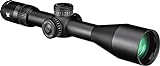
- ARS Mark7.9
ARS Mark is a ranking system developed by bestairriflescopes.com. ARS Mark has no relationship or impact from any manufacturers or sales agent websites. Learn more
- BrandVortex
Last update on 2026-10-04 / Affiliate links / Images, Product Titles, and Product Highlights from Amazon Product Advertising API
Do you need a first focal plane scope for 6.5 Creedmoor shooting?
It depends on whether you hold for windage and elevation using the reticle at varying magnification settings. First focal plane optics, such as the Vortex Venom 5-25x56 and Strike Eagle 5-25x56, scale the reticle hash marks proportionally as you zoom. This keeps your MOA subtensions accurate whether you shoot at 5x or dialed up to 25x. A second focal plane optic like the Vortex Viper 6.5-20x50 PA SFP keeps the Dead-Hold BDC MOA reticle the same visual size, meaning holdovers are only calibrated at a single specified magnification power. For shooters working out distance calculations on steel targets, choosing an optic configured for accurate holdovers removes the risk of calculation errors across zoom changes.
How much magnification is required for 6.5 Creedmoor targets past 500 yards?
Magnification up to 20x or 25x offers a practical balance of target clarity and field of view for extended distances. The Vortex Viper 6.5-20x50 PA provides enough power for mid-range hunting and steel targets, while the 5-25x56 configuration on the Venom and Strike Eagle models provides extra detail for reading target movement. For extreme target distances, the Vortex Razor HD Gen III 6-36x56 First Focal Plane optic provides magnification up to 36x. Higher magnification reduces your field of view, so pick an upper zoom range that matches your typical target size rather than buying maximum magnification automatically.
Which Vortex reticle works best for elevation and wind holdovers?
Grid-style reticles with dedicated MOA subtension marks provide the most consistent reference points for quick adjustments. The EBR-7C reticle featured on the Vortex Strike Eagle 5-25x56 and Venom 5-25x56 includes fine holdover points and windage trees below the main horizontal crosshair. The EBR-7D reticle on the Vortex Razor HD Gen III 6-36x56 delivers similar precision aiming points for rapid corrections without turning the turrets. By comparison, the Dead-Hold BDC MOA reticle on the Viper 6.5-20x50 PA features a simpler design suited for hunting silhouettes, but it provides fewer windage reference points for technical target shooting.
What is the difference between the EBR-7C, EBR-7D, and Dead-Hold BDC reticles?
The main differences are hash mark density and focal plane placement. Both the EBR-7C and EBR-7D are first focal plane MOA reticles engineered with distinct wind-hold dots and fine center dots that remain proportional to the target at all focal lengths. The EBR-7D on the Razor HD Gen III 6-36x56 provides refined line weights tailored for higher zoom ranges. The Dead-Hold BDC MOA reticle on the Viper 6.5-20x50 PA sits in the second focal plane, offering an uncluttered sight picture that works well in brush but requires maximum magnification to use the elevation hash marks accurately.
Does a 56mm objective lens provide an advantage over a 50mm objective?
A 56mm objective lens creates a larger exit pupil at high magnification, which helps maintain a brighter image in poor lighting. The Vortex Venom 5-25x56, Strike Eagle 5-25x56, and Razor HD Gen III 6-36x56 all feature 56mm objective bells designed to pull in ample light across their top magnification settings. The 50mm objective on the Viper 6.5-20x50 PA gathers slightly less light at top magnification but allows you to mount the scope closer to the rifle bore. Larger objectives require taller scope rings, so verify your ring choice to maintain proper barrel clearance along the rifle contour.
How do you select the correct scope ring height for these Vortex models?
Check the exact outer bell diameter of the scope and confirm your rifle receiver rail clearance before purchasing rings. Optics with 56mm objective lenses, such as the Strike Eagle 5-25x56 or Razor HD Gen III 6-36x56, generally require medium or high rings so the bell clears a heavy contour barrel. You also need to confirm whether your optic requires 30mm or 34mm mounting rings by checking the specific Vortex product listing. Measuring your barrel taper and rail profile directly avoids unwanted contact between the objective bell and the rifle surface.

10 Top Picks: Best Youth Air Rifles for 13-Year-Olds

12 Best Rifle Scopes For 5.56 Under 150 Dollars - (2026 Top Picks)

Top 10 Rifle Scopes for Coyote Hunting in 2026

12 Best Benchrest Rifle Scopes of 2026 For Tight Groups

Top 5 Airsoft Rifles: Unleash the Action in 2026
Unveil the Best Straight Wall Deer Rifles: Top Picks for 2026

Top Ammo Choices for Air-Powered Rifles: Boost Your Performance in 2026

Best Quick Detach Scope Rings for Accurate and Convenient Shooting







