
8 Best Western Mule Deer Rifle Scopes of 2026 For Open Country

Many hunters assume a standard woodland scope can handle wide-open sage basins just fine. The reality sets in miles into the backcountry when a buck steps out across a canyon, and that basic glass leaves crosshairs floating without dependable holdover points. Long pack hikes over scree and sudden high-desert temperature drops punish fragile optics. A bump against a boulder or heavy centerfire recoil can silently knock turrets out of alignment, turning a hard-earned tag into a heartbreaking miss in the dawn mist.
Securing a clean shot across open country comes down to an optic that stays tough and tracks true no matter how rough the trail gets. Look for nitrogen-purged aluminum housing that protects your zero against sharp knocks, paired with multi-coated glass measuring 40mm to 50mm to pull in critical legal shooting light at sunrise. Magnification reaching 12x or 16x alongside clean BDC or MOA hash marks gives you the elevation references needed to compensate for distance. The right setup delivers sharp edge-to-edge clarity when that mature buck finally clears the brush, and the options below keep your rifle ready for 2026.

- ARS Mark10.0
ARS Mark is a ranking system developed by bestairriflescopes.com. ARS Mark has no relationship or impact from any manufacturers or sales agent websites. Learn more
- BrandWestHunter

- ARS Mark9.4
ARS Mark is a ranking system developed by bestairriflescopes.com. ARS Mark has no relationship or impact from any manufacturers or sales agent websites. Learn more
- BrandVortex
- ARS Mark9.0
ARS Mark is a ranking system developed by bestairriflescopes.com. ARS Mark has no relationship or impact from any manufacturers or sales agent websites. Learn more
- BrandSimmons

- ARS Mark8.8
ARS Mark is a ranking system developed by bestairriflescopes.com. ARS Mark has no relationship or impact from any manufacturers or sales agent websites. Learn more
- BrandTRUGLO
- ARS Mark8.8
ARS Mark is a ranking system developed by bestairriflescopes.com. ARS Mark has no relationship or impact from any manufacturers or sales agent websites. Learn more
- BrandCVLIFE

- ARS Mark8.8
ARS Mark is a ranking system developed by bestairriflescopes.com. ARS Mark has no relationship or impact from any manufacturers or sales agent websites. Learn more
- BrandUUQ

- ARS Mark8.6
ARS Mark is a ranking system developed by bestairriflescopes.com. ARS Mark has no relationship or impact from any manufacturers or sales agent websites. Learn more
- BrandWestHunter

- ARS Mark8.2
ARS Mark is a ranking system developed by bestairriflescopes.com. ARS Mark has no relationship or impact from any manufacturers or sales agent websites. Learn more
- BrandMonstrum
Last update on 2026-09-27 / Affiliate links / Images, Product Titles, and Product Highlights from Amazon Product Advertising API
Is a 3-9x magnification scope enough for Western mule deer, or should you choose 4-16x?
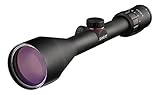
A 3-9x magnification range works well for moderate distances, but a 4-16x or higher optic provides extra visual precision when resolving mule deer against wide sage flats or steep canyon walls. While an optic like the Vortex Crossfire II 3-9x40 handles traditional shooting distances, variable magnification reaching 4-16x or 6-24x allows you to spot antler tines and establish precise points of aim across expansive draws. Choosing a higher range, such as a 4-16x44 or 6-24x50 configuration, provides the optical reach needed for open terrain without requiring a separate spotting scope for every scan.
Which reticle style makes holdovers simplest across canyon drafts?
Reticles featuring dedicated elevation and windage reference marks, such as BDC, Mil-dot, or Christmas-tree designs, provide the fastest holdover corrections in open country. The Monstrum Hornet 6-24x50 features an illuminated first focal plane X-Tree reticle with 6 brightness levels, allowing quick holdover estimation that remains proportional across the zoom range. In contrast, standard duplex styles like the Truplex reticle on the Simmons 8-Point 3-9x50mm offer a clear visual field with 1/4 MOA click adjustments, but they lack drop tick marks for sudden distance changes. Selecting an optic engineered for accurate holdovers prevents hesitation when wind sweeps across a mountain basin.
Can these rifle scopes handle centerfire recoil and rough mountain weather?
You must confirm centerfire recoil ratings and weatherproofing specifications on each specific optic before packing into rough mountain terrain. Certain models explicitly state their resilience, such as the Simmons 8-Point 3-9x50mm, which is listed as waterproof, fog proof, and recoil proof. Structural materials also dictate durability; WestHunter Optics builds its HD series out of 6061 T6 aircraft-grade aluminum alloy to withstand physical impacts. Other scopes, like the TRUGLO 4x32mm, are built specifically for rimfire and shotgun setups rather than high-recoil rifles, making it essential to verify rated platform compatibility before heading up the ridge.
Does objective lens diameter make a real difference in legal shooting light?
Yes, pairing a larger objective lens with multi-coated glass significantly improves light gathering during dawn and dusk feeding periods. A 50mm objective lens, found on models like the Simmons 8-Point or Monstrum Hornet, presents a wide opening for incoming light at legal shooting hours. Optical coatings are equally critical for brightness and contrast. WestHunter Optics reports up to 86% light transmission with BK7 borosilicate glass on the HD 4-16x44 SFIR PRO, and up to 90% light transmission using ion-assisted fully multi-coated B270 sodium-calcium glass on the HD GEN2 4-16x44 FFP. These optical coatings help pull feeding bucks out of deep morning shadows.
Should you mount a first focal plane or second focal plane scope for open-country stalking?
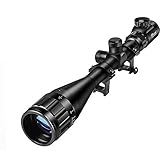
Choose a first focal plane (FFP) reticle if you regularly calculate holdovers at varying magnification, or a second focal plane (SFP) reticle if you prefer a bold crosshair at low power. An FFP scope, such as the WestHunter HD GEN2 4-16x44 or Monstrum Hornet 6-24x50, scales the reticle markings dynamically with magnification, keeping distance subtensions mathematically accurate at every power setting. A second focal plane scope, like the UUQ 4-16X44AO, maintains a constant reticle thickness across all zoom levels, keeping the crosshairs easy to pick up in low brush while calibrating holdover points to a specific magnification setting.
How do you ensure your scope mount fits your rifle receiver and maintains barrel clearance?
Check the mounting rail specifications and ring height against your rifle action to ensure a secure fit and steady eye alignment. Optic packages like the UUQ 4-16X44AO include free mounts fitted specifically for 20mm rails, which will not clamp onto traditional 11mm dovetails or factory-drilled receiver holes without the correct base adapter. Furthermore, scopes with 50mm bells require adequate ring height to avoid touching the barrel contour. Confirming these dimensions beforehand ensures proper barrel clearance and protects your zero from shifting during strenuous backcountry climbs.

10 Top Picks: Best Youth Air Rifles for 13-Year-Olds

12 Best Rifle Scopes For 5.56 Under 150 Dollars - (2026 Top Picks)

Top 10 Rifle Scopes for Coyote Hunting in 2026

12 Best Benchrest Rifle Scopes of 2026 For Tight Groups

Top 5 Airsoft Rifles: Unleash the Action in 2026
Unveil the Best Straight Wall Deer Rifles: Top Picks for 2026

Top Ammo Choices for Air-Powered Rifles: Boost Your Performance in 2026

Best Quick Detach Scope Rings for Accurate and Convenient Shooting







