Bestairriflescopes.com is reader-supported. When you buy through links on our site, we may earn an affiliate commission. Learn more

Best Youth 20 Gauge Shotgun 2026: A Smarter Fit

A best youth 20 gauge shotgun search usually begins with one stubborn problem: a full-size firearm feels awkward before the first shell is ever loaded. An overly long stock forces the shoulder backward, stretches the trigger hand, and makes the muzzle feel heavier than it really is. That poor fit can turn a carefully supervised range session into a frustrating wrestle with balance, recoil, and basic control. A shorter youth stock, sensible overall weight, and accessible controls matter far more than glossy finishes or decorative extras.

Stock fit deserves the closest attention because body size varies widely, even among people of the same age. The trigger should be reachable without twisting the wrist or pulling the shoulder away from the stock, while the butt should sit firmly against the shoulder pocket. A model with spacers or an adjustable length of pull can stay useful through growth spurts, though added parts may increase cost and require occasional tightening. Fixed compact stocks are simpler, but they can be outgrown sooner than expected.

Recoil management isn’t determined by gauge alone, and that catches plenty of shoppers off guard. A very light shotgun may feel easy to carry, yet its lower mass can transmit a sharper kick than a slightly heavier model firing the same load. Ammunition choice, stock shape, recoil-pad softness, shooting stance, and action type all influence felt recoil. Light target loads are generally more comfortable for supervised practice than heavy hunting loads, but every ammunition choice must match the firearm’s chamber markings and manufacturer guidance.

Action type changes the learning experience, too. A break-action shotgun offers a clear visual indication of whether the action is open, and its straightforward layout can make loading supervision easier. A pump action adds manual cycling and usually provides more capacity, but the shooter must operate the fore-end fully and consistently to avoid short-stroking. Semi-automatic designs may soften recoil through their operating system, though they’re typically more complex, costlier, and less visually obvious to inspect at a glance.

Weight and balance should be judged together rather than treated as separate numbers. A compact shotgun that carries too much weight near the muzzle may still tire the support arm quickly, causing the barrel to dip or wander. An extremely light model can be lively and easy to mount, but it may also feel less settled during a controlled swing. Dry handling must occur only under direct responsible supervision, with the firearm confirmed unloaded, ammunition stored elsewhere, and the muzzle maintained in a safe direction.

Control placement can make or break confidence. The safety should be easy to identify and operate without shifting the firing grip into an unsafe position, while the action release and opening lever shouldn’t demand excessive hand strength. Small hands can struggle with stiff controls designed around adult dimensions, and forcing them creates sloppy habits. Clear markings, predictable operation, and a design that responsible adults can inspect quickly offer more practical value than extra capacity.

A youth 20 gauge shotgun also needs to match its actual purpose. A short, light field gun may carry comfortably during long walks, but it can swing abruptly on moving targets and produce more noticeable recoil. A heavier sporting setup may feel steadier at a range, yet become tiring in rough terrain. One gun rarely excels equally at casual clay practice, upland hunting, turkey hunting, and general instruction, so realistic priorities prevent an expensive mismatch.

Proper instruction remains the non-negotiable part of the equation. A compact firearm isn’t automatically safe simply because it’s labeled “youth,” and smaller dimensions never replace close adult supervision, secure storage, eye protection, hearing protection, and formal training from a qualified instructor. Local laws may restrict possession, transport, hunting use, ammunition, or access by minors. The strongest purchase decision begins with legal compliance and professional fitting, not an online ranking.


Gamo Viper Express Air Shotgun And Rifle

A compact air gun can look approachable on a product page, yet the real questions begin with control, safe handling, and whether its design actually matches the intended use. The Gamo Viper Express sits in an unusual category because it can fire .22-caliber pellets and compatible shotshells, but that flexibility doesn’t make it equivalent to the best youth 20 gauge shotgun. It remains an air-powered projectile weapon that requires secure storage, direct adult supervision, eye protection, a proper backstop, and careful attention to local laws. Its listed 750 feet-per-second velocity also deserves respect rather than casual treatment.

Gamo Viper Express

The defining feature is its ability to use shotshells with shot or conventional pellets. That gives the platform two distinct shooting behaviors, with pellets serving typical air-rifle practice and shotshells producing a short-range spread. The change in ammunition type can be useful for controlled target activities, but it also demands a clear understanding of what is loaded before every shot. Mixing ammunition carelessly or assuming both loads behave the same would be a serious mistake.

The stated .22 caliber places it above common .177 air rifles in projectile diameter. A larger pellet may carry more mass, though actual energy depends on pellet weight and real velocity rather than caliber alone. The supplied figure of 750 feet per second should be treated as a manufacturer specification, not a guarantee for every pellet, temperature, or shooting condition. Different ammunition can change speed, trajectory, impact, and accuracy.

The Viper Express shouldn’t be confused with a firearm chambered in 20 gauge. A 20 gauge shotgun uses firearm ammunition and operates on a completely different level of recoil, energy, legal control, and intended use. The word “shotgun” in this product’s name refers to its shotshell capability, not compatibility with standard shotgun shells. That distinction matters, especially where inexperienced handling or vague product descriptions could create false assumptions.

Power And Practical Accuracy

A listed velocity of 750 feet per second provides enough speed for paper targets and other lawful, controlled air-gun activities. Still, muzzle velocity alone says little about practical accuracy. Pellet quality, fit, wind, shooting position, and trigger control all shape the final result. A consistent pellet that groups well is generally more useful than chasing the highest advertised speed.

Shotshell performance brings different expectations. The spreading shot pattern is intended for close distances, and that spread will widen as range increases. Small shot loses useful pattern density quickly, so the shotshell function isn’t a substitute for a traditional shotgun. It also increases the need for a large, dependable backstop because several projectiles leave the barrel with each shot.

Pellet trajectory becomes increasingly curved over distance, making careful zeroing important. A pellet striking high or low at one range may behave differently several yards farther away. That’s normal air-rifle behavior, not necessarily a defect. Responsible use means confirming the impact zone on paper before attempting any other lawful application.

Handling And Supervision

The most important strength is not raw power but the platform’s relatively simple air-gun format. Even so, simple operation doesn’t equal harmless operation. A .22 pellet traveling at the listed speed can cause severe injury, penetrate vulnerable materials, and travel beyond an improvised target. Every session requires a controlled location, a safe direction, and a backstop designed for air-gun projectiles.

Smaller or less experienced shooters may struggle with cocking effort, stock fit, muzzle control, or maintaining a stable shooting position. Those factors can’t be judged from the product name alone. Direct adult supervision must remain active rather than distant, and the supervising adult should understand the model’s controls before handing it over. A qualified instructor is the safer source for first-time training.

Eye protection is necessary because pellets and fragments can rebound from hard surfaces. Steel plates, rocks, concrete, water, and unsuitable traps can redirect projectiles unpredictably. Hearing protection may also be sensible depending on the shooting environment and local range rules, even though an air rifle is quieter than a firearm. Quiet operation can create complacency, which is exactly what should be avoided.

Pros Worth Recognizing

Dual-ammunition capability is the clearest advantage. The ability to use pellets and purpose-made shotshells creates more variety than a standard single-projectile air rifle. That may support different paper-target exercises in a properly controlled setting. It also gives the owner a reason to learn how ammunition type changes pattern, trajectory, and effective distance.

The listed limited lifetime warranty is another favorable detail, though the exact coverage, exclusions, registration requirements, and service process should be read directly from the manufacturer’s current warranty terms. A warranty rarely covers misuse, neglected maintenance, unauthorized modifications, or unsuitable ammunition. Keeping purchase records and following the manual can matter if service is ever needed. Warranty language should never be treated as proof that every component is covered indefinitely.

The .22 format may produce more visible target impact than a lighter .177 pellet, depending on the target material and pellet design. That can make paper scoring easier to see at modest range. Larger pellet diameter may also be appealing for shooters who prefer a heavier projectile. The tradeoff is a more curved trajectory and potentially higher ammunition cost.

Cons And Important Limitations

The product name can create confusion because this is not a conventional shotgun and not a 20-gauge firearm. Anyone researching the best youth 20 gauge shotgun would be looking at an entirely different product class. Treating the Gamo Viper Express as an equivalent could lead to poor expectations about recoil, range, training value, hunting legality, and ammunition. Clear classification is therefore one of the first responsibilities before use.

The shotshell mode has limited range and pattern density compared with a firearm shotgun. Tiny shot can spread fast, lose energy, and become inconsistent as distance increases. Short effective range is a built-in limitation rather than a flaw that accessories can erase. Hard targets also introduce a greater ricochet concern because several pellets may return at different angles.

The advertised velocity may not represent every real-world shot. Pellet weight, barrel condition, seal condition, temperature, and ammunition fit can all alter performance. Velocity variation is normal across different loads, so users shouldn’t build safety assumptions around one headline number. A chronograph is the proper measuring tool, though testing still requires a safe range setup.

Its suitability for younger shooters can’t be determined from age alone. Reach, strength, judgment, training, legal restrictions, and the ability to follow commands matter more than a youth label. Secure storage is mandatory whenever the air gun isn’t under direct control, preferably locked and inaccessible to unauthorized people with ammunition stored separately. Local law may classify or restrict air guns differently depending on jurisdiction.

Maintenance And Ownership Tradeoffs

Routine care should follow the manufacturer’s manual rather than generic firearm-cleaning habits. Excess oil, unsuitable solvents, and improper disassembly can harm seals or internal parts. Correct maintenance usually means keeping the exterior dry, inspecting fasteners, protecting the bore from debris, and using only approved lubricants where instructed. Unauthorized internal work may create a safety problem and affect warranty coverage.

Shotshell residue and pellet debris may require closer inspection around the barrel and loading area. A blocked or damaged bore must never be cleared casually. The air gun should be unloaded, uncocked, pointed safely, and handled according to the manual before any inspection. Manufacturer service is the sensible route when a defect, unusual sound, loss of power, or mechanical resistance appears.

Storage conditions also matter. Humidity can encourage corrosion on exposed metal, while heat and direct sunlight may damage seals, optics, or stock materials over time. A locked cabinet in a dry indoor space is more appropriate than a vehicle, shed, or open closet. The final limitation is straightforward: this model may offer interesting ammunition flexibility, but it still demands the same disciplined habits expected around any device capable of launching dangerous projectiles.

Powerful M3 Pump Action Airsoft Shotgun

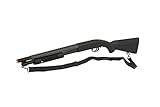
A long game can expose every awkward control, loose stock position, and poorly balanced pound before the first break rolls around. The Powerful M3 enters the best youth 20 gauge shotgun discussion only as an airsoft alternative, not as a real 20-gauge firearm, and that distinction needs to stay crystal clear. Its pump-action layout, retractable stock, and three-BB firing pattern create a familiar shotgun-style experience for supervised recreational play. Still, the six-pound weight, fixed hop-up, and shell-fed system bring tradeoffs that deserve a closer look.

Powerful M3 Airsoft Shotgun

The M3 uses a pump-action mechanism that launches up to three BBs with each completed cycle. That triple-shot pattern can make close-range target engagement feel more forgiving because the BBs spread rather than travel as one perfectly stacked projectile. The design also adds rhythm to play, since every shot requires a deliberate pump before the next trigger pull. It’s engaging, but the manual action slows follow-up shots compared with electric airsoft platforms.

A listed velocity of up to 330 FPS gives the shotgun enough speed for many organized airsoft settings, though field limits always take priority over product-page numbers. Actual velocity can vary with BB weight, temperature, internal condition, and chronograph setup. The supplied description also references 320 FPS, so buyers should expect the final reading to depend on the exact version and ammunition used. That small specification mismatch is worth recognizing rather than brushing aside.

The reinforced barrel is presented as a durability feature, and the fixed hop-up is meant to provide a stable flight path without constant adjustment. A fixed hop-up system keeps setup simple, especially for anyone who’d rather load shells and play than fiddle with tuning. The downside is obvious: different BB weights can’t be dialed in as precisely as they could with an adjustable unit. Simplicity wins, while fine control takes the back seat.

Retractable Stock And Handling

The retractable stock gives the M3 a broader fit range than a rigid full-length stock. Shortening the rear section helps keep the shotgun closer to the body in tight indoor layouts, while extending it creates a more planted shoulder position in open lanes. That adjustable length can reduce the stretched, front-heavy feeling that often makes shotgun-shaped replicas tiring. The mechanism should still be checked regularly because stock wobble can make an otherwise steady platform feel sloppy.

Six pounds isn’t featherlight, despite the description calling the model easy to maneuver. That weight can make the replica feel substantial and less toy-like, but it may also tire the support arm during extended sessions. A six-pound frame is especially noticeable during repeated low-ready holds, long staging periods, or games with little downtime. Smaller players may appreciate the shorter stock yet still struggle with the overall mass.

Balance matters as much as the scale reading. A shotgun can weigh six pounds and remain manageable if the weight stays near the grip, while a muzzle-heavy setup feels cumbersome much sooner. The M3’s pump and reinforced barrel may place extra demand on the forward hand during cycling. A secure two-handed hold helps, but safe muzzle direction and finger discipline should never get lost in the excitement of rapid play.

Shell Capacity And Reloading

The shell-style magazine holds up to 30 rounds, which translates into roughly ten triple-BB shots when three BBs are released per pump. That sounds like a lot at first glance, yet the capacity disappears quickly during active games. The system rewards measured shooting instead of constant trigger work. Players who fire at every movement will spend more time reloading than they expected.

Shell magazines add a satisfying mechanical touch and fit the shotgun theme better than a box magazine hanging beneath the receiver. They’re also small enough to misplace in grass, gravel, staging areas, or gear bags. Spare shell management becomes part of the ownership experience, so a secure pouch makes more sense than loose shells rattling around in a pocket. Losing one isn’t dramatic, but losing several turns a fun afternoon into an annoying scavenger hunt.

Reloading isn’t as fast as swapping a large rifle magazine. Each shell must be handled correctly, and rushed reloads can lead to dropped BBs or improperly seated magazines. That slower process may appeal to someone who enjoys deliberate operation, but it won’t suit every play style. The shell system favors patience, timing, and controlled movement over sheer ammunition volume.

Triple-Shot Performance

Three BBs per pump create the M3’s defining performance trait. The pattern can increase the chance of contact at close range, though calling it pinpoint accuracy would oversell what a spread pattern actually does. Triple-shot firing trades some single-projectile precision for broader coverage. That’s useful in short lanes, but less convincing when distance opens up and the BBs separate further.

The maximum listed velocity gives the BBs enough pace for recreational use, yet distance still exposes the limits of a fixed-hop shotgun. Wind, BB quality, and slight differences among the three barrels or channels can widen the group. A consistent ammunition brand may tighten results, but no setup turns this into a precision rifle. From a practical angle, an accurate break barrel air rifle represents a separate category built around single-projectile accuracy rather than airsoft spread.

The pump must be cycled fully for reliable operation. Short, rushed strokes can interrupt feeding or reduce consistency, especially during hurried movement. The manual cycling requirement adds realism and makes each shot feel deliberate, though it can also wear on the forward arm over a full day. A smooth, complete stroke beats frantic pumping every time.

Pros That Stand Out

The retractable stock is one of the strongest practical features because it changes the fit without tools. That flexibility helps the shotgun adapt to different clothing layers, arm lengths, and field layouts. Compact stock adjustment also makes storage easier than a fixed-stock model of similar barrel length. It’s a simple feature, but one that affects comfort every minute the replica is carried.

The triple-shot system creates a distinct play experience compared with single-shot spring pistols or automatic rifles. Each trigger pull sends a small spread, giving the M3 a recognizable shotgun character rather than merely borrowing the shape. Three-BB output feels lively at short range and encourages purposeful shots. It also avoids the battery charging, wiring, and motor concerns that come with electric platforms.

Shell-fed operation adds tactile appeal, while the pump action keeps the mechanism straightforward. There’s no gas canister to refill and no battery to forget on the charger. Spring-powered operation can be dependable when the replica is kept clean and used with suitable BBs. The basic format is easy to understand, even though safe supervision and field-rule awareness remain essential.

Cons And Real Tradeoffs

The six-pound weight is the first drawback that shouldn’t be sugarcoated. A retractable stock makes the length friendlier, but it doesn’t erase the strain caused by holding a substantial replica for hours. Long-session fatigue can affect aim, pumping consistency, and safe muzzle control. A sling may ease carrying between games, though it adds another piece of gear to manage.

Fixed hop-up limits experimentation with BB weight and long-range tuning. Players who enjoy adjusting flight paths may feel boxed in by the preset system. Limited tuning control isn’t necessarily a problem for casual sessions, but it becomes more noticeable as expectations rise. The M3 is built around straightforward shotgun behavior, not endless customization.

The 30-round shell sounds generous until triple-shot consumption is calculated. Ten trigger pulls per shell can vanish quickly, and carrying multiple shells becomes almost mandatory during longer rounds. Fast ammunition use adds cost and creates more frequent pauses. The shotgun rewards restraint, which may clash with high-volume play habits.

Safety And Field Suitability

Airsoft replicas still require eye protection, clear rules, and responsible handling. A 330 FPS BB can injure unprotected eyes, damage teeth at close range, and leave painful welts. Full-seal eye protection should be treated as essential rather than optional. Local field limits, minimum engagement distances, and age requirements must be followed every time.

The realistic shotgun shape can cause serious misunderstandings in public spaces. Transport should be discreet, lawful, unloaded, and secured in a case rather than carried openly. Responsible storage matters at home as well, especially where children or visitors could access the replica without permission. An orange tip doesn’t guarantee that every observer will recognize it as airsoft equipment.

The M3 isn’t a genuine youth 20-gauge shotgun, and it shouldn’t be presented as training that automatically transfers to firearm handling. Some control habits may feel familiar, but the recoil, energy, loading process, legal requirements, and consequences are entirely different. Adult supervision and organized instruction help keep those categories separate. The realistic format adds enjoyment only when safety discipline stays ahead of the novelty.

Metal Barrel Pump Action Airsoft Shotgun

A compact shotgun-style replica can feel easy to manage at first glance, but balance, pumping effort, and grip shape usually decide whether it remains comfortable after several rounds of play. This single-shot model enters the best youth 20 gauge shotgun conversation only as an airsoft replica, not as a real 20-gauge firearm, so the two categories shouldn’t be treated as interchangeable. Its metal barrel, pistol grip, built-in sights, and spring-powered pump action create a straightforward setup with fewer moving parts than gas or electric platforms. The tradeoff is equally clear: one BB per shot means every miss costs time, rhythm, and position.

Metal Barrel Airsoft Shotgun

The operating system is refreshingly simple. A full pump compresses the internal spring, and one trigger pull releases a single BB. That single-shot pump action encourages deliberate aiming instead of hurried trigger tapping, which can help keep ammunition use under control during casual target sessions. It also means the shooter must cycle the fore-end after every shot, so speed takes a back seat to pacing.

The supplied velocity range sits between 300 and 330 FPS with 0.12-gram BBs. That figure is useful as a reference, though actual chronograph results may shift with temperature, seal condition, BB consistency, and the exact production version. Lightweight 0.12-gram ammunition often produces higher speed readings but can drift more easily outdoors. Heavier BBs may fly with greater stability while registering a lower velocity.

A metal barrel gives the front end more substance than an all-plastic build. The added mass can reduce the hollow, toy-like feel that bothers some players, and it may help the replica settle during slow, supported aiming. Still, weighty construction isn’t automatically better for every session. Extra front-end weight can wear on the support wrist, especially during long periods at low ready.

Pistol Grip And Pump Control

The tactical pistol grip changes how the shotgun sits in the firing hand. A more vertical angle can make wrist positioning feel natural during close-range play, particularly when the stock isn’t shouldered in a traditional way. That pistol-grip control can also help keep the replica steady while the other hand works the pump. Grip comfort still depends on hand size, finger reach, and the texture of the molded surface.

Pump resistance is part of the experience, and it shouldn’t be ignored. A spring-powered shotgun has to store enough energy during each stroke to launch the BB, so the fore-end may require more effort than its compact appearance suggests. Complete pump travel matters because a short or hesitant cycle can interrupt cocking and feeding. Rushing the motion usually creates more trouble than speed.

The action rewards a firm two-handed hold. The rear hand stabilizes the grip while the forward hand draws the pump through its full sequence, then returns it without twisting the barrel off line. That mechanical rhythm can feel satisfying once it becomes consistent. On the flip side, repeated pumping may become tiring during long games, especially for smaller hands or limited upper-body strength.

Sights And Practical Accuracy

Embedded front and rear sights give the replica a clear aiming reference without requiring an optic. The setup is basic, but basic isn’t always bad. Built-in sight alignment keeps the top profile clean and avoids extra weight, loose mounts, or batteries. The sight picture works best at modest distances where BB drop and wind haven’t taken over.

Single-shot operation gives each BB a predictable launch sequence compared with multi-projectile airsoft shotguns. There’s no spread pattern to cover small aiming errors, so the sights and trigger press matter more. That can make the replica feel more like a compact spring rifle wearing a shotgun body. Accuracy claims should remain realistic because smoothbore airsoft systems, lightweight BBs, and fixed internal settings still limit long-range precision.

Wind exposes those limits quickly. A 0.12-gram BB can curve or drift noticeably outdoors, even if the sights are aligned correctly. Ammunition consistency often matters more than squeezing a few extra feet per second from the platform. Clean, seamless BBs reduce feeding trouble and give the fixed shooting system a fairer chance to repeat its point of impact.

Pros That Make Sense

The strongest advantage is mechanical simplicity. There’s no battery to charge, no gas reservoir to fill, and no electrical system to troubleshoot between games. Spring-powered reliability can be appealing for occasional use because the replica remains ready as long as the internal mechanism is in working order. Storage is simpler too, though it still needs to be unloaded and secured.

The metal barrel gives the shotgun a sturdier feel in the hands. It may also resist minor flex better than thin plastic barrel assemblies during normal handling. Solid front-end construction supports steadier aiming from a bench or supported position. The drawback is added mass, but some players will prefer that planted sensation over an ultralight shell.

The pistol grip and embedded sights create a practical control layout without piling on accessories. A shooter can focus on pumping, sight alignment, and trigger discipline rather than managing rails and attachments. Simple handling suits low-key backyard target use where legal, controlled range sessions, or structured airsoft practice. Fewer add-ons also mean fewer screws to loosen.

Cons That Need Attention

Single-shot capacity is the biggest limitation. Every trigger pull requires another pump, so follow-up shots are slower than with electric, gas, or multi-shot spring platforms. Low firing volume can become frustrating during fast indoor games where opponents move quickly and angles change in a heartbeat. The deliberate pace suits target work better than aggressive, high-tempo play.

The listed velocity relies on lightweight 0.12-gram BBs, which can make the number look more impressive than the real flight behavior feels. Those BBs may lose stability and energy quickly, especially in moving air. Advertised FPS shouldn’t be treated as a complete measure of useful range. BB weight, hop behavior, barrel condition, and consistency all matter.

The metal barrel adds durability in one area while increasing fatigue in another. A heavier nose can pull the muzzle downward between shots and make repeated pumping feel less fluid. Front-heavy balance becomes more noticeable during long sessions than during a brief first impression. Anyone expecting a featherlight replica may be surprised by the heft.

Fit Within The Shotgun Category

This product isn’t a firearm and doesn’t fire 20-gauge ammunition. Its shotgun appearance, pump motion, and pistol grip may resemble firearm controls, but recoil, energy, legal treatment, and operating consequences are fundamentally different. The phrase best youth 20 gauge shotgun therefore describes another category entirely. Mixing the two can create unrealistic expectations and unsafe assumptions.

The airsoft format may provide structured practice in muzzle awareness, grip consistency, and sight alignment under direct supervision. Those habits can be useful, yet they don’t replace formal firearm instruction. A real shotgun introduces recoil, ammunition handling, hearing concerns, chamber verification, and legal duties that an airsoft replica can’t reproduce. Category separation needs to remain explicit from the start.

From a practical angle, a bipod for arca rail belongs to a separate precision-support category and has no natural mounting role on this pistol-grip airsoft shotgun. The reference highlights how different shooting platforms require accessories designed around their actual interfaces and intended use. Forcing mismatched equipment onto a simple spring replica adds weight and complication without solving its core limitations. The built-in sights and two-handed pump technique remain the relevant setup here.

Safety And Ownership Limits

A 300 to 330 FPS airsoft BB can damage an unprotected eye and cause painful close-range impacts. Full-seal eye protection should remain in place anywhere the replica is loaded or active. Field velocity limits, engagement-distance rules, and age restrictions also apply before play begins. A product listing never overrides local regulations or venue policies.

The realistic silhouette can create dangerous confusion outside a controlled environment. Transport should be discreet, unloaded, and secured inside an appropriate case rather than displayed in public. Responsible storage matters at home because unauthorized handling can lead to injury, property damage, or a serious police response. An orange tip doesn’t guarantee instant recognition from every angle.

The single-shot action may appear less intimidating than an automatic airsoft rifle, but it still launches a projectile with enough speed to cause harm. Safe muzzle direction, finger discipline, a proper backstop, and direct supervision remain non-negotiable. Metal construction also means dropping or striking the replica can damage surroundings as well as the product itself. Its simple mechanics reduce maintenance fuss, not the responsibility attached to ownership.

Umarex T4E HDS .68 Caliber CO2 Shotgun

A compact CO2 platform marketed around “home defense” can sound straightforward, but the real picture is far more complicated. The Umarex T4E HDS is not a best youth 20 gauge shotgun, not a firearm chambered in 20 gauge, and not something that should be framed as a casual youth product. It is a .68-caliber projectile launcher with a stated output of 16 joules and a listed velocity above 325 FPS, which means careless handling can cause severe injury. Its role is better understood through safety limits, legal restrictions, storage demands, and the risks tied to different projectile types.

Umarex T4E HDS

The HDS uses a 12-gram CO2 cartridge to propel .68-caliber projectiles. Its factory-rated 16-joule output places it well beyond low-powered recreational toys, and the manufacturer’s velocity figure of 325-plus FPS reinforces that point. Actual output can vary with projectile weight, temperature, cartridge pressure, and seal condition. A chronograph reading is useful for technical verification, but it never changes the need for a secure backstop and controlled environment.

The product description emphasizes that this is an original factory production version rather than an aftermarket power modification. Factory configuration may reduce uncertainty around assembly quality and warranty status, though it doesn’t make the launcher harmless or universally legal. Local rules may classify CO2 launchers, kinetic projectiles, pepper projectiles, or defense-marketed devices differently. Ownership, transport, storage, and use all need to match current local law.

The double-barrel shotgun-style layout is easy to recognize, yet appearance can create dangerous confusion. Police officers, neighbors, and bystanders may reasonably interpret it as a firearm from a distance. Realistic styling therefore increases the importance of discreet transport, locked storage, and never displaying the launcher in public. An orange marking or product label won’t guarantee safe recognition during a tense encounter.

Projectile Compatibility And Risk

The description lists compatibility with steel, rubber, nylon, shaped, and pepper projectiles. That range is not merely a convenience feature because each material creates a different injury profile, ricochet risk, penetration behavior, and legal concern. Steel balls can be especially hazardous around hard surfaces due to rebound and concentrated impact. Their use should never be treated as ordinary recreational target shooting.

Rubber and nylon projectiles are sometimes described as less lethal, but that phrase can be misleading. A .68-caliber projectile launched at substantial energy can damage eyes, teeth, skin, and internal tissue, particularly at close range. Less lethal does not mean nonlethal, and impact location matters enormously. Eye protection and a purpose-built backstop remain mandatory during any lawful practice.

Pepper projectiles introduce chemical exposure on top of impact force. Wind can blow irritant back toward the operator, nearby people, pets, or ventilation systems. Cross-contamination can linger on clothing, walls, furniture, and enclosed spaces long after discharge. Medical conditions such as asthma may increase the danger, and local law may restrict possession or use.

CO2 Operation And Practical Limits

CO2 systems are convenient because they don’t require manual pumping before every shot. The pressure source also supports repeatable firing until the cartridge begins to cool or lose pressure. Temperature sensitivity is the catch, since cold conditions can reduce velocity and consistency. Rapid firing may chill the cartridge further, causing performance to fall off during the same session.

A punctured cartridge shouldn’t be left installed indefinitely. Slow leakage can flatten the cartridge, stress seals, and leave the launcher unavailable when expected. Seal maintenance depends on following the manufacturer’s manual and using only approved lubricants. Generic gun oils or solvents may damage O-rings and other CO2 components.

The stated 16-joule figure should be treated as a factory specification rather than a guaranteed reading for every projectile. Heavy projectiles may travel slower while carrying different momentum, and lighter projectiles may post higher velocities. Energy and velocity need to be considered together. A single FPS number never tells the whole story about impact risk.

Pros From A Safety And Design View

The factory-produced configuration offers a clearer baseline than an unknown aftermarket modification. Warranty support may also be easier to pursue when internal components remain unaltered. Factory warranty coverage still depends on the written terms, lawful use, approved ammunition, and proper maintenance. Any assumption beyond those documents would be guesswork.

The .68-caliber format makes projectiles easy to distinguish from conventional airsoft BBs. That visual difference may reduce accidental mixing with 6 mm ammunition or incompatible magazines. Clear caliber identification helps only when storage containers are labeled and separated. Loose projectiles in a shared box invite mistakes.

CO2 operation avoids batteries, chargers, and electrical failures. The manual controls may also be easier to inspect than a complex electronic platform. Mechanical simplicity can support routine maintenance, though it doesn’t eliminate valve wear, seal leaks, or cartridge-related problems. Regular inspection remains part of responsible ownership.

Cons And Serious Tradeoffs

The strongest drawback is the potential for severe injury. A 16-joule .68-caliber launcher can cause lasting harm even without firearm ammunition. High impact energy makes casual indoor handling, improvised targets, and unsupervised access unacceptable. Dry firing, loading, and storage procedures should follow the manual exactly.

Projectile variety also creates more ways to make a dangerous mistake. Steel balls, pepper rounds, and shaped projectiles shouldn’t be treated as interchangeable just because they share a caliber. Different ammunition behavior affects ricochet, penetration, contamination, and legal exposure. A projectile that fits may still be unsuitable or prohibited.

The “home defense” label may encourage false confidence. Any defensive use can escalate a confrontation, be mistaken for deadly force, or create criminal and civil consequences. Legal ambiguity is a major weakness because rules vary by jurisdiction and circumstances. Product marketing cannot determine whether use is lawful or prudent in a real incident.

The HDS also does not match the handling, recoil, energy, or training requirements of a genuine 20-gauge shotgun. Calling it a substitute for the best youth 20 gauge shotgun would blur critical differences between firearm and CO2 platforms. Neither category is appropriate for unsupervised youth access. Direct adult control, secure storage, and qualified instruction remain essential.

Storage And Handling Requirements

Locked storage is the minimum sensible standard. The launcher should remain unloaded, depressurized when appropriate under the manual, and inaccessible to unauthorized people. Separate projectile storage reduces the chance of impulsive or mistaken loading. CO2 cartridges should also be kept away from heat and physical damage.

Transport needs the same care. A closed case prevents public display and protects the device from impact, dust, and unauthorized handling. Discreet transportation matters because realistic replicas can trigger emergency responses. Local rules may require additional steps, including specific storage methods or age restrictions.

Practice belongs only in a lawful, controlled location with a backstop rated for the specific projectile material. Hard surfaces can send steel or rubber rounds back toward the firing line. Full-seal eye protection is essential, and bystanders need the same protection. From a practical angle, quiet air rifles belong to a separate sporting category and should not be treated as interchangeable with a defense-marketed .68-caliber launcher.

Game Face ASGM47 VooDoo Airsoft Shotgun

Fast-looking gear can create the wrong expectation before a single BB leaves the barrel. The Game Face ASGM47 VooDoo carries the shape and controls of a tactical shotgun, yet it belongs to the airsoft category and should never be confused with the best youth 20 gauge shotgun or any firearm chambered in 20 gauge. Its spring-powered pump action, adjustable stock, 19-round magazine, and adjustable hop-up create a simple recreational platform without batteries or gas. That simplicity is appealing, but the stated speed of up to 390 FPS demands strict eye protection, secure storage, direct supervision, and compliance with field rules.

Game Face VooDoo Airsoft Shotgun

The VooDoo operates as a spring-powered single-shot platform, which means each trigger pull requires a full pump cycle beforehand. That setup keeps the internal system relatively straightforward and avoids the charging routines tied to electric airsoft guns. It also slows the shooting rhythm, since every follow-up shot depends on a complete movement of the fore-end. Misses feel more costly, but deliberate aiming becomes part of the experience rather than an afterthought.

A 19-round magazine gives the shotgun more staying power than shell-fed models that may offer only a handful of trigger pulls before reloading. Since the gun fires one BB at a time, the listed 19-round capacity translates directly into 19 shots under normal operation. That’s enough for casual target sessions or a short airsoft round without constant magazine handling. Still, high-tempo play can drain the magazine surprisingly fast.

The manufacturer lists a velocity of up to 390 FPS with 6 mm airsoft BBs. Actual speed can shift according to BB weight, temperature, spring condition, barrel cleanliness, and chronograph method. A lighter BB may post a higher number while drifting more in outdoor air. Velocity alone doesn’t determine practical accuracy, range, or suitability for a particular field.

Adjustable Stock And Fit

The adjustable stock is one of the more useful design choices because it changes the length without tools. A shorter setting can reduce overreaching and keep the shotgun closer to the body during tight movement. Extending it creates a steadier shoulder position for slower target work. Length adjustment helps with fit, though it can’t compensate for excessive weight, poor grip reach, or limited pumping strength.

Stock movement should feel firm rather than loose or rattly. Any wobble can make the rear of the replica shift during aiming, which is especially noticeable on a single-shot platform where each trigger pull carries more weight. Stock stability matters more than having many adjustment positions. A practical setting is the one that keeps the wrist relaxed, the sights aligned, and the shoulder from stretching backward.

Compactness also helps with storage and transport. The collapsed stock reduces overall length, making the shotgun easier to place inside a suitable case. That does not make public carry acceptable, however, because the realistic profile can be mistaken for a firearm. Discreet transport and secure handling remain necessary regardless of stock position.

Pump Action And Shooting Rhythm

The pump mechanism gives the VooDoo its shotgun-like character. A complete rearward and forward stroke cocks the spring and prepares the next BB for firing. Full pump travel is essential because hurried or partial cycling may interrupt feeding or leave the action uncocked. Smooth operation beats speed, plain and simple.

Repeated pumping can become tiring over a long session. The spring must store enough energy to produce the advertised velocity range, so the fore-end may require more effort than a low-powered toy. Smaller hands may also struggle to keep a secure grip while cycling quickly. Pump resistance therefore affects comfort, accuracy, and safe muzzle control all at once.

The manual action has one quiet advantage: it encourages pauses between shots. Those pauses create time to reset the sight picture, confirm the backstop, and maintain finger discipline. That doesn’t automatically make the platform safer, but it can support more deliberate habits under direct supervision. The downside is slower engagement during fast-moving airsoft games.

Hop-Up And Practical Accuracy

The adjustable hop-up gives the VooDoo more tuning flexibility than a fixed system. Hop-up adds controlled backspin to the BB, helping counter gravity over part of the flight path. Adjustable trajectory control can improve consistency when BB weight changes or when the gun is used at different distances. Too much hop, however, sends BBs climbing upward instead of traveling flat.

Tuning takes patience. Small adjustments are usually more useful than dramatic changes, and the effect should be evaluated on a safe paper target with a proper backstop. BB quality also matters because seams, inconsistent diameter, and dirty ammunition can create erratic flight no matter how carefully the hop-up is set. Clean, uniform BBs give the system a fairer chance to perform consistently.

The built-in shotgun format still limits precision compared with a dedicated airsoft rifle designed around a longer sight radius and steadier support. From a practical angle, hunting scopes under 400 belong to a separate firearm-optics category and have no sensible role on this spring-powered airsoft shotgun. The Picatinny rails are better suited to lightweight airsoft accessories that do not upset balance. Adding bulky optics would likely create more front-end strain than useful accuracy.

Picatinny Rails And Sling Setup

Picatinny rails provide room for compatible accessories, though restraint matters. A lightweight sight, small light for controlled field use, or simple rail cover may fit the platform without turning it into an awkward bundle. Accessory flexibility is useful only when the added equipment has a clear purpose. Heavy attachments can interfere with pumping, sight alignment, or safe handling.

The included detachable sling and sling mounts support easier carrying between rounds. A sling can reduce arm fatigue when the shotgun isn’t actively shouldered. It can also snag on obstacles, clothing, or gear if adjusted poorly. Sling length should keep the muzzle controlled and the replica close to the body without tangling around the trigger area.

Rail hardware and sling mounts deserve occasional inspection. Repeated pumping and movement can loosen screws over time, especially if accessories add leverage. Routine fastener checks help prevent rattling or sudden detachment. Over-tightening is also unwise because plastic threads and mounts can be damaged.

Pros That Hold Up

The combination of adjustable stock, hop-up, rails, and a 19-round magazine gives the VooDoo more flexibility than many bare-bones spring shotguns. Each feature affects actual use rather than merely changing appearance. Practical adjustability helps the platform adapt to different shooting positions and BB choices. That said, flexibility doesn’t erase the limitations of single-shot spring operation.

Battery-free operation is another genuine strength. There’s no charger to remember, no motor to troubleshoot, and no gas pressure to monitor. Simple spring mechanics suit occasional recreational use because readiness depends mainly on ammunition and mechanical condition. The tradeoff is the physical effort required for every shot.

The magazine capacity gives the platform a more convenient rhythm than shell-fed alternatives. Nineteen single shots provide enough time to stay engaged before reloading, especially during casual target practice. Direct-feed capacity also reduces the chance of dropping small shell magazines in grass or gravel. Magazine loss is still possible, so storage discipline remains useful.

Cons And Everyday Frustrations

The advertised 390 FPS figure can exceed limits at some organized airsoft venues, depending on their rules and chronograph procedures. A platform that shoots too fast may be restricted, require a minimum engagement distance, or be barred from certain game types. Field compatibility must be verified before arrival. A number printed on a product page never overrides venue policy.

Single-shot operation becomes a clear disadvantage during close, fast games. Each miss requires another pump, and opponents using electric platforms can deliver follow-up shots much faster. Slow firing cadence rewards patience but punishes hurried positioning. Anyone expecting rapid fire may lose enthusiasm quickly.

The adjustable stock and rails can create more points for looseness, wear, or rattling than a fixed, plain design. Extra features need occasional inspection if they’re going to remain useful. Maintenance attention isn’t complicated, but it’s more than simply loading BBs and walking onto the field. Dirt in the magazine, barrel, or hop area can also reduce consistency.

Safety And Category Limits

This airsoft replica is not a real shotgun, and it cannot prepare someone fully for the recoil, loading procedures, legal duties, or consequences of a firearm. The phrase best youth 20 gauge shotgun refers to a different and far more powerful product category. Similar controls may create visual familiarity, but they do not make the two platforms interchangeable. Formal firearm instruction must remain separate.

A 6 mm BB traveling near the listed velocity can injure eyes, damage teeth, and cause painful skin impacts. Full-seal eye protection is essential anywhere the replica is loaded or active. Face protection may also be required by organized fields. Shooting at people outside approved airsoft play is unsafe and may be illegal.

Realistic appearance creates risk during storage and transport. The shotgun should remain unloaded, secured in a case, and inaccessible to unauthorized hands. Locked storage is especially important around children, visitors, or anyone unfamiliar with airsoft equipment. Public display can trigger fear, emergency calls, or a dangerous police response.

A safe practice area needs a dependable backstop rated for airsoft BBs and enough surrounding space to contain misses. Hard walls, glass, metal surfaces, and rocks can produce unpredictable rebounds. Ricochet awareness matters even with lightweight plastic ammunition. Direct supervision, clear commands, and strict muzzle discipline should stay in place from loading through final storage.

5
1 ratings
Edwin Cannady
WRITTEN BY
Edwin Cannady
My name is Edwin Cannady and I love to fish and hunt. I started fishing when I was 5 years old and I've been hooked ever since. I love to share my passion for fishing with others, and I hope to inspire others to get out and enjoy the great outdoors.