
Can BB Guns Also Shoot Pellets?

Most people assume that because BBs and pellets look roughly the same size, any backyard air gun can shoot both. In reality, most standard BB guns cannot shoot pellets, and trying to load one will usually jam the gun. Steel BBs are smooth round spheres, while pellets have flared hollow skirts made of soft lead that easily get crushed in the wrong feeding port. Unless a gun is explicitly stamped as a dual-ammo model, it is designed to fire only BBs.
Whether a gun can handle both depends on its internal parts. Standard BB guns rely on gravity hoppers or narrow spring tubes that instantly wedge against the wider base of a pellet. The barrel construction also matters, since plain smooth tubes act very differently from rifled barrels that feature tiny spiral grooves. Here is how to tell what kind of air gun sits in your hands and how to keep it shooting safely.
The Difference Between Dual-Ammo and BB-Only Guns
To understand why most BB guns choke on pellets, you have to look at how different air guns handle ammunition. A standard BB gun is engineered to do one specific job: feed and shoot smooth, round steel balls. A dual-ammo air gun, on the other hand, is built from the factory with an internal feeding system and barrel designed to safely guide both round steel BBs and shaped lead pellets.
The biggest mechanical difference lives inside the barrel. Most traditional BB guns use a smoothbore barrel, which is simply a smooth metal tube with no internal grooves. Round steel balls roll through smooth tubes easily without needing to spin. Because steel is very hard, firing it through a smooth steel tube causes very little wear over thousands of shots. These guns work great for casual can-shooting, but they lack the tight accuracy needed for precise target shooting.
Dual-ammo air guns solve this problem by using hybrid designs. Some use specially sized smoothbore barrels with magnetic retainers that hold a steel BB in place or seat a lead pellet directly into the firing chamber. Others use rifled barrels, which feature subtle spiral grooves cut into the inner barrel wall. These spiral grooves grip a soft pellet, spinning it like a football for much tighter groupings. If you own a dedicated BB air gun for backyard plinking, trying to force a pellet through it ignores these internal engineering differences and almost always leads to a mechanical failure.
Why Pellet Shape and BB Shape Do Not Mix
At first glance, a .177 caliber steel BB and a .177 caliber pellet look like they should fit into the same metal tube. Both measure close to the same outer diameter, but their physical shapes and materials could not be more different. A steel BB is a hard, perfectly spherical ball coated in zinc or copper. A pellet is shaped like an hourglass, featuring a solid front nose, a narrow waist, and a flared, hollow rear section known as the skirt.
That hollow skirt serves an important purpose in pellet shooting. When pressurized air hits the back of a pellet, the thin skirt expands slightly to form a tight seal against the inner barrel wall. This expansion traps the blast of air behind the projectile and forces the pellet to engage the rifling grooves. Soft lead or tin alloy makes this expansion possible without jamming.
The problem starts when you introduce that flared skirt into a BB feeding mechanism. Most BB guns use spring-loaded magazines, gravity-fed hoppers, or magnetic feed tracks. Round balls roll freely down these narrow channels without catching on corners. Flared pellet skirts do the opposite: they snag, tilt sideways, and crush under the pressure of magazine springs. The moment a soft lead skirt twists inside a feed channel meant for hard round balls, the entire feeding mechanism locks up solid.
Four Checks to Confirm What Your Air Gun Can Shoot
Before you attempt to load any new ammunition into your air gun, run through this inspection list. These four checks will tell you without question whether your gun can handle pellets or must stick strictly to BBs.
- Check the metal stamping on the barrel and receiver. Look closely at the markings etched into the metal frame or stamped near the loading port. Reason: Manufacturers clearly stamp authorized ammo types on the gun itself, displaying labels like "Cal. .177 (4.5mm) Steel BB Only" or "Dual Ammo .177 BB / Pellet." If the stamping only mentions BBs, never attempt to load a pellet.
- Inspect the loading port and magazine channel. Open the loading gate, slide out the magazine, or examine the reservoir track where ammunition enters the firing area. Reason: BB-only guns use spring-loaded follower tubes or open gravity reservoirs that drop round balls directly in front of the firing valve. Dual-ammo guns rely on individual single-shot loading trays or multi-shot revolving pellet wheels that protect the delicate skirt from being crushed.
- Look at the projectile retention system. Cock the gun safely with no ammo loaded and look at the entry point where the projectile sits right before firing. Reason: Many standard BB guns use a small internal magnet to snatch a steel ball off the spring track and hold it in place ahead of the air blast. Lead pellets are non-magnetic, meaning a BB gun cannot hold a pellet steady in the chamber, allowing it to slide loosely down the bore or fall out.
- Verify the specifications in the manufacturer manual. Locate your printed user guide or search the exact model number on the maker website. Reason: The user manual provides the final legal and mechanical authority on projectile compatibility, specifically listing whether the internal seals and barrel dimensions support shaped lead or alloy projectiles.
What Happens When You Force a Pellet into a BB Gun
Loading pellets into a gun built only for BBs creates immediate problems that usually require tools to fix. The most common result is a jammed feed port. When you drop a pellet into an open BB reservoir or squeeze it into a spring-loaded stick magazine, the spring pushes against the soft skirt. The skirt crushes out of round, wedges against the housing wall, and locks the feed follower in place. You end up with a jammed magazine that will neither feed nor release its remaining ammo.
If a pellet manages to reach the firing chamber, the next danger is a barrel obstruction. BB gun barrels are bored slightly larger than the diameter of a standard steel BB to let the ball travel freely without friction. However, pellets rely on that tight seal created by their flared skirt. If the air burst from a simple BB gun lacks the pressure to push the flared skirt all the way through the barrel, the soft lead pellet lodges halfway down the tube.
Firing a gun with a blocked barrel creates severe internal strain. When the trigger is pulled and the air blast hits a stuck pellet, the high-pressure gas has nowhere to go. It reflects backward into the valve assembly, blowing out internal rubber O-rings and shredding valve seals. In spring-piston designs, an obstructed barrel causes an effect similar to dry firing, where the piston slams violently into the front of the compression tube without the cushioning effect of proper air flow. That impact can crack seals, bend mainsprings, and permanently ruin the gun.
Can You Shoot Steel BBs in a Pellet Gun?
Shooting steel BBs through a dedicated pellet gun is just as destructive as jamming pellets into a BB gun. Pellet guns are precision tools designed around soft lead or tin ammunition. When you load hard steel BBs into a quality pellet rifle or a target-focused CO2 air pistol, you create two distinct problems: internal barrel damage and extreme ricochet danger.
First, consider what happens to the barrel. Dedicated pellet guns feature rifled steel barrels with delicate spiral lands and grooves. Lead pellets are much softer than barrel steel, so they glide across these grooves, taking the spiral spin without wearing down the metal. Steel BBs, by contrast, are hardened metal. When fired down a rifled barrel, the hard steel balls scrape aggressively against the spiral grooves, stripping the delicate rifling over time. Once that rifling is gouged or flattened, the barrel loses its ability to stabilize pellets, ruining the gun's accuracy forever.
Second, steel BBs fit too loosely inside a pellet barrel. A standard .177 pellet barrel has an internal diameter of about 0.177 inches across the grooves. A standard .177 steel BB actually measures between 0.171 and 0.174 inches. Because the BB is undersized, pressurized air slips around the ball instead of pushing it cleanly. The loose BB rattles down the barrel from side to side, exiting with erratic flight and terrible accuracy.
Finally, there is the safety hazard of ricochet. Pellets are made of soft lead that flattens out when hitting a solid surface, absorbing their own energy in a rated steel pellet trap, dense rubber mulch box, or thick backstop berm. Steel BBs do not deform upon impact. They bounce violently off hard targets, concrete, or wood backstops, sending hard steel projectiles flying back toward the shooter. Firing steel BBs out of a high-velocity pellet rifle dramatically increases this rebound risk.
Stepping Up to a Dedicated Pellet Rifle
If you find yourself wishing your BB gun could fire pellets, you have likely outgrown simple plinking and want better precision, quieter operation, or enough humane punch for backyard pest control. Rather than risking a ruined gun by forcing mismatched ammo into a BB shooter, the right move is stepping up to an air rifle engineered strictly for pellets.
Dedicated pellet rifles come in a few common power systems, and understanding them helps you match the gun to your shooting space:
- Break-barrel rifles: These classic guns are cocked by pivoting the barrel down on a hinge to compress an internal spring or gas piston. They are self-contained, powerful single-shot rifles that need no external air tanks or gas cartridges.
- Multi-pump pneumatic rifles: These guns are powered by 3 to 10 forearm hand pumps before each shot. They let you adjust velocity depending on whether you are practicing close-range target drills or shooting across a larger yard.
- Pre-charged pneumatic (PCP) rifles: These high-end models feature built-in air reservoirs filled with high-pressure air from a special hand pump, compressor, or scuba tank. They offer recoilless shooting and multi-shot magazine capabilities with supreme accuracy.
- CO2 rifles: Powered by disposable gas cartridges, these offer fast follow-up shots without manual pumping between pulls of the trigger.
When shopping for a pellet rifle, verify that the barrel is fully rifled and look for the loading style that matches your routine. Single-shot trays allow careful manual loading of individual pellets, while multi-shot revolving pellet wheels let you cycle several shots smoothly without touching loose ammunition each time.

- ARS Mark9.7
ARS Mark is a ranking system developed by bestairriflescopes.com. ARS Mark has no relationship or impact from any manufacturers or sales agent websites. Learn more
- BrandGamo

- ARS Mark8.9
ARS Mark is a ranking system developed by bestairriflescopes.com. ARS Mark has no relationship or impact from any manufacturers or sales agent websites. Learn more
- BrandUmarex

- ARS Mark8.5
ARS Mark is a ranking system developed by bestairriflescopes.com. ARS Mark has no relationship or impact from any manufacturers or sales agent websites. Learn more
- BrandDPMS
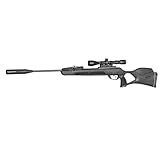
- ARS Mark8.4
ARS Mark is a ranking system developed by bestairriflescopes.com. ARS Mark has no relationship or impact from any manufacturers or sales agent websites. Learn more
- BrandGamo

- ARS Mark7.5
ARS Mark is a ranking system developed by bestairriflescopes.com. ARS Mark has no relationship or impact from any manufacturers or sales agent websites. Learn more
- BrandGamo
Last update on 2026-10-16 / Affiliate links / Images, Product Titles, and Product Highlights from Amazon Product Advertising API
FAQs
What should I do if a pellet is already jammed in my BB gun?
Put the safety on immediately, remove the magazine, and ensure the gun is uncocked. Never pull the trigger again to try to blow the obstruction out with air. Use a soft brass or wooden cleaning dowel slightly smaller than the bore diameter, insert it gently from the muzzle end, and tap the stuck pellet backward toward the loading port where it can fall free.
Are .177 BBs and .177 pellets the exact same size?
No, they have different dimensions despite sharing the .177 label. Steel BBs are smaller, usually measuring between 0.171 and 0.174 inches so they can travel freely down smoothbore tubes. True .177 pellets measure a full 0.177 inches across the head, with the rear skirt expanding even wider to grip the barrel rifling tightly.
Can you use plastic or copper-coated BBs in a pellet rifle?
You should not use standard copper-coated steel BBs because the steel core will still strip the barrel rifling. Plastic BBs are typically made for 6mm airsoft guns and will not fit a .177 barrel. The only round projectiles safe for a rifled pellet barrel are specialty round lead balls sized explicitly for pellet calibers.
Do dual-ammo air guns shoot pellets as accurately as dedicated pellet rifles?
Dual-ammo air guns shoot pellets with significantly more precision than steel BBs, but they generally fall short of dedicated pellet rifles. Because dual-ammo guns must accommodate the dimensions of hard steel balls as well, their barrels and loading ports use engineering compromises that sacrifice some of the tight tolerances found on single-purpose pellet guns.


12 Best 22 Pcp Air Rifle For Hunting of 2026 With Quiet Power

7 Best 22 Pcp Air Rifle Under 300 of 2026 For Backyard Pest Control

10 Best 22 Break Barrel Air Rifles of 2026 For Backyard Pest Control

10 Best 30 Caliber Pcp Air Rifle of 2026 For Medium Game

Top Best 177 Air Rifle Under 100: Budget-Friendly Picks for 2026

How to Safely Reload Shotgun Shells at Home

11 Best Co2 Air Rifle For Pest Control of 2026 To Ensure Humane Dispatch

12 Best Inexpensive Air Rifles of 2026 For Dependable Backyard Accuracy






