
What Is the Easiest Crossbow to Cock Without Straining?

A built-in crank requires the least effort. Crossbows featuring an integrated hand crank turn heavy pulling effort into a smooth, easy motion similar to winding a fishing reel. Instead of yanking a stiff string by hand, you turn a small lever with just five to twelve pounds of force. That keeps your shoulders relaxed, protects a tender back, and prevents the string from slipping out of your fingers mid-pull.
What works best for you still depends on your shooting plans and physical mobility. Big-game hunting requires high-power limbs that almost always demand a crank winch, while simple backyard plinking is often easier with a lightweight lever-cocking pistol bow. Space matters too, since winding a handle seated in a tight ground blind feels very different from pulling ropes while standing. Here is how each system works so you can pick the safest setup for your joints.
Which cocking method takes the least physical effort?
Integrated mechanical crank devices take the least physical effort of any full-size crossbow system. These built-in winches reduce the resistance down to just five to twelve pounds of hand force. Instead of hoisting heavy limbs with your back and shoulders, you turn a small hand crank that does all the heavy lifting through internal gears.
Bare-hand cocking sits at the opposite end of the spectrum and demands the most muscle. Drawing a hunting crossbow by hand requires lifting 150 to 200 pounds of pull weight straight up into your chest using only your fingertips and lower back. Doing this can cause severe muscle strains, pinched nerves, or slipped fingers that send the string snapping forward into your hands.
Rope cockers sit in the middle of the pack. A rope cocker uses a simple cord with two handles and dual pulley wheels to cut the required pulling effort in half. While that provides noticeable relief, a 180-pound bow still demands 90 pounds of deadlift force to reach the latch. For anyone recovering from shoulder surgery or living with arthritis, 90 pounds is still far too heavy to draw safely.
Detachable crank winches offer low cranking resistance similar to built-in models, but they require mounting and locking an external box onto the buttstock before every shot. They work well for lowering physical strain, but they add loose parts that can rattle or get misplaced in the woods. Built-in stock cranks eliminate that hassle by staying mounted and ready at all times.
Self-cocking lever designs represent the easiest method of all, but they only appear on small pistol-sized crossbows. These models feature a hinged rear arm that uses simple forearm leverage to pull the string back in one quick pivot. They require very little strength, making them ideal for light backyard target practice.
How does an integrated crank winch actually work?
An integrated crank winch works just like a low gear on a bicycle or a hand winch on a boat trailer. Crossbow limbs store massive amounts of energy across a very short pull length, which is the distance the string travels from rest to full draw. Fighting that tension all at once requires explosive strength, but a gear system spreads that same workload across dozens of small, effortless rotations.
When you slide the crank handle into the stock, each full circle you turn pulls the string back just a fraction of an inch along the flight rail. Because the gears multiply your turning power, your hand and wrist only feel a tiny fraction of the limb tension. Turning the handle feels about as demanding as winding a garden hose reel or opening a manual car window.
Safety is the biggest advantage of an integrated crank mechanism. Quality winches include an internal clutch or an anti-reverse gear catch that locks the mechanism in place during every rotation. If your fingers slip, your hand cramps, or you lose your grip mid-draw, the handle will not spin backward out of control. It simply stops in place, protecting your knuckles and fingers from injury.
Crank systems also ensure straight, balanced string travel every time you cock the bow. Pulling a string by hand or with a rope often pulls one side slightly harder than the other, which tilts the string and throws your arrow off target. A crank uses a dedicated sled or dual claws that stay locked to the center rail, pulling both sides of the string back with millimeter precision.
Can you hunt with a self-cocking pistol crossbow?
Self-cocking pistol crossbows are built strictly for target shooting and small pest control, not for big game hunting. These compact bows use a hinged lever behind the grip that allows almost anyone to cock the string with one smooth push of the forearm. While they solve the problem of physical strain, they do not produce the power needed for hunting larger animals.
State wildlife agencies enforce strict rules regarding minimum bow specifications for big game like whitetail deer and elk. Most states require hunting crossbows to have a minimum pull weight of at least 125 to 150 pounds to guarantee a quick, ethical harvest. Small pistol crossbows typically feature pull weights well below 100 pounds and fire short, lightweight bolts that lack sufficient kinetic energy.
A hunting arrow must carry enough weight and speed to push a sharp broadhead through hide, muscle, and bone. Pistol crossbow bolts are much shorter and lighter, which causes them to shed their speed rapidly beyond ten or fifteen yards. Trying to shoot a deer or turkey with a pistol bow will result in wounded game rather than a clean harvest.
If you need an effortless draw for deer season, you must choose a standard hunting crossbow equipped with a mechanical crank. That pairing gives you the legal power and deep penetration of a hunting weapon without requiring you to lift heavy pull weights by hand.
How do you cock a crossbow without hurting your back?
Cocking a crossbow safely requires proper body alignment and steady mechanical leverage. Following a structured routine protects your spine, keeps your fingers clear of pinch zones, and ensures the string seats perfectly into the trigger latch every time.
- Set a solid base on the ground: Place the front foot stirrup flat against level ground and step your boot firmly inside the opening. Keep your weight centered directly over the stirrup so the bow cannot tip, slide forward, or kick upward while you draw.
- Seat the cocking sled or hooks squarely: Reach down and snap the crank sled or rope hooks onto the string, making sure the open ends of the hooks face upward toward you. Check that the hooks sit flush against both sides of the barrel rail so the string pulls back straight.
- Align your spine before applying force: Stand upright with your shoulders back and bend slightly at your knees and hips rather than rounding your lower spine. If you are using a crank handle, keep your torso square to the bow and avoid leaning sideways at an awkward angle.
- Turn the handle with steady forearm circles: Rotate the crank handle at a smooth, constant pace without jerking or rushing. Let the internal gear reduction carry the weight while your wrist and forearm guide the handle through its rotation.
- Listen for the trigger latch engagement: Keep cranking until you hear and feel the distinct mechanical click of the trigger latch, which is the internal catch that holds the drawn string in place. Confirm that the safety switch has automatically slid into the safe position before letting go of the handle or removing it from the stock.
What is the safest way to uncock after hunting?
Leaving a hunting crossbow cocked overnight or storing it under full limb tension can stretch the string, warp cables, and create a serious safety hazard inside your home or vehicle. Uncocking the bow at the end of the day must be done carefully to prevent injuries and avoid damaging the equipment.
Never dry-fire a crossbow under any circumstances. A dry-fire occurs when you pull the trigger without an arrow loaded in the flight track. Without the heavy arrow to absorb the stored energy, that violent force slams back into the limbs, cams, and string, which can shatter the limbs and send sharp shrapnel flying toward your face.
Many modern setups now feature built-in de-cocking systems that allow you to unwind the string using the crank handle. If you hunt from elevated stands or ground blinds, choosing crossbows designed with safe de-cocking systems allows you to let down limb tension silently without ever pulling the trigger or shooting an arrow into the dirt.
Follow this checklist to safely uncock your crossbow after a hunt:
- Point the crossbow in a safe direction toward clear, soft ground away from rocks, gear, and other people.
- Remove the loaded hunting arrow from the rail and slide it securely into your quiver so no broadhead remains near the bow.
- Attach the crank handle and engage the de-cocking release button or switch as outlined in your bow's user manual.
- Maintain a firm, two-handed grip on the handle and back-wind the mechanism in smooth, controlled circles until all tension leaves the cables.
- If your bow does not feature a crank de-cocking system, insert a dedicated discharge bolt with a dull field tip and fire it safely into a portable discharge target block or soft dirt mound.
What should you look for in an easy-cocking crossbow?
When selecting a bow to avoid joint pain or muscle strain, prioritize models that feature built-in mechanical winches directly inside the stock. An integrated design ensures the crank is always aligned, eliminates the need to attach clumsy external brackets in the field, and drops the draw effort down to a comfortable level for any physical condition.
Check the design of the crank handle itself to make sure it matches your physical needs. Look for ambidextrous handle ports if you have limited mobility in one arm, and verify that the handle includes a secure storage slot on the stock so it cannot fall out while walking through brush. You should also confirm that the winding mechanism operates silently so the clicking sound will not alert nearby animals.
Pay close attention to the wheel-to-wheel length, which is the total width between the axle pulleys at the ends of the limbs. Narrow, compact bows built for tight hunting blinds make cocking significantly easier while seated because the limbs and crank handle will not bump into window frames or fabric walls. Testing the total carrying weight of the bow is equally important so you can carry your setup through the woods without tiring your shoulders.
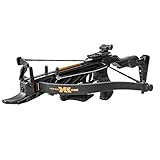
- ARS Mark8.5
ARS Mark is a ranking system developed by bestairriflescopes.com. ARS Mark has no relationship or impact from any manufacturers or sales agent websites. Learn more
- BrandBear X

- ARS Mark7.5
ARS Mark is a ranking system developed by bestairriflescopes.com. ARS Mark has no relationship or impact from any manufacturers or sales agent websites. Learn more
- BrandKrause Publications
Last update on 2026-10-19 / Affiliate links / Images, Product Titles, and Product Highlights from Amazon Product Advertising API
FAQs
How much physical effort does a crank cocker take compared to a rope?
A rope cocker cuts the bow's draw weight in half, which means cocking a 180-pound bow still requires lifting roughly 90 pounds with your back and arms. A mechanical crank cocker uses internal gear reduction to drop that turning resistance down to roughly five to twelve pounds. Winding a crank feels similar to turning a small hand drill or reeling in a fishing line.
Can I cock a crossbow while sitting down in a blind or tree stand?
Cocking a standard crossbow with a rope while seated is extremely difficult and dangerous because you cannot stand up straight to use your leg muscles. A built-in crank cocker solves this problem completely by letting you wind the string back while sitting upright. You simply rest the stock securely across your lap or against the floor and turn the handle with one hand.
Are built-in cranks loud enough to spook deer?
Older crank winches used loud ratcheting gears that produced a sharp, repeating clicking noise every time the handle turned. Modern integrated cranks now feature silent clutch mechanisms that eliminate this sound completely. You can smoothly cock or uncock your bow inside a ground blind without alerting nearby deer or turkeys.
What should you do if the crank handle slips from your hand?
Modern integrated cranks feature an internal brake or anti-reverse safety catch that instantly locks the mechanism if you lose your grip. If your fingers slip, the handle will not spin backward or whip around violently. Simply pause, take a deep breath, firmly place your hand back onto the grip, and continue turning until the string locks into the latch.


12 Best 22 Pcp Air Rifle For Hunting of 2026 With Quiet Power

7 Best 22 Pcp Air Rifle Under 300 of 2026 For Backyard Pest Control

10 Best 22 Break Barrel Air Rifles of 2026 For Backyard Pest Control

10 Best 30 Caliber Pcp Air Rifle of 2026 For Medium Game

Top Best 177 Air Rifle Under 100: Budget-Friendly Picks for 2026

How to Safely Reload Shotgun Shells at Home

11 Best Co2 Air Rifle For Pest Control of 2026 To Ensure Humane Dispatch

12 Best Inexpensive Air Rifles of 2026 For Dependable Backyard Accuracy






