
How Fast Are Crossbow Bolts: Speed Explained

Many archers and hunters often wonder, how fast are crossbow bolts and why does speed play such a critical role in their performance? The truth is, the velocity of your bolt directly shapes everything from penetration power to the accuracy of your shot. Whether you're stalking game in the woods or practicing at the range, knowing the speed of your bolt isn't just trivia, it's the backbone of consistent shooting success. The average modern crossbow launches bolts at 300 to 400 feet per second, while high-end models can push beyond 450 fps, creating a mix of excitement and responsibility for the shooter. Faster speeds mean flatter trajectories and less guesswork when judging distance, which is a lifesaver during high-pressure moments in the field. But speed alone isn’t the full picture, bolt weight, draw weight, and even wind conditions all combine to shape the outcome. For hunters, faster bolts translate into cleaner, more ethical kills, ensuring the energy transfer is powerful enough to reach vital organs. For target shooters, the benefit is greater precision over longer distances, where slower bolts might drop off too quickly. Still, it’s important to balance speed with safety and reliability, pushing for extreme fps without the right equipment can strain your crossbow and reduce its lifespan. So if you're comparing models or fine-tuning your setup, remember this: the answer to how fast are crossbow bolts is more than a number on a spec sheet. It’s about connecting speed with control, ensuring that every pull of the trigger matches your goals, whether it’s harvesting game or hitting bullseyes with confidence.
Archers often ask, how fast are crossbow bolts, and the answer sparks curiosity across hunting camps and shooting ranges alike. Speed isn’t just about bragging rights, it’s the invisible thread tying together accuracy, penetration, and overall shooting performance. A bolt ripping through the air at 350 fps carries a kind of authority that makes every shot feel decisive. Faster bolts help flatten your trajectory, giving you the confidence to line up targets without second-guessing the distance. On the flip side, slower speeds may reduce strain on your equipment and create smoother, quieter shots, which some hunters prefer for stealth. The beauty of crossbow technology today is the range of options it offers. From compact, user-friendly models for beginners to high-performance rigs designed for experienced hunters chasing long-range accuracy, the velocity of bolts is both a technical measure and a practical guide. By digging into how fast crossbow bolts travel, you uncover more than speed, you uncover insights that shape the way you shoot, hunt, and enjoy this timeless craft.
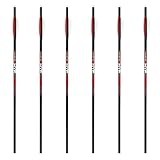
- ARS Mark10.0
ARS Mark is a ranking system developed by bestairriflescopes.com. ARS Mark has no relationship or impact from any manufacturers or sales agent websites. Learn more
- BrandKiller Instinct

- ARS Mark9.2
ARS Mark is a ranking system developed by bestairriflescopes.com. ARS Mark has no relationship or impact from any manufacturers or sales agent websites. Learn more
- BrandBARNETT
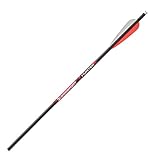
- ARS Mark9.2
ARS Mark is a ranking system developed by bestairriflescopes.com. ARS Mark has no relationship or impact from any manufacturers or sales agent websites. Learn more
- BrandBLOODSPORT

- ARS Mark9.0
ARS Mark is a ranking system developed by bestairriflescopes.com. ARS Mark has no relationship or impact from any manufacturers or sales agent websites. Learn more
- BrandGulfmew

- ARS Mark9.0
ARS Mark is a ranking system developed by bestairriflescopes.com. ARS Mark has no relationship or impact from any manufacturers or sales agent websites. Learn more
- BrandKavard

- ARS Mark8.8
ARS Mark is a ranking system developed by bestairriflescopes.com. ARS Mark has no relationship or impact from any manufacturers or sales agent websites. Learn more
- BrandDEEPOWER

- ARS Mark8.8
ARS Mark is a ranking system developed by bestairriflescopes.com. ARS Mark has no relationship or impact from any manufacturers or sales agent websites. Learn more
- BrandBARNETT
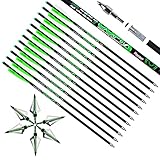
- ARS Mark8.6
ARS Mark is a ranking system developed by bestairriflescopes.com. ARS Mark has no relationship or impact from any manufacturers or sales agent websites. Learn more
- BrandLWANO
Last update on 2025-11-15 / Affiliate links / Images, Product Titles, and Product Highlights from Amazon Product Advertising API
For many hunters and archery enthusiasts, the question how fast are crossbow bolts is more than idle curiosity, it’s the difference between a clean shot and a missed opportunity. The speed of a bolt determines its penetration power, its trajectory, and ultimately, the effectiveness of your crossbow. Modern crossbows often advertise speeds of 300 to 450 feet per second (fps), but that number carries more weight than it appears on paper.
Think of it this way: a bolt traveling at 350 fps covers the distance of a football field in less than a second. That level of velocity isn’t just impressive; it’s what gives hunters confidence when aiming at unpredictable game. The swiftness minimizes the chances of an animal “jumping the string,” or reacting before the bolt makes contact. For target shooters, a faster bolt helps reduce arc, ensuring greater accuracy over distance.
Speed, however, doesn’t act in isolation. The draw weight, bolt weight, and even the broadhead design all influence real-world velocity. A lighter bolt might fly faster but risk lower kinetic energy, while a heavier bolt may carry more impact but slow down in flight. Understanding these trade-offs helps archers align their setup with their goals, whether that’s precision practice or ethical hunting.
Ultimately, the fascination with speed is tied to control. By grasping how velocity impacts trajectory and penetration, archers can make smarter decisions about equipment, technique, and safety. This isn’t just about numbers, it’s about trust in your gear when it matters most.
Ask any seasoned hunter, and they’ll tell you: bolt speed matters. A faster bolt translates to flatter trajectories, which reduces the need to compensate for drop at varying ranges. For beginners, this is a game changer, as fewer adjustments mean greater confidence in every shot.
In hunting, the importance of speed becomes even more critical. A high-speed bolt ensures deep penetration, making it far more likely to hit vital organs and secure a humane kill. Ethical hunting isn’t just about making the shot, it’s about ensuring the animal suffers as little as possible. That’s where velocity shines.
Target shooters, on the other hand, benefit from faster speeds because they create more predictable accuracy over long distances. When your bolt cuts through the air with less drop, you can train your eye to shoot consistently without constant recalibration. It’s the difference between a frustrating practice session and a productive one.
But there’s also a cautionary side. Pushing for maximum speed without proper balance can strain your crossbow and wear out strings prematurely. Some hunters even argue that chasing extreme fps is overrated, as accuracy and shot placement matter more than raw speed. The takeaway? Bolt speed is vital, but it’s only part of the performance puzzle.
Modern crossbows fall into distinct performance categories. Entry-level models usually fire bolts at around 250–300 fps, making them ideal for beginners or small game hunting. Mid-range crossbows step it up to 300–375 fps, providing a balance between speed, control, and affordability. High-end models often boast 400–450 fps or more, pushing the envelope of technology and design.
Hunters targeting large game, like deer or elk, often lean toward setups in the 350–400 fps range. At that level, the bolt carries enough energy to pierce thick hides and bones while maintaining flat trajectories. Recreational shooters, however, may find satisfaction with lower speeds that still offer accuracy without the extra wear and tear.
Interestingly, the industry has reached a plateau where chasing speeds beyond 500 fps offers diminishing returns. At such extreme velocities, bolts may lose stability, and broadhead performance can become inconsistent. This reinforces the idea that balance matters more than extremes.
Real-world tests often show that advertised speeds vary, depending on the weight of the bolt used. Manufacturers typically use the lightest bolts possible to hit higher numbers, but in practical use, your hunting bolts will weigh more, resulting in slightly lower fps. This is why practical field testing always beats relying on brochure stats.
Several factors come together to answer the question: how fast are crossbow bolts really? The draw weight is one of the most significant contributors. A crossbow with a 200-pound draw weight will naturally produce faster bolts than one with 150 pounds, all else being equal.
The bolt weight itself also matters. Lighter bolts travel faster but carry less kinetic energy, while heavier bolts fly slower but hit harder. Hunters often strike a balance between the two, seeking enough speed for a flat trajectory without sacrificing impact power.
String condition and waxing frequency also affect bolt speed. A dry, frayed string can cut down velocity dramatically, which is why regular maintenance is non-negotiable. The limb design, recurve versus compound, plays a role as well. Compound crossbows tend to offer higher speeds due to their energy-efficient cam systems.
Even environmental conditions, like wind resistance and humidity, can shave off a few fps in real-world shooting. That’s why experienced shooters test their equipment under field conditions, not just in controlled ranges. Knowing these factors empowers archers to fine-tune their setup for both performance and reliability.
One of the most common debates in archery is whether speed or accuracy should be prioritized. On paper, high fps looks impressive, but in practice, a bolt flying too fast can sometimes destabilize in flight or magnify form errors. Accuracy, on the other hand, ensures that every shot goes exactly where it’s intended, regardless of raw speed.
Hunters often find that 350 fps is the sweet spot, delivering enough penetration power for most game without sacrificing stability. Target shooters, meanwhile, might prefer slightly slower setups that allow for consistency and easier tuning. This doesn’t mean speed is irrelevant, it just means that speed must serve accuracy, not the other way around.
It’s also worth noting that accuracy improves with practice, while speed is limited by the design of your crossbow. That’s why many seasoned shooters invest in form, stance, and practice routines as much as they do in high-performance equipment.
Ultimately, the answer to how fast are crossbow bolts isn’t just about fps, it’s about the marriage between velocity and control. Those who balance both will always see better long-term results, whether in the field or on the range.
The debate around bolt weight is just as important as the question of how fast are crossbow bolts. A lighter bolt flies faster, giving you that satisfying flat trajectory and less drop over long distances. However, that speed comes at the cost of kinetic energy, which means weaker penetration on big game. On the flip side, a heavier bolt may travel slower, but it delivers a punch that’s critical for clean kills and deeper penetration.
For hunters, the sweet spot is usually a balanced bolt weight that provides both velocity and impact. Many experts recommend bolts in the 400–450 grain range, as they offer enough speed to hit accurately while still carrying significant energy. Target shooters, however, often lean toward lighter bolts to enjoy faster speeds, especially in competitive scenarios where penetration isn’t the main goal.
Choosing the wrong weight can also affect your crossbow’s lifespan. Using bolts that are too light risks dry-fire-like stress on the limbs and strings, while overly heavy bolts can strain the mechanism. The lesson? Match your bolt weight to your intended use, and never overlook manufacturer recommendations.
Even subtle changes in bolt weight can influence velocity by as much as 20–30 fps. This makes bolt selection not just a matter of preference but a serious factor in overall performance.
In recent years, crossbow manufacturers have pushed the limits of speed through innovative technologies. Compound crossbows, with their cam-driven systems, dominate the high-speed market, regularly pushing bolts past 400 fps. Recurve crossbows, while simpler, often max out at slower velocities but win over archers with their durability and reliability.
Some high-end models boast speeds exceeding 470 fps, using advanced materials like carbon-fiber limbs and precision-machined cams. Yet, many hunters argue that such extremes aren’t always practical, as they can compromise accuracy, noise levels, and bolt stability. For most, a reliable 350–400 fps crossbow balances power and precision.
The rise of reverse-draw crossbows has also changed the conversation. By shifting the string’s resting position closer to the shooter, these designs extend power strokes, delivering both higher speed and improved balance. Hunters particularly appreciate how these models combine compact size with powerful bolt velocity.
Technology, however, doesn’t replace technique. Even the fastest crossbow can perform poorly in the wrong hands. That’s why seasoned archers remind newcomers that practice, form, and discipline remain the ultimate “technologies” in achieving consistent accuracy.
Statistics and specs are useful, but the real test of how fast are crossbow bolts lies in the field. Many hunters share stories of how a 350 fps crossbow gave them a perfect shot on a whitetail, while others using 450 fps rigs struggled with stability in windy conditions. These real-world insights prove that context matters more than sheer speed.
Target shooters also report that while high fps numbers look impressive, they often prefer slower setups that allow for more predictable groupings over time. After all, consistency wins competitions, not just raw velocity.
Field experiences also highlight the role of environmental factors. Cold weather, humidity, and wind can all impact bolt trajectory and speed. That’s why experienced archers stress the importance of practice under actual hunting conditions, rather than relying solely on range results.
Stories from hunters often echo the same theme: success comes from balanced setups. Whether your crossbow fires at 300 fps or 400 fps, accuracy, patience, and shot placement remain the deciding factors in the hunt.
The allure of faster bolts often overshadows the safety risks. A crossbow firing above 400 fps produces immense tension on the string and limbs. Without proper maintenance, this can lead to sudden failures, potentially injuring the shooter. That’s why waxing strings, inspecting limbs, and checking nocks are critical for anyone using high-speed rigs.
Safety also extends to the shooter’s awareness. A faster bolt reduces reaction time for both the hunter and the target, leaving little room for error. It becomes essential to maintain clear backstops, especially during practice, as bolts at these speeds can travel farther than expected.
Another overlooked safety factor is arrow compatibility. Using bolts not rated for your crossbow’s fps can lead to catastrophic damage. Manufacturers design bolts to handle specific energy outputs, and ignoring this can void warranties and endanger lives.
Finally, new shooters must respect the learning curve. High-speed crossbows may feel thrilling, but without proper training, they magnify small mistakes. Prioritizing safe handling, proper form, and consistent practice ensures that speed enhances performance rather than becoming a liability.
At the heart of the discussion on how fast are crossbow bolts is the need for balance. Speed offers undeniable advantages, flatter trajectories, improved accuracy, and greater penetration. But it’s not the sole metric that defines a successful crossbow setup.
Hunters must consider ethical kills, which often require more than just speed. The right bolt weight, draw weight, and shot placement matter just as much. Target shooters, meanwhile, need predictability and control, which sometimes means sacrificing raw fps for tighter groupings.
Crossbow technology will continue advancing, but archery remains a discipline grounded in skill. Those who balance speed with accuracy, power with control, and technology with technique will always get the most from their equipment.
In the end, asking how fast are crossbow bolts leads to a richer understanding: it’s not about the number alone, it’s about what that number means for you, your goals, and your experience on the range or in the wild.


12 Best 22 Pcp Air Rifle For Hunting of 2026 With Quiet Power

7 Best 22 Pcp Air Rifle Under 300 of 2026 For Backyard Pest Control

10 Best 22 Break Barrel Air Rifles of 2026 For Backyard Pest Control

10 Best 30 Caliber Pcp Air Rifle of 2026 For Medium Game

Top Best 177 Air Rifle Under 100: Budget-Friendly Picks for 2026

How to Safely Reload Shotgun Shells at Home

11 Best Co2 Air Rifle For Pest Control of 2026 To Ensure Humane Dispatch

12 Best Inexpensive Air Rifles of 2026 For Dependable Backyard Accuracy






