
What Grain Heads Should You Use for a Ravin R20 Crossbow?

Grab a pack of 100-grain heads before sighting in your bow. Sticking with 100 grains matches the factory setup and keeps the arrow heavy enough to protect the limbs from cracking. It also keeps the scope marks true right out of the box, whether screwing on smooth target tips or razor hunting blades.
Switching to a 125-grain tip can make sense if you hunt larger game like elk and need deeper penetration. Keep in mind that a heavier tip slows the flight slightly, which means adjusting the speed dial on the scope to keep distance markers accurate. Most importantly, the combined weight of the shaft and head must never fall below 400 grains, as shooting a bolt that is too light can shatter the bow. Here is a clear look at how to pick the safest, most accurate setup for your hunt.
The Short Version
- Standard choice: Use 100-grain heads for practice and hunting to match the factory scope calibration.
- Big game option: Step up to 125-grain heads for elk or moose to gain penetration, then adjust your scope speed ring.
- Minimum safety limit: Never drop below 100 grains, because total arrow weight must stay at or above 400 grains to prevent bow damage.
- High-speed ratings: Shoot broadheads built with internal spring clips or stiff collars rated to stay closed at 430 feet per second.
The Right Head Weight for the Ravin R20
A grain is a tiny unit of weight used for arrow tips. An ordinary paperclip weighs about 15 or 16 grains, and it takes 7,000 grains to make a single pound. Even though tip weight differences sound small, your choice directly controls how the arrow balances and flies.
For the Ravin R20, the correct tip weight for general hunting and target shooting is 100 grains. This rule applies to both field points (smooth practice tips for targets) and broadheads (hunting tips with razor blades). Keeping both tip types at 100 grains ensures your practice shots land in the exact same spot as your hunting shots.
Arrow flight depends on weight distribution. When an arrow launches, it needs enough weight up front to keep the back end trailing straight behind it. Archery calls this front-of-center balance. If your arrow tip is too light, the back of the arrow tries to overtake the front during flight. The arrow begins to fishtail side to side, killing your downrange accuracy. A 100-grain head on a standard Ravin shaft provides the stability needed for clean, laser-straight arrow flight.
Why 100 Grains Is the Factory Standard
Ravin engineered the R20 as an integrated shooting system. The manufacturer designed the bow limbs, factory arrows, and scope reticle to work together at 430 feet per second. That balance relies on a finished 400-grain arrow.
A bare factory carbon arrow with vanes, an insert, and a clip-on nock weighs about 300 grains. Adding a 100-grain point brings total arrow weight to exactly 400 grains. At this weight, the bow transfers its stored energy into the bolt cleanly, keeping shot noise low and protecting the limbs from excess vibration.
Your scope calibration also depends on this exact weight. The factory crossbow scope features horizontal aiming marks for yardages like 20, 30, 40, and 50 yards. To make those marks accurate, the scope uses an adjustable speed ring on the magnification dial. When that dial is set to 430 feet per second and shoots a 400-grain arrow, each yardage line matches the drop of the bolt.
Changing your tip weight changes your arrow speed and alters its curved flight path. Slower arrows drop faster as gravity pulls them down over distance. If you zero your scope at 20 yards with a 100-grain field point, you can expect the 40 and 50-yard marks to hit dead center. Changing tip weights without adjusting your scope causes your arrow to miss high or low.
When a 125-Grain Head Makes Sense
While 100 grains remains the standard, moving to a 125-grain head makes sense for specific big game hunts. The main benefit is deeper penetration on large, heavy-boned animals like elk, moose, or big black bears.
Adding a 125-grain head brings total arrow weight to around 425 grains. In archery, a heavier arrow carries more forward momentum downrange. Think of comparing a baseball to a ping-pong ball. Even if the ping-pong ball launches faster, the baseball plows through resistance far more effectively. That extra mass pushes blades through thick hide and rib bone for a complete pass-through.
Shooting a 425-grain setup reduces arrow speed by about 10 to 15 feet per second. This minor speed loss causes the arrow to drop sooner past 30 yards. Because of this extra drop, leaving your scope speed dial on the 430 mark will cause you to miss low at longer distances.
To fix this, turn the scope speed dial down to match your new speed, which usually sits between 415 and 420 feet per second. Sight in your 20-yard crosshair using the side-to-side knob and up-and-down adjustment turrets, then verify your impacts at 40 and 50 yards. Hunters setting up high-energy bows, including models like the best tenpoint crossbow for hunting, make this same adjustment when balancing tip mass against trajectory.
Minimum Arrow Weight and Bow Safety Rules
The R20 is an extremely powerful bow, which means following manufacturer safety guidelines is critical. Ravin requires a finished arrow weight of at least 400 grains. Shooting anything lighter risks damaging your equipment and causing personal injury.
The main danger of using a tip that is too light is a dry fire. A dry fire happens when a bow is fired without enough arrow weight to absorb the energy stored in the pulled limbs. When you pull the trigger, the bowstring releases hundreds of pounds of kinetic energy. A 400-grain arrow captures that force and carries it downfield. An ultralight tip, such as an 85-grain head, leaves the arrow too light to absorb that energy.
Unabsorbed energy bounces directly back into the bow frame. That shock wave can splinter fiberglass limbs, bend cams, snap bowstrings, and fling sharp pieces outward. Follow these safety checks on every shoot:
- Check finished weight on a scale: Weigh your complete arrow on a small digital grain scale. Confirm that the shaft, vanes, insert, nock, and tip total at least 400 grains.
- Never use light tips: Avoid 75-grain or 85-grain points. Chasing higher speed with light heads risks bow failure and voids your warranty.
- Practice flex-testing carbon arrows: Flex each carbon arrow gently in your hands before loading. Listen for cracking sounds and look for surface splits. A cracked shaft can shatter upon release, causing dry-fire damage.
- Verify nock engagement: Use official Ravin clip-on nocks and push the arrow back until you hear an audible click. A loose nock lets the bowstring jump the arrow, triggering a dry fire.
- Inspect limbs for cracks: Run a cotton ball over the limb edges. If cotton fibers snag on a splinter, stop shooting and visit an archery pro shop with a bow press. Never clamp high-tension limbs with home tools.
Picking Broadheads That Handle 430 Feet per Second
Shooting at 430 feet per second produces massive wind resistance. Broadheads engineered for standard compound bows shooting at 300 feet per second often fail when shot from an R20.
Mechanical broadheads feature blades that fold against the body in flight and expand on impact. At extreme crossbow speeds, weak blade retention systems fail before reaching the target. Cheap heads rely on small rubber bands or O-rings. Air pressure at 430 feet per second catches the blade tips, tearing the bands and opening the blades mid-flight.
When a blade opens early, the arrow planes off course and misses the target by feet. Choose mechanical broadheads with internal spring clips or solid metal collars rated for speeds of 450 feet per second or higher. These systems lock the blades closed until they strike hide.
Fixed-blade broadheads avoid moving parts, but large fixed blades act like steering fins in high-speed flight. If crosswinds catch wide fixed blades, your bolt drifts off target. If you prefer fixed designs, choose compact heads with low-profile, vented blades. Shooters running fast packages like the tenpoint tx ultra 265 package use these same aerodynamic principles to maintain tight groups.
What to Look for in High-Speed Crossbow Heads
When shopping for broadheads for your R20, look for designs made specifically for high-velocity crossbows. The right head provides field-point accuracy, durable construction, and reliable blade retention at full speed.
Select heads that weigh 100 grains, or 125 grains for heavy game. Matching your hunting tip weight to your practice field points keeps your scope dialed in without extra adjustments. Check for internal spring clips or heavy-duty retaining collars instead of thin rubber O-rings.
Verify that the packaging clearly lists a speed rating exceeding 400 feet per second. High-speed heads feature tough metal bodies that withstand high-energy impacts against bone. Choosing verified high-velocity broadheads gives you clean arrow flight and dependable penetration on game.

- ARS Mark8.8
ARS Mark is a ranking system developed by bestairriflescopes.com. ARS Mark has no relationship or impact from any manufacturers or sales agent websites. Learn more
- BrandRAVIN

- ARS Mark8.5
ARS Mark is a ranking system developed by bestairriflescopes.com. ARS Mark has no relationship or impact from any manufacturers or sales agent websites. Learn more
- BrandRAVIN
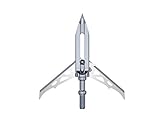
- ARS Mark8.0
ARS Mark is a ranking system developed by bestairriflescopes.com. ARS Mark has no relationship or impact from any manufacturers or sales agent websites. Learn more
- BrandRAVIN

- ARS Mark7.3
ARS Mark is a ranking system developed by bestairriflescopes.com. ARS Mark has no relationship or impact from any manufacturers or sales agent websites. Learn more
- BrandRAVIN
Last update on 2026-10-19 / Affiliate links / Images, Product Titles, and Product Highlights from Amazon Product Advertising API
FAQs
Can I shoot an 85-grain head to get more speed out of my R20?
No, you should never shoot an 85-grain head on standard Ravin bolts. An 85-grain tip drops total arrow weight below the 400-grain safety minimum. That lack of weight creates dry-fire conditions that can crack limbs and void your warranty.
Will switching to 125-grain heads throw off my scope yardage marks?
Yes, a 125-grain tip slows arrow speed by about 10 to 15 feet per second, causing arrows to drop faster past 30 yards. Your scope yardage marks will hit low unless you turn the scope speed dial down to match your new velocity.
Do practice field points need to match my broadhead weight exactly?
Yes, field points and broadheads must weigh the exact same amount in grains. If you practice with 100-grain field points, you must hunt with 100-grain broadheads. Changing tip weight shifts arrow balance and alters where the arrow hits on the target.
How do I know if my mechanical broadhead opened in mid-air?
A broadhead opening in flight usually produces a loud buzzing or whistling sound. The arrow will veer off target and land far from your aiming point. You will also see deployed blades or cut marks where the arrow landed.


12 Best 22 Pcp Air Rifle For Hunting of 2026 With Quiet Power

7 Best 22 Pcp Air Rifle Under 300 of 2026 For Backyard Pest Control

10 Best 22 Break Barrel Air Rifles of 2026 For Backyard Pest Control

10 Best 30 Caliber Pcp Air Rifle of 2026 For Medium Game

Top Best 177 Air Rifle Under 100: Budget-Friendly Picks for 2026

How to Safely Reload Shotgun Shells at Home

11 Best Co2 Air Rifle For Pest Control of 2026 To Ensure Humane Dispatch

12 Best Inexpensive Air Rifles of 2026 For Dependable Backyard Accuracy






