
How Many Yards Is a Bore Sight Good For?

Most shooters assume they should point a laser barrel tool straight at a 100-yard target to match their final shooting distance. That idea sounds logical, but a laser bore sight is actually best used at 25 yards, or 10 to 15 yards indoors. While the beam itself can shine across a football field, a straight line of light cannot mimic the curved drop of a falling bullet. Setting up at close range is simply meant to get your first shot on paper.
A few practical details change your working range. Direct sunlight washes out red beams very quickly, while green lasers stay visible slightly farther out in open fields. Your end goal matters too, because a laser only handles rough alignment rather than a finished zero (aligning the sight so bullets land where you aim). Setting up at the proper short distance keeps you from chasing a tiny dot across the dirt, saving time and expensive ammunition.
The Short Version
- The practical sweet spot is 25 yards. Setting your target at 25 yards outdoors, or 10 to 15 yards indoors, gives you the most reliable setup to get your first live shot on paper.
- Bore sights do not replace live ammunition. A laser barrel tool gets your reticle close, but it cannot account for bullet drop, wind, or barrel harmonics.
- Lasers project straight lines, while bullets drop. Because gravity pulls a bullet down along a curved path, a straight light beam cannot show you where a round lands at 100 yards.
- Daylight limits beam visibility. Standard red lasers wash out quickly in bright sunlight past 25 yards, while brighter green lasers remain visible up to roughly 50 yards under daylight conditions.
The Ideal Distance: Why 25 Yards Is the Practical Sweet Spot
When you mount a new sight, your main goal is simple: you want your very first live round to strike paper so you do not waste expensive cartridges trying to find your target. Setting up your laser barrel tool at 25 yards solves this problem better than any other distance. At 25 yards, you stand close enough to see the laser dot clearly against a paper target, yet far enough away to establish a meaningful alignment between the center of your barrel and your optic.
Many new shooters assume that if they plan to shoot at 100 yards, they should place their bore sighting target at 100 yards. In practice, doing that causes immediate frustration. At 100 yards, any minuscule imperfection in how the tool sits inside your muzzle gets magnified dramatically. A tilt of just a fraction of a millimeter at the crown of your barrel can throw the laser beam several feet off target at a football field's distance. You end up cranking your optic adjustment turrets all the way to their limits, chasing a beam that is not pointing where your barrel actually sends lead.
Starting at 25 yards keeps those tiny mechanical variances small and manageable. The dot stays tight, bright, and centered on your target backer. If you do your initial setup indoors at home before heading out, 10 to 15 yards down a hallway or across a garage works just as well. An indoor alignment at 10 to 15 yards guarantees that when you finally arrive at the shooting range and post a target at 25 yards, your aiming dot and your bore will point at the exact same sheet of paper.
Straight Laser Versus Bullet Arc: Why Long-Range Bore Sighting Fails
To understand why a laser barrel tool cannot give you a finished long-range zero, you have to look at how light and bullets travel. A laser beam is pure light. It travels in a perfectly flat, straight line forever, completely unaffected by gravity, air resistance, or weather conditions.
A bullet behaves entirely differently. The moment a bullet leaves the muzzle of your firearm, gravity begins pulling it toward the earth. To hit a target downrange, the barrel of your firearm does not point straight at the bullseye; it tilts slightly upward relative to your line of sight. Your optic sits between 1.5 and 2.5 inches higher than the center of the barrel, a gap known as sight height over bore. When you fire, the bullet starts below your sight line, climbs upward through your sight line at a close distance, reaches the peak of its curved bullet path, and then falls back down through your sight line at your chosen zero distance.
Because a laser cannot curve, it can never mimic this arc. If you align your sight perfectly with a straight laser dot at 100 yards, your optic and your bore are pointing at the exact same flat spot. When you fire a real cartridge, that bullet will drop well below the laser line as it travels downrange. Depending on the caliber, bullet weight, and velocity, your live round might hit 4 to 8 inches lower than where the laser pointed. Expecting a straight beam of light to predict the drop of a heavy lead projectile at extended distances will only cause confusion at the firing line.
Beam Visibility: Realistic Red and Green Laser Limits in Sunlight
Lighting conditions dictate how far away you can realistically use a bore sight. Manufacturers often list laser diodes with impressive maximum ranges under dark conditions, but bright outdoor sunlight tells a completely different story.
Red lasers represent the most common and budget-friendly option, but they struggle in direct daylight. Sunlight washes out red light wavelengths rapidly. On an open, sunlit firing range, a red laser dot often becomes invisible to the naked eye past 20 or 25 yards. If you place a target out at 50 yards on a sunny afternoon, you will likely spend twenty minutes squinting through your glass just trying to locate the faint red speck. Indoors or during overcast mornings, a red beam easily reaches 50 yards or more, but for midday outdoor range trips, 25 yards is the true operational ceiling.
Green lasers offer significantly better visibility in daylight. The human eye detects green wavelengths much more easily than red wavelengths, which makes green dots look up to four times brighter under ambient light. A quality green laser beam remains visible up to 50 yards in broad daylight, especially if you place it against a shaded target or a dark backer. Under dim evening conditions or inside a large indoor range, green beams can reach out past 100 yards, though the mechanical limitations of the curved bullet path still make long-distance sighting impractical.
If you must work outdoors in bright sun, you can improve beam visibility by using a high-visibility reflective sticker on the center of your target. The reflective surface bounces the laser beam straight back to your eye, helping you spot the dot even when the surrounding target board is flooded with harsh sunlight.
Setting Up at 25 Yards: How to Align Your Reticle Properly
Getting your optic roughly aligned at 25 yards requires a calm environment, stable support, and strict attention to safe handling. Follow these clear steps to complete the process without wasting range time:
- Clear the firearm completely. Remove the magazine, pull the bolt or slide to the rear, and visually inspect the chamber to verify that no ammunition is present. Keep all live ammunition in another room or away from your bench during the setup.
- Check your optic mount. Ensure your sight base and rings sit tight on your standard Picatinny or 20mm slotted accessory rails. Use an inch-pound torque tool to tighten all mounting screws to the manufacturer's listed values, and apply a small drop of thread-locking fluid so firearm recoil does not loosen your hardware later. If you run backup sights, this is also the right moment to verify how backup iron sights line up through the optic glass to ensure your view stays clear.
- Select and seat the proper arbor. Choose the correct arbor (a barrel adapter sleeve that centers the laser tool inside your specific bore size) from your kit. Insert the adapter into the muzzle crown carefully, ensuring it sits flush and snug without any side-to-side wobble. Never force an oversized sleeve into your rifling.
- Immobilize the firearm. Rest your gun in a solid bench vise, a firm shooting sled, or sturdy sandbags. If the gun moves while you look through the glass, you will chase the laser in circles. The firearm must point dead ahead at your 25-yard target without you holding it.
- Turn on the laser and spot the dot. Switch the laser on and locate the dot on your 25-yard paper target. Verify that the beam appears round and crisp, which confirms the adapter sits straight inside the barrel.
- Adjust your windage and elevation. Look through your optic at the target. Use the windage and elevation (the left-to-right and up-and-down adjustment click dials on your optic housing) to steer your aiming dot directly onto the laser point. Turn the dials slowly until your reticle covers the laser beam.
- Remove the tool immediately. Turn off the laser and remove the adapter from your muzzle before doing anything else. Never chamber a round or pull a trigger with a laser barrel tool seated in the bore.
Confirming with Live Fire: Moving from Bore Sight to True Zero
Once you finish aligning your optic to the laser at 25 yards, your gun is not fully zeroed; it is merely bore sighted. True zeroing requires real ammunition fired downrange under live conditions. Use this simple checklist at the shooting range to transition from a rough bore alignment to a pinpoint final zero:
- Fire a 3-shot group at 25 yards: Load your chosen ammunition and fire three slow, steady shots at the center of your target. Do not adjust your dials after a single shot. Three shots reveal your actual group center and filter out small shooter errors.
- Measure the distance to the bullseye: Look at where your 3-shot cluster landed on the paper. Use a pocket ruler or target grid squares to measure how many inches your group sits away from the center mark, both up-and-down and side-to-side.
- Calculate your click adjustments using MOA: Adjust your dials based on minute of angle (MOA measures how much of the target the aiming dot covers). A fine 2 MOA dot covers about 2 inches at 100 yards, which equals half an inch at 25 yards. Most optic dials adjust in 1/4 MOA or 1/2 MOA clicks. At 25 yards, one 1/4 MOA click moves bullet impact only 1/16 of an inch. That means it takes 16 clicks on a standard 1/4 MOA dial to move your impact point one full inch at 25 yards. Adjust your windage and elevation click dials to move your group center directly over the bullseye.
- Fire a confirmation group at 25 yards: Fire another 3-shot string to confirm your adjustments centered the impact on the target. If your rounds hit the center ring, your 25-yard alignment is complete.
- Move your target out to your final distance: Shift your target out to your intended final range, such as 50 or 100 yards for a rifle. Fire a fresh 3-shot group to evaluate where the rounds impact along the natural curved bullet path. Make final fine-tuning adjustments on your turrets until your shots impact exactly where your aiming dot points.
What to Look for in a Bore Sighting Kit
If you regularly switch optics, mount new dot sights, or maintain several different firearms, a dedicated laser bore sighting kit saves substantial time and money on ammunition. When selecting a kit, look for designs that offer practical versatility and straightforward handling.
A versatile kit includes multiple numbered adapter sleeves that slide snugly into bores ranging from small rimfire barrels up to heavy shotgun tubes. Having cleanly molded, precisely numbered adapters guarantees that the tool centers accurately in your muzzle crown without scratching the delicate rifling. Look for tool-free designs that let you secure adapters by hand rather than juggling tiny screwdrivers on a crowded workbench.
Power delivery is another practical factor to weigh. Rechargeable systems that charge via standard USB cords eliminate the annoyance of hunting down odd-sized coin-cell batteries right before a trip to the range. Finally, consider where you do your setup. If you plan to work mostly outdoors at the gun club, choosing a kit with a bright green laser emitter gives you much better daytime visibility at 25 and 50 yards than a basic red diode.
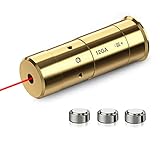
- ARS Mark9.2
ARS Mark is a ranking system developed by bestairriflescopes.com. ARS Mark has no relationship or impact from any manufacturers or sales agent websites. Learn more
- BrandMidTen

- ARS Mark9.0
ARS Mark is a ranking system developed by bestairriflescopes.com. ARS Mark has no relationship or impact from any manufacturers or sales agent websites. Learn more
- BrandMidTen

- ARS Mark9.0
ARS Mark is a ranking system developed by bestairriflescopes.com. ARS Mark has no relationship or impact from any manufacturers or sales agent websites. Learn more
- BrandAEROSHOT

- ARS Mark8.8
ARS Mark is a ranking system developed by bestairriflescopes.com. ARS Mark has no relationship or impact from any manufacturers or sales agent websites. Learn more
- BrandCVLIFE

- ARS Mark8.8
ARS Mark is a ranking system developed by bestairriflescopes.com. ARS Mark has no relationship or impact from any manufacturers or sales agent websites. Learn more
- BrandCVLIFE
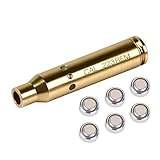
- ARS Mark8.8
ARS Mark is a ranking system developed by bestairriflescopes.com. ARS Mark has no relationship or impact from any manufacturers or sales agent websites. Learn more
- BrandMidTen

- ARS Mark8.8
ARS Mark is a ranking system developed by bestairriflescopes.com. ARS Mark has no relationship or impact from any manufacturers or sales agent websites. Learn more
- BrandAEROSHOT

- ARS Mark8.6
ARS Mark is a ranking system developed by bestairriflescopes.com. ARS Mark has no relationship or impact from any manufacturers or sales agent websites. Learn more
- BrandEZshoot

- ARS Mark8.6
ARS Mark is a ranking system developed by bestairriflescopes.com. ARS Mark has no relationship or impact from any manufacturers or sales agent websites. Learn more
- BrandOWLSHOOT
Last update on 2026-09-30 / Affiliate links / Images, Product Titles, and Product Highlights from Amazon Product Advertising API
FAQs
Can you fully zero a rifle without firing any live ammunition?
No, you cannot achieve a true zero using only a laser barrel tool. A laser projects a straight light beam that ignores gravity, barrel vibration, bullet weight, and wind. The tool only gets your reticle close enough to hit paper on your first attempt, but you must always fire live cartridges to set your final zero.
Should I bore sight at 25 yards or 100 yards for a 100-yard zero?
You should always start your bore sight alignment at 25 yards, even if your goal is a 100-yard zero. At 25 yards, the laser remains bright, crisp, and easy to see, while muzzle misalignments remain minimal. Once you confirm your shots on paper at 25 yards, you can move your target back to 100 yards for final turret adjustments with live ammo.
Why did my live shots land low after lining up the laser?
Live rounds naturally impact lower than a bore sight laser because bullets drop due to gravity, whereas laser light travels dead straight. Additionally, your optic sits about 1.5 to 2.5 inches higher than the bore, meaning your barrel must angle slightly upward for the bullet arc to meet your sight line at distance. Adjust your elevation turret upward during live firing to bring the bullet up to your aiming point.
Is a green laser bore sight better than a red one?
A green laser bore sight performs significantly better outdoors in daylight because the human eye is far more sensitive to green light. A green beam stays crisp and easily visible out to 50 yards in daylight, while a red beam often washes out past 25 yards in bright sun. For indoor setup at 10 to 15 yards, however, both colors perform equally well.


12 Best 22 Pcp Air Rifle For Hunting of 2026 With Quiet Power

7 Best 22 Pcp Air Rifle Under 300 of 2026 For Backyard Pest Control

10 Best 22 Break Barrel Air Rifles of 2026 For Backyard Pest Control

10 Best 30 Caliber Pcp Air Rifle of 2026 For Medium Game

Top Best 177 Air Rifle Under 100: Budget-Friendly Picks for 2026

How to Safely Reload Shotgun Shells at Home

11 Best Co2 Air Rifle For Pest Control of 2026 To Ensure Humane Dispatch

12 Best Inexpensive Air Rifles of 2026 For Dependable Backyard Accuracy






