
How Many Yards Is a Red Dot Sight Good For?

Most shooters can comfortably hit targets from zero out to 100 yards with a standard red dot sight. How far past that mark you can actually reach depends on target size and whether the sight sits on a rifle or a handgun. On a rifle, ringing a torso-sized steel plate at 200 to 300 yards is entirely doable, but without any built-in zoom, smaller targets become difficult to see clearly.
The size of the dot itself also changes your reach. A larger dot covers up more of what you want to hit, which can easily hide a small bullseye at longer distances. Adding a magnifier (a small zoom lens placed behind the sight) helps you see further out, while handguns naturally stay inside closer defensive ranges. Here is what to expect at every distance, how dot size affects your aim, and where the practical limits sit.
Rifles Reach 100 to 200 Yards While Handguns Stay Closer
A red dot sight does not change the physical capability of your firearm, but it makes aiming much faster and more natural. For most rifle shooters, a standard red dot is effective from point-blank range out to 100 or 150 yards. If you shoot at torso-sized steel silhouettes, you can comfortably push a rifle out to 200 or even 300 yards. Past that distance, the unmagnified view makes it difficult to see where your shots are landing.
Firearm type makes a major difference in practical distance. A rifle rests firmly against your shoulder and gives you three solid points of contact: your shoulder, your cheek, and your hands. That stable shooting posture keeps the aiming dot steady on distant targets. A centerfire rifle cartridge also fires a fast, flat-shooting bullet that easily covers 100 to 200 yards with minimal drop.
Handguns tell a completely different story. A pistol is held out at arm's length with no shoulder support, which magnifies every tiny tremor in your hands. Most handgun shooters find a red dot most useful between 5 and 25 yards. While skilled shooters can ring steel targets at 50 yards with a pistol red dot, hitting targets beyond 50 yards becomes an uphill battle due to short barrels, slower handgun bullets, and natural body movement.
If you use a rimfire handgun for target practice, such as choosing a red dot sight for Ruger Mark pistols, your shooting will almost always stay inside 25 to 50 yards. At those shorter ranges, the dot gives you an immediate view of the target without forcing you to align front and rear metal sights.
Target size also decides your real-world yardage limit. Hitting an 18-inch steel plate at 200 yards with an unmagnified rifle sight is something a regular shooter can learn in a single afternoon. Hitting a 2-inch paper bullseye at that same 200-yard distance is nearly impossible with a standard red dot because the glowing dot covers the target completely.
Dot Size Determines How Much Target the Dot Covers
The size of your aiming dot directly dictates how far away you can accurately place your shots. Dot size is measured in MOA, which stands for Minute of Angle. In plain language, one MOA covers roughly 1 inch of your target at 100 yards. This measurement scales up or down based on distance.
A 2 MOA dot covers about half an inch at 25 yards, 1 inch at 50 yards, 2 inches at 100 yards, and 4 inches at 200 yards. Because a 2 MOA dot is relatively fine, it leaves most of your target visible around the edges. This makes a 2 MOA dot the best choice for rifles aimed at targets from 50 to 200 yards.
A larger dot, such as a 5 MOA or 6 MOA reticle, works differently. A 5 MOA dot covers 2.5 inches at 50 yards, 5 inches at 100 yards, and 10 inches at 200 yards. At 200 yards, a 5 MOA dot is wider than a standard dinner plate. If you try to aim at a small target, the red dot will completely blot it out from view, forcing you to guess where the center lies.
Larger dots are not worse; they are simply designed for different jobs. Handgun shooters often prefer a 4 to 6 MOA dot for defensive use inside 25 yards. A larger dot is much easier for your eye to track during rapid movement or fast draws from a holster. For long-distance rifle shooting, however, a smaller dot will always give you better precision.
Dot brightness also affects how large the dot appears to your eye. Setting your brightness dial too high causes the light to flare outward, an effect shooters call blooming or starbursting. That extra glare can make a crisp 2 MOA dot look like a blurry 6 MOA smudge. To shoot accurately at 100 yards or further, always turn the brightness down to the lowest setting that remains clearly visible against your target.
Bullet Drop Makes Distant Shots Land Low Without Holdover
Bullets do not fly in a perfectly straight line like a laser beam. The moment a bullet leaves the barrel, gravity begins pulling it toward the earth. Understanding this downward curved path explains why red dots become harder to use past 100 yards.
Up to 100 yards, a standard centerfire rifle bullet flies relatively flat. The difference between where you point and where the bullet hits is usually only an inch or two. But once the bullet travels past 150 yards, the drop increases dramatically. At 200 yards, the bullet may strike 3 to 5 inches below your point of aim. At 300 yards, that same bullet can drop 12 to 15 inches below where your dot was resting.
Traditional hunting and precision scopes feature crosshairs with built-in hash marks or vertical lines. These marks tell you exactly where to place your crosshair to account for bullet drop at 200, 300, or 400 yards. A red dot sight does not have these reference marks. It offers only a single illuminated dot in the center of a clear glass window.
To hit a target at 200 or 300 yards with a red dot, you must use holdover. Holdover means aiming the dot higher than the target so the falling bullet drops into the center. For example, to hit a target at 300 yards, you might have to float the dot right at the top edge of the steel plate or slightly above it. Estimating holdover takes practice because you have no built-in measurement marks inside the sight window.
Handgun calibers drop even faster than rifle rounds. A 9mm pistol bullet drops 10 to 14 inches by the time it reaches 100 yards, and it loses a tremendous amount of energy along the way. While hitting a 100-yard target with a handgun red dot is a fun challenge, it requires aiming well above the target and relies heavily on guesswork.
A Flip Magnifier Extends Clear Vision Past 200 Yards
A standard red dot is a 1x optic, meaning it has zero magnification. Looking through the sight window shows you the exact same image size as looking through your bare eyes. While your firearm might be accurate enough to hit a target at 250 yards, your eyes may struggle to distinguish the target from the background trees, dirt, or shadows.
A magnifier solves this problem by adding a zoom lens directly behind your red dot. Most magnifiers provide 3x magnification and sit on a hinged base that mounts to your receiver rail. When you need to shoot quickly at close range, you keep the magnifier flipped off to the side and look directly through the red dot. When you need to reach out to 200 or 300 yards, you flip the magnifier into place behind the red dot glass.
Many new shooters worry that a 3x magnifier will make their red dot three times larger on the target. In reality, a magnifier enlarges both the target and the dot in exact proportion. If you have a 2 MOA dot, it still covers 2 inches of the target at 100 yards through the magnifier. The dot does not obscure any more of your target than it did before, but the target now looks three times closer and much easier to identify.
Magnifiers bring a few practical trade-offs that you should keep in mind. They add roughly 8 to 12 ounces of weight to your firearm, making it heavier to carry during long range sessions. They also require specific eye relief, meaning your eye must sit about 2.5 to 3 inches behind the magnifier lens to see a clear image, whereas an unmagnified red dot allows you to view the dot from almost any distance or angle.
Adding a magnifier effectively stretches the usable range of a rifle red dot from 100 yards out to 300 yards. It allows you to confirm your target clearly, check your shot placement, and see small steel targets that would otherwise blend into the terrain.
A 50-Yard Zero Gives the Flattest Path to 200 Yards
Zeroing means aligning your red dot so that your bullets strike the exact spot where the dot rests at a chosen distance. You do this by turning the windage (left-and-right) and elevation (up-and-down) click dials on the optic body. Choosing the right zero distance makes hitting targets across different yardages much simpler.
For a defensive or general-use rifle, a 50-yard zero provides the flattest overall trajectory. When you zero a rifle at 50 yards, the bullet leaves the bore below the sight line, climbs through the line of sight at 50 yards, peaks about 1.5 inches high at 100 yards, and falls back through the line of sight around 200 yards. This means that from 0 to 225 yards, you can hold the dot dead center on an 8-inch target and hit it every time without adjusting your aim.
For handguns, a 15-yard or 25-yard zero works best. A 25-yard zero keeps a pistol bullet within an inch of your point of aim anywhere from 5 to 35 yards, which covers almost every realistic handgun shooting scenario.
Follow these steps to zero your red dot safely and accurately:
- Clear the firearm completely: Before touching any screws or dials, remove the magazine, lock the action open, and visually inspect the chamber to ensure no ammunition is present. Safety always comes first.
- Tighten the mount properly: Mount your sight to the rail using an inch-pound torque tool. Tighten the screws to the manufacturer's recommended limit, usually 15 to 20 inch-pounds, and apply a drop of blue medium-strength thread-locking fluid so recoil does not loosen the optic.
- Check your iron sight alignment: If you keep backup metal sights on your rifle, verify how they line up through the glass. Setting up your iron sights for cowitness lets you see whether the dot rests directly over the front post (absolute co-witness) or sits above the iron sights in the upper portion of the glass (lower 1/3 co-witness), which provides a quick reference check before you fire.
- Start close at 25 yards: Place a paper target at 25 yards and fire a 3-shot group from a supported rest, such as sandbags or a shooting bench. Starting close ensures your shots land on paper so you do not waste ammunition searching for your group.
- Turn the adjustment dials: Look at where your 3-shot group landed relative to your aiming point. Turn the elevation dial to move the bullet impact up or down, and turn the windage dial to shift it left or right until your shots strike the center.
- Confirm at your final distance: Move your target back to your chosen zero distance, such as 50 yards for a rifle. Fire another 3-shot group, make your final minor click adjustments, and fire one last 3-shot group to confirm that the dot and the bullet impacts match perfectly.
Choose Fine Dots for Distance and Enclosed Tubes for Weather
If your goal is to hit targets consistently at 100 yards and beyond, selecting the right type of red dot sight makes the process much easier. Looking at a few core features before you make a purchase will prevent frustration at the shooting range.
Prioritize a sight with a fine 2 MOA aiming dot if you plan to shoot past 50 yards. As covered earlier, a small dot covers less of your target, leaving the center exposed so you can place your shots with precision. Avoid 4 to 6 MOA dots for long-range rifle shooting, as their larger footprint will hide smaller targets once you reach 100 yards.
Consider the difference between open-window sights and enclosed tube sights. An open-window sight features a single piece of glass with an exposed light emitter behind it. These are lightweight and offer an open field of view, making them popular on pistols. An enclosed tube sight seals the light emitter inside a rugged metal housing between two panes of glass. This housing prevents rain, snow, dirt, and mud from blocking the light emitter, making enclosed sights far more dependable for outdoor rifle shooting in harsh weather.
Verify the mounting system before purchasing. Rifle sights typically mount directly to standard Picatinny or 20mm slotted accessory rails, while pistol sights rely on specific screw patterns and recoil lug layouts cut directly into the handgun slide. Make sure the footprint or base included in the box matches your firearm's mounting surface.
Battery convenience also matters. Look for sights with motion-sensing auto-on technology. This feature automatically turns the reticle on the instant you pick up the firearm and puts the sight into a low-power sleep mode after several minutes of stillness. This preserves battery life for years while ensuring your sight is always ready the moment you shoulder the firearm.
Finally, inspect the adjustment dials and glass quality. You want distinct, audible clicks when turning the windage and elevation dials so you can track your adjustments accurately during zeroing. A clean lens with minimal blue tint will also help you spot distant targets much more easily in bright sunlight or overcast conditions.

- ARS Mark9.0
ARS Mark is a ranking system developed by bestairriflescopes.com. ARS Mark has no relationship or impact from any manufacturers or sales agent websites. Learn more
- BrandCVLIFE
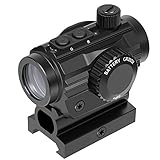
- ARS Mark9.0
ARS Mark is a ranking system developed by bestairriflescopes.com. ARS Mark has no relationship or impact from any manufacturers or sales agent websites. Learn more
- BrandFeyachi

- ARS Mark8.8
ARS Mark is a ranking system developed by bestairriflescopes.com. ARS Mark has no relationship or impact from any manufacturers or sales agent websites. Learn more
- BrandCVLIFE
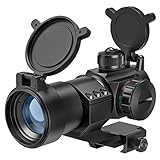
- ARS Mark8.8
ARS Mark is a ranking system developed by bestairriflescopes.com. ARS Mark has no relationship or impact from any manufacturers or sales agent websites. Learn more
- BrandCVLIFE

- ARS Mark8.6
ARS Mark is a ranking system developed by bestairriflescopes.com. ARS Mark has no relationship or impact from any manufacturers or sales agent websites. Learn more
- BrandFeyachi
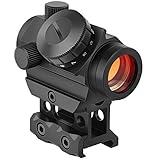
- ARS Mark8.6
ARS Mark is a ranking system developed by bestairriflescopes.com. ARS Mark has no relationship or impact from any manufacturers or sales agent websites. Learn more
- BrandMidTen

- ARS Mark8.6
ARS Mark is a ranking system developed by bestairriflescopes.com. ARS Mark has no relationship or impact from any manufacturers or sales agent websites. Learn more
- BrandUUQ
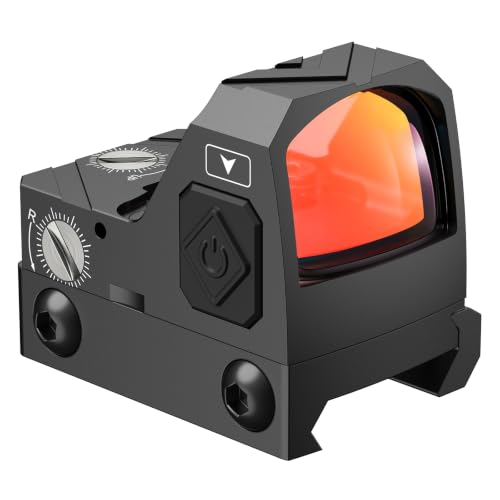
- ARS Mark7.6
ARS Mark is a ranking system developed by bestairriflescopes.com. ARS Mark has no relationship or impact from any manufacturers or sales agent websites. Learn more
- BrandCVLIFE
Last update on 2026-09-30 / Affiliate links / Images, Product Titles, and Product Highlights from Amazon Product Advertising API


12 Best 22 Pcp Air Rifle For Hunting of 2026 With Quiet Power

7 Best 22 Pcp Air Rifle Under 300 of 2026 For Backyard Pest Control

10 Best 22 Break Barrel Air Rifles of 2026 For Backyard Pest Control

10 Best 30 Caliber Pcp Air Rifle of 2026 For Medium Game

Top Best 177 Air Rifle Under 100: Budget-Friendly Picks for 2026

How to Safely Reload Shotgun Shells at Home

11 Best Co2 Air Rifle For Pest Control of 2026 To Ensure Humane Dispatch

12 Best Inexpensive Air Rifles of 2026 For Dependable Backyard Accuracy






