
How Much Does a 22 Long Rifle Cost to Buy and Shoot?

A homeowner spots garden beds torn up by squirrels and decides it is time to clear the property. Starting out with a twenty-two is one of the most affordable shooting sports, but the real expense depends on which design fits your yard. Traditional gunpowder models carry extra fees and range travel, while a pellet air rifle offers a quiet, backyard-safe alternative that keeps your setup simple.
Your final bill changes based on the firing mechanism, ongoing ammunition costs, and the gear you need to see targets clearly. A simple single-shot setup costs far less to run than a rapid repeater, and pellet tins stay much cheaper than boxed powder cartridges. Most importantly, local neighborhood rules determine whether you can practice by the back fence or must pay for shooting club fees. Here is a clear breakdown of the true purchase and upkeep costs so you can pick the right option for your property.
The Short Version
- Upfront cost: An entry-level 22 rifle costs around $150 to $300, mid-tier rifles run $300 to $500, and precision target models climb above $500.
- Running cost: Traditional 22 LR firearm cartridges run about 7 to 12 cents per shot, while .22 caliber air rifle pellets cost only 2 to 4 cents per shot.
- Where you can shoot: Traditional powder firearms face strict city discharge bans that keep you off your own property, while quiet .22 pellet air rifles can often be used safely in your backyard with a proper backstop.
- Hidden extras: Plan an extra $50 to $100 for safety glasses, reactive targets, a solid backstop trap, and a durable airgun-rated optic if your rifle lacks iron sights.
The Upfront Price Tag: Basic, Mid-Range, and Match Rifles
Buying your first 22 rifle involves three main price tiers. Where you jump in depends entirely on whether you want a simple backyard plinker, a dependable pest-control tool, or a pinpoint paper-puncher.
Entry-level rifles ($150 to $300): In this price bracket, you find utilitarian workhorses. A powder-burning rimfire rifle in this range is typically a basic bolt-action or semi-automatic with a synthetic stock and simple open sights. In the air rifle world, this bracket is dominated by single-shot break-barrel guns (rifles cocked by pivoting the barrel down to compress an internal spring or gas piston). These rifles are reliable, rugged, and accurate enough to hit a soda can at 30 yards. The triggers are often heavier, the synthetic stocks feel hollow, and the included bundled scopes are bare-bones, but they get the job done without draining your wallet.
Mid-range rifles ($300 to $500): Stepping into the mid-tier brings a noticeable jump in build quality. Powder rifles feature smoother bolt cycling, crisp adjustable triggers, threaded muzzles for accessories, and handsome hardwood stocks. In the airgun world, this range gives you multi-shot repeaters with revolving pellet clips or entry-level PCP systems (rifles filled with high-pressure air from a special hand pump, compressor, or scuba tank). You get muffled barrels that cut down firing noise, lighter cocking effort, and much better shot-to-shot consistency.
Match and precision rifles ($500 and up): Rifles in this category cater to serious target shooters, competitive benchrest marksmen, and long-range enthusiasts. These setups feature heavy match-grade barrels, fully adjustable stocks with custom cheek rests, and featherweight competition triggers. In the airgun space, advanced PCP rifles in this tier come with internal air regulators that ensure every single pellet leaves the barrel at the exact same exit speed.
Remember that the shelf price on a powder firearm is rarely the out-the-door cost. In most states, buying a firearm requires extra dealer transfer fees, background check fees, and state paperwork charges that can easily add $25 to $75 to your final receipt. Air rifles generally ship straight to your front porch without dealer paperwork fees or background check surcharges.
Powder Firearm vs. Pellet Air Rifle: Choosing the Right Platform
The biggest trap for beginners is buying a traditional 22 LR firearm without realizing what it takes to actually shoot it. Before pulling out your credit card, compare how these two platforms function in daily life.
A traditional 22 LR is a powder firearm. It fires a small gunpowder cartridge with a primer tucked inside the rim of the brass case. When you pull the trigger, the powder ignites, pushing a small lead bullet down the barrel. It produces a sharp crack around 140 decibels, carries lethal energy well past a mile, and creates gunpowder residue. Because of that noise and range, almost every city and suburb enforces strict firearm discharge bans. If you live inside town limits, you cannot step out onto your back deck to dispatch a garden squirrel or plink a tin can. You must pack your gear into your vehicle, drive to a shooting range, pay lane fees, and shoot alongside crowds.
A .22 caliber air rifle replaces gunpowder with compressed air or gas. You have four main choices:
- Break-barrel rifles: You bend the barrel down until it clicks, loading a single pellet directly into the breech. It is entirely self-contained, meaning you never buy air tanks or gas cartridges.
- PCP rifles: These use an onboard air reservoir filled to thousands of pounds of pressure. They offer effortless bolt or lever cycling, multi-shot revolving pellet clips, and zero physical recoil.
- Multi-pump pneumatics: These are rifles powered by 3 to 10 forearm hand pumps, letting you choose lower power for indoor targets or full power for pest control.
- CO2 rifles: These are rifles powered by disposable gas cartridges, offering fast follow-up shots without pumping.
For the average homeowner, a .22 caliber pellet air rifle solves the real problem. It delivers plenty of punch for nuisance pests like rats and starlings, yet it operates at a neighbor-friendly whisper when fitted with built-in noise baffles. Best of all, you can step into your own backyard after work and practice without paying a dime in range fees.
Cost Per Shot: Ammunition and Power Expenses
Upfront rifle cost is only half the financial equation. Over a few years of regular weekend target shooting, ammunition and power supplies can easily surpass the purchase price of the gun itself.
- 22 LR firearm ammunition (7 to 12 cents per round): A standard box of 50 rimfire cartridges usually costs between $4 and $7 for basic round-nose lead plinking rounds. Bulk boxes of 500 drop the per-round price slightly, but match-grade target cartridges climb to 25 to 40 cents per shot. A casual afternoon shooting 200 rounds at the range will cost you $15 to $25 in ammunition alone.
- .22 caliber pellets (2 to 4 cents per shot): High-grade lead or alloy pellets (shaped, aerodynamic projectiles built for rifled barrels) come in tins of 250 or 500. A quality tin costs around $10 to $18. That means firing 200 shots in your backyard costs just $4 to $8. Over several thousand rounds, an air rifle saves enough on ammunition to pay for itself.
- Pellets versus steel BBs: Always check your barrel before loading. Lead or alloy pellets are soft and engage the spiral grooves inside a rifled barrel for high accuracy. Steel BBs are smooth, hard round balls. Feeding steel BBs into a rifled pellet-only barrel will strip the rifling and permanently ruin the rifle. If you only want to plink soda cans with round steel shot, pick up a dedicated backyard BB gun instead.
- Power source expenses: Break-barrel rifles cost nothing to run beyond muscle effort to cock the mechanism. PCP air rifles require a one-time purchase of a high-pressure hand pump or a small portable compressor, after which refills cost essentially nothing. CO2 models rely on small 12-gram or 88-gram gas cylinders, which cost roughly $0.75 to $1.00 per 12-gram bulb, giving you 30 to 40 shots per cylinder.
Startup Gear to Plan For: Accessories and Optics You Actually Need
You cannot shoot straight out of the box with just a rifle and a tin of ammo. Setting aside cash for a few basic accessories ensures you stay safe and hit what you aim at.
Eye and ear protection: Eye protection is non-negotiable. Soft lead pellets can bounce back off hard wood or metal targets, so wrap-around safety glasses are essential for every shooter and bystander. Hearing protection is mandatory for 22 LR powder firearms, which generate enough noise to cause immediate ear damage. Quiet air rifles with muffled barrels operate well below hearing-damage thresholds, so earmuffs are usually unnecessary at home.
Safe storage: Every rifle must be stored away from children and unauthorized visitors. Whether you use a locked hard case, a steel security cabinet, or a dedicated gun safe, make sure it stays latched when not in use. Upgrading to a reliable electronic gun safe lock ensures quick, authorized access while keeping household members completely protected.
Choosing the right optic: Many entry-level rifles come with open fiber-optic iron sights. These work fine for shooting large targets inside 20 yards. But if you want to humanely dispatch small garden pests, you need a magnifying scope. Pay close attention to what kind of scope you buy:
- Spring-piston and gas-piston break-barrel air rifles produce a violent forward-and-backward recoil snap. This two-way whip will shatter standard firearm scopes within 50 shots. You must buy a spring-airgun-rated scope built to absorb two-way vibration.
- PCP air rifles and traditional 22 LR firearms produce mild rearward recoil and work happily with standard rimfire scopes.
- Check your rifle mounting rail before buying rings. Most European and entry-level air rifles feature narrow 11mm dovetail grooves cut into the receiver. Modern tactical rifles and PCP guns frequently use notched Picatinny tactical rails. Make sure your scope mounting rings match the rail on your rifle.
Maintenance tools: Keep a flexible pull-through cleaning cord and some silicone-based airgun oil on hand. Never use petroleum-based firearm bore cleaners in an air rifle; the chemical fumes will eat away rubber breech seals and can cause violent internal pressure spikes. Also, never pull the trigger without a pellet loaded in a break-barrel gun. Dry firing slams the internal piston into the front of the compression cylinder with no air cushion, cracking internal seals and breaking mainsprings.
Backyard Safety Checks: Where You Can Shoot Legally and Safely
The lowest price tag means nothing if you cannot use your rifle where you live. Before spending your hard-earned money, walk your property and confirm these four safety steps.
- Confirm your local discharge rules: Look up your city or county municipal code online, or call your local police non-emergency desk. Ask plainly: "Does the city prohibit the discharge of pneumatic pellet rifles on private property?" Many towns ban powder firearms outright but permit pellet rifles, provided the projectile never leaves your property boundary.
- Build a bulletproof backstop: Never use a wooden privacy fence as a backstop. A .22 caliber pellet moving at high exit speed will slice through aged cedar boards like wet cardboard. Buy a heavy-duty rated steel pellet trap, construct a dense box packed with rubber mulch, or mound up a thick dirt backstop berm. These setups trap spent lead cleanly and prevent dangerous ricochets.
- Establish a clear line of sight: Set up your shooting lane so your backstop sits directly in front of an impenetrable barrier, like an earth hill or brick wall. Confirm that no gates, walking paths, pet doors, or walkways cross between your bench and your target.
- Manage neighbor perception: Even if shooting an air rifle is fully legal on your property, a neighbor who spots a black rifle barrel through the trees might mistake it for a firearm and call local authorities. Choose an air rifle with built-in noise baffles to keep muzzle noise discreet, and set up your target lane away from public view.
If you have an aggressive raccoon, an animal acting strangely during daylight, or zero safe space in your yard for a backstop, put the rifle down. Stop immediately and call a licensed nuisance wildlife control professional to resolve the problem safely.
What to Look For in a Backyard-Friendly 22 Air Rifle
If your goal is pest management and weekend target practice right outside your back door, an air rifle chambered in .22 caliber provides the ideal balance of power and convenience. When shopping through the options, keep these key factors in mind to pick the best match for your home:
Operating system: If you want complete independence, a single-shot break-barrel rifle is the most practical choice. You carry only the rifle and a tin of pellets, with no extra pumps or tanks required. If you prefer rapid follow-up shots on garden pests and desire almost zero physical cocking effort, consider a PCP system with a multi-shot revolving pellet clip.
Cocking effort: Check the cocking effort rating before choosing a break-barrel rifle. High-powered hunting models can require 30 to 45 pounds of muscle force to pivot the barrel open. If you plan to shoot 100 targets in an afternoon with family members, look for a moderate-power model that cocks with less effort.
Velocity and knockdown punch: For humane garden pest control on rodents or squirrels, you need sufficient exit speed and real punch (often measured as foot-pounds of energy). A .22 caliber pellet carries more knockdown weight downrange than smaller calibers, making it the preferred size for pest removal. However, stay away from extreme velocities that push pellets past the sound barrier (roughly 1,100 feet per second). When a pellet breaks the sound barrier, it produces a sharp sonic boom that alerts neighbors and ruins the quiet advantage of an airgun.
Muffled barrels: Look for models equipped with factory sound suppression. Built-in noise baffles and shrouded barrels trap expanding air right at the muzzle, dropping the report to a mild thump that blends effortlessly into everyday neighborhood noise.

- ARS Mark9.7
ARS Mark is a ranking system developed by bestairriflescopes.com. ARS Mark has no relationship or impact from any manufacturers or sales agent websites. Learn more
- BrandGamo

- ARS Mark8.9
ARS Mark is a ranking system developed by bestairriflescopes.com. ARS Mark has no relationship or impact from any manufacturers or sales agent websites. Learn more
- BrandUmarex

- ARS Mark8.5
ARS Mark is a ranking system developed by bestairriflescopes.com. ARS Mark has no relationship or impact from any manufacturers or sales agent websites. Learn more
- BrandDPMS
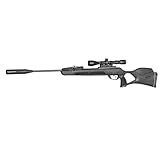
- ARS Mark8.4
ARS Mark is a ranking system developed by bestairriflescopes.com. ARS Mark has no relationship or impact from any manufacturers or sales agent websites. Learn more
- BrandGamo

- ARS Mark7.5
ARS Mark is a ranking system developed by bestairriflescopes.com. ARS Mark has no relationship or impact from any manufacturers or sales agent websites. Learn more
- BrandGamo
Last update on 2026-10-15 / Affiliate links / Images, Product Titles, and Product Highlights from Amazon Product Advertising API
FAQs
Is a 22 pellet rifle as powerful as a 22 LR firearm?
No, a traditional 22 LR firearm produces significantly more power than an air rifle. A 22 LR powder cartridge generates between 100 and 140 foot-pounds of energy at the muzzle, while most backyard .22 pellet air rifles produce between 15 and 30 foot-pounds. That lower energy level makes the air rifle much safer for private property use, while still delivering plenty of humane knockdown punch for small garden pests.
Do I need a background check to buy a 22 caliber air rifle?
In the vast majority of U.S. states, air rifles are not classified as firearms, meaning you do not need a background check or dealer transfer paperwork to purchase one. You can order them online and have them delivered directly to your doorstep. A few jurisdictions, such as New Jersey, Rhode Island, and select metropolitan cities, regulate high-powered air rifles as firearms, so always verify your local municipal codes before ordering.
Can I shoot 22 LR rimfire bullets in a 22 caliber air rifle?
No, you can never load rimfire ammunition into an airgun. Powder-burning 22 LR cartridges require a firing pin strike on the brass rim to ignite gunpowder, while air rifles rely solely on compressed air to push soft lead pellets. Attempting to force a metal cartridge into an airgun breech will damage the chamber, block the barrel, and create a serious physical hazard.
Do I need to buy an expensive scope right away?
You do not need an aftermarket scope if you plan to shoot reactive cans and paper targets at close range. Most starter rifles include functional fiber-optic open sights that work well out to 20 yards. If you plan to hunt small pests at dawn or dusk, an airgun-rated 3-9x magnifying scope makes target identification much clearer and improves precision.


12 Best 22 Pcp Air Rifle For Hunting of 2026 With Quiet Power

7 Best 22 Pcp Air Rifle Under 300 of 2026 For Backyard Pest Control

10 Best 22 Break Barrel Air Rifles of 2026 For Backyard Pest Control

10 Best 30 Caliber Pcp Air Rifle of 2026 For Medium Game

Top Best 177 Air Rifle Under 100: Budget-Friendly Picks for 2026

How to Safely Reload Shotgun Shells at Home

11 Best Co2 Air Rifle For Pest Control of 2026 To Ensure Humane Dispatch

12 Best Inexpensive Air Rifles of 2026 For Dependable Backyard Accuracy






