
How Much Does a Full Crossbow Setup Cost in 2026?

A complete setup costs more than the bow. Basic target models sit on the low end, while dependable hunting rigs require a realistic gear budget. Most bows do not arrive ready for the woods right out of the box, meaning your true investment depends on choosing between a bare frame and a complete kit with optics and a cocking rope (a cord that halves your pulling effort).
Final costs shift based on how and where the gear gets used. Chasing big game demands solid safety mechanisms, faster flight speeds, and mandatory add-ons like a dense arrow target, rail wax, and sharp broadheads. Backyard target practice requires far fewer add-ons. Factoring in these essential accessories early keeps your spending grounded so you can hit the woods without any sudden budget surprises.
Crossbow Tiers from Target Plinkers to Hunting Rigs
Crossbows fall into distinct tiers based on how you plan to use them. The simplest models are handheld pistol crossbows designed for target shooting in the backyard. These compact tools feature light pull weights, which means the muscular effort to pull the bowstring back is easy enough for almost anyone to manage. They fire small plastic or aluminum bolts into foam blocks and cardboard boxes. A small target pistol like this gives you a taste of shooting mechanics, but it does not produce enough energy for big game hunting, nor is it legal for game animals under state wildlife regulations.
When you move up to full-sized hunting equipment, the market splits into three primary categories. Entry-level hunting models offer enough power to cleanly harvest big game while keeping parts simple. State wildlife agencies usually require a minimum pull weight of at least 125 to 150 pounds for hunting whitetail deer or elk, which is much higher than the 40-pound minimum set for standard vertical compound bows. Starter hunting models easily clear this legal hurdle. These bows tend to have wider wheel-to-wheel lengths, which is the distance between the limb tips or pulley wheels. A wider bow is steady on a bench, but it can feel clumsy inside a cramped ground blind or a narrow tree stand.
Mid-tier hunting models sit in the sweet spot for most dedicated hunters. These rigs shorten the wheel-to-wheel length, making the bow far more maneuverable when walking through thick brush. They also include smoother triggers, quiet rubber limb dampeners to absorb vibration, and illuminated scopes with multiple aiming marks. Instead of listening to a loud snap that can cause a deer to drop before the arrow arrives, a mid-tier rig absorbs shock better and shoots noticeably quieter.
Flagship hunting setups occupy the top tier. These premium models feature narrow profiles, often measuring less than eight inches wide when cocked, alongside custom mechanical triggers and silent internal cranking mechanisms. These systems eliminate the need to manually haul heavy bowstrings up the barrel with hand hooks. If you want a setup that cocks silently inside a deer stand and lets you safely uncock the string at the end of the day without firing an arrow, you are looking at top-tier equipment.
Bare Bows Versus Ready-to-Shoot Packages
When shopping for a crossbow, you will encounter two main purchase formats: bare bows and complete packages. A bare bow is sold with only the stock, limbs, barrel, and string. You do not get a scope, a quiver, arrows, or any cocking tools. Buying a bare bow appeals to experienced archers who want to pick their own premium optics and custom arrows. For a beginner, however, starting with a bare bow often turns into an expensive headache.
Buying each piece of gear on its own drives up your overall expense fast. You must purchase a scope with compatible mounting rings, a detachable arrow holder, a set of bolts, and a dedicated cocking rope. A cocking rope is a heavy cord with dual handles and rolling hooks that cuts your pulling effort in half, and shooting a heavy hunting bow without one is nearly impossible. If you buy these accessories individually, you will almost always spend more money than if you bought them together in a bundle.
A factory package eliminates guesswork by delivering a matched system. Choosing a complete crossbow package guarantees that the included arrows match the exact weight and length specifications required by the bow limbs. Using the wrong arrow weight can void your warranty or cause severe limb damage. Packages also supply the correct nock style, which is the plastic or aluminum grooved cap at the back of the arrow that sits against the bowstring.
If you insert an arrow with a flat nock into a bow designed for a half-moon nock, the bowstring can jump over or slip beneath the arrow shaft. That creates a dry fire, which means the bow releases its stored energy without an arrow pushing forward to absorb the shock. A dry fire can shatter carbon fiber limbs, crack pulley wheels, and send sharp composite fragments flying toward your face. Starter packages safeguard your budget and your safety by giving you parts that fit together out of the box.
Hidden Extras and Upkeep You Must Budget For
Many new archers spend their entire budget on the bow itself, only to discover they cannot even sight it in without buying several more essential items. Crossbow arrows travel with immense energy compared to standard vertical bow arrows. You cannot shoot them into hay bales, dirt piles, or lightweight backyard targets. Doing so will blow the fletching vanes off your arrows or bury the shafts so deeply you will destroy them trying to pull them free.
Here is the essential gear you must budget for alongside your bow:
- High-density discharge target: A solid foam block built specifically to stop high-speed crossbow arrows and allow smooth arrow removal without bending the shafts.
- Extra carbon bolts: The two or three arrows in your starter box will wear out or get lost while sighting in your scope, making an extra six-pack essential.
- Hunting broadheads: Bows ship with blunt target practice points, so you must purchase fixed or mechanical razor-sharp broadheads before heading into the woods.
- Rail lube and string wax: Specialized lubricant applied to the metal or carbon arrow track to prevent friction from melting your center string serving.
- Soft or hard carrying case: A padded case to protect delicate scope dials during travel and comply with state wildlife transport laws.
You also need to account for routine seasonal upkeep. Crossbow strings and side cables operate under extreme tension. The center serving, which is the protective thread wrapped around the middle of the bowstring where the trigger latch grabs, takes tremendous abuse on every shot. Applying slick rail lube to the barrel track every ten to fifteen shots prevents heat buildup, while rubbing wax into the exposed string fibers keeps moisture out.
Even with proper maintenance, you will need to replace the bowstring and cables every two to three years. You cannot change a modern compound crossbow string on your garage workbench using standard hand clamps. The limbs hold hundreds of pounds of pressure, so replacing the string requires an archery pro shop bow press. Factoring in a quick visit to a local archery shop for seasonal string changes keeps your setup shooting accurately and safely year after year.
Where Cheap Bows Cut Corners on Safety
Bargain-basement models found on general retail websites often tempt first-time buyers with low prices, but those savings come at a steep cost in materials and safety features. One of the first areas budget manufacturers skimp on is the trigger assembly. A dependable bow features a crisp trigger with minimal travel. Cheap models often use stamped sheet metal or cast zinc parts, creating a heavy, gritty trigger pull. If you have to yank hard on the trigger, you will jerk your aim off target right as the shot breaks.
Inferior triggers also pose real safety hazards. Quality hunting setups include an integrated anti-dry-fire mechanism. This spring-loaded safety bar prevents the trigger latch from releasing unless an arrow is pushed firmly back against the retaining spring. Cheap imports frequently skip this feature or use flimsy plastic latches that break after light use. If you accidentally bump the trigger while loading or forget to load an arrow, the bow will dry fire, potentially cracking the limbs instantly.
Limb quality and vibration control also suffer on cut-rate equipment. Well-engineered bows use laminated fiberglass limbs that flex smoothly and recover cleanly. Cheap alternatives rely on molded composite limbs that hold internal voids and microscopic weak points. When subjected to repetitive high-poundage cycling, these limbs can splinter or develop hairline cracks near the limb pockets. To protect yourself, always inspect carbon arrows and limbs before every shooting session. Gently flex-check carbon arrows by hand to listen for cracking sounds before loading them onto the rail.
If you encounter limb splinters, loose axle pins, or a trigger that fails to engage the safety automatically when drawn, stop shooting immediately. Never attempt to shoot a bow with questionable limb integrity. Take the bow to a qualified archery technician who has the proper inspection tools and a professional press to inspect the unit safely.
What to Look for in a Beginner Bow Setup
Selecting your first setup comes down to matching the design of the equipment to your physical strength and your hunting environment. If you plan to hunt from a spacious ground blind, a slightly wider, front-heavy bow will steady your aim without causing fatigue. If you hike deep into public timber or climb into narrow hang-on tree stands, prioritize a compact frame with a narrow wheel-to-wheel profile and balanced center weight so you can maneuver around branches without bumping your gear.
Before purchasing, check the cocking method carefully. Standard cocking ropes require you to lift half of the bow's total pull weight in one smooth upward motion. If you have shoulder, back, or joint limitations, look for a setup that includes an integrated mechanical crank. A crank uses a small hand winch to draw the string back with just a few pounds of effort. Also confirm whether the model allows you to decock the string without firing a dedicated discharge arrow into the ground at the end of every hunt.
Finally, confirm that replacement parts are easy to find. Stick with established archery brands whose arrows, nocks, strings, and quivers are stocked in local sporting goods stores. If you drop a nock or fray a string during the middle of hunting season, you want to be able to pick up an exact factory replacement the same day rather than waiting weeks for an overseas delivery.
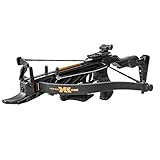
- ARS Mark8.5
ARS Mark is a ranking system developed by bestairriflescopes.com. ARS Mark has no relationship or impact from any manufacturers or sales agent websites. Learn more
- BrandBear X

- ARS Mark7.5
ARS Mark is a ranking system developed by bestairriflescopes.com. ARS Mark has no relationship or impact from any manufacturers or sales agent websites. Learn more
- BrandKrause Publications
Last update on 2026-10-19 / Affiliate links / Images, Product Titles, and Product Highlights from Amazon Product Advertising API
FAQs
How often do you need to replace crossbow strings and cables?
Most manufacturers recommend replacing your strings and cables every two to three years, or after every two hundred to four hundred shots. You should replace them immediately if you spot frayed fibers, exposed core strands, or separation in the center protective wrapping. Regular waxing helps extend their life, but internal wear happens naturally from the extreme tension stored in the limbs.
Can you shoot standard compound bow arrows from a crossbow?
No, you should never shoot standard vertical bow arrows out of a crossbow. Crossbow bolts are much shorter, thicker, and stiffer to withstand the immense forward acceleration produced by the heavy limbs. Firing a thin compound bow arrow from a crossbow will cause the shaft to snap under pressure, which can ruin the bow and cause serious bodily injury.
Is buying a used crossbow safe for a beginner?
Buying a used crossbow can save money, but it carries hidden safety risks if you do not know how to inspect it. Previous owners may have dry fired the bow, leaving invisible stress fractures inside the fiberglass limbs or bent axle pins in the cams. If you choose to buy a used model, take it to an archery pro shop to have a technician inspect the limbs, cams, and safety components before pulling the string back.


12 Best 22 Pcp Air Rifle For Hunting of 2026 With Quiet Power

7 Best 22 Pcp Air Rifle Under 300 of 2026 For Backyard Pest Control

10 Best 22 Break Barrel Air Rifles of 2026 For Backyard Pest Control

10 Best 30 Caliber Pcp Air Rifle of 2026 For Medium Game

Top Best 177 Air Rifle Under 100: Budget-Friendly Picks for 2026

How to Safely Reload Shotgun Shells at Home

11 Best Co2 Air Rifle For Pest Control of 2026 To Ensure Humane Dispatch

12 Best Inexpensive Air Rifles of 2026 For Dependable Backyard Accuracy






