
How to Adjust a 1911 Rear Sight Without Scratching the Slide

Shooting off-center with a 1911 is completely normal and easy to fix at home. To bring your bullet holes back to the center, move the rear sight in the exact direction you want the hits to go. Target-style sights shift with the turn of a small screw, while solid steel sights resting in a wedge slot cut across the slide must be gently pushed sideways.
The right steps depend on whether the sight has click screws or a fixed steel body, and which direction needs help. Click screws handle both up-and-down height and left-to-right drift, but solid sights only adjust sideways. Using a dedicated screw clamp tool or a soft brass rod prevents gouges, while forcing a frozen piece without loosening its hidden lock screw will ruin the slide. A few basic checks ensure every tap moves the notch smoothly without leaving a mark.
Which type of rear sight is on your 1911?
Before touching any tool to your pistol, clear the firearm completely. Drop the magazine, pull the slide back to lock it open, and check the chamber with your finger and eyes to verify it is empty. Once clear, point the muzzle in a safe direction and inspect the rear of the slide.
1911 pistols use one of two sight designs:
The first is a screw-adjustable target sight. It features small screw heads on the top and right side of the sight housing, often with tiny arrows stamped next to them with letters like "UP" or "R" for right. If you see these dials, you will never need to tap the sight.
The second is a fixed sight. This is a solid steel notch sitting inside a dovetail (a wedge-shaped slot cut straight across the top of the slide). Fixed sights lack dial screws, but many hide a set screw (a tiny locking screw tucked inside the top or center of the sight base). Identify your style first, because hammering an adjustable sight or turning a fixed sight will break the parts.
Which direction should you move the rear sight?
Every shooter wonders which way to shift the sight when bullet holes land off-target. The rule for rear sights is simple: move the rear sight in the exact direction you want your bullet holes to go on the target.
If your pistol shoots to the left of your aim, you want your bullet holes to shift right. That means you move the rear sight to the right. If your shots hit low on paper, you need the bullets to strike higher, so you raise the rear sight up.
Do not mix this up with the front sight. Front sights move opposite to target error, but the rear sight always tracks the direction of your desired correction.
Small adjustments make a big difference downrange. At 15 yards, moving your rear sight just fifteen thousandths of an inch (about the thickness of four sheets of paper) shifts your bullet impact by almost two full inches. Never make large changes in one step.
How do you adjust a target sight with click screws?
Adjustable target sights make sighting in easy because you can make fine corrections right at the shooting bench without swinging tools near the slide.
Follow these steps to dial in an adjustable rear sight:
- Confirm your pistol is unloaded and keep the muzzle pointed in a safe direction.
- Pick a gunsmith screwdriver that fits the screw slot snugly. Standard household screwdrivers have tapered edges that slip and burr the screw head. Use a hollow-ground flat bit that fills the slot completely.
- Locate the windage screw (the click dial on the right side controlling left-and-right aim). If shots land left and you want them right, turn the screw clockwise (or toward the "R" mark). Most target sights move bullet impact about one-quarter to one-half inch per click at 20 yards. Turn the screw two or three clicks at a time.
- Locate the elevation screw (the screw on top controlling up-and-down aim). If hits land low and you need them higher, turn this screw counterclockwise toward the "UP" arrow to raise the rear blade.
- Fire a three-shot group from a sandbag rest to confirm the shift. Use smooth trigger pulls so hand movement does not mask the adjustment. Repeat with single clicks until hits land dead center.
How do you drift a fixed dovetail rear sight?
Fixed sights do not have click dials, so you must drift (gently tap sideways across its slot) the steel sight body inside its dovetail cut. Because fixed sights cannot move up and down, this procedure only adjusts left-and-right aim.
Follow these steps to drift a fixed sight safely:
- Unload the 1911, remove the magazine, and field-strip the gun to isolate the bare slide. This protects your frame and internal parts from vibration.
- Inspect the rear sight for a set screw (a tiny locking screw inside the sight base). If present, loosen it one or two full turns with a hex wrench. Tapping a sight while this screw is tight will strip the threads and gouge the slide.
- Clamp the slide firmly into a bench vise. Cover the vise jaws with soft aluminum covers, leather pads, or thick cardboard so it cannot twist when tapped.
- Make a fine pencil mark along the seam where the sight meets the slide dovetail to track movement.
- Place a flat-ended brass or nylon punch against the thick lower base of the sight. Never place the punch against the thin upper blade, which can bend or snap.
- Hold the punch steady against the base, angled slightly downward into the slot. Tap the punch lightly with a small hammer. If your pistol shoots left, tap the sight from left to right.
- Inspect your pencil mark after each tap. Move the sight only a hairline, roughly the thickness of a business card.
- Snug the set screw back down with gentle finger pressure. Fire a group at the range to verify your new zero.
Should you use a sight pusher or a brass punch?
When moving a fixed dovetail sight, you have two choices: a screw-driven sight pusher tool or a traditional brass punch and hammer.
A sight pusher tool is a clamp made of aluminum alloy or steel that wraps around the pistol slide. It uses a threaded bolt to slowly drive a pusher block against the side of the sight. The biggest advantage is complete control. Because you turn a wrench or knob instead of swinging a hammer, there is zero risk of a punch slipping off the sight and gouging your slide finish. Pushers also let you make tiny, measurable micro-adjustments while the slide stays locked in the tool frame.
A brass drift punch and light hammer cost less and fit easily in a range bag. Brass is softer than the hardened slide steel of your 1911, meaning the punch absorbs impact rather than denting the gun. But tapping requires patience and an immovable bench vise. If you try to tap a sight without a vise, the slide bounces, the punch skates across the metal, and you can scratch the finish.
Brass punches can also leave gold marks on dark slide coatings. This residue is just soft brass transfer, not missing finish, and wipes off with gun oil. Still, if you want zero cosmetic marks and precise control, a sight pusher tool is the safer choice. Never use a steel punch or screwdriver, because hardened steel will instantly gouge your slide.
When is a rear sight too stuck to move at home?
Some 1911 rear sights fit so tightly in their dovetail cuts that regular tapping will not move them. Pushing beyond safe limits at home can bend your slide rails or crack the dovetail walls.
Stop immediately and check this list if your sight will not budge:
- You loosened the set screw, but the sight still refuses to move after several firm taps with a brass punch.
- You see white residue or bright red thread-locking compound seeping around the dovetail seams, which requires controlled heat to release.
- The tiny hex set screw is stripped inside its socket, leaving no way to release clamping pressure.
- The slide begins to twist or climb out of your padded vise jaws under moderate hammer taps.
- Your 1911 has a military slide cut with a directional taper that only installs and removes from the right side. Tapping toward the left wedges it tighter.
If you run into any of these issues, do not grab a heavier hammer. Take the slide to a qualified gunsmith. A professional gunsmith has heavy-duty pressing tools, heat equipment, and dovetail files to fit the sight safely.
What tools or mounting plates help with 1911 sights?
If you plan to adjust your 1911 sights at home or swap them for modern aiming systems, having the right gear makes a huge difference.
A universal sight pusher tool designed for square slides is one of the best investments a 1911 owner can make. Look for a heavy-duty pusher built with an anodized aluminum frame, steel drive screws, and adjustable clamp blocks. Check that the tool fits slide widths up to standard 1911 dimensions before buying, and confirm that the pusher block matches the height and angle of your rear sight base. A good pusher lets you make fractional windage adjustments at the shooting bench without carrying a vise or hammer.
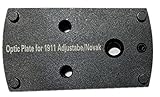
Many 1911 owners also choose to replace their traditional rear iron sights with modern red dot sights for faster target acquisition. To do this without machining your slide, you can use a dovetail optic mounting plate. These converter plates slide directly into your existing rear dovetail cut, giving you a secure platform for compact open-window sights. Before picking a plate, verify whether your slide uses a standard GI cut or a modern Novak-style dovetail, and ensure the plate footprint matches your optic. If you want backup iron sights ready if the optic battery ever dies, explore the best iron sights for cowitness with red dot sights in 2026 to learn how iron sight heights line up through the optic window.

- ARS Mark10.0
ARS Mark is a ranking system developed by bestairriflescopes.com. ARS Mark has no relationship or impact from any manufacturers or sales agent websites. Learn more
- BrandSporGain

- ARS Mark9.2
ARS Mark is a ranking system developed by bestairriflescopes.com. ARS Mark has no relationship or impact from any manufacturers or sales agent websites. Learn more
- BrandPridefend

- ARS Mark9.0
ARS Mark is a ranking system developed by bestairriflescopes.com. ARS Mark has no relationship or impact from any manufacturers or sales agent websites. Learn more
- BrandATG
- ARS Mark8.6
ARS Mark is a ranking system developed by bestairriflescopes.com. ARS Mark has no relationship or impact from any manufacturers or sales agent websites. Learn more
- BrandAde Advanced Optics

TRUGLO Sight-Setter Durable Compact Lightweight Easy-to-Use Rear Sight Adjustment Tool
View on Amazon- ARS Mark8.6
ARS Mark is a ranking system developed by bestairriflescopes.com. ARS Mark has no relationship or impact from any manufacturers or sales agent websites. Learn more
- BrandTRUGLO

- ARS Mark8.2
ARS Mark is a ranking system developed by bestairriflescopes.com. ARS Mark has no relationship or impact from any manufacturers or sales agent websites. Learn more
- BrandKensight

- ARS Mark7.0
ARS Mark is a ranking system developed by bestairriflescopes.com. ARS Mark has no relationship or impact from any manufacturers or sales agent websites. Learn more
- BrandYamosi

- ARS Mark7.0
ARS Mark is a ranking system developed by bestairriflescopes.com. ARS Mark has no relationship or impact from any manufacturers or sales agent websites. Learn more
- BrandKSJED

- ARS Mark6.0
ARS Mark is a ranking system developed by bestairriflescopes.com. ARS Mark has no relationship or impact from any manufacturers or sales agent websites. Learn more
- BrandVAKPAT
Last update on 2026-09-30 / Affiliate links / Images, Product Titles, and Product Highlights from Amazon Product Advertising API
FAQs
How much does moving the 1911 rear sight change bullet impact?
At 15 yards, moving your 1911 rear sight by just 0.015 inches (about the thickness of four sheets of paper) changes your point of impact by roughly 1.5 to 2 inches on target. At 25 yards, that same tiny movement shifts your hit by nearly 3 inches. Always make small adjustments and fire a group to verify your aim before moving the sight again.
Can you adjust the height on a fixed 1911 rear sight?
No, a fixed rear dovetail sight cannot be raised or lowered mechanically. If your 1911 hits consistently low or high with fixed sights, you must adjust elevation by changing ammunition bullet weights or swapping the front sight blade. Installing a taller front sight lowers bullet impact on paper, while installing a shorter front sight raises bullet impact.
How do you clean brass marks off a 1911 slide?
Brass punches often leave gold-colored streaks on dark steel finishes, but this is soft brass transfer rather than a scratch. Put a few drops of gun-cleaning solvent or firearm oil on the mark and let it sit for two minutes. Then scrub the spot gently with a nylon gun brush or a copper-removing solvent and wipe it clean with a cloth.
Which way do 1911 dovetail sights press out?
Most modern 1911 slides with standard dovetail cuts allow sights to be pushed out toward either side once locking set screws are loose. However, standard gunsmithing practice is to push the rear sight out from left to right (looking from behind the hammer) and install a new sight from right to left. Check your pistol manual to confirm if your slide uses a directional taper.


12 Best 22 Pcp Air Rifle For Hunting of 2026 With Quiet Power

7 Best 22 Pcp Air Rifle Under 300 of 2026 For Backyard Pest Control

10 Best 22 Break Barrel Air Rifles of 2026 For Backyard Pest Control

10 Best 30 Caliber Pcp Air Rifle of 2026 For Medium Game

Top Best 177 Air Rifle Under 100: Budget-Friendly Picks for 2026

How to Safely Reload Shotgun Shells at Home

11 Best Co2 Air Rifle For Pest Control of 2026 To Ensure Humane Dispatch

12 Best Inexpensive Air Rifles of 2026 For Dependable Backyard Accuracy






