
How to Adjust Adjustable Pistol Sights to Hit on Target

Rest the pistol across a steady shooting bag before turning any screws. Firing a small group from a firm rest confirms where the gun actually shoots, instead of showing a flinch or trigger pull error. Once that pattern is clear, move the rear sight in the direction you want your bullet holes to shift. Moving the rear sight to the right moves your shots to the right, and raising it makes them hit higher on the paper.
The exact steps depend on the specific hardware on the slide. Many target pistols use tiny click screws for windage (side-to-side aim) and elevation (up-and-down aim), while other setups require gently drifting the metal sight through its slot. Front sight posts also reverse the basic rule, since moving the front post right pushes your bullet hits to the left. Here is how to locate the right adjustments, turn them safely, and center your hits without wasting ammunition.
Rule Out Shooter Error Before Touching Your Sights
Before you loosen a screw or tap a dovetail, you must make sure that your shooting form is not causing the problem. Handguns have short barrels and lightweight frames. That means any small twitch of your finger or wrist moves the muzzle off target before the bullet leaves the barrel. If you adjust your sights to make up for a bad habit, you will only chase your tail and waste expensive ammunition.
The most common problem at the range is recoil anticipation. Right-handed shooters often push the handgun down and to the left as they pull the trigger because their hands tense up right before the shot goes off. Left-handed shooters often see their rounds land low and to the right for the same reason. Sights cannot correct a flinch. If you adjust your sights to compensate for a jerking trigger finger, your mechanics will only get worse, and the gun will never shoot straight for anyone else.
To eliminate human error, you must take your own hands out of the equation as much as possible. Set up a bench rest, which is a padded support on a table to keep the pistol still. Rest your hands and the base of the pistol frame securely on the support cushions so the gun cannot wobble. Pick a clean paper target at a close, standard distance like 10 or 15 yards. Aim at the exact center every time and squeeze the trigger straight back slowly until the gun fires.
Look at your target after firing a group. A group is a pattern of bullet holes fired with the same aim. If your shots are scattered in a wide circle all over the paper, stop right there. Loose shot patterns mean your grip, sight alignment, or trigger squeeze are inconsistent. Sights only need adjusting when your shots cluster tightly together in one spot that does not match where you were aiming. When you can cover your three-shot or five-shot cluster with a small coin or your palm, your mechanics are solid, and you are ready to adjust your sights.
- Drop the magazine and clear the firearm chamber to confirm the pistol is completely unloaded before setting up your bench rest.
- Support your wrists and the bottom of the handgun frame on a firm, padded shooting rest.
- Pick a single, clear point of aim (where the sights are lined up) and hold that exact aim for every shot.
- Squeeze the trigger smoothly straight back without anticipating the recoil or noise.
- Fire three to five shots, then check that the holes form a tight, consistent cluster before turning any screws.
The Core Direction Rules for Rear and Front Sights
Pistol sights rely on basic geometry. Your eye lines up the rear sight notch with the front sight post, pointing the barrel at the target. When your point of aim (where the sights are lined up) does not match your point of impact (where the bullet hits the target), moving the sights changes the angle of the barrel relative to your sightline. Remembering which way to push each sight is easy once you know the core rule.
For rear sights, always move the sight in the direction you want the bullet holes to move on the target. If your shots cluster three inches to the left of the bullseye, you want the bullet impact to move to the right. That means you must move your rear sight to the right. If your shots land low, you want your bullet impact to move up, so you raise the rear sight up. If your shots hit high, you lower the rear sight down. Think of the rear sight as a steering wheel: steer the rear sight in the direction you want your hits to go.
Front sights work the opposite way. If your handgun features an adjustable front sight post, moving it shifts the barrel angle in reverse. If your shots are landing low and you want them to go up, you must lower the front sight post. Lowering the front sight forces you to raise the muzzle of the pistol to bring the sights level with your eye, which lifts the bullet impact. If your shots hit to the right and you want them to go left, you move the front sight to the right.
Understanding windage and elevation helps keep these adjustments organized in your head. Windage refers to left-and-right movement across the target. Elevation refers to up-and-down movement on the target. Most adjustable pistol sights handle both planes at the rear sight, but double-check your firearm before turning anything. Turning a screw the wrong direction is the fastest way to walk your shots right off the paper.
Step-by-Step Instructions for Making Sight Adjustments
Pistols generally feature two types of adjustable sights: click-adjustable target sights or drift-adjustable dovetail sights. Click sights have tiny adjustment screws built into the housing. Dovetail sights sit tightly inside an angled slot cut into the top of the slide and must be nudged sideways. Follow these steps to adjust whichever type is mounted on your pistol.
- Clear the firearm completely. Remove the magazine, pull the slide back, visually inspect the empty chamber, and leave the action open. Never touch sight screws or pusher tools on a loaded handgun.
- Identify your adjustment screws. On click-adjustable rear sights, you will find two distinct screws. The screw on the very top of the sight adjusts elevation (up and down). The screw on the side of the sight housing adjusts windage (left and right). Look closely with a flashlight for tiny markings. Many manufacturers stamp a small letter "U" with an arrow to show which way to turn the screw to raise the rear sight, or an "R" to show which way moves it to the right.
- Select the correct screwdriver bit. Pistol sight screws are small and delicate. Using a household screwdriver that is too small or worn will strip the screw head instantly. Use a proper gunsmithing bit with flat, parallel edges that fit the slot snugly from edge to edge.
- Make small, deliberate turns. If your sight has positive clicks, turn the screw three to four clicks in the required direction. If your sight has smooth friction screws without clicks, turn the screw no more than one-quarter of a full rotation. Keep careful mental track of how many clicks or fractions of a turn you make so you can reverse it if needed.
- Adjust dovetail sights with care. If your pistol has standard sights fitted into a dovetail slot with no windage screw, you must drift the rear sight sideways. Do not hit the sight with a steel hammer, which will gouge the steel and ruin the finish. Mount the slide inside a dedicated pistol sight pusher tool. Align the pusher block against the base of the rear sight and slowly turn the drive bolt to press the sight a fraction of a millimeter in the direction you want your shots to move.
- Confirm your changes on paper. Set the pistol back on your padded bench rest. Load three rounds and fire another group at the exact same point of aim. Compare the new cluster to your first cluster. If the new group moved toward the center but came up short, repeat the adjustment with a few more clicks. If the group moved past the bullseye, back the screw off by one or two clicks.
- Lock in your zero. Zeroing means adjusting the sights so your shots land exactly where you aim at a set distance, such as 15 or 25 yards. Once your group hits the center consistently, check that your screws are snug. For sights without click detents, a tiny drop of blue thread-locking fluid on the screw threads keeps harsh pistol recoil from rattling the setting loose over time.
What to Look for in Sighting Rests and Adjustment Tools
Adjusting pistol sights at the shooting range requires steady support and the right tools. Trying to hold a pistol out in front of you with two hands introduces muscle tremor, heartbeats, and shifting grip pressure. A dedicated pistol sighting rest supports the handgun along the frame and barrel. When shopping for a shooting bench rest, look for a heavy metal base that will not slide across the shooting table. Look for thick rubber or foam pads that cradle the handgun without scratching the finish. Height-adjustment knobs on the front and rear of the rest let you line up the sights with the bullseye without having to lift or muscle the gun into position.
For handguns with dovetail rear sights, a mechanical sight pusher tool is essential. Never use makeshift punches that can slip and damage the slide coating or crack night sight vials. A reliable sight pusher features sturdy aluminum or steel construction with deep clamping jaws. Check that the pusher jaws come with non-marring pads or reversible inserts so they can grip square slides securely without bending or twisting. Fine-threaded drive screws are another vital feature, as they allow you to move the sight a hair at a time with smooth, controlled leverage.
Proper tools also matter if you run modern sighting systems. If you mount an optic on your handgun, you may want taller backup iron sights for cowitness with red dot sights so you can align your mechanical sights directly through the lower portion of the optic window. Adjusting those taller backup sights follows the exact same directional rules as factory sights. Target shooters dialing in rimfire pistols like a target pistol often find that swapping between factory iron sights and dedicated red dot sights for Ruger Mark handguns requires a rock-solid bench rest to dial in tight bullseye groups at 25 yards. Look for well-built tools that fit your specific slide profile before heading out to zero your pistol.

- ARS Mark9.2
ARS Mark is a ranking system developed by bestairriflescopes.com. ARS Mark has no relationship or impact from any manufacturers or sales agent websites. Learn more
- BrandPridefend
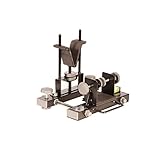
- ARS Mark8.8
ARS Mark is a ranking system developed by bestairriflescopes.com. ARS Mark has no relationship or impact from any manufacturers or sales agent websites. Learn more
- BrandHYSKORE

- ARS Mark8.6
ARS Mark is a ranking system developed by bestairriflescopes.com. ARS Mark has no relationship or impact from any manufacturers or sales agent websites. Learn more
- BrandCaldwell

TRUGLO Sight-Setter Durable Compact Lightweight Easy-to-Use Rear Sight Adjustment Tool
View on Amazon- ARS Mark8.6
ARS Mark is a ranking system developed by bestairriflescopes.com. ARS Mark has no relationship or impact from any manufacturers or sales agent websites. Learn more
- BrandTRUGLO

- ARS Mark8.6
ARS Mark is a ranking system developed by bestairriflescopes.com. ARS Mark has no relationship or impact from any manufacturers or sales agent websites. Learn more
- BrandAISUNOUTDOOR

- ARS Mark8.6
ARS Mark is a ranking system developed by bestairriflescopes.com. ARS Mark has no relationship or impact from any manufacturers or sales agent websites. Learn more
- BrandSporGain

- ARS Mark8.4
ARS Mark is a ranking system developed by bestairriflescopes.com. ARS Mark has no relationship or impact from any manufacturers or sales agent websites. Learn more
- BrandSporGain

- ARS Mark7.8
ARS Mark is a ranking system developed by bestairriflescopes.com. ARS Mark has no relationship or impact from any manufacturers or sales agent websites. Learn more
- BrandSporGain
Last update on 2026-09-30 / Affiliate links / Images, Product Titles, and Product Highlights from Amazon Product Advertising API
FAQs
Why are my shots still hitting low and to the left after turning the rear sight screw?
If your shots remain low and left after several turns, the sights are not the issue. This pattern almost always points to trigger anticipation, where your hand clenches the frame right as the striker drops. Return the sight screw to its starting position and shoot several rounds from a padded bench rest while focusing purely on a smooth, surprise trigger break.
How many clicks should I turn between shot groups?
Turn the adjustment screw two to four clicks between groups when zeroing at 15 to 25 yards. Handgun sight radiuses are very short, so even a tiny movement of the rear sight creates a noticeable shift on paper. Making small adjustments prevents you from overshooting the bullseye and wasting ammunition.
Can I adjust a dovetail rear sight with a hammer and punch?
You can drift dovetail sights with a brass punch, but it carries a high risk of slipping and marring your slide finish. A punch also delivers sharp, jarring blows that can easily crack fragile tritium glass vials or fiber-optic rods inside the sight. Using a mechanical sight pusher tool is much safer because it applies steady, controlled screw pressure without impact shock.


12 Best 22 Pcp Air Rifle For Hunting of 2026 With Quiet Power

7 Best 22 Pcp Air Rifle Under 300 of 2026 For Backyard Pest Control

10 Best 22 Break Barrel Air Rifles of 2026 For Backyard Pest Control

10 Best 30 Caliber Pcp Air Rifle of 2026 For Medium Game

Top Best 177 Air Rifle Under 100: Budget-Friendly Picks for 2026

How to Safely Reload Shotgun Shells at Home

11 Best Co2 Air Rifle For Pest Control of 2026 To Ensure Humane Dispatch

12 Best Inexpensive Air Rifles of 2026 For Dependable Backyard Accuracy






