
How to Adjust an AK-47 Front Sight to Zero Your Rifle

Most shooters assume that adjusting a front sight works just like dialing a rifle scope. That assumption creates frustration on an AK-style rifle, because you must actually move the front sight toward your misses. Screwing the threaded front post down raises where your bullets hit the target, and turning it up lowers them. To fix shots hitting off to the side, push the round steel cylinder holding the post toward the same side where the holes are landing.
The process depends on using a dedicated screw clamp tool rather than pliers or a hammer, which can bend the sight tower and strip threads. It also depends on whether old factory finish has glued the steel cylinder in place, which requires a drop of penetrating oil to free up. Getting everything lined up at your target distance is straightforward once you know which way to turn each piece.
Why You Move an AK Front Sight Toward Your Misses
Adjusting an AK-47 front sight can feel completely backward if you are used to handgun sights or adjustable rear rifle sights. On a standard rifle rear sight, you push the notch in the exact direction you want the bullet to go. If you want the bullet to strike higher on the target, you raise the rear sight. The front sight on an AK-47 works in the exact opposite direction because moving the front sight changes the angle of the rifle barrel relative to your eye.
When you aim down the rifle, your eye automatically aligns the top of the sight post (the threaded pin you look over) with the rear sight notch. If your shots hit low on paper, you need the barrel to point higher toward the sky. To make the muzzle rise, you must screw the sight post downward into the sight drum (the metal cylinder holding the post). Lowering the pin forces you to lift the front of the rifle to bring the post back into the center of the rear notch. That upward tilt lifts your point of impact (where the bullet hits the target).
The same reverse rule applies to windage (left and right adjustment). If your rifle groups to the right of your bullseye, you must push the sight drum toward the right. Shifting the front sight to the right forces you to aim the rifle slightly to the left to get your sight picture centered again. Shooters call this principle chasing your misses or following your bullet holes. If your rifle hits low and right, your front sight must move down and right.
What to Gather and Safe Rifle Setup Before Adjusting
Working on a rifle front sight requires your fingers and tools to sit directly beside the muzzle opening. Safety must always come before anything else. Drop the magazine from the rifle, pull the charging handle back fully, and inspect the chamber visually and with your finger to verify that the chamber is completely empty. Leave the bolt locked back or keep the action open while setting up your bench.
To get dependable results, eliminate human error before you turn any screws. Place the rifle on a solid bench rest, a pair of sandbags, or a sturdy shooting sled. Shooting while standing or resting your elbows on a shaky table causes natural wobble, making it impossible to tell if a missed shot came from misaligned sights or a shaky trigger squeeze.
Gather the right gear before you start firing your zeroing groups:
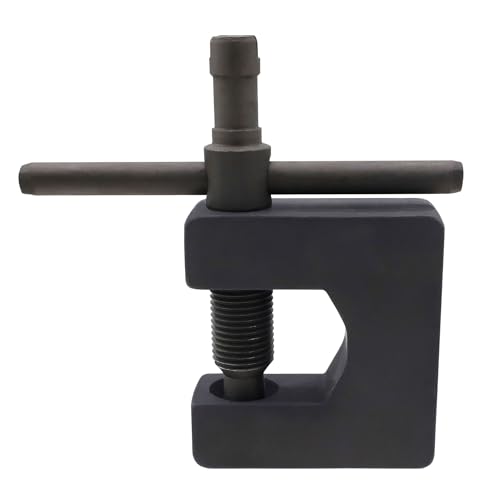
- A dedicated C-clamp sight tool designed for AK and SKS rifles
- Paper targets featuring clear 1-inch grid squares for quick measuring
- A standard ruler or tape measure to record group distances
- A black marker or bright pasters to cover old bullet holes
- A clean cloth and penetrating oil in case the steel drum is stiff
Never use common garage pliers or a heavy claw hammer on your rifle at the firing line. Pliers easily slip off the narrow elevation flats, chewing up the protective finish and flattening the delicate threads. A punch and hammer can easily crush the protective steel ears surrounding the sight post or knock the entire sight block out of vertical alignment.
Steps to Adjust Your AK-47 Front Sight on the Range
- Fire a steady 3-shot or 5-shot group at your target: A single shot can be pulled by a bad trigger press, but a small cluster reveals your rifle's true point of impact.
- Unload the rifle, remove the magazine, and verify the empty chamber: You must place your hands around the muzzle to attach your sight tool, which demands a completely safe firearm.
- Measure the vertical and horizontal distance from the group center to the bullseye: Knowing your exact error in inches tells you how far to turn the threaded post or push the drum instead of guessing.
- Screw the sight post down clockwise if your shots landed low: Lowering the post into the cylinder forces you to raise the muzzle when aiming, which lifts your bullet impacts upward.
- Unscrew the sight post up counter-clockwise if your shots landed high: Raising the sight pin makes you dip the muzzle downward to center the sight, which brings high shots down toward the center.
- Clamp the tool against the right side of the drum if your shots landed to the right: Pushing the metal cylinder toward the right shifts the front post right, which forces your barrel left to bring hits on target.
- Clamp the tool against the left side of the drum if your shots landed to the left: Moving the drum toward the left shifts the pin left, which points your barrel further right when you line up the sights.
- Take the adjustment tool off the front sight block before loading: Leaving heavy steel clamps on the barrel affects how the rifle vibrates under recoil and can fly off during firing.
- Shoot a fresh 3-shot group to verify the sight movement: Confirming the shift on paper shows whether you moved the parts enough or need one final partial turn to finish zeroing.
Fine-Tuning Elevation and Windage at 100 Yards
Most military AK-47 rifles use a standard rear sight leaf marked from 1 to 8 or 1 to 10, representing distances from 100 to 800 or 1,000 meters. The lowest position is usually a battle sight setting marked with a letter, which gives a point of aim suitable for torso hits out to roughly 300 meters. For precise zeroing at the range, slide the rear sight slider forward to the "1" mark and set your paper target at 100 yards or 100 meters.
The threads on a standard front sight post move the point of impact by predictable amounts. On a standard rifle with roughly a 15-inch sight radius, one full 360-degree rotation of the elevation post changes your bullet impact by about 8 inches at 100 yards. That means a half turn moves the strike about 4 inches, and a quarter turn shifts it roughly 2 inches. If your group is 4 inches low at 100 yards, screw the post down exactly one half turn.
Windage adjustments are far more sensitive than elevation adjustments. The sight drum sits in a smooth friction channel inside the front sight block. Drifting the drum just 1 millimeter to the side moves your point of impact by roughly 8 to 10 inches at 100 yards. Because of this steep ratio, you should never crank down on the clamp screw aggressively. Turn the screw handle on your C-clamp tool by small quarter-turn increments, then check how far the cylinder moved inside the housing.
Dialing in your iron sights provides an essential foundation even if you plan to mount an optic later. Many modern shooters set up iron sights for cowitness with red dot sights so they have an instant, reliable backup aiming system visible through the lower portion of the optic glass. If your baseline front sight post is off-center or incorrectly adjusted, your backup iron sights will not line up properly with your aiming dot.
Freeing a Stubborn or Frozen Sight Drum Safely
Surplus rifles and new imports often arrive with sight drums that feel completely welded in place. Heavy military paint, baked-on lacquer, dried protective grease, or tight factory tolerances can lock the drum inside the steel hood. Trying to force a frozen drum with excessive clamp pressure can bend the drive pin of a cheap tool or strip the threads.
Start by applying a few drops of quality penetrating oil or bore solvent directly along the seam where the drum enters the sight block. Let the rifle sit horizontally on its side for 20 to 30 minutes so the liquid seeps into the tight gap between the drum and the sight housing. Flip the rifle over and repeat the oil application on the opposite side to soften old cosmoline and paint seals.
If the drum still refuses to budge under firm hand pressure, apply gentle warmth using a household hair dryer or a heat gun on its lowest setting. Warm the outer front sight hood evenly for two to three minutes. The outer steel sleeve warms and expands slightly faster than the solid inner drum, while the warmth simultaneously softens any factory thread sealant. Once warm, place your clamp tool back on the sight base and tighten the screw with steady pressure.
Avoid using a direct steel punch and hammer against a bare sight block. If you must tap the drum to break a stubborn paint seal, place a thick wooden block or heavy brass drift against the metal to absorb the harsh shock. Support the opposite side of the sight base firmly so you do not transfer bending stress down into the rifle barrel or the gas block pins.
Choosing the Right AK Front Sight Adjustment Tool
A dedicated AK front sight tool is an affordable, purpose-built clamp that eliminates the guesswork and damage caused by improvised garage tools. These tools rely on a rigid C-shaped steel frame that wraps completely around the front sight tower. One side of the frame features an adjustable threaded bolt that presses directly against the sight drum, while the opposite side features an open clearance hole allowing the drum to slide outward freely.
When selecting a sight tool, look for an all-metal model crafted from hardened steel. Thin stamped metal or soft cast alloys often bend or crack when applied to a stubborn factory drum. A reliable tool should also include a slotted cylinder wrench, either built directly into the handle or supplied on the opposite end of the frame, designed to drop cleanly over the front sight post to turn elevation flats without slipping.
Check that the tool matches your rifle pattern. Most standard 7.62x39mm AK-47, AKM, and SKS rifles share the same drum diameter and post dimensions, but heavy-barreled models or custom front sight blocks may require extra clearance. A well-built clamp tool with a comfortable turning handle gives you the smooth mechanical leverage needed for precise millimeter-level adjustments at the range.
- ARS Mark10.0
ARS Mark is a ranking system developed by bestairriflescopes.com. ARS Mark has no relationship or impact from any manufacturers or sales agent websites. Learn more
- BrandZOEKIM

- ARS Mark9.6
ARS Mark is a ranking system developed by bestairriflescopes.com. ARS Mark has no relationship or impact from any manufacturers or sales agent websites. Learn more
- BrandEastern Tactical Supply

- ARS Mark9.0
ARS Mark is a ranking system developed by bestairriflescopes.com. ARS Mark has no relationship or impact from any manufacturers or sales agent websites. Learn more
- BrandAISUNOUTDOOR

- ARS Mark8.8
ARS Mark is a ranking system developed by bestairriflescopes.com. ARS Mark has no relationship or impact from any manufacturers or sales agent websites. Learn more
- BrandTACBRO

- ARS Mark8.8
ARS Mark is a ranking system developed by bestairriflescopes.com. ARS Mark has no relationship or impact from any manufacturers or sales agent websites. Learn more
- BrandZOEKIM

- ARS Mark8.6
ARS Mark is a ranking system developed by bestairriflescopes.com. ARS Mark has no relationship or impact from any manufacturers or sales agent websites. Learn more
- BrandBirchwood Casey

- ARS Mark8.4
ARS Mark is a ranking system developed by bestairriflescopes.com. ARS Mark has no relationship or impact from any manufacturers or sales agent websites. Learn more
- BrandFicero

- ARS Mark8.4
ARS Mark is a ranking system developed by bestairriflescopes.com. ARS Mark has no relationship or impact from any manufacturers or sales agent websites. Learn more
- BrandAikertec

- ARS Mark8.0
ARS Mark is a ranking system developed by bestairriflescopes.com. ARS Mark has no relationship or impact from any manufacturers or sales agent websites. Learn more
- BrandBooge
Last update on 2026-09-30 / Affiliate links / Images, Product Titles, and Product Highlights from Amazon Product Advertising API
FAQs
Which way do I turn the front sight post if my rifle is shooting low?
Turn the front sight post clockwise to screw it deeper into the sight drum. Lowering the sight post forces you to raise the rifle barrel to align the sights, which lifts your bullet impacts upward toward the center of the target.
Can I adjust an AK-47 front sight using regular pliers and a punch?
Pliers and punches should be avoided because pliers slip off the tiny elevation ears and ruin the threads, while punches can bend the protective sight hood. A dedicated C-clamp tool applies smooth, controlled force that moves the parts without scratching or damaging the rifle.
How far does a 1 millimeter shift of the sight drum move my bullet impact?
Moving the sight drum just 1 millimeter to the side shifts your bullet impact by roughly 8 to 10 inches on a target set at 100 yards. Always apply slight pressure and move the drum in tiny increments to avoid pushing your shots completely off the target paper.
At what target distance should I zero my AK-47 iron sights?
Most shooters zero their AK-47 at 100 yards or 100 meters with the rear sight slider placed on the "1" setting. You can also establish an initial rough alignment at 25 yards, but you should always confirm your final groups at 100 yards to ensure true accuracy.
What should I do if the elevation post refuses to turn?
Apply penetrating oil directly to the threads of the post and let it soak for several minutes to break loose dried oil or rust. Ensure your sight wrench is seated completely over both flat edges of the post before applying steady rotational pressure.


12 Best 22 Pcp Air Rifle For Hunting of 2026 With Quiet Power

7 Best 22 Pcp Air Rifle Under 300 of 2026 For Backyard Pest Control

10 Best 22 Break Barrel Air Rifles of 2026 For Backyard Pest Control

10 Best 30 Caliber Pcp Air Rifle of 2026 For Medium Game
Top Best 177 Air Rifle Under 100: Budget-Friendly Picks for 2026

How to Safely Reload Shotgun Shells at Home

11 Best Co2 Air Rifle For Pest Control of 2026 To Ensure Humane Dispatch

12 Best Inexpensive Air Rifles of 2026 For Dependable Backyard Accuracy






