
How to Adjust Beretta 92 Sights Without Damaging Your Slide

A cluster of shots drifting off target is nothing to worry about, and correcting it is straightforward. On standard slides, you can only adjust left-to-right aim by gently tapping the rear sight sideways in its notch with a brass punch or sight pusher. Up-and-down aim is fixed at the factory, so vertical alignment cannot be changed without swapping parts.
A few details change your approach. Classic slides have a permanent front post cut directly into the steel, while newer variants let you replace both sights. Hitting low and to the side often comes from finger pressure on the trigger rather than crooked iron. Mounting an optic plate with a red dot is another path if you want dial clicks for both directions. Looking at your hardware first keeps the metal finish safe and gets your aim centered.
Identify your Beretta slide model before touching any tools
Before you grab a hammer or buy new parts, look closely at the top of your pistol slide. Beretta has produced dozens of variations of the 92 series over the decades, and how your sights are attached depends entirely on the specific slide design you own.
On a classic Beretta 92FS, standard M9, or older 92SB, the front sight post is machined directly into the slide steel. It is one solid piece of metal. You cannot tap it sideways, you cannot raise it, and you cannot replace it without sending the slide to an experienced machinist. For these classic models, all mechanical adjustments must happen exclusively at the rear sight.
Newer variants give you far more flexibility. If you own a Beretta 92X, a Brigadier, an Elite LTT, or an M9A3, your slide features a front dovetail (a wedge-shaped mounting slot cut horizontally across the slide). These models allow you to adjust both the front and rear sights sideways, or swap them out entirely for different heights and notch widths.
- Fixed front post slides (92FS, M9, 92A1): The front sight is permanent metal. Only the rear sight can drift (tap gently sideways) to adjust your left-to-right aim.
- Removable front sight slides (92X, Brigadier, M9A3, M9A4): Both front and rear sights sit in wedge-shaped dovetail slots. You can drift or replace both ends.
- Optic-ready slides (92X RDO, M9A4 RDO): These feature factory cuts covered by a removable plate on top of the slide, designed specifically to host red dot optic plates.
Rule out your finger placement before blaming the iron sights
If your shots are clustering low and to the left of the bullseye, your sights are almost certainly aligned correctly from the factory. This low-left pattern is the single most common complaint among Beretta 92 shooters, especially for right-handed owners. Left-handed shooters experience the exact same issue flipped to the low-right corner.
The Beretta 92 has a relatively wide grip frame and a long reach to the trigger in double-action mode. When you pull the trigger, the pad of your index finger naturally curls inward toward your palm. If your finger sits too deep or too shallow across the trigger shoe, that pulling motion twists the entire handgun slightly in your grip right as the hammer falls. This split-second push drops the muzzle and shoves the point of impact (where the bullet hits) low and to the side.
Another common cause is sympathetic grip squeezing. As you press the trigger, the bottom three fingers of your firing hand instinctively tighten on the front strap of the grip. This natural reflex forces the pistol frame downward right before ignition. Because the slide cycles instantly, you rarely see the muzzle dip while firing live ammunition.
You can prove whether the issue is mechanical or physical by setting up a stable shooting platform at the range. Place your pistol on a flat shooting bench supported by firm sandbags or a pistol rest. Take your time, rest your wrists on the support, center the pad of your index finger on the trigger, and squeeze straight back without tensing your support hand. If the pistol shoots dead center from the sandbag rest, your sights are fine, and adjusting them will only permanently disguise poor grip habits.
Drift your rear sight sideways using non-marring tools
If your bench shots still group consistently to the left or right, you need to adjust windage (your left-and-right aim). You do this by moving the rear sight inside its dovetail slot. The rule of sight movement is simple: always move the rear sight in the exact direction you want the bullet impacts to go. If your shots hit two inches to the left, move the rear sight slightly to the right.
Never strike your pistol with a steel household hammer or a standard mechanic punch. Steel tools will cut through the protective Bruniton finish of your Beretta, leaving shiny, jagged gouges that invite rust. Always use a dedicated brass punch, a dense nylon drift punch, or a mechanical screw-driven sight pusher tool designed for handgun slides.
- Unload and clear the pistol: Drop the magazine from the grip. Pull the slide back, visually inspect the empty chamber, and verify with your finger that no round remains in the firearm. Remove all live ammunition from your workspace completely.
- Strip the slide from the frame: Rotate the takedown latch downward on the right side of the frame, press the release button, and slide the upper assembly forward off the frame rails. Remove the recoil spring, guide rod, and barrel so you are working solely with the stripped slide.
- Clamp the slide securely: Place the slide into a sturdy bench vise. Protect the slide sides by wrapping them in thick leather scrap, heavy cardboard, or soft rubber vise jaws. Clamp the slide firmly along its lower flat rails. Do not over-tighten, but ensure the slide cannot wiggle when tapped.
- Mark your starting reference line: Take a sharp mechanical pencil and draw a fine vertical pencil line across the rear sight base and onto the slide metal right below it. This mark shows you your original factory center position so you can measure how far the sight moves.
- Position your drift punch: Place the flat tip of a brass punch against the lower base of the rear sight, right where it meets the dovetail slot. Never place the punch against the top blade or ears of the sight, as this will bend or shear the metal notch. Angle the punch flush against the sight base.
- Tap gently to drift the sight: Strike the back of the brass punch with a light brass or nylon mallet. Use controlled, light taps rather than heavy swings. Sights are fitted tightly under friction, so listen for a solid metallic click as the sight shifts. Check your pencil mark after every two taps. Moving the sight just one sixty-fourth of an inch shifts your point of impact several inches at 25 yards.
- Clean off any brass residue: Brass is softer than the steel slide, so your punch will leave gold-colored marks on the black finish. This is not scratched paint; it is soft brass transfer. Wet a patch with standard gun cleaning solvent and wipe the markings away.
Change your sight picture or ammunition to correct vertical error
Correcting elevation (your up-and-down aim) on a standard Beretta 92FS requires a different approach because the factory sights do not move vertically. You cannot raise or lower the rear sight notch with a screw, and the front post cannot be tapped up or down. If your pistol consistently shoots too high or too low, you have three practical solutions.
First, check the sight picture you use when aligning the three white dots. Beretta builds the 92 series to use a "combat hold" at 25 yards. In a combat hold, the center white dot on the front sight must cover the exact center of the target you want to hit. If you are used to target revolvers that use a "six o'clock hold" (where the target sits balanced directly on top of the front sight post like a pumpkin on a fence post), your shots will hit low every time. Switching your sight alignment so the dot physically covers the bullseye often solves the vertical gap instantly.
Second, evaluate your bullet weight. The weight of the bullet you shoot changes where it strikes relative to your sights. A standard 115-grain 9mm bullet leaves the barrel quickly at high velocity, which causes it to strike lower on the target. A heavier 147-grain bullet moves slower down the barrel. Because the pistol begins its upward recoil movement while the slower bullet is still traveling through the bore, a 147-grain bullet naturally exits at a slightly higher upward angle and impacts higher on paper. If your Beretta shoots two inches low with light bulk ammunition, switching to standard 124-grain or 147-grain cartridges can lift your group right into the center ring.
If you own a slide with a dovetailed front sight (such as the 92X or Brigadier), you can solve persistent vertical errors by changing hardware. Aftermarket manufacturers sell front sight blades in specific measured heights. Installing a shorter front sight blade makes the gun shoot higher, while installing a taller front sight blade forces the muzzle down and makes the gun shoot lower. If you prefer to keep standard sights while adding aim assistance on dark targets, you can also mount an external helper under the barrel using a rail mount pistol laser sight along the factory accessory rail.
Switch to an optic plate and micro red dot for true dial adjustments
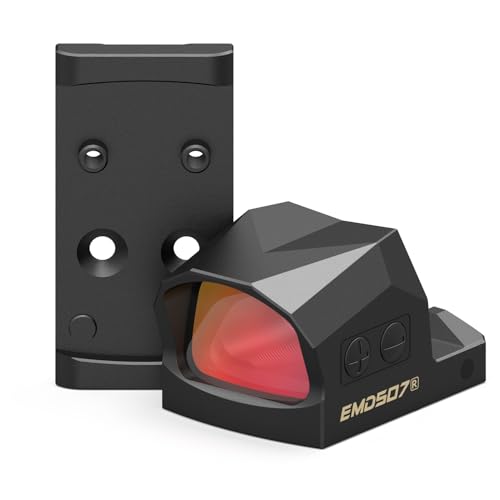
If you find drifting fixed metal sights frustrating, or if you need precise control over both left-to-right and up-and-down aim, mounting a micro red dot sight solves the limitation completely. Traditional iron sights force you to accept fixed vertical positions and nudge metal parts with a hammer. An electronic red dot sight provides internal adjustment click dials for both windage and elevation. Turning a screw with a tiny wrench moves your aiming point in crisp, measured fractions of an inch without touching the slide dovetail ever again.
To use an optic on a Beretta 92, you need an adapter plate that fits your specific slide cut. Factory RDO models feature a flat plate area directly behind the chamber. For older classic slides, aftermarket plates replace the rear sight dovetail entirely, sliding into the existing rear notch to provide a flat mounting shelf. When shopping for an optic system, pay close attention to the footprint (the specific screw-hole and recoil-lug pattern cut into the plate). Common footprints include the RMR pattern for full-size optics and the RMSc pattern for slim carry optics.
You also need to choose between open-window sights and enclosed tube sights. An open-window sight uses an exposed glass pane that keeps the handgun light and slim. An enclosed sight seals the LED emitter inside a boxed housing between two layers of glass, protecting the dot from rain, mud, and lint. Pick an aiming dot size that fits your primary use. A fine 2 MOA or 3 MOA dot covers roughly half an inch to an inch of the target at defensive handgun distances, giving you a precise point of aim. A larger 6 MOA dot or a circle-dot reticle is much faster to acquire in bright light.
When installing an optic, always degrease the screw threads, apply a drop of medium-strength thread-locking fluid, and tighten the hardware using an inch-pound torque tool according to the plate manufacturer manual. Handgun slides experience severe recoil force that will shear un-torqued screws. If you want backup aiming capability in case your optic battery dies, look into iron sights for cowitness, which let you line up your backup iron sights through the optic glass as a fail-safe.

- ARS Mark9.2
ARS Mark is a ranking system developed by bestairriflescopes.com. ARS Mark has no relationship or impact from any manufacturers or sales agent websites. Learn more
- BrandHOLOSUN
- ARS Mark9.0
ARS Mark is a ranking system developed by bestairriflescopes.com. ARS Mark has no relationship or impact from any manufacturers or sales agent websites. Learn more
- BrandVOTATU

- ARS Mark9.0
ARS Mark is a ranking system developed by bestairriflescopes.com. ARS Mark has no relationship or impact from any manufacturers or sales agent websites. Learn more
- BrandVOTATU

- ARS Mark9.0
ARS Mark is a ranking system developed by bestairriflescopes.com. ARS Mark has no relationship or impact from any manufacturers or sales agent websites. Learn more
- BrandBVGD

- ARS Mark8.8
ARS Mark is a ranking system developed by bestairriflescopes.com. ARS Mark has no relationship or impact from any manufacturers or sales agent websites. Learn more
- BrandBurris

- ARS Mark8.8
ARS Mark is a ranking system developed by bestairriflescopes.com. ARS Mark has no relationship or impact from any manufacturers or sales agent websites. Learn more
- BrandLIGHTWIN

- ARS Mark8.8
ARS Mark is a ranking system developed by bestairriflescopes.com. ARS Mark has no relationship or impact from any manufacturers or sales agent websites. Learn more
- BrandTipfun

- ARS Mark8.8
ARS Mark is a ranking system developed by bestairriflescopes.com. ARS Mark has no relationship or impact from any manufacturers or sales agent websites. Learn more
- BrandVOTATU

- ARS Mark8.8
ARS Mark is a ranking system developed by bestairriflescopes.com. ARS Mark has no relationship or impact from any manufacturers or sales agent websites. Learn more
- BrandViridian Weapon Technologies

- ARS Mark8.2
ARS Mark is a ranking system developed by bestairriflescopes.com. ARS Mark has no relationship or impact from any manufacturers or sales agent websites. Learn more
- BrandFeyachi
Last update on 2026-09-30 / Affiliate links / Images, Product Titles, and Product Highlights from Amazon Product Advertising API
FAQs
Which direction should I tap my rear sight if my Beretta shoots left?
Tap your rear sight to the right. The rule for rear sights is to move the rear notch in the exact direction you want your bullet impacts to move. If you want the group to shift to the right, push the sight toward the right side of the slide.
Can I file down the front sight post on my Beretta 92FS?
You should avoid filing the front sight post. The front post on a standard 92FS is part of the slide, so filing it cuts through the protective finish, causes bare metal to rust, and permanently alters the firearm with no way to reverse the change. If the gun shoots low, adjust your bullet weight or switch to a combat sight picture instead.
How far do I need to move the rear sight to fix a two-inch error?
You only need to move the sight a tiny fraction of an inch. On a full-size Beretta 92, moving the rear sight roughly 0.008 inches shifts your point of impact by about two inches at 25 yards. Always use light pencil reference marks and make microscopic shifts between range checks.
Do I need a gunsmith to install an optic plate on a 92X RDO?
No, you do not need a gunsmith if you follow basic mechanical steps at home. You simply remove the blank factory cover screws, set the Beretta-compatible adapter plate into place, add thread-locking fluid, and tighten the mounting screws with an inch-pound torque driver to factory specifications.


12 Best 22 Pcp Air Rifle For Hunting of 2026 With Quiet Power

7 Best 22 Pcp Air Rifle Under 300 of 2026 For Backyard Pest Control

10 Best 22 Break Barrel Air Rifles of 2026 For Backyard Pest Control

10 Best 30 Caliber Pcp Air Rifle of 2026 For Medium Game

Top Best 177 Air Rifle Under 100: Budget-Friendly Picks for 2026

How to Safely Reload Shotgun Shells at Home

11 Best Co2 Air Rifle For Pest Control of 2026 To Ensure Humane Dispatch

12 Best Inexpensive Air Rifles of 2026 For Dependable Backyard Accuracy






